Early Feminist: Mary Wollstonecraft

Earlier this week Meena wrote about the characteristics of ‘good girls’ that include: fear of disappointing others, fear of speaking out for fear of hurting others, need to always excel, avoid conflict, obey rules.

Good girls make up the majority in every generation. And certainly they are no less in any way than the others. But it is the few in each generation, who due to a combination of inbuilt traits, circumstances, passion and perseverance defy these norms. It is these path breakers who open up previously untrodden terrain, and clear the path for their contemporaries, and the generation to follow.

Today it is fashionable to be a ‘feminist’ and women are fighting for “more”. More avenues for better education and employment, more freedom of choice, more say in their own life and matters. This is a good time to remember that this “more” is a luxury compared with a generation of women who did not even have “basic” access to any of these things. And that it is women who have fought hard battles to achieve what we take for granted today.

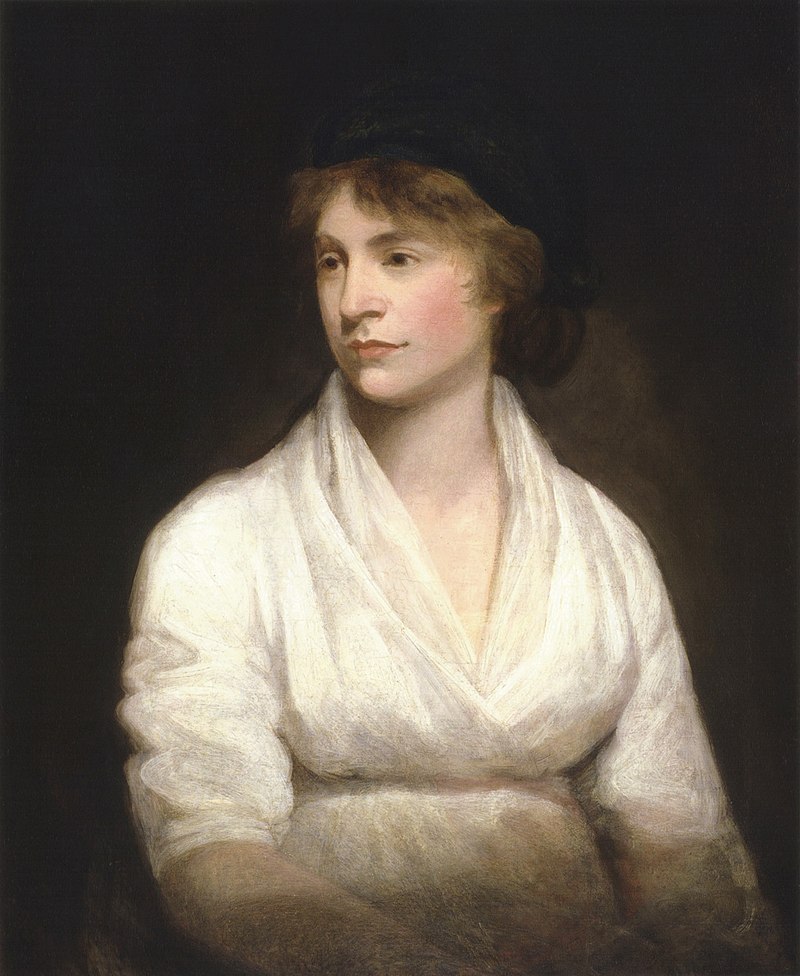
Mary Wollstonecraft was one of these women.

Mary Wollstonecraft was born April 27, 1759, in London in a family that had once been prosperous but had been reduced in circumstances. While her elder brother, and the favoured child received a proper ‘gentleman’s education’, Mary had only a basic formal education when she learned to read and write. This was probably the root of her life-long battle for equal educational opportunities for women. In the meanwhile Mary taught herself a number of languages and spent considerable time exploring a library that one of her friends had. Through these friends, she met Fanny Blood, two years older and skilled at sewing, painting, and the piano. She inspired Mary to take initiative in cultivating her mind.

The financial situation of her family necessitated that Mary find some form of employment. In those days, opportunities for girls from this background were limited to teaching, needlecraft, and being a lady’s companion. At 19 Mary got a job as a live-in helper for a wealthy widow. She could not take it for more than a year. Her independent mind and belief in a girl’s right to a good education led her to found a small girl’s school in London in 1784, with her sister Eliza and friend Fanny Blood. The school closed two years later but this period served as the starting point for Mary’s radical ideas about the necessary equality of female and male education, and belief that the government was responsible for making this happen. She expressed these strong views in her book Thoughts on the Education of Daughters which was published by the radical publisher Joseph Johnson in 1786.

In the meanwhile Mary also made the radical decision to support herself as a professional writer, something very few women of the time could do without an aristocratic sponsor. Settling in London to pursue this new career, she did translations from French and German, read widely, and wrote reviews. She became a regular contributor to Johnson’s new literary magazine, the Analytical Review . During this period she was also introduced to such radical freethinkers as Thomas Paine and William Godwin, and she thrived in this intellectual circle.

In Western Europe during the late 18th century, single women had little protection under the law and married women lost their legal identity. Women couldn’t retain a lawyer, sign a contract, inherit property, vote, or have rights over their children. Mary’s career choice, and especially her decision to write about political and philosophical issues, was not merely unconventional, it was perceived as ‘unwomanly’ and ‘unnatural’. But as she reflected “I am then going to be the first of a new genus”. It was a harsh struggle every step of the way, but Mary continued to pursue her beliefs, and further develop her ideas. Based on her own experience of denial of education, and building upon the thinking in her earlier book, Mary argued that the educational system deliberately trained women to be frivolous and incapable and that if girls were allowed the same advantages as boys, women would be not only exceptional wives and mothers but individuals who could contribute better to society. She declared that both women and men were human beings endowed with inalienable rights to life, liberty, and the pursuit of happiness. To suggest women were equal to men was close to blasphemy at the time.

Mary grew up in England during the Enlightenment, an intellectual period that advocated for the use of reason to obtain objective truths. It is this very advocacy for reason that was the guiding principle for her book A Vindication of the Rights of Woman, published in 1792. The book argued that because women share the gift of reason and have the same innate human value as men, both women and men should be educated rationally, allowed to exercise their natural abilities, and held to the same reasonable standards of behaviour. In order to contribute at the same level as men, women must be educated equally to men. If women were not afforded this opportunity, social and intellectual progress would come to a halt. As she wrote in the introduction to the book: My main argument is built on this simple principle, that if she be not prepared by education to become the companion of man, she will stop the progress of knowledge and virtue. 

The trailblazing book went a step ahead of education for girls. It argued that girls and boys should be co-educated, and that women and men should share parental responsibilities. It also insisted that women should be free to enter business, pursue professional careers, and vote if they wished.

A Vindication of the Rights of Woman sold out within a year, and Johnson issued a second edition. An American edition and translations into French and German followed.

Mary Wollstonecraft’s personal life was equally unconventional for the time. While in France she fell in love with an unscrupulous American businessman and had a child with him. He abandoned both mother and child. Mary was heartbroken and even attempted suicide. Later she was in a relationship with William Godwin and when she was carrying his child, the two married but maintained separate domestic establishments. On 30 August 1797 Mary went into labour and after about 18 hours she gave birth to a daughter, also named Mary. Thereafter she had postpartum complications, and died eleven days later at the age of 38.

Her daughter, who grew up to be Mary Shelley the author of the book Frankenstein, never knew her mother in life, but only through her writing. Mary Wollstonecraft had been working on a novel when she died. In this she wrote, almost as if addressing her daughter: Always appear what you are, and you will not pass through existence without enjoying its genuine blessings, love and respect.

Mary Wollstonecraft lived boldly, and died young. But her ideas went way beyond her own time and life. They planted the seed which eventually led to the Suffrage Movement in the early 20th century. Her book A Vindication of the Rights of Woman is considered the earliest and most important treatise advocating equality for women. This essay is often seen a classic of rationalist feminism that laid the foundation of modern women’s rights movements in the Western world.

–Mamata
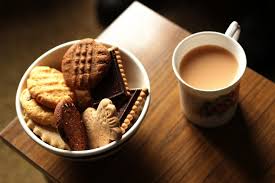
Tea and Biscuits

One has always associated the typical English cuppa with a snack of biscuits. A recent news item reported that the new trend in England, especially among the younger generation, is the popularity of samosas as the preferred snack with tea. This is indeed a total reversal of the traditional colonial notion of appropriate accompaniments to tea.

The English connection between biscuits and tea saw two different aspects during the two World Wars. Huntley & Palmers, the first officially designated biscuit manufacturers in England set up a factory in Reading in 1846. By 1874 it was producing tens of thousands of tonnes of biscuits, becoming the world’s largest biscuit manufacturer. When World War I started in 1914 it received a substantial order from the War Office to manufacture biscuits for the British army. The company manufactured Army Biscuits Number 4 and 9. The ‘Service’ biscuits as they were called, were about four inches square, and were made of whole wheat flour, without sugar. The biscuits provided sustenance, but were very hard and could only be eaten when soaked in tea or water. The fact that some of the biscuits survived intact for a hundred years attests to their durability!

Biscuits and tea found a different connection during World War II in England. By then sweet tea was favoured by the British working class. During the war, tea as well as sugar were severely rationed; there were complaints that tea was not sweet enough. So biscuit manufacturers stepped in by supplying the canteens for civilian war volunteers and other services with biscuits which would add a touch of sweetness with the tea. By the end of the war, it became a reflex for many to have biscuits with their tea. This English tea habit also took roots in what were then colonies of the British Empire.

In India, for many of a certain generation, the words ‘Britannia biscuits’ were almost synonymous. The history of these is interesting. Britannia Industries is one of India’s oldest existing companies. It was founded as a small operation in 1892 by a British businessman, with an investment of Rs 295/-.The first biscuits were manufactured in a small house in what was then central Calcutta. In 1897, the outfit was acquired by four Indian brothers, the Gupta brothers, and was called VS Brothers. In 1918 Charles Holmes, an English building contractor and friend of the Gupta family became a partner in the business. Holmes had a construction firm called Britannia Construction Co. and thus VS Brothers the biscuit manufacturer was renamed by him as Britannia Biscuit Company Ltd.

World War 1 (1914-1919) provided a huge boost for the newly-named company Britannia which was contracted by British colonial government in India to supply specially made biscuits for its soldiers on the frontlines. Thus Britannia joined Huntley & Palmer as suppliers of Service biscuits.

Britannia became the first biscuit maker in India to mechanize production, and the first one east of the Suez Canal to use gas ovens, which it imported in 1921.

In the early 1920s the two most successful biscuit manufacturers in the UK Peek Freens and Huntley & Palmers merged to create a company called Associated Biscuit Manufacturer’s Ltd. This led to world-wide expansion. Britannia merged with this larger company in 1924, and set up a factory in Bombay to meet with the growing demand. The company began establishing a reputation for quality and value. It further strengthened its position by expanding the factories at Calcutta and Mumbai.

During the Second World War, once again the company was contracted to produce Service biscuits, and from 1939-45 almost 95% of its total production capacity was used for this war-time effort. 

In 1952 the Calcutta Factory was shifted to spacious grounds at Taratola Road in the suburbs of Calcutta. During the same year automatic plants were installed there, and later in Mumbai in 1954. The same year the company began production of high-quality sliced and wrapped bread in India. This was first manufactured in a new factory set up in Delhi and first sold there. In 1955 the company launched the all-time favourite Bourbon biscuit in India, followed by Britannia cakes in 1963. In 1978, the Indian shareholding in the company crossed 60%. The Company was re-christened from Britannia Biscuit Company Limited to Britannia Industries Limited with effect from 3rd October 1979. By 1994 the annual production crossed one lakh tonne of biscuits. In 1995 Britannia made it a mission to make every third Indian a Britannia consumer and changed its corporate identity to “Eat Healthy, Think Better”. Since then the company has grown from strength to strength, introducing new brands that rapidly became household names. The company sells its Britannia and Tiger brands of biscuits, breads and dairy products throughout India and in more than 60 countries across the world.

While Britannia is one of the oldest biscuit manufacturing companies in India, today there are several companies that offer choices of sweet or salty biscuits. From Parle G, the world’s largest selling biscuit brand in 2021, to the cream or chocolate-filled cookies, to a host of “healthy, low-carb hi-fibre” options. These are not necessarily ‘tea biscuits’. They are multi-place, multi-use snacks, easy to carry, quick to unwrap and fun to savour even on their own. Even while crunching and munching on biscuits, Indians also continue to enjoy the traditional teatime snacks and savouries of which every state and even every household have their own specialties and favourites—from ganthiya in Gujarat, to murukku in south India, to regional varieties of vadas and pakoras. And of course, the transnational favourite samosa. 

Now it looks like we have come full circle—from Indians adopting English biscuits with chai, to the English adopting samosa with tea!

–Mamata

A House for Mr. Narayan

Generations of Indians have grown up on RK Narayan’s writings. If you have not read his novels, maybe you have seen ‘Guide’, starring Dev Anand and Waheeda Rehman? Or the charming TV series ‘Malgudi Days’? Well, suggest you visit or re-visit all of the above!

RK Narayan was one of the first Indian authors to gain international recognition. His first novel, Swami and Friends, which he wrote in 1930 did not find a publisher for many years. But sometime in 1933, his friends in Oxford to whom he had sent the manuscript, showed it to the famous author Graham Greene. The senior author liked it so much that he recommended it to his publishers and the book saw the light of day in 1935. It got good reviews across the world. RKN followed this up with The English Teacher and The Dark Room, which also won appreciation. From then, it was a steady stream of novels, short stories and articles.

Narayan created the fictional town of Malgudi as the setting for his novels. So authentic was it to his readers that many even today believe it is a real place.

But why the sudden piece on RK Narayan, one might ask.

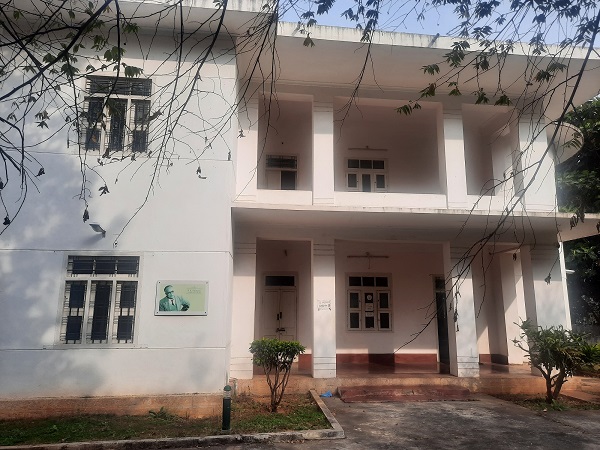
Well, it has been triggered by a visit to his house in Mysuru. Just last week, when I was there, I was lucky to get to visit this house. RKN spent many years in Mysore (as it was spelt then)—some of his growing up years, as well as his adult life when he accepted a commission in the State of Mysore.

It was in the second stint that he built a house which I visited. Set in the quiet area of Yadavagiri, it is a beautiful house typical of the 1950s, full of light and air, with red oxide floors and a beautiful balcony.

It was indeed gratifying to see the house so well preserved. Especially after we heard the story of how it was almost demolished. The author passed away in 2001. All of his family had left Mysuru by then. The house was falling to rack and ruin, when a builder wanted to pick it up and re-develop it. It was at this time that Mysuru woke up to this legacy. Led by a journalist, the people of the city protested. Finally in 2011, the city corporation bought the house and restored it.  

And we must be thankful for this! For not only is the house in good shape, it seems to have been restored fairly faithfully. There is also an exhibition of several artifacts, including his awards, personal items etc., many photographs, as well panels of text for those who have the patience to read them.

But…

And it is a very big BUT!

When one thinks of the potential that the house has for the students, literature lovers and citizens of Mysuru, not to mention the thousands of tourists the city attracts, it is a tragedy to leave it to routine care-taking and not very imaginative management.

As we reflected on our visit, we could come up with more than 10 ideas in less than 5 minutes:

  • Have a lively permanent exhibition, along with special temporary exhibitions to explore specific themes: maybe selected books; his relationship and collaboration with his brother, the famous RK Laxman, who illustrated so many of his books; maybe the process of turning his books into movies or TV (he is said to have hated the movie Guide), RK Narayan compared to comtempory Indian writers, etc., etc.
  • Sell RKN’s books (no, unbelievably, they don’t!)
  • Make it the hub for meetings of book-clubs
  • Make it a venue for book-launches
  • Host lit fests
  • Have literary events for children
  • Have screenings and discussions of movie and TV shows based on his books
  • Have an author-in-residence programme
  • Develop an archive related to his life and work
  • Create and sell souvenirs based on Malgudi
  • Start a café in the lovely little garden space around the house, and serve his favourite dishes
  • Make it a wifi café, so young people hang out
  • And charge a small fee for entrance (the Corporation has kept entry free..generous but it would be more sustainable to charge something).

Ideas are of course easy. Execution is difficult. But do this for RK Narayan’s house we must. He is a very important part of Indian writing in English.

While India does not have a great tradition of making author’s houses into educational and enjoyable experiences, there are more than enough international experiences to learn from: Shakespeare’s birthplace; Mark Twain’s house; Emily Dickenson’s House; Jane Austen’s House; Milton’s House are among the many which are successfully keeping the legacy of these authors alive.

Maybe RK Narayan House can set the example for homes of other Indian authors?

–Meena

Janakidevi Bajaj: Embodying Gandhian Values

Jamnalal Bajaj was considered Gandhiji’s fifth son, and adopted all his values—from Ahimsa to his dedication to the poor, to his commitment to locally made goods and his patriotic spirit. He was an active member of the Congress Party, and gave up the Rai Bahadur title conferred on him by the British Government, and joined the non-cooperation movement.

Importantly, Jamnalalji, in line with the trusteeship concept propounded by Gandhi, felt that inherited wealth was a sacred trust to be used for the benefit of the people and dedicated most of his wealth for the poor and under-privileged.

It was a stupendous level of sacrifice. Would it have been easy to accomplish without the support of his family? Probably not. But Jamnalal Bajaj was lucky in his life’s companion, Janakidevi Bajaj, who not only supported his ideals, but was a freedom fighter and social activist in her own right.

Janakidevi was just eight years old when she married the 12-year old Jamnalal. Both of them were highly influenced by Gandhiji. When Jamnalal took to the Gandhian way of life, Janakidevi was not far behind.

In letter and spirit, she willingly and happily gave up the comfortable lifestyle of a successful industrialist’s wife. At the age of 24, answering the Mahatma’s call, she gave up all her gold ornaments. To her dying day, she never wore any gold again. At the age of 28, she took the vow to give up foreign clothes, and to wear only Kadhi. She burnt all the foreign clothes they had in the house at the central chowk of Wardha. These included expensive saris, silks, suits, woollens and even tapestries depicting Gods. She spun khadhi and encouraged others to take up the vocation. She also gave up purdah in 1919, and motivated other women to do the same, striking a blow for freeing women.

Jamnalal and Janakidevi lived by every ideal they professed. With a deep desire to abolish untouchability, they were the first to open the doors of a temple to Harijans. On 17th July, 1928, the couple threw upon the doors of their family temple in Wardha to Harijans. This was a revolutionary move. Going further, she also hired a Dalit as part of her household staff to serve food to the family.

Throughout the years of the freedom movement, she travelled across the country and addressed and inspired thousands with her message of Swaraj, of the need to boycott foreign goods, of the importance of spinning cloth, the need to eradicate the evil of untouchability, and for social reform.

Janakidevi Bajaj

After 1947 when the country became free, she continued her social work. She was an ardent follower of Vinobha Bhave and worked tirelessly in the Bhoodhan movement. She came out with the innovative idea of ‘koopdaan’, the donation of wells, and collected resources with the ambition that every household could have a well. She also worked for education of women, and espoused the cause of gau-seva.

She was a respected and inspiring figure for those working in the development sector in India, and was awarded the Padma Vibhushan in 1956, in recognition of a lifetime of service.

It was men and women such as these who kept the spirit of Gandhiji and his ideals alive. As we mark the Mahatma’s martyrdom day, it is an appropriate time to remind ourselves of these ideals—non-violence, brotherhood, a burning desire to correct social and economic wrongs, tolerance, and goodwill towards all.

–Meena

A Sweet Welcome to the New Year!

A sweet dish popular in Karnataka, but not too well-known in other parts of the country, is Hayagreeva. Intensely sweet and very rich, the major ingredients are ghee, chana dal and jaggery. How can you go wrong with that?

One should indulge a bit in the New Year, so here is urging everyone to make it during the week (before guilt catches up!).  I shall leave the recipe for you to look up—it is easily available (as what is not, these days?).

I would rather get into the Who, How, Why?

Few of us would associate the name ‘Hayagreeva’ with a sweet. Let alone the sweet, in fact not many may even be aware of Hayagreeva the god. So let’s start at the very beginning.

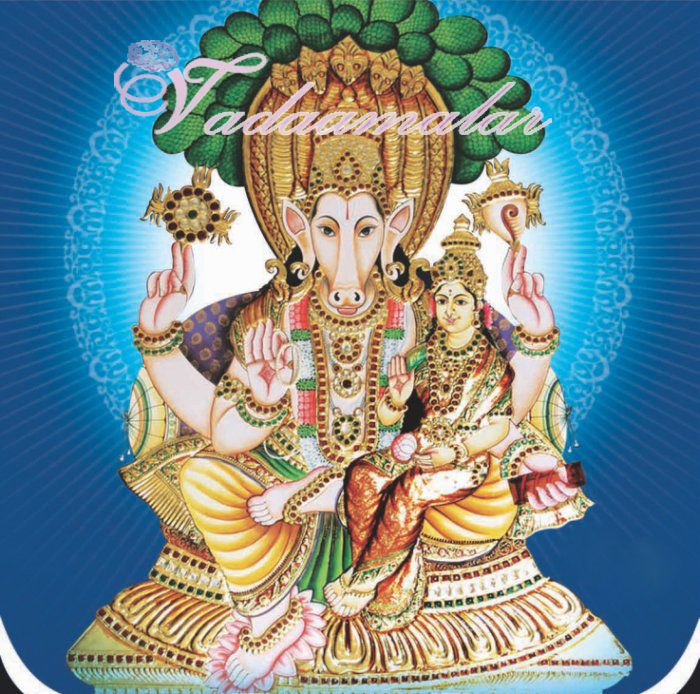
 Hayagreeva is an avatar of Vishnu. Hayagreeva means the ‘horse-necked one’, and that is how this avatar is depicted, with a human body and a horse’s head, and a brilliant white in colour. He is shown clothed in white garments and seated on a white lotus. Hayagreeva represents knowledge and wisdom, and the triumph of knowledge over the evil forces of passion and darkness. He is shown as having four hands. One of these is in the gyana mudra—giving of knowledge, while another holds books. The third and fourth hold a conch and discus, the traditional items associated with Vishnu.

So how does the transition from the name of a God to the name of a sweet happen? Many centuries ago there was a devout disciple of Hayagreeva called Vadiraja Thirtha (1480 to 1600 AD). He was a renowned philosopher and a great scholar, who translated many works of Madhavacharya from Sanskrit to Kannada. He served as the pontiff of the Sodhe Mutt in Karnataka. He was particularly devoted to the Hayagreeva avatar of Vishnu.

It is said that Vadiraja Thirtha would make a sweet by cooking chana dal and jaggery (the two items most beloved to horses) in ghee, and place the dish on a tray on his head. The Lord Hayagreeva would emerge out of his statue in the temple in the form of a horse, and partake of the prasaada. He would spend time playing and dancing for his bhakt, and then go back into the idol.

And thus the tradition of hayagreeva as an offering to the gods was born.

There is another interesting story associated with Hayagreeva. It is said that a goldsmith was once trying to make a statuette of Ganesha. But every time he did this, the head kept taking the shape of the head of a horse. The artisan tried many times, but it was always thus. The goldsmith got frustrated and started to hit the statue with a hammer to break it. But however hard he tried, he could inflict no damage to the idol. That night, in his dream, Lord Hayagreeva himself appeared, and told him to give the statue to a holy man whom he would meet the next day.

And sure enough, Vadiraja Thirtha met the goldsmith the next day. Lo and behold, he knew about the statue and asked the goldsmith about it. He of course gave it to him, and Shri Vadiraja consecrated it and started worshipping it.

May your New Year be as sweet as the hayagreeva!

–Meena

STRIKING TIMES

On 15 December 2022 an estimated 100,000 nurses went on strike across hospitals in the UK, marking the first-ever nationwide walkout in the history of the nursing union in the country. This is probably the culmination of a year that has seen a great deal of labour unrest across Britain which has manifested in a series of strikes. From British Rail workers, to postal workers, bus drivers and baggage handlers at airports, and NHS nurses, several essential services have been disrupted and daily activities affected by these.

Labour unions have had a long history in Britain. It is interesting that one of the earliest examples of labour militancy, was in 1888, and was sparked off by young girls who worked in appalling conditions in a match factory. The Match Girls’ Strike as it came to be known was a key moment in British history and a milestone in the labour movement.

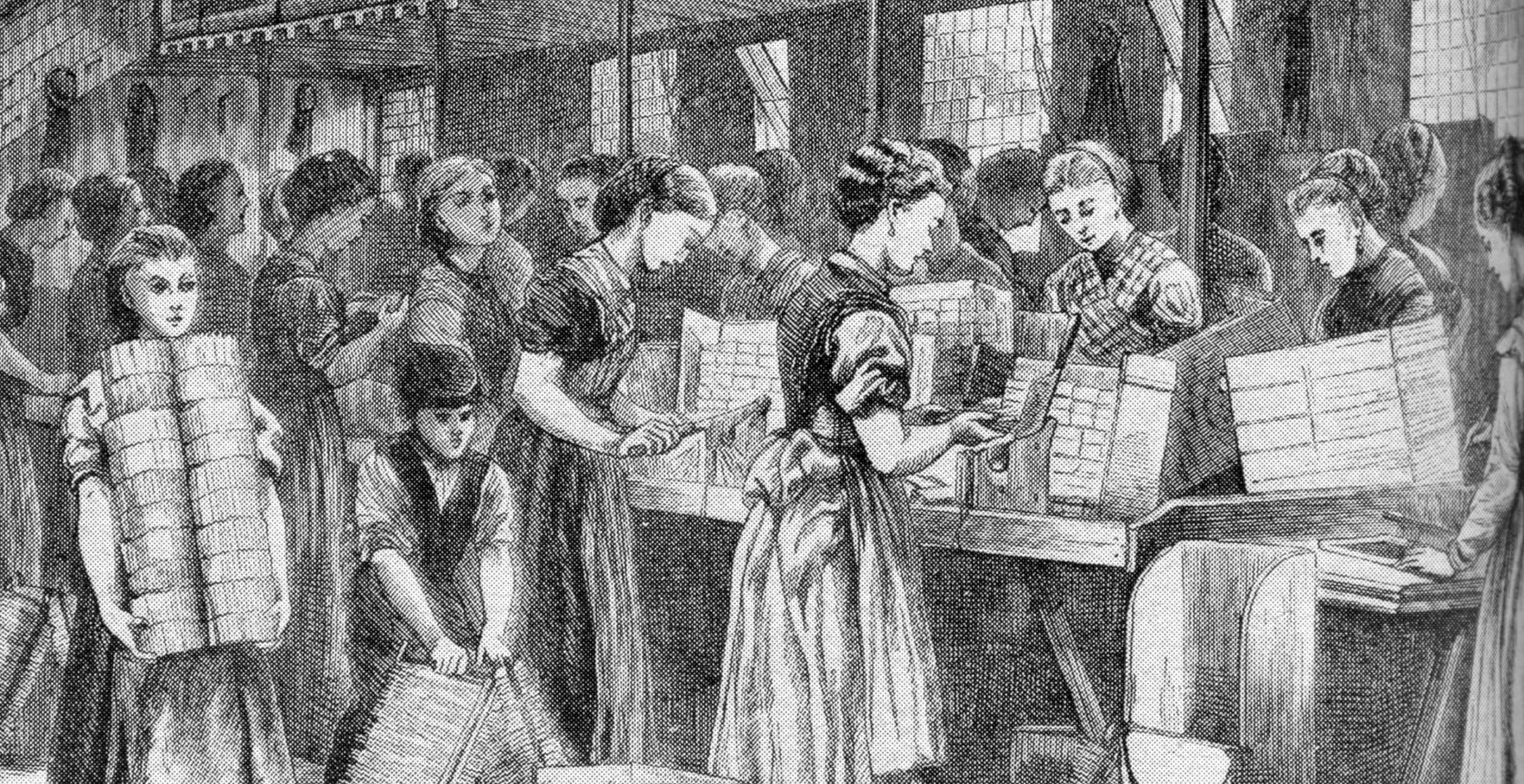
This historic development dates back to the late-nineteenth century in London’s East End, an area inhabited by the very poor, with unsanitary living conditions and rife with disease and malnourishment. This area also provided cheap labour for the nearby factories. Among these was the Byrant and May Match Company. The company employed young girls (starting as early as age 13) who worked, standing on their feet, for 14 hours a day, for very meagre wages from which they had to also feed, clothe and house themselves. Their earnings were further cut by fines and deductions for small mistakes such as leaving a match on the work bench. The girls who were forced to work as they came from large and poor families, had hardly anything left to take home. The girls also suffered abuse at the hands of the foremen. Over and above the economic exploitation, was the hazardous work environment.  

The production of match sticks involved dipping the sticks, made from poplar or pine wood, into a solution made up of many ingredients including phosphorus, antimony sulphide and potassium chlorate. Within this mixture, it was the white phosphorus that was extremely hazardous for bones and lungs. Inhaling it would cause toothaches, and in the long run, a condition called “phossy jaw” an extremely painful type of bone cancer leading to horrendous disfiguration of the face.

Matchgirls strike work!

The Company employed around 1400 such women and made huge profits, even as they managed to circumvent some of the basic labour rules of the time. It was fully aware of the impact of phossy jaw but if anyone complained, they simply instructed them to have the tooth extracted. While discontent simmered within the workers, there was little that the girls could do to change the situation; but the glowing embers were getting hotter; until a spark ignited the matches.

Henry Burrows a social activist and Theosophist, and a close friend of Annie Besant, had heard rumours about the work conditions in the match factory. He first made contact with some of the girls who worked in the factory, and Annie Besant met many of them and heard from them about their appalling work conditions. This prompted her to write an article about this titled White Slavery in London. The article was published on 23 June 1888 in a weekly magazine called The Link which was published by Annie Besant.  

The powerful matchstick industry had never been challenged like this before, it was outraged, and promptly denied everything. Bryant and May threatened to sue Annie Besant for libel and demanded that their employees sign a statement claiming that  the article was untrue. They refused. The company retaliated by sacking one of the workers who they accused of being ring leader. This was the final straw for the Match girls. And so it was that on 5th July 1888, 200 girls and women downed their tools walked out. They marched to the office of The Link and their representatives met Annie Besant. Mrs Besant did not agree with the strike action in principle but she agreed to help them. Her leadership helped to give the girls direction and organization. The ripples spread quickly, and soon about 1,400 workers had walked out in sympathy. 50 girls visited Parliament, to describe their grievances to MPs “in their own words”.

Besant and Burrows proved crucial in organising the campaign which led the women through the streets whilst setting out their demands for an increase in pay and better working conditions. Such a display of defiance against a powerful industrial lobby was met with great public sympathy, and donations for the cause started pouring in. The empathy demonstrated for the plight of working women was also a sign of changing times.

The factory management saw that the bad publicity could harm their interests and they had no choice but to offer improvements in wages and working conditions. This agreement represented a resounding success for the Match girls, who returned to work the next day. Although it would not be until 1908 that the House of Commons finally passed an act prohibiting the use of the deadly white phosphorous in matches.

An important outcome of the Match girls’ strike was the creation of a union for the women to join; this was extremely rare as female workers did not tend to be unionised even into the next century. The Union of Women Matchmakers, which lasted until 1903, was extremely significant, considering that even as late as 1914, less than 10 per cent of female workers were unionised. It also meant that the organisation of the workers did not just disappear after the strike, as had been the case previously.


The Match girls’ success gave the working class a new awareness of their power, and unions sprang up in industries where unskilled workers had previously remained unorganized. As The Link wrote on 4 August 1888 the strike “put new heart into all who are struggling for liberty and justice”. The next year saw the Great Dock Strike, where many of the dock workers were male members of the families of the Match girls. Ultimately, these two strikes led to the formation and growth of the labour movement and Labour Party itself. 

–Mamata

Guts and Gore

Last week we looked at the millions of microscopic life-forms which live within us and which help not just our digestive processes, but contribute overall to our health and well-being.

This week, here is a bizarre story of how we started to get insights into our digestive system (quite literally, as you will see).

The year was 1822, the place Mackinac Island, near the Canada-US border. A young fur-trader called Alexis St. Martin got shot in the stomach—how and why and by whom is not clear, but probably an accident.

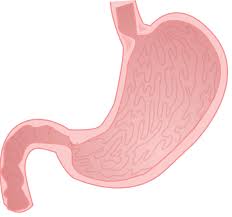
He was treated by Dr. William Beaumont, a US Army surgeon who was stationed at a nearby army post. St Martin had a hole in his stomach where he was shot. The treatment seemed to work and he recovered, but the hole did not close. For the first two weeks or so, whatever he ate, came out through the. But after that, though the hole was still open, the food did not come out and his digestive system seemed to be working normally. And though the stomach-wound healed, there was still a hole there—a window to his innards. Since sstomach acids are very strong, they essentially disinfected the wound from the inside out, and so it was safe to not sew it up.

Dr. Beaumont saw this as a miraculous opportunity to study the digestive system—he could literally look into the stomach as it worked. He paid St Martin to work in his house doing domestic chores with the understanding that he would allow the doctor to carry out experiments. St Martin was not happy, but did not have much choice.

Dr. Beaumont carried out a variety of experiments. For instance, he often watched the digestion happening in St Martin’s stomach after he ate. Sometimes, he let him eat and then retrieved the contents of the stomach later through the hole to see how much digestion had taken place. He would put food in a mesh bag and then dip it into St Martin’s stomach and take it out after some time. He even licked the inside of St. Martin’s stomach and found that the acid taste manifested only when the stomach started to digest food.

Over the next several years, Beaumont observed and recorded everything that went into St. Martin’s stomach. He took samples of gastric secretions and sent them to chemists for analysis.

Gory though it sounds, and medical ethics of today would probably never allow these kind of experiments, it has to be said that Dr. Beaumont’s work laid the foundation for modern ways of studying and understanding physiology. His work helped us to understand how the basic process of digestion actually occurs.

Weirdly enough, even today, in the US and some other parts of the world, the study of the digestion in cows is undertaken by deliberately making a hole or cannula in a cow’s stomach. The hole is fitted with a cannula which acts as a porthole-like device that allows access to the stomach of the cow, to perform research and analysis of the digestive system. These are called cannulated or fistulated cows. Apart from research, this also helps sick cows by allowing vets to insert healthy microbes into the sick cow’s gut. But I wonder if there can’t be ways just to give the sick cow medicines orally. Making a permanent hole in a cow’s stomach doesn’t seem a very nice thing to do! In fact, any animal rights groups find the practice objectionable, and are campaigning against it.

Here is to the spirit of science, of exploration and discovery. But strongly rooted in ethics!

–Meena

It Takes Guts!

‘Gut Ecology’ is the name of a book brought out by the St. Marks Academic Institute which is dedicated to ‘advancing scientific knowledge of colorectal disorders’. I think the book, which features topics like ‘The gut microflora: traditional and molecular identification techniques’, and ‘The ‘unculturables’’ deserves to be a bestseller. Not that I would understand the contents, but I have to admire the dedication and scientific spirit it takes to spend a lifetime researching and writing on such topics! Guts indeed!

But what exactly would the book be about? Let’s break it down. Ecology is the study of organisms and how they interact with the environment around them. An ecologist studies the relationship between living things and their habitats. ‘Gut’ is commonly used to refer to the stomach, entrails, parts or the whole of the digestive tract. So a ‘gut ecologist’ would study the insides of our digestive tract to understand the micro-organisms (collectively referred to as gut microbiota) that live there, and how they interact in our digestive system.

For very long, the presence and role of micro-organisms in our body was not known. It was in the 1670s and ‘80s when Antoine van Leeuwenhoek started using his newly developed handcrafted microscopes that scientists started studying them. Leeuwenhoek described and illustrated five different kinds of bacteria present in his own mouth and that of others, in a letter he wrote to the Royal Society of London in 1683. He later also compared his own oral and faecal microbiota, and proved that there are differences in micro-organisms in body sites. (See why I say it takes guts to be in this field!)

Gut bacteria
Gut bacteria

Now we know that the human gastrointestinal tract—from mouth to anus– is divided into sections, and each provides a different environment and different kinds of micro-organisms thrive in each section. In all, about 100 trillion micro-organisms (most of them bacteria, but also viruses, fungi, and protozoa) exist in the human gastrointestinal tract. In fact, the colon contains the highest microbial density recorded in any habitat on Earth, representing between 300 and 1000 different species. There are actually about as many bacterial cells in our bodies as there are human cells, and they contribute over a kilogram to our weight! So Stewart Brand, the American writer, environmentalist and editor of the highly influential Whole Earth Catalogue was right when he said, ‘If you don’t like bacteria, you’re on the wrong planet.’

These organisms are such an integral part of the functioning of the human body that they are sometimes called ‘the forgotten organ’.

A foetus has no bacteria at all in the system. Through the process of birth, it picks up a good number, and then in the first few years of its life, the child picks up a huge number of different bacteria from its environment. Fascinatingly, like fingerprints, a person’s gut microbiota composition is unique to each individual.

These micro-organisms influence our energy metabolism and many other areas of human health, from immunity and the progress of diseases, to appetite, to nutrition uptake, and even personality! They therefore greatly influence our health, well-being, weight etc.

External factors influence the composition of these micro-biota but by changing our diet or fasting can change the composition of these life-forms in our systems, in a matter of days or weeks, and this is why it is important to pay attention to what we eat. This is also the reason why medical science is increasing focus on  prebiotics and probiotics. If like me, you are confused about the two terms, here are simple definitions:

* Probiotics are foods or supplements that contain live microorganisms intended to maintain or improve the “good” bacteria (normal microflora) in the body.

* Prebiotics are foods (typically high-fiber foods) that act as food for human microflora. Prebiotics are used with the intention of improving the balance of these microorganisms.

Kudos to the scientists who work so hard to help us understand our bodies and their functioning, ready to spend their lives poring over microscopes to figure out how we can live healthier and better!

–Meena

Poppy for Remembrance

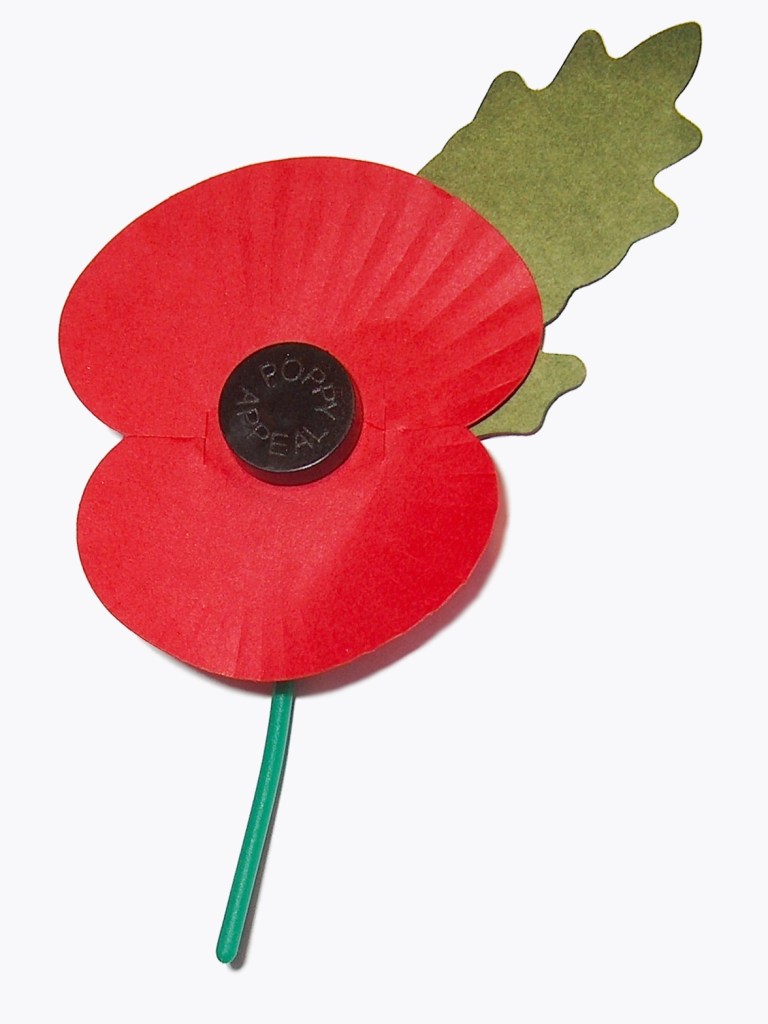
As a watcher of the BBC news channel, one thing that I have been noticing since this month began was that all the newscasters and other people who appeared on the channel have been wearing a lapel pin in the form of a poppy. This week there was also a picture of Britain’s new Prime Minister Rishi Sunak also wearing the same while flagging off the Poppy Appeal.

Why are poppies so much in the news? The crimson poppy flower has become a symbol to honour those who have fallen in battle over the years, and also symbolizes hope and gratitude. The history of this century-old tradition goes all the way back all to World War I.

 As the story goes, during World War I, after a particularly bloody battle in the fields of Flanders in Belgium, thousands of bright red flowers mysteriously appeared. These were common poppies. Interestingly, the common poppy (Papaver rheos) is technically classified a weed which can grow even in the most inhospitable of landscapes. Basically it sprouts naturally in areas where there is massive disruption of the soil and the natural environment, such as bare lands which had been disturbed by the movement of troops and battle equipment. It is believed that during the Napoleanic wars of the early nineteenth century poppies bloomed profusely around the bodies of fallen soldiers, painting the battleground blood red. The same thing must have happened at Flanders.

John McCrae, a lieutenant colonel in the Canadian Expeditionary Forces fighting in Flanders, who had just lost a close friend in the battle, was so moved by this spontaneous bloom that he wrote a poem about the flowers’ resilience and ability to grow in such inhospitable conditions. Titled In Flander’s Field, it was told from the perspective of the fallen soldiers buried beneath the poppies, and honoured the troops who lost their lives in that conflict. The opening lines of the poem:

In Flanders’ fields the poppies blow
Between the crosses, row on row,
That mark our place: and in the sky

The larks, still bravely singing, fly
Scarce heard amid the guns below.

McCrae’s poem was published in London’s Punch magazine in December 1915. It touched a chord in all those who were suffering the losses of loved ones in the war. The poem was read at memorial services, and reprinted it in many publications. Moina Michael, a professor at the University of Georgia in the United States, first came across In Flanders Field in the Ladies Home Journal and was so moved by it that she vowed always to wear a red poppy in remembrance of the lives lost in war. She found some poppies made of fabric in a store; and bought 25 silk poppies for herself and her friends. Once the war ended she herself began to make poppies out of red silk, and sell these to raise money to support the veterans returning from the war. She also lobbied for the poppy to be recognised as a memorial symbol. In 1920 the little red flower was recognized by the National American Legion as the official national emblem of remembrance.

The United States marks this memory on two days– Memorial Day is celebrated in May while 11 November marks Veterans Day. Over time, in the United States, the tradition of the poppy as the symbol of the day has been largely replaced by the yellow ribbon and red, blue and white ribbon campaigns. 

The poppy tradition however took firm root across the Atlantic, and continues to flourish. It first reached France through a French lady Madame Guerin who had seen the introduction of the poppy in America. She thought that selling poppies was a great way to raise money for children who had been affected by the war in France, and she engaged thousands of war widows in making paper poppies, and selling over a million poppies by 1921.  The Royal British Legion adopted the symbol immediately. The idea also spread to the other Commonwealth countries. The first poppy event was held on 11 November 1921.

Thus for over a century now, wearing a poppy has become a symbol of remembering the soldiers lost during World War I in many countries. The flower made of paper or fabric, is generally affixed to the left shoulder to symbolize the act of keeping those who have passed away close to one’s heart; the left shoulder is also one where military medals are worn. 

In the United Kingdom, Canada, France, Belgium, Australia and New Zealand, red poppies are worn in November, especially on 11 November. This date is marked as Remembrance Day as it commemorates the anniversary of the signing of the armistice that formally ended World War I “at the 11th hour of the 11th day of the 11th month” of 1918. This day is now an occasion to remember all those who have lost their lives in all conflicts since World War I.

While the original batch of poppies were bought from France, the first factory to produce poppies in England was set up in 1922, employing five disabled ex-military personnel. Today the Royal British Legion has a factory that employs 50 ex-servicemen all the year round to make poppies for fund-raising events. The poppy has transcended its purely commemorative status to become an object that provides financial stability for the war-affected. 

The annual Poppy Appeal flagged off by the British Prime Minister last week raises funds for The Royal British Legion to support the armed forces community who have served, or are currently serving in the armed forces, and have subsequently been affected physically, mentally or economically by war.

In an age that is even today more war-torn than ever, where young people are laying down their lives in brutal and meaningless warfare in so many parts of the world, this single flower serves as a powerful symbol not only of remembrance, but also a mark of honour, pride and support for those who still give up everything for the security and peace of nations.

–Mamata

Two States are Born

November 1 is marks the birth of two states in the country—Karnataka and Haryana.

Karnataka State Emblem

Karnataka came into being on this date in 1956, after the passage of the States Reorganization Act. It is also called the Unification of Karnataka. During the British Raj, the area now called Karnataka was part of many administrative units. About one-third was part of the Mysore Princely State. The rest was divided among Nizam’s Hyderabad, the Bombay Presidency, the Madras Presidency, and the territory of Kodagu.  The Kannadigas were minorities in all these areas, and felt that their language as well as socio-economic development were not being given priority. Hence started the movement to unite all Kannada-speaking people into one state. The demand started way back in 1856 and got a fillip with the formation of the Karnataka Vidhyavardhaka Sangha in 1890. But it gathered momentum when Aluru Venkata Rao made an appeal in 1903 for the unification of the Kannada-speaking area of Madras and Bombay Presidencies with Mysore State. The movement grew stronger over the years, with a literary thrust and the formation of the Kannada Sahitya Parishad in 1915. The initiative developed in parallel with the Independence struggle, and also gained political strength. The growing strength led to the approval of the formation of the Karnataka Pradesh Congress in 1920.

The Nehru Report of 1928 which appealed for dominion status for India, a federal set up, joint electorates etc., also recommended a separate state for Kannada-speakers. Nothing much happened during the Raj though the Congress pushed for it and the idea had the support of the Maharaja of Mysore. This was probably due to the British not being quite sure how they would manage this. At Independence, the portions of Karnataka that were a part of Nizam’s Hyderabad did not become free along with the rest of India, because the Nizam did not accede. It was only on 17 Sept 1948 that they became part of free India after the Nizam was overthrown. But at this point, neither the Congress nor the Maharaja showed any urgency in the matter of creating the State of Karnataka. In fact, it was only after violent protests, strikes and fasts that the unification was approved in Parliament, and the State of Mysore came into being. It was renamed Karnataka on November 1, 1973.

November 1 is marked as Karnataka Rajyotsava, and is a holiday in the State.

Harayana State Emblem

Haryana too was formed on 1 November 1966, 10 years after the unification of Karnataka. It was formed by the partition of the former state of East Punjab into Punjabi-speaking Punjab, and Hindi-speaking Haryana. In fact, the original clubbing of Haryana with Punjab was arbitrary. The area had been ceded to the East India Company in 1803. It passed to the British, who made it part of the North-Western Provinces and then merged it with Punjab in 1858. But it was never a happy union. The people of both Punjab and Haryana wanted the separation, though the Punjab side was more vociferous. The movement for separation started early in the 1900s, led by stalwarts like Lala Lajpat Rai and Asaf Ali in the early days, and spearheaded by the Punjabi Suba continuing into the ‘60s. The Union Territory of Chandigarh serves as the capital of both the states. Which is a another story!

Celebrating the spirit of federalism, diversity, many languages and cultures!

–Meena