Forts, forts, forts…

A visit to Rajasthan leaves one with a head swimming with visions of elephants and camels, turbans and bandhini saries, sweets and more sweets .  And of course forts and palaces. I spent last week at Rajasthan, and so obviously these grandiose structures are very much on my mind.
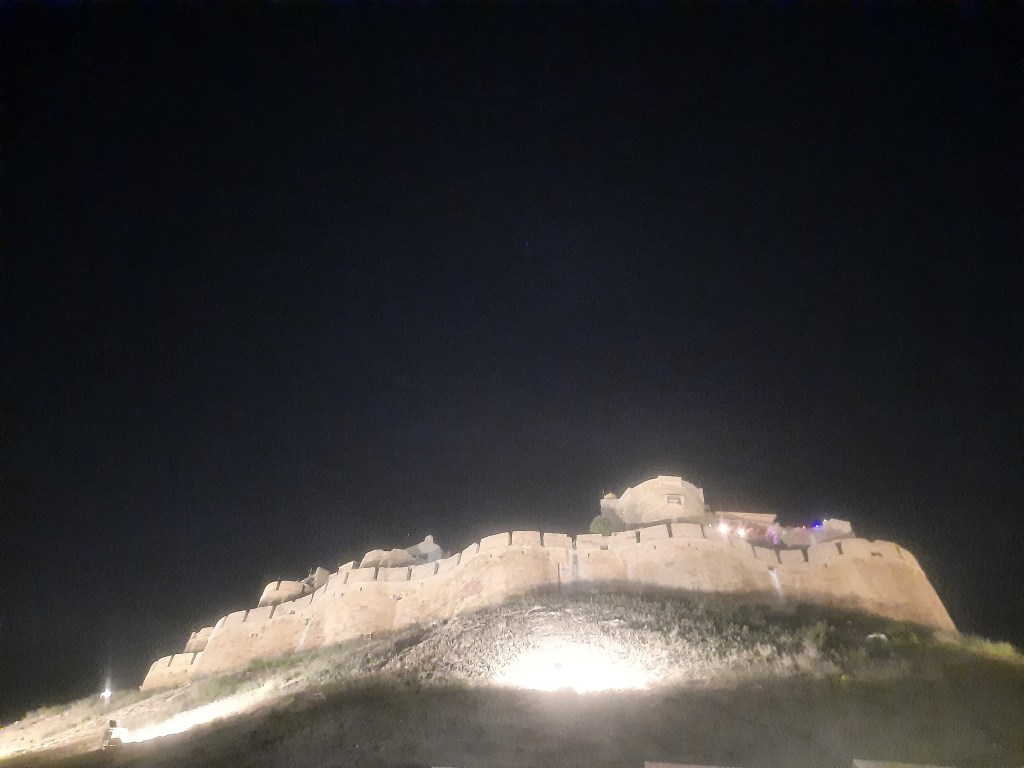
Jaisalmer Fort by Night

Which got me wandering: what are forts vs. fortresses vs. castles vs. palaces,? Well, here we go:

A fort is not a residence, but rather a military fortification. These structures were built specifically for war situations, and used to defend specific territories. A fortress is similar, but it is a larger fortified area than a fort.

A palace is primarily a residential place, occupied by royalty, heads of state, or very rich and important people. They are not fortified against attacks, but rather designed for comfort and elegance, and are often status symbols. 

Castles are large residences or a group of large buildings that have been constructed with strong walls to protect against attacks. Basically, castles are fortified residences. 

Apparently, there are about a thousand forts in India. Going strictly by the book, most forts in India are either fortresses or castles. But the British when classifying them, used the conventional British system and called them all forts.  The oldest surviving fort is thought to be the Qila Mubarak in Bathinda, Punjab, whose origins go back to the period 90-110 AD. This Qila was built by Raja Deb, a Rajput king.

That is a pretty ancient fort! But the thinking about forts goes back to even earlier times. Kautilya, the man who wrote prodigiously on all aspects of governing kingdoms, as far as the 3rd Century BC, had discussed various types of forts and fortifications.

‘On all the four quarters of the boundaries of the kingdom, defensive fortifications against an enemy in war shall be constructed on grounds best fitted for the purpose: a water-fortification (audaka) such as an island in the midst of a river, or a plain surrounded by low ground; a mountainous fortification (párvata) such as a rocky tract or a cave; a desert (dhánvana) such as a wild tract devoid of water and overgrown with thicket growing in barren soil; or a forest fortification (vanadurga) full of wagtail (khajana), water and thickets.’ he says in Book II of the Arthashastra in a section which elaborates “The Duties of Government Superintendents”. He goes into great detail not only about the construction of the fort, ramparts, towers, turrets, gates  and staircases, but even to the extent of specifying the width of various types of roads within the forts which would make for easy movement in war and peace. He details out how the spaces within the fort should be planned, and where which facility should be set up.`

However strongly fortified a fort, the danger of sieges was always present. It was for this reason that Chanakya laid down that: ‘There shall be a water-well for every ten houses. Oils, grains, sugar, salt, medicinal articles, dry or fresh vegetables, meadow grass, dried flesh, haystock, firewood, metals, skins, charcoal, tendons (snáyu), poison, horns, bamboo, fibrous garments, strong timber, weapons, armour, and stones shall also be stored (in the fort) in such quantities as can be enjoyed for years together without feeling any want. Of such collection, old things shall be replaced by new ones when received.’

Well, I suppose all this detailing could possibly have been done by any conscientious bureaucrat. What really gives the Chanakya twist to the discussion on forts is Book XIII, “Strategic Means to Capture a Fortress”. It mentions such tactics as: Sowing the Seeds Of Dissension; Enticement Of Kings By Secret Contrivances; The Work Of Spies in a Siege; The Operation of a Siege; etc.!

Wow! India not only has the most amazing forts, it probably has the oldest document guiding their conception!

–Meena

Cufflinks are a Man’s Best Friend

It seems a little unfair to insist that only women crave for diamonds and gold and jewelry. Down the ages, men have worn a lot of jewelry—one only has to look at paintings and pictures not only of Indian Kings and nobles, but of rich people from around the world. If the Koh-i-noor is on the crown of the Queen of England, the Cullinan (the largest gem quality diamond ever found on earth)  is on the scepter of the King of England, and Cullinan II, the second largest diamond, is on his imperial state crown.

Today, male jewelry is back with a bang. One only has to look at rappers and their gold chains. Closer home, apart from being a means of self-expression, it is both a way to show off wealth, as well as to appease the gods. The popularity of the navaratna ring, which is supposed to cure all ailments, bring wealth and good fortune, is more often seen on men than women. As also rudraksha bracelets and chains.

Of course it’s not all about flashy chunky stuff which sometimes runs into kilos (think Bappi Lahiri). There is also well-designed, subtle stuff.

From crowns to chains to jeweled collars, to bracelets, pendants, brooches, ear rings, to ankle adornments, there have been male versions of almost every piece of jewelry.

However, cufflinks are fairly unique in that they are quintessentially male jewelry rarely worn by women.  There has always been a need for some device to fasten shirt cuffs. In the 13th century, men used ribbons to do this. It was in the early 17th century that cufflinks as we know them today started to emerge. King Charles II popularized them, but they still remained very expensive items which were handmade, and therefore confined to people who could afford them.

It was only in 1876 that George Krementz, a German immigrant, adapted the manufacturing process used to make bullets to make cufflinks, and started mass production. And from that point on, they gained wide usage and popularity.

A cufflink has three parts:

The front face – the top of the cufflink, which is the decorative part, with a design, gemstone, or any other attractive design.

The post – the part that goes through the cuff holes and is attached to the toggle.

The toggle – the bottom part of the cufflink, which locks the link in place and prevents the cufflink from slipping out of the cuff holes

Cufflinks

While a cufflink may be a cufflink to many of us, apparently there are several types:

Whale Back cufflinks have a straight post, a flat head, and a tail shaped like a “whale” flips completely flat against the post.

Fixed back or fixed stud cufflinks do not have any moveable hardware. This means putting them in requires that they are manually secured by pushing the backing through the buttonhole. 

Bullet back cufflinks have a metal bar that attaches to the bridge of the cufflinks. This metal bar, which has a bullet aesthetic, rotates 90 degrees.

Chain link cufflinks are made of two usually identical faces attached by a chain.

Stud or button cufflinks look and work like studs.

Ball return cufflinks are those whose rear features a largish ball, attached to the decorative face by either a chain or curved post.

Locking Dual-Action cufflinks are secured shut with a mechanism similar to that of a wristwatch.

Silk Knot cufflinks are made entirely from silk, with two identical knots attached to a cord.

As I look around me, fewer and fewer men seem to be wearning cufflinks, something I felt sad about, because this is definitely an elegant addition to men’s attire. But a report on the cufflinks market says that the market is at $1.52 billion, and predicted to grow at 5.9% over the next few years. So maybe their demise is not so imminent after all!

Predictably, China is the biggest exporter, but surprisingly, India is one of the importers!

I shall surely look out more carefully to spot cufflinks around me!

–Meena

Trendhim.com; Nextmsc.com

A Cry for Children

This week Meena wrote about Children’s Day in India which is celebrated on 14 November each year, marking the birth anniversary of Jawaharlal Nehru. It is in this same week that another children’s day is celebrated. This is Universal Children’s Day which is celebrated on 20 November every year to mark the date when the United Nations General Assembly adopted, in 1989, the Convention on the Rights of the Child.  

There had been previous discussions about children in the international community. Declarations on the rights of the child had been adopted by both the League of Nations (1924) and the United Nations (1959). Also, specific provisions concerning children had been incorporated in a number of human rights and humanitarian law treaties. However amidst global reports of children bearing the brunt of grave injustice in many forms–from health and nutrition, to abuse and exploitation, it was felt that there was a need for a comprehensive statement on children’s rights which would be binding under international law.

In response to this the UN initiated a process of consultation which led to the drafting of a comprehensive document keeping the child as the focus in all realms—civil, political, economic, social and cultural. The Convention on the Rights of the Child was adopted by the UN General Assembly on 20 November 1989 and entered into force in September 1990.The Convention is the most rapidly ratified human rights treaty in history; more countries have ratified the Convention than any other human rights treaty in history. Three countries, the United States, South Sudan, and Somalia, have not ratified the Convention.

The Convention outlines in 41 articles the human rights to be respected and protected for every child under the age of eighteen years.

The articles can be grouped under four broad themes:

Survival rights: include the child’s right to life and the needs that are most basic to existence, such as nutrition, shelter, an adequate living standard, and access to medical services.

Development rights: include the right to education, play, leisure, cultural activities, access to information, and freedom of thought, conscience and religion. The term ‘development’ includes not only physical health, but also mental, emotional, cognitive, social and cultural development.

Protection rights: ensure children are safeguarded against all forms of abuse, neglect and exploitation, including special care for refugee children; safeguards for children in the criminal justice system; protection for children in employment; protection and rehabilitation for children who have suffered exploitation or abuse of any kind.

Participation rights: encompass children’s freedom to express opinions, to have a say in matters affecting their own lives, to join associations and to assemble peacefully. Children have the right to be heard and to have their views taken seriously, including in any judicial or administrative proceedings affecting them. As their capacities develop, children should have increasing opportunity to participate in the activities of society, in preparation for adulthood.

The Convention establishes in international law that States Parties must ensure that all children – without discrimination in any form – benefit from special protection measures and assistance; have access to services such as education and health care; can develop their personalities, abilities and talents to the fullest potential; grow up in an environment of happiness, love and understanding; and are informed about and participate in, achieving their rights in an accessible and active manner.

Even as the world will be reminded of the Convention on the Rights of the Child this week, this year is tragically one where these very rights are being destroyed minute by minute. More than one hundred children are killed every day in the ongoing war in Gaza and the West Bank. Thousands more are believed to be buried under the rubble of entire townships razed to the ground. Hundreds are dying in hospitals which are being ruthlessly attacked from the air and ground, including premature babies who have not even yet had a chance to take a breath on their own.

Never before in history have so many children faced the horrors of relentless violence, hunger, thirst, displacement, and so many as yet untold terrors. What will be the future of those who do survive this new holocaust?

Which of the Rights listed above will we have the courage to place before them? How can the world appease them, and our own consciences, with a flourish of the Convention on the Rights of the Child?  

In the words of Ghassan Kanafani, eminent Palestinian activist, essayist, novelist, who was killed by a car bomb in 1972 at the age of 36 years.

I wish children didn’t die.

I wish they would be temporarily elevated to the skies until the war ends.

Then they would return home safe, and when their parents would ask them: “where were you?”

They would say: “we were playing in the clouds.

How much longer? How much further?

–Mamata

A Prime Minister, A Cartoonist, and A Dolls’ Museum : Marking Children’s Day

We celebrate November 14th, the birth anniversary of our first Prime Minister Pandit Jawaharlal Nehru, as Children’s Day. This is because not only did he love children, but children loved him right back! They called him ‘Chacha’—a name that stuck even with adults.

Nehru understood children and the need for loving and carefully nurturing them, as also their importance to the future of the nation.  ‘Children are like buds in a garden and should be carefully and lovingly nurtured as they are the future of the nation and citizens of tomorrow. The children of today will make the citizens of tomorrow. The way we bring them up will determine the future of the country’ he said. He also had a clear vision on the purpose and role of education: ‘The object of education is to produce a desire to serve the community as a whole and to apply the knowledge gained not only for personal but for public welfare.’

A contemporary who also loved and valued children was Shankaran Pillai, India’s first political cartoonist. Shankar, as he was called, and Nehru, enjoyed a great friendship, though the cartoonist featured the PM in over 4000 cartoons, many of which were merciless. Nehru was a tall leader—not only could he laugh at himself but he also appreciated the need to do this: ‘It is good to have the veil of our conceit torn occasionally’. He urged the cartoonist on, saying ‘Don’t spare me Shankar.’ Nehru even used to enclose Shankar’s cartoons in his letters to his daughter Indira Gandhi when he was in prison.  

Those were different times, those were different people!

Shankar founded the Children’s Book Trust (CBT) in 1957 to ‘to promote the production of well written, well illustrated and well designed books for children.’ CBT has been bringing out high-quality books in English and Indian languages and these are highly subsidized, to make them widely accessible. In 1968, CBT started a magazine called Children’s World. An International Children’s Competition for Painting and Writing has been on-going since 1951. These were pioneering initiatives.

Shankars Dolls Museum

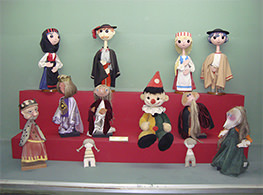
But maybe the most innovative idea was The Shankar’s International Dolls Museum, which has now grown into one of the largest collections of costume dolls anywhere in the world, housing over 7500 dolls from 85+ countries. And it all started with a single doll—sometime in the ‘fifties, the Hungarian Ambassador gave Shankar a typical doll from his country, to give away as one of the prizes in the International Children’s Competition. So fascinated did Shankar become with this doll that he started collecting costume-dolls whenever he travelled.

He did not just do this for his own enjoyment. He often held exhibitions so that children of all strata could see and enjoy them. Pandit Nehru and Indira Gandhi visited one such event, and Indira Gandhi suggested then that Shankar should set up a permanent museum of these dolls. The idea slowly crystallized, and the Museum was inaugurated in 1965. The building where it was housed was appropriately named Nehru House. Nehru gifted a large number of dolls to the Museum and these were the core around which the collection was built. Subsequent PMs as well as Ambassadors and visiting dignitaries from various countries also added special and unique dolls from their nations.  And thereby, a landmark institution was created.

While these were pioneering ideas in their times, the question that needs to be asked is how can the Museum be made relevant for today? How can modern understanding of museums and collections be brought in to revitalize the display and hold the attention of today’s children? The collection is unique ,and the rich collection of artefacts would be a dream for many a researcher to delve into –how can that be facilitated?

We are sitting on a treasure-trove. If we respect the legacy left by Pandit Nehru and Shankar, we have a duty to use this better.

Happy Children’s Day!

–Meena

Pic from https://www.childrensbooktrust.com/dollsmuseum.html

Story in a Teacup: Wagh Bakri Chai

In Gujarat tea is literally ‘the cup that cheers’ at any time of the day or night. From the age-old kitlis the small roadside tea stalls where the sweet milky chai is constantly boiling on the hissing kerosene stove, to the upmarket ‘tea lounges’ where the menu offers a range of fancy artisanal teas, people of all ages and walks of life hang out. Tea is the essential companion to the range of farsans (savoury snacks) that are the identifying hallmarks of Gujarati food.  

While Gujarat is geographically almost across the country from the tea producing states in the east and south, it is probably the biggest consumer of tea leaves. The large-scale sale of tea leaves in the region began with the crossing of continents by a Gujarati entrepreneur Narandas Desai. The company he founded was to grow into one of the largest tea companies in India—Wagh Bakri chai.

The story begins in 1892 when Narandas Desai crossed the ocean to South Africa with the dream to start a business. He took on lease 500 acres of tea estates near Durban, and threw himself with focus and passion into learning the intricacies of cultivating and producing tea, as well as the business of selling it. While he was there he came in touch with Gandhiji who was beginning his own journey of learning to live and work on foreign soil. The two mutually respected each other’s work, values, and personal and professional ethics. They also equally faced the challenges of racial discrimination, which eventually led them both to return to their home country.

Narandas Desai returned to Gujarat in 1915, leaving behind a successful tea business. He came home with very little material wealth, but carrying a prized letter from Gandhi which stated: “I knew Mr Narandas Desai in South Africa, where he was for a number of years a successful tea planter”. He also carried in him the strong Gandhian ethic of hard work and honesty, as well as a sound knowledge of teas and the tea business.

After working briefly at a tea estate in Maharashtra, Narandas moved to Gujarat. He took a loan to establish, in 1919, the Gujarat Tea Depot, the first store in Ahmedabad to sell wholesale loose tea. The original clientele were workers in Ahmedabad’s many textile mills. The tea was procured from estates in different parts of the country; Narandas, from his South Africa experience had learnt how difficult it was to own and run a tea estate. As business grew, Narandas began sourcing and blending better varieties of tea leaves, and expanding his clientele.

In 1934, for the first time, the Gujarat Tea Depot, started selling tea under its own brand. The name selected for the brand was Wagh (tiger) Bakri (goat). The twinning of two disparate characters was intended to represent social equality—tiger representing the upper class and goat representing the lower classes. This was visually represented by a picture of a tiger and a goat drinking tea from the same cup. Here too Gandhi’s influence was visible. The company was not only a swadeshi one, its logo also indicated the support of the movement against caste-based discrimination. The unusual logo became an icon for the company’s ethos, and continues to be so even today.  

Narandas Desai’s three sons Ramdas, Ochavlal amd Kantilal joined their father in managing the growing business. The company also started an office in Kolkata to oversee and check the purchase of tea at auction centres there. Till 1980 Gujarat Tea Depot continued to sell tea in wholesale, as well as retail through 7 retail outlets. But by that time they also foresaw the burgeoning market for packaged teas. In response, the group launched Gujarat Tea Processors and Packers Ltd. in 1980, introducing packaged tea. Initially people were sceptical and hesitant to buy packaged tea as they were used to feeling and smelling loose tea leaves before buying. 

In the early 1990s, the company decided to introduce the concept of tea bags. This again, was uncharted territory. In a culture where boiling tea thoroughly was the norm, the idea of instant ‘dip dip’ tea was alien. Wagh Bakri took the risk and imported state-of -the-art tea bag machines from Argentina. The introduction of tea bags marked a paradigm shift in the tea scene.

The company continued to experiment and innovate, introducing new dimensions and products to the tea drinkers. All the generations of the Desais engaged totally in carrying Narandas’s vision to new heights and breadths, introducing new varieties into the packaged tea market. Through the journey they continued to adhere to their founder’s strong commitment to quality and affordability, targeting “decent profits, but not profit maximisation at any cost to company image and standing”. Even in the face of stiff market competition and many financial pressures, their product range has always carried an economically-friendly price tag. 

But before the product reaches the shop shelves, it is preceded by a great deal of research and evaluation. The research includes understanding the specific tastes of the region where the product is to be introduced. It even includes a study of the local water and milk commonly used for brewing the tea. Every region, if not every home, has its own preferences and tea-brewing processes. The Wagh Bakri team invests a great deal in understanding the preferences of its consumers and putting together suitable blends.

The ultimate test is the tea tasting in which the company’s directors are personally involved. The company’s headquarters in Ahmedabad has a large Tea Tasting Department. Tea samples procured from auctions of different estates, saucers of milky teas blended according to the quality of local water and milk, and weighing scales are systematically arranged. The company’s directors personally taste each sample and rate it according to colour, strength, taste and briskness. On some days 400-500 samples of tea are tasted. There is no compromise on taste and quality. Little wonder then that 50 per cent of the tea consumed in Gujarat is from Wagh Bakri.

While continuing to cater to the traditional tastes, the company is also aware that with international exposure, the younger generation is open to more flavours and trends. In response the company has launched a wide range of offerings from Oolong tea to Matcha tea. It was also the first to offer suitable settings to savour these gourmet teas by setting up Tea Lounges in Ahmedabad in 2006, and later in a few other cities.

The corporate office of Wagh Bakri was inaugurated in 2006. A fitting tribute to the founder whose vision, dedication and trust guided the company for over a century. While largely confined to Gujarat for nearly a century, the company started selling its tea in other states as well between 2003 and 2009. Wagh Bakri is not pan-Indian in its sales, but even with the limited states that it sells in, it is the third largest tea brand in India. It also has an international presence. As its directors believe, it is more than a tea company, it is a creator of connections and a nurturer of relationships.

Wagh Bakri’s executive director, and one of its key tea tasters, Parag Desai recently passed away at the age of 49, after a brain haemorrhage caused by a freak accident. A sad loss for the Wagh Bakri family of tea drinkers across the world. 

–Mamata

Nobel Peace Laureate: Bertha von Suttner

The Nobel Peace Prize for 2023 has recently been awarded to Narges Mohammadi for her fight to promote human rights and freedom for all, especially in the context of the oppression of women in Iran. Her brave struggle has come with tremendous personal costs. She becomes the 18th woman to be awarded this prize since the first Nobel Peace Prize was awarded in 1901.

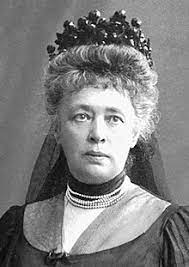
The first woman recipient of the Nobel Peace Prize was Bertha von Suttner who was awarded in 1905. The trajectory of her life, from aristocracy to advocacy, is indeed interesting. She was born in 1843 in Prague which was then a part of the Hapsburg Empire. As Countess Bertha Kinsky von Wchinitz she grew up in a family with a military history. Her father died before she was born, and she was brought up by her widowed mother in less than affluent circumstances; tutored by a cousin in languages and music, and reading voraciously. At the age of 30 she decided to move away and earn for herself, taking on a position with Baron Suttner’s family in Vienna as teacher-companion to his four daughters. It is here that the Arthur the youngest son of the family and Bertha fell in love. However the family was strongly opposed to their marriage. Thus Bertha left for Paris where she became secretary and housekeeper to Alfred Nobel. The two became close friends and remained so, corresponding frequently. It is believed that Bertha played a significant role in inspiring Alfred Nobel to establish the Peace Prize.

Bertha however returned after a short stay in Paris to elope with Baron Arthur von Suttner, even in the face of his family’s opposition. The young couple moved to the Russian Caucasus (what is Georgia today) where they lived for nine years earning a living by giving language and music lessons, and eventually as journalists who wrote about the increasing ethnic conflicts in Russia and Central Europe. During this time Bertha also wrote several novels, including Es Lowos, a description of their life together. Her writing began to reflect her thoughts about conflict and peace.

In 1885, following reconciliation with Arthur’s family, the couple moved back to Austria, and then Paris. It is here that they learned about the International Arbitration and Peace Association in London, and similar groups in Europe that were engaged in promoting the ideal of arbitration and peace in place of armed force. It is then that Bertha’s work started to move away from the purely literary. Wanting to contribute in her own way to the growing peace movement, Bertha wrote a novel, based on careful research, in which the heroine suffers all the horrors of war. The book Die Waffen nieder (Lay Down Your Arms) was published in 1889. This book, criticizing many aspects of the times, was among the first to foretell the results of exaggerated nationalism and armaments. The pacifist novel made a tremendous impact across the world. It was published in 37 editions and translated into 12 languages before World War I.

Bertha von Suttner transitioned from being simply an author to a peace activist. She became an active leader in the peace movement, devoting a great part of her time, her energy, and her writing to the cause of peace – attending peace meetings and international congresses, helping to establish peace groups, recruiting members, lecturing, corresponding with people all over the world to promote peace projects. She supported the foundation, in 1889, of the Inter-Parliamentary Union, a global inter-parliamentary institution which was the first permanent forum for political multilateral negotiations. In 1891 she helped form a Venetian peace group; initiated the Austrian Society of the Friends of Peace, of which she was for a long time the president, and attended her first international peace congress. She also took on the editing of the international pacifist journal Die Waffen nieder! (Lay Down Your Arms!), named after her book, from 1892 to 1899.

After her husband’s death in 1902, Bertha moved back to Vienna. She worked as a writer, travelled, and gave lectures. 1904 she was invited to address the Third International Congress of Women in Berlin. She continued to campaign for peace, and argued that a right to peace could be, and should be, international law. She dedicated her life to peace and disarmament and used her position as a writer, journalist, feminist, lecturer, and political activist to promote the belief that peace is a solution that is both necessary and obtainable. At the dawn of the 20th century, few could write or speak about peace and disarmament with greater authority than Bertha von Suttner.

On 10 December 1905 Bertha von Suttner became the first woman to be awarded the Nobel Peace Prize as a recognition for her life-long fight for peace.

Bertha continued her active dedication to the cause even as she grew older and frailer with cancer. She passed away on 21 June 1914, just a week before the assassination of Archduke Ferdinand and his wife in Sarajevo, the spark which triggered World War I. In the hundred years since, the world has witnessed the horrors of two world wars. And today, violence and war mark every continent on earth. In this period, several women have followed in Bertha’s footsteps, as they fight the continuing battles against violence and oppression in different parts of the world.

Just as this year’s Nobel Peace Laureate was announced, we are seeing the ravages of wars in Gaza, and Ukraine, which may well plunge the world into a cataclysmic situation. A time, surely, to recall the words of Bertha von Sutter: One of the eternal truths is that happiness is created and developed in peace, and one of the eternal rights is the individual’s right to live. The strongest of all instincts, that of self-preservation, is an assertion of this right, affirmed and sanctified by the ancient commandment: Thou shalt not kill.

–Mamata

You’ve Got Mail!

On October 9th, the world marked World Post Day, to commemorate the establishment of the Universal Postal Union in Bern, Switzerland on this day in 1874. Designated by the UN , ‘the purpose of World Post Day is to create awareness of the role of the postal sector in people’s and businesses’ everyday lives and its contribution to the social and economic development of countries.’ Emphasizing the importance of postal services, the UN says, ‘Post offices play a crucial role in fostering cohesive, inclusive, connected communities. Presently, over five million postal employees are entrusted with a variety of essential and personal items, from messages, gifts and goods, to money and medicines.’

India’s history of postal services long precedes 1874, with the East India Company opening its first post office in 1727. This was essentially used for the company’s own posts. The postal services were later taken over by the British Government and the services opened to the public. Many of the princely states as well as the Portuguese, Dutch and other colonial powers also ran their own postal services.

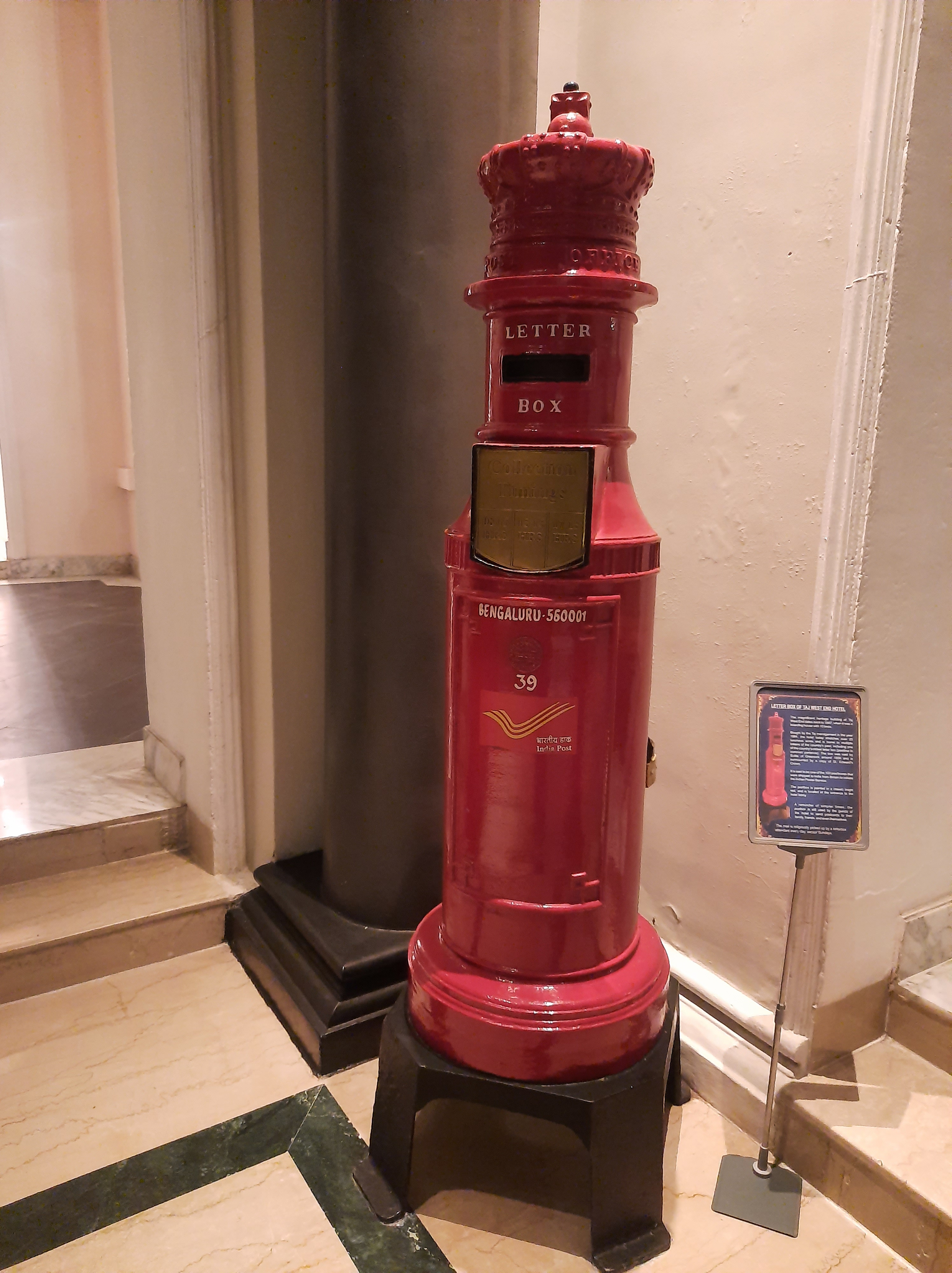
Taj Westend Postbox
India’s oldest functional post box at Taj Westend, Bangalore. Still cleared everyday except Sundays and holidays!

For many people today, posts and post offices don’t seem very relevant. I visit the post office more for investing money in some of schemes offered by them—they are safe and offer a decent interest rate. I haven’t posted a letter in decades, and in fact am suspicious of the few post boxes I see—are they ever cleared, I wonder. I do receive magazines and bulk posts, which are obviously not posted but given in at the post office. The one service I do occasionally use is the Speed Post service—takes about as long as non-premium couriers, and costs a lot less (to the extent that some courier companies use speed-post services to get their packages over the long distance, while they just do the collection and final delivery!).

But the postal service is obviously still very important in our country, going by the numbers. Even today, we have over 1, 55,000 post offices, and Inda’s Dept. of Posts has the most widely distributed postal network in the world. Close to 13.5 crore registered posts and over 30 crore speed posts have traversed the country during the year.

But the non-postal services of the post offices seems even more significant. They act as Aadhar updation centres, as Passport Seva kendras, as a means of paying utility bills and for distribution of direct benefit transfers. Apart of course from the various savings schemes and banking activities.

Yeoman service indeed.

But that is not to say that there is not tremendous scope for improvement, which is obvious even to the layest of lay-people. For instance, I subscribe for a weekly magazine, but I am lucky if I get 3 of 4 issues in any given month. And even then, the deliveries are bunched up—the postman may deliver 2 or 3 together because he can’t be bothered to come every week. So obviously some lacuna in monitoring systems.

And often I end up opting for couriers rather than speed-post for various reasons. The courier will come to my doorstep to pick up the package. And then there are the other flexibilities—speed posts will be accepted and delivered during working hours, on working days. But my packages get ready at the 12th hour, and the post offices shut by then. And so couriers are the only way to go.

And a visit to the post office is an activity for which you need to set aside at least a couple of hours.  Forms for any of the schemes are to be filled manually, and take 10-15 minutes to fill. Nor are they very clear, which means they often have to be re-done. The IPPB app is confusing and takes getting used to. The password expires ever so often and constantly needs to be reset. (That being said, I sincerely appreciate the patience of the postal staff in dealing with the dozens of people and scores of questions. )

India’s postal services definitely need to be re-imagined for tomorrow. We are the technology capital of the world, but it does not seem that adequate thought has gone into using technology in this sector.

But the amazing network created into the remotest parts of the country has the potential for providing the backbone for citizen services that can touch everyone, especially those in under-served areas.

So with three cheers for India Post!

–Meena

Lighthouses: Beacons of the Coastline

As the country gears up for Diwali, the Festival of Lights, India recently celebrated its first Lighthouse Festival. This is the first time that the spotlight is on lighthouses in India. The festival which was flagged off at Goa’s historic Fort Aguada, is aimed at rejuvenating the rich maritime history of 75 iconic lighthouses of the country, and promoting lighthouses as tourism destinations.

In a country which is so rich in the wide range of world-renowned monuments, spanning different eras and styles of architecture, there has not been much attention on lighthouses as heritage structures. Although there are nearly 200 lighthouses dotting the coast of India, not much is known about them, nor are they high on tourists’ itineraries. However the history of lighthouses in India is long and interesting.

The building of lighthouses in India is generally attributed to the colonial rule. The British, as well as the Portuguese and Dutch who ruled some of the coastal parts of the empire developed and constructed lighthouses at strategic points along the coastline. But India’s maritime history goes back much further, and where ships sailed, there must have been systems to guide them. There are sources that indicate that lighthouses also existed long before.

It is believed that lighthouses were built in India in the 3rd century BC by Emperor Asoka who was a contemporary of Ptolamy II, the Egyptian king who built the famous lighthouse—the Pharos of Alexandria which is the first known lighthouse, constructed between 300 and 280 BC. This was one of the Seven Wonders of the Ancient World.

The first known lighthouse in India was at Puhar Port in Kaveripatnam, an ancient South Indian port city. The famous Tamil writer Illango Adigal of 5-6 century AD in his book Silappadhikaram (one of Tamil literature’s Five Great Epics) had explained in detail about the beautiful lighthouse on the Bay of Bengal coast, and the numerous ships anchored at Puhar port, which was doing brisk business those days.

After the invasion of the Indian subcontinent by the Portuguese, Dutch and the English, trade and commerce through sea increased several folds, and over a period of time, lighthouses were built all along the coastline of the Indian subcontinent to guide the seagoing vessels as they approached the coast. These lights were maintained by the local rulers and port authorities.

As ports became busier, the need was felt for more navigation lights. At Colaba, the entrance to Bombay, the chief seaport of the time, the light was provided by a moored light vessel off the coast in 1842. In 1847, first lighthouse was constructed on Colaba point with a revolving light that gave a bright flash every two minutes. The next lighthouse to be constructed was at Karachi port in 1851. This was followed by a lighthouse on Piram Island in the Cambay Gulf, and then on the north mouth of the river Tapti, which was called the Hazira lighthouse. In 1856 a number of other lighthouses were constructed at important points along the western coastline of India. Among these was the lighthouse at Fort Aguada in Goa, which was the venue of the recent Lighthouse Festival.

The construction of lighthouses continued further south along the Malabar Coast through the nineteenth century. A similar exercise was also under way along the eastern coastline from Calcutta down to Madras. As the number of lighthouses increased, it became essential to establish an authority to control and maintain these lights. After detailed discussions and consultations, it was decided to constitute a Lighthouse Department in British India (with jurisdiction extending from Aden to Rangoon). The Governor General of British India gave approval to the Lighthouse Bill on September 21, 1927, and the Lighthouse Department was constituted. To commemorate this, every year 21 September is celebrated as Lighthouse Day in India.

Initially the department had control of 32 lighthouses. Today India has nearly 200 lighthouses, some of which are centuries old, which continue to be regulated by the Lighthouse Act of 1927. These range from the ancient now crumbling edifices; those painted with traditional red and white stripes, to imposing modern steel structures. Only a few of the original structures remain, some have been repaired as heritage structures, while several new automated towers have come up. Many are equipped with modern radar infrastructure, and equipment to collect weather data. The lighthouses are administered by the Directorate General of Lighthouses and Lightships, under the Ministry of Ports, Shipping and Waterways of the Government of India.

For many of us lighthouses are something that we associate with stories of smugglers, shipwrecks and rescues, or one of the many sights that we may take in as part of a seaside holiday. My own association with lighthouses stems back to the adventures of Enid Blyton’s Famous Five; and the rotating light that arched through the night sky on our summer holidays in Diu. But there is a serious global community of lighthouse lovers who study lighthouses. The scientific study of lighthouses and signal lights, their construction and illumination is called Pharology or pharonology. The term has its roots in the ancient Greek pharos (meaning lighthouse) and logos (discourse). Pharos was also the name of the famed lighthouse of Alexandria. These lighthouse enthusiasts or pharologists, not only study and document lighthouses around the world, they also work to promote the cause of lighthouses and light vessels. They are members of the World Lighthouse Association, and share their passion through the Lighthouse Digest.

D Hemachandra Rao, a retired engineer of Chennai turned his hobby into an ‘epic lighthouse yatra’ by journeying across India to visit and document every functional and non-functional lighthouse on the Indian coastline. Starting when he was in his mid-seventies, Rao travelled extensively along India’s coastline, sharing his descriptions and pictures of his findings through his Facebook Timeline. Known as the Lighthouse Man, Hemachandra Rao passed away in June 2022 at the age of 82, leaving behind a rich legacy in the form of a Maritime Heritage Museum that he set up in his house in Chennai. The museum includes hundreds of photographs of the lighthouses that he had visited.

Mr Rao believed that lighthouses had relevance even in the age of satellite technology. He said “the small light, coming from distance, still navigates the humble fishermen… even today we hear stories of fishermen coming to the shores safe led by the small light”.

There is no fog so dense, no night so dark, no gale so strong, no mariner so lost but what its beacon light can rescue. It beckons through the storms of life. It calls, ‘This way to safety; this way to home’. Thomas S Monson

–Mamata

More Than Just a Library

Recently there was an article about heritage libraries in India and how some of these are in the process of being restored, renovated, and upgraded so that the rich history and legacy could be shared with a new generation of bibliophiles. Among these is Mumbai’s David Sassoon Library established in 1870 and the National Library in Kolkata the roots of which can be traced back to 1836.

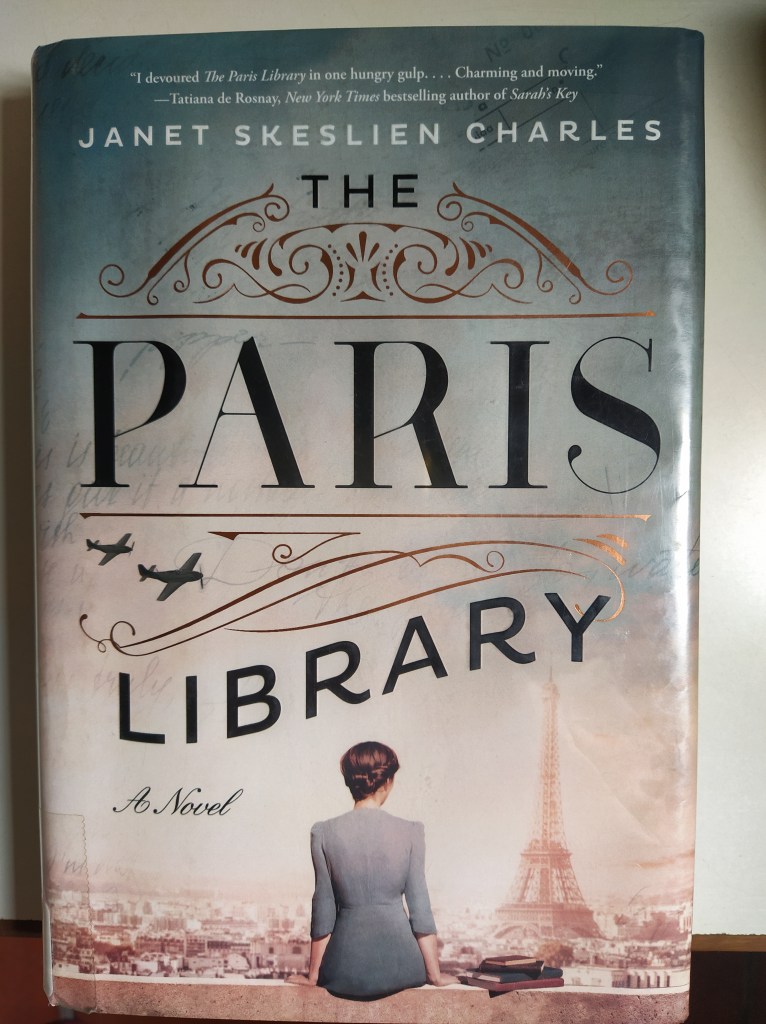
Coincidentally, around the same time I was reading a novel called The Paris Library. While the story and the two main protagonists are fictional, the library around which it revolves, and most of the other characters that are part of the story are based on real people and places. This was the American Library in Paris or ALP as it was called.

As a curious bookworm I was intrigued by this and decided to investigate further into the ALP. I discovered a fascinating history.  

The seeds were sown during World War I. This was when thousands of young Americans were fighting with the Allies on the battlefronts in Europe. At this time when the main supply to the front was in the form of arms or medical equipment, the American Library Association felt that the troops needed something to engage them mentally in the midst of their grueling physical existence. So it collected books and periodicals donated by American Libraries and personal collections and shipped these to France to the Library War Service from where they were sent to military bases, training camps and hospitals where American soldiers were fighting. It is estimated that around 2 million books and five millions periodicals were shared in this way with American soldiers fighting the war far from home. One of the centres which housed part of the collection was also in Paris.

When the war ended, there was a discussion about what to do with the books that that been an important support all through the war, not just for American servicemen. During this period the citizens of Paris had also become fond of browsing through the collection of English language books in open stacks (an uncommon feature of European libraries at the time), and international newspapers and periodicals in the Paris centre. Thus although there was no plan to establish a permanent library in Paris this idea seemed to evolve and slowly take root. The thinking was that the library could also serve as a functional model to demonstrate American library methods, especially the use of the Dewey decimal system and open stacks.

Thus the decision was taken not to ship the books back but to establish a permanent library in Paris in the spirit of Atrum post bellum, ex libris lux: After the darkness of war, the light of books. This also became its motto. There was however the question of funds needed to establish and run the library, but the idea had many advocates, and contributors from all walks of life, in America and in Paris united to pledge every kind of support. This was probably an early example of crowd funding.

As a result the American Library in Paris was founded in 1920 by the American Library Association and the Library of Congress with a core collection of those wartime books. Its charter promised to bring the best of American literature, culture, and library science, to readers in France.

Having been established, there was a continuous struggle to keep it not only running but also to enhance its collections and also serve as a cultural hub. The library constantly innovated to keep itself up and running. The Library worked with sixty-five leading publishers in the United States, who sent free copies of newly published works which the Library displayed in a dedicated exhibition space. Over a thousand new books per year were acquired through this channel. Meanwhile, the Library staff, wrote widely published literary reviews of the new titles, and in 1924, they launched their own literary journal called Ex Libris, to which Ernest Hemingway and Gertrude Stein contributed. The library also formed relationships with other libraries through inter-library loans and other social organisations. The American Library in Paris quickly became a vital hub of reference services and educational outreach. Within just three years of existence, the library’s reference room was visited by 35,000 users. It founded its own children’s section in 1928 and had Story Hours for children. The library had highly qualified and dedicated staff as it invited librarians from some of the best libraries in the USA to come on sabbaticals. Some of these stayed on.

The library which grew out of World War I played a critical role during World War II. Once again it sent thousands of books to the troops fighting at the front in Europe. The library became a refuge for its habitués (regular subscribers) not just providing the comfort of books, but companionship, solidarity and solace. As one of the characters in the book puts it: Libraries are lungs, books the fresh air breathed in to keep the heart beating, to keep the brain imagining, to keep hope alive.

The library remained open even during the dark days of the Nazi occupation of Paris. Many of the American staff including its doughty librarian Dorothy Reeder stood firm, until they were forced to evacuate the country, but a handful of local staff bravely continued to run it. They themselves faced great personal risks in delivering books to the homes of some of the regular Jewish subscribers who were no longer permitted in public spaces. The library was also subject to “inspections” to check if they were harbouring any forbidden literature.

The book The Paris Library tells the story of the library and its habitués during the period of World War II. It is a heart-warming tale of the manifold power of books and the unique bonds that books create between people. As the library director Dorothy Reeder says in the book: Because I believe in the power of books—we do important work, by making sure knowledge is available and by creating community.

The story reflects that the original motto of the library: After the darkness of (another) war, the light of books.

The American Library in Paris celebrated 100 years of its founding in 2020. Even in an age where there is a deluge of information at the fingertips this library serves over five thousand members from sixty countries. It holds the largest collection of English language materials on the European continent, and is wholly community supported. It is now as much a community and cultural centre as it is a library, and its users are as diverse as its collections.

–Mamata

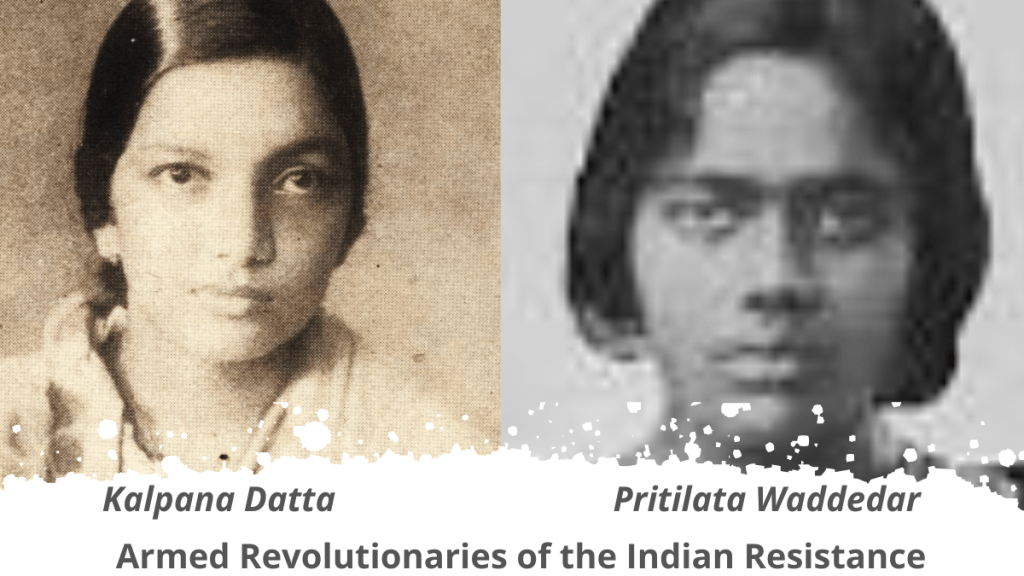
Sisters-in-Arms: Pritilata Waddedar and Kalpana Dutta

This Independence Day week there have been many pieces celebrating the numerous freedom fighters who were part of the nationwide movement for independence. The movement was unique in that it took the path of non-violence to achieve this goal.

Whilst many of the names are part of history textbooks, there were thousands of people who played their part in the fight for freedom. Not all of these are as well remembered. Among these, there were also some who were driven by the same aims but who chose to take another path of showing resistance to the colonial rule.

This is a story of two feisty young women who chose the path of direct resistance, and who dedicated their life to the cause. They are Pritilata Waddedar and Kalpana Dutta.

Pritilata Waddedar

Pritilata Waddedar was born on 5 May 1911 into a middle-class family in a village of Chittagong, now in Bangladesh. She did her schooling in her hometown and then moved to Dhaka for high school studies at Eden College. It is here that the young Pritilata came in contact with other women who were strong anti-colonialists and who were inspired by revolutionary ideas. The spark was ignited. Pritilata then moved to Bethune College in Calcutta to pursue a higher degree in Philosophy. On completion of her course, Pritilata’s degree was held back by the British authorities at Calcutta University because of her anti-British activities. The seeds of rebellion were firmly sown. Pritilata returned to Chittagong in 1932 where she joined as a teacher in a school and went on to become the headmistress.

It was during this period that Pritilata was introduced to Surya Sen who led an underground revolutionary group. Pritilata approached Master Da as Sen was called by his followers with a request to join his group. Initially Sen as well as his comrades were hesitant to include a women in the group, but Pritilata’s revolutionary passion and steely resolve to overthrow the British, as well as her abilities to carry out risky assignments gave her entry into the group.

Comrade Pritilata was a key member of the group that planned and strategized armed attacks on railway lines, telegraph office, the armoury, as well as the famous Chittagong Uprising—the raid on the armoury of police and auxiliary forces that cut Chittagong off from the rest of the country. Pritilata played an important role in supplying explosives to the revolutionaries. The raiders managed to escape but the British authorities tracked them down in the Jalalabad hills near Chittagong. Several thousand troops ambushed the rebels and many of them (some merely teenagers) were killed in the encounter. Sen’s depleted band had to reorganize and re-strategize.

They decided to avenge the Jalalabad massacre by burning down the Pahartali European Club. This club was targeted because, among other white supremacy symbols, it also had a sign at the entrance which declared that ‘Dogs and Indians are not allowed.’ Pritilata was the leader of the eight-member team. The team prepared by intensive training in the use of firearms. As in any military formation the leader was to be the first to attack and the last to return after the rest of the team had moved to safety.

On the night of 23 November 1932 Pritilata and her team, dressed as Sikh men laid siege to the club and set fire to it. British troops were quick to retaliate. Pritilata and her team were chased and ambushed with little hope of escaping alive. Nevertheless Pritilata tried to divert the gunfire to give her comrades a chance to escape. In the process she was shot in the leg. Rather than die under British arrest, the wounded Pritilata swallowed cyanide and ended her life. She was 21 years old. The police found her body early next morning and were surprised to discover that the leader of the attack was a young woman.

Kalpana Dutta

A lot of what we know about Pritilata is thanks to the memoirs of Kalpana Dutta which describe in detail the Chittagong Uprising. Inspired by Pritilata, Kalpana became a fellow comrade, and was also one of the few women members of Surya Sen’s underground group of revolutionaries. Kalpana often travelled disguised as a man, to transport explosives and other supplies to the group. She also became an expert in preparing gun cotton, an explosive agent.

Born on July 27, 1913 in Sreepur village in Chittagong, (now Bangladesh), Kalpana Dutta was fond of listening to adventurous stories since childhood. While studying in high school, she read many biographies and stories of freedom fighters, which inspired her with the passion to join the struggle for freedom. She joined a semi-revolutionary student organisation called the Chhatri Sangha and became one of its most active members. It was here that she met Pritilata, and the two became close friends. It was Pritilata who introduced her to Surya Sen.

Following the Jalalabad massacre, both Pritilata and Kalpana were designated as the key executors of the arson attack on Pahartali Club. Just a week before the attack, while she was on a reconnaissance trip of the area, Kalpana was detained by the British. She was released on bail, she immediately went underground to ensure that the plan would continue without any obstacles. Pritilata became the sole leader of the team. As we know, the team was ambushed and the wounded Pritilata took her own life rather than die in the hands of the enemy. 

Kalpana remained underground, even when the British finally managed to locate and capture Surya Sen in 1933. Three months later, she was eventually arrested and sentenced to life in the second supplementary trial case of the Chittagong Armoury Raid incident. She was released after six years of imprisonment. After her release from prison, she completed her studies and graduated from Calcutta University in 1940. Following independence, she led a relatively quiet life until her death in February1995. She wrote her autobiography in Bengali which was translated into English as Chittagong Armory Raiders: Reminiscence.

The note left by 21-year-old Pritilata when she died sums up the spirit of these two fearless young women who broke many stereotypes of the time.

There may yet be many among my dear countrymen who would question [women being fighters]. Nursed in the high ideal of Indian womanhood they may ask, how can a woman engage in such ferocious task of murdering and killing people?

I am pained at the distinction being made between a man and woman in the struggle for freedom of the country. Today if our brothers can enlist in the war of independence, we too the women should be allowed to do the same and why not?

–Mamata