AJT Johnsingh: The Highest Standards of Wildlife Research

A few days ago came the sad news of Dr. AJT Johnsingh’s passing. And for once, mainstream media covered this event—from AIR to Times of India to Hindu to several other national and regional papers. 

For media to so widely cover the passing of a wildlife researcher is sure indication that there was something special about him. And indeed there was.  He was one of India’s best and most respected field researchers. And even more, he put all that knowledge into practice in conservation.  He strongly believed that knowledge should not lie in books, but be used to develop better policies and practices to support conservation on the ground.

Born to teachers who were both nature-lovers and outdoor people, he grew up in a small town called Nanguneri in Tirunelveli district of Tamil Nadu. His parents encouraged him to be outdoors, and family outings generally meant picnics in the wilderness areas of the Western Ghats. They were early and important influences in his love for nature. Another source of inspiration was Jim Corbett, whom he read avidly when young, and whose approach to conservation he admired—it was an approach that was unsentimental, and doing what needed to be done, extending to killing maneaters when there was no other way out.

JC Daniel of BNHS whom he first met when trekking up in the Kalakad hills in 1971, and who mentored him at various stages in his career, was a great influence.  George Schaller,  American mammalogistbiologistconservationist and author recognized by many as the world’s preeminent field biologist, studying wildlife throughout Africa, Asia and South America, was a role model for Johnsingh.

AJT went to St. Xavier’s College, Palayankottai, and then Madras Christian College, Tambaram. He started his career as a professor at Ayya Nadar Janaki Ammal CollegeSivakasi, He worked as a postdoctoral fellow at the Smithsonian Institution in Washington, D.C. He returned to India in 1981 to work with the Bombay Natural History Society. In 1985, he joined the faculty of newly-established Wildlife Institute of IndiaDehradun, and helped shape this premier institute which has developed the cadre of India’s current wildlife professionals. He retired as the Dean WII in 2005. In this period WII trained over 300 managers and several M.Sc Wildlife and PHD students.

He was the first Indian to carry out field research on free-ranging large wild mammals. He focussed particularly on the dhole (wild dog) in Indian forests. His research in the early years focused on the ecology and prey-predator relationships of dhole, other carnivores and ungulates in Bandipur National Park. His interest and research covered several large mammals, and his knowledge of many species saw him on the IUCN Asian Elephant Specialist Group, as well as the Cat, Canid, Bear, and Caprinae Specialist Groups. He also researched the Mahseer fish.

Tigers also fascinated him. He is credited with having taken the first good photo of a tiger in Bandipur. Talking about this photo in an interview to Sanctuary, he said: ‘ For years, no one had been able to take a clear picture of a tiger in Bandipur. Because my dhole study area was littered with tiger spoor, I always carried a camera around ‘just in case’. On May 23, 1978, around 7 a.m., I was sitting eight metres up on a mango tree in the Ministerguthi nullah, which was frequented by tigers whose pugmarks could easily be seen and whose spray markings, I could smell. I sat for around 45 minutes, barely breathing when a movement in the tall grass caught my eye. The tiger walked towards a clearing right in front of me and when it reached a patch of sunlight, I whistled and with a perplexed look on its face, it froze staring straight at me. But the moment it heard my camera shutter, it vanished. Interestingly, I cannot stop smiling whenever I see this picture.’

He authored several research papers, but what got him know widely across the general public where his three popular books: ‘Field Days: A Naturalist’s Journey through South and Southeast Asia’ (2005), ‘Walking the Western Ghats’ (2015) and ‘On Jim Corbett’s Trail and Other Tales From the Jungle’ (2018). He also edited two volumes of The Mammals of South Asia which in total has 69 chapters.

AJT was decorated with many honours including the Distinguished Service Award by the Society for Conservation Biology, the Carl Zeiss Wildlife Conservation Award, the ABN AMRO Sanctuary Lifetime Wildlife Service Award, ‘Kirloskar Vasundhara Sanman’ and Salim Ali Conservation Award.

The government also respected and valued his expertise. He was on the Standing Committee on the National Board for Wildlife, Government of India, and served for three years as a member of the National Tiger Conservation Authority. He was also a Padma Shri awardee. His voice, opinion and work contributed to the creation of wildlife areas including the Kalakkad-Mundanthurai Tiger Reserve.

We at CEE had the opportunity to interact with Dr. Johnsingh on different occasions when we sought his expertise on various projects. Two in which I was personally involved where he was on the Advisory Committee were the Snow Leopard Education project, and the ‘School Education to Support Asian Elephant Conservation’ project. In the days prior to Zoom and video calls, we could not get into discussions with him, but sent him drafts on which he gave his insightful comments.

The conservation world and India have lost a unique researcher and spokesperson who had the knowledge and courage to speak out, and the stature to be listened to. As a message from his family puts it: ‘The Green Warrior has landed safely in his Valhalla, after a war well fought, to save mother nature, for all mankind.’

And to end with a quote from him which underlines the spirit behind his research: “I used to ask questions about wildlife that no one could answer. So I began to search for answers myself by observing animals. Curiosity is the greatest trigger for good science.

RIP, Dr. AJT Johnsingh.  Your passing is personal loss to your family and friends, and as great a loss to the wildlife and environment you worked so hard to protect.

–Meena

.

A Tree for all Reasons: Khejri

5 June has been marked annually as World Environment Day (WED). First held in 1973, and led by the United Nations Environment Programme (UNEP), WED is the largest global platform for environmental public outreach and is celebrated by millions of people across the world. This year, 2024, the kingdom of Saudi Arabia is hosting the global celebrations.

The focus of this year’s WED is land restoration, desertification and drought resilience.

As the world is seeing rapid advances in desertification, and land degradation, propelled by climate change, it is useful to go back and see nature’s in-built mechanisms for coping with such conditions. 

Khejri tree

Plants that grow in arid areas have special ways of dealing with extreme heat or cold, and other desert conditions.  Desert plants fall into three categories according to the way they deal with the problem of surviving in arid or extremely arid conditions.

Drought evaders: Plants which remain as seeds in the sand, but are ready to spring up when it rains, to flower quickly, to produce another crop of seeds and die again. These are known as ephemerals.

Drought resisters: Plants which have evolved various ways of storing water, locating underground water or reducing their need for water by such methods as shedding their leaves. These are known as perennials. They manage to live from one rainy season to another.

Drought-endurers: Plants which have the capacity to tolerate drought for a longer period by adapting through condensed growth, small-sized leaves and very deep root system.

These natural adaptations have enabled these plants, over millennia, to grow in some of the toughest of conditions. In turn, these plants have also played an important role in supporting other life, including human life, in desert conditions. Perhaps no plant better exemplifies this than the Khejri tree.  

Khejri or Prosopis cineraria is a tree that grows in the dry and arid regions of India and West Pakistan, Afghanistan and Iran where summers are very hot, winters are harsh, and rainfall is scant. It has a variety of common names in different states of India. Khejri or sangria (Rajasthan), jand (Punjab), kandi (Sindh), sami, sumri (Gujarat). Its trade name is kandri.

A moderate-sized evergreen thorny tree, with light bluish-green foliage, its sturdy older branches, and slender tender branches have conical thorns. It sprouts freely from the base, producing a fresh growth of leaves around March. Soon after the new leaves, the small yellow, creamy white flowers appear. These, in turn, give way to pods.

This drought-resister tree has a range of adaptations that enable it to grow well in highly arid and harsh conditions, where other plants cannot survive. It grows on a variety of soils, including moderately saline soils. It has a long and well-developed root system. This serves two purposes; it provides firm anchorage and also aids in obtaining moisture supplies from deep down. Its foliage also helps to absorb moisture from the rains, as and when there is rainfall. 

The roots are a life saver not only for the tree, but are equally valuable for the environment in which the tree lives. The extensive root system helps to stabilize shifting sand dunes. The tree is useful as a windbreak shelter, and in afforestation of dry areas. It fixes nitrogen through microbial activity, and its leaf litter decomposition adds organic matter thus rejuvenating poor soils.

Often being the only kind of tree that grows in the arid conditions, the tree also provides much needed shade and shelter to local farmers, as well as livestock. Prosopis cineraria is a much valued fodder tree, which provides nutritious and highly palatable green as well as dry fodder which is readily eaten by camels, cattle, sheep and goats. Its dead leaves are fed to cattle to improve milk yield. Its dry pods are also nutritious animal feed. The pods are also eaten, in green as well as dry forms, by people who have scant access to a variety of fresh vegetables for much of the year.

The tree’s wood is suitable for construction, and is used locally for numerous purposes including making agricultural implements and tool handles, water pipes, yoke and spokes of carts. The high calorific value of the wood also makes it an efficient fuel wood. The bark of the tree is dry and acrid with a sharp taste. The bark extract is believed to have anti-inflammatory properties, and is used in traditional medicine to treat rheumatism, cough and colds, and asthma, as well as scorpion sting. The pod is also believed to have astringent properties.

A popular saying in the Thar desert encapsulates the value of the khejri. Death will not visit humans, even at the time of famine, if they have a khejri, a goat and a camel, since the three together help sustain humans even under the most trying conditions. 

Thus for millennia the people of the Thar have revered the khejri as such a critical part of their lives. And they have given up their own lives to save the trees that sustain their lives.

Nothing highlights this better than the story of Amrita Devi and the Bishnois, or Twenty-niners, a sect that lived by simple tenets: Do not cut any green tree, do not kill any animal or bird, respect every living being, it has as much right to life as we humans do.

Amrita Devi’s story dates back to 1730.  The then Maharaja of Jodhpur, Abhay Singh, wanted to build a new palace for which he required wood. He sent his soldiers to a village to cut down some khejri trees. But this was a Bishnoi village. For hundreds of years, generations of villagers had nurtured and protected their vegetation, land and wildlife. One of the villagers was churning butter when she heard the commotion. Her name was Amrita Devi. She saw the men sharpening their axes and her mind flashed back to her childhood. She remembered how, every morning, she would respectfully greet  all the khejri trees and choose a special one for that day; she would hug it and thank it for all the gifts that it gave her and her people. Every child in the village had their own special tree.

Now the trees were in danger. Amrita Devi ran and confronted the axe men. She pleaded with them: “Leave our trees. They are our brothers and sisters, our village protectors. They are the breath of life, the water we drink, and our food.”

The axe men paid her no heed. They continued with their task. Amrita Devi hugged a tree. “Chop me first” she said, “take my life and leave my tree.” The axe men tore her away, but Amrita Devi was back at her tree, clinging for dear life. She did not let go of her tree; the axe men had to chop through her body to get to the tree. No sooner did Amrita fall than hundreds of villagers, young and old, rushed to the trees. Each one hugged a khejri tree. The king’s men continued to chop through them, until 363 people lay dead at the feet of the trees they hugged to save.

When the king heard of the incident, he could not believe that people would lay down their lives for trees. He personally visited the village to meet these people. They said: “The trees can survive without us, but we cannot survive without the trees.” The king was deeply moved the faith and humility of these people. He proclaimed that from then on no Bishnoi village would be called upon to provide timber or wildlife by hunting. Almost three centuries later, the Bishnoi community is intact. The twenty-nine tenets continue to live, even as the khejri trees give life to the land and its people. Amrita’s village came to be known as Khejarli after the trees she gave her life for.

Amrita Devi’s name is synonymous with her sacrifice. In 2001, a national award (the Amrita Devi Bishnoi Wildlife Protection Award) was created in her honour, to recognize people who had contributed to environmental conservation.

This World Environment Day, as the world looks ahead to combatting desertification, it is humbling to look back and remember the story of Amrita Devi and the khejri trees.

–Mamata

Shady Environment-Talk

June 5: Marked as Environment Day across the world since 1973.

The world has come a long way since the time in 1972 when such a day was mooted. Not only in terms of becoming more aware about the environment and taking action, but also in terms of the planetary boundaries being pushed to the brink through not taking enough action!

With the environment being such a widely talked-about issue, every actor—governments, businesses, civil society– have taken these issues on board.

Which is very good.

Till it is not.

The ‘till it is not’ includes corporates and other entities passing themselves off as environmentally or socially friendly when they are not. How do they do this? Here are a few terms that are used in the context of the many, many shades of these tricks:

  • Green Washing is undertaking misleading promotion of products or policies as environmentally friendly when in reality, they are not—often exaggerating the benefits while hiding the true or non-existent environmental impact. Common and insidious, such examples may range from misleading ads, to misleading recycling claims, to unverifiable carbon footprint claims, and every PR stunt in the book.
  • Blue Washing, indulged in by some of the largest corporations across the world, is the practice of businesses to sign up for the UN Global Compact and use their association with the United Nations to enhance their image and shift attention from their controversial business practices.
  • Carbon Washing is when companies make misleading or unsubstantiated claims about their carbon impacts or initiatives.
  • Social washing is similar to green washing, but in the context of being socially conscious–corporations wrongfully trying to market themselves as socially responsible.
  • Purple Washing is when a state or organization appeals to women’s rights and feminism in order to deflect attention from its doing nothing, or in fact actually harming these rights. 
  • Pink Washing is when companies try to create a false impression of being LGBTQ friendly while doing nothing to make life for their LGBTQ employees easier.
  • Rainbow Washing is similar to the above, when corporations use the rainbow symbol or colours, while being involved in activities that are damaging to LGBTQIA+ community 
  • Vegan Washing is when companies promote their products through appeals to compassion for animals, while actually causing animal suffering

Of recent times, the vocabulary of Green Washing has got even more nuanced! Here are some subtle variations:

  • Green Shifting: This is a subtle move, wherein companies highlight consumer choices, thus transferring responsibility to them, rather than highlighting their sustainability efforts.
  • Green Lighting: This trend is about corporations highlighting a particularly environmentally friendly aspect of their operations, in an effort to divert attention from less sustainable practices elsewhere in the company.
  • Green Rinsing: This involves businesses frequently changing ESG targets without genuine accomplishment, thereby making it hard for stakeholders to track their progress.

The UN warns about the seriousness of the harm that Green Washing (and allied colour-washes) can cause. In the context of climate change, the UN points out that: ‘Greenwashing presents a significant obstacle to tackling climate change. By misleading the public to believe that a company or other entity is doing more to protect the environment than it is, greenwashing promotes false solutions to the climate crisis that distract from and delay concrete and credible action.’

They identify many tactics of green washing including:

  • :‘Claiming to be on track to reduce a company’s polluting emissions when no credible plan is actually in place.
  • Being purposely vague or non-specific about a company’s operations or materials used.
  • Applying intentionally misleading labels such as “green” or “eco-friendly,” which do not have standard definitions and can be easily misinterpreted.
  • Implying that a minor improvement has a major impact or promoting a product that meets the minimum regulatory requirements as if it is significantly better than the standard.
  • Emphasizing a single environmental attribute while ignoring other impacts.
  • Claiming to avoid illegal or non-standard practices that are irrelevant to a product.
  • Communicating the sustainability attributes of a product in isolation of brand activities (and vice versa) – e.g. a garment made from recycled materials that is produced in a high-emitting factory that pollutes the air and nearby waterways.’

The UN urges us all to be more responsible by:

  • Learning more about green washing techniques so that we are more discerning
  • Make better consumer choices by buying only from companies whose green claims have been substantiated
  • Taking into account a product’s lifecycle and its environmental impact through every stage of making, use and disposal.

This Environment Day, let’s become better watch-dogs for the environment by getting more savvy about this colour palatte!

–Meena

Tree Architecture

About three decades ago, a new colleague joined our organization. During introductions, obviously the topic of what he had done-where he had done came up. It was an impressive pedigree—a Ph.D from JNU, under the legendary professor of ecology Dr. P.S. Ramakrishna. So far, so good. But his elaboration of what he had done his Ph.D on was what threw all of us. ‘Tree architecture’, he said casually, as if was a term we used day in and day out.  And embarrassing to admit, though we worked at Centre for Environment Education and should have been up with all terms ecological, none of us had heard this one. Dr. Ram Boojh Yadav, our new colleague educated us.

Last week, as I was doing my piece on topiary or tree-shaping, not surprisingly these memories came back to me. If topiary is about humans shaping trees as per their whims, tree architecture is about trees growing as they are destined to. So I thought I should re-visit that term which mystified me so many years ago, and try to learn a little more about it. So here goes…

When you look at a tree that you are familiar with, even from a distance and maybe even without leaves and flowers, you usually know what tree it is, e.g., mango vs. neem vs. Ashoka. And when it comes to botanists and arborists, obviously they can distinguish and identify many more just by looking at the silhouette.

Tree silhouttes

How does this happen? The answer is tree architecture or the study of the form of trees, which started gaining ground as a formal discipline in the 1970s, and has been use for a long time in management of trees. It is the branch of science that explains why a tree looks how it looks.

Tree architectures studies characteristics like type of branching, type of extension growth, branch orientation, flowering position etc. This is done by observing and schematising many individuals of the same species, in all life stages, to try to identify the ‘building plan’ of that species.’   To cite a researcher: ‘Plant architecture tries to identify fixed and repetitive phenomena in plant structures, valid for all individuals of the same species or even valid for multiple species.

So why does a tree look how it looks? Well the basic reason is genetics. Each tree species has a genetic blueprint of how it would ideally develop. And this goes back to its evolutionary history. For instance, the higher mechanical stresses imposed on trees that are native to windy areas makes them put down more wood to strengthen their structure, and consequently trees growing in such areas develop shorter but thicker trunks, branches, and roots. In contrast, trees that grow in sheltered areas will grow taller and thinner to improve their chances of reaching the light.

But the expression of this genetic blueprint depends on the site where an individual tree is growing—the soil, light, water, wind and other such factors that it finds there. These are the site conditions.

And the last are the environmental influences—has it experienced lightning, storms, insect infestations, human interactions, etc.

The science of tree architecture is based on subdividing trees into groups with similar characteristics (e.g., type of branching, type of extension growth, branch orientation, flowering position). Research has shown that all trees in the world fall into one of 23 architectural models—in other words, there are 23 tree building plans in the world!

Go on out there. Take a walk, get some exercise, breathe in some fresh air. And look at tree building-plans!

–Meena

Thanks: https://www.validtreerisk.com/resources/Documents/News/Tree%20Architecture%20

Celebrating Tree-shapers: World Topiary Day

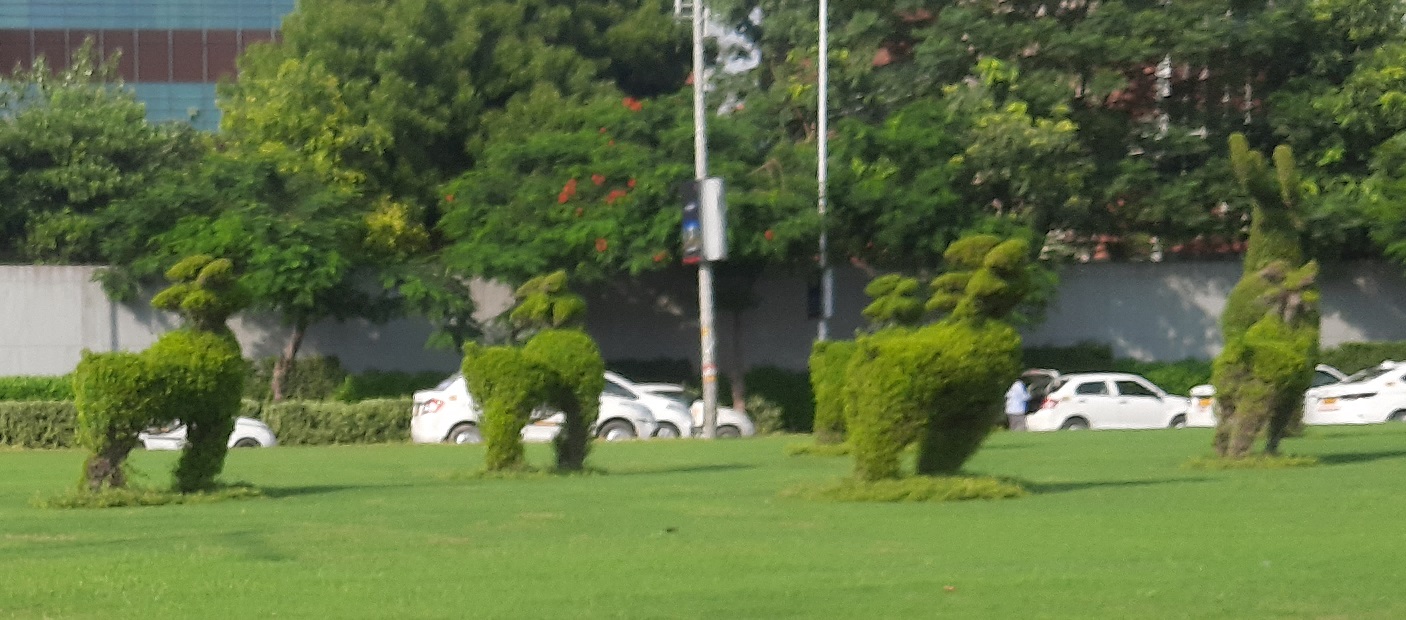
Have you seen deer walking across a traffic island in the middle of a crowded urban space? Or perhaps elephants in your city garden? Well, that is topiary.

Topiary, as per the Britannica, is ‘the training of living trees and shrubs into artificial, decorative shapes’. It is an ancient art, going back to the time of the Romans. In fact, Gaius Matius Calvinus, a contemporary of Julius Caesar is supposed to have been one of the first practitioners, and Caesar is said to have popularized it all over the Roman Empire.

There are three fundamental types of topiary:

  • Shrub topiary which consists of shrubs which are designed and shaped in various shapes and sizes. Very experienced gardeners do the cutting freehand, while others use frames.
  • Vine topiary, wherein vines and climbers are encouraged and shaped to grow in various topiary forms
  • Moss topiary where a frame is filled with wet moss and the chosen plant, and grown in the desired shape.

Whatever the type of topiary, it is an endeavour which requires ongoing work, care, patience and expertise

The fortunes of topiary have waxed and waned. After a long lull, the Italian Renaissance, which saw the flowering of many arts, also saw the revival of topiary. It became the rage in Italy, France (including in the Versailles), and with the Dutch and English.  The British took to it with passion, and it was found not only in the homes of the rich and the famous, but also in the modest gardens of peasants and tradesmen. Imagination was the only limit, with ships, fantastical beasts and human figures, all roaming the lawns.

Till topiary went overboard. And it was the mighty pen which defeated the scissors. Alexander Pope wrote a satirical essay “Verdant Sculpture” criticizing over-the-top topiary, and as a result, by the 1720s and ‘30s, topiary fell out of favour and was cleared from most prominent English gardens. The Levens Hall Garden was one of the few which escaped, and is today the oldest topiary gardens, with 30,000 bedding plants carved in a variety of shapes.

Till topiary was again revived in the 1840s. Not at the same scale, but it became moderately popular.

In its own unique forms, topiary has been quite popular in Asia too. China and Japan have practiced it for many centuries, with the objective of helping the trees achieve their “natural” form. Even the popular bonsai is a form of topiary.  Japanese Zen Gardens make extensive use of different topiary techniques.

Topiary
Topiary at Delhi Airport

In 2021, a new event, World Topiary Day, was created by the owners of one of the world’s oldest topiary gardens, the Levens Hall and Gardens in Cumbria, UK, which dates from 1694. World Topiary Day marked on May 12th every year, celebrates ‘… the fantastic art of topiary (shaping and cutting particular types of tree into geometric shapes and forms that resemble common objects and people) and its heritage within the world of gardening’, and seeks to inspire ‘…keen gardeners and lovers of al fresco living to adopt topiary’s style and structure within their own private gardens.’

A new award for topiary has also been announced as recently as this year and the ‘…search is on for Britain’s best topiary artists thanks to the inaugural Topiary Awards, which are now open for entries until May 31.’

In India too, many gardens and public spaces have examples of topiary. But sadly, after the initial enthusiasm, they are not maintained well, and therefore go out of shape. 

India is however home to the tallest topiary as per the Guinness Book of Records. This is the Samban-Lei-Sekpil in Manipur, started in 1983, which has now reached 18.6 m (61 ft) in height. The plant used is Duranta erecta, a shrub common in Manipuri gardens. It is shaped into a tiered structure called ‘sekpil’ that honours Umang Lei, the forest god.

Here is to tree-shapers, tree-barbers, tree-architects and their tribe, for adding green landmarks and a touch of whimsy to our lives.

–Meena

We Got The Blues!

Majorelle blue

Last year we visited Morocco. And of course, one of the highlights of the Marrakesh stay was a visit to the Jardins Majorelle. It is named after the person who created it–Jacques Majorelle, a famous French furniture designer who fell in love with Morocco in general and Marrakesh in particular, and spent most of his life there. He was inspired by the colours and designs of the country. He bought land on the outskirts, and commissioned a Cubist Villa to be built there, which he painted in a particular shade of blue which he developed inspired by the blue tiles widely used in that part of the country. The colour now carries his name, and is trademarked as Majorelle Blue. And as an afterthought, it is also called Moroccan Blue! (I wonder if Marrakesh craftspeople and tile makers whose ancestors must have developed the colour get any benefit from the use of the trademark?!?)

Another artist who added his name to blue was Yves Klein. Over ten years starting 1947, he created what is referred to as the purest blue.  This ultramarine blue is called International Klein Blue.

There is something special about blue. It is invariably voted the most popular colour in American and European polls. It is an ancient colour, associated with the Gods (in India, Krishna and Rama are blue, and Shiva’s throat is blue), and with royalty in many parts of the world. But in many languages, it is one of the last colours to be named! Which seems strange, considering the sky and the seas are some of the vastest expanses human eyes see.

Blue is associated with feelings of calmness and relaxation, as well as stability and reliability. Of course, it is also associated with sadness, which is why we talk about ‘feeling blue.’ Offices are often done up in blue because research has shown that people are more productive and creative when working in blue rooms. In branding and advertising, blue is often used to market products and services which are associated with hygiene(sanitizers and disinfectants), air and sky (airlines and airports), water and sea (cruises, mineral water).

But it is supposed to be a very unappetizing colour! Blue is the least common one amongst the foods we eat. It is said to suppress the appetite, and some diets even recommend eating off blue plates when you are trying to reduce your food intake.

Blue is also a fairly uncommon colour in nature–even the few animals and plants that appear blue don’t actually contain the colour!.

In ancient times, this was one of the most expensive colours to produce, which is why only the royalty and the rich wore it. In India however, it has been in use for over 5000 years, thanks the blue dye derived from the Indigofera Tinctoria (Indigo). Our Indus Valley ancestors dyed their clothes with this.  

This has also been one of the most costly pigments for painters and hence the colour was used only for important subjects. During the Renaissance, the Virgin Mary was the most important subject painted and most art from that time shows her wearing blue.

In pottery however, it has been a mainstay for centuries. Samples of pottery decorated with blue glazes going back to the ninth century are thought to have originated in Iran, developed by craftsmen of Basra. From here, it spread to China, where blue and white decoration was widely used in Chinese porcelain starting from the 14th century. All these glazes used cobalt to give the blue colour.

From here blue pottery spread to Europe, specially the Delft in the Netherlands. And of course, our very own Jaipur pottery is popular too.

Think blue, think calm! Eat off blue, stay thin!

–Meena

And see https://wordpress.com/post/millennialmatriarchs.com/1288

Hippo Day is a Thing!

February 15 is marked as Hippo Day.

And come to think of it, why not? After all, hippos are the third largest land animals on Earth (after elephants white rhinos). Males can measure around 3.5m long and stand 1.5m tall, and weigh in at up to 3,200kg.  That’s a weighty reason to allocate a day for them!

On Hippo Day, here is an interesting story.

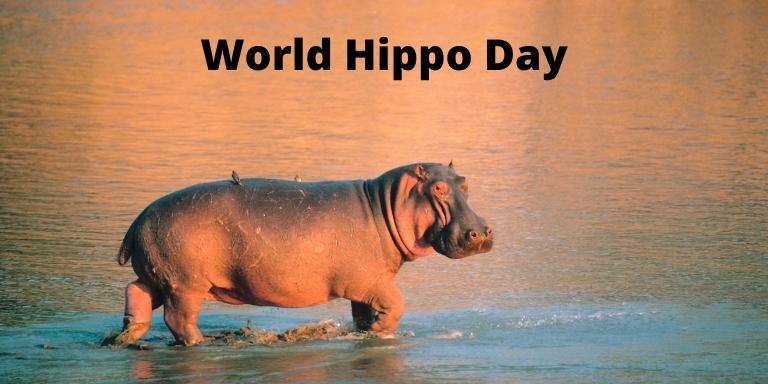
Hippo
Credit: Animalia Facts

A hippo can eat up to 35kg of grass in one night. And it is this ability to munch down herbage in quantities, and their very bulk, that led to a strange development in the US in the 1910s. Senator Robert F. Broussard, who represented Louisiana, brought a House Resolution for large-scale import of hippos to the US. No, not as a curiosity or to keep in zoos. But to solve two problems that America was facing at that time.

The first was the widespread proliferation of water hyacinth. First brought in as an ornamental water plant from the Amazon, the hyacinth spread madly, and within two decades, had overtaken waterways across the South of the US, threatening water trade routes. Several ways to get rid of the weed were tried—from breaking plants up, to dredging them, to setting them on fire. But nothing stopped the weed. 

The second problem was the steeply rising prices of meat, making it unaffordable for many. The fundamental reason is not clear—it could have been the rising prices of grain, cattle shortages or profiteering by meatpacking companies. Or a combination of all of these. But there were people in the US who seriously feared that they would be forced into vegetarianism which they saw as a disaster. (It was a different time, wasn’t it?)

Senator Broussard and some friends came up with the completely out-of-the-box and bizarre idea of importing hippos to solve this twin crisis. Their claim was that the hippos would happily chomp their way through the hyacinths. And that their flesh would be a great source of meat and protein for the Americans!

And so they moved the “American Hippo Bill” in 1910! Ex-President Teddy Roosevelt was among its supporters.

The House Committee before which the Bill was presented asked some very sensible basic questions: Could hippos be domesticated? Could they be contained? Would they eat the water hyacinth? Is their meat edible? Broussard and his colleagues answered with a resounding ‘yes’ to all the questions.  

But the answers, we know today, are ‘No’ in each and every case. Hippos are not domesticable. They are known to kill about 500 people every year.  They are extremely strong and heavy, and it would be almost impossible to contain them with even the strongest fences. And they are very unlikely to have made water hyacinth a serious part of their diet. They feed mainly on grasses and would not have taken to this weed which is very low in nutritive value. And though hippo meat is eaten, it is not widely consumed.

There would have been other serious negative ecological impacts of introducing hippos into the waterways too—their heavy treading in water bodies would stir up the mud, and their poop would add to the organic load in the water, and would completely disturb the dynamics and lead to algal blooms and other problems.

Fortunately sense prevailed in the House Committee and they vetoed the Bill. Else, who knows what the American landscape would be like today!

And now for some Hippo Trivia to celebrate Hippo Day

We think of hippos as African animals, but nearly 5.9 million to 9,000 years ago, India was home to the hippopotamus. These entered Eurasia from Africa, and later diversified into South Asia before going extinct.

They can hold their breath and walk under water for up to 5 minutes.

Hippos may look bulky, but they are quite athletic, and run at speeds of up to 30kmph!

A group of hippos is called a bloatOther terms for a hippo group include thunder, herd,  sea, school,  pod,  dale,  crash, and  siege.

Happy Hippo Day!

–Meena

See also:

Homes for Hippos: https://wordpress.com/post/millennialmatriarchs.com/4830

Beware the Kiboko: https://wordpress.com/post/millennialmatriarchs.com/2707

Oh Sh*t!

The last few weeks have been peppered with cleaning cat-poop of the lawn. A particular cat has taken to using our garden as its favoured toilet. Now we are spraying the lawn with a suspension of coffee grounds and haven’t had an episode in the last few days. Fingers crossed.

But the whole trauma got me thinking about poop in general.

And I realized how many words there were for this. In fact, the number of synonyms for faeces is proof of human fascination for the subject.

There is wide variety of terms for poop, and though some of them are interchangeable, there are also very specific ones– for certain types of animals or species or used in certain circumstances. Here are some of them so our vocabulary in this area can go beyond shit and crap!

Faeces is the most generic term, and the word comes from the Latin word faex, meaning “dregs”. Excrement, Excreta and Stool are also fairly generic and mean the solid wast released solid waste from the bowels of a person or animal. bowels of a person or animal Ordure too is similar—the solid waste solid from the bowels of people or animals.  

Here is a look at a few other terms:

Droppings: Faeces of animals.

Dung: Solid waste from animals, especially cattle and horses

Scat: Animal faeces, particularly of wild carnivores

Spraint:  This is the dung of otters.

Fras: These are the droppings/faeces of insect larvae

Manure: Manure is organic matter that is used as fertilizer in agriculture. Most manure consists of animal faeces but may also include compost and green.

Guano: This is accumulated excrement and remains of birds, bats, and seals, valued as fertilizer. 

Worm casts: These are the excrement of worms. Earthworm casts are prized as fertilizer.

Fecal Pellets: An organic excrement, mainly of invertebrates.

Fewmets: In hunting terminology, these are the droppings of deer and other quarry animals by which a hunter identifies his targets. Another term used in hunting is Spoor which can indicate a track, a trail, a scent, or droppings especially of a wild animal

Fewments: For science fiction fans, this is the term for dragon droppings!

Coprolite: Fossilised faeces of animals that lived millions of years ago.

Paleofaeces: Ancient faeces, often found as part of archaeological excavations or surveys.

Rabbits, hares and related species produce two types of fecal pellets: hard ones, which are the real poop; and soft ones or cecotropes, which are partially digested food which they eject, and eat again!

In medicine and biology, scatology or coprology is the study of faeces.

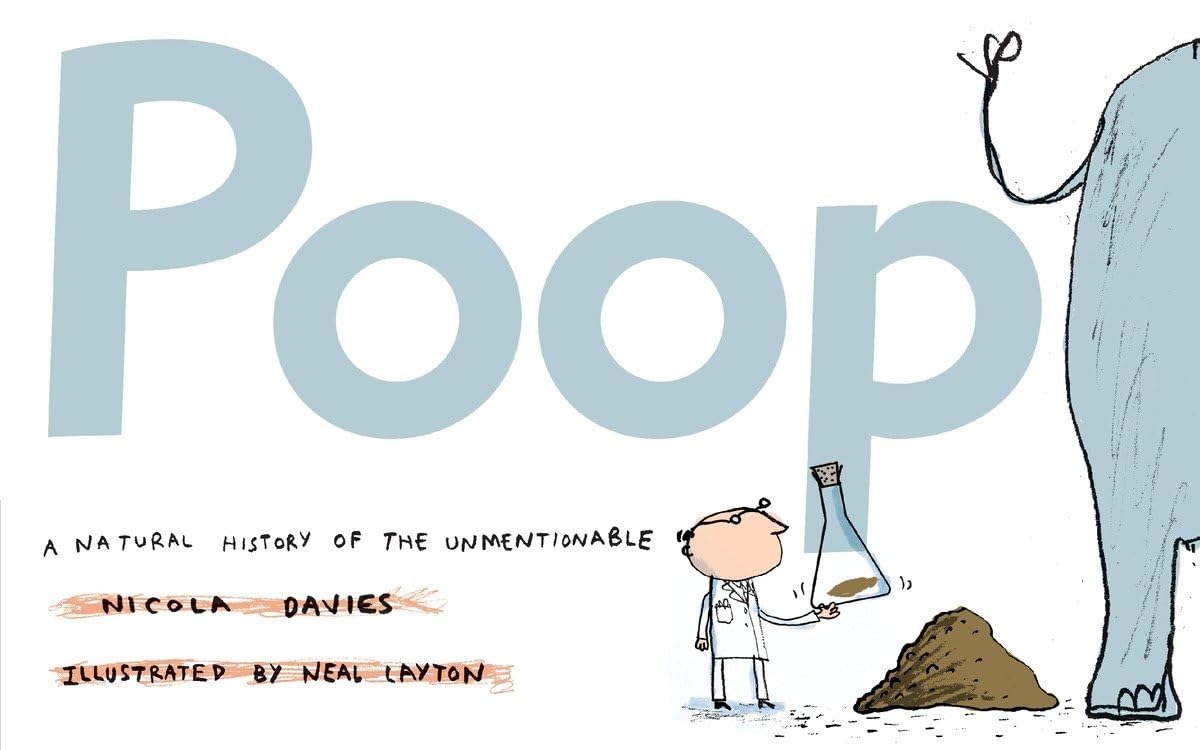
poop
Looking forward to reading this fascinating picture book for adults!

The study of such excrement is of course of use to doctors in the diagnosis of various medical conditions. It is also of great importance in obtaining an understanding of wildlife behavior, and the environment as a whole. Scat analysis can yield useful information on animal populations and their distribution across a habitat, how many males and females there are, what they are eating, their health condition and from all these, information on the health of the habitat itself can be deduced. Scat analysis is sometimes faster, easier and cheaper than many other means of studying animal populations, and it is possible to get a lot of information about animals non-invasively.  It is also possible to extract DNA from poop and this has helped identify species characteristics.

So it’s not just 4-year olds who have a fascination for this subject. Many adults make it their life’s work, and their chosen tool in getting to know more about the world!

–Meena

The Camel in the Tent: Invasive Animal Species

The story of the Arab who kindly let his camel put his nose in the tent to keep it warm, and ended up with the entire camel inside, while the Arab was ousted into the cold is an old one. It is quoted as an example of “give an inch and they will take a mile”. While this is a fable, in reality there are several examples in Nature, of animal species, who, once invited or introduced, proceed to take over spaces, pushing out the original inhabitants. A case of invasive species.

Recently I wrote about some invasive plant species in India. This is about invasive animal species which have not only invaded spaces but which have posed serious threats to native species in several parts of the world.  Ironically some of the most damaging invasive animal species were originally introduced either for sport, as pets, or as livestock and pack animals. Here are a few examples.

European rabbits. In 1859, Thomas Austin, a wealthy English settler in Australia, received 24 wild and domesticated European rabbits as a Christmas present from his brother in England. These were for hunting on his estate in Melbourne. The rabbits multiplied rapidly, producing more than four litters each year. They had no predators to keep their numbers in control. They also adapted easily to their new environment, and by burrowing beneath the soil, they spread far beyond the boundaries of the estate. In 50 years these rabbits spread across the entire continent. Their numbers became so large that they destroyed crops and land, leading to soil erosion. They also negatively affected agriculture and plants by overgrazing. Not only did the rabbits wreak havoc on Australian croplands, they contributed to the decline of native plant and animal species. Today Australia has over 200 million rabbits, the fastest colonization rate for an introduced mammal ever recorded. The control of this invasion continues to remain a huge challenge which has engaged Government researchers, biologists, farmers, and others.  The colonization of Australia by the European rabbit is said to be one of the most iconic and devastating biological invasions in recorded history.

Cane toad: Another story from Australia. This one about a species that was introduced not for sport, but for biological pest control, and ended up being a major pest itself.

Photo source: https://wwf.org.au/blogs

The Australian sugar industry began around 1862 when Captain Louis Hope succeeded in raising a viable sugarcane crop, and then established a sugar mill in Queensland. Establishing the sugar industry was difficult in the face of drought conditions. A bigger problem was that the roots of the plants were eaten by the larvae of native beetles which were collectively called cane beetles. In 1933, Australian sugarcane growers attending a conference in the Caribbean heard about a toad that was effective in destroying these beetles. Australia had no native toad species. The growers lobbied for the import of the cane toads to Australia in the hope that these would combat the crop-destroying cane beetles. 

In early 1935, a box containing 102 toads arrived from Hawaii. The toads were kept in captivity where they rapidly multiplied. In July 1935 the toads were released into the fields. But not all was known about the toads by then. As it turned out, the toads could not jump high enough to eat the larvae of the beetles that lived largely on the upper stalks of the sugarcane plants. The voracious toads thus began to feed on whatever they could get at the lower level—insects, bird’ eggs and even native frogs. Would-be predators were killed by the poison that these toads secreted. Thus the original plan misfired disastrously, as the invited invaders laid ravage to the crops and native species. The cane toad continues to seriously impact the ecosystems of northern Australia even as they spread to other parts. Due to Australia’s geographic isolation and subsequently unique and fragile biodiversity, this is a grave issue. The Australian Government has stated that ‘There is unlikely to ever be a broad-scale method available to control cane toads across Australia’.

Photo source: Wikipedia

Indian Bullfrog. Closer to home both in terms of geography and history, is the relatively recent example of the spreading menace of the Indian bullfrog on the Andaman Islands. While the first report of its sighting was in October 2011, it is believed that the bullfrogs may have been introduced to the islands in early 2000s.The reason for the introduction is not clear. Some believe that the tadpoles may have come with fish food from mainland India. Or it may have been brought by farmers from West Bengal and released into rice fields for local consumption. But having arrived, these prolific breeders are beginning to make inroads. Of greatest concern is that their tadpoles are carnivorous, and eat tadpoles of other frog species, thus threatening the native species. The large-sized adult frogs also compete with native species for the same food.

As the frogs are spreading to more islands, the story of Australia’s invasion by alien species is beginning to play out again—introduction, naturalization, and expansion.   The Andaman archipelago which consists of 300 islands has rare endemic species which are vulnerable to such invasions, and which eventually could lead to disturbing delicate ecological balances.

Common Myna. Once again, a twisted tale of transition from mainland to islands. This ubiquitous bird that we are so used to seeing around us, is not such a friendly neighbourhood bird in the Andaman islands. Of the 12 bird species that were introduced into the Andamans around the end of the 19th century, 6 have disappeared, but 5 are still found there. Of these, the common myna has been not only the most successful spreader and stayer, but also the biggest threat to native avian species. These birds are known to prey on the eggs and chicks of other bird species. They also compete with the local hole-nesting birds for nesting sites, slowly inching out the native inhabitants from their own habitats.

From the Andamans, all the way to Australia, the range of the common myna is increasing at a rapid pace, leading the IUCN Species Survival Commission to declare it as one of the world’s 100 worst invasive species that pose a threat to biodiversity, agriculture and human interests.

Like the camel that sidled its way into the well-meaning Arab’s tent, the process of incursion, expansion, dislodging of original inhabitants, and taking over, is the story of invasive plant and animal species. This process, together with habitat destruction, has had serious ecological costs, and has been a major cause of extinction of native species throughout the world in the past few hundred years.

–Mamata

With Gratitude for Every Morsel of Food…

The recurrent theme in the last few days has been FOOD.

First, the passing away of Dr. MS Swaminathan, the father of India’s Green Revolution at the age of 98. Today, we have forgotten the first few decades after Independence, when hunger was a reality for many in our country. At Independence, hardly 15 percent of agriculture was under irrigation. The food grain production was 50.8 million tonnes. Agricultural methods, tools and equipment, were centuries if not millennia old, and were grossly insufficient to feed the country’s growing population. On top of that, the vagaries of nature, which saw floods and droughts disrupting cultivation. Food insecurity and shortages were common, and two severe droughts 1964–65 and 1965–66 led to major food shortages and famines. We were dependent on food imports to feed our people, and many people doubted the survival of us as a nation, when we could not even fulfil this basic need.

It is this dismal scenario that pushed people to look for solutions that would make us food secure and food sufficient. And the hero of the hour was Dr. MS Swaminathan. Swaminathan, a student of zoology, who was a witness to the tragedy of the Bengal Famine of 1943 and frequent food shortages, decided to devote his life to improving this situation. And that is what he went on to do just this. He joined the Indian Agricultural Research Institute soon after Independence, and from there went on to do research and post-doctoral work in the subject. At IARI, he learnt about the work of Dr. Norman Borlaug in Mexico, where he had developed a dwarf variety of wheat which yielded more grain, and at the same time had stalks strong enough to hold the weight of the grains. Dr MS saw this as a beacon of hope and worked with Dr. Borlaug to develop improved crop varieties suitable for India. He also worked on fertilizers suitable for our conditions, as well as more efficient farming techniques. This laid the foundation for our Green Revolution, and paved the way for India not only to becoming self-sufficient in food, but becoming a grain basket for the world. Today, our food grain production is estimated at a record 330.5 million tonnes (MT).

The Green Revolution though the saviour, was however not without its flip-side. It needed increased amounts of chemical pesticides and fertilizers thus reducing the soil fertility and quality in the medium term; these crops needed more water; and it led to monocultures based on specific crops and varieties, leading to erosion of agri-biodiversity. Dr. Swaminathan recognized these issues, and for many years led the movement for what he termed ‘the Evergreen Revolution’ which focussed on more environmentally sustainable ways of increasing productivity of the land.

As a part of Centre for Environment Education, we were fortunate to have opportunities to meet and interact with this giant. He came to our campus maybe a few times a year, as Chairman of our sister-institution VIKSAT, and also as guide and mentor to many of our projects and initiatives. I had the good luck to work under his guidance when CEE was putting together Government of India’s official submissions to the World Summit on Sustainable Development, and he was one of the advisors to the process.

And coming to the other food-related events:

Oct 2 marks the birthday of Gandhiji, who believed that farmers, farming and rural India had to be at the core of any development in India. He summed it up with his statement: “To forget how to dig the earth and tend the soil is to forget ourselves. “

It also marks the birth anniversary of Lal Bahadur Shastri, our second Prime Minister, who gave the nation the slogan ‘Jai Jawan, Jai Kisan’, seeing soldiers and farmers at the same level when it comes to ensuring the nation’s security.

And Sept 29 also marks the observance of UN’s International Day of Awareness of Food Loss and Waste. The goal of this day is to raise awareness on the importance of the problem and its possible solutions, and to promote global efforts and collective action towards meeting

And Sept 29 also marks the observance of UN’s International Day of Awareness of Food Loss and Waste. The goal of this day is to raise awareness on the importance of the problem and its possible solutions, and to promote global efforts and collective action towards meeting Sustainable Development Goal Target 12.3, which aims to halve per capita global food waste at the retail and consumer level by 2030, and reduce food losses along the food production and supply chains.

No more appropriate time to ponder on our relationship to food, those who produce it, and how we interact with it. And lets not forget: the prevalence of undernourishment–the share of people who lack regular access to sufficient calories– is increasing, with as many as 828 million people undernourished in 2021.

With gratitude to all the farmers and farm workers; the policy-makers who understand their importance and respect them for their contribution; those who work on the science of it; and those who cook it.

We owe every mouthful to you all. And may we never forget it.

–Meena