CELEBRATING OCEANS: RACHEL CARSON

The first week of June has two significant days that relate to the environment. World Environment Day (WED) on 5 June and World Oceans Day (WOD) on June 8. While desertification was the focus of WED, the themes of WOD emphasized the importance of working together to find solutions to ocean challenges.

Historically one name has been associated both with WED as well as WOD. Rachel Carson is probably best known for her book Silent Spring, one of the first that warned of dangers to all natural systems from the misuse of chemical pesticides such as DDT. Published in 1962, this initiated the contemporary environmental movement. Over the years Silent Spring became one of the essential readings and references for environmentalists and ecologists.

What is perhaps less known is that for a decade before she wrote Silent Spring, Rachel had already published three books, as well as numerous articles, on the subject that was dear to her heart—the Seas and Oceans. Rachel’s work was unusual in that it combined a solid base of science that she communicated in beautiful language and style, making for a rare combination of nature and literature.

Rachel’s love for nature stemmed from her early years in a rural community where she freely explored her surroundings, and also expressed her thoughts through her other passion—writing. Rachel Carson was born on 27 May 1907 in Springdale, Pennsylvania. After High School, in 1925, Rachel joined Pennsylvania College for Women as an English major determined to become a writer. Midway through her studies, however, she switched to biology. A summer fellowship at the U.S. Marine Laboratory in Woods Hole, Massachusetts was her first close experience with the ocean. In 1929, Carson was awarded a scholarship to study at Johns Hopkins University in Baltimore, an enormous accomplishment for a woman at that time. Graduating with a Master’s degree in Zoology in 1932, and with a flair for writing, Rachel began to work for the public education department of the US Bureau of Fisheries writing pamphlets on conservation and natural resources. This was the start of her long career as scientist and editor, eventually rising to become Editor-in-Chief of all publications for the US Fish and Wildlife Service.

In 1935 she was asked to create a series of short radio programmes on marine life called Romance Under the Waters. Her growing interest in oceans and marine life was supported by the opportunity to visit waterfronts and marine environments, access to scientific information, and interaction with a range of people associated with different aspects of the oceans as part of her work. During World War II, Rachel Carson was part of a programme to investigate undersea life, terrain and sounds, designed to assist the Navy in developing techniques and equipment for submarine detection. Thus Rachel had the opportunity to study many aspects of oceans.

In her free time, Rachel also wrote about findings from this research in a language and style that would reach beyond the academics to a larger audience. She wrote several articles for popular magazines, designed to create wider awareness about the wonder and beauty of the living world. As she once said: I have always wanted to write. Biology has given me something to write about. She also believed that science and literature could meld harmoniously. The winds, the sea, and the moving tides are what they are. If there is wonder and beauty and majesty in them, science will discover these qualities… If there is poetry in my book about the sea, it is not because I deliberately put it there, but because no one could write truthfully about the sea and leave out the poetry.


Rachel Carson’s first book, Under the Sea-Wind, was published in 1941. In 1951 she published her prize-winning study of the ocean, The Sea Around Us. The book remained on the New York Times bestseller list for 81 weeks.

In 1952 Carson resigned from government service to devote herself to her writing, but also for the freedom that she would have as not being a part of the government, to raise issues, question government policies, and use her public voice to create awareness and encourage action.

In 1955 she published The Edge of the Sea. These books established Rachel Carson as both a naturalist and science writer for the public. But it was her final book, Silent Spring, published in 1962, that awakened society to a responsibility to other forms of life. In it, Carson documented in minute biological detail the harm caused to the ecosystem by harmful pesticides, especially DDT. The book was based on years of her research which indicated that the abnormalities caused by the pesticide showed up first in fish and wildlife, and went on to endanger the overall environment. As expected, Carson’s book provoked a huge controversy, as well as personal attacks on her professional integrity. The pesticide industry mounted a massive campaign to discredit her. The federal government, however, ordered a complete review of its pesticide policy and Rachel Carson testified before a Congressional committee, calling for new policies to protect human health and the environment. As a direct result of the Carson’s study and her making it public through Silent Spring, DDT was banned in the United States.

Despite her earlier noteworthy studies of the marine environment Rachel Carson’s name became synonymous with Silent Spring and DDT.

Rachel Carson died in 1964 after a long battle against breast cancer.

The theme for this year’s World Oceans Day is Waves of Change: Collective Actions for the Ocean. It would be worthwhile this year to revisit Rachel Carson’s books on the sea which seem as relevant today as they were when she wrote them in the 1950s. Carson’s ecological vision of the oceans demonstrates a larger environmental ethic which drew attention to the threats to the sustainability of nature’s interactive and interdependent systems. Her writing presages Climate change, rising sea-levels, melting Arctic glaciers, collapsing bird and animal populations, crumbling geological faults. All of which are dire realities today.

–Mamata

Be a Sport!

This month games have been in the news. From cricket dominating the headlines, to Meena’s pieces on the importance of play for the all-round development of children. Toys are perhaps the first objects that children interact with as they learn how to ‘play’. Beginning with supporting the development of psycho-motor skills, toys also encourage imagination and creativity.  As the child explores and discovers, in its own way, the toy becomes way more than what it was formally designed for. Toys can become the central characters in a gamut of games and make-belief adventures. The child’s interactions with toys also begin to lay the foundation of the sense of ownership (“my doll, my truck”), which also lends itself to possessiveness when the same toy is ‘snatched’ ‘begged’ or ‘coveted’ by another child. 

It is at this early stage then, that the field of games introduces other instincts such as ownership and competiveness, often leading to conflict. This is where the concepts of ‘sportsmanship’ are also planted (or not planted), well before the child graduates from toys and imaginary play to more formal games, and then on to sports.  

A game is described as a physical or mental recreational activity involving one or more players, defined by a goal that the players try to reach, and some set of rules to play it.

A sport is a physical activity carried out under an agreed set of rules, with a recreational purpose: for competition or self-enjoyment, or a combination of these.

The two terms have also spawned two related terms—sportsmanship and gamesmanship.

Gamesmanship refers to the strategic manipulation of the rules and the spirit of the game to gain an advantage over opponents. While not necessarily breaking the rules, players who engage in gamesmanship employ tactics that push the boundaries of fairness. This may include exploiting loopholes, distracting opponents, engaging in unsportsmanlike conduct, or using psychological tactics to gain an edge. While gamesmanship may be within the confines of the rules, it can undermine the principles of fair play and the spirit of the game.

Sportsmanship refers to the values and behaviours exhibited by the players that uphold the spirit of fairness, self-control, respect for rules, opponents and authority, and integrity. Sportsmanship fosters positive relationships among players, promotes teamwork and healthy competition, encourages accepting victories and defeats with grace, and thereby enhances the sports experience.

Poor sportsmanship, while not exactly using manipulative tactics, includes unethical behaviour such as intentionally injuring opponents, taunting or insulting players, or disrespecting officials and fans. 

We teach children the importance of sports, but sadly do not pay enough attention to also inculcating the values of sportsmanship from an early age.  We send them to coaching classes to hone their skills in a sport—from tennis to football to hockey. Large academies are set up that identify budding players and rigorously mould them to become “champions.” These instil in the young minds the yen to be winners always, to be the best, the fastest, and the strongest at all times. They also laden them with highest of expectations. The aspiring champions carry on their young shoulders the burden to always meet these expectations, at any cost, including personal burn-out and breakdowns.

This expectation balloons manifold in the eyes of spectators of team games. It manifests itself in the fanatic fandom of a favourite team. This is what buoys the playing teams and fuels the culture, and indeed, the enormous business of spectator sports. Support and encouragement of one’s favoured team is necessary, even desirable in sports. But when this balloon bursts, leading to a mass wave of intense negative feeling, it is certainly not sportsmanship. What we have forgotten in our love for ‘our team’ is that it is more than one team that makes a sport a sport, that that it calls for dignity and grace to acknowledge that we cannot always be the winner.

Participation in sports develops important skills, but this needs to be combined with developing the values and behaviour of sportsmanship. Even as we coach our young minds and bodies to excel in sports, it is important to remember that they also need coaching in sportsmanship. This involves engaging also with their hearts and emotions. It means emphasising respect for the opposing team in every circumstance—win, lose or draw, on or off the field. It means extending goodwill not only to one’s own team mates and coaches, as well as the others who support the players in many ways, including the spectators.  

While healthy competition is an important ingredient of a competitive sport, unsportsmanlike conduct cannot justify the end—winning at any cost. Competing with honour and fairness need not be a dampener to the skills and excellence of players. Rather a game well played to the best abilities of both teams enhances not only the quality of the game, but the ambience within which it is played. 

As the curtains fall on the mega spectacle of World Cup cricket, let us remind our children (and indeed ourselves) that the true spirit of sportsmanship means that it doesn’t matter what the outcome of the game is, it is not just about winning or losing; it is also about empathy, about the person or people you are competing against; they deserve to be shown the same respect you would show them outside of sport. Sportsmanship centres on three vital life-skill components of Respect, Losing with Dignity, and Winning with Humility. Let this principle be the guiding factor in the long game of life, as in the many games that we play in many fields.

Be a sport! May the best one win!

–Mamata

Teacher? Teacher!

In the run up to Teacher’s Day which is celebrated in India on 5 September every year, there will be numerous pieces about outstanding teachers, teachers who have changed the lives of students, and other inspiring stories.

Sadly, even as we felicitate and celebrate teachers such as these, there are also disturbing reports about teachers who, perhaps, could leave life-long scars on the children that they have the opportunity to mould and nurture. These belong to the mass of average teachers who are “teachers” in name but not in deed. What do they make of their job, which is really speaking a means of livelihood, and even that, which is insecure?

Take this piece, titled Confessions of a Teacher.  

I am a teacher. I saw an article entitled ‘Teacher’s Confessions’ and thought, why not pen down my own confessions?

I have been in teaching for years now. As a requirement to becoming a teacher, I had at that time, to study the science and principles of education. I have not learnt much more, since then.

I go to public libraries but rarely touch teaching related journals. A glance at the librarian’s issue book will show several books against my name, but none related to education.

I am certainly in the habit of reading. In the early years I was busy studying the textbooks and related material. But the textbooks don’t change often. I now need only to glance at the books. My reading list now includes dailies and monthlies and some assorted fiction.

After school hours I rarely discuss education-related topics. My discussion includes topics such as someone’s dismissal or promotion, forms and examinations, higher authorities or fellow teachers, booksellers, and so on.

During recess time, my colleagues gather for a cup of tea. We talk of many things. But never do we talk about how to teach, teaching aids, or students.

The school timings are fixed. The curriculum is set. The school bell heralds the passage of time, and students are prepared for the examinations. The systems are in place. I go to school. Teach the lessons for the day. I carry out my tasks and keep the order – partly by force, partly by wit, partly through my image, and largely through the set disciplinary systems of the school.

I don’t get into the depths of any subject. There is no time; just enough to complete what will be part of the exams. Students will take longer, and explanations will have to be made to the authorities.

I know the students by name, or those that know their lessons, and those that do not. I do not know anything about their family, their friends, their own personalities. We are not close. I know their minds, but not their hearts.

I see who comes first, and who is last. I do not know about their physical strengths and weaknesses. Those who finish their work and bring it to me, are clever; those I like. The rest are duds; I do not like them. Between us there is no affection. How can there be trust? They are afraid of me; and I exert my authority over them.

Once I leave the school, I scarcely think of them, save perhaps, one who might have been greatly disrespectful. Each to our own homes. Perhaps, as I lie down the thought may cross my mind that as the exams near, I will have to speed up the revision, for which I’d use the recess.

I haven’t seen the home of the children. Nor have I shown them my home. I do not have such a relationship with them.

I dream that I will be promoted till some day I become headmaster. I will complete my term of service, retire and enjoy my pension. I hope to save a little before I am too old. That is why I have to take tuitions.

I wish that I am well thought of in my community, that I can educate my children so that they get good jobs, and I can marry them off before I enjoy old age.

It is for this that I wish to work. Today the profession of teaching is, for me, an activity, a job. In all this, the ideals of education, the changing principles and practices of teaching, the desire to bring new changes in the field – all this is not in one, where will they come from?

I would like to explain clearly what my position is today. My state is like this; I presume my fellow teachers are in a similar situation.

If we think that this is a familiar scenario, it may come as a surprise that this was written in 1932 (nearly a hundred years ago). The author is Gijubhai Badheka an eminent educator who helped to introduce Montessori education methods to India. Disturbed by the dark educational system of that time, he embarked on his journey into the realms of education, and left behind a rich legacy of work and writing.

More about Gijubhai and his work on www.gijubhaibadheka.in.

Several generations later, the dilemmas about what makes a ‘good teacher’ continue to engage educators.

A hundred years after Gijubhai wrote some of his seminal works on education, Sir Ken Robinson one of the eminent contemporary thinkers on education propounded a critique of the school system. His TED talk Do Schools Kill Creativity? is one of the most watched talks. He urged schools to transform teaching and learning to an experience personalized for every student involved.

His words resonate closely with Gijubhai’s angst about the state of education, and his dream for a transformative educational system

Role of the Teacher    

The problem is that over time, all kinds of things have gotten in the way of it – testing regimes, league tables, unions’ bargaining rights, building codes, professional identities, the concerns of various pressure groups, ideology of various political parties. It’s very easy for people to spend all day discussing education without mentioning the students at all. But all of this is a complete waste of everybody’s time if we forget that our role is to help students to learn. Therefore, the question is: what should they learn and how do we best do that?

All the great education systems and schools know that. It’s why they invest so heavily on the selection of teachers, why they insist on getting people who don’t just have good degrees, or have them at all. They want people who know their material, but they also know that teaching depends upon a whole set of pedagogical skills and a love of the process. It’s more than the transmission of direct content. It’s about having a set of skills focused on facilitating learning. (Sir Ken Robinson)

A teacher’s work is like flowing water. The fulfilment of the work of education is not in teaching one or two subjects… Real education lies in making humans aware about their own unending strengths. (Gijubhai Badheka ‘Note to Teachers’ 1920)

Some food for thought.

–Mamata

Another World Youth Skills Day…

In 2018, the proportion of India’s working-age population started growing larger than its dependant population (children below 14 and above 65 years of age). This bulge in the working-age population, called the demographic dividend is going to last till 2055—a total of 37 years.

World Youth Skills Day

But such a large population of young people is productive only if they are educated and skilled so that they realize their potential and contribute to the nation’s growth.

The harsh reality is that only about one in five Indians in the labour force is “skilled” as per the Human Development Report (HDR) Report 2020. India is 129th among 162 countries for which this data is available.

If the absolute numbers are a matter of concern, for me, the less-obvious ‘quality of skills’ is even more of concern.

Let’s look at a few indicators of how effective skill training programmes in India may be. With regard to many skills, a school dropout can be certified at Level 3 or 4 through a 3-month training programme. In the formal skill structure, which is the ITI and Polytechnic systems, the length of programmes is more respectable, but the courses and curricula are outdated by about five decades—some of these institutions still offer programmes in Stenography! The faculty may never have set foot in an industry, and the equipment, even if it is functional and not rusting, has not been in use in the real-world for at least 20 years. And the youth themselves, during their time in these institutions may never work on an industry shop-floor, or even visit a factory.

If skill is ‘the ability to do something well’ how do we expect youth passing out of such systems to do anything useful, least of all ‘well’?

Contrast this to Germany, which is one of the leaders in skill training. They base their skill training on the dual system which works because of the cooperation between Medium and Small Scale Enterprises, and vocational training institutes. Trainees in the dual system typically spend part of each week at a vocational school and the other part at a company. Dual training usually lasts two to three-and-a-half years. It is basically a combination of theory and training implanted in a real work setting. It is an integral part of the education system and is driven by industry and trade unions, who constantly upgrade and modify training modules and job roles. These occupations are certified by either a chamber of commerce or crafts or trades. About 70% of German youth go through this skilling system.

Whether is the length of the training, the rigour, the exposure and hands-on work in industry, or the up-datedness of the curriculum based on industry needs, where is the comparison between skilling in such a system and skilling in India? We can talk about the importance we place on skilling, tout the numbers (the National Skill Development Corporation website says 1,10,34,285 candidates have been certified through the flagship short-term training programmes), and the institutional structure and industry-involvement mechanisms we have put in place.

But to quote a 2019 ILO report on India,

‘Since 2013 … despite ongoing reforms promoting skills development, VET has not kept pace with general education, and its share of upper secondary education fell to 2.7 per cent in 2016. Moreover, VET does not respond to the training needs of young women. Only 17 per cent of VET students were girls in 2016, down from 20 per cent in 2000 (UIS, 2018). Non-formal and informal VET programmes do not reach a large proportion of India’s young people. Survey data collected in 2017 indicate that only 5 per cent of young people aged 14–18 were taking any type of vocational training, whether formal or not. And 59 per cent of those receiving training were taking courses shorter than six months.’

This should not be news to any of us. Each of us has experienced how difficult it is to find a plumber, electrician, carpenter or welder, leave alone one who knows their job, can problem-solve; one who turns up on time; one who works cleanly and cleans up their mess.

We are five years into our demographic window. And still have not put in place a critical building block, viz skilling. How can we hope to fulfil our dreams, aspirations and ambitions if we don’t bring about DRASTIC changes and SOON? We need to take an honest look at where we stand, admit we are not on the right track, and go back to the drawing board.  

July 15 is marked as World Youth Skills Day.  We in India too marked this last week. But Skill Days will come and go. When will our youth be able to access high quality skills?

–Meena

Zoos and the Sense of Wonder

Cheetahs at Oakland Zoo. Picture: Oakland Zoo site

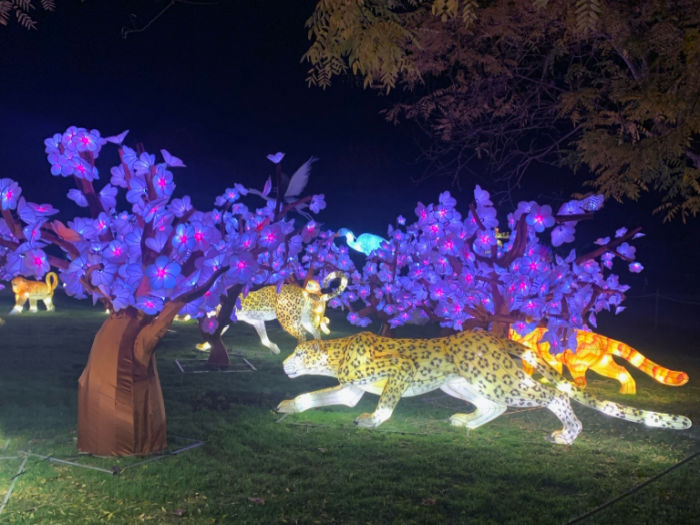
Oakland Zoo is celebrating its annual Glowfari Festival through November, December and January. This year, the highlights include ‘a walkabout through the land down under with kangaroos and koalas, icons of the California coastline including whales, otters, and jellies, exotic animals of the tropical rainforest, and a trip to the past with a towering T-Rex and a megalodon shark tunnel!’ Ok, apart from the t-rex and megalodon shark, that’s not very usual for a zoo, right? Well, not till you learn that these are not real animals that the visitors will see but hundreds of huge hand-painted animal lanterns  placed throughout the zoo’s campus, making for a totally unique tour of the zoo by night. The spectacular lanterns are arranged throughout a mile-long pathway. They glow in the dark, turning the zoo into a fairyland. The tag line of the fest is ‘A Wildly Illuminating Lantern Festival’.

Sean Kenney’s Lego Butterfly

Some years ago, a New York based artist Sean Kenney toured several zoos and botanical gardens in the US with over 150 life size and larger-than-life size sculptures of animals and plants made with, hold your breath, Lego blocks! Lego blocks are this artist’s chosen medium. who turned his The largest sculptures took up to nine months to construct. The pieces are set in place as per a master-plan, and glued tother. A lion, for example, took 474 construction hours and Lego 48,248 bricks to build.

Brevard Zoo currently has an exhibition called ‘Life Beneath our Sea’ which displays a dozen giant sand sculptures hand-crafted by world-class artists using over 500 tonnes of sand, which is bringing the beauty of underwater scenes to the viewers.

These are just a few examples of innovative programmes being done by zoos to attract visitors, bring the beauty of wonder of nature to them, and educate them.

It is well recognized that experiences with animals and educational elements can increase zoo visitors’ motivation to take conservation action, and this is why zoos place so much emphasis on educational initiatives.

San Diego Zoo, probably the top-rated zoo in the world, has developed curricula on a number of topics that can be taught through a combination of classroom activities, along with activities to be done during a visit to the zoo. The topics range from the Panda curriculum to the Wildcats curriculum to Animal Adaptations to the Australian Outback curriculum. They also organize field trips with guides for schools, opportunities to get close to small animals, safari park guided field trips, special early morning trips and even sleepovers at the safari park!

The Singapore Zoo has specific programmes for various levels, from pre-school to primary school to secondary school. They also have professional development programmes for teachers. These are very structured experiences. For instance, one of the education programmes offered to secondary students ‘Fragile Forest’ helps them get a multi-dimensional experience of life in a rainforest ecosystem. It includes a walk amidst fascinating flora and coming face to face with lemurs, bats, butterflies, birds, tarantulas, snails, millipedes, etc. This tour also demonstrates the importance of rainforests to our lives, and ways individuals can help to save them.

And it is not just children that zoo education caters to. Many zoos like the Smithsonian offer internships for adults and senior students, and encourage volunteering.  

A number of zoos pivoted during COVID to offer virtual zoo experiences, including pre-recorded virtual Zoo tours, online classes allowing children to personally interact with Zoo educators and virtually meet several animal ambassadors up close. Some Zoos like the Taronga Zoo, run an educational TV channel, with new videos releasing every week. Other zoos offer virtual guided tours through the Zoo Commissary, Vet Hospital, and behind the scenes Aquarium.

Yet other zoos offer educational kits like exhibit design kits, , biological artefacts (i.e. skulls, feathers, shells, etc), and materials to conduct conservation learning games.

India too places emphasis on zoo education. The Central Zoo Authority got Centre for Environment Education to develop a Zoo Education Masterplan—a 330 page document which provides zoos in India a detailed way-forward on the why, what and how of education at such facilities.

Lets hope zoos across the world are able to effectively use education to support conservation.

–Meena

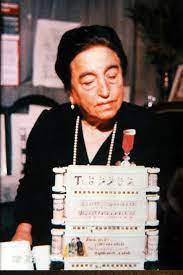
Angela Ruiz Robles: eBook Pioneer

What is it that would help to lighten the weight of school bags, is portable, makes learning more attractive and adapts teaching to the level of each student; can be used in the dark, supports learning with sounds, can be used in multiple languages, can be a useful teaching aid for teachers?

Today most school children can easily answer this as a “Tablet”. But this list, and this vision of such a teaching-learning device was made over 75 years ago, and resulted in an invention called Mechanical Encyclopedia. The inventor was Angela Ruiz Robles–a Spanish school teacher. 

Angela’s story is fascinating and inspirational.

Angela Ruiz Robles was born on 28 March 1895, in Villamanin, a municipality in the province of Leon in Spain. Her father Feiciano Ruiz was a pharmacist and her mother Elena Robles a housewife. Angela completed her higher education at the teacher training college in Leon, and went on to teach shorthand, typing and business at the same college from 1915 to 1916. In 1917 she was a teacher and director at the Gilberto Gordón School in Gordón, a town located near the city of León.

In 1918 she accepted a position as teacher in Santa Eugenia de Mandía, a village near Ferrol in Galicia, and remained there for the next decade. It is here that she found her true calling as a teacher. She was totally dedicated to her students, giving personal attention to each one; noting those who required special attention according to their needs. Her work was not confined to the classroom; she visited the homes of her students to provide additional instruction and support. She understood that every child has unique learning abilities, personalities and insecurities. As her old students recalled: “Doña Angelita, who was known by her first name to all of us, was the perfect teacher. She never treated any student differently and always honoured each individual learner’s needs.” Angela spent ten years in the village school and was greatly loved and respected by all.

Angela lost her husband when she was 40, and in 1928 she moved to Ferrol. She needed to teach, but now also to provide for her family. She founded the Elmaca Academy named after her daughters Elena, Maria Elvira, and Carmen. The Academy located in her own home provided classes for those aspiring to join customs, become mail carriers, or telegraph operators, as well as apply for business management studies. Her academy followed participatory pedagogical methods that were much ahead of their time; and this was reflected in the highest pass rate in the country for her students.

Along with the regular courses Doña Angelita gave free night classes to people with few resources. The Academy also became a social centre. Letters were read to, and written for illiterate immigrants; literary gatherings were held; food distribution was organized, and religious processions could be watched from here.

In 1934, she became manager of the Escuela Nacional de Niñas del Hospicio (National Girls’ School of the Hospice) in Ferrol, which cared for orphaned or abandoned girls. Doña Angelita made sure that the girls got a primary education, musical education and learned a useful trade so that they could earn and integrate with society.

As Doña Angelita continued her teaching and other educational work, she also had to support and bring up her three young girls by herself, but she made time for her own research and writing. Between 1938 and 1946, she wrote, lectured, edited and republished sixteen books. She published three of them: Compendium of Castilian Orthography, Castilian Orthography (abbreviated) and Modern Abbreviated Martinian Shorthand—books addressing the conventional Spanish spelling systems. In 1944, Ángela Ruiz started her Scientific-Grammatical Atlas project. Her goal was to teach Spanish grammar and spelling while making Spain better known through Spanish grammar, syntax, morphology, spelling and phonetics.

Angela Ruiz was also constantly thinking of resources, innovations, and inventions that would help to improve the teaching-learning process, and spent hours after her daily work in exploring and experimenting with such tools. Her aim was simple: “To make teaching easier, to get maximum knowledge with minimum effort.”

It was then that she dreamed of what she described as a “Mechanical Encyclopaedia” which addressed the needs listed in the first paragraph of this piece. This book included a vast range of information which was represented in graphic, sound or textual form. It could be made of waterproof and lightweight materials. It had the possibility of directly incorporating lighting and magnifying glasses.

Her invention consisted of patterned sheets. When you put your finger on them, they lit up and an educational text appeared. For this to happen, she incorporated an electrical circuit that she designed herself.

Angela made a sketch and detailed out her new kind of book which she described as “a mechanical, electrical, and air pressure procedure for reading books“. She was certain that her invention was a valuable educational tool and she went to Madrid to find promoters. Her invention was appreciated, but did not result in any funding for her to develop the patent. Angela was disappointed, but undeterred she continued to work on improving her invention.

On 10 April 1962, ten years after her first attempt, she filed a patent entitled An Apparatus for Various Readings and Writings. That prototype made of zinc and bronze was the Mechanical Encyclopedia. Today this prototype is exhibited at the National Museum of Science and Technology in A Coruña in Spain.

With that physical prototype, she once again undertook the rounds of different ministries in Madrid. Again the previous story was repeated: many pats on the back, but not a single penny. After all she was a woman, and a provincial school teacher, how could her invention be taken seriously? Angela continued her efforts until she was almost 75 years old, but she was unable to develop or distribute her inventions.

Today writer and philanthropist Michael Hart is best known as the inventor of the e-book, and in 1971, he created the Gutenberg Project, the first project to make e-books freely available via the internet. Sadly, forgotten in history books is the name of Angela Ruiz Robles, a passionate and dedicated teacher, and the original pioneer of the electronic book.

–Mamata

From Tagore to Ken Robinson: Creative Education

Continuing musings on education this week. This time with some thoughts from Sir Ken Robinson, one of the most influential contemporary thinkers on education, and discovering uncanny similarities in his vision with that of Rabindranath Tagore.

British-born teacher, author and speaker Ken Robinson spoke out against what he describes essentially an industrial model of education, a manufacturing model, which is based on linearity and conformity, and ‘batching’ people. As he said: We have sold ourselves into a fast food model of education, and it is impoverishing our spirits and our energies as much as fast food is depleting our physical bodies.

He viewed large school systems as being rigid and unresponsive, squeezing the creative juices out of children by overemphasizing standardized testing and subjects like mathematics and science over the arts and humanities.

Ken Robinson advocated strongly for schools not only to broaden their curriculums but also to support teachers as creative professionals; and to personalize learning by breaking large classrooms — artificial environments that invite boredom, he said — into small groups.

Over a hundred years after Tagore, he shared Tagore’s vision of a good teacher: Good teachers activate children’s minds instead of helping them to assimilate and collect information, and inspire children through their own self-development.

Ken Robinson made it his life’s mission to highlight the importance of systems and environments that nurtured creativity. In his book Creative Schools he describes how he views creativity.

 Imagination is the root of creativity. It is the ability to bring to mind things that aren’t present to our senses.

Creativity is putting your imagination to work. It is applied imagination. Innovation is putting new ideas into practice. There are various myths about creativity. One is that only special people are creative, another is that creativity is only about the arts, a third is that creativity cannot be taught, and a fourth is that it’s all to do with uninhibited “self-expression.”

None of these is true. Creativity draws from many powers that we all have by virtue of being human. Creativity is possible in all areas of human life, in science, the arts, mathematics, technology, cuisine, teaching, politics, business, you name it. And like many human capacities, our creative powers can be cultivated and refined. Doing that involves an increasing mastery of skills, knowledge, and ideas.

Creativity is about fresh thinking. It doesn’t have to be new to the whole of humanity— though that’s always a bonus— but certainly to the person whose work it is. Creativity also involves making critical judgments about whether what you’re working on is any good, be it a theorem, a design, or a poem. Creative work often passes through typical phases. Sometimes what you end up with is not what you had in mind when you started. It’s a dynamic process that often involves making new connections, crossing disciplines, and using metaphors and analogies. Being creative is not just about having off-the-wall ideas and letting your imagination run free. It may involve all of that, but it also involves refining, testing, and focusing what you’re doing. It’s about original thinking on the part of the individual, and it’s also about judging critically whether the work in process is taking the right shape and is worthwhile, at least for the person producing it.

Creativity is not the opposite of discipline and control. On the contrary, creativity in any field may involve deep factual knowledge and high levels of practical skill. Cultivating creativity is one of the most interesting challenges for any teacher. It involves understanding the real dynamics of creative work.

The real driver of creativity is an appetite for discovery and a passion for the work itself. When students are motivated to learn, they naturally acquire the skills they need to get the work done. Their mastery of them grows as their creative ambitions expand. You’ll find evidence of this process in great teaching in every discipline from football to chemistry.

We have to recognize that human flourishing is not a mechanical process, it’s an organic process. And you cannot predict the outcome of human development. All you can do, like a farmer, is to create the conditions under which they will begin to flourish.

Tagore dreamed the same dream and urged for the same process when he wrote: Do not be preoccupied with method. Leave your instincts to guide you to life. Children differ from one another. One must learn to know them, to navigate among them as one navigates among reefs.

This week as we all remembered the teachers who have, in some way or the other, contributed to making us who we are, words of such visionaries help us to better articulate what it means to be a real teacher.

–Mamata

Celebrating the Gurus: Teachers’ Day

Rabindranath Tagore was the one who gave Gandhiji the title of Mahatma. Gandhi in turn called him ‘Gurudev’ in reverence to his wisdom and his learning, and saw him as a teacher to humanity.
Gurudev and Radhakrishnan at Shantiniketan where Oxford Univ held a special convocation in 1940 to honour Tagore
Gurudev Rabindranath Tagore gave India a different vision of education, of teachers and the teaching process. It is appropriate to remind ourselves of his views on these subjects on the occasion of Teachers’ Day, Sept 5. Trying to paraphrase him would be useless.  So better, I thought, to share a few quotes:
About teachers:
‘A teacher can never truly teach unless he too continues to teach himself. One lamp can never light another unless it continues to burn its own flames. Similarly, the teacher who has come to the end of his subject, and has no living traffic with his knowledge but merely repeats his lessons to his students, can only burden their minds, he cannot inspire them.’
‘Good teachers activate children’s minds instead of helping them to assimilate and collect information, and inspire children through their own self-development. They encourage them to work on the teacher’s own original projects and thereby travel together on their journey to more understanding.’
Gurudev always looked for gurus for his schools and educational institutions, rather than teachers. According to him, gurus are ‘active in the efforts to achieve the fullness of humanity”. They ‘will give their whole selves to their students instead of merely sharing the material as prescribed by the curriculum’.
His message to teachers:
‘Do not be preoccupied with method. Leave your instincts to guide you to life. Children differ from one another. One must learn to know them, to navigate among them as one navigates among reefs. To explore the geography of their minds, a mysterious instinct, sympathetic to life, is the best of all guides.’
He wanted teachers and school administrators to recognize the importance of letting children discover the joy of learning and what nature has to teach them. Nothing sums this up better than an excerpt from a lecture he gave in London in 1933, where he recounts one of his encounters with a more ‘traditional’ educator:
‘I well remember the surprise and annoyance of an experienced headmaster, reputed to be a successful disciplinarian, when he saw one of the boys of my school climbing a tree and choosing a fork of the branches for settling down to his studies. I had to say to him in explanation that ‘childhood is the only period of life when a civilized man can exercise his choice between the branches of a tree and his drawing-room chair, and should I deprive this boy of that privilege because I, as a grown-up man, am barred from it?’ What is surprising is to notice the same headmaster’s approbation of the boys’ studying botany. He believes in an impersonal knowledge of the tree because that is science, but not in a personal experience of it. This growth of experience leads to forming instinct, which is the result of nature’s own method of instruction. The boys of my school have acquired instinctive knowledge of the physiognomy of the tree. By the least touch they know where they can find a foothold upon an apparently inhospitable trunk; they know how far they can take liberty with the branches, how to distribute their bodies’ weight so as to make themselves least burdensome to branchlets. My boys are able to make the best possible use of the tree in the matter of gathering fruits, taking rest and hiding from undesirable pursuers. I myself was brought up in a cultured home in a town, and as far as my personal behaviour goes, I have been obliged to act all through my life as if I were born in a world where there are no trees. Therefore I consider it as a part of education for my boys to let them fully realize that they are in a scheme of existence where trees are a substantial fact, not merely as generating chlorophyll and taking carbon from the air, but as living trees.Ideal Teachers: Gurus vs. Schoolmasters.’
On Teachers’ Day, as we commemorate Dr. S. Radhakrishnan, another of India’s great educators, let us think about what education means in this changing world, and how the role of teachers must evolve.
–Meena

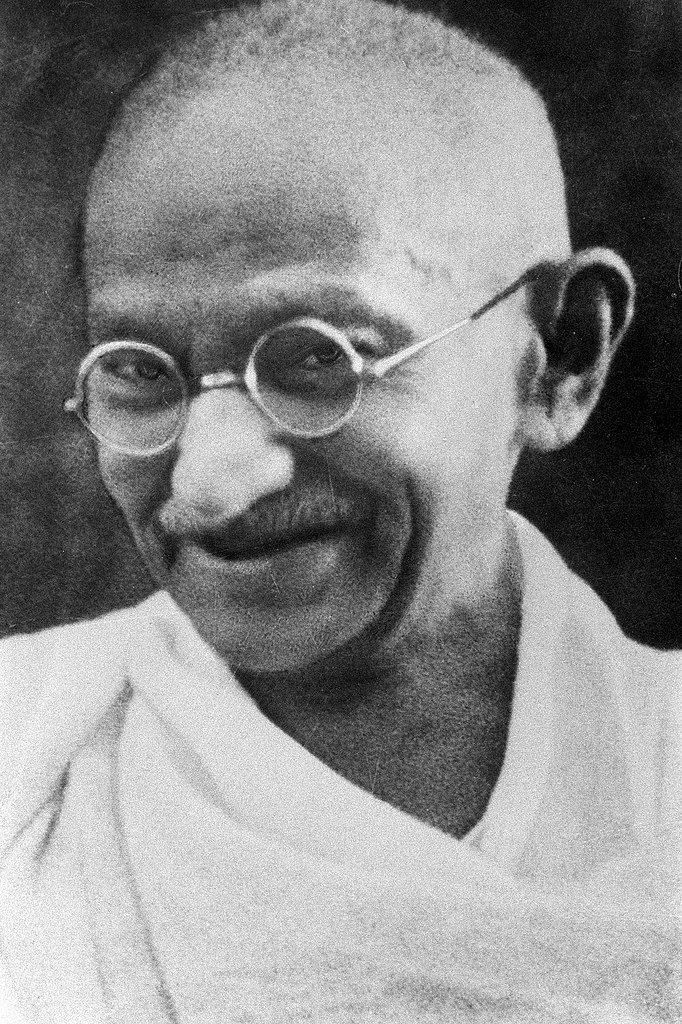
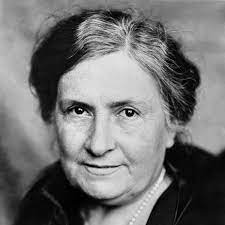
Mahatma Gandhi and Madam Montessori

India is currently in the process of introducing the New Educational Policy (NEP 2020). Exercises are ongoing to develop the curricula and frameworks for education at all levels, starting from Early Childhood Care and Education (ECCE).  As per the Policy document: The overall aim of ECCE will be to attain optimal outcomes in the domains of physical and motor development, cognitive development, socio-emotional-ethical development, cultural/artistic development, and the development of communication and early language, literacy, and numeracy.

This vision for laying the strongest foundation for lifelong learning has its seeds in the thoughts and writing of many educationists and thinkers. It has a deep resonance with Gandhiji’s thoughts on education. In 1937, at a conference in Wardha, Maharashtra, Mahatma Gandhi seeded an important idea to revamp the educational system through Nai Talim or Basic Education.

Gandhiji’s vision was that this new paradigm of education should prepare the young learners to become morally sound, individually independents, socially constructive, economically productive and responsible future citizens. The foundation for this was to be laid in early childhood. Gandhiji believed that education should develop all the capacities of the child so that he becomes a complete human being. “By education I mean all-round drawing out of the best in child’s and man’s body, mind and spirit. Literacy is neither the beginning nor the end of education. This is only a means through which man or woman can be educated. 

In Gandhiji’s educational thoughts the integrated development of the personality of child is more important than mere literacy or knowledge of different subjects. Thus his vision was of life-centred as well as child-centred education. Besides learning of three R’s–Reading, Writing and Arithmetic in school, he insisted on development of the three H’s–Hand, Heart and Head.

While these thoughts took formal shape in the form of Nai Taleem in 1937, they had long been brewing in his mind. Over the years he was also assimilating the writing and educational philosophies of other thinkers and practitioners of alternate and innovative systems of teaching and learning. One of these was Madam Montessori.

The two had already met in spirit before they met in person. Gandhiji was in London to attend the Round Table Conference in October 1931. Maria Montessori was at the time holding one of the International Training Courses for teachers. Common friends brought them together. At their first meeting which was around 9 October 1931, the interaction was recorded thus:

Gandhi greeting her said: “We are members of the same family”.

“I bring you the greetings of children” said Madam Montessori.

Gandhiji said: “If you have children I have children too. Friends in India ask me to imitate you. I say to them, no, I should not imitate you but should assimilate you and the fundamental truth underlying your method.”

Madam Montessori: “As I am asking my children to assimilate the heart of Gandhi. I know that feeling for me over there in your part of the world is deeper than here.”

Gandhiji: “Yes, you have the largest number of adherents in India outside Europe.”

On 28 October 1931 Gandhi gave a speech at the Montessori Training College in London wherein he traced his own Montessori journey.

Madam you have overwhelmed me with your words. [Madam Montessori had welcomed Gandhiji as “a soul rather than a man”.]

It was in 1915 when I reached India, that I first became acquainted with your activities. It was in a place called Amreli that I found there was a little school being conducted after the Montessori system. Your name had preceded that first acquaintance. I found no difficulty in finding out at once that this school was not carrying out the spirit of your teaching; the letter was there. But while there was an honest—more or less honest—effort being made, I saw too that there was a great deal of tinsel about it.

I came in touch, then with more such schools, and the more I came in touch, the more I began to understand that the foundation was good and splendid, if the children could be taught through the laws of nature—nature consistent with human dignity, not nature that governs the beast.

…I see the same thing here, and it was a matter of inexpressible joy to me that from childhood the children were brought to understand the virtue of silence. It and how in ,response to a whisper from their teacher, the children came forward one after another, in pin-drop silence. It gave me great joy to see all the beautiful rhythmic movements and as I was watching those movements of the children, my whole heart went out to the millions of the children of the semi-starved villages of India, and I asked myself as my heart went out even to those children, “Is it possible for me to give them these lessons and the training that are being given under your system, to those children?

It was this first meeting that inspired Mahatma Gandhi to visit Montessori schools in Rome on his way back. He declared there, his interest in promoting them in India. The two continued to be in touch. Just after the outbreak of the Second World War in 1939 when Maria Montessori came to India, Gandhiji was one of the first to send her message of welcome. They met and corresponded during the nearly 10 years that Montessori lived and worked in India. After Italy’s entry into the World War, restrictions were imposed on Montessori as she was being considered as an enemy-alien. Gandhiji expressed sympathy, and regret even, though he was under restrictions himself.

In March 1940 when Madam Montessori was in Ahmedabad she inaugurated the Bal Mandir (kindergarten) in the Sabarmati Ashram campus. Thus the long friendship between two visionaries took concrete form.

As we mark Maria Montessori’s birth anniversary on 31 August, it is a good time to revisit the close links between her and the Mahatma. In these turbulent times, we urgently need to remember their strong belief that to have real peace, we must begin with the children.  

If we are to teach real peace in this world, and if we are to carry on a real war against war, we shall have to begin with the children. MK Gandhi

Averting war is the work of politicians; establishing peace is the work of education. Maria Montessori

–Mamata

The Jawaja Project

One of the criticisms against academic institutions is that they are far removed from every day realities and seldom contribute in solving real-life challenges.

The Jawaja project undertaken by IIM Ahmedabad in partnership with the National Institute of Design (NID), Ahmedabad is an early exception.

It was in 1975 that Ravi Mathai, IIM-A’s legendary first fulltime director, set out on a journey to see how corporate management principles could be used to solve the major problem facing India-poverty. Ravi had stepped down as Director and could now devote time to such a project.

The decision was taken to work in Jawaja, a drought-prone district of Rajasthan, consisting of about 200 villages and 80,000 population. There seemed very little scope for development there, given the arid landscape and lack of water and other physical resources. But Prof Ravi Matthai had a different perspective, because he saw people as the biggest resource.

As they understood the area better, they found that the area had a 300-year tradition of leather-craft. The communities there were also skilled at weaving. And so they decided to build on these skills to develop sustainable livelihoods for the communities there. Prof. Mathai roped in NID to join hands with IIM-A, to work on livelihoods and empowerment of the communities in Jawaja. He and Ashoke Chatterjee, his counterpart in NID, started the journey which involved many faculty from both institutes.

The idea was to connect artisans with contemporary disciplines of management and design, and knowledge institutions which had this knowhow. There were some important basic principles underpinning the effort. The first and foremost was that the relationship was one of mutual respect and learning—after all, even as the communities learnt new skills, the faculty of the institutions were learning how their knowledge could be put to use in solving social problems. Another important aspect was to see how much of the value chain could be controlled by the artisans and communities themselves, so that their incomes could be enhanced. The idea was to innovate and design new products which would have new markets, so that the traditional value chains could be broken and the craftspeople could play a greater role in more areas. The focus was also on working in groups, to give greater resilience and strength to the efforts.

Jawaja bag
A prized Jawaja bag

The process was by design a gradual one, moving from basic products which did not need very high quality—e.g, leather school bags and woven floor mats, to higher value ones like office supplies, more trendy bags, and high-end furnishings.

The challenges were of course many. Apart from the need to design new products which would use the old skills, technologies and equipment, another major concern was quality control.

With regard to production of new designs, a train-the trainer model was envisaged, which did not work quite as planned. With regard to quality control, the idea was that it would initially be done by external experts, and would then be taken over by the crafts groups themselves. This again went slower than foreseen. Funds and resources for developing new products and for procurement of raw material were always a constraint.

But the enduring success of the bold experiment is seen even today at several levels.

The first was the creation of self-reliant institution of crafts people– the Artisans’ Alliance of Jawaja and its associations. These started to manage all links of the value chain in Jawaja, from raw material procurement, finances, bank dealings, design and technology know how, and marketing processes. These are still active today and continue to innovate, produce and market these products which are highly valued.

The second is the impact of the project on the larger development scene. It was the learning from running this grassroots education and empowerment project that the idea of setting up a specialized institution for education in rural management came up, and the Institute of Rural Management (IRMA), Anand, was born. This was given shape by Prof Ravi Mathai and two other professors who had been with IIM-A—Dr.Kamala Chowdhary and Dr.Michael Halse.

The Jawaja experiment widespread legacy is that it influenced development sector thinking on how to approach community-based livelihood interventions in a spirit of mutual respect and learning.

It is an initiative which needs to be much more widely known, understood and discussed.

–Meena