Well Spun!

Ponduru, a village in Srikakulam, Andhra Pradesh, arguably produces the best khadi in India. Well, at least Gandhiji thought so. He was highly impressed with the fineness of the khadi produced here and preferred it to other khadis. The best dressed (khadi-mode) contemporary politicians even today get their saris, dhotis and shirt material from here.

Ponduru khadi is hand-carded, hand spun and hand woven—truly khadi in letter and spirit.

What makes it special? Well, more than one factor, it seems. For one, the raw material itself is of a special quality—it is made from special varieties of hill cotton and red cotton which are grown in Vizianagaram and Srikakulam districts. For another, Ponduru khadi is very smooth, especially the higher count variety. This is because the jawbone of the Valunga fish found in Srikalkulam is used to comb the cotton  fibers to separate them from the seeds, and the process lends a soft sheen  to the cotton.

21637405-76C9-4CD8-B597-D2A608CB60E3

There was a time when every home in this village had a loom. But like in most of India, the number of khadi workers in Ponduru is falling. The low remuneration is of course a major reason. Those involved in the sector do not want their children to follow them—they would much rather they got a ‘professional’ degree and got a ‘secure’ job.

Fortunately, there are some efforts to improve the situation, including dedicated NGOs working in the sector. Chitrika is one such which has been working closely with the Ponduru khadi sector for over a decade now. They are helping the workers organize themselves into Producer Cooperatives, find newer markets, and improve their capacities. New and innovative designs are being brought in. All this is enhancing the incomes of the weavers, almost doubling them in the last decade.

But without a pull from the market, no government subsidies or NGO efforts are going to lead to sustainable results. An eminent Gandhian once mentioned that if every Indian bought one khadi garment a year, the sector would thrive and all our khadi workers would be able to earn decent incomes.

A small thing to ask! And this is in our hands.

So this piece today is a call to action. We are about a month away from Independence Day. Go out and buy some khadi! It is a practical and easy ‘good deed’ for 15 August!

Buy khadi, and specially buy Ponduru khadi, best of all khadis!

–Meena


Up My Wall

Of course house lizards must climb my walls in summer. They must eat up the nameless insects and the mosquitoes and the what-nots. I don’t love them, though I respect their role. And the translucent babies are amazingly cute.

Moths must rest on the walls of my room occasionally. Grey, brown, black, white, small, big. Love all of them. Also spiders.

I have found a slug or two climb the outside-wall. Don’t mind too much, though they do leave a yucky trail.

But the one that really stunned me was a tree frog up my bedroom wall, next to a portrait of my mother! The wall of my first floor room, on the side with no window. How did it even get up there? Climb a tree, jump through the open window, hop across the whole room and then climb the opposite wall? Wow!

D1CEBD2F-E21B-44E8-8827-E80D13734C2D

Ten minutes of full-on excitement. Lots of jumping around ( frog, Raghu and me, with the frog winning on agility and grace— hands down, or is it feet down??); screeching (mainly me, not at all the frog);  some sleight of hand with newspapers and a bucket. And we managed to get the frog out safely.

Oh, how boring  life would be without things that climb my walls!

5A9AB48F-7A43-461C-A334-E8B3DC79EE2D

78BE1532-E3D7-4514-93E7-39C5BC5FC5F6

—Meena


Talk Time

All through school and college, one of the best parts was the ‘night-spend’ (before it was called ‘sleep-over’!) at a friend’s place. The high point of this was staying awake till very late, sometimes even till dawn, simply nattering the hours away. Though well past our school and college days, for myself and my friends, this continues to be so, even today!

We never seemed to run out of conversation. Conversation was comfort, it was catharsis, it was heart-to-heart and tête-à-tête, and more. Conversation was face-to-face communication.

It was not just with friends–face-to-face communication was a way of life. Families caught up with doings and happenings/news over daily meals, and at family get-togethers; colleagues exchanged views over a cup of tea; housewives met at the corner for a chinwag to exchange neighbourhood gossip, and senior citizens bemoaned the state of the world as they took their constitutional in the park. We communicated daily with the shopkeepers, the domestic help, the essential service providers like the milkman, the presswalla, the newspaper supplier, and the auto drivers.

Today we are told that the world is “connected” like never before. We are in constant communication, as it were…Through the press of a button we can order our groceries and daily requirements; we can book tickets for movies or order in food; we can upload pictures of our latest travels; we can stream live the family wedding from the exotic destination; we can open our hearts to the BFF through Twitter and Instagram…and we can even text our children in their bedroom to say that dinner is ready!

The world is “connected” 24/7. Time saving, effort saving, technological marvels we say.  But somewhere in all this, have we not lost something precious? Something that is a basic human need–Face-to-face communication, an ancient and abiding human gift? Are we losing a vital connection?

“When you speak a word to a listener, the speaking is an act. …Listening is not a reaction, it is a connection. …And it is a mutual act: the listener’s listening enables the speaker’s speaking. It is a shared event, intersubjective: the listener and speaker entrain with each other.  …When you can and do entrain, you are synchronising with the people you’re talking with, physically getting in time and tune with them. No wonder speech is so strong a bond, so powerful in forming community.” (Ursula K. Le Guin in a piece titled Telling Is Listening.)

Perhaps the next time, before we sign up for “Unlimited Talk Time” offers, let us see if we can make real Time for Talk.

–Mamata

Keeping Tradition Alive

July is here. And along with it, the festival season. Pujas—a time for festivities, fun, enjoyment with the family. A time to get back in touch with our traditions. A time of solemnity and also gaiety.

6c9530db-1939-4892-bb6d-61c4e4561547-e1531315938949.jpeg


But also today, a time for stress! Who knows what the auspicious grass for Ganesh Chaturthi is? Or the prasadam to be made for Thiruvadarai? What is the rangoli to make for Rathasapthami?

And how to answer questions from the kids? Why is Naga Panchami celebrated? Who is Ekadashi? Why do we make sundal for Navaratri?

“Follow the Hindu Moon: A Guide to the Festivals of South India’, by Soumya Aravind Sitaraman, will answer all these questions and more. Brought out by Random House about 10 years ago, this magnum opus is in two volumes, totaling to over 800 pages. But don’t be put off by the weight and the bulk. The publication is erudite and comprehensive, but extremely easy to read and refer to. The text presentation is clearly organized and simple.

What really brings the book to life are the more than 400 colour plates. Beautiful, un-posed, real—they bring alive the beauty of our traditions. Whether it is the decoration of Varalakshmi or the photographs of the delicacies made for different pujas, you wish you could be there in the photo, living that moment. The photographer is Usha Kris, Soumya’s mother!

Volume 1 is called  ‘Celebrate’. It covers: “Puja Basics’—everything from aartis to vastram; ‘Embracing the Almighty’—a guide to pujas;   ‘ Getting organized’—pooja checklists to annual festival planner; and ‘Celebrate’—detailed walkthroughs for every festival of South India, including procedures, observances, rituals, sankalpams, stories, etc.

Volume 2 called ‘Understand’ has sections on everything from ‘Reading the Panchanga’ to shlokams, to naivedya recipes, and festival-specific rangoli designs.

The books work at several levels: as a ‘Do-it-yourself’ guide for novices; as a reference book on details for experienced mamis; and as a fascinating browse for anyone.

At first look, Rs. 3500 seems a bit of an investment. But this book is bringing to you almost those many years of tradition!

So whether you are an experienced puja veteran, or a student in the US who wants to celebrate festivals the traditional way, or an ‘armchair cook’ like me, you are going to enjoy this book. So buy it for yourself. Or share the joy of a festival and gift it to a loved one!

–Meena

129 Pages Open Up a World

‘The Buddha in the Attic’. What an innocuous book title. And such a pretty cover.

But the world it opened for me was neither innocuous or pretty.

b5ddb7a1-198f-4968-9302-fdc498cf6c7d.jpeg

A confession first. I am pretty ill-informed of historical migration to the US. I knew about Italians and Irish going. And other Europeans—like the Polish. But I never thought of Asian migration as significant. Hence the very moorings of the book were an education. ‘Oh, Japanese migrate to the US in numbers in the 1880s?’ was the question that struck me. I had to do some little surfing and reading to give myself a context.

Just a quick wiki-glimpse of the highlights of this for those of my readers who may not be familiar with the issue:


Coming back to the book, it traces the stories of ‘picture brides’ who came to the US from Japan. And therein lies the brilliance. It is not the story of one woman or family. The technique that Julie Otsuka uses is such that through a tiny 129-page book, I begin to understand the history of the whole Japanese community in the US in the pre-WWII period, and get powerful insights into what might have happened to a whole set of picture brides.

Read it to understand history from the perspective of immigrants; read it to understand history from the perspective of women; read it to understand xenophobia is not new and that history does repeat itself; to learn that the stories of some women are the stories of all women; to learn that the stories of one diaspora are the stories of all diaspora; to learn how so much can be conveyed with so few words.

Bottom line, READ IT!

–Meena

P.S: Feel really ill-informed. I never knew about this book or Julie Otsuka till recently.

Needs, Wants and Luxuries

So the ultimate in luxury seems to be “Make Google Do It”! As the ads remind us your little Google Assistant will do it all for you—Play music, Cast videos, Control your lights, Get step-by-step cooking recipes, Stay updated with news and sports, and anything else that you shall wish for—Just Ask and your wish is its command. This is the new age Aladdin’s Lamp, no less!

Not so long ago, we still remember walking back and forth from the Black and White television set to change the channel (from the limited selection available). Then came the Remote! And its fallout—a generation of couch potatoes! And more recently, the Fitbit and Gym generation that needs to burn the calories collected courtesy the hard-working Bot!

It is the age of too much, an age of choices galore. For those who can afford it, the choice is no longer ‘Keeping up with the Joneses’, but staying ahead of ‘Those who have Everything.’

But what are the choices being offered, and what are we choosing?

I am reminded of a simulation exercise that we often did as environmental educators. We would ask participants to imagine that they have to leave their home due to a sudden disaster in the area. Before they leave they have time to take just 20 things that they can carry with them. They are not allowed to take money. They do not know where they are going, when they will reach, and if and when they will be able to return. They must make a list of these 20 things. Once they had done this, they were told that the truck that was carrying them is overloaded, and they have to drop 5 of the 20 things they were carrying. What would they choose to leave? Once they have done this, they were further told that the truck has broken down and they will have to walk. Which 5 of the 15 items will they discard? Now the list has 10 items. As they go ahead they are stopped by a gang of dacoits who demand five items from the ones they are carrying. Which ones will they give, and which ones will they keep? Now they are left with 5 items.

At the end we would review each one’s list, and think about the choices each one made, and the reasons for these. We would, perhaps for the first time, review our own belongings from the perspective of Needs–those that were essential for survival; Wants–those that were desirable but not indispensable, and those that were things we owned because we could afford to—Luxuries.

This is not simply an abstract exercise;  in news reports every day we see heart-rending  scenes of millions of refugees—ousted from their countries and homes by natural calamities, political upheavals, social and cultural persecution. People with nothing to their name. People for whom simple survival is a luxury.

For those of us fortunate enough to have choices, and the luxury of more than we need, it may be worth sparing some thought to our personal List of 20-5-5-5. How much do we really need?

“He who knows he has enough is rich.” (From the Tao Te Ching an ancient Chinese philosophical poetry.)

–Mamata

Justifications Believers Could Give

In the old days, it seems from all reports,

That Gods of all faiths performed many, many miracles


THEY would save believers from the jaws of death

THEY would heal lepers and give sight to the blind

THEY would grant riches and victory to the righteous

And take the time to wipe the tears of widows and orphans


But it seems THEY are slipping up badly these days

I can see no miracles around me

In fact, THEY are performing ‘Below Expectation’ (a term from my appraisal process!)

Even in their core function

Which is to reward the good and punish the bad


Well, when you think about it

I can find some excuses for THEM

How do you expect THEM to cope

With the kind of rise in population

The world has seen from the good old days?

So many billions of souls

Calling out to them for

Miracles big and small


Agreed THEY are Gods

But even THEY, surely

Must be stressed and over-worked

Poverty, hunger, AIDS

Terrorist attacks, the War on Terror

Nuclear proliferation

Stock market booms and busts

Dictators and trolls

Floods, droughts, tsunamis

Child trafficking, porn sites

Violence against women


In between sorting out all this

Do you seriously expect THEM

To make the time

For a personal miracle for you?


Get real!


–Meena


A Special Week

Last week was special for the Matriarchs. A week of reunions and catching-ups. Meeting old friends in new places. A week to celebrate friendship, and be grateful for good times, and even bad times, savoured and shared.

Sharing some thoughts that capture the spirit.

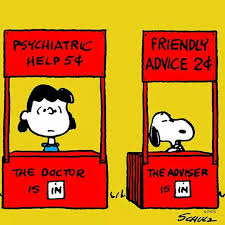
“We trust our friends to tell us what we need to know, and to shield us from what we don’t need to discover, and to have the wisdom to know the difference. Real friends offer both hard truths and soft landings, and realise that sometimes it is more important to be nice than to be honest. That too is knowledge that comes only with age…. In other words friends are what we have in addition to, or in lieu of therapists.”                Anna Quindlen

doc is in.jpg
Source: Google

–Mamata

Things That Got Our Teachers’ Goats

A few weeks ago, I wrote about something that had our teachers and school management paranoid—so called ‘contraband books’. We had a well-stocked school library, but obviously we had an urge to read something beyond—like comics and M&Bs! Which our teachers and the nuns were determined to stop us from doing. One of the things that used to happen irregularly regularly were surprise checks. Suddenly about four teachers would walk into the classroom, and order us to open our desks and bags, and would riffle through them. Anyone caught with any book other than textbooks or school library books was sent off to the Principal, and had the book confiscated.

I marvel at those days of innocence, considering that as far as I know, no one was ever caught with anything more wicked than an Archie comic. Or yes, a Barbara Cartland. While Georgette Heyers were completely kosher and in fact, in the school library lists, and even M&Bs were tolerated (which meant we were not too nervous if a teacher heard us mention them), for some reason BCs really got the teachers paranoid.

They were also paranoid about what our hair was fastened with. It had to be black ribbons. Rubber bands, even black ones, got them. What to talk of ‘love in Tokyos’!

And socks. They had to be plain white, and NO DESIGN! The faintest sprays of flowers or creepers, even white on white, would get them on a trip.

Skirts had to be just above the knee. Anything shorter and there would be consequences. The girls with more oomph and guts found their way around this. They used to roll up the waist band of the skirt two or even three times, so that the skirts were at a daring mid-thigh. And roll them down, oh so innocently, when any strict teacher happened by.

All this was at Carmel Convent Delhi. But I am sure that readers of my generation would all relate to this.

I thank my teachers for the discipline they dinned into us. For the values they made a part of our lives. For the seriousness with which they taught us. For how earnestly they took their mission of making something of us.

–Meena

Word Play

I am a logophile. Before you leap to dangerous conclusions, let me explain! I am a lover of words! Words fascinate me, excite me, and intrigue me—the sound of words, the use of words, and the play with words. While I run scared from attempting a Sudoku puzzle (I guess that makes me Numerophobic or Arithmophobic!) I cannot resist any kind of word game or puzzle. Scrabble is the only board game I enjoy. I feel insecure without the presence of my faithful dictionaries on my table, even when I can Google up a word with a single click.  I enjoy the act of turning the pages to find the word I am looking for and, in the process, discover at least a few new ones while browsing.

Perhaps the first word that got me hooked was supercalifragilisticexpialidocious from the film Mary Poppins. It sounded as wonderful as it meant. It took many hours to learn how to say this, and much longer to even dare to spell it out! Though an invented word, it later found its legitimacy in the Oxford English Dictionary. But it could not lay claim to being the longest word in the English language, the title of which is claimed by—take a deep breath—pneumonoultramicroscopicsilicovolcanokoniosis! (a lung disease caused by inhaling very fine ash and sand dust.)

logphile.jpg

Source: Google

Over the years I have been noting down interesting words and word-related things.

Sharing some fun and games with words!

Palindrome

These are words or phrases that read the same in both directions. According to language experts palindromes are the most difficult kind of phrase to create.

The best known example: Madam I’m Adam.

An interesting one: A Man, A Plan, A Canal, Panama.

And a very clever one!

Doc, note, I dissent. A fast never prevents a fatness. I diet on cod.

Lipogram

This is a literary work in which one or more letters of the alphabet are excluded. The term lipogram comes from the ancient Greek leipográmmatos, which means ‘leaving out a letter of the alphabet’.

As far back as the 3rd century BC, Greek poet Tryphiodorus wrote an epic of 24 books, each one omitting one letter of the alphabet.

One of the most famous lipograms of more recent times (1939) is a 50,000 word novel called Gadsby. The author Ernest Vincent Wright makes no use of the most frequently used letter of the English alphabet—E.

A tiny extract illustrates how: ‘Upon this basis I am going to show you how a bunch of bright young folks did find a champion: a man with boys and girls of his own; a man so dominating and happy as individuality that youth is drawn to him as is a fly to a sugar bowl.’

From selective exclusion to all-inclusion—that is the Pangram!  This is a short sentence containing all 26 letters of the English alphabet. All the worthies who learnt touch typing on a manual typewriter will be glad to learn that the one sentence they pounded out, in endless practice, is the most famous Pangram: The quick brown fox jumps over the lazy dog.

Cheers to all fellow logophiliacs, wordaholics, word fanatics, word nuts, logolepts, verbivores and, the even nobler, epeolatrists (worshipper of words).

May our tribe increase!

–Mamata