Ode to the Sparrow

The last few days have seen many ‘DAYS’.

March 21 was World Poetry Day. It was adopted as such by UNESCO 21 March as World Poetry Day in 1999, at its 30th General Conference. The aim of Poetry Day is towards ‘supporting linguistic diversity through poetic expression and increasing the opportunity for endangered languages to be heard. World Poetry Day is the occasion to honour poets, revive oral traditions of poetry recitals, promote the reading, writing and teaching of poetry, foster the convergence between poetry and other arts such as theatre, dance, music and painting, and raise the visibility of poetry in the media.’ (UNESCO).

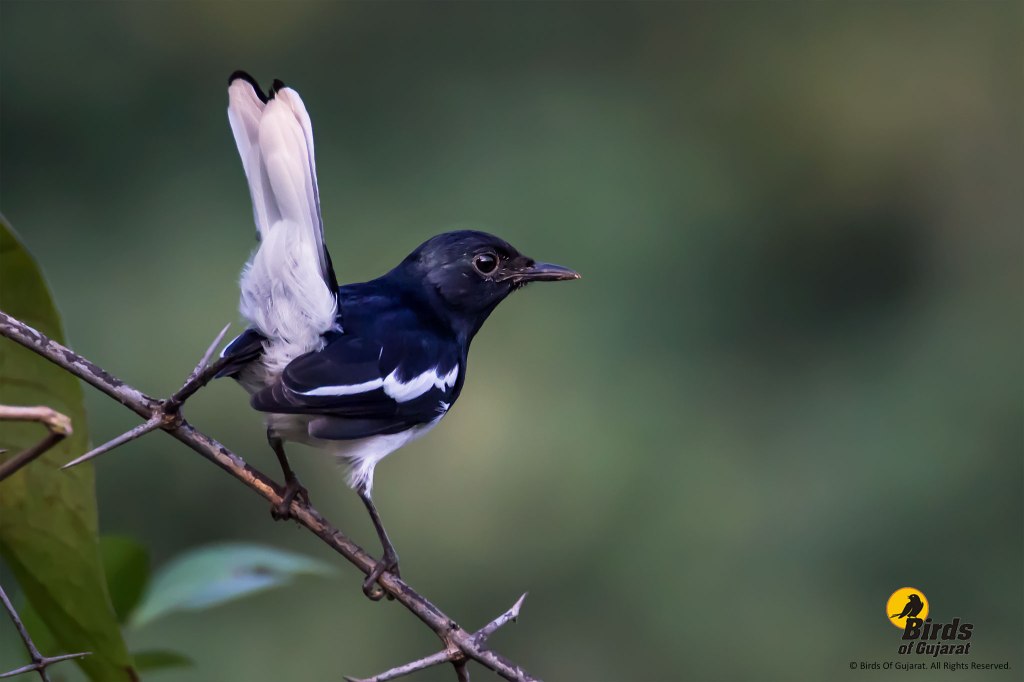
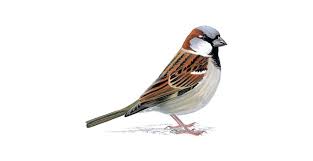
Sparrow

March 20 is celebrated as World Sparrow Day (WSD). The Day, celebrated for the first time in 2010, is meant to raise awareness about the house sparrow and the dangers it confronts. World Sparrow Day was established by Mohammed Dilawar who grew up in Nashik, Maharashtra. Birds were a big part of his childhood. As an academic, he came across a student-project about the decline of sparrows in UK, and that got him thinking about the same thing happening in India, and he decided to do something about it. He started Nature Forever Society (NFS) in 2005, and has been recognized as an Environmental Hero. WSD is one of his many initiatives to protect biodiversity.

Let’s bring the two ‘Days’ together with poems about….sparrows.

And interesting, I found two poems which also resonate with what we are going through today.

The first, a poem by the Tamil poet Mahakavi Bharatiyar, is about his yearning for India’s freedom.

Liberation – Little Sparrow: Subramania Bharathi

O May you escape all shackles

And revel in Liberty

Like this

Sprightly Sparrow!

Roam about in endless space,

Swim across the whirling air,

Drink the measureless wine of the light

That flows for ever from the azure sky!

Happily twittering and making love

Building a nest beyond danger’s reach

Guarding the fledgling, hatched from the egg

And giving it feed and a wholesome care.

From: https://tamilandvedas.com/tag/poem-on-sparrow/

The other, a poem is by Paul Laurence Dunbar who was born in 1872 to two formerly enslaved people from Kentucky and became one of the first influential Black poets in American literature. He sees the sparrow as a bird of peace and hope and love, whose calls our hearts are too deadened to listen to.

The Sparrow: Paul Laurence Dunbar

A little bird, with plumage brown,
Beside my window flutters down,
A moment chirps its little strain,
Ten taps upon my window–pane,
And chirps again, and hops along,
To call my notice to its song;
But I work on, nor heed its lay,
Till, in neglect, it flies away.

So birds of peace and hope and love
Come fluttering earthward from above,
To settle on life’s window–sills,
And ease our load of earthly ills;
But we, in traffic’s rush and din
Too deep engaged to let them in,
With deadened heart and sense plod on,
Nor know our loss till they are gone.

From: https://poets.org/poem/sparrow-0

Here is to a world where we make poetry, see sparrows, and importantly, listen to their call!

–Meena 

Colours

It is the season of colours. In Nature this is when blossoms and blooms announce the arrival of spring. The birds flaunt their plumage to attract their mates. It is colours that make this statement with an astounding variety of shades, from the flamboyant to the nuanced.

Colours are also significant in the world of humans. They express our moods, and our preferences. They indicate our race, nationality, or our sexuality. They inspire, as well as give form to our art, our textiles, and our cuisines. Each colour is unique in itself, but it is when colours come together that the real magic happens.

Sadly it is when colours begin to define race and politics that the magic turns murky. It is when national colours become the label of “friend” or “enemy”, and when the colour of the skin assumes pejorative tones that colours begin to create dangerous schisms and chasms. This when humans become so blinkered that colours begin to assume divisive identities; that colours increasingly create silos within which monochromatic sentiments fester until they explode in violence and war.

These ruminations were triggered by a poem that I came across. The words are simple, but the thoughts profound.

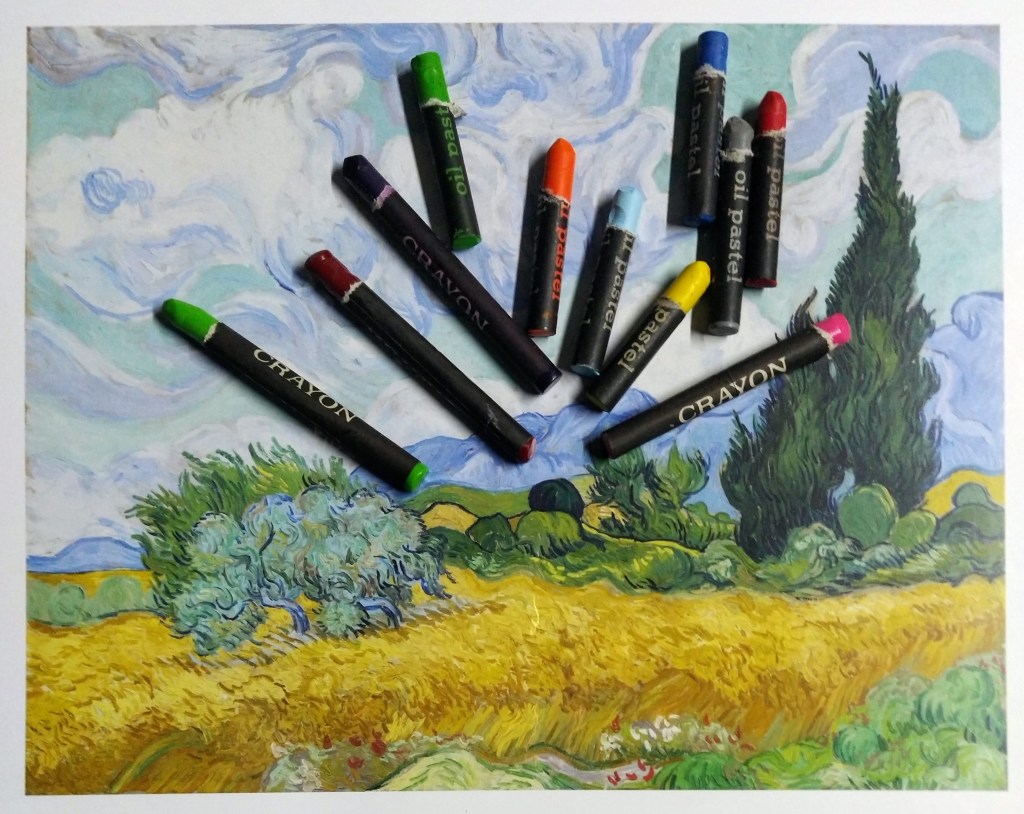
CRAYONS

While walking into a toy store

The day before today

I came upon a crayon box

With many things to say.

“I don’t like Red!” said Orange.

And Green said “Nor do I”.

“And no one here likes Yellow.

But no one knows just why.”

“We are a box of crayons

That does not get along.”

Said Blue to all the others,

“Something here is wrong.”

Well I bought that box of crayons

And I took it home with me.

And I laid out all the crayons

So the crayons could all see.

They watched me as I coloured

With Red and Blue and Green.

And Black and White and Orange

And every colour in between.

They watched as Green became the grass

And Blue became the sky.

The yellow sun was shining bright

On white clouds drifting by.

Colours changing as they touched,

Becoming something new.

They watched me as I coloured

They watched till I was through.

And when I finally finished,

I began to walk away.

And as I did the crayon box.

Had something more to say.

“I do like Red” said Orange

And Green said “So do I!”

“And Blue, you were terrific.

So high up in the sky!”

“We are a box of crayons

Each of us unique.

But when we are together

The picture is complete.”

Today as we celebrate Holi, the festival of colours, let the colours unite us in our revelries, in their true spirit. Let colours become all-inclusive rather than exclusive. Let the many different shades and tints come together to weave a magnificent and rich multi-hued tapestry. Let us remember that within every colour lies a story, and stories are the binding agent of cultures.

Happy Holi!

–Mamata

Celebrating Slimy

You would have been exhorted to vote for Parliamentary and your State legislature. You would have been urged to vote at your college elections for your Union rep, or in your housing society for office bearers. . You are routinely encouraged to vote for your favourite participant in some reality show or other.

But have you ever voted for a mollusc?

Well, that is what researchers in Germany are asking you to do! Experts from Senckenberg Museum, Loewe-TBG and the worldwide society for mollusc research (Unitas Malacologica) have put together a shortlist of five molluscs, and the one that gets the most votes is crowned Mollusc of the Year!

And the prize? Well, a bit sad for one representative of the winning species, which will be euthanized, and its cells burst to extract its DNA, which will then be sequenced. But happy news for the rest of that species and molluscs in general, as hopefully it will lead to a better understanding of their evolution.

Why the song and dance? Why can’t the experts just decide which mollusc they want to study and go ahead? Well, essentially, the competition is a way to raise awareness about molluscs. And boy, do we need our awareness raised! The very title of this piece which is propositioned on the world ‘slimy’, is an indicator of the lack of awareness. Our perception of moullscs as slimy creatures comes from our encounters with snails and slugs. But these are just a few species of the over 1,00,000 known mollusc species. Slime is NOT one of the characteristics of that the phylum, unlike the common perception.

Molluscs are the largest family of invertebrates after arthropods, with fossil records going back over 550 million years. They span in size from the microscopic to 45 feet; can weigh up to 750 kgs; can live from hours to centuries—the longest-lived one is known to have survived over 500 years. There are species which live on land and water, both fresh and salt. They inhabit every continent and ocean.

Snails, octopuses, squid, clams, scallops, oysters, cuttlefish and chitons are all molluscs. All of them have soft bodies which typically have a “head” and a “foot” region, and often their bodies are covered by a hard exoskeleton.

These creatures have played a significant role in the lives of humans. At one level, they have been a source of protein down the ages; pearls are of course a coveted gem; mollusc shells have been used as money at many times and in many parts of the world. At the same time, some species are serious pests of crops, have destroyed ships at sea, and have led to economic devastation. 

Though there are so many species of molluscs and they are so wide-spread, very little is known about them, either to the general public, or even to scientists. And that is why the competition is important—to create a widespread awareness of this set of creatures which are such a large part of our living world; and to enthuse scientists in their work to study them.

Coming to the specifics of the competition, the five contenders this year are:

Painted Snail
Painted Snail

Tustiaria rubescens, the Barge-footer, also known as the tusk or tooth shell. They live in both the Mediterranean Sea and Eastern Atlantic Ocean, inhabiting muddy bottoms, normally offshore.

Telescopium telescopium, the Telescope Snail lives in mangrove forests along the Indian Ocean including parts of the coasts of Pakistan, Goa (India), Thailand, Philippines, Australia, Singapore, Madagascar, Cambodia, Indonesia, Iran, Malaysia, Vietnam, and  Papua New Guinea.

Cymbulia peronii, the Sea Butterfly, is a species that has been reported from all oceans around the world. These 6 cm wide animals have a gelatinous shell which looks like a transparent slipper. They also have what looks like two wings which enable them to “fly” through water columns.

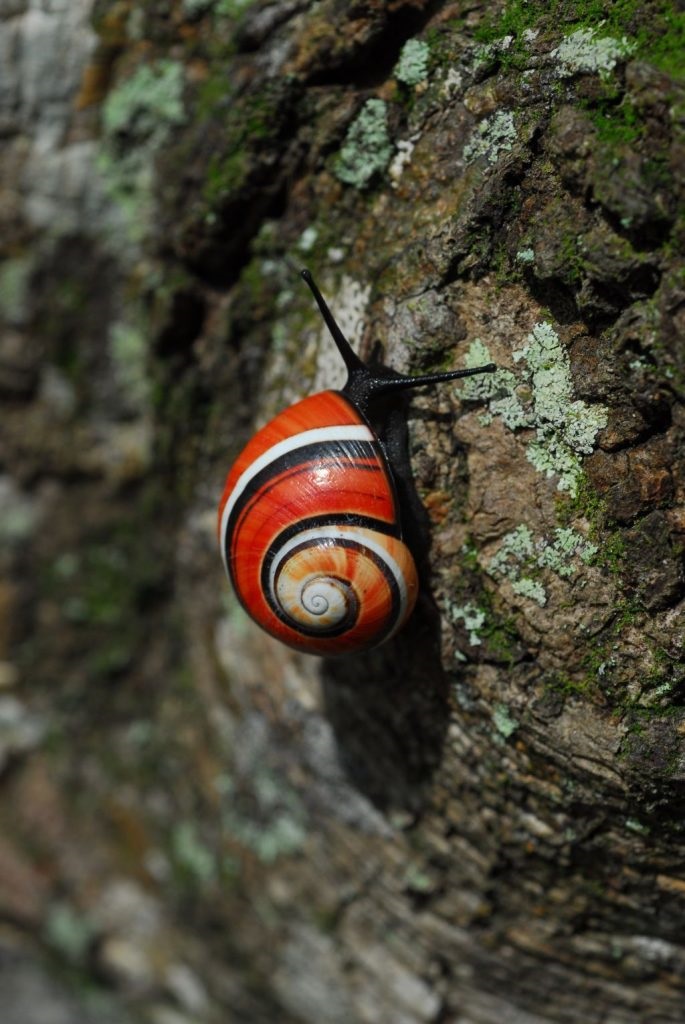
Polymita picta, the Painted Snail is an endangered snail. known for its colourful shell and the ‘love dart’, a device to stab partners during mating to transfer ‘sexual hormones’. It is found only in Eastern Cuba.

Teredo navalis , the Naval Shipworm is a clam which looks like a worm. They are also called shipworms, as they used to eat through the hulls of wooden ships. They are said to have eaten through Columbus’ ships and stranded him in Jamaica! They are found throughout the tropics and subtropics. 

The competition (this is the second edition) closes today, 15 March. So hurry to https://tbg.senckenberg.de/molluscoftheyear-2022/ and cast your vote to support research which will help us understand our living planet better.

–Meena

Two Faces of War

As the world watches in despair at another meaningless war, amidst the dark and dismal narratives, it is the stories of hope and resilience that resonate the loudest. And unknown or forgotten connections are remembered anew.

For many of us, Ukraine was just another name on the map, and we imagined that it was far away geographically and personally. Until we read about the many many Indians who have been living, studying and working there. It got even closer with the media in Gujarat full of stories not only of the Gujarati students who were stranded there, but equally of the way other Gujaratis in neighbouring countries were offering overwhelming help and support to fellow countrymen in need. In Poland especially food and shelter is being given with open hearts and homes—helping to create a little India in a distant land.  

This link with Poland goes back many years, back to another war—World War II, and a reverse flow of displaced people. One of the heart-warming stories is about how the Maharaja of Jamnagar created a Little Poland in Gujarat.

In 1939 Poland was invaded by both Germany and Russia. There were mass arrests, massacres, grabbing of land and businesses, and large-scale deportations. Over two million Polish civilians were sent to camps in Siberia, and thousands died, even before they got there. Hundreds of Polish children were left orphaned or abandoned. In 1941 there was an international amnesty that allowed the destitute refugees to leave the Soviet Union. They undertook arduous and long journeys to distant lands that were offering them refuge.

India was at the time, still under British rule and the British government was not keen on accepting refugees. In the face of severe opposition by the British, Digvijaysinhji Ranjitsinhji Jadeja or “Jam Saheb” as he was called, the Maharaja of Nawanagar, a princely state in Gujarat was the first to offer the orphaned children from Poland refuge. The 46 year old king had developed a special interest in Polish culture ever since his meeting with Ignacy Padrewski, a Polish pianist that he had met in Switzerland. He was moved by the plight of the Polish orphans. Despite the official British refusal to accept these refugees, as the head of a princely state the Maharaja had some level of autonomy. He was determined to use it and take in the homeless children. 

In early 1942 the first group of 170 children who reached Bombay, and travelled on to Balachadi a small seashore town close to the maharaja’s capital Jamnagar. The maharaja welcomed them with the words “You are no longer orphans. From now on you are Nawanagarians and I am Bapu, father of all Nawanagarians, so I’m your father as well”.

Bapu Jam Saheb and his Polish children at a Xmas show

Jam Saheb was true to his word. The children were initially put up in tented accommodation while the Balachadi camp was being built. The maharaja went to great lengths to ensure that Balachadi became a home away from home for these children who, at a young age, had experienced dislocation, loss of family and home, and the horrors of war. He built dormitories in which each child had a separate bed, and generously provided food, clothes and medical care. He converted the guest house of his Balachadi palace into a school, and even set up a special library with Polish books so that the children would not forget their mother tongue. He was concerned that they should not forget their own culture; he encouraged the children to put up shows including their songs and dances, and continued the country’s strong traditions of Scouts and the church. He encouraged children to play sports, and they were free to use his gardens, squash courts, and pool. He was concerned about their choice of food and would host special meals for the children. One of the children recalled, many years later, how the children did not like the way spinach was cooked and went on a ’spinach strike’. When the Jam Saheb heard about this he immediately ordered the cooks not to include spinach in the meals. 

Between 1942 and 1946 over 600 Polish children found a home in Little Poland thanks to the maharaja. When the war ended and the orphans had to return to Europe, both the children and the maharaja were heart-broken. The unusual bond that was formed remained strong, and played a crucial role in giving stability and hope to children who had lost everything.

The Maharaja died in 1966. His Polish “children” had spread across the world in countries where they started new lives after the end of the war. 76 years later, as a testimony to the enduring bonds, and to mark 100 years of Poland’s independence, in 2018, six of these “children” (now in their nineties) returned to Balachadi. They walked down memory lane, remembering the Bapu who not only gave them a home, but also their childhood.

Jam Saheb is remembered not only by his children, but is also considered a hero by the country that honours his generosity. He was posthumously awarded the Commander’s Cross of the Order of Merit. A city square in the heart of Warsaw is named Skwer Dobrego Maharadzy (The Square of the Good Maharaja). When he was alive the Maharaja had been asked how the Polish people could thank him for his generosity and he had replied that they could name a school after him. One of the city’s foremost private schools is named the Maharaja Jam Saheb Digvijaysinhji High School. A fitting tribute indeed.

Today, as another war rages, Poland is welcoming thousands of displaced women and children. Perhaps some of them will find refuge in the Square of the Good Maharaja, and history would have come full circle.

–Mamata. 

Women of Substance

Some people know the name Savita Ambedkar. Fewer know the name Gyan Patnaik. These were women who were achievers in their own right, but decided to stay in the background, while their husbands took the larger stage. A small peek into their lives…

Savita Ambedkar: Dr. Savita (born Sharada) Ambedkar was the wife of Dr. BR Ambedkar. Born in 1909, she belonged to a very forward-looking family which gave great importance to education. This enabled her to pursue her MBBS in a day and age when it was not very common for women to even complete school. After graduating from Grant Medical College Bombay, she was appointed as Medical Officer in a major hospital in Gujarat. However, due to ill-health, she gave up her job there and returned to Bombay in a while, and started assisting a senior doctor in his practice. It was at this time that she met Dr. Ambedkar at the house of a common acquaintance He was immersed in his work as Labour Minister in the Viceroy’s Council. The acquaintanceship began with a few conversations about women’s rights, Buddhism, etc., and continued for many years. . Dr. Ambedkar had lost his first wife and had resolved not to marry. During the writing of the Constitution which obviously must have been a very stressful time,  Dr. Ambedkar’s health suffered and he came to Bombay for treatment. Dr. Savita was closely involved in his treatment, and they had many conversations about social change, literature, religion, etc. Their friendship grew, and they decided to get married in 1948. After that, she not only lent her intellectual support in his many tasks, she also acted as his personal doctor-nurse, and was involved in social work. Dr. Ambedkar has credited her with increasing his life-span by 8-10 years.

Tragically, after his death, she was accused of having poisoned him. Govt. of India set up committee to look into the circumstances of his death. The committee found no indication of foul play. While during Dr. Ambedkar’s life, she was a very respected figure in the Dalit-Buddhist movement, after that, there were allegations that she was not really committed to it, given her Brahmin birth. However, after some years, there was a reconciliation and she actively participated in it once again. She was responsible for the preservation of many documents and papers related to her husband and received the posthumous Bharat Ratna on his behalf.

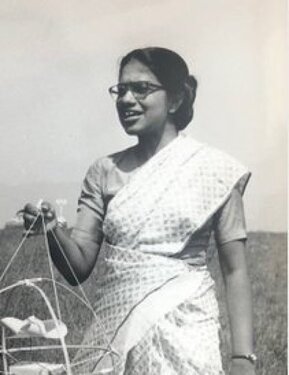
Gyan Patnaik: Fiesty Gyan was the wife of the flamboyant Biju Patnaik.  She was one of the first women-aviators in India, and probably the first woman to get a commercial pilot’s license in the 1930s. It was their joint love of flying that brought the Punjabi Gyan and the Odiya Biju together.  He piloted his baraat across the country for the wedding, and was known as Punjab’s son-in-law.

Gyan participated fully in the nationalist movement with Biju. She co-piloted the plane with him in his daring rescue of Indonesian leaders from Dutch-occupied Java. She went back there on several missions with Biju to bring humanitarian aid to the beleaguered people. She was also very active in supporting the freedom struggle in Nepal in the 1950s. She flew several sorties to Burma along with her husband to rescue British families as the Japanese invaded the country during World War II.

Gyan Patnaik with her Husband

She was passionately interested in science and the use of science for improving people’s lives, and provided leadership to these initiatives through the Kalinga Foundation. She was a wise counselor not only to Biju Patnaik, but also to many leaders in Orissa. However, during the later years, Biju preferred that she live away from Orissa so as not to get caught up in the rough and tumble of state politics.

A woman-doctor and a lady-pilot in the 1930s were on path breaking journeys and would have made waves. Being married to prominent men brought them to the public eye and they garnered accolades in a different way—one where they were seen more as supporters of men on the national stage, rather than achievers in their own right.

On International Women’s Day, we claim back the stage for them and many others like them, and wish all readers.

–Meena

PS: We started our blog on International Women’s Day, 2018. Four years and 480 posts–an opportunity for immense learning and sharing. A big thank you to all our readers!

War and Peace

Once again the world is at war. Just as the images of the ravages in Afghanistan were beginning to fade, our senses are once again overwhelmed with the heart wrenching narratives of the unfolding tragedy of war in Ukraine. As the powers that be are flexing their muscles and showcasing their might, and statesman are spouting rhetoric, people like you and me have had their entire life turned upside down overnight. Behind the smoke and the rubble are thousands of human faces, each with their personal stories of loss and trauma, looking into an abyss of uncertainty.  

In all the din and despair, we all need some words of sanity and hope, but there are so few voices now that can bring some reason and solace. Sadly in the last few months the world lost two such voices who saw the senselessness of war and dedicated their life to peace. One was Archbishop Desmond Tutu who passed away in December 2021 and to whom we paid tribute in our piece Looking Ahead With Hope posted on 30 December 2021. The other was Thich Nhat Hanh who passed away in January this year at the age of 95.                        

Thich Nhat Hanh was a Vietnamese Buddhist monk who was a prolific author, poet, teacher and peace activist. He was born as Nguyen Dinh Lang in Hue in Central Vietnam on October 11, 1926. He joined a Zen monastery as a novice monk at the age of 16. Upon his ordination in 1949, he assumed the Dharma name Thich Nhat Hanh. Thich is an honorary family name used by Vietnamese monks and nuns. Later he was universally best known as Thay which means teacher.

Even as a young bhikshu (monk) in the early 1950s, Thich Nhat Hanh was actively engaged in the movement to renew Vietnamese Buddhism. He was one of the first bhikshus to study a secular subject at university in Saigon, and one of the first six monks to ride a bicycle.

When war came to Vietnam in the mid-1950s, monks and nuns were confronted with the question of whether to adhere to the contemplative life and stay meditating in the monasteries, or to help those around them suffering under the bombings and turmoil of war. Thich Nhat Hanh was one of those who chose to do both. Even as he was getting deeper into the spiritual realm of Buddhist beliefs, he was also actively engaged in the efforts at mitigating the devastating effects of the war on his people and country. In the early 1960s, Thich Nhat Hanh founded the School of Youth and Social Service, a grassroots relief organization of 10,000 volunteers including young monks. They went into the war affected areas to care for the wounded, to resettle the refugees by setting up new places for these people to live, to build schools and health centres. The youth did not see themselves as just social workers, but as practitioners of the Buddhist principles of non-violence and compassionate action.

In 1961 Thich Nhat Hanh travelled to the United States to teach Comparative Religion at Princeton University, and the following year went on to teach and research Buddhism at Columbia University. He returned to Vietnam in 1963 to join the growing Buddhist opposition to the U.S.-Vietnam War, which attracted global attention because of self-immolation by several monks as a gesture of protest. He travelled once more to the U.S. and Europe to make the case for peace and to call for an end to hostilities in Vietnam. Towards the height of the Vietnam War in the mid-1960s he met civil rights leader Martin Luther King, whom he persuaded to speak out against the conflict.

In 1964 Thich Nhat Hanh published a poem called Condemnation in a Buddhist weekly. It reads in part:

Whoever is listening, be my witness:
I cannot accept this war.
I never could I never will.
I must say this a thousand times before I am killed.
I am like the bird who dies for the sake of its mate,
dripping blood from its broken beak and crying out:
“Beware! Turn around and face your real enemies
— ambition, violence hatred and greed.”

The poem earned him the label “antiwar poet,” and he was denounced as a pro-Communist propagandist. As his voice began to be heard in America and Europe, and because he refused to support either North or South Vietnam in the conflict, both the communist and non-communist governments banned him from entering the countries, forcing Thich Nhat Hanh to live in exile for over 39 years. As he explained “I did not intend to come and to stay for a long time in the West. In fact, I was invited to deliver a series of talks and took the opportunity to speak about the war, the version that was not heard by people outside of Vietnam because the Buddhists in Vietnam, we represent the majority who do not side themselves with any warring parties. And what we wanted really is not a victory, but the end of the war. So what I told people over here at that time did not please any warring parties in Vietnam. That is why I was not allowed to go home.”

During this period of exile, Thich Nhat Hanh, who spoke seven languages, became a global advocate for peace and spoke and wrote widely against the cycle of war and violence. He also continued to teach, lecture and write on the art of mindfulness and ‘living peace,’ and in the early 1970s was a lecturer and researcher in Buddhism at the University of Sorbonne, Paris. In 1975 he established the Sweet Potato community near Paris, and in 1982, moved to a much larger site in the south west of France, known as Plum Village which grew into the West’s largest and most active Buddhist monastery, with over 200 resident monastics and up to 8,000 visitors every year, who come from around the world to learn “the art of mindful living.”

Thich Nhat Hanh was able return to Vietnam only in 2005, when the Communist government allowed him to teach, practice and travel throughout the country. His anti-war activism continued. In 2014, a month after his 88th birthday he suffered a severe stroke which left him largely paralyzed and unable to speak but he continued to spread his message through his serene presence. Thich Nhat Hanh passed away peacefully at his root temple, Tu Hieu, in Hue, Vietnam, on January 22, 2022 at the age of 95.

If his physical presence was here today, the gentle monk would have been anguished by yet another meaningless war and reminded the world that there is an alternative path of trust, compassion and fellowship.  Let us remember his words:

“We know very well that airplanes, guns and bombs cannot remove wrong perceptions. Only loving speech and compassionate listening can help people correct wrong perceptions. But our leaders are not trained in that discipline, and they rely only on the armed forces to remove terrorism.”

And most of all: “Hope is important, because it can make the present moment less difficult to bear. If we believe that tomorrow will be better, we can bear a hardship today.”

With hope for a better tomorrow.

–Mamata

Serendipity is the Best Travel Guide

Last week, along with dear friends, we had driven to Shimoga to see the Jog Falls, maybe visit the Bhadravathi Sanctuary, and do the other local sights.

Alas, trouble broke out there and we decided to cut short our visit and drive back—fortunately after seeing the Falls. While we were not heart-broken to return a day early, there was an air of slight disappointment in the two cars.

When…

…we suddenly saw a sign ‘Welcome to Amrutapura: City of Ancient Amrutesvara Temple’ (Karnataka has a wonderful practice of labeling its towns, from Chennaptana: Toy Town, to others which are Silk Towns, Arecanut Towns, Coffee Towns etc.).  We recollected that the Hotel Desk had cursorily told us that Amrutapura was a possible place to visit, but we hadn’t really registered it it was a casual mention.

But now that we were here with a day to spare, we decided to explore the possibilities.

And what an experience awaited us!

Amruthavarsha Temple, Karnataka
Gopuram of Amruthavarsha Temple, Karnataka

Built in what experts deem the older Hoysala style, this 12thcentury Shiva temple was commissioned by Amrutheshwara Dandanayaka, one of the commanders of Veera Ballala II, the Hoysala King. The beautiful little temple, where worship still happens, is dense with an amazing array of sculptures. Friezes from the Ramayana adorn one side of the structure, while stories of Krishna and tales from the Mahabharatha decorate the other. One tower has a detailed panel of Shiva slaying Gajasura. Another tower showcases the emblem of the Hoysalas, a young man battling a lion. As per folklore, a young man, Sala, saved his Jain guru, Sudatta by striking dead a lion near the temple of the goddess Vasantik. The name of the dynasty itself comes from this incident– ‘Hoy’ meaning strike, and ‘Sala’ for the young man’s name. (I am a little confused about this story, not being able to make out the connection between Sala and the dynasty–did he found it? Was he one of the scions? Obviously, more research is called for on my part. But what really intrigues me is the killing of a tiger to save a Jain muni. Surely the teacher could not have approved of this?). There is also a large stone embedded in the premises, with a poem inscribed on it, which is believed to have been written by Janna, one of the most famous poets of the region and times.

Vasudeva praying to the Donkey, Amruthavarsha Temple, Karnataka
Vasudeva praying to the Donkey

It would seem that a lot of thought had gone into selection of the incidents to be depicted on the friezes. Krishna’s birth, the events subsequent to that, the various attempts of various hideous demons to kill him in his infancy, and his mischievousness as a child form a large part of the display. The most intriguing was of one of a man bowing to a donkey. We could not figure it out, but the temple priest was kind enough to tell us the story. It seems that when Vasudeva was preparing to smuggle Baby Krishna out in a basket on the night he was born, to deliver him to Nand at Mathura to save him from Kamsa, there was a donkey outside the prison gates, all ready to bray aloud and attract the attention of the guards. Vasudeva prostrated himself in front of the donkey, pleading with it not to make a noise. And it finally agreed, thus allowing the clandestine operation to proceed smoothly.

Krishna's Cradle Ceremony, Amruthavarsha Temple, Karnataka
Krishna’s Cradle Ceremony

There is of course the aesthetic beauty of the temple created in ancient times. But at a time when my 7-year old house has leaks and cracks and sundry problems, it is amazing to see how the 12th century structure is still so well maintained and standing so strong. And then, the peaceful and serene ambience of the temple, the spotless cleanliness, the well-maintained greenery. Kudos to the ancient masters, the priests who have taken care of the temple for 900 years+, and now the ASI, which seems to be managing it. But also a small request to ASI: how about a sign somewhere on the temple with its name (no, there was no hint that it was indeed the Amruthavarsha Temple)? How about some information on the temple itself, apart from signs warning of dire consequences of defacing the structure? How about a little more publicity for such a wonder? How about public conveniences built somewhere in the vicinity for travellers who drive many miles to get here?

But no complaints. The temple just blew our minds.  Maybe it is only in India that one would serendipitously happen on a 12th century masterpiece while driving along desultorily. 

–Meena

Ayahs Remembered

Recently I read the memoirs of a member of a wealthy and renowned family of Gujarat. The author describes how when she was a young girl, her family used travel to Europe, and even spend considerable time living in England. This was in the early 1900s when not many Indian families did so. She also recalled that when the family returned from England, they brought back with them two English nannies. She remembers that in addition to being instilled with all the polite and proper English manners, the regimented life that she and her siblings led under the nannies; there were even allocated times when they could meet their parents.

While ‘nannies’ have had a long and characteristic role in English literature, it was interesting to read an Indian experience of English nannies. 

Coincidentally, the same week I read a very interesting account of the Indian nannies or ayahs as they were called, in the colonial period. Ayahs were essentially nannies from colonial India and other parts of Asia who were charged with looking after the children of English families in India. The practise probably began with the large numbers of British who came to India to work in different capacities under the East India Company. While most of these came from ordinary families, and were not very highly paid, the cost of living in India was so low as compared to England, that here they could afford to live luxurious lives, supported by a retinue of servants. The ayah who provided round-the-clock child care was an important part of this support system.

When the families returned home, it was common for them to take back the ayahs, especially to continue their duties during the months-long sea voyage back. But these ayahs were most often taken without any kind of formal contract or understanding about their terms of employment. And as the history indicates, many of these ayahs were dismissed or simply abandoned by the English families once they reached England. The employers often did not even arrange or pay for their return passage home. Several were ill-treated and abused by their employers. The ayahs, many of them young girls themselves, were literally thrown out on the street, with no money, employment nor place to stay. There was often no record of these women, even on the ship’s manifest, they were not listed by name, but only as ‘nanny’ of the family.

At one stage in the mid-1800s there were a considerable number of such homeless and helpless ayahs (and Chinese amahs) in London causing concern, especially among Christian charities. This led to the founding of what was called the Ayahs’ Home in 1825. Set up by the London City Mission, the house provided a refuge for abandoned or ill-treated ayahs. The ayahs stayed there until they could find alternate work, or find their return passage home. There was an interesting arrangement whereby the family that brought the ayah from India would pay the cost of the return fare to the Home, and the same would be sold to a family returning to India who would take the ayah back. There was on average 100 ayahs living in the Home, for varying periods of time. 

The original Home moved to another location in 1900 and once again in 1921 to what remained its location at 4 King Edward Road in Hackney. The Ayahs’ Home became an important landmark. It was the only such institution in Britain with a named building. Over time its history began to be forgotten.

In 2018 Farhanah Mamoojee a young British woman of Indian descent discovered, by chance, some stories about ayahs, and tried to find out more. She was fascinated to discover that she lived not far from the building in Hackney that used to be the Ayahs’ Home, but there was no signage indicating this, nor information available about the site.  She made it her mission to draw attention and bring recognition to ayahs who were part of British history. She started the Ayahs’ Home Project through which she started collecting untold stories about the forgotten and often ‘nameless’ ayahs; and organising events with a spotlight on this little known group. She also started a campaign to petition for the building to be awarded a Blue Plaque. A Blue Plaque is a permanent sign installed in a public place in the United Kingdom to commemorate a link between that location and a famous person, event, or former building. Mamoojee felt that the Ayah’s Home needed to be commemorated as the Home symbolized the collective struggles of a group of unrecognised women, and their shared but nearly forgotten histories.

Mamoojee’s efforts have borne fruit. Recently there was news that this year the building will be honoured with a Blue Plaque.

Ayahs may have been part of colonial history, but even today there is a new stream of domestic helpers from India and South and South East Asia being taken abroad to work for rich employers. And every now and then one hears disturbing stories of them being ill-treated by the employers, and being helpless and stranded in a foreign land. Perhaps there is as much need for a safe refuge for these indispensable, but often callously treated women as there was two hundred years ago.

–Mamata

A Fish on the Road

 Novelty or mimetic architecture is a type of architecture in which buildings are given unusual shapes for purposes such as to convey a message about what they represent, or to copy other famous buildings. They ‘mimic the purpose or function of the building or the product they are associated with.’ They are structures built with the intention that they be used. (They are different from architectural follies which are unusable, ornamental structures often in strange forms.)

While the style started in the US somewhere in the 1930s, India is quite a leading light. Any respectable  ’10 most..’ or ’15 most..’ in the world of mimetic architecture lists would include three buildings from India: the Chowdiah Memorial Hall, Bangalore; the Fish Building Hyderabad; and the Lotus Temple, New Delhi. So maybe we should quickly recap what these are.

The Chowdiah Memorial Hall is a major cultural Centre in Bangalore. It is shaped like a violin to commemorate Thirumakudalu Chowdiah, the violin maestro. The building, designed by Mr. SN Murthy, was completed in 1980. It is shaped like a huge seven-stringed violin, and has all a violin’s essential elements, like the strings, keys, the bridge and the bow.

The Fish Building, Hyderabad, inaugurated in 2021, houses the offices of the National Fisheries Development Board. It is a 4-storey building which incorporates elements of the fish-form, like two circular windows as eyes. The building stands on pale blue pillars and is lighted by blueish lights in the night, to give the impression of a fish swimming in water.   Designed by Narasimham Associates (as far as I can make out!), it is said to be inspired by Frank Gehry’s ‘Fish’ sculpture located in Barcelona.

The Lotus Temple, a temple of the Bahai faith, was designed by the Iranian Faribroz Sahba, and was dedicated in 1986. It is a major tourist attraction of New Delhi. Made of 27 free-standing marble-clad petals, it is a pretty green building too, with 120 kW of its 500 kW electricity requirement coming from solar power generated by solar panels on the building. It also houses a greenhouse to study indigenous plants and flowers that can be grown in the area.

All this build-up to announce that my own nick of the world (truly a backwater by the name of Rajanakunte, in ‘who-lives-there North Bangalore’) now boasts a fish-shop in the shape of a fish! The proprietor proudly told us that it is the first such in Bangalore city itself, though Mysuru has one! While not commenting on the aesthetics of fish-buildings, either this one or the larger sibling in Hyderabad, my yellow, green and blue fish does add quite a pop to the Yelahanka area which is anyway quite rich in street art.

Other examples of mimetic architecture in India are of course the variously-shaped water tanks in many pockets across the country. It is not uncommon to catch glimpses of water-pots, aeroplanes, cars, tablas etc. atop houses. It seems to be like an endemic—there are concentrations of such water tanks in a given stretch, and taper off in the length of 5 km or so. The other prevalent example of mimetic architecture is police stations, with several of them being shaped like helmets!

There is a whole world of mimetic buildings waiting to be explored, including:  The Big Basket, Ohio, the headquarters of the Longaberger Company, an American manufacturer of handcrafted maple wood baskets; Haines Shoe House, Pennsylvania, the house of successful shoe salesman Mahlon Haines designed like one of his work boots; and the Dancing House Hotel, Prague designed as a tribute to the famous dancers, Fred Astaire and Ginger Rogers. 

As you browse the web to locate these, do also look around. Who knows what is waiting to be discovered next door!

–Meena

The One Who Rolls Up: Pangolin

Valentine’s Day has just passed with all its lovey-dovey messages. But love is not only about humans to humans. In 2017 the Google Doodle for the day featured a little love story about pangolins!

Pangolins one may ask? What are they, and why were the stars for the day?

Pangolins are curious creatures. With their long tail, long snout and a body covered with scales, they are often thought of as reptiles. Pangolins, also known as Scaly Ant eaters are actually mammals. They belong to the taxonomic order Pholidota, meaning ‘scaled animals’, a group of unusual mammals with tough, protective keratin scales. Pangolins are the only scaled mammals on earth.  It is believed that the scales evolved as a means of protection. When threatened by big carnivores like lions or tigers, the pangolin usually curls into a tight ball, tucking its face under its tail. The overlapping sharp scales act as an armour protecting it from the predators. It is this ability to curl up into a ball that gives it the name Pangolin which comes from the Malay word pengguling, meaning “the one who rolls up”.

Pangolins have short legs with sharp claws which are effective for burrowing for shelter, as well as to get into ant and termite mounds. These form their primary diet, and also give it the name of Scaly Anteater. They have no teeth, but an unusually long and sticky tongue (up to 16 inches long) helps them to probe deep into the ant tunnels and termite mounds to retrieve their prey. They have poor eyesight, but a well-developed sense of smell and hearing which guides them when they come out, mainly at night.

The strange appearance and secretive nocturnal habits of the pangolin gave it a somewhat mythical association in some indigenous cultures, as well as a part in folk tales and legends. In Chinese legend pangolins are said to travel all around the world underground, and in the Cantonese language the name for pangolin translates to “the animal that digs through the mountain,” or Chun-shua-cap, which translates to ‘scaly hill-borer’.

Many indigenous African cultures have diverse beliefs associated with pangolins. Here is a delightful tale from a tribe in South Africa that tells how the pangolin came to be what it is today. 

Long long ago the pangolin did not have scales, and the pangolin did not eat ants. It had a thick coat of beautiful fur, and its favourite food was honey! The pangolin’s thick fur protected it from the bee stings when it raided beehives for honey. But the pangolin had a competitor for the honey. That was the honey badger whose thick skin was not as effective in warding off the bees as the pangolin’s fur. The bees were so harassed by the constant attacks from both these creatures that they called upon the Creator to protect them from the two honey raiders.

The Creator decided that the two would have a competition, and the one who proved to be the most cunning at the game would retain the privilege of getting its favourite food. 

Pangolin had long strong legs and sharp claws with which to open the hives, and a long tongue to lap up the honey. But it was also skilful enough so as not to do too much damage. The honey badger was in a hurry, and also clumsy, as a result of which he made quite a mess. It was a close competition. The honey badger realised that the pangolin’s biggest asset was its fur, and in jealously it began to plot about defeating the pangolin by unfair means.

One night as the pangolin slept, the honey badger stealthily poured honey over its coat with a trail leading to the nest of the fierce red ants. The army of ants attacked the sleeping pangolin and penetrated deep into its fur to get the honey. The pangolin was in great pain from the ant bites. Desperate for relief, it ran and rolled in the embers of a nearby bush fire until its fur was burnt away, leaving only sore and exposed skin. The pangolin lost its protection and could no longer raid bee hives, and the honey badger continued to do so, even though it had won by deceit. The Creator felt sorry for the pangolin and gave it another form of protection, an armour of tough overlapping scales, and also a new diet instead of honey—ants and termites. And so as the elders narrate, the pangolin got his scales and became an ant eater.  

Ironically, the very scales that the pangolin was given to provide protection have today become the cause of the greatest threat to this animal. This shy curious creature is the most trafficked animal in the world. Pangolins are heavily poached for their meat and scales which are in high demand in countries like China and Vietnam. Their meat is considered a delicacy and pangolin scales are used in traditional medicine and folk remedies, leading to huge illegal trade in pangolin skin, scales, and meat, which poses a grave threat to their very survival.

There are eight species of pangolins. The four species native to Asia–The Chinese, Sunda, Indian, and Philippine pangolins are listed by the International Union for Conservation of Nature (IUCN) as critically endangered. The other four species which are native to Africa– the Giant Ground, Ground, White-bellied, and Black-bellied pangolins are all listed as vulnerable. According to a study reported on by BBC an estimated 100,000 pangolins are illegally taken from the wild every year across Africa and Asia. One million pangolins are believed to have been trafficked between 2000 and 2013 alone.

World Pangolin Day is celebrated on the third Saturday in February every year as an international attempt to raise awareness about these unique animals, and the precarious state that they are in. It aims to bring together stakeholders to help protect this unique species from extinction.

This Saturday, let us join the world to celebrate ‘the one who rolls up’. 

–Mamata