
Like many of my fellow citizens, I am not a great fan of rajas, maharajas and their ilk. Nevertheless I love one Maharaja. The Air India Maharaja of course!
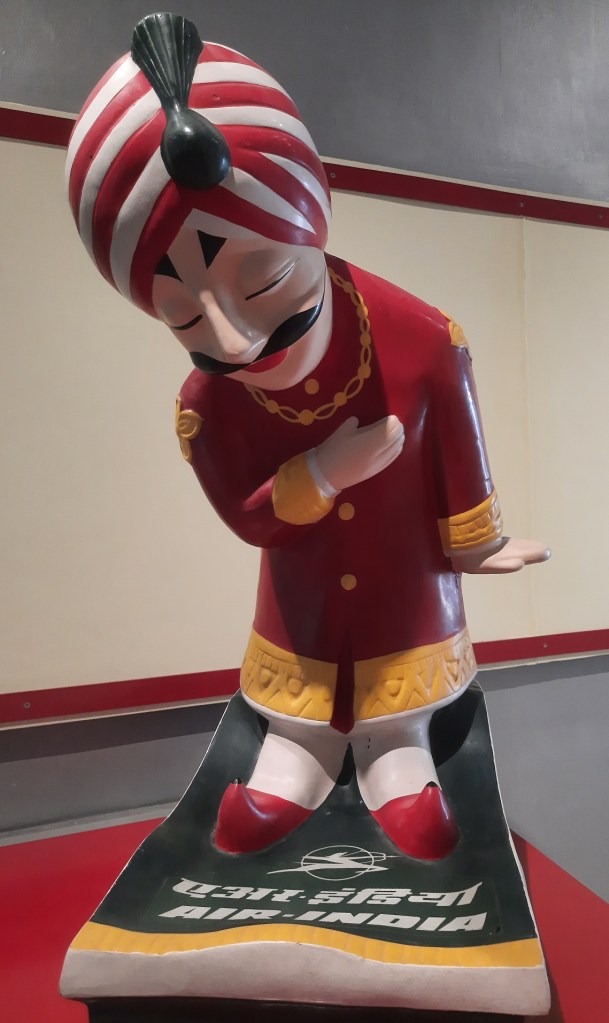
And the Maharaja has come to my neck of the woods (Bangalore), bringing with him a part of his famed art collection. Yes, the National Gallery of Modern Art (NGMA) here is hosting close to 200 pieces from the Air India art collection for six months.
Air India’s was one of the largest corporate art collections in India, estimated to have been worth over Rs. 350 crores about eight years ago. The collection has been built over almost seven decades and comprises close to 4000 works. It spans across modern and contemporary paintings, folk art and miniatures, as well as sculptures, textiles, photographs and antique clocks.
The collection started in the 1940s, propelled by JRD Tata, who wanted all of Air India’s booking offices across the world to represent India. Bobby Kooka and Jal Cawasji were mainly responsible for selecting and buying the art pieces. They would not only buy paintings from established artists, they would also visit student exhibitions and pick up paintings. Many of these would be used to make calendars, post cards etc. There was another interesting way of acquiring paintings—the transportation service contract. In exchange for the works of artists, Air India would give them international air tickets! Many an artist, including MF Hussain found this offer irresistible!
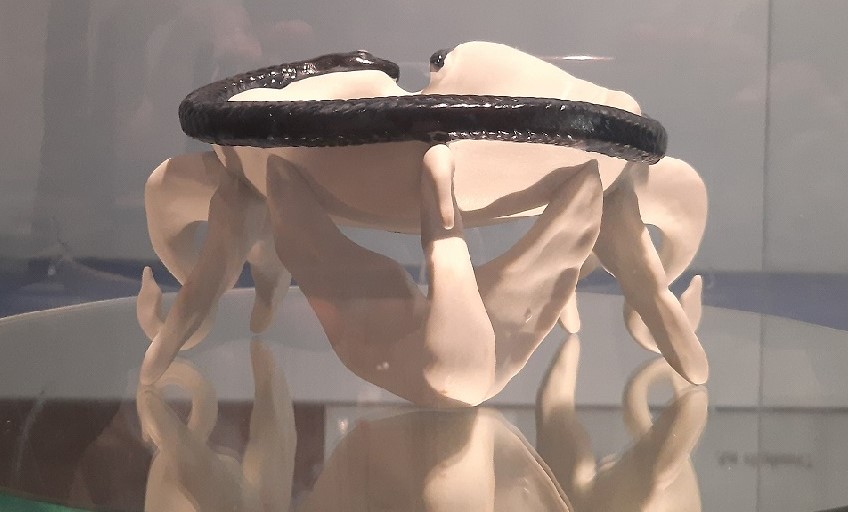
There were specially commissioned art works too. For instance, in the days when smoking in the air was quite normal, the airline commissioned Salvador Dali to design a special ashtray to be given to first class passengers. This was in 1967. 500 limited edition pieces were made of an ashtray comprising a shell-shaped centre with a serpent twined around its perimeter, supported by two surrealist elephant-heads and a swan. Dali asked for a baby elephant as payment, and got it too!
When the Tatas controlled Air India, the art works were carefully documented, displayed, stored and issued out from the Mumbai office to various domestic and international offices. After the merger with Indian Airlines in 2007 however, things went awry. The collection was moved to Delhi and there was no real ownership. There were scandals with one of Jatin Das’ works allegedly disappearing. Moreover, the works were not properly stored or cared for.
When Air India was re-privatized a few years ago, it was decided that the collection would go to the NGMA, where it could be taken care of professionally. A further decision was taken that the collection would not just stay in one location, but would travel across the country and to other countries as well.
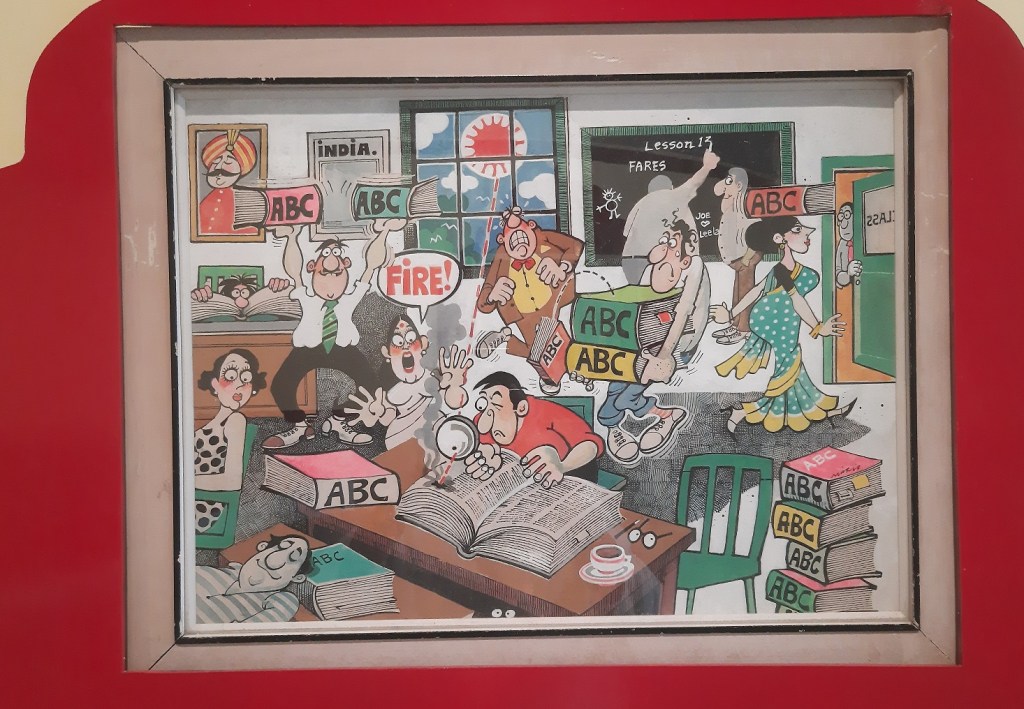
It is as part of this that the collection has now come to Bangalore, where it is being displayed at the NGMA building which itself is a sight. Called the Manickyavelu Mansion, it belonged to Manickyavelu Mudaliar, a mining baron, who himself bought it from the Wadiyars of Mysore. Mudaliar who came from a poor family made it big thanks to his forays into manganese and chrome mining. But the fortune did not last long and the mansion was taken over by the City Improvement Trust Board. In 2000, it was leased out to the Ministry of Culture. So today the imposing mansion with grand rooms and a scale quite fitting to a national museum, set in serene green grounds with century old trees, is the Southern Headquarters of the NGMA.
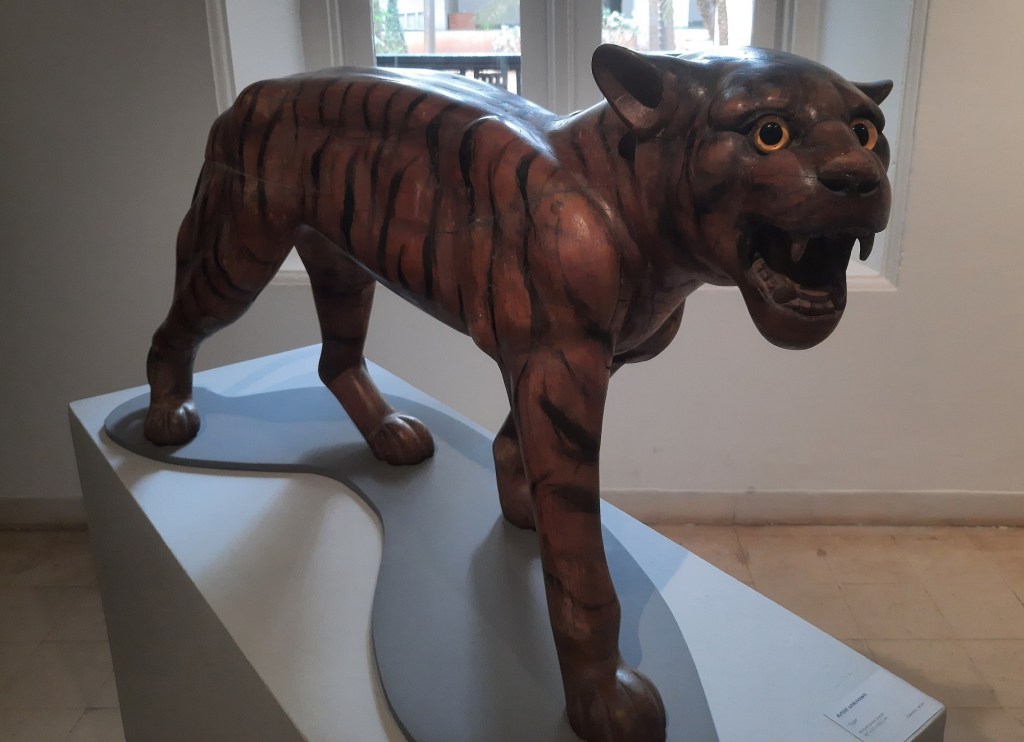
So if you are in Bangalore, ensure you drop into the gallery to see the Air India exhibition. You will see works by Anjolie Ela Menon, B. Prabha, Arpana Caur, MF Hussain, Jatin Das and Raza, among others.
And one room is devoted to the Braille versions of these works. The paintings and the information about them are done in Braille and hopefully will be enjoyed by many.
A special exhibition indeed!
–Meena

 Millennial Matriarchs