Counting cows…

We the people of India have been waiting to be counted for over four years now. The decadal census of people, which is supposed to be the basis of policy-making has been delayed since 2021, breaking a tradition after seven fairly on-time exercises.

Well, our four-legged co-inhabitants are luckier. The 21st Livestock Census started last week, and will take places over almost five months, from October 2024 to February 2025. It will cost about Rs. 200 crore, and around 1 lakh field officials–mostly veterinarians or para-veterinarians–will be involved in the enumeration process. Though 95.8% of livestock population is in rural areas, the census will cover both rural and urban areas.

Livestock is defined as ‘domesticated animals raised in an agricultural environment to produce labour and commodities such as meat, eggs, milk, fur, leather and wool’. This particular census will collect data on15 species of livestock– Cattle, Buffalo, Mithun, Yak, Sheep, Goat, Pig, Camel, Horse, Ponies, Mule, Donkey, Dog, Rabbit and Elephant, capturing data on 219 indigenous breeds of 16 species. Apart from livestock,the headcount of poultry birds — Fowl, Duck, Turkey, Geese, Quail, Gini Fowl, Ostrich and Emu — will also be taken. The age, sex and use of each individual animal will be documented.

The census will involve officials going from door-to-door to collect detailed data on domesticated animals and birds across the nation—including not just households (about 30 crore), but also household enterprises, non-households (private sector, cooperative sector, etc.) and institutions. Information about the animals will be collected, as also information on instruments and machinery used for animal husbandry. This census will leverage mobile technology for data collection and transmission and hopefully, this will enhance the accuracy and efficiency of data collection.

The Livestock Census has a hoary history in India, with the first one being conducted in 1919-1920. It is conducted every five years with the 20th Livestock Census taking place between October 1, 2018 and September 20, 2019. It put the total Livestock population at 536.76 million, showing an increase of 4.8% over Livestock Census-2012.  Total Bovine population (Cattle, Buffalo, Mithun, and Yak) was 302.79 million in 2019 which shows an increase of 1.0 per cent over the previous census.
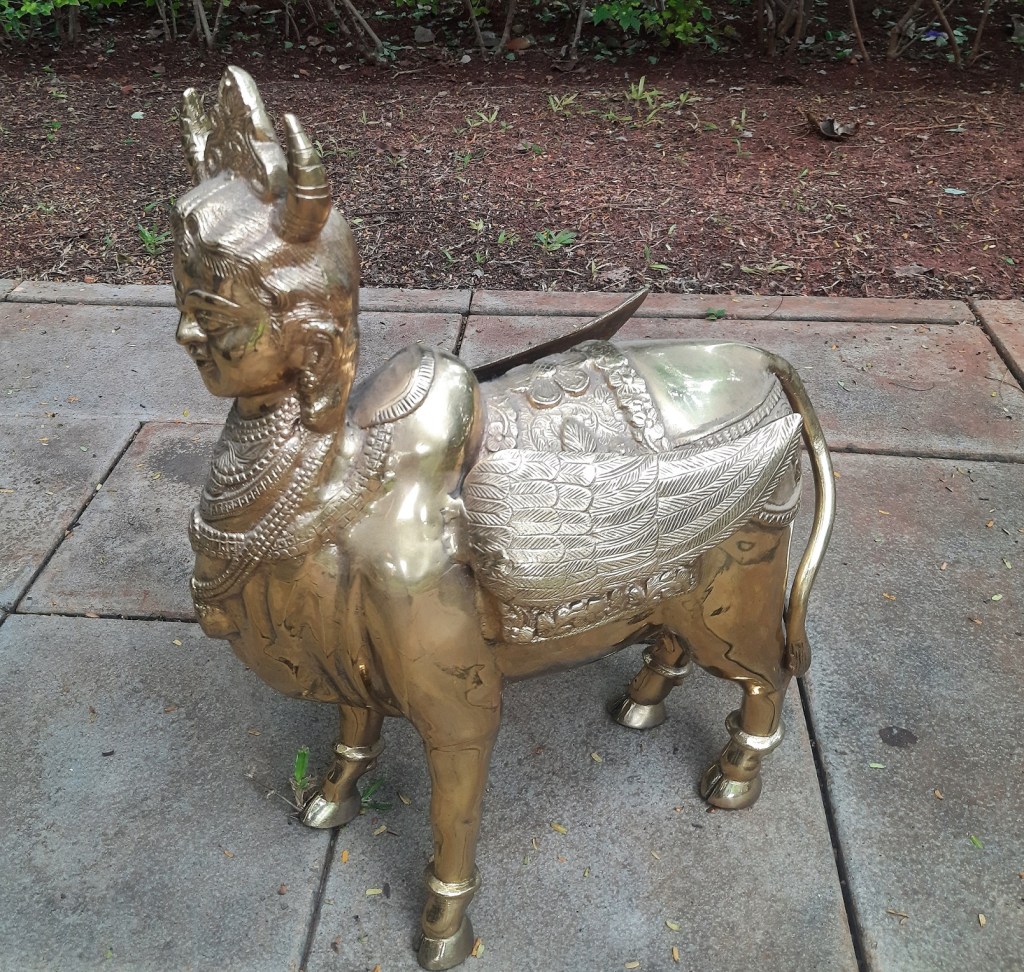
The livestock sector is critical in our country given that it provides livelihoods to over 2.1 crore people. It contributes about 6 per cent to the total GDP, and 25 per cent to the Agricultural GDP. The share of livestock in agricultural sector GDP growth has been increasing faster than the crop sector. This is fuelled by rising incomes, a rising population and increased urbanization, which are all propelling demand for livestock products, and hence the rising importance of this sector. As per the 20th Livestock census, the total livestock population shows an increase of 4.6 per cent over the Livestock census 2012. India has the largest population of cattle of any country in the world, with about 33 per cent of the total number.

Worldwide, livestock make up almost 10 per cent of vertebrate biomass—more than human beings, wild birds and wild animals put together! While today cattle make up the largest livestock group worldwide, it was sheep which were among the first animals to be domesticated—probably as early as 10,000 bce.

While there is enormous potential for livestock to contribute to livelihoods of the poor especially women, there are many challenges in India—from disease, to lack of access to veterinary care, vaccination, insurance, fodder and clean water, to diminishing grazing lands,  to challenges in increasing productivity, to lack of organized markets which leads to the exploitation of the sellers, to tackling the contribution of this sector to climate change.

The Livestock census aims to provide data to frame policies and programmes which will hopefully improve the situation.

But as they count cows, maybe they need to count humans too. We too could do with better policies and programmes in many, many areas of life!

–Meena
The Moving Finger…

Last week was devoted to calligraphy, which we are assured by practitioners, is not handwriting at all. Rather, they aver, it is an art form.

Calligraphers are few and far between. But each and every one of us is a hand-writer. Children start doodling and scribbling by the age of two, and most write the alphabet before they are four. It might be one of the most universal of skills! And an essential one too, because research suggests that writing by hand enhances learning and memory. Brain patterns established during handwriting are important for memory formation and learning new information. And of course it improves fine motor skills. So hand writing practice is pretty important even for children who are digital natives and may not use the skill very much as grown-ups.

There are 12 characteristics on which quality of handwriting is evaluated: line quality, spacing, size consistency, pen lifts, connecting strokes, complete letters, cursive vs. print, pen pressure, slant, baselines, embellishments, and placements.

But it is a fact that the quality of penmanship has gone down with time. As we use the skill less, we get worse at it. In fact, there are times when I can’t decipher my own scribbled notes. Reports and records based on these notes are my only forays into fiction!

Which is why it is probably important to highlight and celebrate this skill.

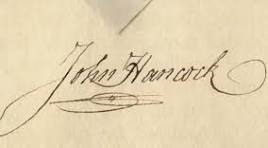
In the US, they observe National Handwriting Day on January 23rd. Why this date? Well, it is the birthday of John Hancock, the first signatory of the Declaration of Independence. Among the 56 signatures on the document, his large, flamboyant signature stood out. In fact, so prominent was it that “John Hancock” is an informal synonym for signature in the US!

The Day started to be observed in 1977, when educators were already beginning to feel that the art of handwriting was getting lost. The Writing Instrument Manufacturers Association came forward to do something about this (and of course at the same time, increase sales of pens, pencils, paper and writing instruments). They initiated National Handwriting Day.

(Incidentally, though we use handwriting and penmanship interchangeably, they are not quite the same. Handwriting is the act of writing out full words or sentences by hand on paper. Words may be written either legibly or illegibly. Penmanship is the art or skill of having excellent writing, and good penmanship makes the process of reading written work much easier.)

Lately, something called the World Handwriting Contest has been initiated. Each year, the World Handwriting Contest opens for entries between January 1 and June 30. There are eight age categories, starting from Children below age 7, right through –Teens, Teens, Adults and Seniors (age 65 up). And it is open to anyone, anywhere.

There are two styles for which prizes are given:

Functional Handwriting which strives for legibility, speed, and fluency without aiming at artistic effect. For this category, the judges will further separate entries as cursive, which joins 50% or more of its letters or manuscript printing, which joins fewer than half of its letters; and
Artistic handwriting which uses a monoline or calligraphy marker, pen, or brush along with decorative strokes, flourishes, and/or combinations of shading, hairlines and/or thick and thin strokes to create an artistic effect.

NRI domination over the Spelling Bee contests is well accepted. People of Asian origin now seem to dominate among winners of the Handwriting competition too, with Indians and Indian-origin names finding frequent mention (with stiff competition from Bangladesh!). Among Indians, Salil Jha of Bhopal has won a prize (above 65 category). Roslin Richard of Bangalore is first place winner in the Adult Category; Feba Sara Saji of Kerala is a winner in the Teens category. Keep it up people! May the moving finger keep writing beautifully!

–Meena

Food Historian: KT Achaya

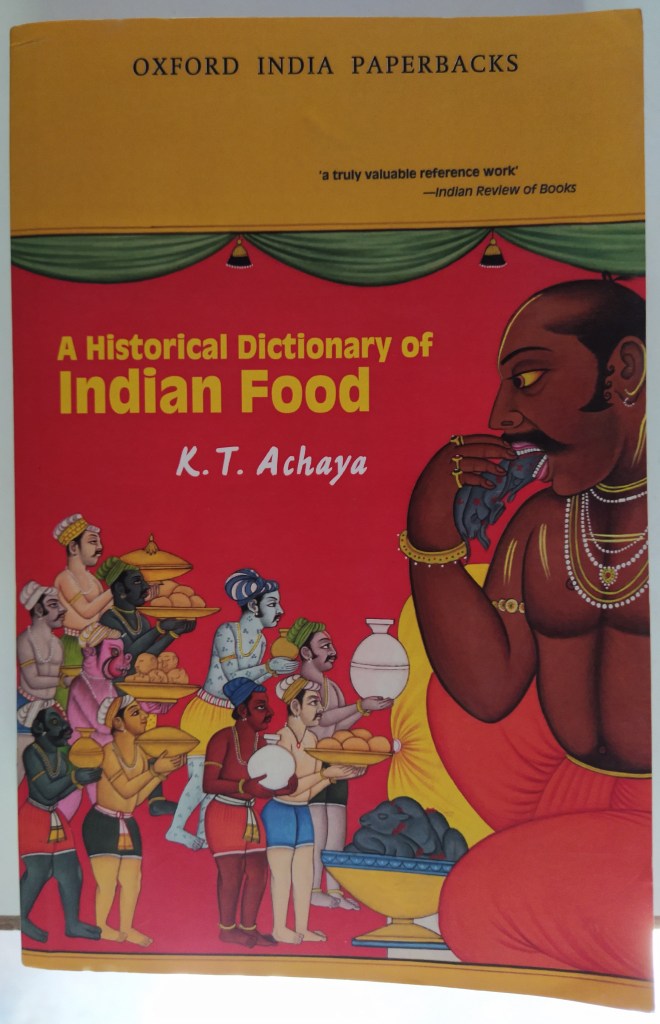
Several years ago, a dear friend gifted me a book on food. Not because I am a great foodie myself, but because I love probing into the ‘why’ and ‘how’ of things, and this book did the same. Whenever I write a piece about food, I invariably dip into this trusty resource. This is a book called A Historical Dictionary of Indian Food   by KT Achaya. 

The painstaking and well-researched book traces the origins and pathways of food, and food ingredients that are so much a part of our cuisines. KT Achaya was a scientist with deep interest in the humanities as well the fine arts. He was also fluent in a number of Indian languages which gave him access to diverse original sources. From ancient Sanskrit manuscripts, archaeological evidence, to a wide range of scientific as well as historical documents, KT Achaya compiled facts about countless ingredients as well as dishes that threw up fascinating nuggets of information, and sometimes also ruffled feathers (e.g. idlis did not originate in India!)

Recently I read another book which talked about Achaya the man himself. That was an interesting story in itself, and gave life to the name that I had only associated with my food dictionary. I discovered that Achaya spent his entire professional life as highly respected scientist working with compounds and formulae, before his avatar as a food historian.

KT Achaya was born on 6 October 1923 at Kollegal in Karnataka. His father was a sericulturist who managed a silk farm run by the government of India. Achaya graduated from Madras University with chemistry honours. He also got his MSc degree from the same after pursuing his research at the Indian Institute of Science in Bangalore. A government scholarship took him to the University of Liverpool for his doctoral studies. His research focused on the chemistry of cow and buffalo ghee, and was academically well received. In 1948 he published his first book, Indian Dairy Products co-authored with K. S. Rangappa. This is still considered one of the most important books in the field.

Achaya returned to India in 1949. In 1950 he was selected to help establish an institute under the auspices of the Indian Council of Scientific and Industrial Research (CSIR). Originally named Regional Research Laboratory, this is now the Indian Institute of Chemical Technology, Hyderabad. Achaya went on to spend 22 years at the Institute, engaged in ground-breaking research and publishing academic papers that garnered international recognition.

In 1971, Achaya became the executive director of the Protein Foods and Nutrition Development Association of India in Mumbai. Here he hoped to develop products that were high in nutrition, easy to consume, and inexpensive. The project did not succeed commercially, but the book on nutrition that he wrote during this period, Your Food and You, became popular and was translated into several Indian languages. Subsequently Achaya moved to Mysore to be close to Coorg where his origins lay.

He retired in 1983. It is during this period that Achaya began to write articles on the history of Indian food for the Science Age journal. It is these that grew in scope and range, ultimately being published as books, the first of which was Indian Food: A Historical Companion described as an ‘incomparable classic on Indian food’. He went on to publish several other books including A Historical Dictionary of Indian Food and The Food Industries of British India.

Achaya described himself as a “cowboy” because he had worked so long in the chemistry of dairy products and milk production. His later research later turned to oils and oil production, nutrition, and food technology. In fact Achaya was much more–a Renaissance man in an age of specialisation. He was not only interested in, but knowledgeable about western and Indian classical music, photography, art, cinema, books, sports, and of course food. He was an innovative cook himself; experimenting with different kinds of cuisine, and equally interested in understanding more about the ingredients he used for the different dishes, and leading him on the trails to track their origins and history.  

First published in 1994, Indian Food: A Historical Companion marked a new phase in food writing in English in India. There were, at the time, books on food in Indian languages. S. Meenakshi Ammal’s Samaithu Paar in Tamil (the English translation of which was also gifted to me by the same friend!) was a classic that was passed down through generations. The early English language books were by people like Tarla Dalal. But these were simply ‘recipe’ books. Achaya’s was a totally different genre. These were the first compendiums of their kind. They were scholarly, encyclopaedic, and often not relieved by photographs, and even, recipes. 

The years that followed saw a spurt in interest in food history. Today there are many books which trace the history of food in different ways. Many of these document traditional family recipes and place these in a social, historical and geographical context. Some of these combine history, anecdotes and photographs, along with interesting layouts and illustrations. Then came the internet where recipes from the local to the global, from the simplest to the gourmet are available at ones fingertips.

Be that as it may, for a pre-internet generation there is something special about browsing through a recipe book. I myself have a kitchen shelf with a variety of recipe books, collected over the years; some of which I dip into to refresh a memory, or to explore a change in the regular menu. Achaya’s books evoke not only a sense of exploration and discovery, but also a deep respect for the scholarship and passion of a single man.

–Mamata

Frozen Poetry: The Art of Calligraphy

Though the term ‘calligraphy’ is Greek for ‘beautiful writing’, as the art form evolved, the word has taken on a larger meaning. 

Today, people think of calligraphy as:

‘… the art of forming beautiful symbols by hand and arranging them well.’
or
‘…a set of skills and techniques for positioning and inscribing words so they show integrity, harmony, some sort of ancestry, rhythm and creative fire.’

Calligraphers don’t like you to equate the form to ornamental decorated letters or to the use of letters as ornaments, insisting it is about symbols themselves being beautifully formed and arranged.

They say at some level, it is not handwriting at all, because the primary goals of handwriting are to be quickly and easily written and accurately read. In fact, beauty, personality and artistic impact are nowhere near as important in handwriting as clarity and speed (I wish someone had told my primary school teachers that!).

Calligraphy, they say, is ‘writing as an art form’ and not ‘artistic-looking handwriting’. So while handwriting aims to be read, calligraphy aims to produce an ‘art’ reaction.

Calligraphy is ‘a skill which involves touch, pressure, hand movement, unity, and that elusive quality we term “beauty.’ (V. Studley).

The art originated in ancient China, where characters were initially carved onto materials like animal bones and tortoise shells. Over time, this practice evolved into using ink brushes and writing on paper. From China, it moved to neighbouring countries, and slowly Westwards. The ancient Romans used reed or quill pens dipped in ink to write on long rolls of paper, while Christian churches later adopted western calligraphy to reproduce Biblical texts. Arabic calligraphy based on Arabic letters is also very well-developed, and an important part of art and architecture.

The tools used in calligraphy are all-important. While initially, the Chinese artists used ink brushes, the Romans started using reed or quill pens. Calligraphy was revolutionized with the invention of the steel nib. Different types of steel nibs—e.g., those with pointed tips and those with flat, broad edges being used for different calligraphy styles.

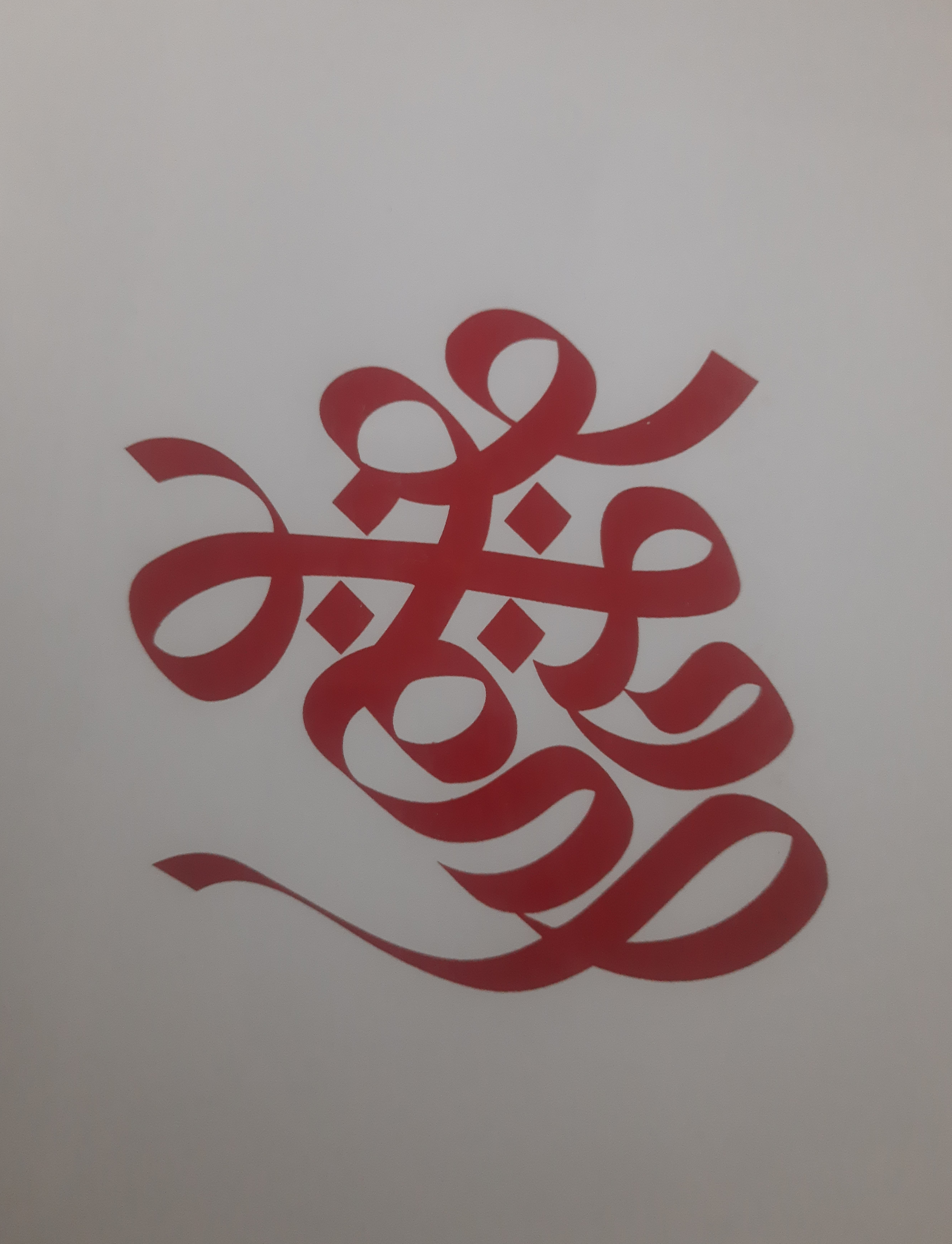
Calligrapher PP Raju’s work–both spiritual and meditative

The symbol of Indian Rupee adopted in 2010 is a great example of calligraphy. The symbol is an amalgam of Devanagari “Ra” and the Roman Capital “R”. It was conceptualised and designed by Udaya Kumar, an alumnus of the IDC School of Design of IIT Bombay.

The reason for this meander down calligraphy-lane is because only last week, Kochi hosted the second edition of the International Calligraphy Festival of Kerala (ICFK). The festival was organized by the Kerala Lalitha Kala Academy and the Thiruvananthapuram-based Kachatathapa Foundation, which is led by renowned calligraphy artist Narayana Bhattathiri. It brought together calligraphers from South Korea, France and Vietnam with Indian calligraphy experts like Achyut Palav, often referred to as the patriarch of Indian calligraphy, and D. Udaya Kumar, the creator of the Indian Rupee symbol. It was a priceless learning opportunity for students, teachers, advertising artists, art lovers and art enthusiasts from fine arts colleges, design institutes and design colleges in Kerala.

Apart from lectures, demonstrations and discussions on the subject, there were a range of activities including workshops, live demonstrations, an international calligraphy exhibition, and calligraphy quizzes.

What a beautiful event that must have been, for as someone said ‘Calligraphy is a kind of music not for the ears, but for the eyes.’

–Meena

Measuring Mount Everest: Radhanath Sikdar

Recently there was news that the world’s tallest mountain, Mount Everest is growing taller! While the rate of growth (0.2-0.5 mm per year) may not be significant given the total height of the mountain, it is a subject of study and research. The process behind this growth is called isostatic rebound, where land rises when heavy material like rock or ice is removed. In this case this is happening as a nearby river is eroding and causing the land under Mount Everest to push up, thereby increasing its height.

The height of Mount Everest has always been in the news, from the time that its height was measured for the first time, providing proof that it was the tallest peak on earth. Thereby hangs a long tale.

In 1802 the East India Company who were then ruling India instituted an ambitious project to scientifically survey the entire Indian subcontinent. The survey, originally started in Scotland, was brought to India as a geographical survey of the conquered territory after the British defeated Tipu Sultan.

The Great Trigonometrical Survey (GTS), as it was called, was expected to take five years. It ended up taking seventy years!

From 1923 the Survey was being supervised by Sir George Everest. In 1927 Andrew Scott Waugh, who had joined the Bengal Engineers, a regiment of the East India Company army, was appointed as a cadet in the Company, and he was assigned to the Great Trigonometrical Survey in 1832. By the late 1830s, when the Great Trigonometrical Survey reached the Himalayan region, Andrew Waugh had become Superintendent of the Great Trigonometrical Survey of India. The surveying of Everest was carried out under his supervision.

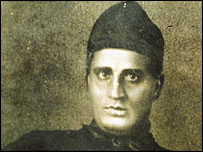
In 1831, George Everest, who had become the Surveyor General of India, was looking for a mathematician who had specialised in Spherical Trigonometry, to be a part of the GTS. A professor at what was then Hindu College (now Presidency College) suggested the name of his 19-year old student Radhanath Sikdar.

Radhanath had been a student at what was then the Hindu School of Calcutta for seven years. He had supported himself on scholarships, and his mathematical abilities did not go unnoticed. George Everest appointed the young Radhanath as a ‘computer’ in the newly established computing office. This was an era when a computer did not refer to a machine, but to the people who did complex calculations. Radhanath’s skills in this were far superior to those of his colleagues. He did not just use the established methods but invented his own formulas and applications to accurately measure different factors. He was described as a ‘hardy, energetic young man, ready to undergo any fatigue, and acquire a practical knowledge of all parts of his profession’. The young Radhanath became a favourite of George Everest.

Radhanath was sent to Mussourie where the main office of GTS was based, and it is here that he spent the next 15 years. His regular job began in 1832 as a sub-assistant. His salary was Rs 107 per month, comprising a pay of Rs 50, tent allowance of Rs 40 and horse allowance of Rs 17. In 1838, when his monthly salary was Rs 173, Sikdar expressed a wish to leave GTS for a profitable post as ‘teacher to a public institution’. Everest made a strong plea to the government to grant Radhanath Sikdar a substantial increase as an inducement to stay. As a result he was given an increment of Rs 100.

Everest retired in 1843 and was succeeded by Colonel Andrew Scott Waugh. Eight years later, in 1851, Radhanath was promoted to the position of Chief Computer and transferred to Calcutta.

This is when Radhanath started measuring the snow-capped mountains in Darjeeling. Foreigners were not allowed in Nepal so observations were taken from the Terai on the Indian side. Till then, Kanchenjunga was believed to be the highest mountain in the world. But during this survey the team noted that a mountain, then called Peak B, appeared to be higher. As calculations continued, the mountain was renamed Peak XV. The mountain had local names, it was known as Chomolungma in Tibet, Chomolangma by the Sherpas of Nepal and Qomolangma in China. But it had not yet featured on the international scene.

In 1852, the chief computer Radhanath Sikdar, through a series of calculations was able to establish that this peak was indeed higher than Kanchenjunga, making it the highest mountain in the world. He gave proof of this to his boss Andrew Scott Waugh who had succeeded George Everest as both Surveyor General of India, and Superintendent of the Great Trigonometrical Survey of India. Waugh waited four years to confirm and reconfirm the information. This was officially announced in March 1856. He also proposed that the highest peak be named after his mentor Sir George Mallory. And thus what could have been Mount Sikdar became Mount Everest!

Radhanath Sikdar’s many years of path breaking ‘computing’ and his tallest discovery were eclipsed by the ruling powers of the day. However, Radhanath continued his passion and pursuit of mathematics, even after he retired from the Survey in 1862. He joined as mathematics teacher at what later became the Scottish Church College. He, along with a friend, also founded Masik Patrika, a Bengali journal aimed at promoting education and women’s empowerment. Radhanath Sikdar passed away in May 1870.

On 27 June 2004 the Department of Posts issued a commemorative stamp featuring Radhanath Sikdar and Nain Singh Rawat a legendary the Indian explorer who surveyed the vast unexplored expanses of Tibet in the late 19th century.

–Mamata

I am a Little Teapot..

I suppose in today’s world, children don’t often see teapots. Fortunately, the poem ‘I am a teapot’, one of the cutest action-songs, is still a part of the pre-school repertoire. As the poem tells us, typically teapots have an opening with a lid on top, through which the dry tea and hot water are added; a handle for holding the vessel: and a spout through which the tea is served. And there may be a small air hole in the lid, though the poem does not mention it.

A teapot is basically a vessel used for steeping tea leaves  in boiling or very hot water, and then serving the resulting brew.  

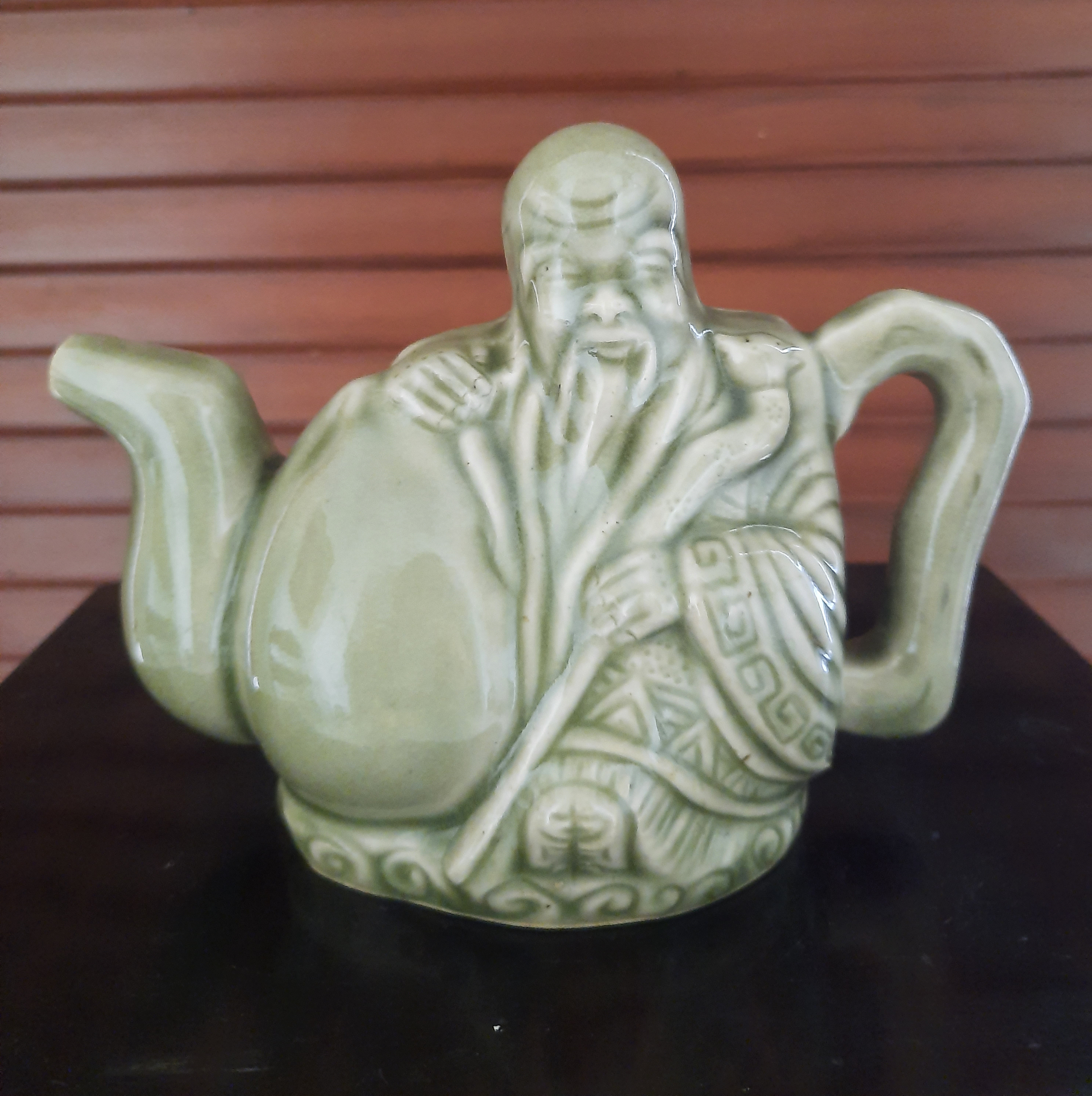
Assassin Teapot: Essential Kitsch from China!

The teapot has a hoary history. It originated in China—of course! The first recorded one goes back to the end of the Sung dynasty (1271-1368). These were Yixing teapots which were red or purple-colored earthen vessels. These containers made in the city of Yixing are still produced today and still very popular and are considered the epitome of teapots.

The idea of the teapot spread to Europe after the East India Company introduced tea and teapots in the late 17th century. In the early 18th century, the Company used to commission Chinese artisans to make teapots as the quality of porcelain in China was better there than in Europe. But slowly Germany and then France got into the game, and started perfecting the art and science. In the mid-1800s, an English pharmacist William Cookworthy, after several experiments, finally hit upon a way to make porcelain similar to that made in China and set up a factory in Plymouth.  And from then on, English and tea and teapots became synonymous!

Many and fantastical are the shapes, sizes and colours in which teapots have been crafted down the centuries. It is a thing of beauty and elegance.

And it is this that the annual Sydney Teapot Show has been showcasing for over 30 years. This is an exhibition and competition where participants take up the challenge of making a unique teapot. Each year, there are specific themes, and this year’s categories are Australian Poets, Toy Story and The Natural World. There are also prizes for Best Pourer and Supreme Teapot – Best in Show. The Show celebrates craftsmanship at its best. As the organizers point out: ‘The skill of the clayworkers is employed in making a teapot – one of the more difficult tasks in ceramics – and their imagination and creativity is also evident in their response to the categories suggested’. The show started on 3 October, and is on for a month. Anyone lucky enough to be down under on these dates can catch the show.

Australia seems to particularly treasure teapots. The Bygone Beauties Museum there has over 5500 pieces! But it is not just in Australia that teapots are celebrated.  The Victoria and Albert Museum has a good collection. The National Museum of Asian Art at the Smithsonian has some special beauties.

There are also several private collectors and collections. Sonny and Gloria Kamm of Los Angeles have been collecting teapots for over 35 years, and have about 17,000 pieces. Sue and Keith Blazye have 8,450 teapots in their home in Kent, plus around another thousand duplicates in the loft,.

Of special interest is the Chitra Collection. It is private museum of historic teawares.  As the site explains, ‘In 2011 Nirmal Sethia, the Chairman of the luxury tea company, Newby Teas, set himself the task of acquiring the world’s greatest collection of teawares to record and preserve tea cultures of the past. Today, the collection, named in honour of his late wife, Chitra, totals almost 2000 objects and is already the world’s finest and most comprehensive of its kind.’  So if you are not able to make it to Sydney, check out https://chitracollection.com/collection/ for a teapot-treat!

As the weather turns balmy, it’s the perfect time to bring out your teapot and sip a refreshing cup, while reflecting on these teapot-related pieces of wisdom!

Disciples and devotees…what are most of them doing? Worshipping the teapot instead of drinking the tea!Wei Wu Wei (Theatre producer and philosopher)

A great idea should always be left to steep like loose tea leaves in a teapot for a while to make sure that the tea will be strong enough and that the idea truly is a great one.Phoebe Stone (Author and artist).

–Meena

Celebrating Dragonflies

As the festive season begins, the next few months will see a variety of celebrations. Among the dazzle and din that marks the festivities, there is a quieter celebration going on in several parts of the country. This is the Dragonfly Festival.

Why celebrate dragonflies?

Dragonflies are believed to have been around for more than 300 million years, predating even the dinosaurs. Some of the ancient ones had a wingspan of over two feet! Today we can see only the miniature version of what may have been spectacular creatures, but they are no less charismatic.

Dragonflies are flying insects; members of the order Odonata. As do most insects, they have six legs, a head, thorax and abdomen which is divided into ten segments. They have four wings, and compound eyes which are made up of thousands of tiny units (ommatidia). Most dragonflies are beautifully coloured with shades of greens, reds, yellows and blues.

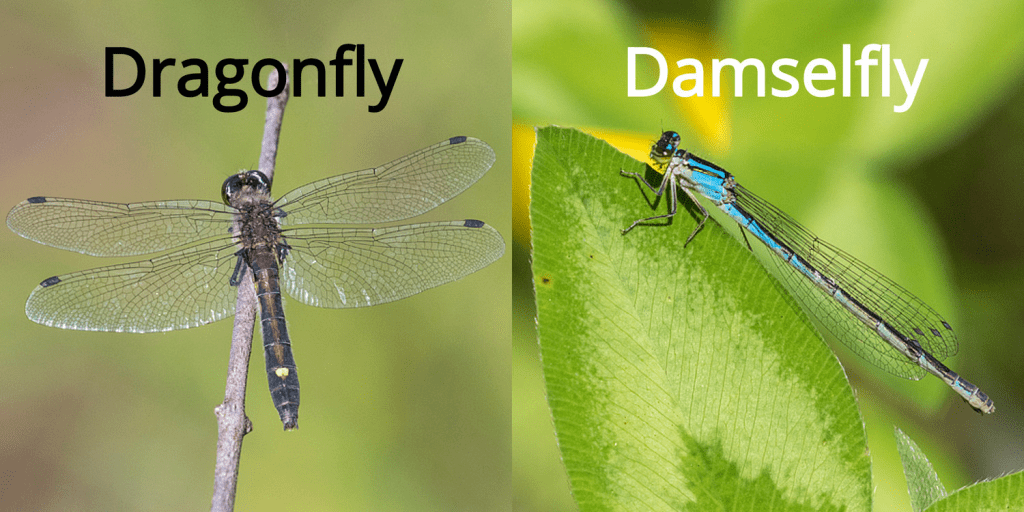
Within the order of Odonata, there are two suborders — dragonflies and damselflies. Although both are commonly called dragonflies, the two are distinct, with the most important difference being the position of the wings when at rest. A dragonfly’s wings will be held separately down at their side while a damselfly will hold its wings together over their back. Damselflies are slender while dragonflies have thicker bodies; and damselflies have two distinct eyes while the eyes of dragonflies typically almost meet in the middle of their head.

The dragonfly life cycle is uneven. The insects lay their eggs on the surface of the water, and the larva that emerges from the eggs is a grayish-brown creature that feeds on aquatic plants and larva of small insects. It remains in the larval stage for most part of its life, shedding the outer layers at regular intervals. For the final shedding it comes out of the water, climbs on a blade of grass, and emerges in its adult form with beautiful wings that make it a swift and graceful flier. It is this magical metamorphosis that has given the dragonfly spiritual associations in some cultures, where it symbolizes transformation and renewal. https://millennialmatriarchs.com/2019/09/24/dragonflies/

Dragonflies are remarkable flyers. When moving forwards they can attain a speed of almost 55 km per hour. They can hover in mid-flight for almost one minute and rotate 360 degrees in place. They can even fly backwards with similar alacrity. Their flying skills and sharp vision aid their hunting technique; they capture prey insects in flight. This has given them the name of Hawks of the Insect World. Adult dragonflies are mainly insect eaters but the nymphs also consume freshwater invertebrates, tadpoles, and even small fish. Being predators both at larval and adult stages, they play a significant role in the wetland food chain. Adult odonates feed on mosquitoes, blackflies and other blood-sucking flies and act as an important biocontrol agent for these harmful insects. They play important ecological roles not only as predators, but also as prey of birds, frogs and other aquatic creatures. 

Healthy aquatic ecosystems with strong food chains are critical for dragonflies to survive and thrive. When food sources for dragonflies are affected by the impact of insecticides, this leads to a disruption in the food chain. Which in turn indicates a threat to the larger ecosystem of which those food chains are a part. Thus dragonflies are important environmental indicators; a decrease in dragonfly populations signals that all is not well with the water quality, and in turn the aquatic ecosystem that it supports. 

Today, there are more than 5,000 different species of dragonflies and they can be found on every continent except Antarctica. But these are threatened as a result of threats to their habitats. Dragonflies are very sensitive to changes in the environment so change in dragonfly numbers could be an early warning signal of changes in wetlands. There is now increasing consciousness about the vital role of dragonflies, especially with the rapid degradation of wetlands across the world, due to a range of factors including spread of urbanisation, pollution, agricultural practices, and climate change. Conserving dragonflies and their habitat is being highlighted as a priority because they are valuable environmental indicators, including water quality and biodiversity.

The first step to conservation is a greater awareness and better understanding of dragonflies. This can begin with observing these in the context of their habitats, and recording odonate population trends.

India has over 500 species of odonata, with the greatest diversity in the Western Ghats and Northeast India. 196 species in 14 families and 83 genera are known from the Western Ghats. Of this, 175 species are reported from Kerala. Even though India is rich in Odonates, the general public has little awareness of this, nor its significance. Concerned about this, Society for Odonate Studies (SOS), a non-profit organization was formed to impart knowledge to the public about dragonflies and damselflies, and to conduct scientific studies with the objective of conservation of the species and their habitats. The Society created a surge of interest among young naturalists and wildlife enthusiasts in Kerala. SOS joined hands with WWF-India to launch a wider initiative which grew into the Dragonfly Festival.

The Dragonfly Festival started in 2018 to connect citizens with these fascinating creatures, demystify Dragonflies and Damselflies, and celebrate their importance. This is a unique Citizen Science campaign conducted across India which seeks to spotlight the significance and status of dragonflies and damselflies as indicators of healthy ecosystems, and support their conservation. The festival is a collaboration between international, national and local partners which include Bombay Natural History Society (BNHS) and Indian Dragonfly Society (IDS) and NBA UNEP, UNDP, Indian Dragonfly Society (IDS) and NBA UNEP, UNDP, and IUCN-CEC. Over the years the initiative has engaged thousands of individuals across several states. In addition to on-ground observation and identification, the festival includes expert sessions, nature walks, competitions, and workshops. This year WWF-India had called for volunteers to conduct regular surveys at a number of wetland locations, and monitor the species over a three-month period. The tasks will include photo documentation, observation and identification. The data will be uploaded on the India Biodiversity Portal. 

So many reasons to celebrate dragonflies! And, as India also celebrates Wildlife Week in the first week of October, a reminder that dragonflies and damselflies can be as charismatic as tigers and lions!

–Mamata

Tragedy in a Paradise: Kuru Disease

Viewers of hospital serials like House become familiar with the names, symptoms and treatments for a variety of obscure diseases, from Wilson’s disease to Fulminating osteomyelitis to Ornithine Transcarbamylase Deficiency to Epstein Barr to Amyloidosis and Sarcoidosis.

But even to a hardened medical-series watcher like me, the most horrifying disease that I came across was in a news report. And the disease is Kuru.

Kuru is a prion disease. A prion is a type of protein that can trigger normal proteins in the brain to fold abnormally. Normal prion protein is found on the surface of many cells. Prion diseases occur when this protein becomes abnormal and clumps in the brain. It then causes brain damage. (https://www.hopkinsmedicine.org/)

This abnormal protein build-up in the brain can lead to memory problems, personality changes and trouble with movement. Symptoms include rapidly developing dementia, difficulty walking and changes in gait, jerking movements of the muscles, hallucinations, confusion etc. Death usually results within a year or two.

Experts still don’t know a lot about prion diseases. There are several of them, with the most common form of prion disease that affects humans being Creutzfeldt-Jakob disease (CJD). Others include Variably protease-sensitive prionopathy, Gerstmann-Sträussler-Scheinker disease etc.

These are sometimes spread to humans by infected meat products. In rare cases, the infection can spread through contaminated corneas or medical equipment.

But fortunately prion diseases are rare, with about 200 being reported in the US, because unfortunately these disorders are often fatal—there is just no cure.

Even among prion diseases, Kuru is particularly bizarre. It is caused by eating human brain tissue contaminated with infectious prions. But why would anyone eat human brain tissue? Well, it was a widely practiced funeral ritual among the Fore people of Papua New Guinea.

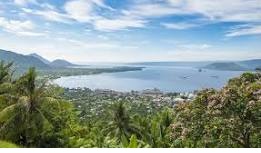
Papua New Guinea
Idyllic Papua New Guinea

The Fore people live in the Okapa District of the Eastern Highlands Province of PNG. Research in the 1950s indicated that the Fore tribe had a population of about 11,000 people. Of this small number, almost 200 people a year were dying of an unknown illness. As they started investigating this, they ruled out contaminants from the environment, common infections and the possibility of genetic inheritance. They narrowed it down to something in their practices. And then a study of their funerary rituals gave a clue. The Fore people would cannibalize their dead. The anthropologist  Hertz uncovered the reason for this—it sprang from love and respect for the deceased. ‘By this rite the living incorporate into their own being the vitality and the special qualities residing in the flesh of the deceased; if this flesh were allowed to dissolve, the community would lose strength to which it is entitled…. at the same time, endocannibalism spares the deceased the horror of a slow vile decomposition’, he wrote.

Children and women were usually more affected by Kuru  than men, probably because they consumed the brain as compared to the men who preferred muscles.

‘Kuru’ in Fore means shivering. It is also called the laughing disease because the affected would exhibit sporadic uncontrolled laughter.

The practice was banned in the 1960s by the PNG government. But sadly, the deaths continued for quite a while after that, since Kuru has a long incubation period—30 to even 50 years. So someone infected in the late sixties might have shown symptoms only in the late nineties. The last diagnosed case was in 2005.

Thank God, it is behind us!

Sorry if this has been a morbid and depressing piece. Blame it on the news item which triggered it!

–Meena