
The last few weeks have been peppered with cleaning cat-poop of the lawn. A particular cat has taken to using our garden as its favoured toilet. Now we are spraying the lawn with a suspension of coffee grounds and haven’t had an episode in the last few days. Fingers crossed.
But the whole trauma got me thinking about poop in general.
And I realized how many words there were for this. In fact, the number of synonyms for faeces is proof of human fascination for the subject.
There is wide variety of terms for poop, and though some of them are interchangeable, there are also very specific ones– for certain types of animals or species or used in certain circumstances. Here are some of them so our vocabulary in this area can go beyond shit and crap!
Faeces is the most generic term, and the word comes from the Latin word faex, meaning “dregs”. Excrement, Excreta and Stool are also fairly generic and mean the solid wast released solid waste from the bowels of a person or animal. bowels of a person or animal Ordure too is similar—the solid waste solid from the bowels of people or animals.
Here is a look at a few other terms:
Droppings: Faeces of animals.
Dung: Solid waste from animals, especially cattle and horses
Scat: Animal faeces, particularly of wild carnivores
Spraint: This is the dung of otters.
Fras: These are the droppings/faeces of insect larvae
Manure: Manure is organic matter that is used as fertilizer in agriculture. Most manure consists of animal faeces but may also include compost and green.
Guano: This is accumulated excrement and remains of birds, bats, and seals, valued as fertilizer.
Worm casts: These are the excrement of worms. Earthworm casts are prized as fertilizer.
Fecal Pellets: An organic excrement, mainly of invertebrates.
Fewmets: In hunting terminology, these are the droppings of deer and other quarry animals by which a hunter identifies his targets. Another term used in hunting is Spoor which can indicate a track, a trail, a scent, or droppings especially of a wild animal
Fewments: For science fiction fans, this is the term for dragon droppings!
Coprolite: Fossilised faeces of animals that lived millions of years ago.
Paleofaeces: Ancient faeces, often found as part of archaeological excavations or surveys.
Rabbits, hares and related species produce two types of fecal pellets: hard ones, which are the real poop; and soft ones or cecotropes, which are partially digested food which they eject, and eat again!
In medicine and biology, scatology or coprology is the study of faeces.
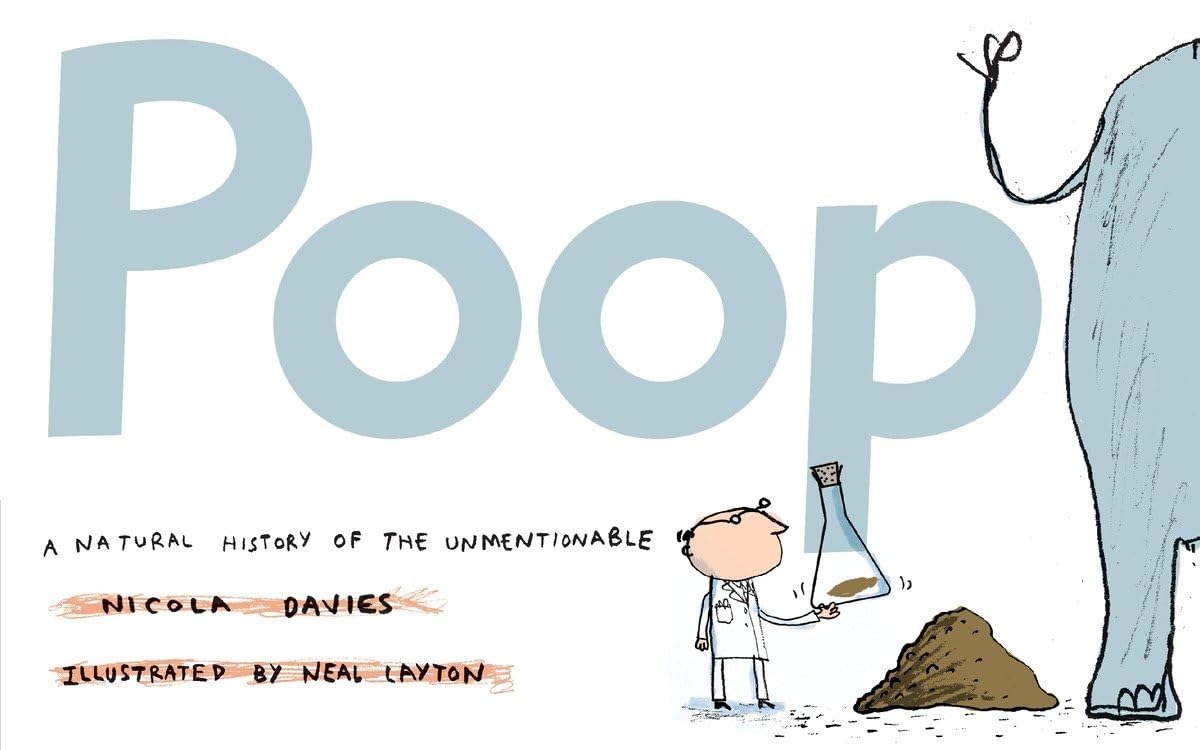
The study of such excrement is of course of use to doctors in the diagnosis of various medical conditions. It is also of great importance in obtaining an understanding of wildlife behavior, and the environment as a whole. Scat analysis can yield useful information on animal populations and their distribution across a habitat, how many males and females there are, what they are eating, their health condition and from all these, information on the health of the habitat itself can be deduced. Scat analysis is sometimes faster, easier and cheaper than many other means of studying animal populations, and it is possible to get a lot of information about animals non-invasively. It is also possible to extract DNA from poop and this has helped identify species characteristics.
So it’s not just 4-year olds who have a fascination for this subject. Many adults make it their life’s work, and their chosen tool in getting to know more about the world!
–Meena

 Millennial Matriarchs