
In the last couple of weeks a previously unheard of name has been making news. This is Conocarpus, and the news is that the Government of Gujarat has imposed a ban on the plantation of Conocarpus trees in both forest and non-forest areas. This has come not long after there was praise for the lush greenery that lines the riverfront of the Sabarmati river in Ahmedabad which was made possible by the large-scale plantation of Conocarpus as part of the riverfront development plan. Similar plantations have been done in several cities of Gujarat in the past few years. This has also been the case in some other states. Several municipalities in Telangana planted these fast-growing trees on both sides as well as between the roads to increase greenery. The Pune Municipal Corporation planted these in some public parks. Conocarpus erectus trees have been a popular choice in recent years for beautification of public spaces, as well as residential societies. It is only more recently that researchers have drawn attention to the adverse health and environmental impacts of these trees, raising concerns.
Ironically these trees, which are greening urban landscapes are botanically mangrove plants that grow in tropical or coastal mangroves. They are not native to India, but are indigenous to North and South America, as well as parts of Africa. They began to be widely planted in urban areas because of their ability to grow quickly, and their thick foliage. Now research is indicating that there is more harm than good done. Conocarpus trees have a high-water demand, which is easily met in their natural habitat. But when these are planted in arid areas, their deep root systems compete with nearby plants for water, and also significantly impact local water resources. The roots can damage drainage systems and underground telecommunication lines. The non-indigenous species can outcompete native flora and disrupt natural ecosystems and local biodiversity. They are also a threat to human health as their pollen can trigger allergic reactions causing cough, cold and asthma.
And so the not-too long ago welcomed visitor is beginning to raise concerns. The story is not new. India has seen several examples of such ‘invited invaders’. Meet some of these, who have come to stay.
Prosopis juliflora a thorny, evergreen shrub/small tree which is native to northern South America and Central America, was introduced to India during the nineteenth century in order to halt the further expansion of the Thar Desert in north-western states and to meet the fuel wood crisis of peninsular India. Most of the Indian states and union territories introduced this species in their provinces in order to overcome the local fuel wood demands. This exotic cousin of local Prosopis species (especially Prosopis cineraria) quickly gained a roothold and spread rapidly wherever it grew, developing impenetrable shrubby thickets of thorny branches which could injure humans and domestic animals. The impact on local biodiversity was also evident in the Protected Areas where the plant was introduced, especially in Keoladeo Ghana and Ranthambore National Parks in Rajasthan, where the introduction turned into an invasion that drastically reduced the grassland habitat and threatened the continued survival of the grassland species of birds (especially the Great Indian Bustard) and other animals like the Desert fox. The spread of the shrub reduced the foraging area for wild and domestic animals, affecting the food pyramid all the way up to the tiger—the keystone species. By the time the deleterious effects of the well-intentioned introduction were realized, the alien invasion had become uncontrollable in scope and scale.
Parthenium hysterophorus is an erect fast-growing herbaceous plant native to the area surrounding the Gulf of Mexico, North, Central and South America and the West Indies. It is a weed commonly known as bitter weed, carrot weed, broom bush and, in India as congress grass.
It is believed that the seeds of the weed entered into India during the 1950s along with the wheat grains received from the United States under the US PL 480 scheme. Since its introduction, the weed has invaded different habitats in India including agricultural lands, bunds of wetland, watercourses, community land, urban areas, overgrazed pastures, industrial areas, playgrounds, sides of the road and railway tracks and the fringes of the reserve forests and other protected areas. Today it has spread over millions of hectares of land across the country. The invasion has been global as the weed has been reported from more than 20 countries across five continents.
Due to its harmful effects on humans, livestock and to biodiversity, P. hysterophorusis was declared as the most dangerous terrestrial weeds of our times. As it spreads, the weed releases chemicals that alter the natural chemical composition of the soil which affects the productivity of crop plants and other native plants. The weed also impacts human health causing respiratory problems including asthma and bronchitis, watering eyes, as well as skin inflammation and eczema.
Lantana camara, popularly known as wild sage, is a thorny and multi-stemmed deciduous shrub, which produces clusters of small attractive tubular multi-coloured flowers. The plant is a native of South and Central America and the Caribbean islands. The plant was widely introduced in the 19th century in tropical parts of Africa, Asia and Oceania as an ornamental and hedge plant. In India Lantana was introduced around 1807 as an ornamental plant at the then Royal Botanical Garden in Kolkata. In due course of time, the noxious weed managed to escape from the introduced sites and invaded several thousand hectares, including protected areas such as national parks and sanctuaries. Today the plant is believed to have been naturalized in nearly 60 countries and several island nations.
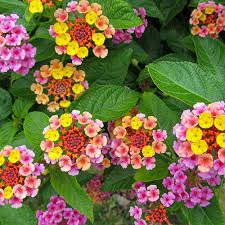
Studies have established that the uncontrollable spread of Lantana has had harmful impacts on the ecosystem. It disturbs the natural succession cycle of native vegetation, altering the floral composition of the local ecosystem, leading to the gradual elimination of native floral diversity. Apart from wild flora, the biochemical properties of the plant also adversely affect cash crops such as coffee, cotton, tea, rice and sugarcane among others. Considering the vast impacts on the ecosystem, biodiversity and range extension ability, IUCN’s Invasive Species Specialist Group (ISSG) has declared the weed as one among 100 of the world’s worst invasive species
Water hyacinth (Eichhornia crassipes) is a floating aquatic invasive plant species native to Amazon basin of Brazil, which has drastically invaded into many tropical and subtropical countries of Latin America, Caribbean, Africa and Southeast Asia. Invasion of this species causes huge loss to aquatic biodiversity and provides home to several disease-causing vectors
The rapidly growing plant was introduced into several parts of the world, including India, at the end of the nineteenth century for ornamental purposes. In due course of time, water hyacinth found its way into natural inland water bodies such as lakes, rivers, reservoirs and rural ponds. In most of the wetlands of Africa and India, this species is still spreading even after a century of its initial introduction.
Invasion of this species causes huge loss to aquatic biodiversity. It spreads rapidly spread within a short period to form dense impenetrable mats across the water surface, preventing the entry of sunlight and also limiting water access for humans and wildlife. The proliferation of the weed in the wetlands slowly alters the density and diversity of the floating and submerged native aquatic plant species, ending in their extinction. The dense vegetation serves as a breeding ground for several vectors such as mosquitos, flies, and snails, which can transmit diseases like cholera, malaria, and filariasis. The invasion affects water transport, fishing, leads to disruption of hydroelectric operations, blockage of the natural water tributaries and irrigation and flooding systems causing flooding. Due to its vast impacts on the local economy, biodiversity and human health, the weed has been recognized as one of the 100 most dangerous invasive species, and the top ten worst weeds.
The IUCN defines invasive alien species as animals, plants or other organisms that are introduced by humans, either intentionally or accidentally, into places outside of their natural range, negatively impacting native biodiversity, ecosystem services or human economy and well-being. Today as the world faces numerous challenges from not just biological invasions, the threat of these invasions continues to grow as the movement of people and goods around the world increases opportunities to transport species to new environments. At the same time, climate change is making areas more hospitable to new species. Invasive alien species are one of the biggest drivers of biodiversity loss and species extinctions. Such invasions also put human health, food security and livelihoods at risk, as highlighted in the United Nations Sustainable Development Goal 15.
–Mamata

 Millennial Matriarchs