
August is a Month of Days! Well, I know all months are made up of days, but August is made up of many significant Days—from Independence Day to International Youth Day to Quit India Movement Day to World Mosquito Day, to….
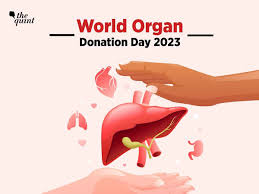
In the process, even media seems to get overwhelmed and is not cover many of the issues adequately. One such day is World Organ Donation Day, marked globally on 13 August every year, to raise awareness on the need for organ donations, and to clear misconceptions around the issue.
For a quick overview: There are two major types of donations– deceased donation which is the process of giving an organ or a part of an organ after death, for the purpose of transplantation to another person; and living donation, wherein a donor can give part of certain organs to another person. (The other two types of organ donations are Vascularized Composite Allografts (VCAs) which involves the transplantation of multiple structures including skin, bone, muscles, nerves, connective tissue etc.; and Paediatric donations.)
In India, Deceased Organ Donation is usually done only from a person who has been declared brain-stem dead by a team of authorized doctors at a hospital. A person is said to be brain-stem dead when there is an irreversible loss of consciousness, absence of brain stem reflexes and irreversible loss of the capacity to breathe. These are often accident victims and others who have suffered fatal injuries to the head or have had brain haemorrhage. Organ donations after cardiac death are rare in our country.
Sadly, the deceased donation rate in India is dismally low—it stands at under one donor per million population, and no upward trend has been seen for a decade now. It is estimated that 20 people die each day in our country waiting for an organ donation. Experts estimate that 65 donations per million population are needed to fill the gap.
Considering that we won’t need our organs after death, it would seem that this would be the easiest kind of donation! But in a country where charity and giving are a deep-rooted part of the culture, organ donation meets many barriers. A study published in a prominent medical journal regarding reasons why the figure is so low in India says: ‘Lack of awareness (80.1%), religious beliefs and superstitions (63.4%), and lack of faith in the healthcare system (40.3%) were cited as the three most probable reasons for poor deceased organ donation rates in India. Fear of disfigurement (29.5%), lack of government sponsored incentives (27.6%), fear of procedural delays (27%), and inappropriate counselling for deceased donation (26.4%) were also commonly cited reasons for poor organ donation rate.’ (J Clin Exp Hepatol. 2016 Jun; 6(2): 81–86.).
From the above, it seems that creating awareness and proper counselling are the urgent needs. Most of us don’t know that one deceased organ donor can save up to eight lives. He or she can contribute two kidneys to two people; two lungs to two people; one liver which can be divided among two people; one pancreas and one heart which can save one life each. Apart from this, eyes can give sight and donated tissue can help as many as 75 people. Increasing awareness and appealing to the inherent giving instinct could be critical factor in increasing donations. This is borne out by the fact that in the study mentioned above, people said that the ‘the thought of saving someone’s life’, as well as a ‘feeling of improved sense of humanity’ were motivators for such donations.
You can register your intent to donate organs with the National Organ & Tissue Transplant Organisation (NOTTO). Such a pledge does not carry legal weight as the consent of family is necessary for the donation of organs of deceased people, but it is a clear signal of the wish of the deceased. And if during life the donor discusses his or her wish with family members, they will surely do it, in respect of the loved one’s last wishes. Afterall, what can be more satisfying that their loved one lives on!
So go ahead and visit https://notto.mohfw.gov.in/ today!
–Meena

 Millennial Matriarchs