
 I hate when shops ask me to leave behind my handbag at the counter and give me a token in return. Apart from the general feeling of insecurity in being parted from my bag, there is the very real problem of juggling phone and purse as I shop. I certainly, however, will not be amenable to using ‘wallet parking’, though the service should be offered generously, as it is in a restaurant close to my office.
I quite sympathize with the confusion over valet and wallet. After all, since the 16th century, the word ‘valet’ has traditionally been pronounced as rhyming with pallet, though an alternative pronunciation, rhyming with chalet, as in French, is now more commonly used. The Oxford English Dictionary lists both pronunciations as valid.
Who is a valet? Well, the origin of the word is French. A valet or varlet is a male servant who serves as personal attendant to his employer and is responsible for the clothes and personal belongings of an employer, as well as making minor arrangements for his comfort. Taking guests’ horses or carriages to the stables were additional responsibilities. In English, the use of the term valet as “personal man-servant” is recorded since 1567. Famous fictional valets include of course Jeeves, familiar to readers of Wodehouse, and Alfred Pennyworth, valet to Bruce Wayne (Batman).
One supposes that the term for parking attendant must have evolved from the duty of the valet to ‘park’ horses in the stable.
Valet parking, as a professional service originated in the US, with Herb Citrin called the Father of Valet Parking. His father used to park cars in the ‘30s, and Herb joined him in this when he was about 16 years old. In 1946, he started a company, predictably enough, called Valet Parking Service, and professionalized the service including introducing the now-ubiquitous smart valet uniforms. Starting from restaurants, he went on to provide the service to office buildings, department stores, airports, and events like the Oscars and Emmys.
The service has evolved from being something availed by the affluent, to being available in even modest establishments. It is big business, with US estimating that in that country alone, there are 2,00,000 people employed to provide parking services.
Valet parking is still evolving. From just parking cars, now valet services are being provided for other vehicles like bikes and boats. Bicycle parking especially is gaining traction, with the increasing use of bicycles and bicycle services in cities across the world.
A welcome development indeed.
But still. Wallet Parking? No thank you!
–Meena
Photo credit: Sudha Priscilla

 cent children’s literature festival that I was a part of. At my story readings I started by spreading out an array of books related to that session. As soon as the children gathered there, each once grabbed a book and started leafing through it. Every child urged that I should read for them the book she/he had picked up. The excitement of seeing books accessibly displayed, and being able to pick up a book themselves was palpable.
 We who worked at the Centre for Environment Education (CEE) were lucky. The list of luminaries with whom we had the opportunity to interact was beyond belief.
 this past weekend. The venue itself was unique—the Art District in Alembic City with its sprawling lawns, old trees, and intriguing studio spaces housed in what was Alembic’s (remember those ubiquitous Yera glasses?) first factory, over a hundred years old! Imagine this coming alive with the colour, sound and movement of thousands of children—a vibrant tapestry seamlessly weaving the past, present and future.
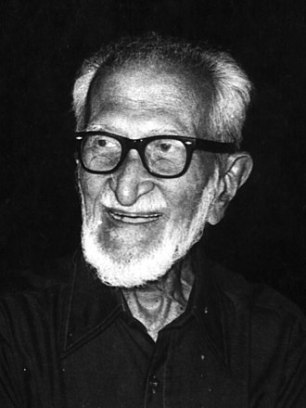 Salim Ali’s birthday falls on 12 Nov. He was born in 1896 and passed away in 1987. He may be credited with single-handedly bringing ornithology to India. And this interest in ornithology, as it spread, led to interest in wildlife and biodiversity; in environmental issues; in conservation; and in sustainable development.

 Millennial Matriarchs