
Food for Thought

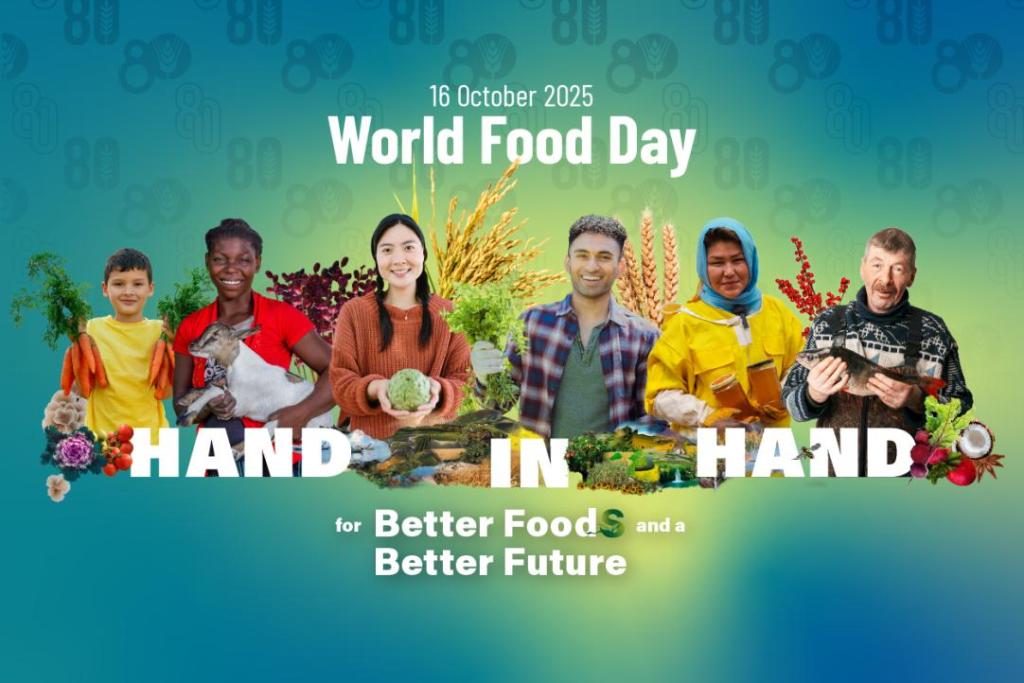
October 16 marks World Food Day—the day in 1945 that the Food and Agriculture Organization (FAO) was set up. FAO is a specialized agency of the United Nations that leads international efforts to defeat hunger. FAO’s goal is to achieve ‘food security for all and make sure that people have regular access to enough high-quality food to lead active, healthy lives.’ 194 countries and the European Union constitute its membership and FAO works in over 130 countries worldwide.

World Food Day aims to raise global awareness about food security and hunger, promoting actions to eradicate hunger and malnourishment. The day focuses on sustainable food systems, healthy diets, and equitable food distribution to ensure a better future for all.  The theme for World Food Day 2025 is “Hand in Hand for Better Foods and a Better Future”.

One would hope that with world attention on this critical issue, things would have gotten better in the decades since the establishment of FAO. Well, in fact measures of world hunger over time do show a general decline from that time. But the bad news is that progress has stagnated and reversed in recent years due to factors like conflict, climate change, and the pandemic.

Food Sufficiency

One area of concern in this turbulent world of conflicts and tariff wars is a country’s food self-sufficiency. The alarming fact is that as per a study reported in Science Alert, carried out by researchers from the University of Göttingen in Germany and the University of Edinburgh, only ONE country in the world can is self-sufficient in all seven key food groups (Fruits, Vegetables, Dairy, Fish, Meat, Plant-based protein, and Starchy staples).

And is Guyana! China and Vietnam were the runners-up, producing enough food to meet their populations’ needs in six out of the seven categories. Less than 15% of countries are self-sufficient in five or more food groups. Half a dozen countries– Afghanistan, the United Arab Emirates, Iraq, Macau, Qatar, and Yemen – are unable to meet self-sufficiency in any food group.

This is bad news in a world which cannot count on peace and fair trade across borders. Governments have to urgently re-think their agricultural policies.

India

India’s agriculture has come a long way from the days of ‘ship to spoon’ when we dependent on the largesse of developed countries. Today, we are net strong in staples (cereals including rice, wheat and coarse grains) and dairy.

But we have our vulnerabilities. The weakest points are pulses and oils.

We depend on pulse imports because production fluctuates.We produced around 24-25 million tonnes of pulses in 2024-25 and imported about 4.65 million tonnes. Domestic production fluctuates due to weather etc.

India meets only ~ 40-45% of its edible oil demand through domestic production. The rest is imported (for oils or oilseeds). In 2023-24, imports we imported approximately16 million tonnes of edible oils. Domestic production is increasing but yield gaps, land use, and competition with other crops are constraints.

The issue is not just the macro-numbers. The context of persistent malnutrition and food insecurity due to rising food prices, food wastage, farmer distress and the increasing impact of climate change on agricultural production must be kept in mind.

Respect Food and Farmers

While we hope our governments and institutions will sharply focus on this, as individuals, this World Food Day is an opportunity to think about where our food comes from; how we can eat healthy without imposing enormous costs on the earth; how we can bring food-waste down to zero. And renew our respect for the farmers who feed us, often without due return.

–Meena
Going Back to the Roots

Last week a friend from France was visiting, and we had bhindi vegetable for lunch. The conversation turned to what this vegetable was called, and how it was eaten, in different parts of the world– from crisply fried Lady’s Fingers, to Okra soup.  This not particularly fancy nor exotic vegetable boasts of a long list of synonyms including gombo, gumbo, quingombo, okro, ochro, bamia, bamie, quiabo!

Fruits and vegetables are such an integral part of our daily diet, but most of us are not aware of their intriguing histories. Many vegetable names simply refer to their shape, colour and taste. In the case of Drumstick, this makes sense, but to imagine bhindi as Lady’s Fingers does take a leap of imagination!

The names of many vegetables and fruits in English have their origins in languages like Latin, Spanish, and French; and sometimes the original meanings lie hidden in their names.

Eggplant was given its name by Europeans in the middle of the eighteenth century because the variety they knew had fruits that were of a whitish or yellowish colour, and the shape and size of goose eggs. The purple variety that we are most familiar with, and call baingan or brinjal may have been derived from the Sanskrit vatimgana. This word travelled through Persian to the Arabic name al-badinjan, and further filtered through Portuguese and Catalan to become aubergine in Britain and Europe.

Cabbage gets its name from Middle French caboche which means ‘head’. It was derived as a diminutive from Latin caput which means head as it resembled the head of a person.

Orange, the fruit on the other hand, was not named for its colour, but the other way round.  The word is believed to have its origins from the Sanskrit naranga; which explains why, in several Indian languages, it is called narangi.

Pineapple seems to be a simple joining of two English words–pine and apple.  But surprisingly this word was originally used for what we call pine cone; although it is inexplicable why an inedible, hard piece of a tree should be called a pine ‘apple’. To confuse things further, melon is the Greek word for apple!

In a similar vein, Gooseberry has nothing to do with geese. It was originally gorseberry, derived from the ‘gorst’ which meant rough. This berry was so called because it grew on a rough and thorny shrub.

Raspberry comes from the German verb raspen which means to rub together or rub as with a file. The marks on the berry were thought to resemble file markings.

Strawberry is a corruption of ‘strayberry’ which was so named because of the way the runners from this plant stray all over the place!

Currants were so called because they first came from Corinth. Cherries got their name from the city of Cerasus. The term grape is the English equivalent of the Italian grappo, and the Dutch and the French grappe, all meaning bunch. Raisin is a French word that comes from the Latin racenus, a dried grape.

Kiwi however takes the cake! It is so called not because it originated in New Zealand—the home of the Kiwi bird. It is the Chinese missionaries who brought the fruit to this country, and they called them Chinese gooseberries because they were from China and similar in flavour to gooseberries. It wasn’t until the 1960s, when New Zealand began exporting the fruit, that people started calling it Kiwi fruit.

IMG_20191017_110116.jpg
Vegetable or Fruit?

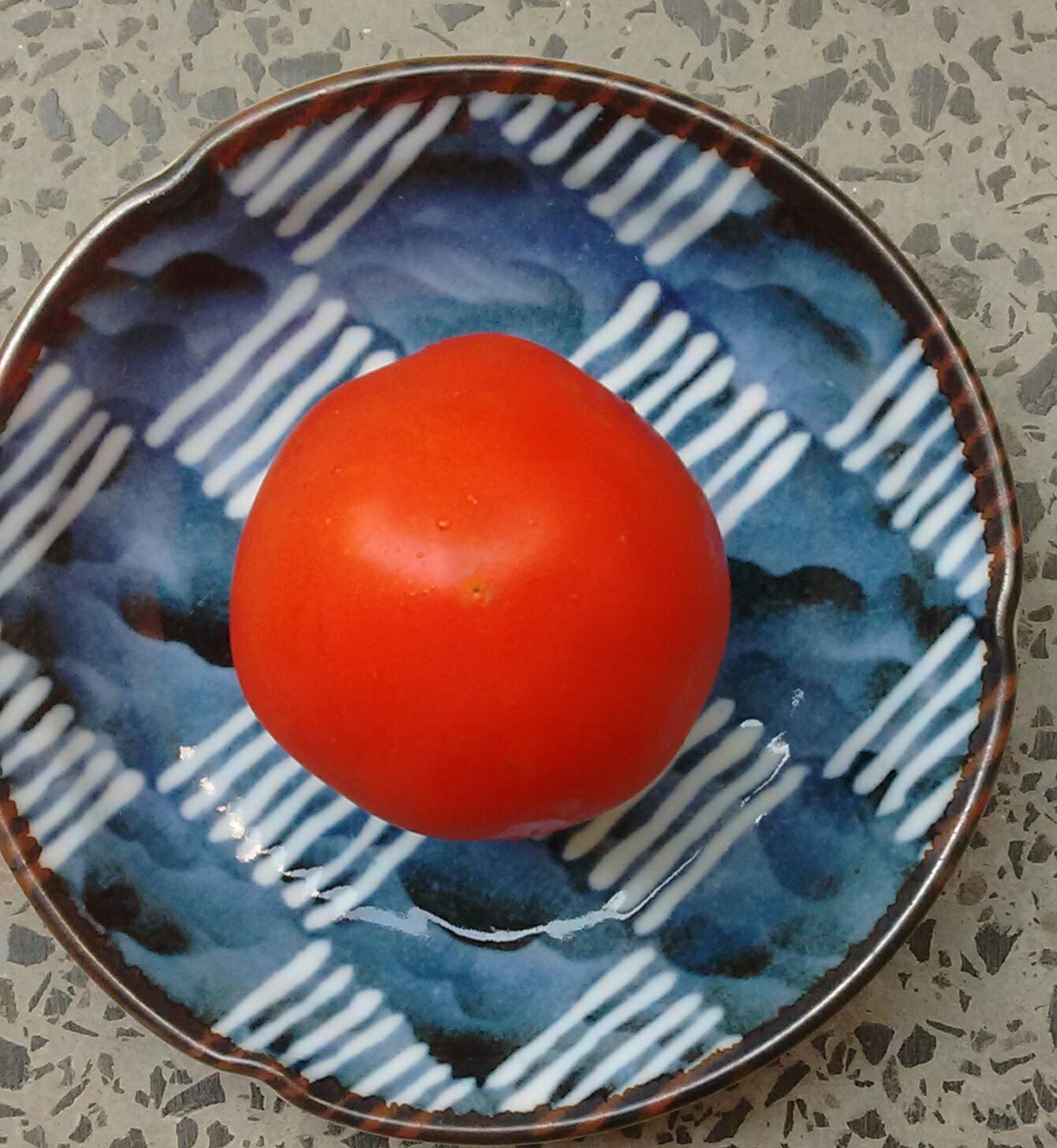
And then there is the tomato. In culinary terms we consider it a vegetable; but this is actually a fruit in terms of its botanical characteristics—it is edible, contains a seed, is at least somewhat sweet, and grows on a plant.

16 October is celebrated every year as World Food Day. This marks the date of the founding of the Food and Agriculture Organisation (FAO) of the United Nations.  Let each day be one of thanksgiving and celebration of the food we eat, by whatever name we may call it. After all, a mango by any other name will taste just as delicious!

–Mamata