
World Rivers Day is marked across the world on the fourth Saturday of September every year. In times when rivers in every country in the world face an array of threats, this day is an opportunity to highlight the integral role of rivers in the environment and lives of all living beings, and to encourage the improved stewardship of all rivers.
The proposal for a global event to celebrate rivers was led by Mark Angelo an internationally-renowned river advocate. The proposal was accepted by the United Nations which had launched the Water for Life Decade in 2005 to help create greater awareness of the need to better care for the world’s water resources. The World Rivers Day was observed for the first time in 2005. Since even as people are reminded of the critical role of rivers as indicators of a healthy ecosystem, rivers across the globe are being sapped of their vital lifeblood.
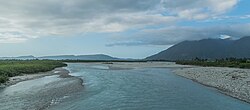
The ancient civilizations and peoples not only understood this role of rivers, but also revered it. Perhaps the most telling example of this reverence is the link between the indigenous Maori community in New Zealand, and their deep connection with the Whanganui River. The Whanganui tribes have for centuries lived along the river from which they get their name, and fished in it for food and livelihood. But for them the river is equally central to their spiritual practices; it is sacred. It defines their self-identity; as their proverb indicates: I am the river. The river is me.
The large-scale advent of European settlers to New Zealand in the 1840s changed the situation. Increasing trade and riverboat traffic began to take a toll on the river ecosystem. While Maori chieftains and the British Crown signed a treaty to guarantee the Maori the continuation of their rights and privileges, the situation on the ground was very different. Over time, the different resources of the river–water, aquatic life, riverbed gravel, the waterways that supported trade and transport, and the land along the river bank were each exploited separately for their utility to the settlers called Pākehā by the local people, and parcelled out to individual ownership, even as the indigenous inhabitants were being pushed to the brink. This was completely against the traditional belief that the river was a single and indivisible entity, and not something to be owned. The tribes believed that rivers resources could be used but only the people who contributed to the community had the right to benefit. Under Māori belief, all things have mauri – a life force and personality. When the river’s water quality was degraded, the mauri of the river wasn’t respected, in turn affecting the mauri of the local people, who relied on the river to sustain them. The local people protested, and even initated legal action to claim an independent identity and right for the Whanganui River. The earliest of such petitions date back to 1873.
The case went on through the century and into the next. Tribunals were set up and hearings were conducted. In 1999 the Tribunal agreed that the river was a treasure, but that the local people did not have legal rights over the river. Once again, the litigation stalled. It took another two decades to gain legal recognition for the river itself. The local people, many who were descendants of the original litigants, continued their fight. The case went on to become one of New Zealand’s longest-running court cases.
Finally on March 15, 2017, after over 160 years of negotiation, Whanganui gained “legal status as a person.” The river henceforth will be considered as a living entity. This means that polluting or damaging the river is now legally equivalent to harming a human. Two representatives from the Māori tribes can speak on the river’s behalf, and it can be represented in court cases in an arrangement similar to a legal trust.
The Whanganui River became the world’s first natural resource to be granted its own legal identity, with the rights, duties, and liabilities of a legal person. Having the river recognised as a legal person means that harming it is the same as harming the tribe. If there is any kind of abuse or threat to its waters, such as pollution or unauthorised activities, the river can sue. It also means it can own property, enter contracts and be sued itself.
The legal identity reinforces the deep and inalienable connection that the Māori have to the river, which they consider to be an ancestor, and acknowledges their inherent role in maintaining its well-being. The river continues to be the font of their spiritual sustenance and renewal. It is a caregiver, a guardian, and a totemic symbol of unity.
This case is also indicative of a growing movement called Rights of Nature. This initiative which was launched in 2010 is a broad alliance of civil society organizations in partnership with governments, Indigenous Peoples, members of the scientific community, and future generations delegations.
The Rights of Nature model seeks to recognize Nature and her elements as rights holders, providing them with a voice through representation, and reorienting western law around principles of relationship, interconnection, reciprocity, responsibility, and the recognition that all Earth’s beings, ecosystems, and components have fundamental rights to exist, thrive, and evolve.
The movement is committed to advocating, accelerating, and escalating the global adoption and implementation into legal systems of the Rights of Water Ecosystems (e.g. rivers, mangroves, ocean, and others) and in general, the Rights of Nature.
The Whanganui River which became the first waterway in the world to be granted legal personhood, provided a boost to the movement which is today active in several parts of the world. It seeks to repositioning people and Nature as members of a collective whole working together towards a shared vision of a healthy and livable planet, promotes holistic water management approaches.
–Mamata
 Millennial Matriarchs