
Last week I wrote about a young doctor who chose to use his medical training to serve people in war situations. This was Dr Kotnis who worked with passion and dedication on the war front in China, almost a century ago. Every generation and every period of history has examples of such professionals who voluntarily choose to serve in some of the most difficult and dangerous situations.
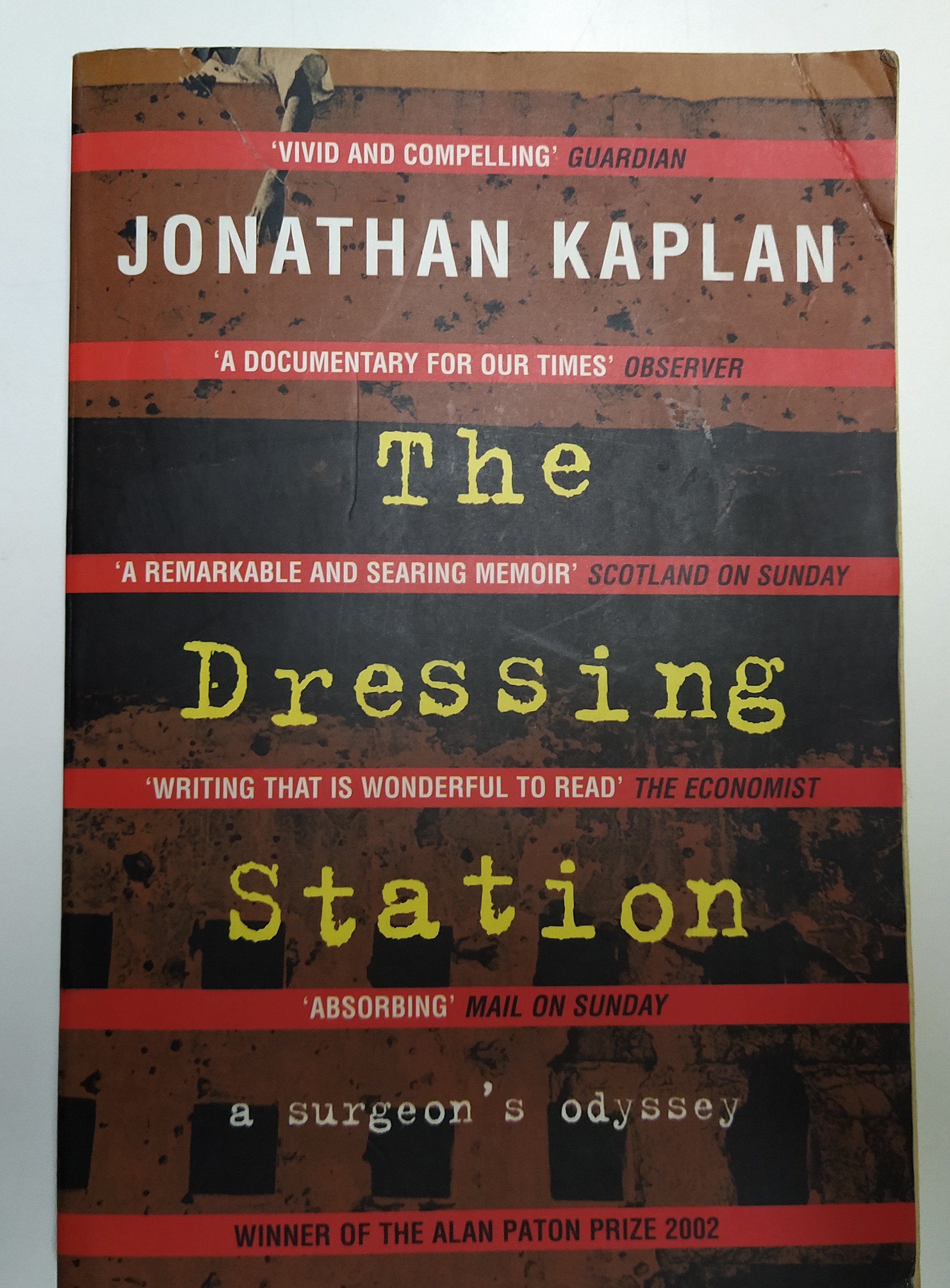
I recently read a fascinating account by such a doctor in our own times. This is Dr Jonathan Kaplan who began his medical career, as do all doctors, after long and intensive years of study. Dr Kaplan graduated from medical school in South Africa and spent the next ten years acquiring specialist qualifications and training as a general surgeon, and super-specialization in vascular surgery in hospitals in the UK and USA. This equipped him to move on to become a “consultant” with a comfortable and prosperous practice. In his own words:
Master of Surgery. The title had a ring of Zen about it, as though I was now a sage of some martial art, a mystic bladesman. I had trodden the path of professional dedication, served the necessary years at the required levels of experience and responsibility, paid all my dues to date. A consultant post—the reward for all this industry—lay ahead, with attendant success and security. But I found myself beset by an odd emptiness…
This sense of emptiness led Jonathan to choose otherwise. He became a “medical vagabond” as he describes himself. He spent many years as a volunteer surgeon in some of the world’s most dangerous war zones in the 1990s. He attended to the casualties of apartheid in Cape Town; worked on the front line treating Kurdish fighters during the uprising at the end of the Gulf War, and in a part of Burma’s Shan state under attack by the Burmese army; in Mozambique during the civil war, and in Eritrea at the time of the Ethiopian offensive in 2000.
Besides the blood, sweat and tears of the battlefield, the adventurous Jonathan Kaplan was always looking for new challenges. In his own words Working as a doctor in war zones was voluntary and unpaid. My hospital career looked increasingly uncertain—my curriculum vitae was a curious patchwork of jobs that shocked the sensibilities of staid consultants—and I was considering a full-time post in accident and emergency medicine where I hoped a varied resume might be less provocative to the interview committees.
But that was not to be. A variety of chance offers led to interesting stints where Dr Kaplan saw different sides to the realities of illness and emergency care. Among these was being an air ambulance doctor, and a resident doctor on a cruise liner. He also became deeply engaged in an investigation on the impacts of mercury poisoning in a part of Brazil.
For most of his life Jonathan Kaplan worked tirelessly, and with minimal resources, amidst the most challenging conditions and heart-rending human tragedy, using every skill at his disposal to treat the wounded, and save lives. At the same time he also meticulously documented the politics, struggles, and universal human dilemmas. These have been published in a book titled The Dressing Station.
The book is a fascinating read, that vividly describes some of the most tragic and devastating impacts of war on human beings, alongside some highly technical details of surgery, and the contradictions of war-zone realities. But Jonathan is much more than a reporter. He also shares his angst and his internal struggles to maintain his humanity even under the most inhuman circumstances. He wonders about human life, and the role that doctors have to play in the human drama between birth and death. That is what makes his writing both eye-opening, as well as thought-provoking, not just for medical practitioners, but for every one of us who are on the other side of the ‘consulting table’.
As he shares: I have practised medicine in diverse fields: as a hospital surgeon, a flying doctor, a ship’s medical officer. I have operated on wounded straight off the battlefield, treated people with rich stains of tropical disease raging in their bloodstreams, and tried to help those affected by occupational illness from industrial toxins or work place stress. I have run research programmes funded by corporate finance—that met the needs of the shareholders before they benefitted any patients—and I’ve cared for children wasted by diseases of famine and war. Like most doctors I have seen my craft used and abused; been part of its successes and witnessed its failings. It is by the means of this unforgiving arena that we struggle to define ourselves.
He further ponders on his work and on life: No clinician can give an objective account of that work: the intersection between doctor and patient is mutual and intimate, and in the end comes down to something between us that is a fragile thing, as fragile as life. All we can do is the best we can in the war against death and against despair, including our own. For at its extreme the practice of medicine is a succession of front line, and each victory is only a temporary respite.
Dr Kaplan continues to take periodic assignments as a volunteer surgeon in conflict zones amidst UK hospital surgery, film-making, academic teaching, and working as a photographer, and as an advisor on medical TV dramas. He has also proposed, investigated, researched, produced and directed documentaries on health, development and environmental issues for several TV channels.
I picked up The Dressing Station by chance, not having earlier heard of Jonathan Kaplan. It was a gripping read. I look forward to reading his second book Contact Wounds.
–Mamata
 Millennial Matriarchs