The Stroop Effect and Other Sneaky Brain Games

Having been associated for long with Vikram A. Sarabhai Community Science Centre (VASCSC), the pioneering science centre in the country, I always source STEM education materials and kits from them.

A few weeks ago, we received one such package I had ordered. The wonderful thing about VASCSC material is that they don’t let an inch of space go to waste. So the large envelope in which the kit came was also printed with any number of science games and puzzles.

The one that my 6 year old grand daughter and I really had fun with was the Stroop Effect.

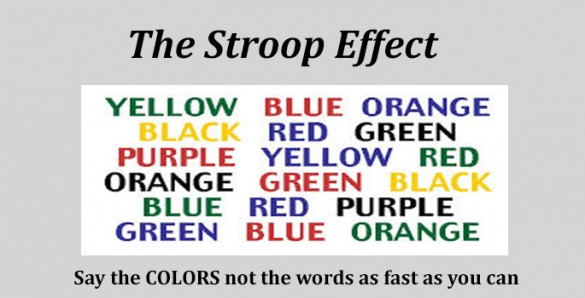
It was all giggles as she held out the sheet with a bunch of words and asked me to look at them.  The word “RED” was written in bright blue ink. She asked me to say the colour, not the word..

“Red!” I said instinctively.

“No!” she giggled. “It’s blue ! You have to say the colour of the ink!”

Oh.

And just like that, we stumbled headfirst into the Stroop Effect—a clever little quirk of our brains first identified by psychologist John Ridley Stroop in 1935. Stroop, an American psychologist conducted a series of studies as part of his PhD research. He was fascinated by how automatic processes—like reading—can interfere with other tasks, such as identifying colours. In his now-famous experiment, he showed that when colour words (like “red” or “green”) were printed in mismatched ink colours, people took longer to name the ink colour. This delay, or interference, revealed something profound about how our brains handle conflicting information.
So what is the Stroop Effect?

The classic version of the Stroop test asks you to name the colour of the ink in which a different colour name is written. Like the word “Green” printed in red ink. Sounds simple, right? But our brains are wired to read words so automatically that it slows us down, or even trips us up, when the word and the ink colour don’t match.

This interference between what we read and what we see is a fascinating peek into how our minds juggle competing bits of information.

Why does it matter?

What seems like a party trick actually has deeper implications. Psychologists use the Stroop test to study attention, processing speed, and cognitive control. In clinical settings, it helps assess brain injuries, dementia, and even ADHD. The longer it takes for a person to respond correctly, the more it can reveal about how their brain is functioning.

But even beyond labs and clinics, understanding the Stroop Effect has very real applications.

Take driving, for instance. Ever noticed how highway signs use simple fonts and colours? Imagine if a stop sign said “Go” in red letters—confusing, right? Designers rely on principles like those revealed by the Stroop Effect to make sure our brains process the right cue first.

It’s not just colours and words

Once you start noticing, these mental speed bumps are everywhere. Consider this: we all know that when we try rubbing our stomach with one hand and patting our head with the other, we run into hilarious situations. It is tricky, because your brain is trying to coordinate two conflicting patterns of movement. That’s a bit like motor interference, another cousin in the Stroop family.

Or think of the McGurk Effect, where what you see affects what you hear. If a video shows someone saying “ga,” but the sound is “ba,” your brain may hear “da.” Vision wins over sound, just like reading wins over colour in the Stroop test.

And then there is change blindness—when something in a visual scene changes, and we don’t notice because our attention is elsewhere. Magicians depend a lot on this trick, as also UX designers, who try to guide user attention in websites and apps using visual cues.

A lesson in humility

For me, discovering the Stroop Effect was a gentle reminder that our brains, for all their wonder, are not infallible. They’re predictably imperfect, prone to biases and blind spots. Well, that makes life more exciting!

–Meena

Image: Venderbilt University site
Reach for the Sky: Recalling Interactions with Dr. Kasturirangan

Last week, India and the world of science lost a doyen: Dr. Kasturirangan who in the decade till 2003, led the Indian Space programme as Chairman of the Indian Space Research Organisation, as Chairman of the Space Commission and as Secretary to the Government of India in the Department of Space. During this period, India saw the launch of PSLV, our indigenously developed launch vehicle; the testing of Geosynchronous Satellite Launch Vehicle (GSLV); and IRS satellites among others.

Before that, as the Director of ISRO Satellite Centre, he headed the development of the Indian National Satellite (INSAT-2) and the Indian Remote Sensing Satellites (IRS-1A & 1B) as well as scientific satellites. He was Project Director of BHASKARA-I & II. He was also the Project Director for India’s first two experimental earth observation satellites, and subsequently was responsible for overall direction of the first operational Indian Remote Sensing Satellite, IRS-1A.

It was in his time as ISRO chief that Chandrayaan-1 was conceived.

I am proud to say that I had the chance of a few personal interactions. However, not in the context of high-science and technology!

As everyone in the country knows, Dr. Rangan was deeply involved in education, and obviously had a passion for science education (what we today call STEM). It was in this context that I had the chance to interact with him. He was the Chairman of the Board of Governors of the Vikram A. Sarabhai Community Science Centre (VASCSC), where I serve as a member. VASCSC was the result of Dr. Vikram Sarabhai’s vision of enabling the country’s top scientists to contribute to science education. The institution was started in 1966 as a facility where people concerned about the quality of science education could come together to try new ideas and methods of science teaching.

The institution has deep programmatic and emotional links with the various institutions associated with Dr. Sarabhai, the father of India’s space programme.  Dr. Kasturirangan was an obvious choice to chair it!

When very busy people take on yet another committee or chairmanship, it is often really only ornamental. With the best of intentions, they lack the time or mind-space to get deeply involved.

Not so with Dr. Rangan. He ensured to attend VASCSC Board meetings, sometimes in person, otherwise by Zoom. He was there on the dot even for Zoom meetings. He was completely clued in and asked sharp questions about the Action Taken Report. He had a prodigious memory and made quick decisions. He was always supportive of the programmes and publically appreciative of the management and staff for their innovative initiatives and their commitment. He never allowed himself to be distracted with anything else during the course of the meetings, and ensured everyone had their say. It was a humbling experience as well as a learning for all of us.

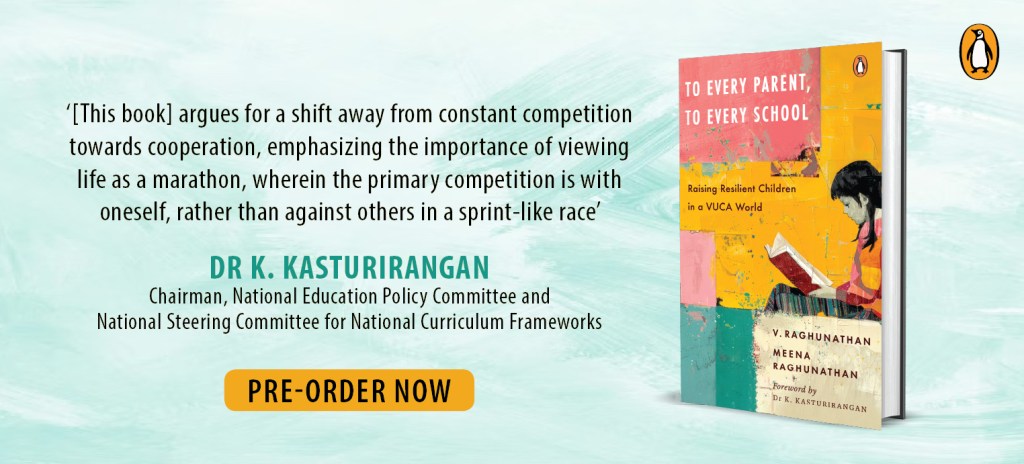
Raghu and I count it as a privilege that he consented to write the Foreword for our book: TO EVERY PARENT, TO EVERY SCHOOL: RAISING RESILIENT CHILDREN IN A VUCA WORLD (Penguin India). Even after he agreed, we were apprehensive: would he find the time to do it within the publisher’s deadline, given the enormous calls on his time? But we need not have worried. The write-up was with us a few days before the date we had indicated! And what a gracious Foreword it was!

These were people cut from a different cloth. They dedicated their lives to their mission. They wore their myriad achievements lightly. They were courteous to one and all. They listened. Nothing was too small for their attention. And they cared.

Grateful for the opportunity to interact with such inspirations.

–Meena

Sky-gazing

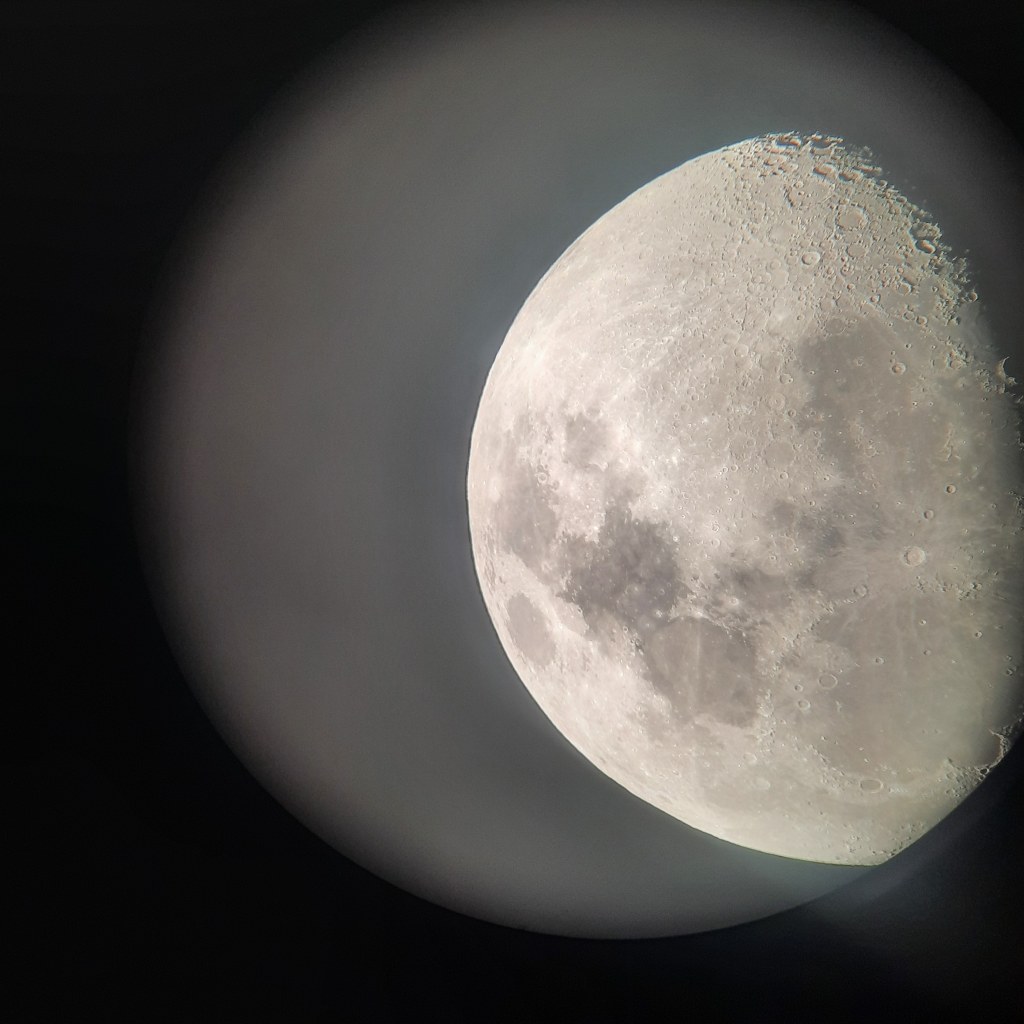
A few weeks ago, when we were in the Western Ghats, the resort manager kindly set up a telescope in the evening. It was for the kids who were our co-guests, but ultimately it was the adults who hogged the eyepiece! It was amazing to see the craters on the moon; Mars and Venus; and sundry stars. And we were reminded once again of the fascination that the sky has always held for humans.

The conversation obviously took a turn towards raking up memories about telescopes. Techy-types among the group reminded us that the magnification power of a telescope essentially indicated the size of an object observed inside the eyepiece relative to the size of that object when observed with the naked eye. For example, when looking at Mars at 50x magnification, the red planet will appear 50 times larger than if one looked at it with one’s eyes.  Factors like light pollution, atmospheric turbulence, temperature, wind, and much more affect the viewing experience. When viewing conditions are bad, the view will be blurry, fuzzy, shaky and unstable.  That is generally why telescopes are set up in high altitudes: the atmosphere is thinner at higher levels, and makes for better viewing. Air quality is important for good observations because any particles in the air will reflect light–so higher altitudes work better in this aspect too. Also, telescopes need to be located as high above the clouds as possible. And of course remote areas have less pollution.

Humans have been gazing through telescopes since the 17th century. The earliest existing record of such an instrument is a 1608 patent submitted to the Dutch government by a spectacle-maker called Hans Lipperhey. While the actual inventor of the refracting telescope is not known, Lipperhey was the one to file the patent. Scientists all over Europe were fascinated by the invention and many started their own attempts to come up with one. Galileo built his own version a few years afterwards, and started making his telescopic observations of celestial objects. The word telescope itself was coined in 1611 by the Greek mathematician Giovanni Demisiani for one of Galileo Galilee’s instruments, and translates roughly into ‘far-seeing.’

To most of us, the word ‘telescope’ probably brings to mind the Hubble, launched by NASA in April 1990 and still in operation today.  What we refer to as the Hubble Telescope is in fact a large, space-based observatory. It has been in operation for over 31 years, and in fact, its observation abilities have grown with time because new, cutting-edge scientific instruments have been added to the telescope over the course of the years through five astronaut servicing missions. It has made over 1.5 million observations over the course of its lifetime including seeing the collision of a comet with Jupiter, and has discovered moons around Pluto. It is truly one of the instruments which is shaping our understanding of the world.

Indians of course have always been fascinated with the skies, and down history have built different kinds of instruments to study the stars and other celestial objects. The observatories built by Maharaja Sawai Jai Singh of Jaipur between 1724 and 1734–the Jantar Mantars in Jaipur, Delhi, Ujjain, Varanasi, and Mathura being among the recent ones. 

India’s focus on space observations has continued into the modern era, with ISRO launching our first dedicated Space Astronomy Observatory—Astrosat–in September 2015. India’s biggest telescope currently is the 3.6m Devasthal Optical Telescope, a custom-built instrument of great complexity. Built in collaboration with Belgium and Canada, this telescope has the distinction of being largest telescope in India for the study of celestial objects at optical wavelengths. Devasthal is a district of Nainital, at a height of about 2,450 mt.

Women have had their share in these explorations. The ancient scholar Gargi (somewhere between 800-500 BC), engaged in questions about astronomy. In a dialogue with Yajnavalkya, she asks ‘what is that which pervades above the heavens, below the earth and in between the two (heaven and earth)’.

In the present day too, we have our share of astronomical stars (pun intended).  G. C. Anupama, the former Dean and Senior Professor (retired), Indian Institute of Astrophysics (IIA) is a world renowned astronomer. She has served as president of the Astronomical Society of India (ASI), the first woman to head this association of professional astronomers.  She is a member of the Indian core team which is part of the international effort to establish the thirty meter telescope (TMT) in Hawaii, USA, as also the principal investigator of the project which led to the establishment of the 0.7m wide field telescope at Hanle near Leh in Ladakh, the world’s ninth highest site for optical, infrared and gamma-ray telescopes in the world.

Exploring the skies is fundamental to the human quest for understanding ourselves. And it can set children on a course to study the world around us scientifically. If you don’t want to invest in a telescope which may cost in the tens of thousands, if not in the lakhs, do check out DIY telescope kits, available for as little as Rs. 1000 (one such option available at https://scienceshop.vascsc.org/). Who knows, you could be starting some kid out to a journey to ISRO or NASA—if not the stars!

–Meena

Focus on Citizen Science

April is marked as Citizen Science Month—not in India, but in the US. But it can only be to the good to take best practices from anywhere at all, and adapt them for our use, right? And an acceleration of the citizen science movement is something that is definitely a crying need in our country!

What is citizen science? The term probably appeared first in 1989, in an issue of the MIT Technology Review 1989, but till today, there is apparently no consensus on a single definition–one paper cites 34! But a working definition we could go by is the one given by the National Geographic Society: ‘Citizen science is the practice of public participation and collaboration in scientific research to increase scientific knowledge.’ The benefits of such initiatives are manifold: large public participation in scientific pursuits; raising scientific awareness and knowledge; democratization of science; ability to pull in indigenous and community knowledge, etc. In fact, without wide-spread involvement of a large number of people, many projects would be very difficult to do—nationwide bird counts, butterfly counts, monitoring water quality across large areas, weather monitoring, space watch, etc. 

India has its share of action on this front. The Indian Biodiversity Portal launched in 2008 is a prime example. It ‘aims to aggregate data through public participation and provide open and free access to biodiversity information’ and invites the public to participate in gathering and documenting such knowledge. It currently has 1.54 million observations on 58.3 thousand species. It is an invaluable resource, which would have been difficult to put together without the participation from people across the country.

Another interesting initiative is by the CitSci (Citizen Science for Biodiversity) India–they organize an annual Citizen Science of Biodiversity Conference. Their site also shares useful information on on-going biodiversity and conservation related citizen science projects undertaken by a host of NGOs, like the Citizen Sparrow initiative, which is ‘a public participatory project to which all members of the public are invited to contribute. ‘

It is not just conservation. There are projects in various other scientific research areas as well. The Pune Knowledge Cluster develops research projects where citizens from all walks for life can participate to help analyse big data from various scientific streams including astronomy. Yet another organization in this area is the Centre for Citizen Science (a Pune based organization with the explicit objective of promoting citizen science) whose ‘Project Meghdoot’ aims to study the phenomenon for monsoon across the country.

River Quality Monitoring, CEE
River Quality Monitoring, CEE (Joy of Learning II)

Nor is this a recent phenomenon. I recall in the 1990s, when I was working at Centre for Environment Education (CEE), we had a project wherein school children, as part of the Ganga Pollution Awareness programme, were monitoring and reporting the water quality in the river in their stretch. Similarly, we had green-cover mapping and biodiversity census by college students in Karnataka, which was then correlated to remote sensing data.

The initiatives for spreading scientific knowledge, a necessary precursor of citizen science, have a hoary history in India, and several institutions have been committed to doing this for decades now. Two of the oldest are VASCSC and KSSP. Dr. Vikram Sarabhai, in the ‘60s, created an institution, today called the Vikram A. Sarabhai Community Science Centre (VASCSC), one of whose objectives is to encourage scientific thinking. The Kerala Sastra Sahitya Parishad (KSSP) is a People’s Science Movement of Kerala, India, founded in 1962 has over 1200 units spread all over Kerala.

In fact, the recognition of the importance of science for national development is enshrined in the Constitution as a Fundamental Duty of every citizen! This section explicitly states that ‘It shall be the duty of every citizen of India.. to develop the scientific temper, humanism and the spirit of inquiry and reform.’

From here to citizen science should not be too long a distance to traverse. But it questionable if we have even achieved the scientific temper, so earnestly endorsed by Pandit Nehru as ‘the scientific approach, the adventurous and yet critical temper of science, the search for truth and new knowledge, the refusal to accept anything without testing and trial, the capacity to change previous conclusions in the face of new evidence, the reliance on observed fact and not on pre-conceived theory, the hard discipline of the mind—all this is necessary, not merely for the application of science but for life itself and the solution of its many problems.’

Even with such strong foundations and a bunch of dedicated organizations, neither scientific temper nor citizen science is very widespread in India today. While there is much talk of the importance of STEM, it is yet a theoretical approach aimed at cracking exams, and not an effort to inculcate scientific thinking and the spirit of science as a part of how we live, think and take decisions.

Maybe we should pause to ponder on this now—because it is Citizen Science Month somewhere in the world!

–Meena

For anyone who wants to explore the subject more, ‘Citizen Science in India: Introduction, Challenges and Way Forward’, a paper by Suryesh Namdeo and Moumita Koley provides a contemporary overview of the subject.

Go Figure: National Mathematics Day

December 22, the birthday of the mathematical genius Shri Srinivasa Ramanujam, has been observed as National Mathematics Day in India since 2012, the start of the celebration of his 125th birth anniversary. The Day has, since then, been marked in schools and colleges by special events like maths quizzes, competitions etc. Hopefully, the enthusiasm will be carried over to the digital medium this year.

Those of us who fear math will also recall they feared their math teachers. In fact, the fear of math stems in most of us because we just did not understand what was happening in the class. And math teachers seldom felt the need to do anything differently to help students understand the abstract concepts better.

It is in this light that Mathematics Educators like Shri AR Rao stand out. He dedicated his life to math education and inspired generations.

Born in the small village of Jakka Samudram of Salem district, Tamilnadu, he had his initial schooling at Tanjore—not far from Kumbakonam, where Ramanujam and studied lived when he was young.  He studied chemistry, not mathematics at graduate level, and then took a post graduate degree from Chennai. But his karmabhumi was Gujarat. He joined Bahauddin College, Junagadh in 1933, as a Professor of Mathematics and spent 27 years there. After that he taught in various other colleges in the state.

After ‘retirement’ in 1974, he started his second innings. He became a mathematician at VASCSC (Vikram Sarabhai Community Science Centre), a pioneering science education facility in the county. The teacher of formal mathematics became the flag-bearer of non-formal mathematics as a means to popularize mathematics. His mission was to make mathematics enjoyable for students and everyone else.

His innovative mind came up with dozens of puzzles, games, models and teaching aids towards this.

He set up India’s first Mathematics Laboratory at VASCSC. He traveled, attended workshops and seminars, and spoke all over the country to popularize these ideas.

I had the great good fortune of having interacted with Shri AR Rao to some extent. When I was helping at VASCSC, his 90th birthday came up. It was decided to throw a surprise party at the Centre. Just to ensure that he did come in that day, a message was sent to him that the Trustees wanted to meet him.

I still remember the joy and the excitement of the many students and bhakts who came for the party. And at last the guest of honour, Shri AR Rao, walked in. He was truly surprised and thrilled. He almost broke down when it was his turn to speak. He said that he had come in very nervously, thinking that the Trustees had wanted to meet him to ask him to retire now that he was 90! Such was his love and passion for spreading the word on mathematics education that he wanted to come in to work at this age. And indeed he did, till the age of 100. He passed away on 4th April, 2011.

If today the teaching of mathematics in India has become more comprehensible to the average student, if students appreciate and enjoy the beauty of mathematics, and if teachers have begun to employ innovative methods to teach the subject, Prof. AR Rao had a lot to do with it.

It would be appropriate to end with a quote from him:

“Although everyone concedes that without mathematics, modern science and technology can hardly make any progress, it is common knowledge that the students everywhere consider mathematics as a very difficult subject. Of the many reasons that can be found for this, perhaps, the most important are, some defective methods of teaching, over emphasis on exams and indiscriminate cramming of materials from the text books and the so-called guides. So what is really needed is inculcation of a power of understanding and a capacity of creative thinking.” AR Rao.

Blessed indeed to have met such people!

–Meena

Much of the material has been drawn from http://www.vascsc.org/images/pdfs/Glorious-Innings-of-Prof.A-R-Rao.pdf.