Pencil in the Dates: Stationary Fairs around the World

Two weeks ago, we dipped our toes into the pastel-hued wonderland of Japanese stationery. This week, starting from Japan, we do a world-trip of Stationery Expos.

Japan: Two Shows, Two Personalities

Japan doesn’t just have one stationery expo—it has two, each with its own character.

The Japan Stationery Show, held every November in Tokyo, is the country’s premier industry fair. Here, manufacturers reveal their latest innovations: notebooks that open perfectly flat, mechanical pencils that never break lead, and pens that glide like a brush. It is also home to the coveted Stationery of the Year awards, which often set the trends for the year ahead. Though businesslike in its purpose, the show is open to consumers too, making it a buzzing space where industry professionals and stationery fans meet.

The Stationery Girls Expo (Bungu Joshi Haku), by contrast, is pure celebration. Launched in 2017, it caters to bungujoshi—literally “stationery girls,” a term now used for anyone who adores stationery as a lifestyle. Here, washi tapes in hundreds of designs, pastel highlighters, limited-edition pens, and playful planners dominate the stalls. The mood is festival-like—queues of eager shoppers, arms full of bags, and excited chatter about the season’s “must-have” notebook. If the Japan Stationery Show sets the industry agenda, the Stationery Girls Expo captures the culture of stationery—personal, expressive, and joyful.

With the cheerful tagline “the most enjoyable event for stationery lovers,” this expo is playful, creative, and community-driven. Its name might suggest it’s just for girls, but the event welcomes anyone with a soft spot attractive staionary. Spread across several days in Tokyo and Osaka, it has grown into Japan’s largest stationery festival, drawing nearly half a million visitors cumulatively.

The expo is also known for its Bungu Joshi Awards, where visitors vote for their favorite products—categories range from Tokimeki Design (heart-fluttering design) to Heart-throbbing Convenience (products that spark delight through functionality). The audience becomes part of the show, giving the event a democratic, festival-like atmosphere.

What’s especially interesting is the shopping system. Each visitor is given a transparent bag at entry. As they wander through stalls, they pick up treasures and drop them into their bag, paying for everything at a central cashier. It’s a clever system that avoids long queues at individual stalls and keeps visitors free to browse. The expo also offers exclusive merchandise only available on-site—tiny rewards for the true devotees.

Germany and USA

Germany’s Paperworld (now merged with Ambiente), has for decades set the global benchmark. Here the focus is on sustainability, efficiency, and innovation. Think paper made from stone, packaging that biodegrades in weeks, and pens that feel like sleek machines. It is vast, professional, and very B2B—corporate buyers and distributors scanning stalls with intent.

Then there’s the US National Stationery Show (NSS) in New York. This one feels closer to Japan in spirit—independent designers, hand-illustrated journals, greeting cards that are art in themselves. The joy of paper and pen as a form of self-expression is what binds the NSS community.

India: Now taking Mainstage

And, did you know, India has its own Expos too—two of them!

A Stationery Fair has long been part of the well-known Delhi Book Fair. Last month saw not only the 28th Delhi Book Fair, but also the 24th Stationery Fair at Bharat Mandapam. “Besides promoting books of all genres, the aim is to focus on providing students with educational books and stationery,” says Hema Maity, general manager, India Trade Promotion Organisation (ITPO).

The newer entrant is the Stationery & Write Show which debuted in 2019 in Mumbai, co-located with gifting and lifestyle fairs. That first edition saw 272 exhibitors and over 12,000 visitors—a remarkable start for a new platform. By 2022, the event had grown into a three-in-one showcase—Paperworld India + Corporate Gifts Show + Interior Lifestyle India—drawing nearly 15,000 trade visitors and 215 exhibitors. Fast forward to 2025, and the growth is striking: 18,000+ visitors from 285 Indian cities and 49 countries, with 340+ exhibitors. The annual fair, usually held in late January at the Bombay Exhibition Centre, now rivals international events in scale. It has a Delhi edition too.

And the highlights? Eco-friendly stationery made from recycled paper, cork accessories, even moss-covered desk décor. Alongside these, educational toys, quirky notebooks, and premium pens jostle for attention.

What makes India’s fairs unique is the mood—serious business buyers walk the aisles, but so do college and school students and stationery lovers. It is equal parts trade fair and festival.

The Magic That Endures

Whether in Tokyo, Frankfurt, New York, or Mumbai, expos remind us that stationery is not just about function. It is about beauty, culture, even memory. And perhaps that is why, year after year, these fairs continue to draw thousands: they affirm that ink on paper still carries magic in a screen-dominated world.

–Meena
Kuldhara: Ghosts of the Past, Vandals of the Present

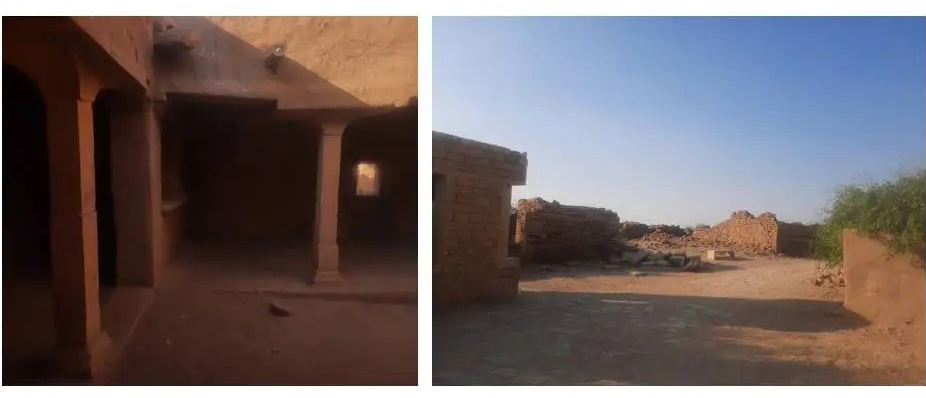
Kuldhara is on the tourist map of Jaisalmer district. On the way to Sam where the desert starts, is this ‘ghost town’ abandoned by its inhabitants about 200 years ago. The history of the town goes back to the 13th century when it was first settled by Paliwals, people from Pali district. Over the centuries, it grew into a prosperous place, with about 400 houses and over 1500 inhabitants at the peak. It had a pond, Udhansar, excavated by one of the first inhabitants, and at least one temple dedicated to Vishnu, as well as several wells and a step-well. It is actually a planned city, with proper layouts and a place for everything.

Till it was suddenly abandoned. It is not clear why the inhabitants left, but many reasons are given. Was it dwindling water supplies? Was it an earthquake? Or, more dramatically, was it the unwanted pursuit of one of the beautiful girls of the town by a local minister?

Well, whatever the reason or combination of them, it is a fact that people started leaving the place, probably not fleeing overnight as the tourist guides will tell you, but probably in trickles.

The mud-brick houses, temple and various other structures still stand in fairly good condition. Local legend of course goes that the township is haunted, and visitors are assured it is a dangerous place at night! The legend also says that the Paliwals while leaving the place, placed a curse on it, saying that anyone who tried to occupy it would meet dire consequences. All this led to its attracting tourists.

Kuldhara

The Rajasthan government decided to develop this as a tourist site around 2015. This is definitely a strategic move, given that it is just 18 kms away from Jaisalmer, and makes for a comfortable half-day trip, and it had already gained notoriety for its ghosts.

It is well-maintained by the Archeological Survey of India. There are of course guides. And importantly, fairly clean toilets. To this day, the neighbouring villages insist the gates be closed in the evening, so the Kuldhara ghosts don’t wander into their houses!

Of course, a lot more could be done—more signage, re-creation of a typical house, visualization of the town as it must have originally been, a more serious delve into the reasons for its abandonment, etc.

All of this will hopefully be done by the authorities in due course.

But an extremely disturbing incident that happened last week brings to fore the need for us as citizens and tourists to be more responsible. Newspapers report on a video that went viral. The video shows two tourists holding hands and kicking down the ancient brick wall of one the houses in Kuldhara. They were apparently doing this for putting up the video on social media.

The police are waiting for a formal complaint to be filed before taking action. Hopefully, this will be done fairly soon and action will be taken. The penalty for those who deface structures of national and historical importance has fortunately been enhanced in 2010 vide an amendment to the Ancient Monuments and Archaeological Sites and Remains Act. Now, such vandals will have to face imprisonment up to 2 years and/or a fine of up to Rs. 1 lakh.

Sadly, very few cases actually come to the stage where the punishment is given. Often, even the FIR is not registered—though in this case, the police seem to be ready to do this.

Kuldhara is just the latest example—from tourists knocking down pillars at Hampi to graffiti in Golconda, we have a long sad story of vandalism at cultural heritage sites.  If our monuments are to have a chance, punishment in these cases needs to swift, exemplary and well-publicized. Maybe there needs to be a sign outside the monument as to how someone tried to vandalize and what punishment they got!

And of course our educational institutions need to instill respect for our cultural and natural heritage, and strongly din home the need to take the greatest care of them.

The responsibility rests with each and every one of us.

­­–Meena

Thanks for a Spelunking Time!

Humans and caves go back to the dawn of time. In popular media and imagination, people of the Palaeolithic era are cave-dwellers, armed with rocks and clothed in animal skins and furs. While it is true that human ancestors did live in caves in that period, these were probably not their predominant dwellings. But since bones, artefacts, weapons and paintings in caves are sheltered and preserve better, a lot of objects used by early humans are found there rather than anywhere else, giving rise to the perception that humans mostly inhabited caves.

Mawsmai Caves
Mawsmai Caves, Meghalya

Our fascination with caves is long-standing. These dark, mysterious places figure in many an adventure story. Aladdin for instance, found his magic lamp in the Cave of Wonders. The thieves in the Ali Baba story hid their treasures in a cave which opened with the famous spell ‘Open Sim Sim’. Pirates are often associated with caves, as are many children’s stories involving lions and tigers.

Most caves are formed by the dissolution of limestone. Why does this happen? Rainwater as it falls to the earth dissolves carbon dioxide that it encounters in the air it passes through. As this carbon-di-oxide laden water percolates through the soil, it turns into a weak acid. The acid slowly dissolves the limestone along the joints, planes and fractures in the soil to form cavities. Some of these cavities in time become large enough to form caves.

India has its share of breath-taking caves which are of interest from a geological standpoint as formations;  from the archaeological stand point in that they house ancient cave paintings and artefacts; and from an aesthetic and religious standpoint—as the home of fantastic carvings and temples.

The earliest evidence of humans in India have been found in the Bhimbetka caves in Madhya Pradesh, with some of the shelters showing evidence of being inhabited 1,00,000 years ago! The cave paintings here go back to about 8000 BC. The Ajanta and Ellora caves in Maharashtra have Hindu, Buddhist and Jain temples, with the oldest dating as far back as 2nd century BC! Badami, Elephanta, Amarnath and Borra are among other popular and highly-visited caves.

But Meghalaya may take the prize when it comes to caves. The Krem Liat Prah caves in the Jaintia Hills are listed among the longest caves in the world, with a length of 30,957 meters—and this is only the explored length! In fact, the top nine out of the ten longest and deepest caves in India are in Meghalaya!

Another interesting cave is the Siju Cave of the Garo Hills, also known as the Bat Cave, which spans over 4 kilometres long, but with nearly all of it is filled with underground streams and rivers, is not easy to explore.

During my recent visit to Meghalaya, we were able to visit three touristy caves (Mawsmai and Arwah caves, and the Garden of Caves at Laitmawsiang) which easily are accessible and not too difficult for even the inexperienced. And that gave me a small taste of what it would be to be a spelunker —a person who walks and climbs in caves as a sport (from the Latin spelunca, which in turn derives from Greek spelynx, both of which mean ‘cave’).

A lot of the work of discovering, exploring and bringing to light the caves of the state has been done by the Meghalaya Adventurer Association founded by Brain Dermot Kharpran Daly and his group of dedicated spelunkers.

But all is not well with the caves of Meghalaya. Limestone mining for the cement industry is a major threat to the caves. As one drives across the state, one can see hill after hill carved and hollowed out. In fact, this has already led several disasters including the collapse of the Krem Mawmluh Caves, the seventh-longest cave system of the state. Much of this mining is now illegal, but that does not mean it has stopped!

Is there nothing we can do to stop the depredation of these amazing structures that have formed over million years?

–Meena

Beach Lore

The good news that newspapers brought us yesterday was that eight Indian beaches had qualified for the Blue Flag tag—an achievement indeed! This Certification is awarded by Foundation for Environmental Education (FEE), an NGO, and is a respected one, with stringent requirements. There are 33 criteria spanning environmental, educational, access and safety related parameters. Beaches tagged as Blue Flag provide clean and hygienic bathing water, along with basic infrastructure for tourists.

It is not impossible to spruce up for an inspection and get a certification or award. The challenge is make the improvement sustainable, and an inclusive shared vision with all stakeholders. Let us hope these eight beaches are able to do this and stay on the list, even as more join them in the years to come.

At any rate, it provides an opportunity to revise some beachy information:

A beach is a narrow, gently sloping strip of land that lies along the edge of an ocean, lake, or river (yes, technically, even the land around a lake or along a river is a beach!).

Beaches are made of materials such as sand, pebbles, rocks, and seashell fragments. Over the decades and centuries, forces of nature—water, wind, erosion, weathering—act on the cliffs, rocks and landforms at the edge of the waters, and break them down.  As tides come in, they deposit sediment which may have sand, shells, seaweed, and even marine organisms like crabs or sea anemones. When they go out, they take some sediment back with them.

Beaches are constantly changing. Tides and weather can alter beaches every day, bringing new materials and taking away others. There are seasonal variations too. In the winter, storm winds throw sand into the air. This can sometimes erode beaches and create sandbars. In the summer, waves retrieve sand from sandbars and build the beach back up again. These seasonal changes cause beaches to be wider and have a gentle slope in the summer, and be narrower and steeper in the winter.

At 7500 kms, India has the world’s seventh-longest coastline, with nine states and two union territories having coasts.

Apart from aesthetics, beaches are habitats for many, many species. The Olive Ridley coming to nest in the Gahirmatha beach of Orissa is a phenomenon that naturalists come from around the world to witness. In all, about 2,50,000 to 3,00,000 turtles nest here every year, in the space of about two weeks. Thousands of female turtles arrive each night to lay eggs. They make nest holes, lay 100-300 eggs, smooth the nests over, sometimes covering them with vegetation, and go back. Fifty days later, the eggs hatch, and millions of little turtles, each the size of a brooch, make their way into the ocean to start their lives.  

Our coasts and beaches are also witness to a hoary past: The rockcut temples of Elephanta date back to the 6th century AD. The temples of Mahabalipuram are almost as old—going back to the 7th century. The Konarak temple dates back to the 13th century, at which point it stood directly on the sea, though today the sea has moved about 3 km away. Dwarka is believed to have been the Krishna’s capital, and is said to stand on the site of five earlier cities. Fort Aguada, Goa, built in the 17th century has a unique lighthouse. Rameshwaram has the largest temple in India.

And of course, on April 5, 1930, Gandhiji and 78 satyagrahis reached the beach at Dandi on the coast of Gujarat to make salt and history.

So let’s protect our beaches! Let’s Blue Flag them all!

–Meena

Monumental Tragedy

Thanks to COVID and the search for not-too-popular sights, we ended up visiting the Chikkajala Fort last weekend. On the way to Bangalore Airport and not too far from my home, we have been meaning to go for a long time.

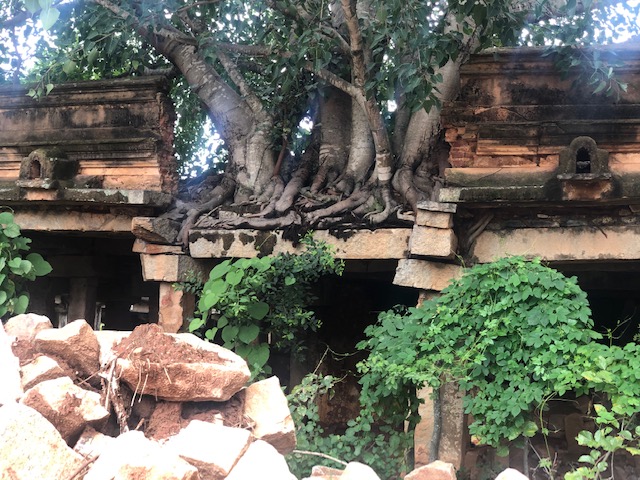
‘Fort’ is a misnomer today—what stands is a temple with what once must have been a beautiful, deep temple-tank in front of it, and a few long corridor-like stone structures. The site of Chikkajala is a prehistoric one apparently. It is likely there was a ‘vassal fort’ but it no longer stands. The estimates of the age of the temple and extant structures range from 300 to 950 years!

Apart from the general ravages of time and the overall neglect, apparently some parts of the structures were demolished for road widening after the new airport came up.

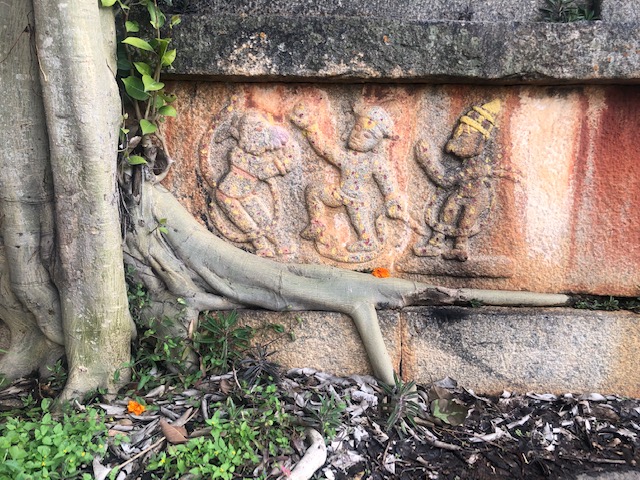
Whatever the reasons, it was sad!  To see a construction which must have a thing of beauty, lying in rack and ruin. The structure just falling down as it stands. Carvings defaced. Trees growing on and through the buildings. Cows grazing and leaving behind generous piles of cow dung. The temple tank completely overgrown with vegetation.  Plastic water bottles and discarded chips packets.

It was particularly poignant because only last week, Karnataka announced its Tourism Policy for 2020-25. The State aims to be among the top two tourist destinations in the country. I confess I have not read the 104-page document completely, but what I have read leaves me completely confused! While it talks at length of developing tourism infrastructure, ‘products and services’, I am amazed that it says nothing about the core of tourism—the sights that tourists go to see. What is to be done to preserve and enhance the condition of the cultural artefacts and natural heritage. Agreed, this is in the purview of other departments, but does a tourism policy not have to be in sync with these other departments, and should the synergies not be laid out as a part of the Policy?

The strategic intervention as mentioned by the Policy, and which seem to me to sadly lack so many, many critical elements, are:

  • Position Karnataka as a preferred tourism destination at state ,national and international levels
  • Facilitate improvement of Infrastructure, Tourism Products and Services
  • Streamline processes for obtaining approvals and clearances
  • Prioritise Human Resources Development & Capacity Enhancement
  • Promote ICT based initiatives for providing timely and reliable information services to tourists
  • Create institutional structures for effective implementation of the Policy
  • Provide attractive concessions and investment subsidies for various tourism

Admittedly I know nothing about Tourism or Tourism policy. But I do know when an ancient monument next to my house is falling to bits. I do see that a monument right on the main road to the airport can attract a lot of footfalls. I can gauge that it is about some money, but  much more about caring.

A small piece of heritage in a country which has so much that we can’t be bothered about any of it? A tiny blip in a list of monumental tragedies?

–Meena

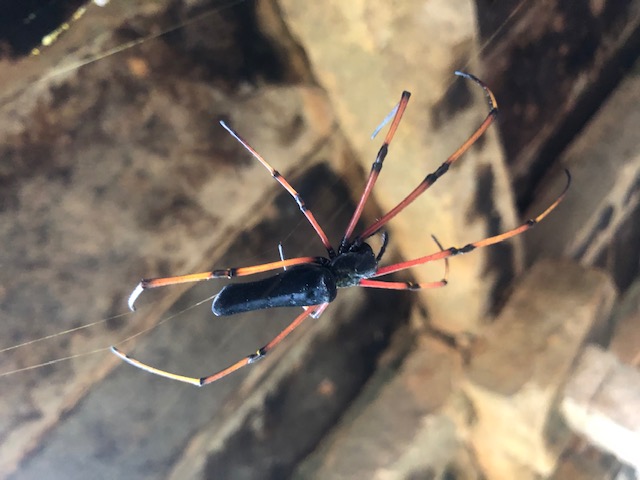
PS: A lovely spider sighted in the ruins. About 5 inches across, it had spun a web which was about 4 ft across. Maybe Nephila pylipis, but I am not quite sure.

Photo credits: V. Raghunathan

TEN DAYS IN NEPAL

May 29th is Nepal’s Republic Day. To mark this upcoming day, here is my friend Anuradha’s travelogue, which could help those planning a trip to this amazing country. Meena.

We planned a 10-day trip and booked air tickets much in advance by Nepal Air direct flight from Bangalore to Kathmandu @ Rs.14K /ticket for round trip. With Kathmandu as a base, we took a package @ Rs.1.3 lacs for 3 pax which included flight tickets from Pokhara to Jomsom round trip, a private car with driver, and accommodations in 4* plus hotels for 9 nights.

Day-1: We were off! Reached Kathmandu by evening.

Day-2 (Friday): Kathmandu local city sightseeing -Swyambhunath Stupa, Darbar squares of Kathmandu & Patan, Pashupathinath Temple.  The ‘Living Goddess’ of Darbar square, hand-made idols of brass and metals at Patan, ancient Pashupathinath Temple were the most memorable.

Day-3 (Saturday): Early morning drive to Chitwan—a distance of around 120 Kms. On the way, there is a popular cable car ride to Mano Kaamana temple. Saturday being a state holiday, there were long queue.  Though we spent half day on the whole process of cable car ride, it was worth it.  Reached Chitwan around 5.30 pm and checked in to Hotel Green Park. As it was already dark, no activity was scheduled. We hired an auto and went around Chitwan and nearby villages, spoke to local people, did some food shopping.  Annual Elephant festival was happening nearby and we dropped in. We enjoyed watching elephant racing and elChitwanephant Polo.

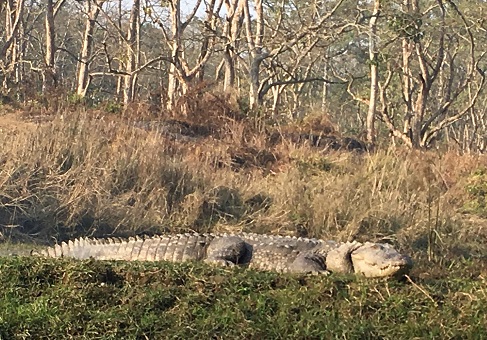
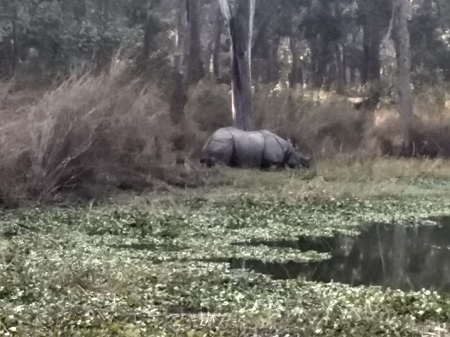
Day 4 (Sunday):  Chitwan National Park visit, Elephant safari, Boating, bird watching, visit to Elephant Breeding centre and cultural evening. Rhinoceros is a star of Chitwan. There are an estimated 600+ plus Rhinos here.  Elephant Safari of around 1.5 hours across a river and inside the jungle was an amazing new experience. We could see Rhinos, Deer, Crocodiles and rare birds.

RinoBird watching from a boat across River Budiramati was amazing.   Jungle walk with guide across National Park, viewing rare Himalayan medicinal plants, creepers, birds was truly educational. We were excited to see a just-born baby elephant in the breeding centre.


Day 5 (Monday): Drove to Pokhara from Chitwan.  Beautiful drive across rivers, valleys of Himalayan stretch.  View of Dhaulagiri, Nilgiri and Annapurna range of Himalayas, Matsyangadi, Sethi Gandaki and Gudi Gandaki Rivers.  Compared to Kathmandu, Pokhara looked more developed with better infrastructure.  Our hotel was right opposite the famous Fewa lake.   Visited couple of local places in Pokhara. As it was 31st Dec, entire city was decorated and Street Festival was going on.  We roamed around here and got to know about local Mela.    It was indeed a memorable great experience to be in Nepal’s happening Pokhara, on the New Year eve.

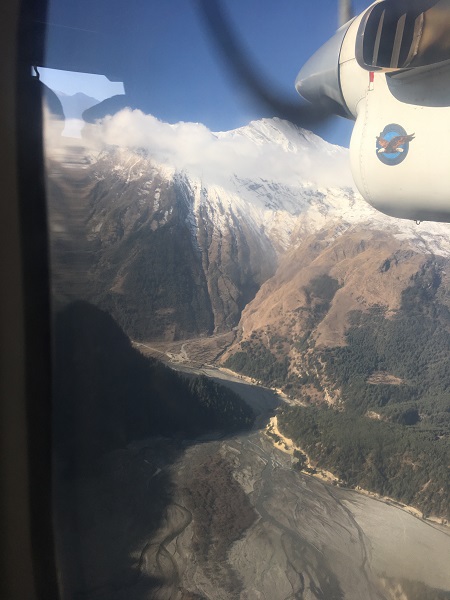
Jamsom flightDay 6 (Tuesday): Travelled from Pokhara to Jomsom by 7.50 hrs Tara Air flight.  Flight didn’t take off on scheduled time due to bad weather.  Till 10.45 am, we had no idea whether flight would take off.  Luckily weather cleared by 11 am and we were on the way.  It was a spine-chilling experience in a 12-seater charter flight, flying at a very low height of 30 mts among Himalayan glaciers.
Flight landed in a small place Jomsom, surrounded by mountains.  Temperature was minus (going down to -17o C). Stay was arranged in Om’s Home, a beautiful heritage hotel.  Understand Amitabh Bachchan stayed in this Hotel during shooting of his movie Khuda Gawah.  To our excitement, the same room was allocated to us.  We quickly freshened up for a local visit around Jomsom, to a lake which was frozen and a beautiful Morpha village.  Since it was off-season, not many tourists found and it was calm and heavenly.  The apple-growing Morpha village was very clean and neat with wooden houses.   Dining room at Hotel was kept warm by non-electrical boiler heater.  Internet connectivity was very good though it is a remote place.

Day 7 (Wednesday):  Mukthinath Darshan.  We started around 9 a.m. from Hotel by jeep towards Mukthinath.  There are no words to explain our experience of passing through the Himalayan valley. We filled our hearts and minds with the Himalayan view and took pics. We crossed Khinga, Jarkot, Kakbani villages, Kali Gandaki river and drove towards Mustang and arrived to Mukthinath base. After 30 mts trek, we reached the holy temple.  Our dream of seeing god Mukthinath has come true.  We bathed in icy cold holy water here.  We had a very good darshan as there were no crowds, thanks to the cold.

As we had read that ‘Saligrama’ is found at Kali Gandaki river, we requested our driver to take us to the river bank .  He was good enough to do so and after an hour of searching, we found a few.  On the way back we bought fresh Walnuts and dried apple.

Day 8 (Thursday): Departure from Jamsom by Tara Air and back to Pokhara around 9 a.m. Full day Pokhara local visit was planned.  We have covered Museum on Mountaineering-definitely worth a visit.  4.5 km boat ride in Fewa Lake was a wonderful experience.Peace Pagoda stupa at Pokhara was also interesting.

Day 9 (Friday): Sunrise view from Sarangkot is not to be missed.  The view of Davalgiri and Annapurna Himalayan ranges, sun rising on these mountain ranges can’t be explained but has to be experienced.  We were in no mood to leave the place and were there till 8.30 a.m. filling our eyes with mountain ranges and sun rise view. As next visit was to Nagrkot a long drive from Pokhara, we had to leave to continue the journey.

It was full-day awesome drive across river Trishooli, Sethu Gandaki. On the way, we visited an extremely old temple Changinarayan.  Wooden crafts and masks are famous here. We reached Nagarkot mountain peak around 8 p.m.  Our stay was arranged in Country Villa wherein each room is on a mountain edge and built in such a way that sunrise can be viewed from the room itself. The great Everest mountain ranges are visible from Nagarkot.  It is better to plan for more time at this beautiful place.

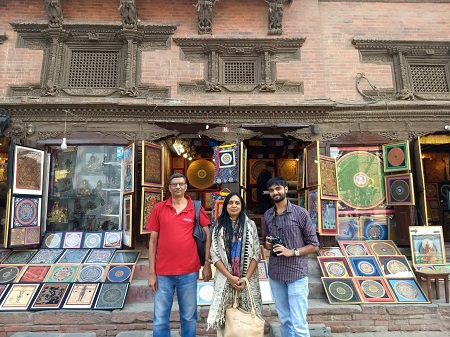
Day 10 (Saturday):  Morning, we checked out of the to drive towards Bhaktapur, a heritage city. Bhaktapur is famous for Thangka art and paintings.  City looked red–all brick buildings without paint. We visited Darbar square of Bhaktapur, saw beautiful sculptures and heard stories behind these.  We quickly finished our Bhaktapur visit so as to reach airport by 12 noon to catch our return flight.

Paintings

Reached Bangalore around 5 p.m. with amazing memories of Nepal, eyes filled with Himalayan glaciers, blessings of Lord Pashupathinath and Mukthinath.

Our observation of Nepal on our 10-day tour is that people of Nepal are very proud and concerned about the Himalayas and treat their land as God’s home.  Women are respected, they go all alone freely.  People are sincere and happy.   All the places we visited in Nepal were clean and well maintained. Rest rooms were hygienic. Garbage bins are available in most of the places and also getting cleared every now and then.  Nepal is truly a worth visiting destination.

–Anuradha Nagaraj

(Trip of Dec 2018-Jan 2019).

The Worshipful Bull

In Indian mythology, Nandi the bull is both the guardian of Mount Kailash, and the vehicle of Lord Shiva. The worship of Shiva and Nandi goes back to the time of the Indus Valley Civilization. The bull-seals found in Mohenjodaro and Harappa  have led some researchers to conclude that Nandi worship goes back many thousands of years.

A statue of a seated Nandi is often found in front of Shiva temples, facing the God. In metaphysical terms, Nandi represents the individual soul, looking to unite with the universal soul or Shiva. At a mundane level, people often use Nandi as a communication medium, whispering wishes into his ears, so that he may convey them to Shiva, who may listen to him more readily than to us!

Why suddenly this interest in Nandi? Because I was in Orissa this week, and did a three-hour road journey and also visited 5-6 villages.

Still doesn’t explain it?

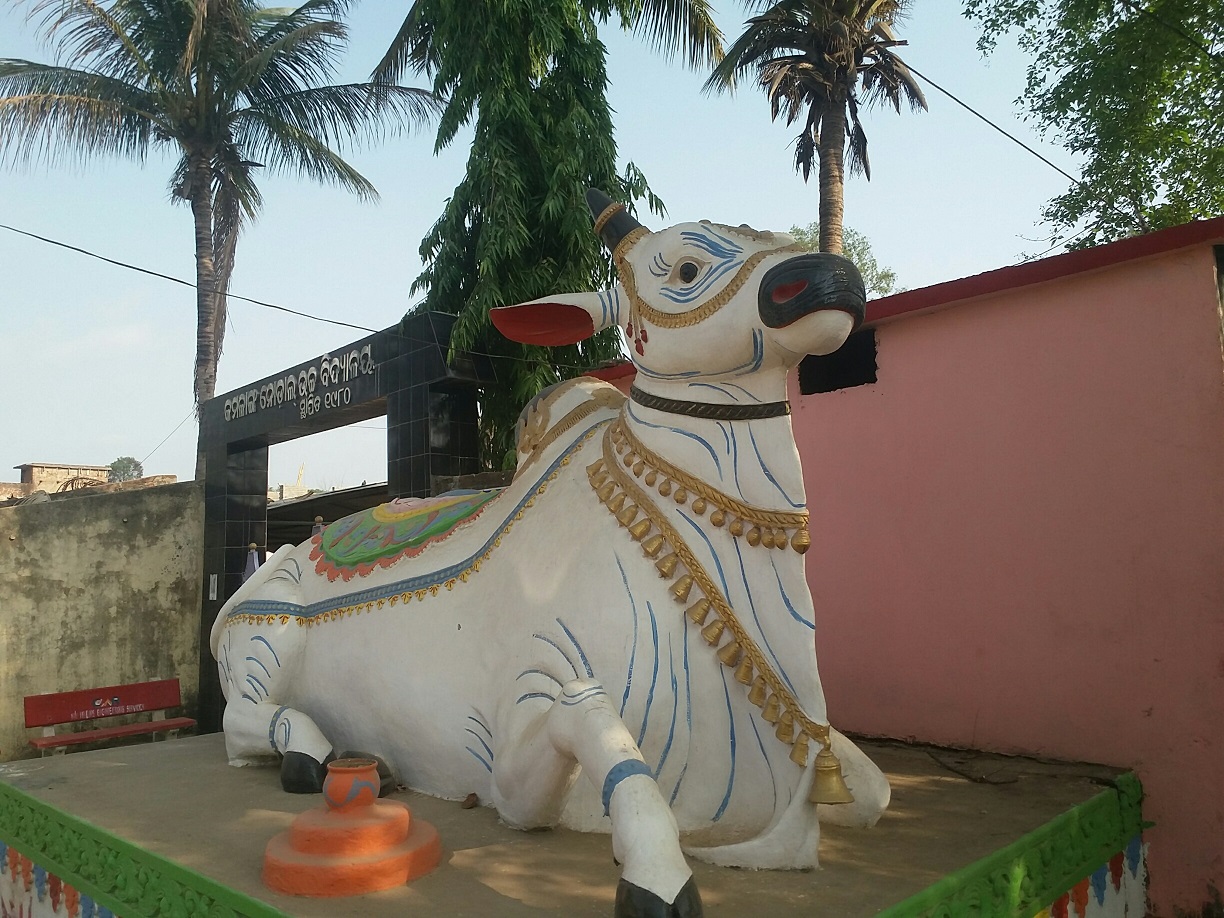
nandi

Well, it was the number of Nandi statues I saw in this time. Almost every hamlet and village had one. Pretty big and prominent. Sometimes the shrines they were in front of were smaller than the Nandis. And there were also some stand-alone Nandis! They were in all shapes and sizes.  A few small, most medium sized and a few really large. Some smiling, some serious, some with inscrutable expressions. Some puny and under-fed, some healthy. Some in proportion and some not-so.  But Nandi, after Nandi, after Nandi.

I have travelled to several states. I have seen ever-increasing number of stand-alone Hanuman statues; and several Shiva statues. But as far as I can recall, I have not come across so many Nandis. I am not sure why there should be so many in Orissa particularly, because traditionally, large Nandi statues are more prevalent in the South—Andhra Pradesh, Karnataka, Tamilnadu. But I do not recall that Nandi statues are found so commonly in these states.

The largest bull statue is in the Mahanadiswara Swamy temple in Kurnool, AP. It stands 15ft by 27 ft. This is followed by the bull in the Lepakshi Temple, also in AP. Other prominent Nandis are the ones at Chamundi Hills, Karnataka, Brahadishwara Temple, Tamilnadu, and of course, Banagalore’s own Bull Temple. Orissa does have one of the big 10 Nandis, at Bhanjanagar town.

But I think the state must beat all simply in the number of Nandis dotting the state scape. These are not old—would not think many are over a decade in age. It would indeed be interesting if someone could undertake a study to understand why there is such a proliferation in recent times. Wish it could be me, but sadly, I don’t think I can do it at the moment. So when I go back to Orissa, I will content myself with just looking out for them, counting them and clicking them

–Meena