
This week offered a rare celestial phenomenon which also coincided with the festival of Sharad Purnima, the full moon heralding the beginning of the winter season in India. This was the appearance of the Harvest Moon. This was one of the Supermoons that are scheduled to appear this year.
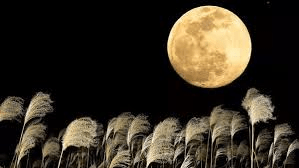
The Moon’s orbit around the Earth is not circular but elliptical, meaning that the distance between the two varies throughout the year. A Supermoon is when the moon is full at its closest point to the earth, called the perigree, or within 90% of its closest point. When it is at this point, the full moon appears noticeably larger and brighter. The term Supermoon was first coined by astrologer Richard Nolle in 1979.
The recent October full moon is known as the Harvest Moon. The Harvest Moon is the name given to the full Moon that rises closest to the Autumn equinox which is usually around 22 September, but aligning with the time between late September and November. During these weeks, the full moon tends to rise earlier than usual for several nights in a row, causing the evening sky to stay illuminated for a longer time. The name dates from the time before electricity, when farmers in the northern hemisphere depended on the Moon’s light to harvest their crops late into the night. The Moon’s bright light and extended period of illumination was particularly important during fall, when harvests are the largest in America.
Over time different cultures, have traditionally given names to full moon across the lunar calendar. The cycles of lunar phases were also a method of timekeeping. For example, in many Native American tribes, names of full moons reflected what was happening in Nature at that time. For example: January: Wolf Moon named after the howling of hungry wolves lamenting the scarcity of food in midwinter. February: Snow Moon reflecting the month’s typically cold, snowy weather. March: Worm Moon after the worm trails that would appear in the newly-thawed ground. April: Pink Moon after a species of early blooming wildflower. May: Flower Moon as thanks for the abundant blooming of spring flowers. June: Strawberry Moon to reflect the time for harvesting of strawberries. July: Buck Moon for the time when male deer, which shed their antlers every year, begin to regrow them. August: Sturgeon Moon which is when this fish species appeared. September: Full Corn Moon when crops are gathered at the end of the summer season. It is often the nearest full moon to the autumnal equinox, earning the title of ‘harvest moon’. October: Hunter’s Moon which gives hunters enough light to be able to stalk prey and hunt at night. November: Beaver Moon which refers to both the time when beavers are actively building dams, and also when hunters set beaver traps. December: Cold Moon which marks the setting in of winter.
The moon and its cycles have fascinated people from time immemorial. While the Native American tribes found a close connection of these cycles with their own life and work cycles, the mystery of the moon has also been the staple of folklore and fantasy. Several Asian cultures have tales about the moon. In China and Japan one of the zodiac animals–the rabbit—also has links with the moon.
There is a popular folktale in Japan about the Moon Rabbit which is believed to have its origins in the Buddhist origin tale. As one version of the story goes:
Many years ago, the Old Man of the Moon decided to visit the Earth. He disguised himself as a beggar and asked Fox (Kitsune), Monkey (Saru), and Rabbit (Usagi) for some food.
Monkey climbed a tree and brought him some fruit. Fox went to a stream, caught a fish, and brought it back to him. But Rabbit had nothing to offer him but some grass. So he asked the beggar to build a fire. After the beggar started the fire, Rabbit jumped into it and offered himself as a meal for the beggar to eat.
Quickly the beggar changed back into the Old Man of the Moon and pulled Rabbit from the fire. He said “You are most kind, Rabbit, but don’t do anything to harm yourself. Since you were the kindest of all to me, I’ll take you back to the moon to live with me.”
The Old Man carried Rabbit in his arms back to the moon and he is still there to this very day exactly where the Old Man left him. Just look at the moon in the night sky and the rabbit is there!
The rabbit on the moon is called Tsuki no Usagi in Japanese. People imagine when they look up at the full moon that they can see the shape of the rabbit pounding rice cakes with a pestle. At Jugo-ya the Japanese mid-autumn festival, people gather to watch the full moon, and children sing a song about Usagi the moon rabbit.
There is a similar legend in Korea where the moon rabbit is known as Daltokki, and also pounds rice cakes. In Vietnam, in a similar legend, the white rabbit is named Tho Trang. All these are celebrated at the Mid-Autumn festival.
The legend has also captured the fantasy of modern artists. A Dutch artist Florentijn Hofman created a giant moon rabbit as part of a display at the Taoyuan Land Arts Festival in Taiwan in 2014. It was made of 12,000 pieces of Tyvek, a kind of high-density polyethylene fibre, and placed in the open where it looked as if it was staring at the clouds in the sky and daydreaming, as the breeze ruffled its tyvek ‘fur’.
India too has its share of moon legends. Whatever we may imagine we see in the shadows on the moon, the sight of a full moon is always breath-taking. This year the Harvest Moon which usually occurs in September, was on 6 and 7 October, a rare occurrence. Sadly many missed a clear viewing as many parts of the country had rain or cloud cover. But not to despair, this year will still allow us to enjoy two more Supermoons—on 5 November and 4 December.
–Mamata
 Millennial Matriarchs