
112 years after the tragedy, April 15 is still marked as the day the RMS Titanic sank. This is remembered as the biggest maritime disaster of all times. The largest and most luxurious ship in the world at the time, The Titanic was also one of the most technologically advanced for its time; its 16 watertight compartments were believed to make the ship unsinkable. But just four days into its maiden voyage, the Titanic struck an iceberg near Newfoundland, Canada, damaging its watertight compartments. Only hours after the collision the ship sank, taking 1500 passengers with her.
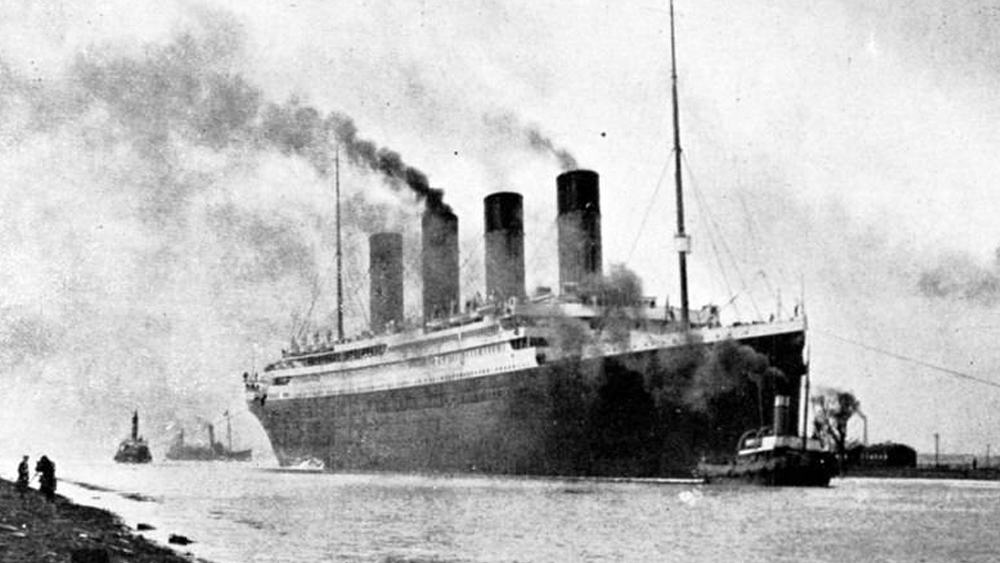
Not many are aware that twenty years before this tragedy, another ship had mysteriously vanished, taking along with her, more than a thousand people. And this little known event occurred along the coast of Gujarat in India on 8 November 1888.
The ship was SS Vaitarna, one of the earliest steamships operating on the west coast of India. It was named after the Vaitarna River which flows north of Mumbai, but was built by the Grangemouth Dockyard Co. Ltd in Scotland. It took three years to build. The 170 feet long steamer had three floors and 25 cabins. Its value was estimated to be 10,000 pounds, and it was insured for 4,500 pounds. Its maiden voyage from Scotland involved sailing around Africa to Karachi its first destination.
The Vaitarna was owned by A.J. Shepherd & Co. in Bombay. The captain of the ship was Haji Cassum, a zamindar from Kuchchh who owned large tracts of land around Mumbai.
The ship started sailing in 1885 and was used mainly for carrying cargo and passengers between the Mandvi port in Kuchchh and Bombay. Vaitarna was far from the luxury liner that the Titanic would be two decades later. But it had something that was a great novelty for the time—electricity! The ship was lit with electric bulbs, long before external lighting was made mandatory for safe navigation at sea. This was such a unique feature that the local people dubbed the ship Vijli (the Gujarati word for electricity or lightning). The lighted ship attracted scores of visitors when it used to come to Mumbai; sightseers were charged two rupees for the viewing.
Vijli regularly plied between Mandvi in Kuchchh and Bombay, ferrying passengers and goods. It took 30 hours to cover the distance, and the passenger fare was eight rupees.
On 8 November 1888, the ship was anchored at Mandvi port. At noon that day it set sail for Dwarka with 520 passengers on board. About 200 more passengers are believed to have boarded at Dwarka before the ship left for Porbandar. But as the weather was turning stormy the ship did not stop at Porbandar but headed directly for Bombay. The storm gained strength and the seas were choppy. That evening the ship was seeing off the coast of Mangrol, but that was the last sighting. Vijli never reached Mumbai. The next day SS Vaitarna was declared missing with all the passengers on board. The passengers included 13 wedding parties and a number of students who were on their way to Mumbai to appear for their matriculation exams.
While it is known that there were at least 700 passengers, plus about 40 crew members, the exact number of casualties could never be ascertained. It was common practice for ships to load far beyond their normal capacity. It has been speculated that ship could have been carrying as many as 1200 passengers.
No wreck of the ship nor remains of the passengers were ever found. Unlike the Titanic, SS Vaitarna had no survivors. The first attempt to locate the remains were by the ship SS Savitri. Its captain Mahomedbhoy Dawood, had been a friend of Haji Cassum for many years; he knew Cassum to be a careful navigator.
The cause of the wreck has also remained a mystery. A Marine Court of Inquiry was set up by the Bombay Presidency to investigate. It pointed out that the ship did not have enough lifeboats, and was not adequately equipped with safety measures. Generally the ships in this region were not designed to ply on stormy seas. They would travel along the coast from port to port during the non-monsoon seasons, and would remain moored in harbour during the rainy season. But November is not the monsoon season in the Arabian Sea.
However another report by the then government of India claimed that the ship was in good condition and all its machinery was in good order, and that it was fully equipped and sufficiently manned. It would have taken a cyclonic storm to capsize it.
Whatever the cause, the effect was the total and complete disappearance of SS Vaitarna. However this disaster led to the realization about the need for relaying early credible forecasts about storms and led to several reforms in India’s shipbuilding and navigation systems.
No compensation was given to the families of the missing passengers. After the initial attempts at searching for the wreckage, the curtains were drawn. While the sinking of the Titanic continues to evoke interest and discussion even a century later, this early, and just as tragic, shipwreck has almost been forgotten in the annals of shipping history. The Lloyd’s Register of London recorded only one word against SS Vaitarna: Missing.
The Vaitarna tragedy however became a part of the lore of Saurashtra. Even today stories and songs commemorate Vijli and her captain Haji Cassum.
–Mamata
 Millennial Matriarchs