Republic Day at Whangamōmona: When a Town (Sort Of) Seceded

A few weeks ago, India celebrated Republic Day. It was, as always, a solemn occasion. For us, Republic Day marks the day when we adopted our Constitution and became a Republic.

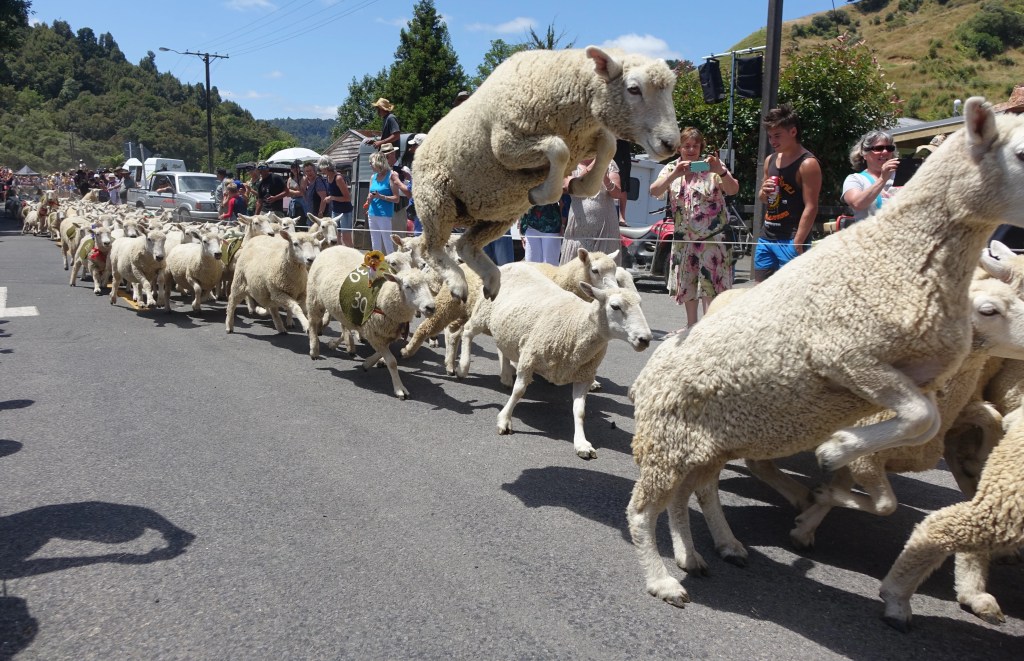
But not all Republic Days are solemn. Nor do they come every year.  Whangamōmona, a small settlement in rugged New Zealand’s North Island, celebrates Republic Day in January,  but only every two years.  It last celebtrated its Republic Day on Jan 18, 2025, marking 36 years of independence. Hundreds of visitors attended the event, which featured rural activities, a sheep race, presidential elections

Whangamōmona has a funny backstory.  It seceded from New Zealand. How and why did this come about?

In 1989, New Zealand restructured its local government boundaries. For decades, Whangamōmona had been part of the Taranaki region. But the reforms shifted it into the Manawatū-Whanganui region instead. On paper, this was administrative housekeeping. On the ground, it felt like cultural displacement.

The town identified economically and socially with Taranaki. Farming networks, community ties, supply routes were all there.  But suddenly, they were told they belonged somewhere else.

So on 1 November 1989, in response to what they saw as distant bureaucratic meddling, Whangamōmona declared itself an independent republic.

But this wasn’t angry secession. It was satire with a straight face.

The Republic of Whangamōmona established:

  • A president
  • A passport (yes, you can get it stamped)
  • A national day
  • And a constitution — loosely interpreted

The tone was tongue-in-cheek, but based very much on community pride. Every two years, on Republic Day (in January), thousands of visitors descend on this tiny town of fewer than 50 permanent residents. There are sheep races. Gumboot throwing. Debates. Parades. And, most importantly, the presidential election.

The candidates over the years have included:

  • A goat (Billy Gumboot)
  • A poodle
  • A human (briefly)
  • And even a tortoise

A race to choose the President

Billy Gumboot, the goat, was perhaps the most iconic president. He reportedly served with dignity until his untimely death in 1999. His successor? Tai the poodle.

Isolation as Identity

Whangamōmona isn’t easy to get to. It lies along the Forgotten World Highway — which is honestly one of the best road names ever conceived. The route winds through dramatic hills, misty valleys, and farmland that feels cinematic in its remoteness.

In the early 20th century, Whangamōmona was a frontier settlement, established during railway expansion. It once had a hotel, a school, a hall, and enough settlers to sustain real momentum.

Then the railway declined. Young people left. Farms consolidated. The population shrank.

Like many rural communities worldwide, it faced the existential question: how do you survive when the economic centre shifts away?

Whangamōmona’s answer was genius: if you cannot compete on scale, compete on story.

The “Republic” became a brand. Visitors stop at the Whangamōmona Hotel (the town’s social nucleus), get their passports stamped, and take photos with the republic signage.

Instead of being “a place left behind,” Whangamōmona became “that place bold enough to declare independence.”

Why This Tiny Republic Matters

In a world where declarations of independence are usually soaked in conflict, Whangamōmona offers something softer: protest through humour.

It reminds us that governance is, at some level, a social agreement — and that local identity matters deeply. The town’s mock-secession wasn’t a rejection of New Zealand. It was a wink at centralised decision-making.

There is no bitterness in it now. Only tradition.

Republic Day is less about rebellion and more about reunion. Former residents return. Visitors become temporary citizens. The town swells with life.

For one weekend, the population multiplies many times over. And the republic thrives.

Who gets to decide where we belong?

Sometimes the answer is: we do.

And maybe that’s why this story resonates so widely. It’s about scale — how small places can assert symbolic power. It’s about humour as strategy. It’s about community cohesion in the face of administrative indifference.

Whangamōmona could have quietly faded into obscurity. Instead, it elected a goat.

That choice tells you everything.

A funny story with profound lessons about identity and self-assertion.

–Meena
Pic: https://www.rnz.co.nz/news/

A Flag for the Republic

Every Republic Day, the tricolour appears with ritual predictability. It rises along Rajpath, flutters on homes, schools and government offices, slips into newspaper mastheads and WhatsApp greetings. We see it as a finished symbol, but the Indian flag, like the Republic it represents, took quite a while to take its final design.

The earliest Indian flags of the twentieth century were crowded and emotional. In 1906, a flag hoisted at Calcutta’s Parsee Bagan Square carried multiple colours, symbols, even words — less a flag than a manifesto. A year later, Bhikaji Cama unfurled another version in Stuttgart, turning cloth into quiet provocation. These were attempts to imagine India visually and politically, before it existed as a nation.

In 1917 came the Home Rule Flag designed by Annie Besant and Bal Gangadhar Tilak, including stars, stripes, the Union Jack, crescent moon and more. A design as complicated as the messaging.

By 1921, when Pingali Venkayya presented a tricolour to Mahatma Gandhi, the design had shifted towards restraint. After much discussion and a few changes, this basic design of three colour stripes and a wheel at the centre was adopted in 1931. Colours were chosen not just for beauty but for what they might stand for —values and ethical balance. The charkha at the centre had a strong message: spin, labour, self-reliance and progress. This was adopted as the flag of the Indian National Congress.

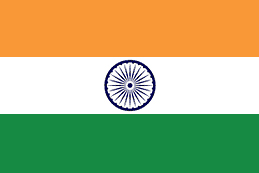
On 22 July 1947, the Constituent Assembly adopted the flag we know today. The charkha was replaced by the Ashoka Chakra — an ancient symbol pressed into modern service. Saffron, white and green were retained, standing for courage, peace and growth. There was no text, no ruler’s emblem, no date to anchor it to a single moment. It was a disciplined choice, and one that we are proud of.

When Design Meets Judgment

All flags are beloved by the people of the country. But there is also design aesthetics. What makes a flag good from this perspective? This question has spawned an entire subculture of passionate experts who evaluate flags with great seriousness. Their principles are deceptively simple: a flag should be easy to draw, limited in colour, free of text, and recognisable at a distance. A flag, they insist, must work when it is old, faded, flapping, or badly stitched. History may explain a design, but it does not excuse a cluttered one.

By these measures, many flags around the world falter. Coats of arms dissolve into visual noise. Mottos disappear into creases. Seals that look impressive on paper collapse on fabric. In the process, a curious truth emerges: symbolism ages better when it is spare.

The Curious Case of Flag Rankings

Over the last two decades, flags have been pulled into the modern compulsion to rank everything. Design schools, vexillological associations (i.e, association of people who study flags), online polls, children’s surveys, and pop culture lists have all attempted to crown the world’s most beautiful flags. The results vary, but patterns repeat.

Japan’s rising sun is endlessly praised for its calm authority. Switzerland’s square flag earns admiration for bold simplicity. Canada’s maple leaf is often held up as a model of contemporary national branding. Nepal’s double-pennant shape wins points simply for refusing to conform. These flags succeed not because they shout, but because they know exactly what they are.

The rankings are hardly neutral. Familiarity influences taste. Politics sneaks in. Yet when designers, schoolchildren and casual observers repeatedly gravitate towards the same flags, it suggests certain features which resound across cultures.

And Where Does India Stand?

India rarely tops these lists, but it almost never sinks either. In most design-based rankings, the tricolour settles comfortably in the upper third of the world’s flags. It is respected rather than sensational.

Its strengths are structural. The layout is clean. The colours are distinctive without being aggressive. The symbolism is layered but not overloaded. Most importantly, there is no text — a decision that has quietly protected the flag from linguistic politics and historical expiry dates.

The Ashoka Chakra is both the flag’s greatest strength and its mildest complication. Conceptually, it is rich: law, motion, moral order. Visually, it is intricate. Purists point out that twenty-four spokes violate the famous rule that a child should be able to draw a flag from memory. But perhaps that tension is apt. A flag is not meant to be reduced to a doodle.

In comparative terms, India often ranks above older European flags burdened with heraldry and below ultra-minimalist icons like Japan or Bangladesh. As a post-colonial flag, however, it scores especially well — modern without being rootless, symbolic without being authoritarian.

The Constitution and the Display

For decades after Independence, ordinary citizens were not freely allowed to fly the national flag. Its use was governed by strict rules, reserved largely for government buildings and official occasions.

But in 2002, a Supreme Court judgment affirmed that flying the national flag was a fundamental right under freedom of expression, the Flag Code of India was liberalised. The tricolour could finally enter homes, balconies and private spaces. It was a quiet but significant shift: the flag moved from being a state-controlled emblem to a shared civic symbol.

Republic Day is about the Constitution, but it is also about the quiet endurance of symbols. The Indian flag has survived regime changes, political churn, commercial misuse and overexposure. Today, it flies proudly over tanks and textbooks, protests and parades.

Happy Republic Day!

–Meena

Updating Anthems

In this week of Republic Day, the tune of our national anthem and other patriotic songs are all around us. Without them, the mood cannot be built. Singing the national anthem together with neighbours, community, colleagues, fellow-students—there is nothing more symbolic of our oneness.

Anthems in general are rallying cries, rousing or uplifting songs identified with a country, section, cause etc. A national anthem is a solemn patriotic song officially adopted by a country as an expression of national identity.

These songs are our identity. But just as in so much else, should they change as contexts and realities change?

Well, five countries have taken the bold step of changing their anthems in recent years.

Australia: On Jan 1, 2021, Australia’s national anthem, “Advance Australia Fair,” underwent a significant change. The phrase “For we are young and free” in the second line was changed to “For we are one and free.”  This is an effort to respect the Aboriginal and Torres Strait Islander peoples, recognizing that Australia’s history precedes European settlers tens of thousands of years. It is a symbol of Australia’s commitment to unity and reconciliation with Indigenous population.

Austria: Austria’s national anthem is “Land der Berge, Land am Strome” (Land of Mountains, Land by the River). The language was reviewed and modified to promote gender inclusivity in 2021 . The original lyrics which referred to “great sons,” was changed to “great daughters and sons.”

Canada: In 2018, Canada made a significant and widely-welcomed change to its national anthem “O Canada” in 2018. The line “in all thy sons command” was changed to “in all of us command.” was changed to “in all of us command”, again an effort for gender-inclusivity.  

South Africa: Like the nation itself, South Africa’s national anthem is unique. It combines lines from several different languages and songs, including the hymn “Nkosi Sikelel’ iAfrika” and the former anthem “Die Stem van Suid-Afrika.” In recent times, small changes have been made to the anthem with the purpose to ensure proper pronunciation and inclusion of all languages and honour the linguistic heritage of all its people.

New Zealand: In 1977, the Government announced that New Zealand would have two national anthems — the traditional anthem ‘God Save The Queen’ and the poem ‘God Defend New Zealand’. Since then, both the anthems have had equal status. Following the accession of King Charles III to the throne in 2022, the words of the first anthem changed to ‘God Save the King’.

The latest change in a national anthem is not for a change of words but of the tune. In January 2025, Saudi Arabia has asked Hans Zimmer (Oscar-winning composer of the Lion King, Dune etc.) to create a new version of its national anthem, Aash Al Malik (Long live the King)!

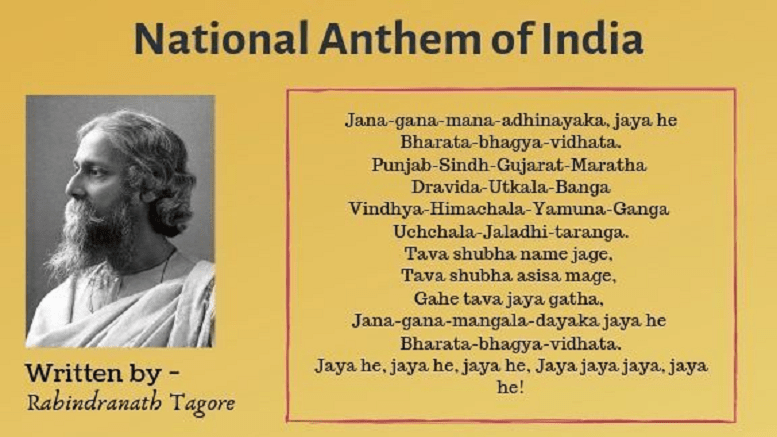
Our anthem Jana Gana Mana (‘[Ruler of] the minds of the people’) was  composed as “Bharato Bhagya Bidhata” in Bengali by  Rabindranath Tagore on 11 December 1911. The first stanza of the song  was adopted by the Constituent Assembly of India as the National Anthem on 24 January 1950, the same day as the Indian Constitution was signed. (Mamata has dwelt on this at length in post last week).

There have been a few proposals to change/add/delete words and phrases. For instance, to add the name ‘Kamrup’ to make the anthem inclusive of the Northeast; or remove the name ‘Sind’ because it is no longer in India. The word “Adhinayak” has also been controversial,  because it was used to praise King George V in 1911. In 2019, there was a bill moved in the Rajya Sabha, to modify the third line to ‘Punjab Sindh Uttarpurv Gujarat Maratha’, to bring in the Northeast. However,  the Supreme Court has struck down all of these.

While tampering with sacred traditions is always fraught, there does seem to be sense in these suggestions, and maybe we need a debate on this. After all, the essence of democracy is debate, and this seems a worthwhile one!

Happy Republic Day!

–Meena

Thanks: http://www.vanguardngr.com