
Well, most people do not think of ‘pi’ as easy. This constant is the bugbear of many a student. The general reaction is ‘The ratio of the circumference of a circle to its diameter is a constant. Something like 3.14…. So what’s the big deal?’
Well, Pi plays a crucial role in many, many calculations within and beyond mathematics and science. It is one of the most widely known mathematical constants and is applied in various calculations, from basic geometry, trigonometry, calculus to complex physics equations and in engineering applications. It is central to calculations related to motion, gravity, and electromagnetic radiation. In engineering, Pi is used in design and construction of circular structures such as bridges, tunnels, and pipes. And in astronomy, it is employed in calculations involving the orbits of celestial bodies and the study of planetary motion. Pi is also important in computer science, where it is used in algorithms for numerical analysis, machine learning, and cryptography.
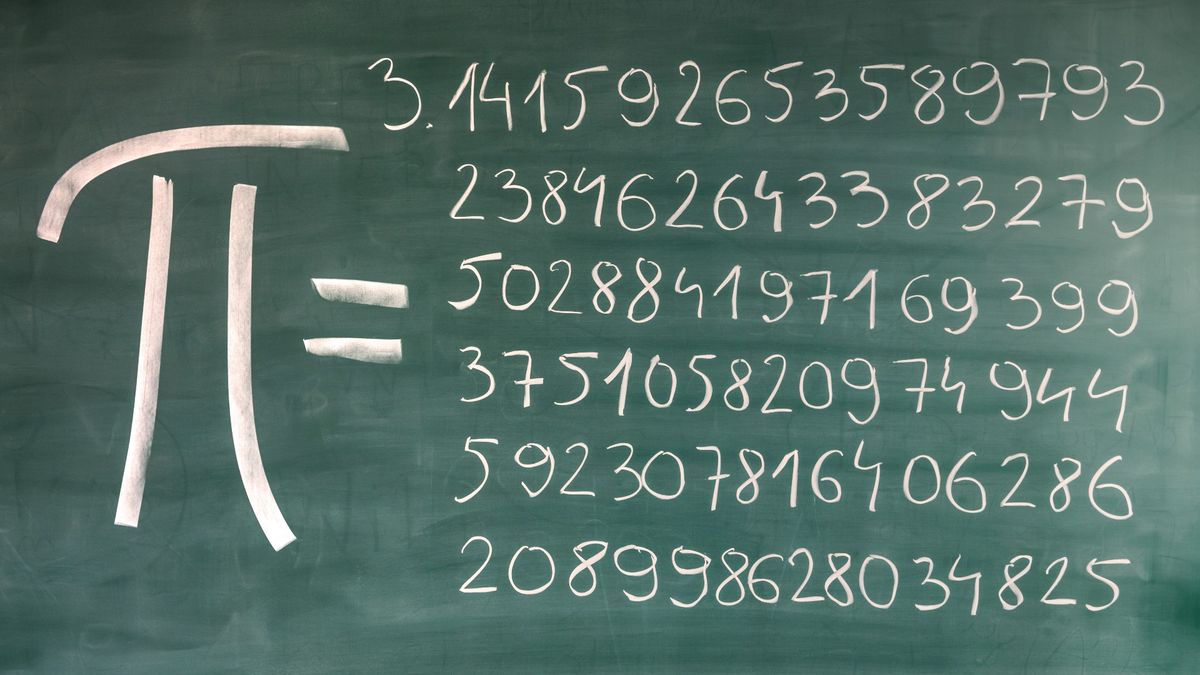
Humanity has been fascinated with Pi for over 4000 years. The earliest recorded calculations of Pi date back to the Babylonian, Egyptian and Hebrew civilizations—it even appears in a verse in the Hebrew Bible(written around the 4th century BC). The Indian mathematician Aryabhata (476-550 CE), in his work Ganitapada approximated value of Pi as 62,832/20,000 = 3.1416 (more accurate than Archimedes’ ’inaccurate’ 22/7 which was frequently used), but he apparently never used it for anything, nor did anyone else at the time. Famous mathematicians like Fibonacci, Newton, Leibniz, and Gauss dedicated a lot of time to studying the value of Pi, calculating its digits, and applying it in numerous calculations.
These centuries of fascination culminated in someone deciding to do something about it—declaring a DAY for it! On 14 March 1988, the first official large-scale celebrations of Pi Day were organized at the San Francisco Exploratorium by Larry Shaw, a physicist. The events to mark the day included several participants marching around a circle and consuming fruit pies. Since then, it has gained popularity and the U.S. House of Representatives passed a notification in March 2009, recognising 14 March as Pi Day.
Why 14 March? Well, that date is also written as 3.14! And, by coincidence, is also the birthday of Albert Einstein! Pi Day celebrations across the world include calculating more and more digits, and memorizing their value!
Pi has been calculated to over 60 trillion digits beyond its decimal point. As an irrational and transcendental number, it will continue infinitely without repetition or pattern.
Pi has also inspired literary genres! Pilish is a genre which is written in such a way that each digit of pi denotes the number of letters in each word. So, the first word has 3 letters, the second 1, the third 4, and so on. The only novel in Pilish is by the American Mike Keith, with the title: Not A Wake: A Dream Embodying π’s Digits Fully For 10000 Decimals
Mike has also invented the “piku”, which is a Pilish poem based on haiku. And here is something he wrote for Pi Day some years back:
It’s a moon,
A wheel revolving on golden earth, and lotus blossoms.
Mountains embrace windmills, and it all reflects this number, pi.
On the other hand, to celebrate the day, NASA’s Jet Propulsion Laboratory has come up with a series of science and engineering questions that are related to some of the agency’s Earth and space missions.
Well, to each their own favourite Pi or Pie!
Happy Pi Day!
–Meena
 Millennial Matriarchs