

A New Year, and the Quiet Power of Giving

The start of a new year is not only a fresh beginning for our personal goals, but also invites a pause to reflect on what really matters. In spite of the wars, the violence and the turmoil there are parts of the 2025 story which are happy, especially the story of how we in India give back.

The recent India Philanthropy Report 2025 — a collaborative effort between Bain & Company and Dasra — offered a thoughtful snapshot of giving across the country. It didn’t just measure how much was donated; it shed light on how giving is changing in character. According to the report, private philanthropy — gifts from individuals, families, and organizations — reached an estimated ₹1.31 lakh crore in FY 2024 and is poised to accelerate rapidly over the next several years.

The EdelGive Hurun India Philanthropy List 2025 also reminds us that India’s giving spirit is alive at the very top levels. Leading philanthropists collectively donated more than ₹10,000 crore last year, with figures rising dramatically over the past few years.

Families are reshaping India’s philanthropic landscape. Where giving might once have been an occasional gesture, it is increasingly becoming a way of life — woven into the rhythms of how families think about purpose and legacy. More than a third of philanthropic households now include intergenerational or next-gen givers whose influence is helping steer funds toward ecosystem building, climate action, and gender equity — areas that were once sidelined in favour of more traditional charitable causes.

This evolution of giving reveals something profound. That there has always been generosity is not to be debated But now generosity in India is becoming more intentional. It’s not just about supporting the familiar or the immediate. It’s about recognizing that the greatest impact often comes from building capacity — strengthening systems, forging partnerships, and investing not just in charity, but in change makers themselves.

Philanthropic journeys are no longer ad hoc, isolated one-off donations, but rather, they are long term commitments. Families — both established and newly affluent — are hiring dedicated staff to manage their giving portfolios, thinking in terms of grant-making and strategic partnerships, and using data and collaboration to guide decisions. It’s a shift from charity to investment. From transactions to transformation.

The sheer breadth of causes gaining traction — education, healthcare, climate resilience, gender equity — reflects a maturing sense of social responsibility.

But I suspect that giving in India is truly underestimated. The true pulse of generosity extends far beyond headline gifts. It lives in the young alumni who pledge to fund scholarships that unlock opportunity. It lives in the professionals who commit a portion of their income to social causes they care about. It lives in the quiet choices families make to support education of their staff, to step in during health emergencies, to support NGOs.

Not just money. I am inspired by an 80 year old who volunteers at government hospitals to help less empowered patients to navigate the system and his 75 year old wife who gives free tuitions; a post graduate student who takes government school students on nature trails over the weekends; a retired professor who motivates college students to undertake plantation drives.

Each one of us is doing it. But it does not get reflected in the statistics, because it often flows through informal channels. If we could count all this, I think the figures would skyrocket far beyond the official ones.

As we step into 2026, perhaps the most hopeful thing isn’t just that giving is growing in size. It’s that we are recognizing that giving in its many forms, isn’t just a response to crisis; it’s a part of how we build the future we want to see.

So if your New Year asks you to think about what you can do, consider what you can givee, not just in money, but in time, attention, skills and compassion. Everyone of us can make a greater difference to the possibility of a better tomorrow — for all of us.

Here’s to a year of deeper giving, rooted in purpose, and defined by connection.

–Meena & Mamata
When Social Responsibility was Risky Business!

Philanthropy has been garnering headlines in the world media for some years now, with the most successful entrepreneurs speaking more about their giving initiatives than their businesses. And it has indeed set off a virtuous cycle.  

But lest we think giving by industrialists is a new phenomenon …

In continuation of last week’s blog which marked 13 November (designated as World Kindness Day), and November 16 (International Day for Tolerance and Peace), here is a look at a few examples of Indian industrialists whose philanthropy exhibited a sense of enlightenment and responsibility that was path-breaking . The critical thing to remember is that most industrialists of the late 18th and the early 19th centuries saw building up India’s industry and infrastructure and supporting the freedom movement as their most critical social responsibilities. They were flying in the face of the Raj in doing this, and the Raj had the power to destroy them! But that did not stop them.

The Vision of Jamsetji Tata

Shri Jamsetji Tata was a pioneer in setting India on the path to industrial self-reliance. But it was not just about technology. His vision for the well-being of his workers was truly enlightened. Way back in the 1880s, he offered facilities like crèches for workers in his mills, as well as short working hours, properly ventilated workspaces, fire safety, etc. In 1886 he instituted a Pension Fund, and in 1895, began to pay accident compensation.

The story of Jamshedpur is another testimony to his vision. The work on this township for housing the workers of the Steel Mills was commenced in 1908. Shri Jamsetji dreamt of more than basic housing for his workers. He wanted to build a proper modern planned city. His instructions regarding the city were:  “Be sure to lay wide streets planted with shady trees, every other of a quick-growing variety. Be sure that there is plenty of space for lawns and gardens; reserve large areas for football, hockey and parks; earmark areas for Hindu temples, Muslim mosques and Christian churches.”

It was private philanthropy that led to the creation of institutions like the Indian Institute of Science (IISc), Bangalore and Tata Institute for Fundamental Research, Mumbai. It is said that Jamsetji mooted the idea of contributing to an institute like IISC as early as 1898, long before Carnegie’s endowment to set up a Technical School (today Carnegie Mellon University).

From Temples to Gods, to Temples of Education

Shri G.D. Birla was a strong supporter of Gandhiji and gave considerable resources to the freedom struggle. Many of us would have at some time or other visited a Birla Mandir–many a large town in India boasts one. Apart from this charitable activity of temple-building, a landmark contribution of Shri Birla is the creation of one of India’s best higher educational institutions—the Birla Institute of Technology. This was started as a school for G.D. Birla and R.D. Birla by their grandfather in 1901. It grew into a high school  in the 1920s. In the forties, the Birla Education Trust was founded and the institution went from strength to strength, adding degree and post-graduate courses in a variety of disciplines.  In 1964, taking advantage of a Ford Foundation grant, the institute formed a partnership with Massachusetts Institute of Technology (MIT), USA, and was well on the path to leading India’s achievements in technical education.

Gandhi Ashram is Saved!

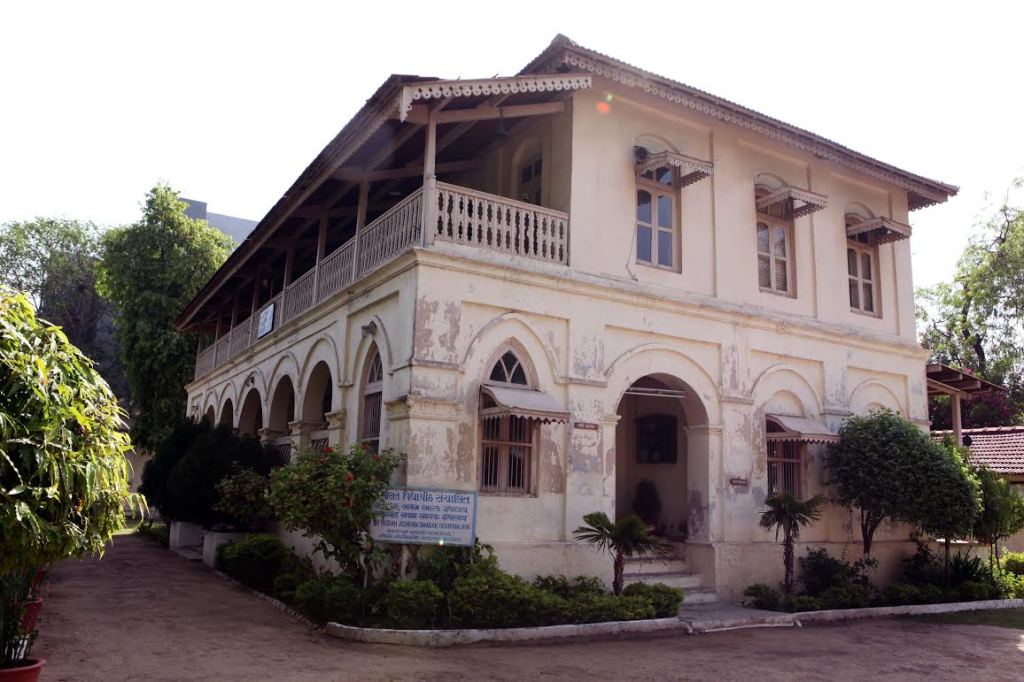
When Gandhiji  first came to Ahmedabad, he set up his Ashram at Kochrab. He invited a Dalit family– Dudabhai and Danibehn–to come and live at the Ashram. This led to considerable agitation among the Ashram’s neighbours as well as many funders, leading to a financial crisis, which forced Gandhiji to think of shifting the Ashram.

Kochrab Ashram

And then one day, in Gandhiji’s words: “A car drew up near our quarters and the horn was blown. The children came with the news. The sheth did not come in. I went out to see him. He placed in my hands currency notes to the value of Rs 13,000 and drove away. I had never expected this help, and what a novel way of rendering it!”

This gift saved the Ashram. It is well-known that the ‘Sheth’ was Shri Ambalal Sarabhai, one of the foremost industrialists of the time. However, neither he nor Gandhiji ever admitted this!

Jamnalal Bajaj: Exemplary Patriotism

Jamnalal Bajaj was considered Gandhiji’s fifth son, and adopted all his values—from Ahimsa to his dedication to the poor to his commitment to locally made goods and his patriotic spirit. He fought for admission of Harijans into temples, and in the face of strong objections, opened up his own family temple in Wardha—the first temple in the country to do this.

Shri Bajaj was an active member of the Congress Party, and gave up the Rai Bahadur title conferred on him by the British Government and joined the non-cooperation movement.


Importantly, Jamnalalji, in line with the trusteeship concept propounded by Gandhiji, felt that inherited wealth was a sacred trust to be used for the benefit of the people, and dedicated most of his wealth for the poor and under-privileged.

On the shoulders of giants….

–Meena

 www.tata.com

https://jamnalalbajajfoundation.org/jamnalal-bajaj/about