
Once upon a time—before HR departments and LinkedIn profiles—jobs came with titles so evocative, so oddly poetic, they sound like characters straight out of a Dickensian drama or a Ruskin Bond vignette. While today’s professions lean towards the ultra-pragmatic and descriptive, many titles of the past came with a whiff of romance. For example: the Remembrancer.
Yes, the Remembrancer. Not an app. Not a diary. A person. One whose very profession was to remember. Specifically, to remind monarchs and magistrates of important affairs—debts, legislation, ceremonies. A Remembrancer was originally an official tasked with reminding a monarch or government body about matters of state, legal affairs, or financial obligations. The title comes from the idea of “remembering” important business that required attention.
The City Remembrancer of London–a post dating back to 1571–still exists, quietly observing proceedings in Parliament, tucked behind the Speaker’s Chair. We can’t help but picture him as an elderly gentleman in an impeccably cut coat. who acts as a liaison between the City of London and Parliament. Their duties include monitoring legislation that might affect the City, representing the City at ceremonial functions, and advising on constitutional matters. The Remembrancer also attends the State Opening of Parliament and sits in a specially designated place in the House of Lords.
It is not just the UK. India too continues something that must have started in colonial times. We still have Legal Remembrancers in our legal system, primarily at the state level. They play a crucial role in advising the government on legal matters and representing the state in court proceedings. The Legal Remembrancer (or Remembrancer of Legal Affairs) is a government official who acts as the chief legal advisor to the state government.
Even quainter are the roles that seem to exist simply to add charm to history books. The Ale Conner who tested beer for public consumption. The Knocker-Up who tapped windows with a stick to wake people up before alarm clocks were invented.
Saggar Maker’s Bottom Knocker is not a Victorian insult; it is an occupation. In pottery, a saggar is the box which holds the clay which is being fired. By placing various substances in a saggar, dramatic effects can be produced on the finished pottery. A master-craftsman called a saggar maker made the saggars. But bases of the saggars were produced mechanically and did not require much skill. They were left to young apprentices called bottom knockers, as they literally knocked them into shape.
While a Computist might bring visions of those working on advanced computer programmes, in the old days, these were people charged with calculating Easter based on lunar cycles—part astronomer, part theologian. An alternative term for jyotish?
A Lector was a person who used to read out Karl Marx or pulp fiction to cigar workers in Cuba while they rolled tobacco leaves by hand.
Resurrectionists or resurrection men were body-snatchers who would steal fresh corpses and sell them to medical schools for students to practice dissection. This trade flourished at the end of the 18th and beginning of the 19th centuries in Britain as a result of a lack of bodies to dissect in these schools. Organised criminal gangs would steal recently buried bodies, or acquire dead bodies before burial, and then sell them at a premium to anatomy teachers who used them to demonstrate dissection and also give students a chance to try dissecting themselves, as this was a required part of medical training. The widespread practice of body snatching led to the Anatomy Act in Britain, which legalized the use of unclaimed bodies for anatomical study.
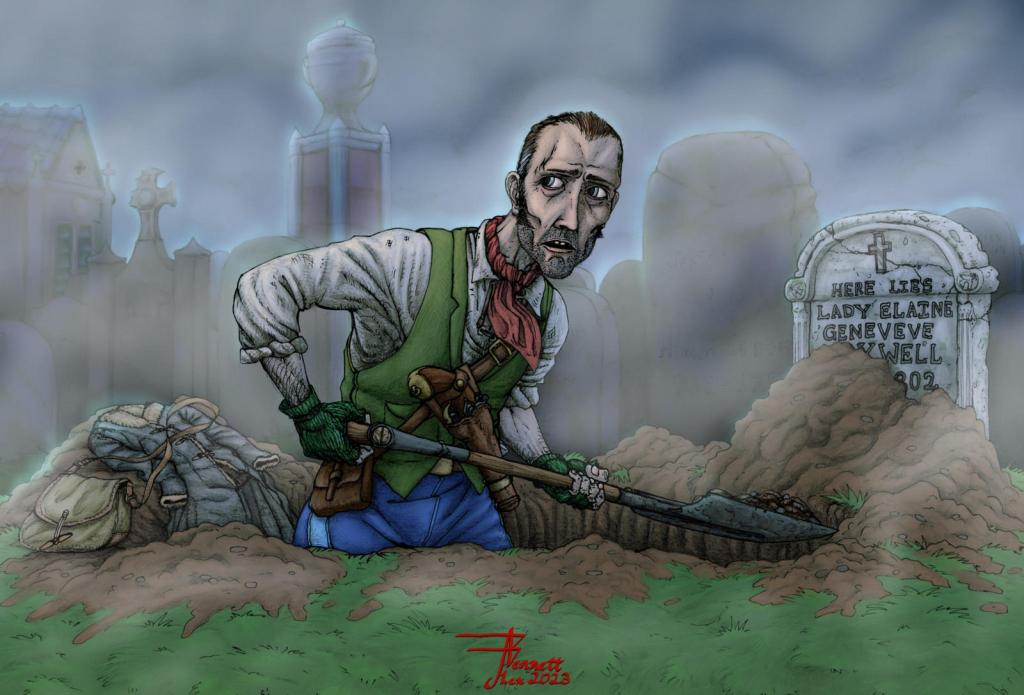
We can’t help but wonder what future historians will make of us. “Brand Evangelist,” they might scoff. “Was that a missionary or a marketer?” “Content Creator—was that a novelist or a TikToker?”
Perhaps some titles are best left in the mists of time, to be stumbled upon in dusty libraries or trivia nights. But wouldn’t it be something to bring a few back? A ceremonial Remembrancer for family birthdays, perhaps? A Beadle to enforce silence during Zoom calls?
Till then, we’ll sip our tea like old scribes, toast to forgotten vocations, and remember to remember the Remembrancers.
My first and recent encounter with the wonderfully romantic word ‘remembrancer’ was not in a pleasant context. A Haryana committee which recommended the appointment of Vikas Barnala, an accused in a stalking case, to the position of assistant advocate general in the office of advocate general, included a Remembrancer.
–Meena
Pic credit: Our Great American Heritage
 Millennial Matriarchs