
A Magical Walk

I remember it well—a mere 400 metre walk on our office campus in Ahmedabad. That day we were walking along the path that all of us took regularly; walking along with us was Professor HY Mohan Ram, a member of our Governing Council, who was there for the Council meeting. As we walked, Professor Mohan Ram talked—gently, softly, but with passion and excitement, pointing out plants that we saw every day, but, as we realised, we never really ‘looked at’.

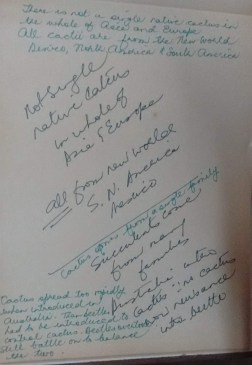
“Look at this one”, he pointed at a plant, “this is Aduso. Its botanical name is Adhatoda vasika which means ‘that which the goat will not touch’. This is what is used for making medicines for cough and cold.” Going just two steps ahead, “You know the cactus, but did you know that there is not a single native cactus in the whole of Asia and Europe? All cactii are from the New World—Mexico, North America and South America.” ”Look at this magnificent neem tree.  Its botanical name Azadirachta indica comes from the Arabic for azad meaning ‘free’ and drakhta meaning ‘tree’. This is thought to be a tree indigenous to India, but there is some doubt if it is originally Indian. It may have originated on the Burma border and come to Bangladesh from there.” “Did you know that Lutyens, when planning the landscaping of Delhi’s roads, planted only native species. Each avenue was planted with one species of fruit tree.” Three steps ahead, we come to the white flower commonly called Chandni. Professor tells us, “Have you noted carefully the arrangement of petals of flowers? Most flower petals are usually in multiples of 3 or 5 (except in the case of the mustard flower).” “Many high school students know this as the shoe flower that they got for dissection in the exams. But why the name shoe flower? Because it is used to polish shoes! Its other name is hibiscus, and is believed to have originated in China.”

IMG_20170822_090553807.jpg

Professor HYM had a fascinating story for every step that we took, drawing attention to the tiniest of flowers that we carelessly trampled underfoot, to the towering culms of bamboo. The path that took us 5-7 minutes to traverse became a magical mystery tour that took close to two hours. Through his eyes the blur of vegetation turned into a veritable treasure trove, with each plant glowing with its own special attributes.

Not long after this visit, Meena and I invited Professor HYM to contribute to a collection of tales of ‘Nature Heroes’ that we were putting together. He graciously agreed, and shared with us some of his journey, experiences and inspirations in a piece titled Reflections of a Botanist.  He writes “I have not pursued any single course. I have done what interests me and not what is in style. I have a deep interest in Indian classical music and photography.”

He concludes the piece with this, “What enlightenment have I received as a student of plant biology? I wish I could be like a tree: deep-rooted and firmly fixed, bearing a lofty bole and a broad canopy, continuously absorbing, synthesizing and renewing, unmindful of stresses and insults, resilient to changes and perpetually giving.”

In the passing away of Professor HY Mohan Ram the world has lost not only a botanist par excellence, but a much loved and respected teacher, researcher, and writer. For us, the Matriarchs, Professor Mohan Ram will always be remembered as a gentle, unassuming guide with a twinkle in his eyes, and a life-long inspiration whose visits to the Centre were like the Open Sesame to a fascinating world of flora.

A page from my notes on the Walk!  (Date 22 August 1998)
IMG_20180620_115125823.jpg


–Mamata

Cacophony

Just about fifteen years ago, as I lay in bed at night, I could hear the howling of jackals, the rhythmic beat of the distant train, hoots of owls, and the chorus of frogs after the first rains. I would waken to the call of the Sarus cranes, and the meowing cry of the Jacanas in the open ground across from my house.

Today I lie awake all night to the rattling, shattering clangour of the monstrous mechanical cranes and concrete mixers as they dig deep into the soil where the Sarus sang and Jacanas nested, and from where rise the gigantic metal skeletons of multi-storey towers. On the weekends I can no longer listen to the music that used to be a part of our evenings, over the incessant honking, beeping, screeching and yelling from the traffic jams outside my gate, as a noisy, rambunctious crowd heads for the ‘happening’ mall that looms in neon-lit glory, where once the buffalo wallowed and the froggies sang.

Our lives are so cluttered with noise, we do not know silence any more. We are almost afraid of the quiet. We get anxious if we are not continuously reassured by the hum, buzz or ringtone of our phone…Why no calls, no messages, no alerts?? Does nobody ‘like’ us anymore? We feel unmoored without the 24/7 din around us. Is there a moment in our day when we can hear simply silence?

On a visit to Bali last year I learned about Nyepi–the Day of Silence. This day falls (usually in March) on the day after the dark moon of the spring equinox when the day and night are of approximately equal duration. It marks the start of “Caka” year – Balinese New Year – which is celebrated over six days. The first two days are marked by parades, noise and revelry, and Nyepi falls on day 3. The observance of the Day of Silence is based on an ancient myth that, after the boisterous and active celebrations of day 1 and day 2, the Island goes into hiding to protect itself from the evil spirits, fooling them to believe that Bali, enveloped in an atmosphere of complete tranquility and peace, is a deserted Island.

The quietest day of the year is guided by the four precepts:
No fire or light, including no electricity.
No form of physical working other than that which is dedicated to spiritual cleansing and renewal.
No movement or traveling.
Fasting and no revelry/entertainment or general merrymaking.

Everyone stays indoors, engaged in fasting, prayer, meditation, reflection and introspection—erasing the clamour, and cleansing the body and spirit. What a wonderful tradition and even more, how wonderful that it is so well honoured and celebrated in spirit and deed, even today.

If only we could all disconnect from the din, and connect within.

STOP PRESS!

This year for Nyepi all phone companies on the island of Bali agreed to shut down the mobile internet for 24 hours. Imagine a day without internet, Facebook and Instagram and instant messaging apps! And this, on one of the world’s most popular and busy tourist destinations! Yes, they did it, and survived!

–Mamata


A Feast for all the Senses

Mango

Mango looks like gift-wrapped sunbeamsIMG_20180608_203804.jpg

Mango sounds like ‘slurp’

Mango smells like only a mango can

Mango tastes like Kesar    (*pick your favourite!)

Mango feels like one can survive the summer after all!

Ah Mangifera indica!


About 1,500 varieties of mango are grown in India, including 1,000 commercial varieties. Each of the main varieties of mango has a unique flavour.

* Take your pick!

IMG_20180608_203550.jpg

1. Taimoorlang
2. Husnaara

3. Aabehayat

4. Zawahiri
5. Dussheri
6. Chosa
7. Lucknowi
8. Langra
9. Neelum
10. Rumani
11. Alphonsa
12. Bombay Green (Sarauli)
13. Banganpalli
14. Samar Behest Chausa
15. Fazli 16. Kishenbhog 17. Himsagar 18. Gulabkhas 19. Zardalu 20. Airi   21. Malkurad (Goa) 22. Kesar 23. Rajapuri 24. Jamadar(Gujarat) 25. Beneshan 26. Bangalora
27. Suvarnarekha 28. Mulgoa 29. Raspuri 30. Badami 31. Allampur Beneshan 32. Himayuddin 33. Jehangir 34. Cherukurasam 35. Bathua 36. Bombai 37. Sukul
38. Fernandin 39. Mankurad 40. Vanraj 41. Mundappa 42. Olour 43. Pairi 44. Safeda
45. Raspoonia 46. Mithwa Sundar Shah 47. Mithwa Ghazipur 48. Taimuriya
49. Sharbati Begrain 50. Gilas 51. Nauras 52. Rasgola 53. Hardil-aziz 54. Cherukurasam
55. Peddarasam 56. Totapuri 57. Kothapalli Kobbari 58. Chinna Rasam 59. Cheruku Rasam 60. Pedda Rasam 61. Mallika 62. Ratole 63. Kaju
64. Himayat 65. Khatta Meetha 66. Panchadara Kalasa 67. Manjeera
68. Amrapali 69. Arkapuneet 70. Sindhu

Source: http://www.festivalsofindia.in/mango/varieties.aspx

–Mamata

An Avian Tale With A Happy Ending

bird

Our office in Yelahanka Bangalore is small and homely. The second floor place is surrounded by lovely trees, and we can see thick foliage from our windows.

Last summer, every now and then, we used to hear loud thuds. Not too often, but often enough for us to wonder what it was about. To begin with, we couldn’t figure out what on earth those were about. But then we realized that birds were crashing into our windows. Generally, it was crows. One day, a female koel hit her head. They all banged into the windows and then fell onto our narrow balcony. It did not seem to affect them too much. They just rested for a few minutes and were on their way again.

But one day, there was a huge bang and thud. We rushed out to our balcony, to find a small bird lying on its back. It seemed to barely be breathing. We panicked. We had no clue what to do. Anuradha and Sudha got busy talking to friends who might know what to do. But no clear suggestions came. They then tried calling animal shelters, NGOs, the Forest Department. Some numbers were old and out of commission. Some didn’t respond. Some didn’t have any solutions. The Forest Dept. was helpful. They suggested we could take the bird to their shelter. But unfortunately, that was 25 kms away. A drive of 2 hours during morning hours in Bangalore. It was unlikely the bird would survive the traffic and drive.

We did not want to disturb the little bird, but noticed some crows circling around, and figured it needed to be moved indoors. So we found a cardboard box and put it into it. It was still opening its eyes once in a while, so we held on to hope. We put it away in a quiet, dark room, with a bowl of water by the side. We restrained ourselves with great difficultly from going into the room every two minutes to check on it. We used the time, and a little help from friends, to figure out that it was a juvenile brown headed barbet.

bird 1.PNG

We gave it half an hour and then went in. And lo and behold, to our great relief and joy, it was sitting up. Still looking dazed, but definitely alive. We once again closed the door and left it alone. After another half an hour, when we went in, it was sitting on the window sill.

bird 3

Now the challenge was to get it out of the office and out on the wing. It was extremely confused and kept flying away from us and the door. It took 10 minutes but Vinod, a colleague who luckily was visiting the office that day, managed to gently catch it. Then the release ceremony! We took it outside and with a gentle tap, it flew into the tree top.

What a relief!

But the morning was so traumatic, we felt we couldn’t go through such an experience again. So we tried to work out out why the birds were crashing. Finally, we figured that it was the tinted glass windows. The trees and thick foliage around were reflected faithfully in this and it looked like open skies, so birds seems to continue flying forward, not realizing that there was a barrier. We were not sure, but since it was the only possible solution we could think of, we decided to replace the tinted glass with plain glass. Before that, we went through elaborate trials, when we called for various types of glass, propped them up and checked the reflections.

Since the day we replaced the glass, there have been no bangs, thuds or accidents, so looks our problem analysis was right.

Though I have to admit, my room is uncomfortably sunny on some days! Well, a small price to pay.

A Sad Ending

We are wakened at dawn every day by the melodious duet of the Coucals. The Coucal couple share our little garden, and we watch over each other. The Coucal or Crow Pheasant is a handsome bird; its glossy black body, chestnut wings and long black tail lends it a special dignity and grandeur. After the morning duet of soft whoops and klak-kloks, they join us as we have our morning tea. Sitting amongst orange flowers of the Cordia tree, or flitting across to the Champa tree, they offer a reassuring start to our day. As the day progresses, they descend lower to drink from the water container, as the smaller birds respectfully make way for them. Then as the sun reaches its peak, the omnivorous birds stride confidently across our small patch of lawn, looking for sustenance. Through the rest of the day, they call to each other using an amazing repertoire of calls. We could never have imagined that a single bird could produce such a variety of sounds.

About a month ago we noticed that the Coucal couple were more than usually busy. We saw them flying back and forth all day long, carrying in their beak a strand of the creeper with the white flowers, twigs from the nearby neem tree, long blades of grass and other trailing vegetation. Some days later, having tracked their destination, we discovered that they had made a nest high up in the tangle of our bougainvillea. The nest was very large, and from ground level looked quite messy! Even though we only had a worm’s eye view of their new home; there it was, testimony to the well-coordinated effort of our faithful couple. We were honoured that they liked our garden enough to move on from cooing and courting to setting up home! We were not quite sure when Mrs Coucal decided to start her family in her new home. But we watched and waited eagerly, like anxious grandparents-to-be. We hoped that at least one or two eggs had successfully hatched. While we could not follow all that went on in the nest, we were reassured that the parents were assiduously flying back and forth, this time with morsels in their beaks. It was amazing to see how the couple worked relentlessly and in perfect tandem—getting food, keeping an eye on the nest and around, being alert and protective—all the while calling to each other, with gurgling chuckles and raucous croaks.

Then yesterday we heard a rustling in the dry flowers and leaves piled under the bougainvillea. A closer look revealed a tiny little cluster of black and brown feathers fluttering weakly in the undergrowth. The chick had not yet developed wings strong enough to make it back to the nest. We were very concerned, and felt quite helpless as the anxious parents hovered nearby. We prayed, and tried to see how it could be safe. When we did not see it late last evening, we hoped for the best.

Sadly this morning we saw the still little bundle of feathers. Nature had not meant it to grow into a handsome young Coucal, and to share our garden. Today, the Coucals do not call.

–Mamata