International Day of Action for Rivers: A Detour to Dawki

Pollution, mining, deforestation, physical impediments created by man—a host of challenges confront India’s rivers. But a bright spot in all this is the Dawki or Umngot River in Megalaya. In the 2021 listing of the cleanest rivers of the world, Dawki made it to Number 4, behind only the Thames (England), Tara River (Montenegro-Bosnia Herzegovina), and St. Croix (USA). An incredible achievement by any standards.
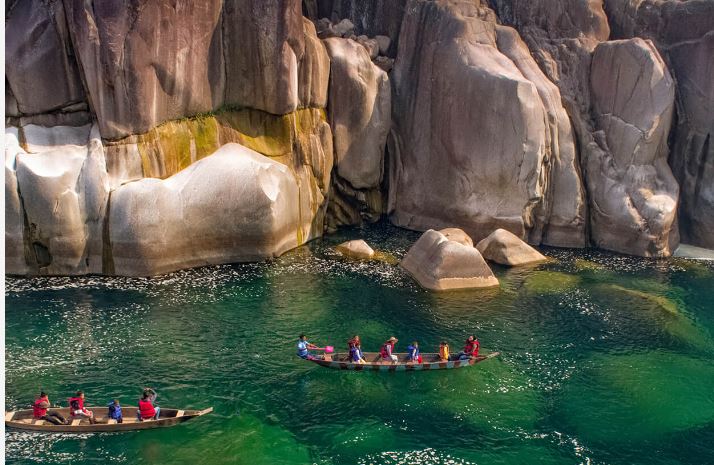
Dawki river

I had the good fortune to visit Megalaya recently and Dawki was an essential part of the itinerary. Reality is not far from the numerous idyllic pictures on the internet (one from the Meghalaya Tourism site reproduced here!). It is indeed glass-like, a clear green to greeny-blue, with visibility right to the bottom of the river, going down to about 50 feet in parts. The boat-ride on the river was one of the most soothing experiences.

Pic: https://www.meghalayatourism.in/

Much of what is good in the Northeast, including how well the Dawki is maintained, can be attributed to community participation in the safegaurding and nurture of community resources. If only these mindsets and practices could be replicated in other parts of the country! (But actually, I am more worried about the wrong mindsets and practices from other parts of the country reaching the Northeast!).

An interesting part of the experience was that the ghat from where one takes the boat-ride is bang on the Indo- Bangladesh border. In fact, only a line of small stones separates the two countries! There is active commerce between the two sides, with hands reaching out to take goods and receive money (Indian currency acceptable). I tasted a number of pickles from a vendor on the other side. And of course the photo-op of the place is pics of people straddling the border or line of stones! The border is manned by the BSF on our side, who keep a sharp lookout  for cross-border movement especially as evening falls.

But getting back to rivers and river quality.  Water quality can be defined as the physical, chemical and biological characteristics of water. Parameters that are frequently sampled or monitored for water quality include temperature, dissolved oxygen, pH, conductivity, Oxidation-Reduction Potential, and turbidity.

Of these, dissolved oxygen or DO is considered the most important indicator of water quality of rivers, lakes etc. The higher the DO, the better the water quality. Lower Dissolved Oxygen means that there is not enough oxygen in the water to support fish and other aquatic life. Low DO is a result of excess growth of algae in water. Such growth happens where there is an excess of phosphorus and nitrogen going into the water. These chemicals come into the waterbodies through discharges from wastewater treatment, agricultural run-off (from the use of pesticides and fertilizers) and storm water runoff.

Rivers are our lifelines, and quality of the waters in our rivers is an area of major concern both in India and across the world. It is to focus attention on this that an International Day of Action for Rivers was declared in 1997. This was at the initiative of International Rivers Network, Narmada Bachao Andolan (India), and Biobio Action Group (Chile), and is marked on March 14 every year.

On this day dedicated to saving, celebrating, and creating awareness about the importance of rivers, let’s think about our rivers and how our actions impact them. What will it take to have some more Indian rivers join a lonely Dawki on the list of the cleanest rivers of the world?

–Meena
Bridging the Past and Future

Bridge-building brings to mind heavy equipment; tonnes of steel and concrete; engineers and overseers by the dozens. And lakhs of rupees.

Well, what if there were bridges which involve some rubber trees; centuries of traditional knowledge and skill passed down from one generation to another; and a lot of cooperation? And very little money.

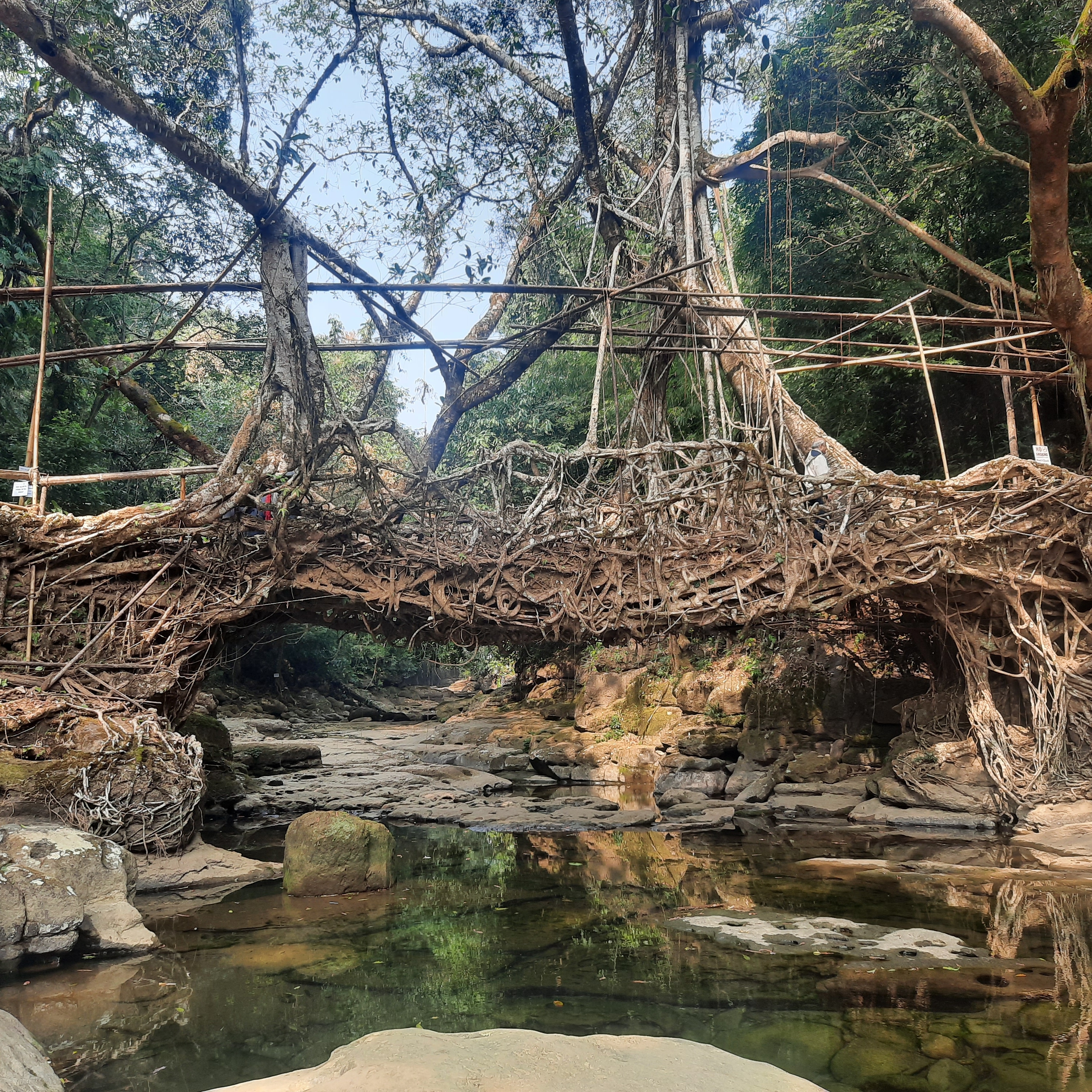
And indeed there are such bridges by the dozens in Meghalaya. Built by the Khasi and Jaintia communities, the Living Root Bridges, locally known as Jingkieng Jri, play a key role in rural connectivity in the dense forest areas of the state, which are also among the wettest areas of the world (think Cherrapunji).

Living Root Bridge

The process begins with the planting of two rubber trees– Ficus elastica—one on either side of the river. These trees take about 10 years to grow and give rise to secondary aerial roots.  A bamboo scaffolding is created across the river, and these roots are woven together and trained onto to this to start creating the structure. The aerial roots thus grow across the river, and when they reach there, they are planted again on the opposite side. The roots along the scaffolding grow thicker and intertwine. The roots need to be guided to grow in the right direction for the next few decades, after which they can stand on their own.

The planning and engineering skills required to build these bridges is enormous– they often rise 50 to 100 feet in the air and may be as much as 175 feet in length. Many are ‘single-storey’ bridges, but there are ‘double-storey’ ones as well. They have always been built and cared for by the local communities, and the tradition continues.

The bridges need loving care—for instance, every two years, the bamboo scaffolding has to be changed since the moisture and humidity might damage it. Properly cared for, these can last for a hundred years and more.

These bridges have been around for centuries and are even today, about 100 are in use, connecting over 75 villages. While local communities use them for their normal day-to-day movement, these bridges are also now major tourist attractions. They also act as corridors for animals to safely cross the rivers—barking dear and clouded leopards have been recorded to use these bridges. The bridges support the growth of moss and provide a habitat for squirrels and other small animals, and nesting sites for birds.

The technique is used not just for making bridges but also other structures that are needed locally, for instance,  ladders and steps to provide a reliable mode of movement especially during the monsoon season; platforms and towers which serve as lookout points; erosion and landslide prevention structures to protect slopes and help in soil stabilization.

A true testimony to the patience, skill and cooperative spirit of the communities who build, use and care for them. And also to the effective methods of transmission of traditional knowledge, so that generation after generation is able to do this work effectively.

This sustainable and eco-friendly tradition has been recognized internationally. In fact, as of last year, the Living Roots Bridges or the Jingkieng Jris has been included in the UNESCO’s tentative list for World Heritage Site status.

I was lucky enough to see such a bridge and walk across it. It was an amazing experience. The one I visited was very accessible to tourists. But some other intrepid members of our group went to see a double-storey one, which involved six hours of trekking. And came back exhausted and with aches and pains in every joint. But they said that every pain, ache and stiff joint was worth it, and given half a chance, they would do it again!

So take the soft route or the hard, but if you can possibly see a Living Root Bridge, it will be a memorable experience.

–Meena


On Orchids

For most of us:

Orchids = Rare

Orchids = Exotic

Orchids = Beautiful.

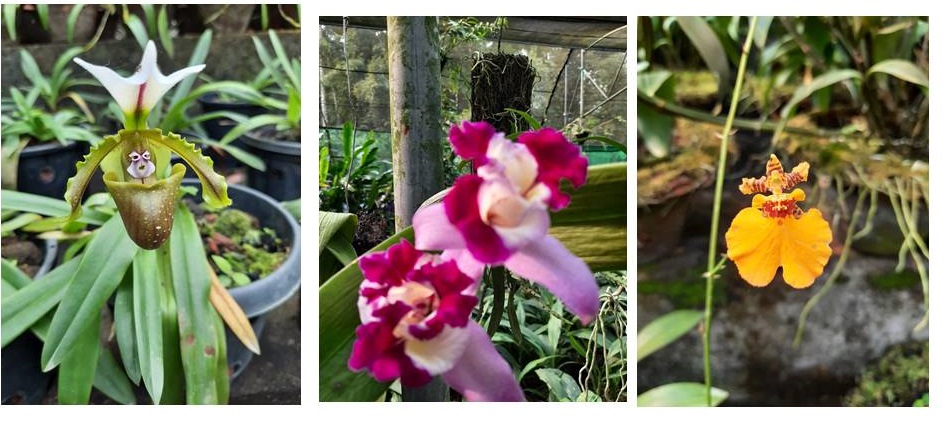
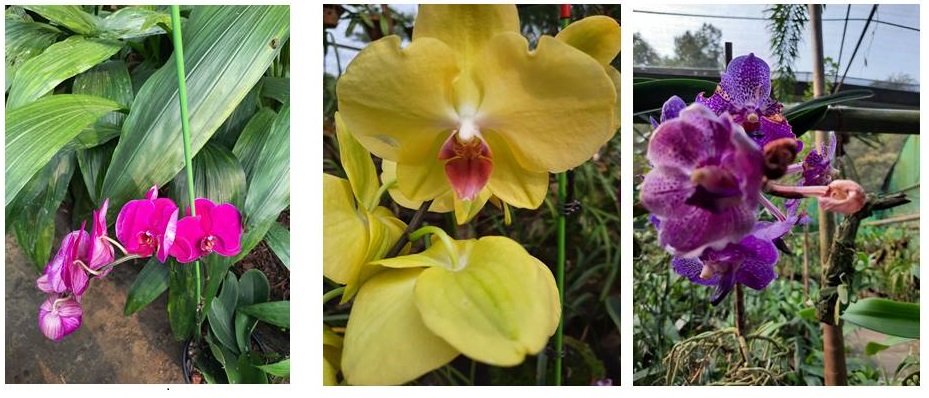
I recently went to Meghalaya where I visited an orchid park. And of course the variety and beauty of the orchids we saw were amazing. But when I tried to figure out a little bit more about these flowers, I found all the three equations mentioned above, which have been firmly planted in my mind for decades, to be false!

Orchids in fact belong to one of the top two most-common families of flowering plants on earth! This is the family Orchidaceae which comprises about 750 genera and close to 28,000 species!  So orchids are not rare!

Orchids

The dictionary meaning of ‘exotic’ is ‘origination in or characteristic of a distant foreign country’. Actually, with their wide distribution, orchids may be among the least exotic flowers. Orchids grow on every continent except Antarctica. At least four species have been reported from north of the Arctic Circle. So orchids are not exotic in most parts of the world! 

And while most orchids are beautiful, there are some which are warty, bumpy, hairy and unbeautiful. In fact, the latest orchid to be discovered—the gastrodia agnicellus–from a forest in Madagascar, has been dubbed “the ugliest orchid in the world” by the Royal Botanical Gardens, Kew in the United Kingdom. It has been likened to a soul-sucking eyeless worm. While I am not very comfortable to have anything castigated so severely on the basis of looks, I have to admit after looking at pics of this flower, orchids are not always equal to beautiful!

Ok, easy enough to demolish myths. Now time to look at some facts.

To begin with, what are orchids? Orchids come in different sizes, different shapes, grow in different parts of the world. But the one characteristic which unites them, as well as differentiates them form other flowering plants, is the fusion of the male portion of the flower (stamen) with the  female portion (pistil), into one structure called the column—often visible protruding from the center. Orchids have three sepals and three petals, which all appear to be part of the flower. The middle petal is modified and is usually brightly coloured and exudes a scent.  

Orchids are among the oldest flowering plants known. A few years ago, Harvard University scientists discovered a fossilized bee carrying orchid pollen which dates back at least 15 million years. However, scientists speculate that orchids have been around much longer than that, maybe as much as 100 million years.

Orchids

Orchids have the tiniest seeds in the world. A single seedpod can have up to 3 million seeds in it.  The seeds are so small they can only be seen under a microscope. The plants take about 5-7 years to bloom once germinated, and can live up to a hundred years.

Incidentally, the vanilla bean comes from a species of orchid.  It is the only orchid which is commercially grown and harvested, not for its flowers but its beans!

India has a vast orchid diversity—a total of 1256 species have been recorded, out of which 307 are endemic to the country. But our orchids are under pressure. This pressure mainly comes from illegal harvesting and exploitation for trade. Orchids are illicitly collected from the wild and traded as ornamental plants.

So yes, do get orchids for your home-garden. They will surely add a touch of colour and beauty (unless of course you choose the gastrodia agnicellus!). But make sure they are sourced ethically. For many of them are indeed under threat.

–Meena