
When I lived in Kenya, and learnt a little bit of Kiswahili, it was great fun to discover curious words or phrases. One of the best ones was to the local word for curd/yogurt. This was called Mazeevaa Lala—literally “sleeping milk!”
I was reminded of this recently when I chanced upon a Maltese saying My eye went with me, to mean that you have fallen asleep, as not taking your eyes with you would result in a sleepless night!
This is one of the many sayings in a delightful book titled Speaking in Tongues: curious expressions from around the world–a compilation of proverbs, idioms and sayings from different languages of the world, put together by Ella Frances Sanders. What brings the words alive are the accompanying illustrations, also by Ella who describes herself as “a writer out of necessity and an illustrator by accident.”
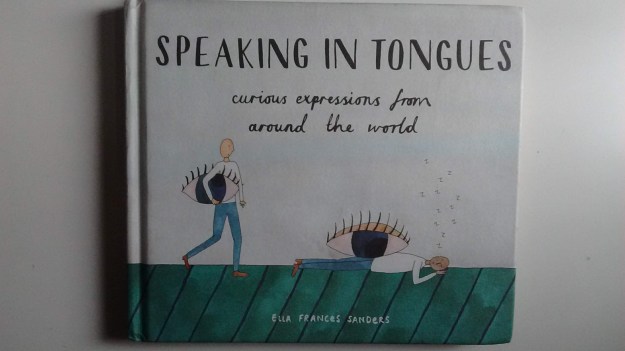 From Finnish to Igbo, Armenian to Yiddish, each double spread presents delectable sayings and drawings that blend the wit and wisdom of the ages while also placing these in their cultural context.
Cannot resist sharing some:
Even the monkeys fall from trees. This well-known Japanese saying reminds that even the best and the cleverest can still make mistakes, and cautioning to keep overconfidence in check! Perhaps the recent World Cup surprises where the superheroes fell from grace is an apt analogy!
You are my orange half. A Spanish term of endearment that means that someone is your soulmate or love of your life. Not quite sure what is so endearing about an orange, but reminded of the Amul chocolate ads that urged us to “Share it with someone you love!”
Horse horse Tiger tiger. To describe something that is so-so, or neither here nor there. This is a Mandarin expression; its origin lies in a story about a painter who painted a half tiger half horse but nobody bought it as it was neither one nor the other.
To pull someone out of their watermelons. A Romanian idiom that means to drive someone crazy! Not much light on why being in or out of watermelons can be harmful to mental health!
Stop ironing my head. An Armenian way of saying “Stop bugging me!” Popularly used when someone keeps asking irritating questions and won’t leave you alone. In many Indian languages we have our own equivalents in the form of “Don’t eat my head.”
To give a green answer to a blue question. A Tibetan reference to when the answer is completely unrelated to the question asked. Something that people in politics are adept at!
This is just a sampler of the 52 proverbs, expressions and idioms that have been passed on from one generation to another in diverse cultures. Interestingly, they reflect not just diversity, but also the sameness as it were. As I read I immediately thought of similar ones in Hindi and Gujarati, as will surely be the case in all languages. Remember how we had to memorise proverbs in our language subjects in school and what a pain it was? Maybe it is time to revisit these!
A perfect one to end with. To have a head full of crickets.
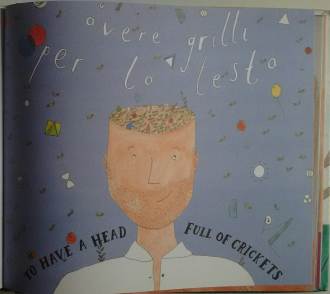
How the Spanish describe a mind buzzing with crazy, wonderful ideas, whims, and flights of fantasy…(what some would call nonsense!)
Nicely sums up how I often feel!
–Mamata

 Millennial Matriarchs