
Focus on Citizen Science

April is marked as Citizen Science Month—not in India, but in the US. But it can only be to the good to take best practices from anywhere at all, and adapt them for our use, right? And an acceleration of the citizen science movement is something that is definitely a crying need in our country!

What is citizen science? The term probably appeared first in 1989, in an issue of the MIT Technology Review 1989, but till today, there is apparently no consensus on a single definition–one paper cites 34! But a working definition we could go by is the one given by the National Geographic Society: ‘Citizen science is the practice of public participation and collaboration in scientific research to increase scientific knowledge.’ The benefits of such initiatives are manifold: large public participation in scientific pursuits; raising scientific awareness and knowledge; democratization of science; ability to pull in indigenous and community knowledge, etc. In fact, without wide-spread involvement of a large number of people, many projects would be very difficult to do—nationwide bird counts, butterfly counts, monitoring water quality across large areas, weather monitoring, space watch, etc. 

India has its share of action on this front. The Indian Biodiversity Portal launched in 2008 is a prime example. It ‘aims to aggregate data through public participation and provide open and free access to biodiversity information’ and invites the public to participate in gathering and documenting such knowledge. It currently has 1.54 million observations on 58.3 thousand species. It is an invaluable resource, which would have been difficult to put together without the participation from people across the country.

Another interesting initiative is by the CitSci (Citizen Science for Biodiversity) India–they organize an annual Citizen Science of Biodiversity Conference. Their site also shares useful information on on-going biodiversity and conservation related citizen science projects undertaken by a host of NGOs, like the Citizen Sparrow initiative, which is ‘a public participatory project to which all members of the public are invited to contribute. ‘

It is not just conservation. There are projects in various other scientific research areas as well. The Pune Knowledge Cluster develops research projects where citizens from all walks for life can participate to help analyse big data from various scientific streams including astronomy. Yet another organization in this area is the Centre for Citizen Science (a Pune based organization with the explicit objective of promoting citizen science) whose ‘Project Meghdoot’ aims to study the phenomenon for monsoon across the country.

River Quality Monitoring, CEE
River Quality Monitoring, CEE (Joy of Learning II)

Nor is this a recent phenomenon. I recall in the 1990s, when I was working at Centre for Environment Education (CEE), we had a project wherein school children, as part of the Ganga Pollution Awareness programme, were monitoring and reporting the water quality in the river in their stretch. Similarly, we had green-cover mapping and biodiversity census by college students in Karnataka, which was then correlated to remote sensing data.

The initiatives for spreading scientific knowledge, a necessary precursor of citizen science, have a hoary history in India, and several institutions have been committed to doing this for decades now. Two of the oldest are VASCSC and KSSP. Dr. Vikram Sarabhai, in the ‘60s, created an institution, today called the Vikram A. Sarabhai Community Science Centre (VASCSC), one of whose objectives is to encourage scientific thinking. The Kerala Sastra Sahitya Parishad (KSSP) is a People’s Science Movement of Kerala, India, founded in 1962 has over 1200 units spread all over Kerala.

In fact, the recognition of the importance of science for national development is enshrined in the Constitution as a Fundamental Duty of every citizen! This section explicitly states that ‘It shall be the duty of every citizen of India.. to develop the scientific temper, humanism and the spirit of inquiry and reform.’

From here to citizen science should not be too long a distance to traverse. But it questionable if we have even achieved the scientific temper, so earnestly endorsed by Pandit Nehru as ‘the scientific approach, the adventurous and yet critical temper of science, the search for truth and new knowledge, the refusal to accept anything without testing and trial, the capacity to change previous conclusions in the face of new evidence, the reliance on observed fact and not on pre-conceived theory, the hard discipline of the mind—all this is necessary, not merely for the application of science but for life itself and the solution of its many problems.’

Even with such strong foundations and a bunch of dedicated organizations, neither scientific temper nor citizen science is very widespread in India today. While there is much talk of the importance of STEM, it is yet a theoretical approach aimed at cracking exams, and not an effort to inculcate scientific thinking and the spirit of science as a part of how we live, think and take decisions.

Maybe we should pause to ponder on this now—because it is Citizen Science Month somewhere in the world!

–Meena
For anyone who wants to explore the subject more, ‘Citizen Science in India: Introduction, Challenges and Way Forward’, a paper by Suryesh Namdeo and Moumita Koley provides a contemporary overview of the subject.

The Storyteller Who Saved Silent Valley: A Tribute to Prof MK Prasad

For those of us who started working on environment-related issues in the ‘80s, ‘Silent Valley’ was one of the success stories which was held up to us as an example of how arguments based on good science, people’s power, and unrelenting campaigning could save the world. Or some part of it.

For those who have forgotten what this was about, hydroelectric dams were proposed on the River Kunthipuzha, which would have involved the submergence of the forests of Silent Valley, a biodiversity rich habitat, home to many, many unique species of flora and fauna, including the rare and unique lion-tailed macaque which is endemic to the Western Ghats.

Kerala Sasthra Sahithya Parishad (KSSP), a people’s science movement, led the campaign against the project under the leadership of Prof. MK Prasad. They published well researched techno-economic and socio-political assessment reports of the proposed project. The campaign by KSSP evoked a huge response from citizens at large, as well as eminent scientists and environmentalists like Romulus Whitaker of the Madras Snake Park, Dr. Salim Ali (who was probably the first to flag the issue), Dr. MS Swaminathan etc. The renowned poet Sugathakumari was at the forefront of the movement, and her poem “Marathinu Stuthi” (“Ode to a Tree”), was a rallying call for the people.

In an early and unique victory for the environmental movement in India, the then-PM, Mrs. Indira Gandhi finally weighed in, and the project was halted. Subsequently, the area was declared a National Park.

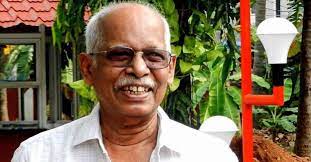
Prof MK Prasad
Prof MK Prasad

The story is one of the amazing dedication and hard work of a large number of people. But Prof. MK Prasad’s was a symbol of the movement. Prof MKP as he was fondly referred to, was a botanist who spent his life in academics. He taught botany, was Principal of Maharaja’s College, Eranakulam, and Pro-Vice Chancellor, Calicut University.

But he was not confined to classrooms, and believed passionately in taking science to the people. He was an environmental and science activist all his life, and a founding member of KSSP. His distinction as a scientist supported his environmental activism, which no one could dismiss as woolly-headed.

He was a member of the Governing Council of Centre for Environment Education for many decades and we at CEE were fortunate to have him as a teacher, guide, and mentor. Never for him the exalted distance of a Board Member. He was always interested in the minutest details of our projects and lives, and was happy to spend any length of time chatting with us. Prof Prasad passed away last week due to COVID. Here are a few poignant memories which bring him to life.

Prof Prasad, my mentor and a dear friend. It seems a little presumptuous to call this stalwart my friend, but as unassuming as he was, he truly was that. I’d scold him when he sat next to me during the Governing Board meetings, when lesser mortals like us were let in, because he would chatter away irreverently while serious matters were being discussed. He guided me through the challenge of trying to break into the ivory towers of higher education, and when things didn’t work, he’d say our efforts were “before their time”. That, always accompanied by his naughty smile, had become his code word. He also treated me as his unofficial research assistant, which I enjoyed.  He would call to ask me to find out about things that often I knew nothing about, and it was always great learning. Will miss you, Sir!

Kiran Chhokar.

When I think of Prof Prasad, I can see him walking down the corridors of ASCI where we held our Steering Committee meetings in Hyderabad. As always, he is dressed in a half-sleeved shirt, has no smile on his face – but his kind, sharp eyes are twinkling! I am immensely grateful for all his advice and guidance to the school environmental education project. But more importantly, I feel blessed to have spent some time with such a stalwart. His greatness and his humble demeanour co-existed so well! 

Something I found remarkable in him and so distinct from my generation is that he always gave a considered, detailed response to every request for advice. He never rushed to give an immediate response. Sometimes, he would respond the next day – probably after mulling over the issue. 

On one of his first visits to ASCI, I told him that there was a National Park (the KBR National Park) close by and he could probably take a stroll there in the evening. When I met him the next morning, he gave me a gentle, but proper scolding about my recommendation. I learnt my lesson – one does not present KBR as a ‘National Park’ to the person who saved the Silent Valley National Park! 

Kalyani Kandula

While I was working at the Centre for Environment Education (CEE), Ahmedabad,  I had the good fortune of knowing Professor Prasad. I have known him for many years now.  At Governing Council meetings held at CEE often I would sit next to him and would be very inspired by his valuable suggestions, critical comments and review of many projects CEE was handling. He would not mince his words. A gentle soul, very down to earth and a great inspiration to many. Professor Prasad in fact attended my sister’s wedding in Kerala. My father Dr.S.M.Nair and Professor Prasad shared a great professional and personal bond. 

Meena Nair

Some weeks after CEE’s office in Pune was started, Prof MKP dropped by. He was in Pune for some other work. Though it was a single person office and I a relatively junior staff member, Prof MKP was interested to see how I was settling in and getting on. When I told him that Amma (my mother in law) would have been happy to meet him, considering his association with KSSP, he just said that he would be happy to come over for coffee. So we did that, and Amma (and I) was very touched by the gesture. Later Prof Prasad and I went to meet Prof Pisharoty and I just felt blessed to listen to their conversation.

Sanskriti Menon

For me, he was the quintessential story teller. We would invite him to come and speak in various training programmes we organized—those for Forest Officers, for Environmental Educators from around South and Southeast Asia, for NGOs, for school and college teachers. Of course his sessions had to be around the Silent Valley Campaign. I must have sat through his sessions a dozen times if not more. But the passion, involvement and detail with which he told the story of the campaign inspired not only every new batch of trainees who had never heard it before, but equally, us the organizers who had heard it and read about it and discussed it ad-infinite. Such was the power of his passionate storytelling! And not just the Silent Valley–he had done so many interesting things, met so many interesting people, been so many interesting places–he could keep an audience engaged for hours!

Thank you Sir, for inspiring us. We are comforted by the knowledge that you are looking down at us with a twinkle in your eye!

–Meena

Another old piece on Dr. Pisharoty at : https://wordpress.com/post/millennialmatriarchs.com/43