‘Tis the season of good cheer and brotherhood.
Of celebrations and togetherness.
Of Christmas trees and ornaments.
And this last is what we are talking about today.
The tradition of decorating trees with ornaments is thought to have originated in Germany in the 1800s. An enterprising gentleman by the name Hans Greiner began making glass ornaments called baubles for hanging on trees. These were the first mass-produced Christmas ornaments and were a huge commercial success. Woolworths was the first company to import these types of decorations into the United States in 1890, from where the custom spread to other parts of the world.
Common ornaments include globe ornaments, angels, egg ornaments, figurines, snowflakes, icicles and stars. They are made from a variety of materials, including glass, plastic, porcelain, metal, wood, and expanded polystyrene
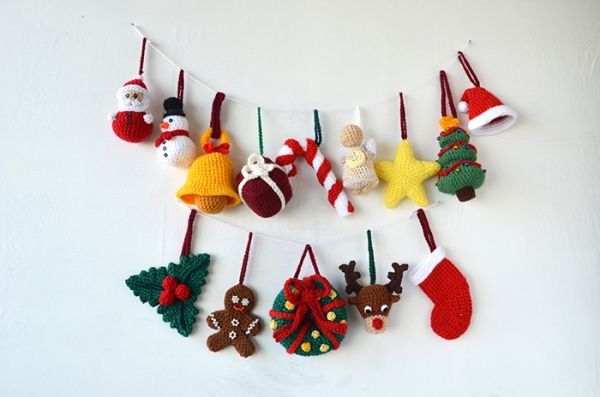
A trend that has been popular in recent years is amigurumi Xmas ornaments. If like me, you haven’t a clue what this is, amigurumi is the art of creating crocheted or knitted stuffed creatures and objects, which has its roots in Japanese culture.
While the exact origins are not clear, it is believed to have developed from multiple influences over time. Japan has a long history of hand-made dolls and toys, such as “temari” (decorative balls made from thread) and “daruma” dolls. Amigurumi probably grew from these traditions. During the Meiji period (1868-1912), European knitting and crochet techniques were introduced to Japan and became popular. Japanese crafters combined these techniques with their traditional doll-making skills to create amigurumi,which comes from the Japanese words “ami” meaning crocheted or knitted, and “nuigurumi” meaning stuffed doll.
Amigurumi grew more popular in Japan in the post-World War II era. As the country’s economy grew stronger, it led to increased income and leisure time, and a resurgence in crafting hobbies. It was during this time amigurumi gained recognition as a distinct art form.
A major impetus to the growth of this craft was the rise of “kawaii” culture. This Japanese aesthetic emphasizes cuteness and adorableness—think Hello Kitty. Amigurumi lends itself to the creation of cute, whimsical, and anthropomorphic designs and hence appealed to the kawaii aesthetic.
Internet and social media brought amigurumi international attention and today, amigurumi enjoys a global following including in its use as Xmas ornaments. Amigurumi angles, cherubs, stars, elves and reindeers decorate trees across the world. Many people take pride in crocheting or knitting figures either on their own or with the help of popular amigurumi kits which include patterns, instructions, wools and needles.
A popular Xmas tree ornaments also rendered in crochet, which we are not very familiar with in India, is the Christmas Pickle. This is an American tradition. A decoration in the shape of a pickle is hidden on a Christmas tree, with the finder receiving an extra gift. It is also thought that he or she will enjoy good fortune for the next year. (While for us Indians, a pickle brings thoughts of mangoes and limes, in the West, it is often a cucumber, and that is what Christmas Pickle ornaments represent).
The origin of the Pickle ornament is not known. Americans think it came from Germany, but Germans have no clue about this tradition. But here is one story: During the American Civil War, Bavarian-born Private John C. Lower had enlisted in the Pennsylvania Infantry. He was captured in 1864 and taken to the prison camp. On Christmas Eve he begged a guard for a pickle because he was starving. The guard provided the pickle, which Lower later credited for saving his life. After returning to his family in Bavaria, he began a tradition of hiding a pickle on their Christmas tree each year.
Even if it is not true, it is surely a story that captures the Christmas spirit!
Christmas wishes, Peace and Goodwill among all!
–Meena

 Millennial Matriarchs