
The story of the Arab who kindly let his camel put his nose in the tent to keep it warm, and ended up with the entire camel inside, while the Arab was ousted into the cold is an old one. It is quoted as an example of “give an inch and they will take a mile”. While this is a fable, in reality there are several examples in Nature, of animal species, who, once invited or introduced, proceed to take over spaces, pushing out the original inhabitants. A case of invasive species.
Recently I wrote about some invasive plant species in India. This is about invasive animal species which have not only invaded spaces but which have posed serious threats to native species in several parts of the world. Ironically some of the most damaging invasive animal species were originally introduced either for sport, as pets, or as livestock and pack animals. Here are a few examples.
European rabbits. In 1859, Thomas Austin, a wealthy English settler in Australia, received 24 wild and domesticated European rabbits as a Christmas present from his brother in England. These were for hunting on his estate in Melbourne. The rabbits multiplied rapidly, producing more than four litters each year. They had no predators to keep their numbers in control. They also adapted easily to their new environment, and by burrowing beneath the soil, they spread far beyond the boundaries of the estate. In 50 years these rabbits spread across the entire continent. Their numbers became so large that they destroyed crops and land, leading to soil erosion. They also negatively affected agriculture and plants by overgrazing. Not only did the rabbits wreak havoc on Australian croplands, they contributed to the decline of native plant and animal species. Today Australia has over 200 million rabbits, the fastest colonization rate for an introduced mammal ever recorded. The control of this invasion continues to remain a huge challenge which has engaged Government researchers, biologists, farmers, and others. The colonization of Australia by the European rabbit is said to be one of the most iconic and devastating biological invasions in recorded history.
Cane toad: Another story from Australia. This one about a species that was introduced not for sport, but for biological pest control, and ended up being a major pest itself.
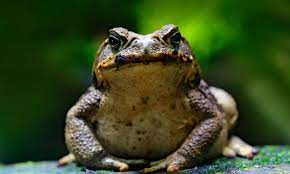
The Australian sugar industry began around 1862 when Captain Louis Hope succeeded in raising a viable sugarcane crop, and then established a sugar mill in Queensland. Establishing the sugar industry was difficult in the face of drought conditions. A bigger problem was that the roots of the plants were eaten by the larvae of native beetles which were collectively called cane beetles. In 1933, Australian sugarcane growers attending a conference in the Caribbean heard about a toad that was effective in destroying these beetles. Australia had no native toad species. The growers lobbied for the import of the cane toads to Australia in the hope that these would combat the crop-destroying cane beetles.
In early 1935, a box containing 102 toads arrived from Hawaii. The toads were kept in captivity where they rapidly multiplied. In July 1935 the toads were released into the fields. But not all was known about the toads by then. As it turned out, the toads could not jump high enough to eat the larvae of the beetles that lived largely on the upper stalks of the sugarcane plants. The voracious toads thus began to feed on whatever they could get at the lower level—insects, bird’ eggs and even native frogs. Would-be predators were killed by the poison that these toads secreted. Thus the original plan misfired disastrously, as the invited invaders laid ravage to the crops and native species. The cane toad continues to seriously impact the ecosystems of northern Australia even as they spread to other parts. Due to Australia’s geographic isolation and subsequently unique and fragile biodiversity, this is a grave issue. The Australian Government has stated that ‘There is unlikely to ever be a broad-scale method available to control cane toads across Australia’.
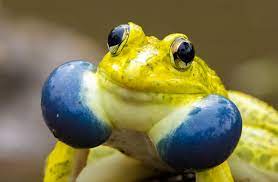
Indian Bullfrog. Closer to home both in terms of geography and history, is the relatively recent example of the spreading menace of the Indian bullfrog on the Andaman Islands. While the first report of its sighting was in October 2011, it is believed that the bullfrogs may have been introduced to the islands in early 2000s.The reason for the introduction is not clear. Some believe that the tadpoles may have come with fish food from mainland India. Or it may have been brought by farmers from West Bengal and released into rice fields for local consumption. But having arrived, these prolific breeders are beginning to make inroads. Of greatest concern is that their tadpoles are carnivorous, and eat tadpoles of other frog species, thus threatening the native species. The large-sized adult frogs also compete with native species for the same food.
As the frogs are spreading to more islands, the story of Australia’s invasion by alien species is beginning to play out again—introduction, naturalization, and expansion. The Andaman archipelago which consists of 300 islands has rare endemic species which are vulnerable to such invasions, and which eventually could lead to disturbing delicate ecological balances.
Common Myna. Once again, a twisted tale of transition from mainland to islands. This ubiquitous bird that we are so used to seeing around us, is not such a friendly neighbourhood bird in the Andaman islands. Of the 12 bird species that were introduced into the Andamans around the end of the 19th century, 6 have disappeared, but 5 are still found there. Of these, the common myna has been not only the most successful spreader and stayer, but also the biggest threat to native avian species. These birds are known to prey on the eggs and chicks of other bird species. They also compete with the local hole-nesting birds for nesting sites, slowly inching out the native inhabitants from their own habitats.
From the Andamans, all the way to Australia, the range of the common myna is increasing at a rapid pace, leading the IUCN Species Survival Commission to declare it as one of the world’s 100 worst invasive species that pose a threat to biodiversity, agriculture and human interests.
Like the camel that sidled its way into the well-meaning Arab’s tent, the process of incursion, expansion, dislodging of original inhabitants, and taking over, is the story of invasive plant and animal species. This process, together with habitat destruction, has had serious ecological costs, and has been a major cause of extinction of native species throughout the world in the past few hundred years.
–Mamata
 Millennial Matriarchs