
Getting Serious about Play!

Last week, we talked about the International Dolls’ Museum in Delhi.  And we lamented about its not keeping up with the times and re-inventing itself.

A model from which it could draw inspiration is The Strong National Museum of Play, Rochester, New York, USA. It was established in 1969 based on the collection of one individual, Margaret Woodbury Strong, who by that point in time has collected over 27,000 dolls. Like Shankar who set up the Dolls’ Museum, she started by exhibiting parts of her collection and later added two wings to her palatial house to exhibit to select visitors. Over time, she started thinking about setting up a museum for the public.   Margaret Strong died in 1969, leaving her collection and her wealth for a museum, which was finally opened to the public in 1982.

The Museum’s display of the collection of dolls is only a small part of what it does. It is ‘a highly interactive, collections-based museum, devoted to the history and exploration of play’ and sees itself as ‘the ultimate play destination of all ages’. To meet this mission, it has interactive exhibits in a space of 1,50,000 sft, online exhibits, the World Video Game Hall of Fame, a Play Lab which is a maker-space, and a Skyline Climb. The Strong Museum takes the effort to ensure that the experiences are accessible for people of all abilities. Many of the exhibits on the online museum are viewable to all of us on Google Arts and Crafts.

A very interesting initiative of the Museum is the National Toy Hall of Fame. Every year, the Hall of Fame recognizes and inducts toys that have ‘inspired creative play and enjoyed popularity over a sustained period’. The public (I think only those who live in America) are invited to nominate their favorite toys based on the following criteria:

  • ‘Icon-status: the toy is widely recognized, respected, and remembered.
  • Longevity: the toy is more than a passing fad and has enjoyed popularity over multiple generations.
  • Discovery: the toy fosters learning, creativity, or discovery through play.
  • Innovation: the toy profoundly changed play or toy design. A toy may be inducted on the basis of this criterion without necessarily having met all of the first three.’

What a wonderful way to engage with the community at large! The toys in the Hall of Fame include everyday objects, like sand which is one of the most popular materials for children to play with; blankets which children can make into anything from tents to disguises; to cardboard boxes which as we know are more interesting to kids than the most expensive toy packed inside. The list of course includes items created to be played with—from balls, playing cards, rubber ducks, girl-dolls, hoola-hoops, jump-ropes and  jigsaw puzzles to Rubik’s Cube and Nintendo.
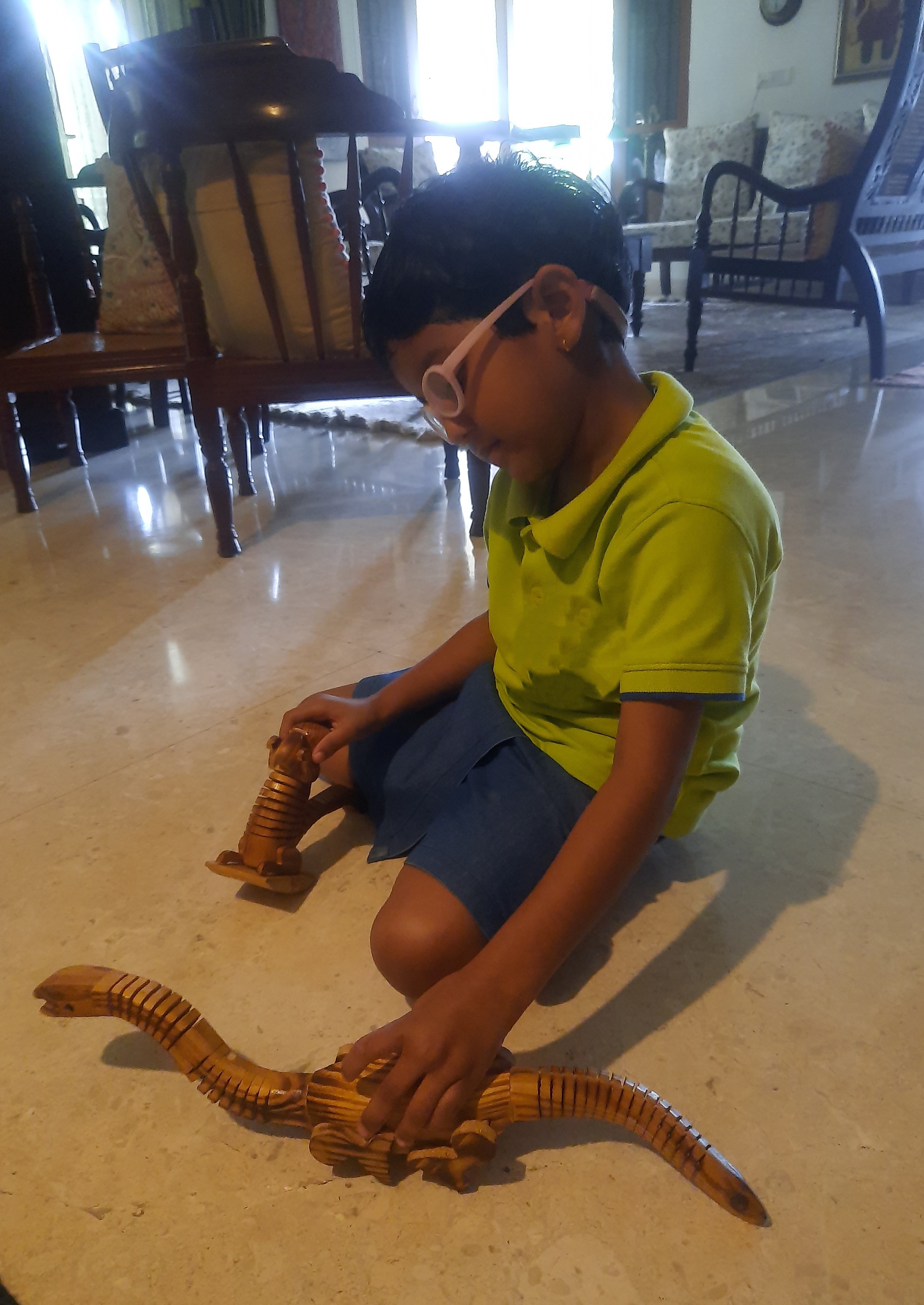
Games and toys

The Museum has the core philosophy that ‘Play sharpens minds and boosts creativity. When children play, they learn to solve problems, make decisions, express ideas and recognize boundaries’, the Museum focuses attention on educators, with special grade-related exhibits and lesson-plans for teachers.

The Museum plays a very serious role in research too. The Strong’s Brian Sutton-Smith Library and Archives of Play is devoted to the intellectual, social, and cultural history of play and is a 230,000-volume research library and archives of primary and secondary sources, including scholarly works, professional journals, periodicals, trade catalogues, children’s books, comic books, manuscripts, personal papers, business records, and more.

Another important collection is The International Centre for the History of Electronic Games which has 60,000 artefacts and thousands of archival material on the history of video games.

A third collection is The National Archives of Game Show History which ‘preserves the history of game shows—from the earliest panel shows and quiz scandals, to the games and puzzles of the 1970s, to the big money network series and the classic games now in primetime’.

So efforts on every front to be relevant to a wide audience, and to keep up with the times.

A lesson or two or three, our museums can learn?

–Meena
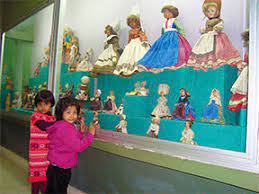
A Dolls House

At a recent get together with my sisters we were reminiscing about how we used to spend our childhood summer holidays in Delhi. In addition the many simple DIY activities that we devised, one of the highlights was the visit to the BC Roy Memorial Children’s Reading Room and Library. In an age when reading and books were the main pastime, this exclusive library for children, with its wide selection of books, and a welcoming ambience was a perfect place to be.

The library was housed in the building of the Children’s Book Trust. One summer, when we used the library we also discovered another fascinating display in the same building. This was the Dolls Museum which became not only our favourite destination, but also an essential visit for friends and relatives who visited Delhi.

All the three unique institutions were the brainchild of Keshav Shankar Pillai, popularly known as Shankar, who was India’s most celebrated political cartoonist before and after India’s Independence. The Children’s Book Trust which he founded in 1957, was among the pioneer publishers of children’s books in independent India. CBT continues even today with its mission to promote the production of well-written, well-illustrated and well-designed books for children at prices within the reach of the average Indian child. The BC Roy Library which was set up in 1967 was to become the largest library exclusively for children.

From books to dolls—how did that happen? The story has earlier roots. Shankar used to publish a political satire magazine called Shankar’s Weekly. In 1949, under the auspices of the magazine Shankar announced a competition inviting paintings and writings from children across India. It got an overwhelming response. The following year the competition was thrown open to children from all over the world. It was called Shankar’s International Children’s Competition. Today, the competition receives about 160,000 entries from over 160 countries. The entries are judged by an international jury.

In the early 1950s Shankar received a doll from the Hungarian Ambassador to be given away as a prize for this competition. Shankar with his childlike fascination for unusual things fell in love with the doll which was dressed in a traditional Hungarian costume. He asked the Ambassador if he could keep the doll for himself. The little doll triggered in Shankar the itch to collect more costume dolls. As a journalist who often accompanied the then Prime Minister Jawaharlal Nehru on his trips abroad, Shankar had the opportunity to visit many countries where he began to pick up dolls in the traditional national and regional costumes, made by local craftsmen.

Shankar’s collection grew rapidly and soon he had a collection of nearly 500 dolls. He decided to exhibit these dolls in different parts of India along with the children’s paintings from the competitions. The frequent packing and unpacking began to damage the dolls; this worried and upset Shankar. An exhibition put up in Delhi was visited by Prime Minister Jawaharlal Nehru and his daughter Indira Gandhi. As they appreciated the collection, Shankar also shared his concern about the frequent moving of the displayed dolls. Indira Gandhi suggested that the exhibition should have a space of its own. The most natural place for it was in the building then being put up for the Children’s Book Trust in Delhi. And there the dolls found their permanent home. The International Dolls Museum as it became known was inaugurated on 30 November 1965 by the then President of India Dr S Radhakrishnan.

The Museum opened with a collection of a thousand dolls. Between 1965 and 1987 another 5000 were added, a vast majority coming as gifts. Today the Museum has a display of 7000 exhibits from almost eighty-five countries, giving it a truly international character. One section has exhibits from European countries, the U.K., the U.S.A, Australia, New Zealand, and the Commonwealth of Independent States, and the other from Asian countries, the Middle East, Africa and India. The dolls cover a wide range, both geographical and historical. The oldest exhibit is of a Swiss woman lying in bed dating back to 1781. There are dolls from the Queen of England’s Collection, Samurai and Kabuki dolls from Japan, Spanish flamenco dancers, ballet characters from South Korea, and nomadic singer dolls from Turkmenistan, among many others spanning the globe.  In addition to Shankar’s original collection, the collection has grown mainly from dolls gifted by dignitaries from different countries visiting India, as well as ambassadors of different countries to India. The dolls stay on as continuing little ambassadors of their countries, each telling its own story.

The section on Indian costume dolls showcases the incredible diversity of culture, heritage and traditions of our country. The dolls are meticulously handcrafted based on research that focuses on an accurate representation of physical attributes, dress, ornaments, and accessories like farming equipment, musical instruments, baskets and bags. There is a collection of bride and groom dolls depicting wedding traditions of different parts of India, and one of dolls in different dance costumes. Some of the dolls are arranged as group installations depicting markets, farming activities, household and festival scenes which demonstrate a sense of community.

The Indian dolls are made at a workshop attached to the museum. In addition to display the dolls are given in exchange for gifts to the museum from other countries, or sold to collectors. Apart from this workshop, there is also a ‘clinic’ where damaged dolls are repaired and restored.

Unlike other museums that one usually associates with ancient relics and artefacts, the Dolls Museum is a vibrant and living experience. It provides a rich panorama of the incredible diversity of the human race and cultures; it sparks imagination and curiosity; it transports the child into a ‘doll-filled’ world of its dreams, and the adult back to the innocent joys of childhood.   

Although my association with the Children’s Book Trust has continued over the years—from reader to contributing writer, it is many years since I visited the Dolls Museum. But as we mark International Museum Day on 18 May, it is a good time to remember and celebrate this special museum. As an educator now, I see the tremendous potential of this museum to help children explore, discover, and celebrate the diversity of cultures. As the International Council of Museums puts it “Museums are important means of cultural exchange, enrichment of cultures and development of mutual understanding, cooperation and peace among peoples.”

–Mamata