
Every Republic Day, the tricolour appears with ritual predictability. It rises along Rajpath, flutters on homes, schools and government offices, slips into newspaper mastheads and WhatsApp greetings. We see it as a finished symbol, but the Indian flag, like the Republic it represents, took quite a while to take its final design.
The earliest Indian flags of the twentieth century were crowded and emotional. In 1906, a flag hoisted at Calcutta’s Parsee Bagan Square carried multiple colours, symbols, even words — less a flag than a manifesto. A year later, Bhikaji Cama unfurled another version in Stuttgart, turning cloth into quiet provocation. These were attempts to imagine India visually and politically, before it existed as a nation.
In 1917 came the Home Rule Flag designed by Annie Besant and Bal Gangadhar Tilak, including stars, stripes, the Union Jack, crescent moon and more. A design as complicated as the messaging.
By 1921, when Pingali Venkayya presented a tricolour to Mahatma Gandhi, the design had shifted towards restraint. After much discussion and a few changes, this basic design of three colour stripes and a wheel at the centre was adopted in 1931. Colours were chosen not just for beauty but for what they might stand for —values and ethical balance. The charkha at the centre had a strong message: spin, labour, self-reliance and progress. This was adopted as the flag of the Indian National Congress.
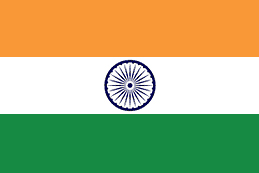
On 22 July 1947, the Constituent Assembly adopted the flag we know today. The charkha was replaced by the Ashoka Chakra — an ancient symbol pressed into modern service. Saffron, white and green were retained, standing for courage, peace and growth. There was no text, no ruler’s emblem, no date to anchor it to a single moment. It was a disciplined choice, and one that we are proud of.
When Design Meets Judgment
All flags are beloved by the people of the country. But there is also design aesthetics. What makes a flag good from this perspective? This question has spawned an entire subculture of passionate experts who evaluate flags with great seriousness. Their principles are deceptively simple: a flag should be easy to draw, limited in colour, free of text, and recognisable at a distance. A flag, they insist, must work when it is old, faded, flapping, or badly stitched. History may explain a design, but it does not excuse a cluttered one.
By these measures, many flags around the world falter. Coats of arms dissolve into visual noise. Mottos disappear into creases. Seals that look impressive on paper collapse on fabric. In the process, a curious truth emerges: symbolism ages better when it is spare.
The Curious Case of Flag Rankings
Over the last two decades, flags have been pulled into the modern compulsion to rank everything. Design schools, vexillological associations (i.e, association of people who study flags), online polls, children’s surveys, and pop culture lists have all attempted to crown the world’s most beautiful flags. The results vary, but patterns repeat.
Japan’s rising sun is endlessly praised for its calm authority. Switzerland’s square flag earns admiration for bold simplicity. Canada’s maple leaf is often held up as a model of contemporary national branding. Nepal’s double-pennant shape wins points simply for refusing to conform. These flags succeed not because they shout, but because they know exactly what they are.
The rankings are hardly neutral. Familiarity influences taste. Politics sneaks in. Yet when designers, schoolchildren and casual observers repeatedly gravitate towards the same flags, it suggests certain features which resound across cultures.
And Where Does India Stand?
India rarely tops these lists, but it almost never sinks either. In most design-based rankings, the tricolour settles comfortably in the upper third of the world’s flags. It is respected rather than sensational.
Its strengths are structural. The layout is clean. The colours are distinctive without being aggressive. The symbolism is layered but not overloaded. Most importantly, there is no text — a decision that has quietly protected the flag from linguistic politics and historical expiry dates.
The Ashoka Chakra is both the flag’s greatest strength and its mildest complication. Conceptually, it is rich: law, motion, moral order. Visually, it is intricate. Purists point out that twenty-four spokes violate the famous rule that a child should be able to draw a flag from memory. But perhaps that tension is apt. A flag is not meant to be reduced to a doodle.
In comparative terms, India often ranks above older European flags burdened with heraldry and below ultra-minimalist icons like Japan or Bangladesh. As a post-colonial flag, however, it scores especially well — modern without being rootless, symbolic without being authoritarian.
The Constitution and the Display
For decades after Independence, ordinary citizens were not freely allowed to fly the national flag. Its use was governed by strict rules, reserved largely for government buildings and official occasions.
But in 2002, a Supreme Court judgment affirmed that flying the national flag was a fundamental right under freedom of expression, the Flag Code of India was liberalised. The tricolour could finally enter homes, balconies and private spaces. It was a quiet but significant shift: the flag moved from being a state-controlled emblem to a shared civic symbol.
Republic Day is about the Constitution, but it is also about the quiet endurance of symbols. The Indian flag has survived regime changes, political churn, commercial misuse and overexposure. Today, it flies proudly over tanks and textbooks, protests and parades.
Happy Republic Day!
–Meena
 Millennial Matriarchs