
Fabrics for Freedom: Khadi and Beyond

We are all aware of how central khadi was to our struggle for independence. It was not only about defying the British and refusing to buy their imported cloth, but a potent symbol that it was not mere freedom from colonial rule that was critical, but also economic independence—a means of livelihood for millions of people of the country. In the words of Divya Joshi: ‘Gandhiji presented khadi as a symbol of nationalism, equality and self-reliance. It was his belief that reconstruction of the society and effective Satyagraha against the foreign rule can be possible only through khadi….The spinning wheel was at one time the symbol of India’s poverty and backwardness. Gandhiji turned it into a symbol of self-reliance and non-violence.’
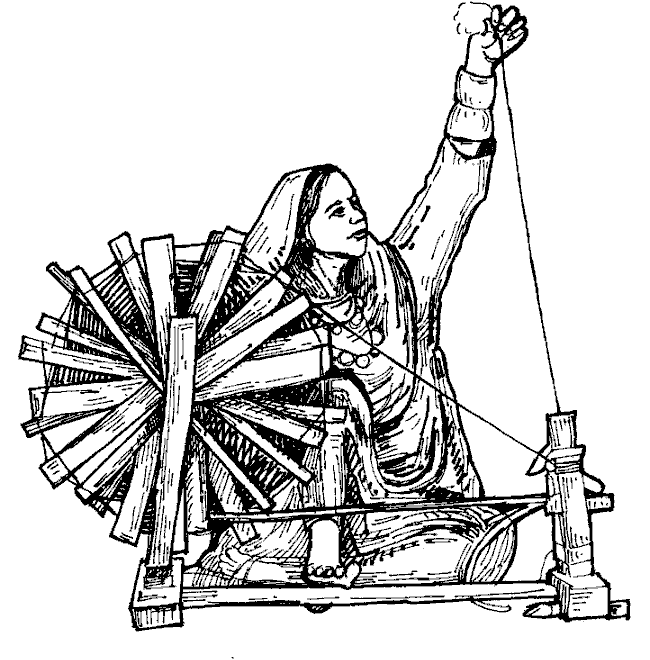
Khadi

But India is not the only country where spinning and weaving of textiles were a core part of a movement for independence. Another large British colony also used this as a weapon. This was the USA!

Britain saw its colonies including the American territories, as suppliers of raw material, insisted that they export all cotton to it, and buy all finished cloth from it. And of course it imposed huge taxes on all these products including fabric.

In defiance, the people in the American colonies started spinning their own cloth, and the spinning wheel because as important a symbol of patriotism in Americanin the 1760s and 1770s as the charkha was to the become in the 20th century in India.

Women were at the forefront of the spinning movement in the American War of Independence, and created their own homespun cloth to disrupt the British monopoly.  Fabric made this way was called “homespun.” Wearing homespun was a symbol of patriotism.  

In certain areas like New England, women showed their protest by going to ‘spinning bees’ where they would set up spinning wheels and keep each other company while they spun yarn. And these were not isolated events—for instance, in a single area, from Harpswell, Maine to Huntington, Long Island, over 60 spinning meetings were held over 32 months starting in March 1768.

The Daughters of Liberty, a group of political dissidents who got together to fight for liberty, were at the forefront of these spinning bees. They organized boycotts of British goods, especially tea, and they manufactured replacement products, especially cloth.

As in India, spinning was at the centre of a lot of publicity and was a rallying point for the freedom fighters. Newspapers reported elaborately on the smallest cloth-making development to amplify the message. Spinning schools were set up and awards were offered for the person who wove the most cloth. Old and young learnt to spin—it is reported that a 70-year-old woman in Newport, R.I., learnt to spin for the first time during the movement. Competitions were held—‘in 1769, two Connecticut women held an all-day spinning contest in which the winner spun seven skeins and two knots of fine linen yarn, just a little more than her competitor’.

The boycott of imported fabric and other goods from tea to molasses, worked, and it is estimated by some sources that the value of imported goods from Great Britain to the US fell by half in 1769 over the previous year, from 420,000 to 208,000 pounds.

So ‘swadeshi’ proved a potent war cry against imperial colonizers halfway across the world!

As it did in India almost 150 years later–rallying self-confidence, morale, giving a sense of identify.

Happy Independence Day!

Buying one pair of Khadi clothes a year can contribute to livelihoods for our millions of weavers. And they need it more than ever now, as the spinning of the national flag, which was their monopoly, has been taken away.

–Meena
The Proud Tricolour

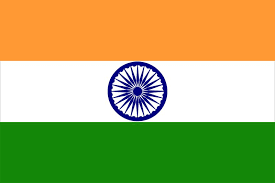
75 years ago, on 22 July 1947, Jawaharlal Nehru moved the motion for the adoption of the national flag. This is what he said on the occasion: ‘the national flag of India shall be horizontal tricolor of deep saffron (kesariya), white and dark green in equal proportions. In the centre of the white band, there shall be a wheel in navy blue to represent the chakra.’

Indian flag

Today, there are many who interpret the symbolism of the flag in different ways. But it would make sense to go back and understand the thinking of the founding fathers of the nation, who discussed and debated these issues long and hard. And what better way to understand this than through the words of one of the most eminent thinkers of the 20th century, academic, statesman and philosopher, Dr. Sarvepalli Radhakrishnan?  Dr. Sarvepalli Radhakrishnan later President of India, speaking on the motion moved by Nehru, explained the meaning of the flag design. Here are some quotes from this speech:

‘The world is full of misunderstandings, suspicions and distrusts. In these difficult days, it depends on us under what banner we fight. Here we are putting in the very centre the white, the white of the sun’s rays. The white means the path of light. There is darkness even at noon .. but it is necessary for us to dissipate these clouds and control our conduct—by the ideal light, the light of truth, of transparent simplicity which is illustrated by the colour of white.

We cannot attain purity, we cannot gain our goal of truth unless we walk the path of virtue. The Ashoka wheel represents the wheel of the law, the wheel of Dharma. Truth can be gained only by the pursuit of the path of Dharma, the practice of virtue. Truth, dharma, virtue, these ought to be the controlling principles of those who work under this Flag.’

‘The red, the orange, the Bhagwa colour, represents the spirit of renunciation. …Our leaders must be disinterested. They must be dedicated spirits.’ ..’That stands for the fact that the world belongs not to the wealthy, not to the prosperous but to the meek and humble, the dedicated and the detached.’

‘The green is our relation to the soil, our relation to plant life here on which all other life depends. We must build our Paradise here on this green earth. If we are to succeed in this enterprise, we must be guided by truth (white), practice virtue (wheel), adopt the method of self-control and renunciation (saffron).’

 In the same speech, he refers to the need for our society to change what is wrong with it. ‘Dharma is something that is perpetually moving. ..There are so many institutions which are worked into our social fabric like caste and untouchability. Unless these things are scrapped, we cannot say that we either seek truth or practice virtue. ..Our Dharma is Sanatana, eternal, not in the sense that it is a fixed deposit, but in the sense that it is perpetually changing…So even with regard to our social conditions, it is essential for us to move forward.’

Dr. Radhakrishnan occupied the George V Chair in Philosophy at Calcutta University; served as Vice Chancellor of Andhra University and Benaras Hindu University. Oxford University appointed him to the H.N. Spalding Chair of Eastern Religions and Ethics. He served on India’s Constituent Assembly and also as chairman of the University Education Commission. He was a chairman of the Board of UNESCO and leader of the Indian delegation to the same. He was Indian Ambassador to Moscow, then Vice President of the country, and its second president from 1962 to 1967.

He was a nationalist who believed in an India built and guided by those who were truly educated, by those who had a personal vision of and commitment to raising Indian self-consciousness.

His scholarly works include: Indian Philosophy, 2 vol; The Philosophy of the Upanishads;  An Idealist View of Life Eastern Religions and Western Thought;  East and West: Some Reflections; A Sourcebook of Indian Philosophy; and The Pursuit of Truth.

And of course, many of us have grown up reading his Ramayana and Mahabharata!

So as we mark the 75th anniversary of the adoption of the Tricolour, and are almost upon our 75th Independence Day, it is time to re-dedicate ourselves to the real meaning of the flag, which Dr. Radhakrishnan’ sums up as: ‘The Flag tells us ‘Go ever alert, be ever on the move, go forward, work for a free, flexible, compassionate, decent, democratic society in which Christians, Sikhs, Moslems, Hindus, Buddhists, will all find a safe shelter.’

–Meena

The Train Reached the Station….

And all I could see was fire and smoke! Everything outside seemed to be burning. I could hear cries of ‘Allah ho akbar’ and ‘Hey Ram’. There was not a soul on the platform. We and the other newly married couple from our bogey got down. We didn’t know what to do—we just stood there for a few minutes, with all our luggage. I was holding the ‘chumbu’ that had not fitted into any trunk. My veena, wrapped in old sarees, lay at my feet.  I had no clue what was going on. My husband looked worried, but I did not know what he was worried about. We had thought that athimber (my husband’s sister’s husband) would come to the station to take us home. We had heard that there was some trouble in Delhi, and thought that surely he would have arranged for transport. But there was no one there.

Then a porter appeared. He came to my husband and they started speaking in Hindi. I could only understand a few words of Hindi at that time, so I don’t know what they said.

After a lot of discussion, the porter hurried away and returned with a cart of some kind. We loaded all our luggage onto this. But the veena would not fit in—the neck stuck out. So my husband picked it up. I was still carrying the chumbu.

My husband only said ‘Walk fast. Don’t make a noise’.

I could not understand where we were going. We got down from the sloping end of the platform and crossed some tracks and kept walking along the tracks. They were going so fast, I was finding it difficult. I was hungry—the GT was supposed to have reached at 5 o’clock in the morning, but it had reached at 5 o’clock in the evening.

As we walked along, there were houses on the sides. They all looked the same. It was some colony. We saw not a soul on the way. I could not make out whether anyone lived in the colony or they were all empty houses.

It was difficult to manage all the luggage in the cart as we walked over the uneven ground. There were trunks with clothes. Two holdalls. My mother had tied up vessels and kitchen items in old sarees. Then there were tins with different types of sweets and savories. My father had bought a blue glass jar from his lab supplier because I loved them. My mother had filled it with mixture ordered from the hostel. She told me I could use the bottle later to store something in the kitchen. Suddenly the blue jar fell down and broke. Tears came to my eyes, but I did not dare cry. We just kept walking on.

After about half an hour of walking, the porter stopped the cart near one of the houses. He went to the door and knocked softly. Someone looked out of the window. On seeing the porter, he came to the door and opened it slightly. He was dressed like a watchman.

They whispered to each other. Then the porter signaled to us to take the luggage into the house. The house was full of piles of luggage.  The watchman shifted a few pieces here and there and made some space for our luggage. We brought in the pieces one by one and put them there.

I asked my husband in Tamil: ‘Are we going to leave the luggage here? All the silver vessels are here. How can we leave them?’ My heart was sinking. My mother had bought two large oval plates and two tumblers specially for my coming to my husband’s house for the first time.

He just hissed at me to keep quiet. He took the porter and watchman to a corner, said something to them and gave them lot of money. We walked out.  The veena was in my husband’s hands—it was too big and odd shaped—we could not put it in the room. And for some reason, I was still carrying the chumbu.

When we had walked a few minutes, I saw a huge railway water spout gushing water. I ran to it. Only when I started drinking did I realize how hungry and thirsty I was. I drank and drank. Then we walked on. We had now left behind the colony and were in the city. My husband told me there was a curfew on but it was relaxed for an hour and so we had to hurry and reach home. But I didn’t know what a curfew was.  We walked quietly along the side of the lanes.

And then the horror! A man came running from one direction. There was another man chasing him. He caught up with him, and in front of our eyes, he drove a knife into the first man. Blood spurted out. I was going to scream, but my husband clamped his hand on my mouth. The killer pulled the body and threw it into the gutter on the side of the road and ran away. He had not noticed us.

I asked my husband why that man had killed the other one, what was happening? But he just gestured to me to keep quiet and walked on.

By the time we reached home, it was dark. It was not our house, my husband told me. ‘This is Tagore Road. My sister’s house. Our house is in Lodhi Road—too far away.’

We went in. Our brother-in-law was there and 2 other families who were sheltering there because their own areas were not safe. My sister-in-law and mother-in-law had gone to our house in Lodhi Road to get the house ready for us, but had got stuck there.

The ladies welcomed us and did aarti. One of them said ‘Are you hungry? There is some arisi upma we made in the morning. You can have that’. Never had food tasted so good. But there was not much. Even as we were eating this, the ladies started cooking dinner. There was a murungakka tree in the garden. So they made murungakka sambhar and rice. This was the menu for the next three days, both for lunch and for dinner.

In the night, all the ladies slept in one room. We each would keep a cloth with red chili powder in it, and a heavy stone (ammi) or something like that next to our pillows. The ladies told me that if anyone should come into the house, I should throw the chili powder in their eyes. The men would go out in groups and do rounds of the colony. They had piled up stones and reapers across the lane entrance.

I was fifteen years old at that time. The year was 1947.

–Meena

This is the true story of the day my athai (father’s sister) landed in Delhi as a new bride, in the midst of the Partition.

Well Spun!

Ponduru, a village in Srikakulam, Andhra Pradesh, arguably produces the best khadi in India. Well, at least Gandhiji thought so. He was highly impressed with the fineness of the khadi produced here and preferred it to other khadis. The best dressed (khadi-mode) contemporary politicians even today get their saris, dhotis and shirt material from here.

Ponduru khadi is hand-carded, hand spun and hand woven—truly khadi in letter and spirit.

What makes it special? Well, more than one factor, it seems. For one, the raw material itself is of a special quality—it is made from special varieties of hill cotton and red cotton which are grown in Vizianagaram and Srikakulam districts. For another, Ponduru khadi is very smooth, especially the higher count variety. This is because the jawbone of the Valunga fish found in Srikalkulam is used to comb the cotton  fibers to separate them from the seeds, and the process lends a soft sheen  to the cotton.

21637405-76C9-4CD8-B597-D2A608CB60E3

There was a time when every home in this village had a loom. But like in most of India, the number of khadi workers in Ponduru is falling. The low remuneration is of course a major reason. Those involved in the sector do not want their children to follow them—they would much rather they got a ‘professional’ degree and got a ‘secure’ job.

Fortunately, there are some efforts to improve the situation, including dedicated NGOs working in the sector. Chitrika is one such which has been working closely with the Ponduru khadi sector for over a decade now. They are helping the workers organize themselves into Producer Cooperatives, find newer markets, and improve their capacities. New and innovative designs are being brought in. All this is enhancing the incomes of the weavers, almost doubling them in the last decade.

But without a pull from the market, no government subsidies or NGO efforts are going to lead to sustainable results. An eminent Gandhian once mentioned that if every Indian bought one khadi garment a year, the sector would thrive and all our khadi workers would be able to earn decent incomes.

A small thing to ask! And this is in our hands.

So this piece today is a call to action. We are about a month away from Independence Day. Go out and buy some khadi! It is a practical and easy ‘good deed’ for 15 August!

Buy khadi, and specially buy Ponduru khadi, best of all khadis!

–Meena