
Is it windy outside? Not really! Then why this piece? Well, it is in anticipation of Global Wind Day, a worldwide event that is marked annually on 15 June. It is ‘ a day for discovering wind energy, its power and the possibilities it holds to reshape our energy systems, decarbonise our economies and boost jobs and growth.’
Fair enough! Today, winds are gaining huge importance because of their potential to add to the basket of energy sources—a clean energy source that will help mitigate climate change challenges. It is because of this promise that wind power has grown rapidly since 2000, Global installed wind generation capacity has increased by a factor of about 100 in the past two decades. In 2021, the total wind generation capacity globally was 830 Giga Watts. India is proudly at Number 4 position in the world, with an installed capacity of 40+ GW. And there is still a long way to go, with estimated potential for wind in India being 200 GW.
Just to double back, what is wind? Put simply, it is the the movement of air relative to the surface of the Earth. Winds play a significant role in determining and controlling climate and weather.
And how is electricity produced from winds? Basically, it is by converting the kinetic energy of air in motion into electricity. Wind rotates rotor blades of a turbine, which converts kinetic energy into rotational energy. This rotational energy is transferred by a shaft to the generator, thereby producing electrical energy.
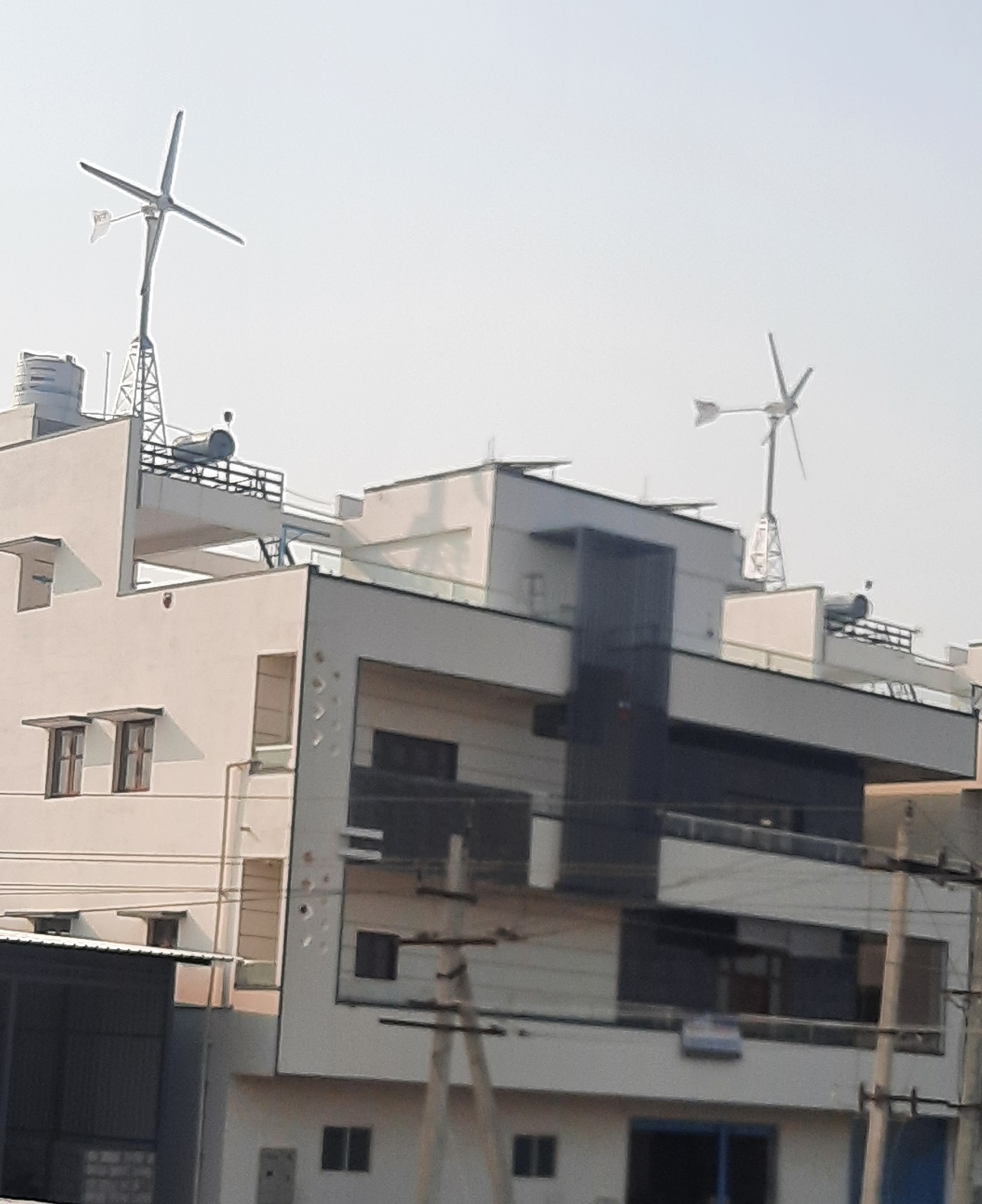
So yes, wind is a harbinger of hope for the future. Though maybe not without its own issues. Wind energy can obviously be produced only where the winds are strong and fairly sustained through the year—and there are not too many places like that in the world. Through the day and through the year, wind intensity changes, so that wind energy is not generated throughout—it is an intermittent source. And of course, winds can be unpredictable, so the generation cannot be assured. Wind turbines are noisy and also change the landscape drastically. Wind energy potential is highest in remote places, which makes investment in transmission lines and related equipment essential. They also have impacts on local biodiversity and even migratory birds. While the cost of producing wind energy has come down in the last few years, and it is a competitive source, technology and R&D have to progress further so that costs may be brought down.
India has committed to producing 140 GW of wind energy as part of its climate ambitions.
But for us in India, winds are not important just for their energy potential. Lives and livelihoods here have always centered around the monsoon winds—which bring or don’t bring us our rains. The monsoon–a periodic wind in the Indian Ocean and southern Asia—is our lifeline. The summer monsoon usually happens between April and September and bring us our heavy rains. The winter monsoon, which lasts from October to April don’t bring much rain as far as India is concerned. The English word monsoon comes from the Portuguese monção, but ultimately from the Arabic (mawsim, “season”).
So all the more reason to understand the role of winds in our lives, and mark Global Wind Day!
And a fun fact to end with:
Ramakkalmedu, also called God’s Own Hill-station, in Idukki district, Kerala, is the windiest place in India and one of the windiest places in Asia. Throughout the year the wind speed here is around 35 km/hr. Located at a height of about 3500 feet, the place is home to–what else–a wind energy farm with a capacity of 12.5 MW!
–Meena
 Millennial Matriarchs