Prickly Love

May 10 is celebrated as Cactus Day in the US. It is “a day dedicated to recognizing and appreciating the unique and fascinating world of cacti. This day also serves as a reminder of the many cactus species facing extinction and the need for their conservation, especially in their natural habitats.” Cacti are flowering plants that produce seeds. They are able to bloom every year, but they will produce an abundance of flowers in response to heavy rains. The family Cactaceae comprises many species of flowering plants with succulent (water-storing) stems.

It is entirely appropriate that it is a day marked in the US. Because 1749 out of the known 1750 species of cacti are native to the Americas! In other words, cacti were not originally found in any other part of the world.

I have to admit, this kind of blew my mind. All of us, from the time we are children, when asked to draw deserts or make an exhibit around the theme, have always generously populated our deserts with our own versions of cacti.

But cacti occur naturally only in the Americas–from Patagonia in South America, through the US, to parts of Canada. Anywhere else we see them, they have been taken by humans.
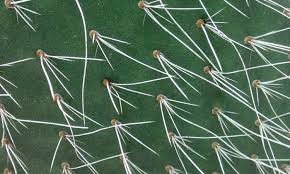
There are however equivalents in other parts of the world. There are the Euphorbs, tamarisks, saltbrushes etc. in Africa, and succulent and spinifex grasses in Australia. In India we have khejri, thoor, acacias etc. all of which grow in our deserts. But these are not cacti. All them have various adaptations to dry conditions like small or no leaves, spines, thick stems and deep roots. But they differ from cacti in that they do not have areoles. The presence of a structure called the areole is what sets cacti apart from all other plants. Areoles are round or elongated, often raised or depressed area on a cactus which is equivalent to a bud and from which spines, flowers, stems, or roots grow.

Cacti were introduced to Europe by, no surprises, Christopher Columbus. In 1493, on his second voyage to the Americas, he brought back a specimen of the prickly pear—the first time a cactus was seen in Europe. It caught the fancy of botanists, horticulturists and the public, and led to widespread cultivation of these plants.

They came to India with the Europeans, most likely sometime in the 16th or 17th century. In recent times, there has been much interest in these plants. They are much prized for their dramatic looks and are a feature in every balcony garden and indoor succulent-tray.  At a commercial level, the dragon fruit, cultivated widely across the country and now found in roadside fruit stands everywhere, is a cactus. Known  as pitaya or pitahaya, it is native to southern Mexico, Central America, and parts of South America. It is a climbing cactus species. The fruit is low in calories, rich in antioxidants and is said to have many other wonderful properties. But frankly, I am yet to get used to the bland taste!

For a few years now, our Central Arid Zone Research Institute (CAZRI), and ICARDA, an international organization, have been experimenting with cultivation of cacti, with a view to using it as fodder. Cacti as a fodder crop is seen as having the potential to help in the widespread shortage of green fodder, particularly during the summer months in many parts of the country. While still in experimental stages, it is thought to have some possibility.

India also has large and scientifically significant cacti collections. The National Cactus and Succulent Botanical Garden and Research Centre is located in the city Panchkula, the satellite town of Chandigarh. It is spread over seven acres and houses over 2500 species of cacti and succulents. The Regional Plant Resource Centre at Bhubenehswar has Asia’s largest collection of cacti. This Centre has created 200 new varieties and hybrids of cacti by breeding, growth manipulation, etc.

We said at the start that all except one cactus species was native to the Americas. The one exception is Thipsalis baccifera also know as the mistletoe cactus, which occurs naturally not only in the Americas, but also Africa, Madagascar, and close home in Sri Lanka. Scientists are still figuring out the how and why of this exception.

So look at cacti with new eyes. Love them, but don’t hug them!

-Meena
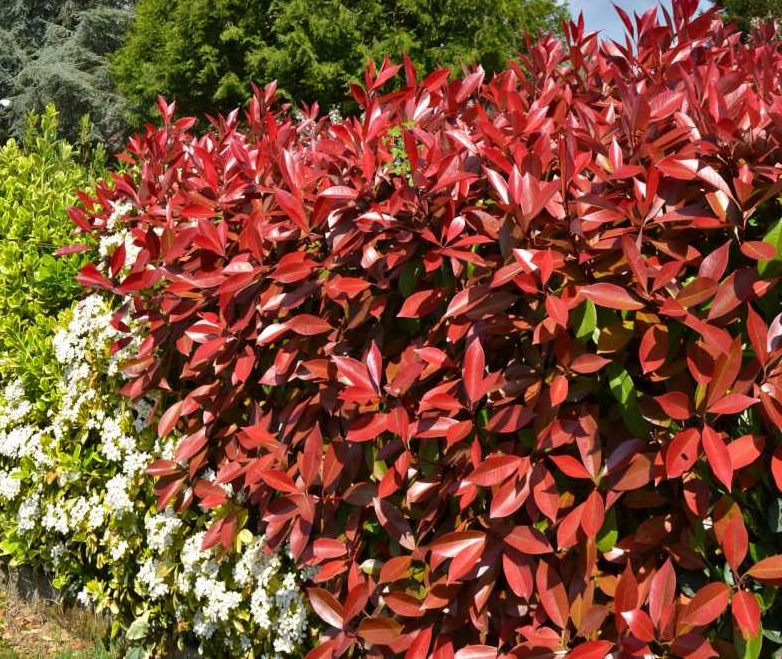
Contested Hedges

Contested borders are in the news every day. You can’t miss the claims and counter-claims between neighbouring countires—in our case, mainly China.

But it seems that disputes between neighbours on humble garden hedges are as serious. In the UK, disputes between neighbours on this issue have even resulted in deaths, with one Mr. Wilson of Lincolnshire, dying from gunshot wounds sustained during an argument over hedges, and a Mr. Reid dying of a heart attack after a heated dispute with his neighbour on the same subject. While not so drastic, many people have been levied stiff fines on the charge of trespass for cutting their neighbours’ encroaching hedges. In all, there were 1,00,000 hedge disputes in the UK prior in 2003.

Why do these disputes arise? A major reason is that the hedge blocks too much light to a neighbour’s house or garden; or that the hedge blocks a view. Or a neighbor’s overgrown hedge may encroach on your property. Also, branches or roots may cross into your property from a neighbor’s property or a public road.

This serious situation led to the passing of laws to manage the situation. In 2003, UK passed laws to manage disputes related to hedges. The UK Law essentially is about ‘high hedges’ defined as those over 2 meters in height. Transgressions of hedge-related law come under the definition of Anti-Social Behavior, since 2003!

The situation is understandable, given the extent of hedges in the UK. Laser scanning has shown that the UK has 390,000 km of hedges and hedgerows (1-6 metres tall) on field boundaries– enough to go round the world almost 10 times.

A step back. What is a hedge? A hedge is a line of shrubs (and occasionally trees), planted closely (3 feet or closer) which form a barrier or mark the boundary of an area, such as between neighbouring properties. Hedgerows on the other hand are hedges used to separate a road from adjoining fields, or one field from another, and which may incorporate larger trees. Apart from demarcating boundaries, hedges and hedgerows may serve as windbreaks to improve conditions for crops, as. A hedge is also called a “live fence”.

Under the UK Law, these disputes don’t go to court. Neighbours are encouraged to reach negotiated settlements. If this does not work, a written complaint may be given to the local Council, which will look into both sides of the argument and give a decision. Either the Council will reject the complaint, or they will give an order to cut the hedge to the mandated height. The cutting has to be done keeping in mind The Wildlife and Countryside Act 1981 which makes it an offence to destroy any bird’s nest that is either in use or being built!

Few other countries have such elaborate laws on the subject. However, some local authorities in the US do regulate the height or placement of hedges. For example, a resident of Palo Alto was arrested for allowing her xylosma hedge to grow too tall.

So go ahead. Do grow your Photinia, Duranta, Golden Cypress, Nerium, Hibiscus, Copper Leaf, Ixora, Tecoma, Vilayati Mehendi or whatever else takes your fancy. But make sure they don’t inconvenience your neighbours and get your behaviour labelled as anti-social—at least under the UK laws!

If everyone could plant hedges and learn to maintain them with discipline, maybe we will also learn to manage other boundary disputes without resorting to violence.  It could make for a world where boundary disputes become a thing of the past!

–Meena

Private Gardens for Public Pleasure

Last week, we delved into the making of the Butchart Garden in Victoria, Canada—a private garden which is completely open to the public. This is not common. For the most part, public gardens are public, and private gardens are private—open only to the enjoyment of the owners, their families and friends.

A public garden is defined by the American Public Gardens Association as: “An institution that maintains collections of plants for the purposes of public education and enjoyment, in addition to research, conservation, and higher learning. It must be open to the public and the garden’s resources and accommodations must be made to all visitors. Public gardens are staffed by professionals trained in their given areas of expertise and maintain active plant records systems.”

On the other hand, a private garden is ‘a type of Urban Green Spaces Areas in immediate vicinity of private (privately owned or rented) houses, cultivated mainly for ornamental purposes and/or non-commercial food production’ and is not usually open to the public.

While Jennie Butchart, creator of the Butchart Gardens was clear right from the start that she wanted as many people as possible to see and enjoy her gardens, not all owners have been so open. Or even if they wanted to, didn’t know how to go about it. But that would be such a loss, because some of these private gardens are spectacular.

And hence, the various initiatives in many parts of the world which try to make private gardens accessible to the public.

For instance, in the US, the Garden Conservancy organizes Open Day programmes. This institution is a nationwide community of gardeners and garden enthusiasts who teach and learn about gardens. Believing that there is no better way to improve as a gardener than by seeing and experiencing firsthand a wide range of gardens, they organize these Open Days, which since 1995, have seen ‘more than 1.4 million visitors into thousands of inspired private landscapes—from urban rooftops to organic farms, historic estates, to innovative suburban lots—in 41 states’. These events are curated and ticketed and open up some of America’s best private gardens to the public for a few days. The organization even brings out an annual publication—‘The Garden Conservancy’s Open Days Directory’ This is a yearly guide to hundreds of private gardens across the United States. The directory includes information on the gardens’ types, such as organic, scenic, or historic, and how and when they can be visited.

In the UK,  London Parks & Gardens organizes the Open Gardens London event every year, helping visitors enjoy hallowed private London gardens including roof gardens, city farms, allotments, spaces steeped in history, and much more. A ticket to the event gives visitors access to every garden on display across the whole weekend, with children under 12 allowed in for free!

Under the Open Gardens South Australia programme, garden owners generously open their gardens for a weekend. The NGO helps owners plan and promote their opening. Some of the ticket money is usually donated to a charity of the owner’s choice

In Ireland, the Gardens Open initiative of Garden.ie lists around 300 gardens open for visiting, some year-round, others by appointment.

Mughal Gadens

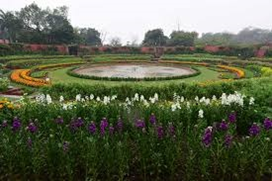
The Rashtrapati Bhavan gardens, previously known as the Mughal Gardens are not private. However, they are not open to the public all the time. Constructed by Sir Edwin Lutyens in 1917 in the traditional Persian Charbagh style the Gardens were renamed Amrit Udyan in 2023. The 12-acre beautifully cultivated gardens are open to visitors in Feb-March and Aug-Sept every year and a popular tourist spot in New Delhi.

India has some large public gardens, but no well-known large private gardens—certainly none open to the public. Maybe it is time for some people with the means and the green thumbs to create such green oasis in our crowded, polluted, frantic cities. That would be social responsibility indeed!

–Meena

A Quarry Blooms: Butchart Gardens

Victoria, the capital of British Columbia, Canada, is a place renowned for its tranquil beauty. And the crown jewel of Victoria is the Butchart Garden. Visited by about 1 million people every year, this 55-acre garden houses about 900 varieties of flowers  tended by 50 gardeners.

Two things are especially interesting about the Butchart.

The first, it is cultivated on the site of an abandoned quarry. Way back in the 19th century, the Butcharts were into cement production–Robert Butchart had started manufacturing Portland cement in 1888 in Ontario, Canada. As his business grew, he and his wife Jennie Butchart decided to move to the west coast of Canada because it had rich deposits of limestone—a critical input for cement production. They started quarrying limestone there, in the Saanich Penisula on Vicotria Island. Jennie trained as a chemist and worked in the company laboratory.

The couple also decided to build a house there, and in 1904, established their home near the quarry.

Jennie was always interested in gardening. In 1907 Isaburo Kishida, a Japenese garden designer from Yokohama, Japan, came to Victoria to build a tea garden at the Esquimalt Gorge Park. Following this, Japanese-style gardens became the rage in the area. Several prominent citizens, including Jennie Butchart, commissioned Kishida to build Japanese gardens in their estates.

This was the start of Jennie’s horticultural journey. In 1909, the limestone quarry was exhausted. Jennie was devastated to see the degradation and destruction left behind. She set about turning it into what came to be known as the Sunken Garden.  She transported tonnes of topsoil by horse-carts and is said to have personally tucked ivy into any hole or crevice in the rock and the grim quarry walls, suspended in a boson’s chair. It was a long process to get the ravaged quarry to bloom, but the garden was ready in 1921. So rather than a wound on the face of the earth which the abandoned quarry might have been, thanks to the relentless efforts of one woman, the site houses a world-famous garden.

After this highly successful reclamation project, Jennie’s ambitions grew and in 1926, she converted their tennis courts into an Italian garden. In 1929, the kitchen garden gave way to a rose garden. 

The reclamation is one part of the story.

The other interesting aspect of the Butchart Gardens are that they family-owned but perfectly accessible to the public.

The gardens came up on land owned by Robert and Jennie. And since then, have passed from generation to generation. The couple gifted the gardens to their grandson Ian Ross on his 21st birthday. He took the mission passionately forward, transforming the garden into an internationally-recognized landmark. Over the course of five decades, Ross not only enhanced the horticultural aspects, but added several performance features, like outdoor symphony concerts, a variety stage show, and in 1987 introduced a Magic of Christmas display.

When Ross died in 1997, his son Christopher took over, expanding the gardens and staff. The weekly fireworks, for which the Gardens are famous even today, were started by him.

After Christopher’s passing in 2000, Christopher’s sister Robin-Lee has been managing the legacy. Barnabas Butchart Clarke, the only child of Robin-Lee and David Clarke, and great-great-grandson of the founders, is next in line.

While the Butchart Gardens continue to be family-owned, they have been a designated a National Historic Site of Canada since 2004.

That the legacy has stood the test of time for almost 130 years is testimony to the fact that Jennie was a woman out of the ordinary. She cared more for her gardens and flowers than fashion, and was usually to be found dressed in overalls and a straw hat. She wanted people to see and enjoy the gardens, and even though there were thousands of visitors even in her lifetime, she was against charging.

The Butchart Gardens have always been at the forefront of taking up environmental causes. Even currently, their site features a campaign against improper disposal of biosolids (nutrient-rich, organic material that are produced as a result of wastewater treatment). They also support NGOs in their area through in-kind donations.

A legacy beyond flowers indeed!

–Meena

Celebrating Tree-shapers: World Topiary Day

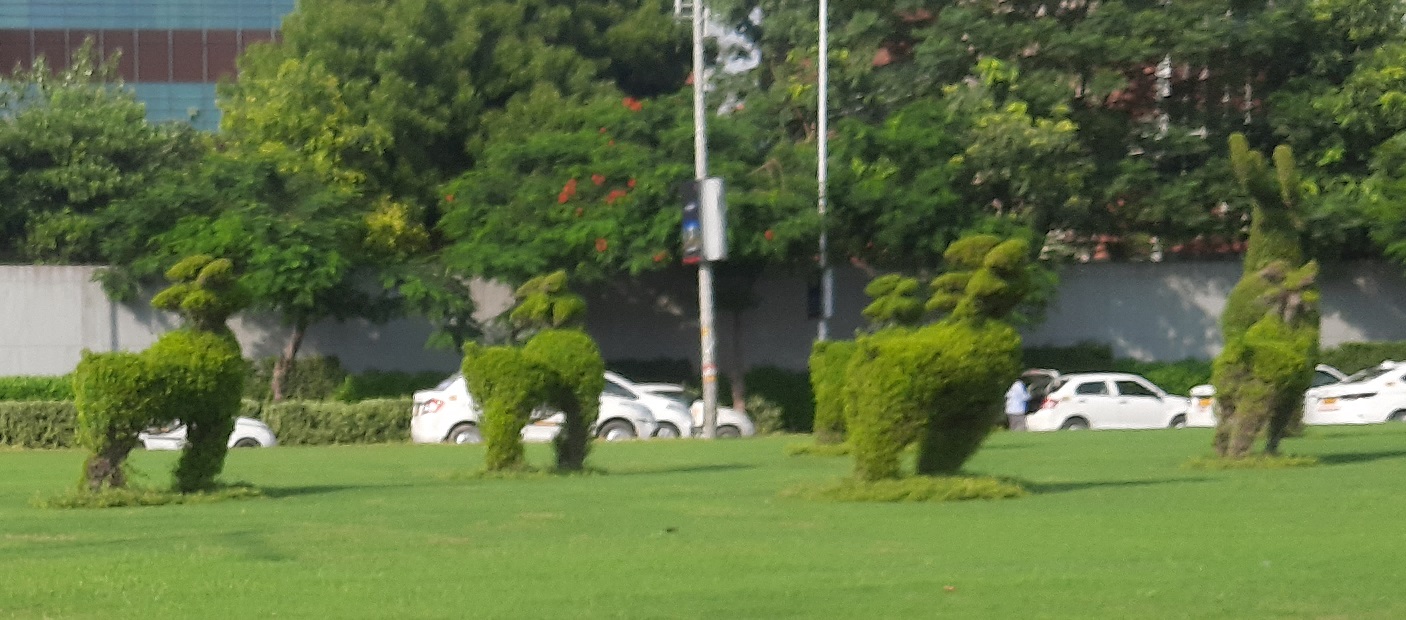
Have you seen deer walking across a traffic island in the middle of a crowded urban space? Or perhaps elephants in your city garden? Well, that is topiary.

Topiary, as per the Britannica, is ‘the training of living trees and shrubs into artificial, decorative shapes’. It is an ancient art, going back to the time of the Romans. In fact, Gaius Matius Calvinus, a contemporary of Julius Caesar is supposed to have been one of the first practitioners, and Caesar is said to have popularized it all over the Roman Empire.

There are three fundamental types of topiary:

  • Shrub topiary which consists of shrubs which are designed and shaped in various shapes and sizes. Very experienced gardeners do the cutting freehand, while others use frames.
  • Vine topiary, wherein vines and climbers are encouraged and shaped to grow in various topiary forms
  • Moss topiary where a frame is filled with wet moss and the chosen plant, and grown in the desired shape.

Whatever the type of topiary, it is an endeavour which requires ongoing work, care, patience and expertise

The fortunes of topiary have waxed and waned. After a long lull, the Italian Renaissance, which saw the flowering of many arts, also saw the revival of topiary. It became the rage in Italy, France (including in the Versailles), and with the Dutch and English.  The British took to it with passion, and it was found not only in the homes of the rich and the famous, but also in the modest gardens of peasants and tradesmen. Imagination was the only limit, with ships, fantastical beasts and human figures, all roaming the lawns.

Till topiary went overboard. And it was the mighty pen which defeated the scissors. Alexander Pope wrote a satirical essay “Verdant Sculpture” criticizing over-the-top topiary, and as a result, by the 1720s and ‘30s, topiary fell out of favour and was cleared from most prominent English gardens. The Levens Hall Garden was one of the few which escaped, and is today the oldest topiary gardens, with 30,000 bedding plants carved in a variety of shapes.

Till topiary was again revived in the 1840s. Not at the same scale, but it became moderately popular.

In its own unique forms, topiary has been quite popular in Asia too. China and Japan have practiced it for many centuries, with the objective of helping the trees achieve their “natural” form. Even the popular bonsai is a form of topiary.  Japanese Zen Gardens make extensive use of different topiary techniques.

Topiary
Topiary at Delhi Airport

In 2021, a new event, World Topiary Day, was created by the owners of one of the world’s oldest topiary gardens, the Levens Hall and Gardens in Cumbria, UK, which dates from 1694. World Topiary Day marked on May 12th every year, celebrates ‘… the fantastic art of topiary (shaping and cutting particular types of tree into geometric shapes and forms that resemble common objects and people) and its heritage within the world of gardening’, and seeks to inspire ‘…keen gardeners and lovers of al fresco living to adopt topiary’s style and structure within their own private gardens.’

A new award for topiary has also been announced as recently as this year and the ‘…search is on for Britain’s best topiary artists thanks to the inaugural Topiary Awards, which are now open for entries until May 31.’

In India too, many gardens and public spaces have examples of topiary. But sadly, after the initial enthusiasm, they are not maintained well, and therefore go out of shape. 

India is however home to the tallest topiary as per the Guinness Book of Records. This is the Samban-Lei-Sekpil in Manipur, started in 1983, which has now reached 18.6 m (61 ft) in height. The plant used is Duranta erecta, a shrub common in Manipuri gardens. It is shaped into a tiered structure called ‘sekpil’ that honours Umang Lei, the forest god.

Here is to tree-shapers, tree-barbers, tree-architects and their tribe, for adding green landmarks and a touch of whimsy to our lives.

–Meena

On Orchids

For most of us:

Orchids = Rare

Orchids = Exotic

Orchids = Beautiful.

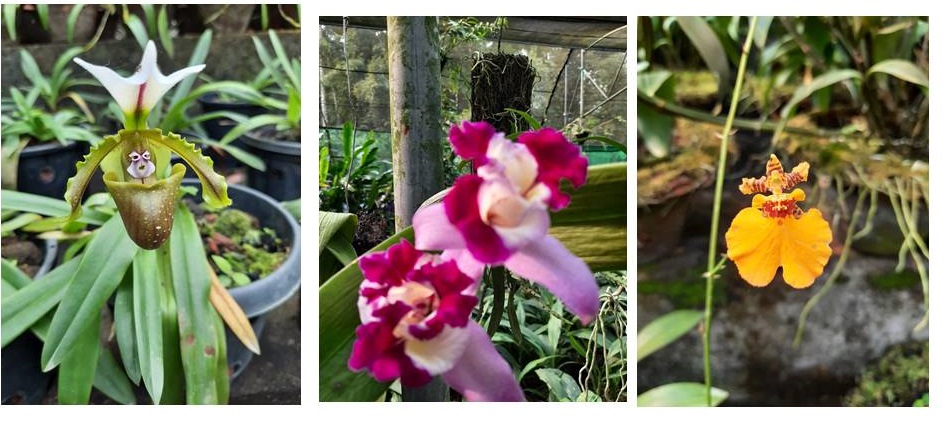
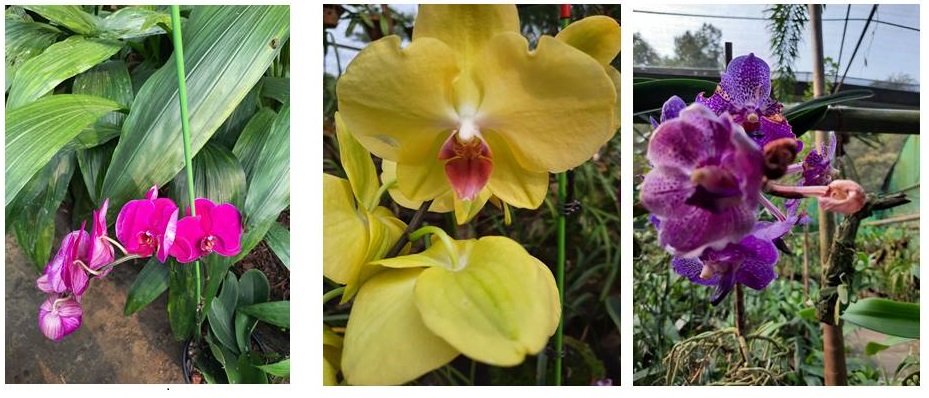
I recently went to Meghalaya where I visited an orchid park. And of course the variety and beauty of the orchids we saw were amazing. But when I tried to figure out a little bit more about these flowers, I found all the three equations mentioned above, which have been firmly planted in my mind for decades, to be false!

Orchids in fact belong to one of the top two most-common families of flowering plants on earth! This is the family Orchidaceae which comprises about 750 genera and close to 28,000 species!  So orchids are not rare!

Orchids

The dictionary meaning of ‘exotic’ is ‘origination in or characteristic of a distant foreign country’. Actually, with their wide distribution, orchids may be among the least exotic flowers. Orchids grow on every continent except Antarctica. At least four species have been reported from north of the Arctic Circle. So orchids are not exotic in most parts of the world! 

And while most orchids are beautiful, there are some which are warty, bumpy, hairy and unbeautiful. In fact, the latest orchid to be discovered—the gastrodia agnicellus–from a forest in Madagascar, has been dubbed “the ugliest orchid in the world” by the Royal Botanical Gardens, Kew in the United Kingdom. It has been likened to a soul-sucking eyeless worm. While I am not very comfortable to have anything castigated so severely on the basis of looks, I have to admit after looking at pics of this flower, orchids are not always equal to beautiful!

Ok, easy enough to demolish myths. Now time to look at some facts.

To begin with, what are orchids? Orchids come in different sizes, different shapes, grow in different parts of the world. But the one characteristic which unites them, as well as differentiates them form other flowering plants, is the fusion of the male portion of the flower (stamen) with the  female portion (pistil), into one structure called the column—often visible protruding from the center. Orchids have three sepals and three petals, which all appear to be part of the flower. The middle petal is modified and is usually brightly coloured and exudes a scent.  

Orchids are among the oldest flowering plants known. A few years ago, Harvard University scientists discovered a fossilized bee carrying orchid pollen which dates back at least 15 million years. However, scientists speculate that orchids have been around much longer than that, maybe as much as 100 million years.

Orchids

Orchids have the tiniest seeds in the world. A single seedpod can have up to 3 million seeds in it.  The seeds are so small they can only be seen under a microscope. The plants take about 5-7 years to bloom once germinated, and can live up to a hundred years.

Incidentally, the vanilla bean comes from a species of orchid.  It is the only orchid which is commercially grown and harvested, not for its flowers but its beans!

India has a vast orchid diversity—a total of 1256 species have been recorded, out of which 307 are endemic to the country. But our orchids are under pressure. This pressure mainly comes from illegal harvesting and exploitation for trade. Orchids are illicitly collected from the wild and traded as ornamental plants.

So yes, do get orchids for your home-garden. They will surely add a touch of colour and beauty (unless of course you choose the gastrodia agnicellus!). But make sure they are sourced ethically. For many of them are indeed under threat.

–Meena

The Versatile Shoe Flower

Within urban myths (defined by the Collins Dictionary as ‘a story, esp one with a shocking or amusing ending, related as having actually happened, usually to someone vaguely connected with the teller’), there should be a special category for ‘school myths and beliefs’  which could be defined as ‘stories and other things believed by a generation or generations of school children’.

One such myth subscribed to fervently by our generation was that if pencil shavings were soaked in milk, left in the moonlight, and some incantations recited over them, they would turn into erasers. Hundreds of children tried this, but since the incantations were not known to anyone in our circles, we attributed our failures to the lack of this knowledge.

The other widely held belief was that we could polish our leather shoes to wonderous lustre with the shoe flower or hibiscus. This was a very convenient belief to hold, as we thus avoided putting in 10 minutes hard work a day with brush and polish, and getting all messy. On the way to school, we would grab some red hibiscus flowers which were ubiquitous, and just before assembly, surreptitiously give our shoes a wipe-around. When the shoes were still kind of wet with the juice from the flowers, they looked ok, but I was never sure if they actually did anything.

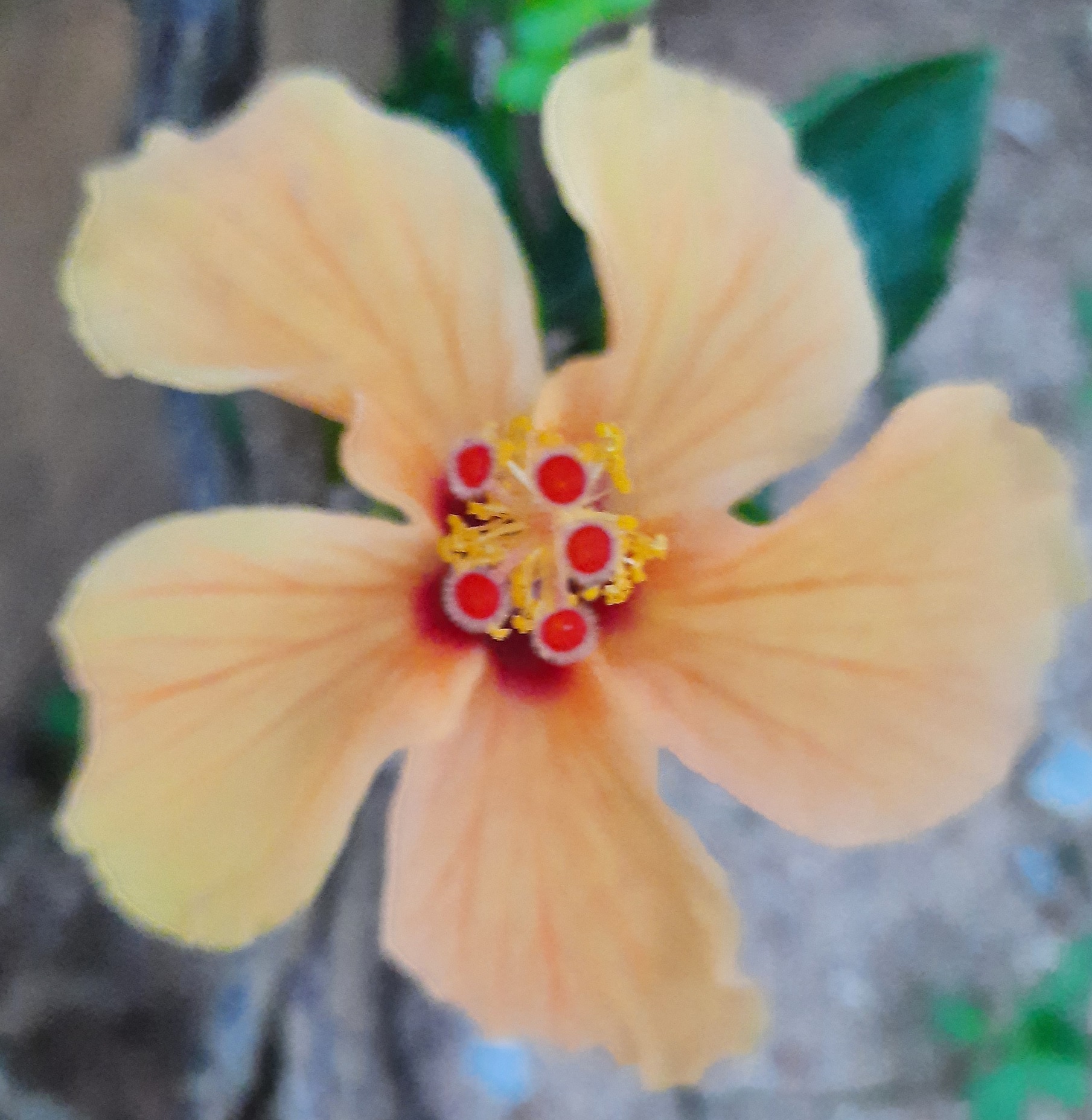
Hibiscus

But unlike other urban myths, maybe this one has some basis in fact. The hibiscus is called shoe flower because in Malaysia and Indonesia, the flower petals were used to produce a black dye for shoe polishing.

Hibiscus belongs to the genus Malvaceae of the mallow family. There are many hundred species, and the genus is native to warm temperate, subtropical and tropical  regions throughout the world. 

In fact, the hibiscus is an extremely versatile flower. It is used extensively in pujas, and having a bush in the garden assures the devout that they will have flowers throughout the year.

And then of course, its use as a hair tonic. Remember the jabakusum hair oil? The jabakusum or javakusum in fact is a name for hibiscus. It was C.K. Sen, a vaidya from a family of Ayurvedic practitioners, who took this oil commercial. He formed a company C.K.Sen & Co Ltd in 1878, with Jabakusum Taila as the first product. It became an instant hit. Its inherent qualities were assisted by smart marketing—it was positioned as ‘The Royal Toilette’ and ‘By the appointment to the Princess of India’ (no one seems to have asked who that would be!). It was the first hair oil brand in Asia to have a commercial film ad.

Even today, some people dry the flowers and steep them in coconut oil and use it for their hair. The leaves and flowers are also used as the base of hair packs and shampoos.

The humble hibiscus has several medicinal uses as well—it is a laxative as well as a diuretic. It is used to treat colds, fluid retention, stomach irritation and a number of other ailments.  There are claims that it may help to reduce high blood pressure and cholesterol.  Hibiscus tea, made by steeping the flowers in hot water for five minutes is a popular drink and home remedy.

In the Philippines, children use the flower to make bubbles. The flowers and leaves are crushed until the sticky juices come out. Hollow sticks or straws are dipped into this and bubbles are blown. 

The hibiscus flower is worn by girls in Tahiti and Hawaii. Traditionally, if the flower is worn behind the left ear, the woman is in a committed relationship. If the flower is worn on the right, she is single.

The hibiscus is a national symbol of Haiti, and the national flower of many countries including the Solomon Islands and Niue, South Korea, Malaysia and Hawaii.

With all this, we seem to tend to take the hibiscus for granted just because it is so common and easy to grow. I never knew of a hibiscus which did not take wherever it was planted. Even a ten-thumbs like me can plant and see a hibiscus bush flower.

Hibiscus come in various colours, with red, pink, white, yellow, orange, multicoloured ones being most common. There are even purple hibiscus. In many cases, the colour of the flowers of a hibiscus bush will change with changes in temperature, hours of daylight etc. For instance, the hotter it gets, the brighter the orange and yellow flowers bloom.

There is something special in the bush outside your house. Marvel at it!

–Meena

Indicator Tea

Those who have gone through high school science will remember lab-experiments involving indicators. Adding a drop of phenolphthalein and noting that critical point at which the colourless liquid in the flask turned a bright pink. Or when the litmus paper turned red or blue. Remember how critical it was for our grades to observe these colour changes correctly? As a B.Sc Chemistry student, indicators played a pretty large part in my life!

Those colour changes are what my experiences with butterfly-pea tea took me back to. This tea has been much in vogue for some time now. But keeping in character, I am of course about two years behind the trend.

This in spite of having the creeper literally at my doorstep. Planted there to supply flowers for my mother’s puja– the shankpushpi flower is specially a favorite of Lord Shiva–it has proven itself a hardy survivor of my spurts of inept gardening. It grows and flowers and flourishes. The indigo-blue flowers are equally beautiful on the plant and in the puja.

Clitoria ternatea commonly known as Asian pigeonwings, bluebellvine, blue pea, butterfly pea or  Darwin pea, is known for its blue flowers, though there is a less common white variant. In India, it is called shankpusham, girikarnika or aprajita.

Here it is used mainly for worship and to some extent in Ayurveda, mainly for de-stressing, and to boost memory and brain function.

The use in Southeast Asia is more varied. It is an integral part of many Thai, Malaysian and Burmese recipes as an ingredient and as a colouring agent, and is very widely used in Chinese medicines.

Which brings me to the visually-stunning butterfly-pea tea, which is a wildly popular drink in those countries (and now the world). Made by steeping a handful of flowers (fresh or dry) in hot water, the resulting tea is a lovely blue. Squeeze a lemon into it, and it turns pink or even violet—taking you right back to your school lab! It is basically the same phenomenon—a change in pH resulting in a change in colour.

Research on the use of Butterfly Pea in managing Alzheimer’s has been ongoing for some time now. The latest is a research study from National Centre for Biological Sciences, India, published in Journal of Medicinal Chemistry, which takes forward the hypothesis that extracts from this plant ‘can help in neuroprotection and prevent progressions that cause the ailment’.

So go ahead and plant a shankpushi in your garden or a pot—only making sure that it gets enough sun. It is not at all difficult to grow—my creeper sheds seeds all around, and each week, I find tens of little plants wanting to curl around the nearest support and climb. It will do well in most soils, even enriching them, as it is leguminous and will fix nitrogen. Apart from watering it once in a while, you don’t need to do much.

And in return, it will add beauty to your garden, adorn your puja room, help you make conversation-piece teas, salad additions and coloured rice. And hopefully also boost your brain-power. A winning proposition all around!

–Meena

Anarkali At My Window

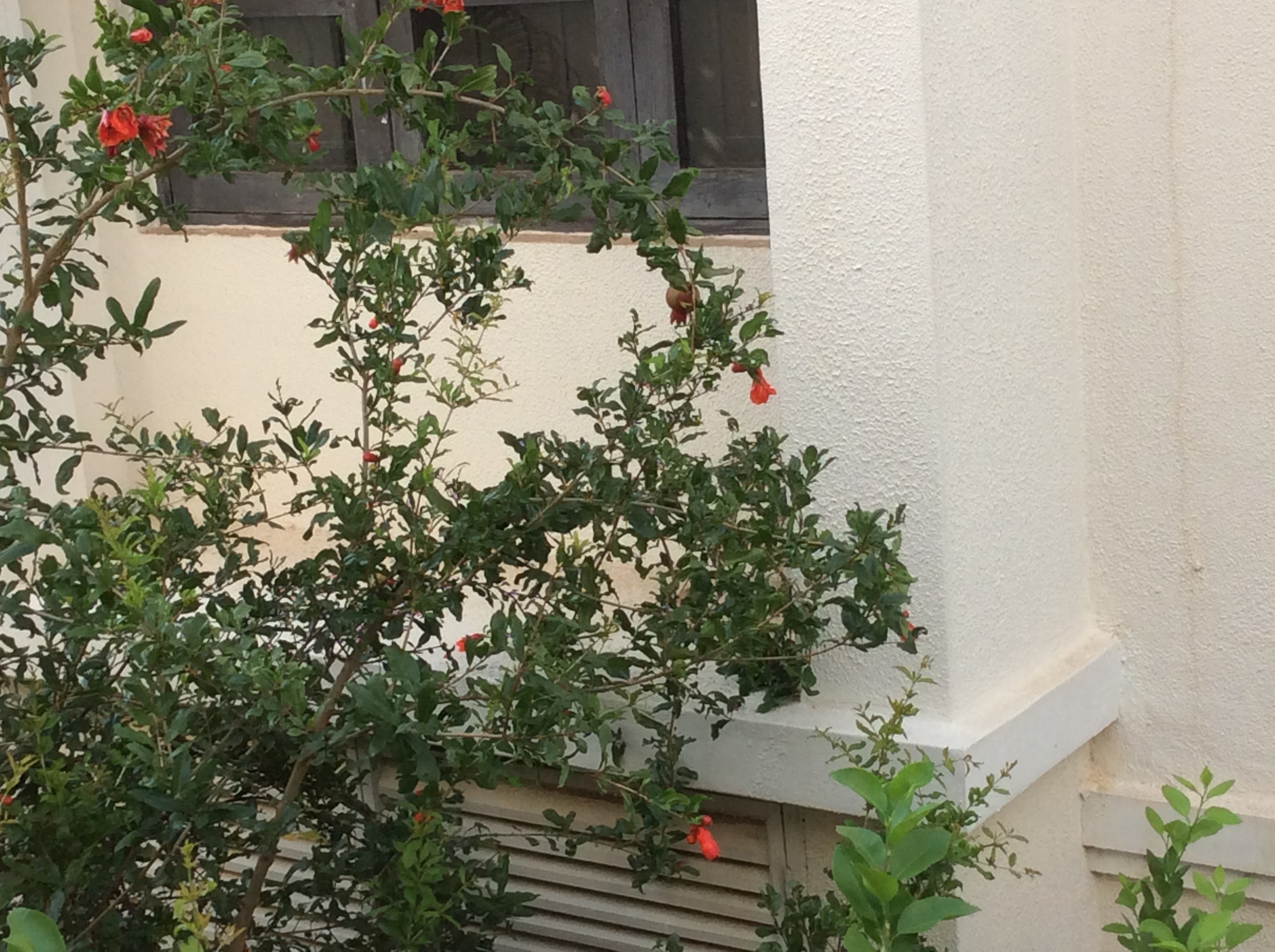
BFCA646E-31A4-47A9-AB75-B961DD704B3ELockdown has certainly make us more observant and has given us new ways of looking at things. There is a pomegranate tree whose top I can see from my window—and considering I spend eight or nine hours working in that room, it is very central to my vision! It is currently flowering, abuzz with bees, and fruits have started forming.

I have always wondered why Anarkali*, the beauty who stole the to-be Emperor Jahangir’s heart and brought him to loggerheads with his father Emperor Akbar, was called so. Was the flower so beautiful that our most famous beauty was named for it? I never did think so.

Well, my recent close encounters with the tree and flowers have given me a greater appreciation of the beauty of the flower. Bright waxy orange blossoms which stand out against the green of the leaves, and a nice shape. And bees drawn to them by the dozens, as maybe men, young and old, were drawn to Anarkali (one version is that she was part of Akbar’s harem, and that rivalry between father and son for her favours was at the heart of the dispute).

But maybe more than just the beauty of the flowers, it is the associations that the ancient fruit has, that makes the pomegranate so much part of the imagination. It is one of the few fruits which is mentioned in the texts of many religions.

Starting from ancient Greek mythology–in the story of Persephone’s abduction by Hades, lord of the underworld, the pomegranate represents life, regeneration, and the permanence of marriage.The story is that one day while out gathering flowers, Persephone was kidnapped by Hades and taken down to his kingdom. By eating a few pomegranate seeds, Persephone tied herself to Hades.

Pomegranate is mentioned in the Vedas and is an important part of Ayurveda. It is a symbol of fertility and abundance, and one of the nine fruits offered to Goddess Durga.

In Buddhism too, it is significant. The Buddha received many valuable gifts from wealthy disciples. But it is said that a poor old woman’s gift of a small pomegranate was the one that delighted him most. It is also said that he once offered a pomegranate to the demon Hariti, which cured her of her alarming habit of eating children.

It finds a place in Zoroastrianism too. In Persian mythology, Isfandiyar eats a pomegranate and becomes invincible.

In Islam, the fruit is considered a symbol of harvests, wealth, and wellness. Legend has it that each pomegranate contains one seed that has come down from paradise. Along with olive, dates and figs, it is one of the four sacred fruits in Islam.

In Judaism, it is believed that each pomegranate has 613 seeds—one for each of the Bible’s Commandments. The Song of Solomon compares the veiled cheeks of a bride to the two halves of a pomegranate.

1A6133BD-4C41-49AA-BA38-4EED5DB8E6ADThe pomegranate is a symbol of resurrection and life everlasting in Christian art, and the pomegranate is often found in devotional statues and paintings of the Virgin and Child, as in Bottecelli’s ‘Madonna of the Pomegranate’ shown here.
I shall delight in the beauty of the pomegranate flowers for now. I shall try to get a few fruits before the parakeets get them all. And I shall let thoughts of all the health and prosperity they will bring me help me through the Lockdown!

–Meena

*Anar= Pomegranate. Kali= Flower


When is a Flower not a Flower?

When it is a bougainvillea!

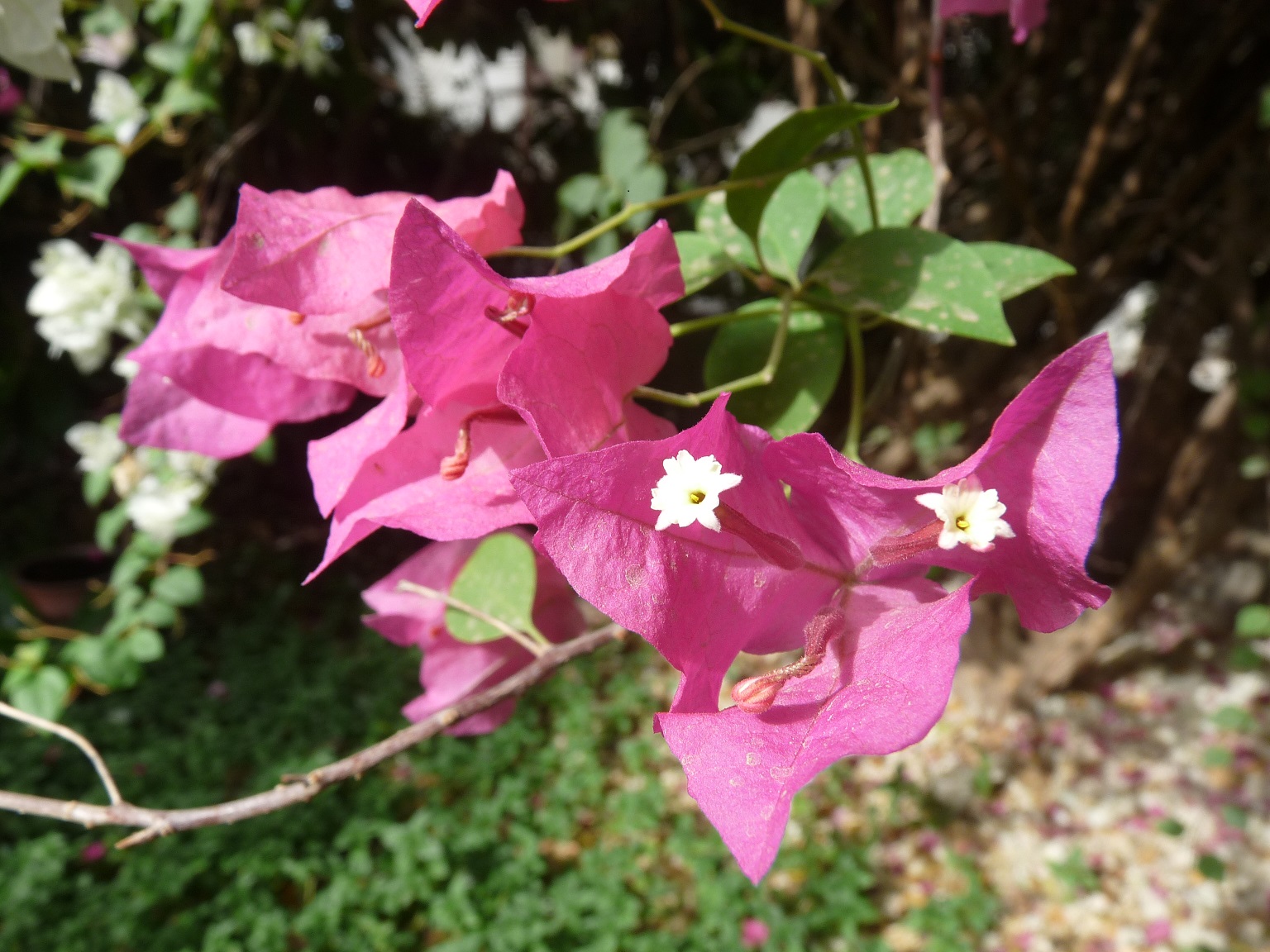
Yes, I learnt pretty late in life that what I thought were the petals, are actually bracts! And what pray are bracts? Well, seems bracts are modified leaves! They grow above all other leaves, but below the petals. And no, bracts are not to be confused with sepals, which are the green, leaf-like things which cover the petals when the flower is still in bud stage!

Confused? Well I was. But when I looked more closely at the bougainvillea, I got it. Look closely and you will see small white flowers at the centre of what you would a minute ago have called a pink flower. (There are three such small flowers within each set of bracts, though you cant quite see them in the pic.)

bougainvillae flower

Bracts are often brightly coloured and have evolved to attract flowers. Our friend the bougainvillea is a great example of this, with bracts of magenta, pink, yellow, white, orange and every other colour! Another flower that is not a flower you think, is the poinsettia. The bright coloured petals are bracts. In grasses, each floret is covered by two bracts, and each group of florets has another pair of bracts at its base! The dried bracts are the chaff we remove from the grain!

A seemingly simple cheerful plant, which happily blooms for us on road-medians, along compound walls, in gardens. Fairly easy to grow as long as it gets enough sun and we take care not to over-water. But I have found three levels of complexity:

  1. The spelling. I just cannot get it right without the spellcheck! Yes, I know it is named after a person. But please can we do something about it?
  2. This bract-petal confusion.
  3. The woman who discovered it, while disguised as a man and who never got the credit (see our post ‘Colour and Cheer’, 15 Nov, 2018).

Simple is the new Complex! Or do I mean Complex is the new Simple?

–Meena