Walking Stick: Symbol of Status, Symbol of Renunciation

The walking stick may be one of the most ancient tools ever invented (or should we say ‘discovered’??!!). I can imagine my ancient-ancestress in Africa, 300,000 years ago, stopping to cut a branch and smoothen it, to help her trek and clamber over hills and rocks.

Walking sticks obviously began as mobility aids, in that they help with balance and mobility issues; reduce the risk of falling; help those recovering from injuries and those who experience pain in their hips or knees. But of course, they were also used for self-defence. Having a two-in-one is always great–my ancient grandmother would have used hers to shoo away wolves or hyenas.

What began as a very functional item would soon have become a thing of beauty and pride– my ancestress-grandmother may have spent the evenings chipping at her stick and carving wonderful designs on it.

Down the ages, these sticks became a symbol of power, authority and status. Ancient images show kings, religious leaders and authority figures holding them.

But walking sticks really came into their own in the 17th and 18th centuries, when they became an essential part of the wardrobe of fashionable men in Europe. The cult is thought to have started with Louis XIV. This royal king was conscious of his height—he was 5’4”, and so used heels (red and high). And to help him balance, he used a walking stick. Heels and walking sticks became the rage in the French court, and then spread to the rest of Europe and to England. They became prized possessions  and an oft-exchanged gift between kings and courts.

And of course, befitting the importance given to these objects, they began to be made of precious material and extravagantly decorated. The knobs or handles were carved individually, made of gold, silver, ivory, tortoise shell, or painted porcelain, and studded with precious stones or inlaid with mother of pearl. Shapes ranged from lions to dogs to rams to fantastical creatures. Louis XIV had a stick whose eagle knob was set with twenty-four diamonds!

And no one who could afford it was content to have just one.   Voltaire, the French philosopher-writer owned eighty sticks, though he considered himself a man who did not follow fashion.  Count Brühl of Dresden, owned three hundred canes to match his three hundred suits, and had a snuff-box to match each cane! Queen Victoria had a room full of canes, gifted to her from across the world, though she used only one–one of great historic value which had been presented to King Charles II. The head was made of “An idol which graced the temple of an ill-fated Indian prince… an exquisitely wrought affair in ivory… The eyes and forehead are jewelled and on the tongue is the rarest of rubies.”
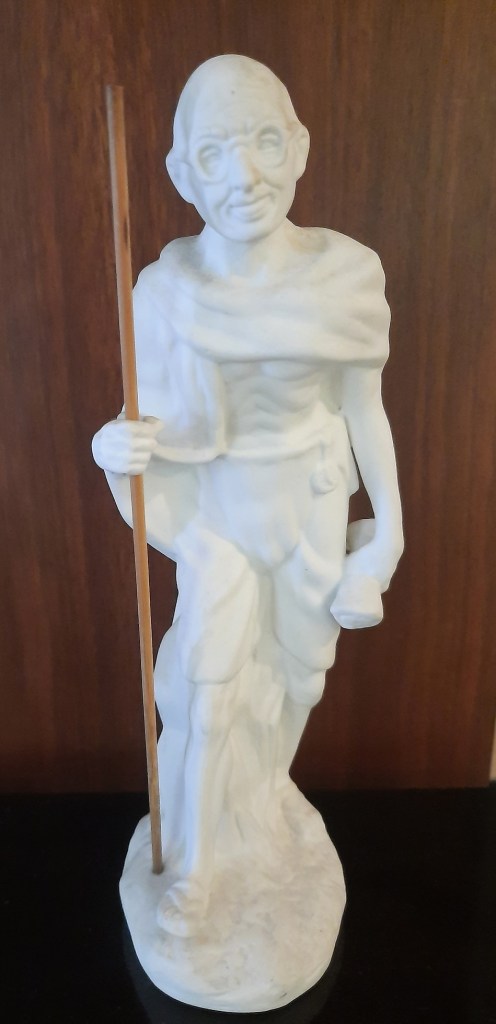
But if walking sticks were a symbol of worldly power, they were also the symbol of spirituality. They were among the few possessions of monks–Hindu, Jain and Buddhist.  A staff is part of our image of Swami Vivekananda. And of course Gandhiji! It was with the help of his lathi that Gandhi strode across the country, and walked 241 miles in 24 days to protest the British monopoly on salt in India.

There is a very interesting story about Gandhiji and his lathi. In the 1920s and 30s, Ghorghat village in Bihar made and supplied lathis all across north India, and these were essentially used by the British forces on protesting unarmed Indians. When Gandhiji visited Ghorghat in 1934, the villagers wanted to gift him a lathi. He agreed but put a condition—that they would not sell them to the British anymore. It is a symbol of those times and of Gandhiji’s influence that the villagers readily agreed to give up a means of their livelihood. Gandhi accepted their gift. Ever since, the village celebrates ‘lathi mahotsav’ to commemorate the gifting of a lathi to the Mahatma.

Walking sticks started losing their image as a fashion-accessory around the middle of the last century, but great are the advancements of walking sticks as mobility aids. So now it is about function and not art!

Well, we, especially men, may have lost a fashion accessory. But with better and more functional walking sticks on the market, senior-life is surely better!

–Meena
Wise Words on Democracy

Election fever is well upon us. Not just us in India. An estimated third of the world goes to the polls this year.

A good time to pause and reflect on what people who have contributed so much to the shaping of our nation have said about democracy?

The first section is devoted to quotes taken from the discussions in the Constituent Assembly of India in 1949. The later section reflects Gandhiji’s thoughts on the subject.

‘What is democracy? I define it, in one word. Democracy is accommodation. Any person who does not understand this small definition of democracy, cannot be a democrat at all. ‘(Shri R. V. Dhulekar)

‘If we are going to have a democratic form of Government we should have as real democracy as possible by giving as much power to as small a unit as practicable so that the individuals composing the unit may have easy and ready remedy ..’. ( Shri B. P. Jhunjhunwal)

‘..the strength of democracy lies in the character of the people and their representatives.’ (Shri B. M. Gupte)

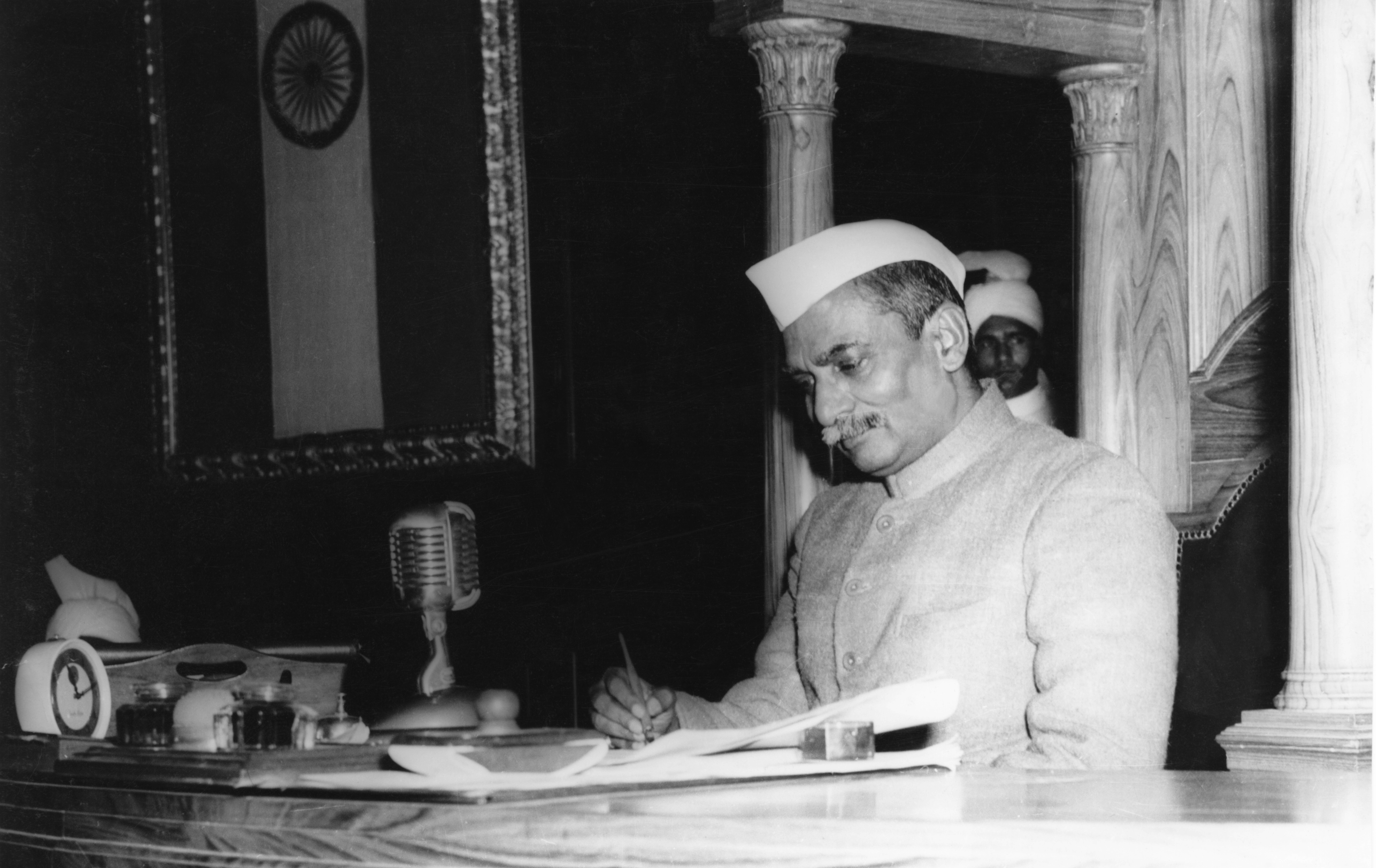
Constitution of India
Dr. Rajendra Prasad, President of the Constituent Assembly, signing the Constitution of India.

‘The essence of democracy is not so much the existence of what are called political parties, etc., but the essence of democracy is the effective participation of the individual in the actual government of the country. The greater and more effective the participation of the individual in the government, the greater is the democracy, because democracy is still only an ideal which has yet to be reached by humanity.’ (TJM Wilson)

‘..Gandhiji  said that true democracy rose not from the top but from the bottom. Power and authority should not be centered at the top but should be distributed among the people at the base of society. Then alone can true democracy be established and then alone can people enjoy freedom.’ (Shri Kamlapati Tiwari)

‘We must observe the caution which John Stuart Mill has given to all who are interested in the maintenance of democracy, namely, not “to lay their liberties at the feet of even a great man, or to trust him with powers which enable him to subvert their institutions“. There is nothing wrong in being grateful to great men who have rendered life-long services to the country. But there are limits to gratefulness. As has been well said by the Irish Patriot Daniel O’Connel.. no nation can be grateful at the cost of its liberty. This caution is far more necessary in the case of India than in the case of any other country. For in India, Bhakti or what may be called the path of devotion or hero-worship, plays a part in its politics unequalled in magnitude by the part it plays in the politics of any other country in the world. Bhakti in religion may be a road to the salvation of the soul. But in politics, Bhakti or hero-worship is a sure road to degradation and to eventual dictatorship. (BR Ambedkar)

‘We must not to be content with mere political democracy. We must make our political democracy a social democracy as well. Political democracy cannot last unless there lies at the base of it social democracy. What does social democracy mean? It means a way of life which recognizes liberty, equality and fraternity as the principles of life.’  (BR Ambedkar)

From: Discussion in the Constituent Assembly of India. 1949.

Gandhiji on Democracy

‘I understand democracy as something that gives the weak the same chance as the strong.’

Democarcy is ‘..”the art and science of mobilizing the entire physical, economic and spiritual resources of all….in the service of the common good of all”

‘There is no human institution but has its dangers. The greater the institution the greater the chances of abuse.  Democracy is a great institution and therefore it is liable to be greatly abused. The remedy, therefore, is not avoidance of democracy but reduction of possibility of abuse to a minimum.’

‘..if individual liberty goes, then surely all is lost, for, if the individual ceases to count, what is left of society? Individual freedom also can make a man voluntarily surrender himself completely to the service of society. If it is wrested from him, he becomes automation and society is ruined. No society can possibly be built on denial of individual freedom.’ ‘In the democracy which I have envisaged, a democracy established by nonviolence, there will be equal freedom for all. Everybody will be his own master.’

Profound perspectives indeed, and we would do well to reflect on them, and to think about the fundamentals of democracy, which are:
1) Respect for basic human rights,
2) A multi-party political system paired with political tolerance,
3) A democratic voting system,
4) Respect for the rule of law,
5) Democratic governance, and
6) Citizen participation

Democracy is much more than election day and inking the finger!

–Meena

Pic: http://www.nbpgr.ernet.in

Gandhi and the Environment: A Tribute for World Environment Day

Mrs. Indira Gandhi was the only Head of State at the United Nations Conference on the Human Environment held at Stockholm in 1972, apart from the host Prime Minister Olaf Palme, who was the host. The speech she gave at the Conference, linking human development, poverty and peace to environmental conservation is definitely one of the first steps towards the articulation of sustainable development. i.e., ‘meeting the needs of present generations without compromising the ability of future generations to meet their own needs’.

But long before this Gandhi, there was another Gandhi who was calling the world’s attention to these issues. Who else but Mahatma Gandhi!

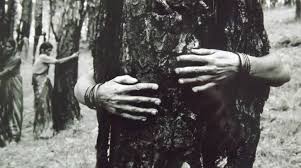
chipko
Hug the Trees!

Gandhiji may not have articulated his thoughts on the environment in terms that we use today. But his whole philosophy was deeply rooted in concepts of what we now call sustainability: taking only what one needs from the environment, simplifying wants, equity, non-violence towards all life forms, and a caution against mindless pursuit of ‘development’. Many environmental movements like Chipko or Narmada Bachao Andolan are in fact inspired by Gandhiji.

On the occasion of Stockholm+50 and WED, here are some quotations from the Mahatma, which mark him as a very early spokesperson for environment and sustainable development.

‘I suggest that we are thieves in a way. If I take anything that I do not need for my immediate use, and keep it, I thieve it from someone else. I venture to suggest that it is the fundamental law of Nature, without exception, that Nature produces enough for our wants from day-to-day, and if only everybody took enough for himself and nothing more, there would be no pauperism in the world, there would be no man dying of starvation in the world.’

Speech on ‘Ashram Vows’ at YMCA, Madras. 16 Feb, 1916. CWMG Vol 13, 230-231.

‘Earth provides enough to satisfy every man’s need, but not every man’s greed.’

Quotation popularized by Gandhi.

‘We cannot have ecological movement unless the principle of non-violence becomes central to the ethics of human nature.’

Mohan-mala. A Gandhian Rosary. Ahmedabad. Navajivan Publishing House. 1997. 93-94.

‘God forbid that India should ever take to industrialization after the manner of the West. The economic imperialism of a single island kingdom (England) is today keeping the world in chains. If an entire nation of 300 million took to similar economic exploitation, it would strip the world bare like locusts.’

Young India. 12 Dec 1928. CWMG Vol. 38. 243.

If it is man’s privilege to be independent, it is equally his duty to be inter-dependent.

http://www.selfimprovementpath.com.mahatmagandhi.

‘In the modern rush, the chief use we have for our rivers is to empty our gutters in them and navigate our cargo vessels, and in the process make them dirtier still.’

Young India, 23 December, 1926.

‘Civilization, in the real sense of the term, consists not in the multiplication, but in the deliberate and voluntary reduction of wants.’

Yeravada Mandir. Navjivan Publishing House, Ahmedabad.  

‘We cannot have ecological movement unless the principle of non-violences becomes central to the ethics of human nature.’

Mohan-mala. A Gandhian Rosary. Navjivan Publishing House.

–Meena

Credit: Centre for Environment Education put together a collection of Gandhiji’s thoughts to mark the 10th anniversary of the Earth Charter, in a publication called ‘Earth Charter & Gandhi: Towards a Sustainable World.’ Compiled by Karikeya Sarabhai, Meena Raghunathan, Amishal Modi. These quotations are taken from there.

The Timeless Wisdom of Gandhi

This week, up until Oct 2, the posts will be dedicated to remembering Gandhiji. This issue, it is quotes from his writing, focussing on the ethical foundations of economics. As relevant today, as ever. As relevant at an individual level, as for a country. Food for thought indeed.

Earth provides enough for every man’s need, but not every man’s greed.

Popularized by Gandhi

Civilization, in the real sense of the term, consists not in the multiplication, but in the deliberate and voluntary reduction of wants.

Complete Works of Mahatma Gandhi. Vol 44, 103-104.

This mad rush for wealth must cease, and the labourer must be assure, not only of a living wage, but a daily task that is not mere drudgery.

Young India, 13 Nov 1924.

I must confess, I do not draw a sharp or any distinction between economics and ethics.  Economics that hurt the well-being of an individual or nation are immoral and therefore sinful. Thus the economics that permit one country to prey upon another are immoral. It is sinful to buy and use articles made by sweated labour.

Young India, 13 Nov 1924.

We may neither take nor keep a superfluous thing..

Harijan. 31 March, 1946.
The real meaning of economic equality is ‘To each according to his need.’

Harijan. 31 March, 1946.

A certain degree of physical harmony and comfort is necessary, but above a certain level it becomes hindrance instead of help. Therefore the ideal of creating an unlimited number of wants and satisfying them seems to a delusion and a snare.

CWMG. Vol  63. 241.

I will give you a talisman. Whenever you are in doubt, or when the self becomes too much with you, apply the following test. Recall the face of the poorest and weakest man whom you may have seen, and ask yourself if the step you contemplate is going to be of any use to him. Will he gain anything by it? Will it restore to him a control over this own life and destiny? In other words, will it lead to Swaraj for the hungry and spiritually starving millions? Then you will find your doubts and your self melt away.

CWMG. Vol 89. 125.

Economic equality …mean(s), however, that every will have a proper house to live in, sufficient and balanced food to eat, and sufficient khadi with which to cover himself. It also means that the cruel inequality that obtains today will be removed by purely non-violent means.

Harijan. 18 August, 1940.

–Meena

These are from a compilation I was lucky enough to work on, launched at the Gandhi Ashram by Mr. Steven Rockefeller, to commemorate the Tenth Anniversary of the Earth Charter.

Sarabhai, K., Raghunathan M., Modi A. (Compiled). Earth Charter & Gandhi: Towards a Sustainable World. Ahmedabad. Centre for Environment Education. 2010.

MKG–LLB MD(Hon)

“His vocation to be a medical healer was deeper than his vocation to practice law.  He practiced law for about 20 years and then quit forever (though vigorously engaged in politics); his medical healing of sick individuals continued throughout the rest of his life.”

A recent lecture by Dr Mark Lindley at the Sabarmati Ashram in Ahmedabad explored Gandhi’s persona as a healer, and health advisor as well as practitioner. Lindley himself wears many hats! An internationally renowned musicologist, as well as an ecological economist, he is also a Gandhi scholar with particular interest in Gandhi’s views on health.

While I was aware of Gandhi’s strong and passionate views on health, diet and lifestyle, a lot of which can be found in his seminal work Key to Health, Lindley’s talk revealed several new aspects of Gandhi which I felt would be interesting to share.

We all know that Mohandas Gandhi went to England in 1888 when he was 18 years old to study law, under advice from family elders. What is perhaps not as well known is that Gandhi’s own desire was to study medicine there. At that point however, apparently the popular perception that becoming a barrister would be an ‘economically’ more practical choice prevailed.

The idea resurfaced around 1908 after he had already been practising law in South Africa. Gandhi may have felt that he could serve people better by practicing medicine than by practicing law. This time, it was the fact that studying medicine would involve vivisection that led him to reject the idea. During his visit to London in 1909, he wrote to a friend that a certain doctor there “…tells me that in the course of his studies he must have killed about fifty frogs. An examination in physiology without this, he tells me, is not possible. If this is so, I have absolutely no desire to go in for medical studies. I would neither kill a frog, nor use one for dissecting if it has been specially killed [by someone else] for the purpose of dissection.”

Interestingly Gandhi’s writings soon after that visit reflect a radical change of view. In Hind Swaraj which he wrote on board the ship while returning from England in 1909, Gandhi vociferously avers “I was at one time a great lover of medical profession. It was my intention to become a doctor for the sake of my country. I no longer hold that opinion.”

“It is worth considering why we take up the profession of medicine. It is certainly not taken up for the purpose of serving humanity. We become doctors so that we may obtain honours and riches. I have endeavoured to show that there is no real service of humanity in the profession, and that it is injurious to mankind. Doctors make a show of their knowledge, and charge exorbitant fees. …The populace, in its credulity and in the hope of ridding itself of some disease, allows itself to be cheated.”

Reading these lines, 109 years later, I was struck by how much this sounds like some of the concerns about the medical profession today!

As the famous French epigram goes “plus ça change, plus c’est la même chose”, in other words “the more things change, the more they stay the same.”

–Mamata