Prickly Love

May 10 is celebrated as Cactus Day in the US. It is “a day dedicated to recognizing and appreciating the unique and fascinating world of cacti. This day also serves as a reminder of the many cactus species facing extinction and the need for their conservation, especially in their natural habitats.” Cacti are flowering plants that produce seeds. They are able to bloom every year, but they will produce an abundance of flowers in response to heavy rains. The family Cactaceae comprises many species of flowering plants with succulent (water-storing) stems.

It is entirely appropriate that it is a day marked in the US. Because 1749 out of the known 1750 species of cacti are native to the Americas! In other words, cacti were not originally found in any other part of the world.

I have to admit, this kind of blew my mind. All of us, from the time we are children, when asked to draw deserts or make an exhibit around the theme, have always generously populated our deserts with our own versions of cacti.

But cacti occur naturally only in the Americas–from Patagonia in South America, through the US, to parts of Canada. Anywhere else we see them, they have been taken by humans.
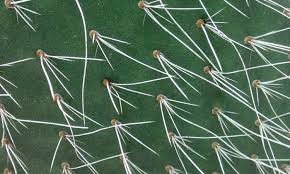
There are however equivalents in other parts of the world. There are the Euphorbs, tamarisks, saltbrushes etc. in Africa, and succulent and spinifex grasses in Australia. In India we have khejri, thoor, acacias etc. all of which grow in our deserts. But these are not cacti. All them have various adaptations to dry conditions like small or no leaves, spines, thick stems and deep roots. But they differ from cacti in that they do not have areoles. The presence of a structure called the areole is what sets cacti apart from all other plants. Areoles are round or elongated, often raised or depressed area on a cactus which is equivalent to a bud and from which spines, flowers, stems, or roots grow.

Cacti were introduced to Europe by, no surprises, Christopher Columbus. In 1493, on his second voyage to the Americas, he brought back a specimen of the prickly pear—the first time a cactus was seen in Europe. It caught the fancy of botanists, horticulturists and the public, and led to widespread cultivation of these plants.

They came to India with the Europeans, most likely sometime in the 16th or 17th century. In recent times, there has been much interest in these plants. They are much prized for their dramatic looks and are a feature in every balcony garden and indoor succulent-tray.  At a commercial level, the dragon fruit, cultivated widely across the country and now found in roadside fruit stands everywhere, is a cactus. Known  as pitaya or pitahaya, it is native to southern Mexico, Central America, and parts of South America. It is a climbing cactus species. The fruit is low in calories, rich in antioxidants and is said to have many other wonderful properties. But frankly, I am yet to get used to the bland taste!

For a few years now, our Central Arid Zone Research Institute (CAZRI), and ICARDA, an international organization, have been experimenting with cultivation of cacti, with a view to using it as fodder. Cacti as a fodder crop is seen as having the potential to help in the widespread shortage of green fodder, particularly during the summer months in many parts of the country. While still in experimental stages, it is thought to have some possibility.

India also has large and scientifically significant cacti collections. The National Cactus and Succulent Botanical Garden and Research Centre is located in the city Panchkula, the satellite town of Chandigarh. It is spread over seven acres and houses over 2500 species of cacti and succulents. The Regional Plant Resource Centre at Bhubenehswar has Asia’s largest collection of cacti. This Centre has created 200 new varieties and hybrids of cacti by breeding, growth manipulation, etc.

We said at the start that all except one cactus species was native to the Americas. The one exception is Thipsalis baccifera also know as the mistletoe cactus, which occurs naturally not only in the Americas, but also Africa, Madagascar, and close home in Sri Lanka. Scientists are still figuring out the how and why of this exception.

So look at cacti with new eyes. Love them, but don’t hug them!

-Meena
Contested Hedges

Contested borders are in the news every day. You can’t miss the claims and counter-claims between neighbouring countires—in our case, mainly China.

But it seems that disputes between neighbours on humble garden hedges are as serious. In the UK, disputes between neighbours on this issue have even resulted in deaths, with one Mr. Wilson of Lincolnshire, dying from gunshot wounds sustained during an argument over hedges, and a Mr. Reid dying of a heart attack after a heated dispute with his neighbour on the same subject. While not so drastic, many people have been levied stiff fines on the charge of trespass for cutting their neighbours’ encroaching hedges. In all, there were 1,00,000 hedge disputes in the UK prior in 2003.

Why do these disputes arise? A major reason is that the hedge blocks too much light to a neighbour’s house or garden; or that the hedge blocks a view. Or a neighbor’s overgrown hedge may encroach on your property. Also, branches or roots may cross into your property from a neighbor’s property or a public road.

This serious situation led to the passing of laws to manage the situation. In 2003, UK passed laws to manage disputes related to hedges. The UK Law essentially is about ‘high hedges’ defined as those over 2 meters in height. Transgressions of hedge-related law come under the definition of Anti-Social Behavior, since 2003!

The situation is understandable, given the extent of hedges in the UK. Laser scanning has shown that the UK has 390,000 km of hedges and hedgerows (1-6 metres tall) on field boundaries– enough to go round the world almost 10 times.

A step back. What is a hedge? A hedge is a line of shrubs (and occasionally trees), planted closely (3 feet or closer) which form a barrier or mark the boundary of an area, such as between neighbouring properties. Hedgerows on the other hand are hedges used to separate a road from adjoining fields, or one field from another, and which may incorporate larger trees. Apart from demarcating boundaries, hedges and hedgerows may serve as windbreaks to improve conditions for crops, as. A hedge is also called a “live fence”.

Under the UK Law, these disputes don’t go to court. Neighbours are encouraged to reach negotiated settlements. If this does not work, a written complaint may be given to the local Council, which will look into both sides of the argument and give a decision. Either the Council will reject the complaint, or they will give an order to cut the hedge to the mandated height. The cutting has to be done keeping in mind The Wildlife and Countryside Act 1981 which makes it an offence to destroy any bird’s nest that is either in use or being built!

Few other countries have such elaborate laws on the subject. However, some local authorities in the US do regulate the height or placement of hedges. For example, a resident of Palo Alto was arrested for allowing her xylosma hedge to grow too tall.

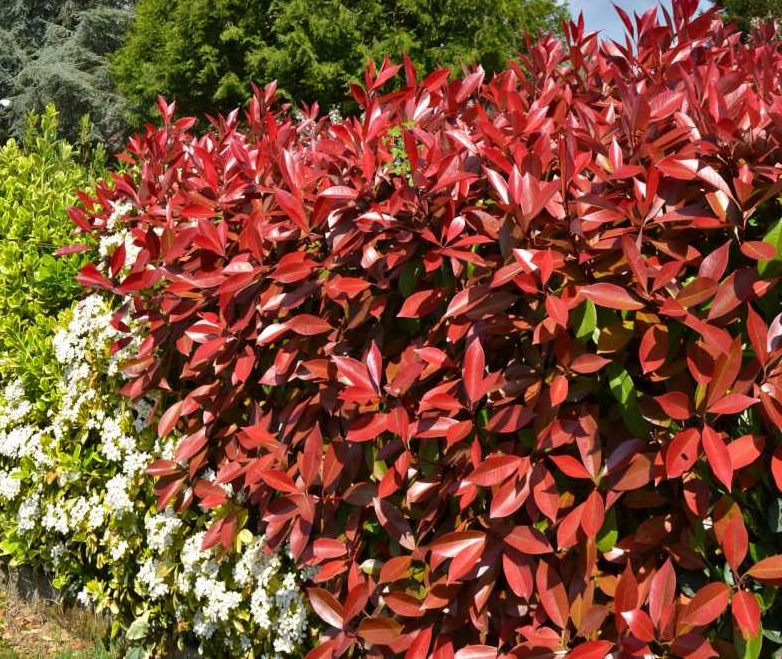
So go ahead. Do grow your Photinia, Duranta, Golden Cypress, Nerium, Hibiscus, Copper Leaf, Ixora, Tecoma, Vilayati Mehendi or whatever else takes your fancy. But make sure they don’t inconvenience your neighbours and get your behaviour labelled as anti-social—at least under the UK laws!

If everyone could plant hedges and learn to maintain them with discipline, maybe we will also learn to manage other boundary disputes without resorting to violence.  It could make for a world where boundary disputes become a thing of the past!

–Meena

A Quarry Blooms: Butchart Gardens

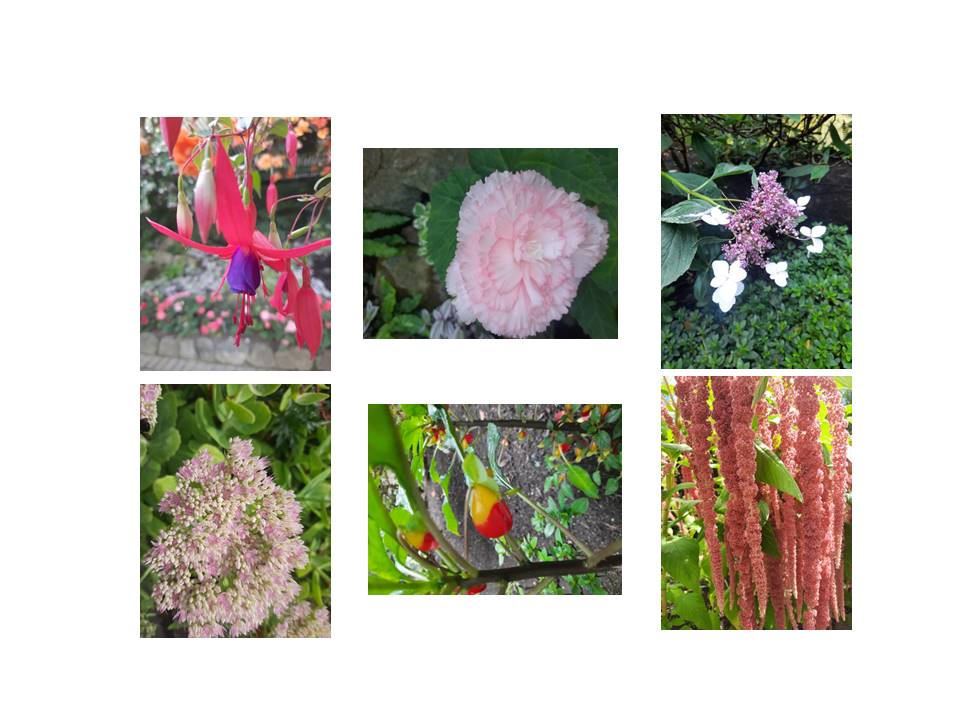
Victoria, the capital of British Columbia, Canada, is a place renowned for its tranquil beauty. And the crown jewel of Victoria is the Butchart Garden. Visited by about 1 million people every year, this 55-acre garden houses about 900 varieties of flowers  tended by 50 gardeners.

Two things are especially interesting about the Butchart.

The first, it is cultivated on the site of an abandoned quarry. Way back in the 19th century, the Butcharts were into cement production–Robert Butchart had started manufacturing Portland cement in 1888 in Ontario, Canada. As his business grew, he and his wife Jennie Butchart decided to move to the west coast of Canada because it had rich deposits of limestone—a critical input for cement production. They started quarrying limestone there, in the Saanich Penisula on Vicotria Island. Jennie trained as a chemist and worked in the company laboratory.

The couple also decided to build a house there, and in 1904, established their home near the quarry.

Jennie was always interested in gardening. In 1907 Isaburo Kishida, a Japenese garden designer from Yokohama, Japan, came to Victoria to build a tea garden at the Esquimalt Gorge Park. Following this, Japanese-style gardens became the rage in the area. Several prominent citizens, including Jennie Butchart, commissioned Kishida to build Japanese gardens in their estates.

This was the start of Jennie’s horticultural journey. In 1909, the limestone quarry was exhausted. Jennie was devastated to see the degradation and destruction left behind. She set about turning it into what came to be known as the Sunken Garden.  She transported tonnes of topsoil by horse-carts and is said to have personally tucked ivy into any hole or crevice in the rock and the grim quarry walls, suspended in a boson’s chair. It was a long process to get the ravaged quarry to bloom, but the garden was ready in 1921. So rather than a wound on the face of the earth which the abandoned quarry might have been, thanks to the relentless efforts of one woman, the site houses a world-famous garden.

After this highly successful reclamation project, Jennie’s ambitions grew and in 1926, she converted their tennis courts into an Italian garden. In 1929, the kitchen garden gave way to a rose garden. 

The reclamation is one part of the story.

The other interesting aspect of the Butchart Gardens are that they family-owned but perfectly accessible to the public.

The gardens came up on land owned by Robert and Jennie. And since then, have passed from generation to generation. The couple gifted the gardens to their grandson Ian Ross on his 21st birthday. He took the mission passionately forward, transforming the garden into an internationally-recognized landmark. Over the course of five decades, Ross not only enhanced the horticultural aspects, but added several performance features, like outdoor symphony concerts, a variety stage show, and in 1987 introduced a Magic of Christmas display.

When Ross died in 1997, his son Christopher took over, expanding the gardens and staff. The weekly fireworks, for which the Gardens are famous even today, were started by him.

After Christopher’s passing in 2000, Christopher’s sister Robin-Lee has been managing the legacy. Barnabas Butchart Clarke, the only child of Robin-Lee and David Clarke, and great-great-grandson of the founders, is next in line.

While the Butchart Gardens continue to be family-owned, they have been a designated a National Historic Site of Canada since 2004.

That the legacy has stood the test of time for almost 130 years is testimony to the fact that Jennie was a woman out of the ordinary. She cared more for her gardens and flowers than fashion, and was usually to be found dressed in overalls and a straw hat. She wanted people to see and enjoy the gardens, and even though there were thousands of visitors even in her lifetime, she was against charging.

The Butchart Gardens have always been at the forefront of taking up environmental causes. Even currently, their site features a campaign against improper disposal of biosolids (nutrient-rich, organic material that are produced as a result of wastewater treatment). They also support NGOs in their area through in-kind donations.

A legacy beyond flowers indeed!

–Meena

The Flowers of War

The media has been full of the 50th anniversary of the Carnation Revolution over the last week. It happened in Portugal. And apparently, Portugal wasn’t even a respectable democracy 50 years ago! Since a coup in May 1926, Portugal was under an authoritarian regime. In 1932, Antonio Salazar took over as Prime Minister, and remained at the helm of affairs till 1968 and continued to hold the reins of power tightly, with little say for the people in anything. He alo would not give up Portugal’s large overseas territories including Goa, Daman, Dadra and Nagar Haveli. In India of course, the Indian armed forces invaded, and supported by the local freedom fighters, took over in 1961. Portugal continued fighting long-drawn colonial wars in other parts of the world. Within Portugal also, it was an authoritarian rule. Finally, in 1974, the people of Portugal lost patience. On 25th April, there was a largely peaceful coup led by members of the Armed Forces Movement and backed by civilians from all walks of life. It began to be called the Carnation Revolution because there were almost no shots fired. It being the carnation season, the markets were full of carnations, and people started giving them to each other and also placed them in the muzzles of the soldiers’ guns, as well as in their button holes.  It was a happy ending!

Flowers
Bouquet of Flowers in a Vase Georgius Jacobus Johannes .Getty Open Access

Many subsequent peaceful revolutions have been named after flowers, including: The Tunisian revolution of 2010-11 is called the Jasmine Revolution in honour of the country’s national flower In the Rose Revolution in Georgia in 2003, Opposition leader Mikhail Saakashvili carried a rose into parliament when he demanded the resignation of President Eduard Shevardnadze, while protesters in the streets gave long-stemmed roses to soldiers called out to stop them. The President resigned. The 2005 Tulip Revolution in Kyrgyzstan forced President Askar Akayev to flee the country. 

But the association of wars with flowers goes further back than that. The famous War of Roses was a long-drawn series of inter-generational wars for the British throne. Fought over 30 years starting 1455, the war was between the House of Lancaster and the House of York, descendants of two sons of Edward III who reigned from 1330-1377. Amidst  claims and counter-claims to the throne almost as complicated as between the Pandavas and Kauravas, the war raged till Henry Tudor (later Henry VII) who represented the claim of the House of Lancaster, won the Battle of Bosworth, and sealed the claim by marrying Elizabeth of York, the daughter of the Yorkist King, thus uniting the two houses. The War of Roses is so called for the symbols of the two sides—the white rose of York and the red rose of Lancaster. After the marriage of Henry and Elizabeth, the symbol was combined in a way that overlaid the white and red roses.

But the oldest of flower-wars has to be war over the parijata tree fought between Krishna and Indira. The origin of the story goes back to the Harivamsam (1st or 2nd century BCE). In this tale, Narada gives Krishna a single enchanting blossom of the parijata flower from the special tree in Indra’s garden. Krishna is with his senior-wife Rukmini at the time, and gives it to her. When the junior-wife Satyabhama hears of this, she is angry beyond belief and is only pacified when Krishna promises to fetch her the tree itself from the heavenly garden. However, Indra refuses to part with the tree, and Krishna has to fight a mighty battle—which of course he wins. And the parijata is brought to earth and planted here. (See ‘Heaven’s Flower’ https://wordpress.com/post/millennialmatriarchs.com/164)

So flowers can cause wars. And they can stop wars.

It’s a choice we have to make today!

–Meena

On Orchids

For most of us:

Orchids = Rare

Orchids = Exotic

Orchids = Beautiful.

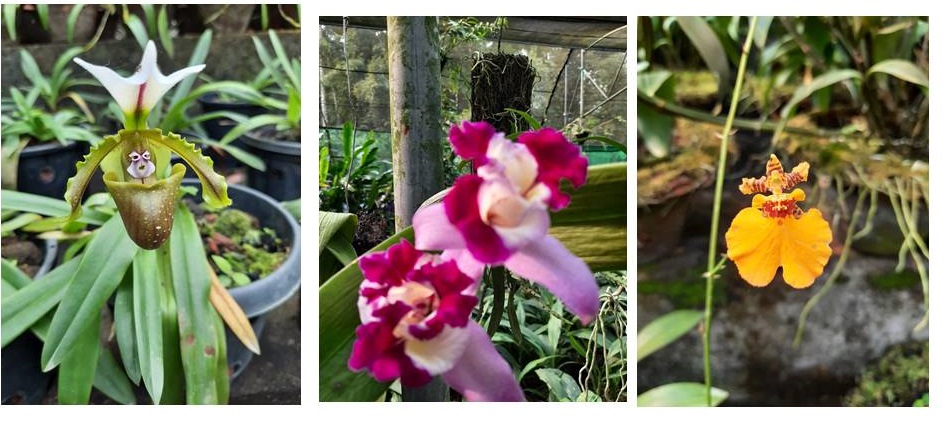
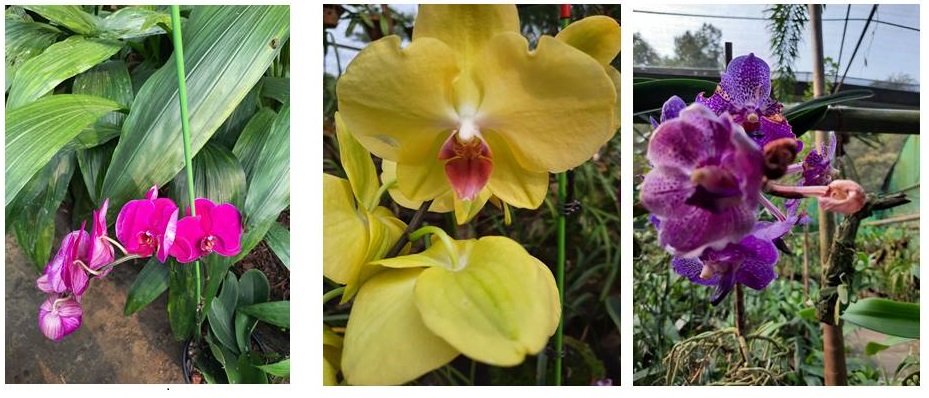
I recently went to Meghalaya where I visited an orchid park. And of course the variety and beauty of the orchids we saw were amazing. But when I tried to figure out a little bit more about these flowers, I found all the three equations mentioned above, which have been firmly planted in my mind for decades, to be false!

Orchids in fact belong to one of the top two most-common families of flowering plants on earth! This is the family Orchidaceae which comprises about 750 genera and close to 28,000 species!  So orchids are not rare!

Orchids

The dictionary meaning of ‘exotic’ is ‘origination in or characteristic of a distant foreign country’. Actually, with their wide distribution, orchids may be among the least exotic flowers. Orchids grow on every continent except Antarctica. At least four species have been reported from north of the Arctic Circle. So orchids are not exotic in most parts of the world! 

And while most orchids are beautiful, there are some which are warty, bumpy, hairy and unbeautiful. In fact, the latest orchid to be discovered—the gastrodia agnicellus–from a forest in Madagascar, has been dubbed “the ugliest orchid in the world” by the Royal Botanical Gardens, Kew in the United Kingdom. It has been likened to a soul-sucking eyeless worm. While I am not very comfortable to have anything castigated so severely on the basis of looks, I have to admit after looking at pics of this flower, orchids are not always equal to beautiful!

Ok, easy enough to demolish myths. Now time to look at some facts.

To begin with, what are orchids? Orchids come in different sizes, different shapes, grow in different parts of the world. But the one characteristic which unites them, as well as differentiates them form other flowering plants, is the fusion of the male portion of the flower (stamen) with the  female portion (pistil), into one structure called the column—often visible protruding from the center. Orchids have three sepals and three petals, which all appear to be part of the flower. The middle petal is modified and is usually brightly coloured and exudes a scent.  

Orchids are among the oldest flowering plants known. A few years ago, Harvard University scientists discovered a fossilized bee carrying orchid pollen which dates back at least 15 million years. However, scientists speculate that orchids have been around much longer than that, maybe as much as 100 million years.

Orchids

Orchids have the tiniest seeds in the world. A single seedpod can have up to 3 million seeds in it.  The seeds are so small they can only be seen under a microscope. The plants take about 5-7 years to bloom once germinated, and can live up to a hundred years.

Incidentally, the vanilla bean comes from a species of orchid.  It is the only orchid which is commercially grown and harvested, not for its flowers but its beans!

India has a vast orchid diversity—a total of 1256 species have been recorded, out of which 307 are endemic to the country. But our orchids are under pressure. This pressure mainly comes from illegal harvesting and exploitation for trade. Orchids are illicitly collected from the wild and traded as ornamental plants.

So yes, do get orchids for your home-garden. They will surely add a touch of colour and beauty (unless of course you choose the gastrodia agnicellus!). But make sure they are sourced ethically. For many of them are indeed under threat.

–Meena

Tippy-tippy Tap…

The last few weeks have been a time of looking closely at flowers, and marvelling at their variety. I observed about 12 types of pink flowers, about 8-10 types of orange flowers, about 5-6 red, a few yellow ones, a few white ones and two types each of purple flowers and blue flowers–all in my colony. 

So of course the question came to my mind: Was this the typical distribution of flower colours? Was pink the predominant colour, followed by orange and red? And so started my search to find out a little more about this.

First and foremost, what gives flowers their colours? Colours mainly come from the presence of pigments in the chromoplasts or cell vacuoles of floral tissues.  The most common pigments in flowers come in the form of anthocyanins which range in colour from white to red to blue to yellow to purple and to even black and brown. The other major group are the carotenoids, which provide the yellow colours, along with some oranges and reds. While many flowers get their colours from either anthocyanins or carotenoids, there are some that can get their colours from a combination of the two. Other classes of pigments, but of less importance in relation to flower pigmentation, are chlorophylls (greens), quinones (occasional reds and yellows), and betalain alkaloids (giving yellow, red and purple). 

Coming back to which is the most common flower colour, all my web- searching only told me that there was no definitive answer! To begin with, we don’t even know how many flowering plants there are. And of the flowers we know and have catalogued, colour data are seldom maintained. There is no repository of flower colour information. There is no database which documents flower colours, let alone rank them.

There are many good reasons that make it difficult to document these colours. There is no absolute measure. Colours look different in different lights, at different times of the day. Each person perceives colour differently—what looks orange to me look yellow to you. And we all describe them differently—I may say violet for a colour and you may say mauve.

Moreover, colours vary from genus to genus, and even within a species. A plant growing in one area (say, the plains) can have flowers  that are very different from the same plant growing elsewhere (say in higher altitudes). The colours of flowers depend very much on the growing conditions—soil, sunlight etc. So they may change somewhat with season too.

Recent research suggests that factors like ozone depletion and global warming have caused flowers to change their colours over time. For instance, of the 42 species studied in that research, UV-pigmentation in flowers increased at a rate of 2% per year from 1941 to 2017.

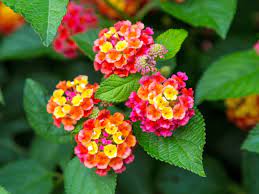
lantana
Lantana is one of the flowers which changes colour on pollination

Flowers also use colours as signalling mechanisms. Some flowers change their colour once they are pollinated, so that bees do not come back to them, but rather go to unpollinated flowers. (Eminent teacher, Prof. Mohan Ram, who developed a generation of botanists, ecologists and environmentalists, taught us this during a memorable nature walk.) Some flowers change their colour with age.

But here are some speculations about flower colours:

Counter-intuitively, some people believe green may actually be the most common flower colour–many plants, including most trees, bear flowers in various shades of green. This may be followed by white, yellow, blue and the reds in that order.  Brown is not uncommon either. But all scientists and naturalists emphasize that these are only guesses.

So don’t worry too much about how many. Just enjoy the flowers and their colours!

–Meena

Look, See, Wonder…

As environmental educators, our most important task with children as well as adults was to awaken them to the wonders of the world around them. From this wonder of the variety of life and the intricate connections therein would come an intellectual curiosity to understand the world better, followed by a passion to do something about it. So the responsibility was to take people through the steps of Awareness, Appreciation, Skills, Knowledge and Action.

So the first step seeing and sensing the world. I remember some of the exercises we used to do in our workshops to help people do this:

  1. Observe the greens : Closely observe the shades of the leaves of different plants/trees. Try to describe the differences.
  2. Observe the shapes of leaves: Sketch different leaves to scale.
  3. Bark rubbings: Find a tree, place a piece of paper on the bark and colour over with a pencil to get the impression of the bark design. Repeat with another tree.
  4. Listen to sounds: Sit in absolute silence for 5 minutes in a natural area and note down the sounds your hear.
  5. Smells: Go around a garden and sniff the flowers, the leaves, the plants, the soil.

Even the most cynical adult would get completely involved and excited, and the result would be a ‘Wow, who would have thought that there were so many shades of green;  that soil smelt like this; that there were so many different types of sounds in nature!’

Roles got reversed when the world decided to environmentally educate me two days ago, as I was on my walk. The very same path that I follow every day, but I was out a little earlier than usual. So the light was different and everything stood out with a brightness and clarity that I did not get to see later in the evenings.

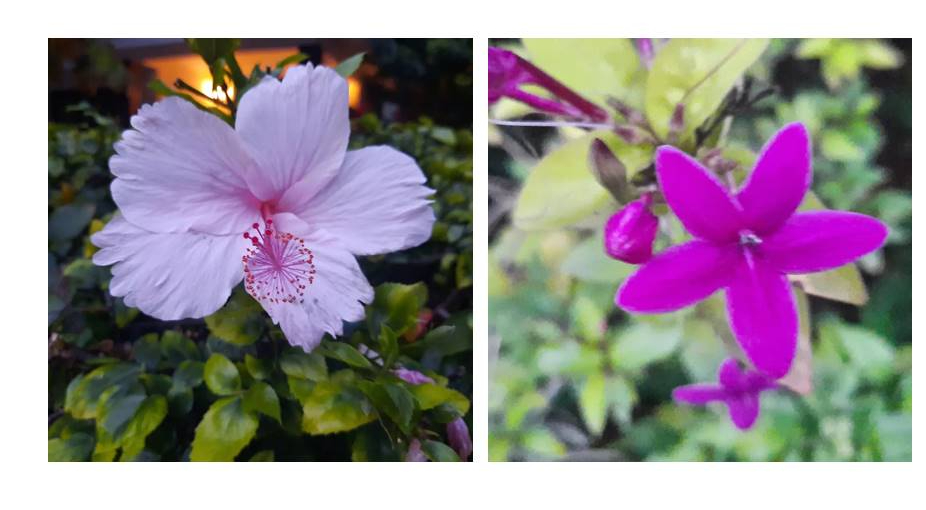
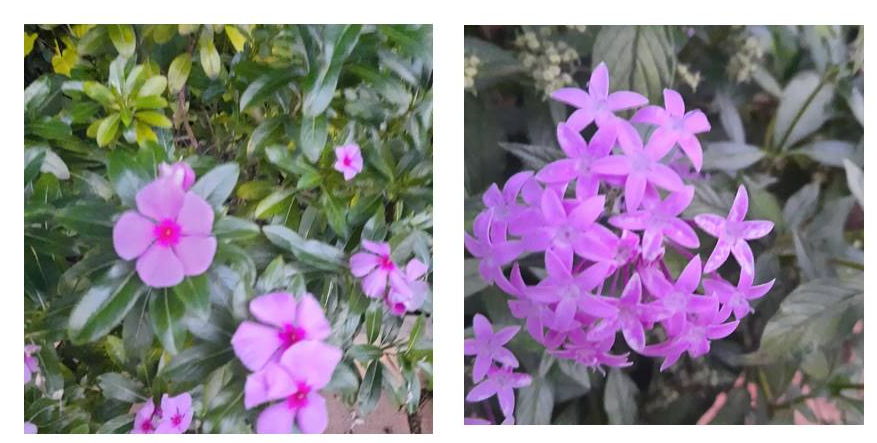
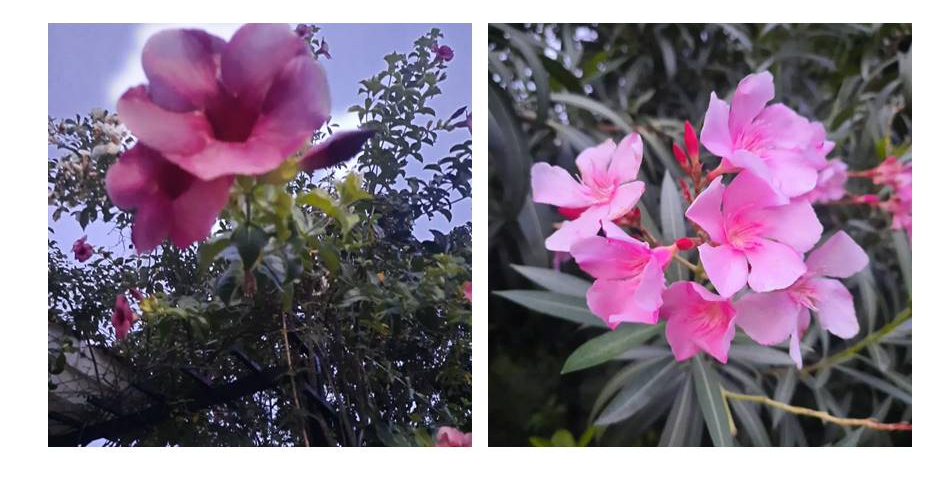
I saw one beautiful pink flower and decided to take a pic. I continued for 2 meters, and saw another one. And within the space of 10 minutes, I had 11 flowers in different shades of pink captured in my phone. I was wonder-struck!

I had obviously only been ‘looking’. I had forgotten to ‘see’. The difference, as Grant Scott, a famous photographer puts it: there is ‘.. a seriousness of intention that one of these words suggests, whilst the other gives the impression of a casual approach to perhaps what is the same thing. The word ‘see’ suggests a depth of visual engagement that allows the person ‘seeing’ to control the action and retain control of any further action that may take place after the initial seeing. To look suggests an observation of surface, it does not suggest any further depth than that. To look suggests both the beginning and end of the action, whereas to see suggests the beginning of a process of investigation.’

So while the popular adage is that we should take the time to smell the flowers, I would also urge that we take the time to see the flowers. And even more important, take the time to let a sense of wonder overtake us!

From this sense of wonder will come the sense of urgency to take care of our world!

–Meena

When is a Flower not a Flower?

When it is a bougainvillea!

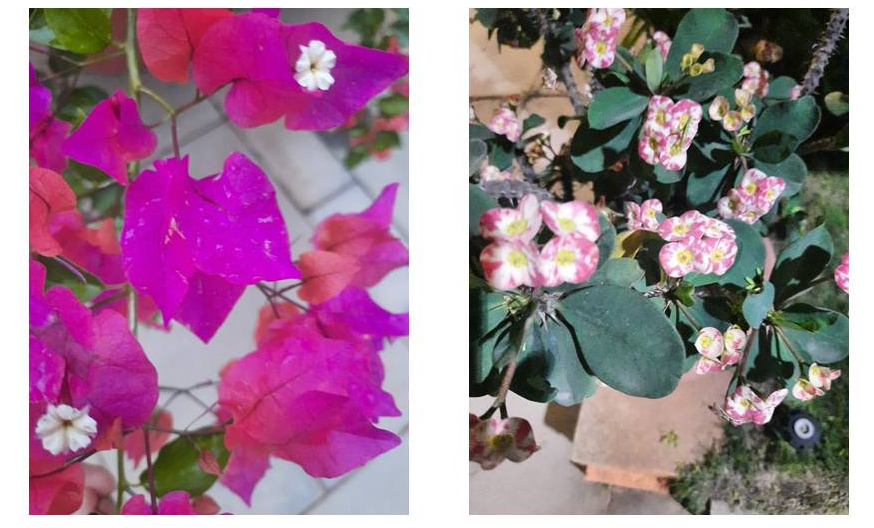
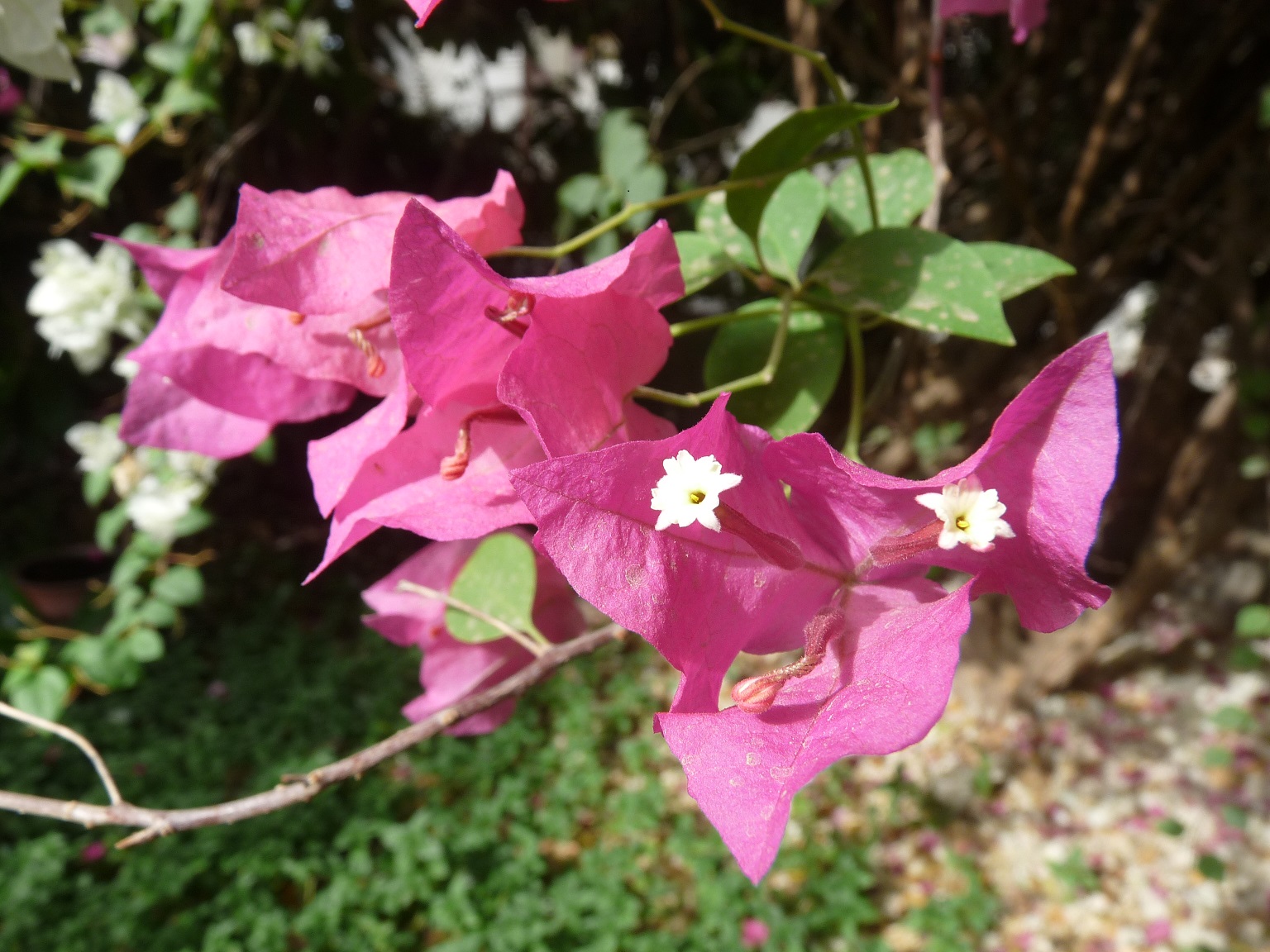
Yes, I learnt pretty late in life that what I thought were the petals, are actually bracts! And what pray are bracts? Well, seems bracts are modified leaves! They grow above all other leaves, but below the petals. And no, bracts are not to be confused with sepals, which are the green, leaf-like things which cover the petals when the flower is still in bud stage!

Confused? Well I was. But when I looked more closely at the bougainvillea, I got it. Look closely and you will see small white flowers at the centre of what you would a minute ago have called a pink flower. (There are three such small flowers within each set of bracts, though you cant quite see them in the pic.)

bougainvillae flower

Bracts are often brightly coloured and have evolved to attract flowers. Our friend the bougainvillea is a great example of this, with bracts of magenta, pink, yellow, white, orange and every other colour! Another flower that is not a flower you think, is the poinsettia. The bright coloured petals are bracts. In grasses, each floret is covered by two bracts, and each group of florets has another pair of bracts at its base! The dried bracts are the chaff we remove from the grain!

A seemingly simple cheerful plant, which happily blooms for us on road-medians, along compound walls, in gardens. Fairly easy to grow as long as it gets enough sun and we take care not to over-water. But I have found three levels of complexity:

  1. The spelling. I just cannot get it right without the spellcheck! Yes, I know it is named after a person. But please can we do something about it?
  2. This bract-petal confusion.
  3. The woman who discovered it, while disguised as a man and who never got the credit (see our post ‘Colour and Cheer’, 15 Nov, 2018).

Simple is the new Complex! Or do I mean Complex is the new Simple?

–Meena