
Vasco da Gama Lands in India

526 years ago to the day yesterday (May 20), the first European made it by the sea route to India. This was the Portuguese Vasco da Gama who landed in Kozhikode (Calicut), Kerala. And the history of globalization and the colonization of India by Europeans started.

The discovery of the sea route to India was a milestone in world affairs. It provided access to the spice trade, which otherwise happened overland—more time consuming, more risky and more expensive. Vasco da Gama first came to India via the Cape of Good Hope, and became the first to link Europe and Asia by an ocean route—one that traversed the Atlantic and the Indian oceans. This enabled Portugal to establish colonies all the way from Africa to Asia, and dominate the trade between Asia and Europe for decades. The Dutch, the English, the French and the Danish lagged by almost a century before they could challenge the Portuguese for supremacy in these seas.
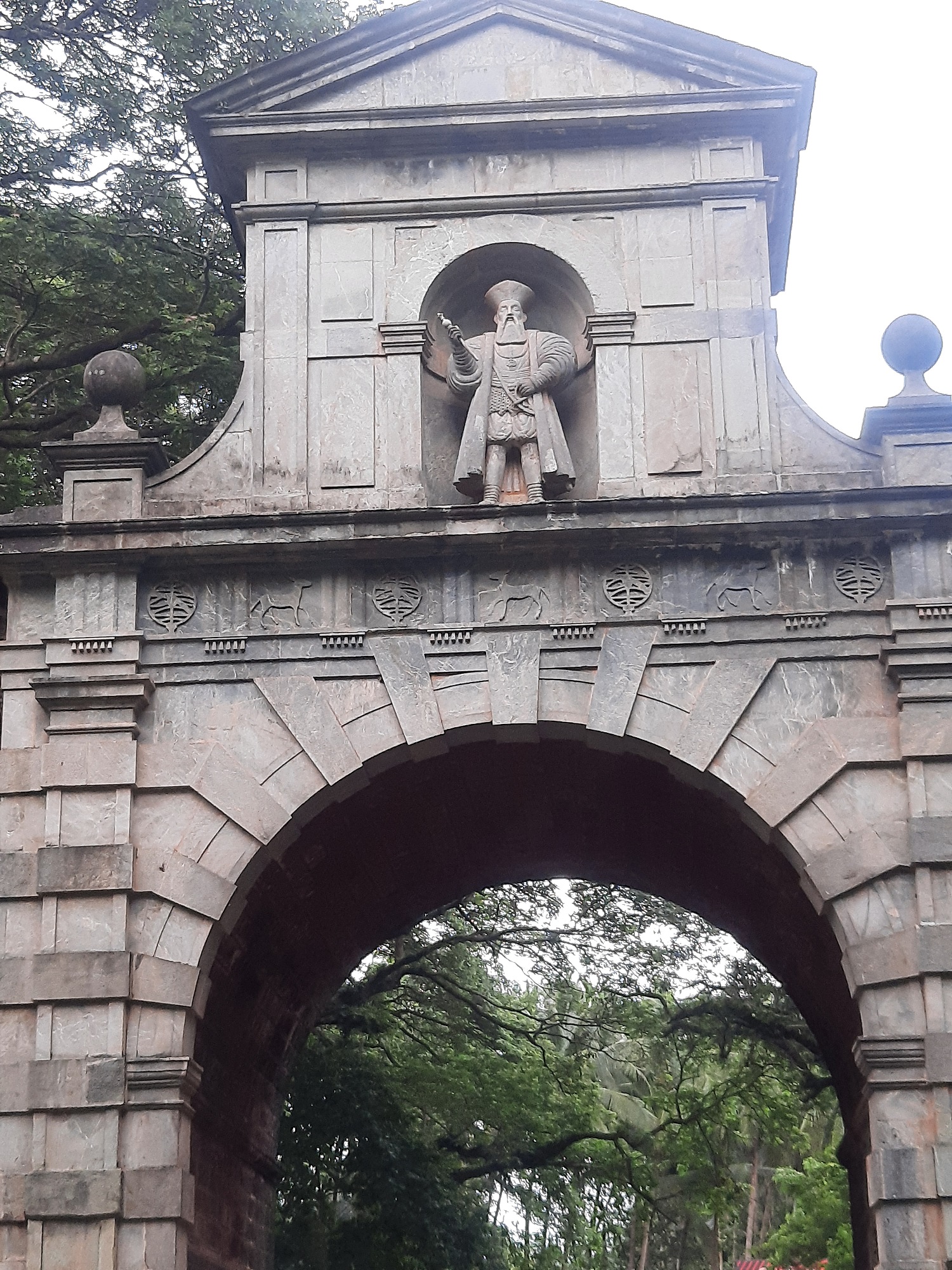
Vasco da Gama
Statue of Vasco da Gama, Viceroy’s Arch, Old Goa, Velha Goa

There can be no questions about da Gama’s courage, enterprise, skills and sheer sense of adventure in venturing out into unknown waters, and persisting for almost two years in the voyage to finally make it to India.

But even as one celebrates this spirit of human endeavor, it is necessary to question many of the motives and actions.

Da Gama, in his interactions with the Zamorin (ruler) of Calicut was always less than respectful. The Zomorin received da Gama with the respect due to a visitor from foreign shores, but da Gama had no clear answers to why he was visiting India, and gave the Zamorin such trivial gifts from the Portuguese king that no one would quite believe that da Gama was a royal ambassador and not some small-time merchant. This resulted in the Zomorin refusing Vasco da Gama’s request for permission to leave a representative behind to look after the merchandise he had not been able to sell. Further, local officials insisted on his paying customs duty like any other trader. This irritated the entitled da Gama, and he kidnapped and carried away some Nairs and sixteen fishermen when he left the shores.

But the most damning incident occurred during his next visit—the Second Armada. His ships reached India in October 1502. At the same time, a ship named Mirim carrying about 400 Muslim pilgrims including 50 women, had set out from Calicut for Mecca. Da Gama’s ships intercepted Mirim, looted the ship, locked in the passengers including the owner and an ambassador from Egypt, and burned them to death. Only about 20 children were spared on the condition that they would convert to Christianity. Da Gama watched the whole gory incident through the porthole of his ship.

Da Gama had come this time with the objective of signing a trade treaty with the Zamorin. After the pilgrim ship incident, the Zamorin hesitated to take on the Portuguese head-on and indicated his willingness to sign a treaty. But Da Gama had an atrocious condition—that the Hindu Zamorin expel all Muslims from his territory before negotiating the treaty. The Zamorin was appalled and refused. A very senior priest, Talappana Namboodri, known to both sides was sent to Da Gama to try to sort out things. But da Gama labelled him a spy, and had the priest’s lips and ears cut off. He had a pair of dog’s ears to his head before sending him away. But this was not the end of the matter. So infuriated was da Gama that he had the Portuguese fleet bombard the unfortified city of Calicut for nearly two days from the sea, severely damaging it. He also captured several ships, cut off the crew’s hands, ears and noses, dispatching them to the Zamorin with a note wherein he said that he would be happy to reset the relationship to a positive note once the Zamorin had paid for the items plundered well as the gunpowder and cannonballs used to bombard Calicut! Things escalated, and there was a sea battle which da Gama won. He also started trade with Cochin and Cannanore which were at war with Calicut.

Da Gama’s fortunes in Portugal declined for some decades after this journey, and he lay low. In 1594, with the new King’s blessings, he set out again for India, now with the title of Viceroy. This time he landed in Goa. He set out immediately to strengthen the Portuguese domination along the East Coast. However, it was not for long. He contracted malaria and died three months later in Kochi.

The Portuguese were the first Europeans to colonize India, and the last to leave! Vasco da Gama not only laid the foundation for this, but also for the ‘divide and rule’ strategy—turning one religion against another, one kingdom against another– which served future colonizers well.

Heroes in their time and country, leaving behind troubling legacies.

–Meena

Cantonments: Serene Oases

I recently came across a fascinating 2017 publication titled ‘Cantonments: A Transition from Heritage to Modernity’. This coffee table book has been brought out by the Director General of Defence Estates, which has ‘the task of Cantonment Administration and Land Management of all the defence land in the country’.

The word cantonment is derived from the French word canton, which means corner or district. Originally, it referred to temporary arrangements made for armies to stay during campaigns or for the winter. However, with colonization, the colonial powers had to set up more permanent military stations, and in India and other parts of South Asia, such permanent military stations came to be referred to as cantonments. In the US too, a cantonment is essentially ‘a permanent residential section (ie., barracks) of a fort or other military installation’. In India, the very first cantonment was set up by the British at Barrackpore about 250 years ago (though Danapur in Bihar also makes a claim to be the first!), and they grew in numbers in the 18th century.

Coffee table book on Indian Cantonments
A Coffee table book on Indian Cantonments

There are 62 cantonments in India, classified into four categories, depending on their size and population. The total cantonment land in the country totals to over 2 lakh acres. Cantonments are mixed-use areas, with both military and civil populations, unlike Military Stations which are exclusively inhabited by the Armed Forces. Cantonments are governed by the Cantonments Act, 2006, and the ultimate decision-making body is the Cantonment Board, which has equal representation of elected and nominated/ex-officio members.

Coming back to the book I started the piece with, it is a fascinating display of visuals from cantonments, and a great showcase of the diversity that cantonments are home to.

I learnt a lot of things I was not aware of. For instance, that the site of the Kumbh Mela, the Sangam, is within the Fort Cantonment of Allahabad. During the Kumbhs, the state government takes over the management of the area. Or that the Agra Fort, to which all of us troop, to get a glimpse of the Taj as Shah Jehan did a few centuries ago, is within a cantonment. Or that the Allahabad Cantonment houses an Ashokan pillar with edicts. This pillar is unique in that apart from Ashoka’s inscriptions, it contains later inscriptions attributed to the Gupta emperor, Samudragupta of the 4th century (an early case of state-sponsored graffiti?). Forts at Ahmednagar, Belgaum, Cannanore etc., are also part of cantonments.

Dr. Ambedkar, the father of our Constitution, was born in Mhow Cantonment—his father Ramji Maloji Sakpal held the rank of Subedar in the British army. Mhow is in fact today officially called Dr. Ambedkar Nagar. The Cantonment houses the Dr. B.R. Ambedkar Smarak, a marble structure which has an exhibition on the life of the leader.

Gurudev Rabindranath Tagore spent considerable time at the Almora Cantonment Board and is said to have written a number of books, including parts of the Gitanjali, during his sojourn here. The building where he stayed is now called Tagore House.

Cantonments house excellent buildings—the Flag Staff House built in 1828 on the banks of the Hooghly is now the Barrackpore home of the Governor of Bengal. The Rashtrapathi Nilayam at Secunderabad is part of a cantonment.

Expectedly, many war memorials are also housed in various cantonments, including the Madras War Cemetery, the Kirkee War Cemetery, Delhi War Cemetery, etc.

These areas also have a number of old and revered places of worship, from churches to temples to masjids.

And of course these are biodiversity havens—especially the ones up in the hill reaches of Shillong, Ranikhet, Landsdowne etc. Migratory birds visit the Danapur Cantonment, and thousands of open-billed white storks breed here.

We have all seen/passed through/visited/lived in cantonments, and have to admit they feel like serene, clean, green, well-ordered oases.  But cantonments are not without their controversies. Not only are they criticized as Raj-era relics perpetuating colonial mindsets, but also, there have been several tussles between civilians and the Forces establishment—whether public access to roads that run through these areas, or the issues of civilians who live within them—they cannot for instance, access home loans or government housing schemes.

The Comptroller and Auditor General of India (CAG) has been rather scathing with regard to the management of lands under Defence Control. The Army itself at some stage has wondered if it can afford the money spent on the upkeep of these areas. In a major development, at the start of 2021, the PMO has asked for views on the abolition of all cantonments.

So it seems there is some kind of a push at the top levels to do away with them. But one wonders—is that throwing out the baby with the bathwater? Would it not be better to re-conceive them to give a fair say to all stakeholders, and make the management more inclusive and responsive? And learn lessons from them on how to run our urban settlements well?

–Meena