
In many countries, ranging from America to Japan, the song of the cicadas heralds summer. This summer, cicadas are making headlines in the United States which is bracing up for a cacophony of noise as trillions of cicadas are due to emerge in a rare synchronized event that occurs only once in a couple of hundred years.
Source: Getty images
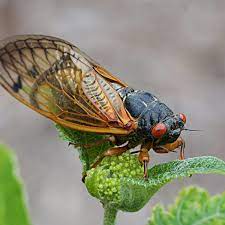
Cicada species have been around for a long time. The oldest cicada fossils are from the Triassic period, where they may have buzzed around the dinosaurs. Cicadas are members of the superfamily Cicadoidea. A cicada has a stout body, a broad head with two large compound eyes on both sides, and clear-membraned wings. Cicadas have modified mouthparts to feed on liquids rather than solid material. Larvae suck juices from plant roots, while adults suck fluids from woody shrubs and trees. While all cicadas have the same basic body shape, they come in all sorts of sizes and colour.
The most defining feature of cicadas is not in their form but in the sound that the male cicadas make to attract female partners. This sound is produced by the movement of specialized structures on each side of the abdomen called tymbals. Tymbals are thin membranous structures streaked with marginally thicker ribs. A muscle pulls these ribs inward and then releases them, resulting in a sharp sound. Rapid repetition of this action at a speed of 300 to 400 times per second generates the distinctive song of the cicada. The cicada’s body is like a hollow musical instrument, similar to a violin or guitar, with air-filled pockets that act like echo chambers, amplifying the sound. Varying body sizes produce different sound frequencies. Each species has its own specific call. In answer to the male’s song, the female cicada replies with a soft click.
Despite having no vocal chords and no lungs, male cicadas are the loudest insects in the world. While poets may wax eloquent about the song of the cicada, the decibel level of the cicada chorus can be deafening. The intensity of the sound can be as high 120 decibels, the decibel level of a jet engine!
Cicadas have a fascinating lifecycle. The male attracts the female with his powerful song which reverberates through the air. The female arrives, and after the mating, she makes slits in tree branches and lays her eggs. The eggs hatch six to seven weeks later. The emerging young ones look like termites, and stay on the plant, feeding on sap till they are ready to drop down to the ground. This marks the beginning of the next stage of their lifecycle. Tunnelling through the earth with their powerful front legs, the nymphs burrow and build chambers deep in the soil, living a major part of their lives underground, feeding on roots, till they are finally ready to emerge as adults. Once they crawl back onto the surface, the nymphs shed their exoskeletons, and start flapping their wings. They spend the next six weeks or so of their adult life, making a cacophony to attract mates, so that the eggs can be laid before they die
This trait of disappearing distinguishes cicadas from most other insects. While all species of cicadas disappear underground, different species have different cycles of emergence. There are annual cicadas which emerge once a year, or once very couple of years, and periodical cicadas which spend most of their lives underground, and emerge, en masse every 13 or 17 years to mate and start the cycle over again. Of the 3,400 species of cicadas in the world, only nine species are known to have developed the habit of disappearing underground for years at a time and then emerging en masse simultaneously.
It is this cycle of disappearance and reappearance that has symbolically linked cicadas with rebirth and transformation in some cultures. In China during the Han Dynasty, jade cicadas were placed on the tongue as part of the burial ceremony to ensure that the departed have voices in their afterlife. Some Native American tribes believe that cicadas emerge from the earth, bringing with them an opportunity to renew their relationship with nature and their ancestors.
India has approximately 250 species of annual cicadas, but only one species of periodic cicada, the Chremista ribhoi in Meghalaya that emerges once in four years. Forests in all parts of India are abuzz with cicada sounds, especially before the rains begin, thus here cicadas are associated with the monsoon. A curious tale related to cicadas is that when, in 1847, an Englishman discovered a forest area in Kerala, he found it to be completely devoid of cicada sounds, and thus so quiet, that he named it Silent Valley.
This summer several parts of the United States will witness the once-in-lifetime phenomenon of the simultaneous emergence of billions of cicadas from two different broods of cicadas—one that lives a 13-year cycle and one that has a 17-year cycle. This rare synchronized event last occurred in 1803. This is causing much excitement among scientists as well as others, who will witness (as well as hear) this rare event—a cicada summer to remember!
–Mamata
 Millennial Matriarchs