A Week of Celebrations

Just as the January festivities that heralded the New Year have waned, the early days of February have their own set of celebrations. From Galantines Day and Valentines Day, to Basant Panchami, to the Chinese New Year, this is a week that celebrates new beginnings.
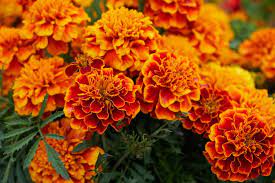
Meena has written about the history of the first two days. The third day, Basant Panchami falls on the fifth day of the Hindu month of Magha. This year this happens to be on 14 February. This auspicious day, marks the first day of spring in the Indian seasonal almanac. This is also the day to pay homage to Saraswati, the goddess of learning, music, arts and wisdom. Homes are decorated with marigold flowers and rice flour rangoli, special food is cooked and distributed to family and neighbours after the traditional puja to invoke year-long blessings of the Goddess for knowledge and progress. Yellow is the colour that marks this celebration of spring—from wearing yellow clothes to the myriads of marigold ornamentations.

Celebrations of another spring festival in another part of the world also commenced this week with joy and fervor. This is the Chinese New Year, which like Basant Panchami, is determined by the lunar calendar. These celebrations, which last for 16 days, commenced on 10 February this year. The Chinese Spring Festival was originally a ceremonial day to pray to gods for a good planting and harvest season. As in all agrarian societies, the entire year was dependent on a good harvest. People also prayed to their ancestors, for their blessings. Even today, Chinese New Year heralds a time of renewal, prosperity, and festivity, not just in China, but for Chinese communities across the world. Celebrations symbolize fresh beginnings and a renewal of familial ties, and it is customary for family members from far and wide to travel to meet up for reunions and gatherings.

The Chinese zodiac follows a twelve-year cycle with each year assigned to an animal. The twelve animals are arranged in this order: Rat, Ox, Tiger, Rabbit, Dragon, Snake, Horse, Goat, Monkey, Rooster, Dog, and Pig. 2024 is the Year of the Dragon according to this zodiac. The dragon holds significant cultural importance in Chinese folklore. The Chinese people deeply cherish the dragon which is believed to represent strength, wisdom and good fortune. The dragon, this year’s Chinese zodiac sign represents power, magic, and the pursuit of one’s desires. Each animal in the zodiac is thought to influence the personality traits and fate of those born that year. Individuals born in the Year of the Dragon are thought to be blessed with good luck.

As in all traditional societies, there are a number of customs that mark the special days. Unlike most festivals which are preceded by a special round of ‘spring cleaning’, in the run-up to Chinese New Year’s day, traditionally bathing was not allowed on this day, as also sweeping  throwing of garbage, a few days prior to this day. This is to make sure that all the good luck is not swept or washed away! On the other hand there is a designated day before the New Year which is dedicated to cleaning so as to sweep the bad luck away and make room for the good. A delicate balance indeed! There are a few other taboos during the New Year period, once again to guard against any ‘seeping changes’. No cutting of hair or nails, no use of sharp objects, no breaking no swearing, cursing or saying unlucky words like ‘death’ or ‘sickness’.

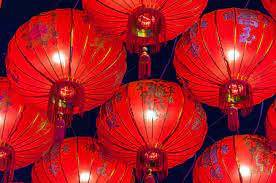
While Indian spring festival is marked by the exuberance and cheer of yellow, it is red that marks the heralding of a new year in China. Houses are decorated with red lanterns, strings of red chilli peppers (real or fake), and red decorations on walls and doors. Red clothes are also a part of the Spring Festival wardrobe. It is believed that the colour red will help to deter evil and demons. Children traditionally receive money in red packets or pockets are they are called. These symbolize the transfer of good fortune from elders to the youngsters. The practice has its origins in folklore.
As the legend goes an evil spirit named Sui would appear on New Year’s Eve and pat the heads of sleeping children three times. This would make the children sick. One couple was playing with their child at bedtime with some coins and left the coins on red paper near the child as it slept. That night when the sprit Sui came it was frightened away by the coins glinting on the red paper. Thus began the tradition of giving children coins in red covers on New Year’s Eve, to guard against evil spirits and for their good health and fortune through the year. The tradition continues to this day.

The other tradition which is closely linked to the celebrations is the bursting of crackers, just as Diwali celebrations are marked in India. This one too has a legend attached. Another mythical beast named Nian who preyed on people and livestock, used to visit villages on New Year’s Eve, forcing people to hide in fear in their houses or escape to the mountains. There are two versions of the story. In one, a young boy burst crackers and scared away the monster. In another, a beggar took refuge in an old woman’s house and promised to save her from the monster. He pasted red papers on the doors and windows and burst crackers at midnight, both of which frightened away the monster. Thus bursting of firecrackers at midnight on New Year’s Eve and again on New Year’s morning has continued to be a tradition associated with this festival.

Ironically, due to safety reasons and air pollution concerns, the Chinese government has banned firecrackers in many cities in China. However there has been a lot of public pressure to allow people to celebrate an ages-old tradition of welcoming the New Year with the sound and light of firecrackers.

On another note, the Chinese government is hoping that the declining fertility rate and falling population numbers which has reached worrisome levels will get a boost with a flood of new babies born in the Year of the Dragon. According to the traits associated with the Chinese zodiac children born in this year will be imbued with strength, intelligence, confidence, and success. Thus it is hoped that parents will hope to conceive and deliver dragon babies in this year!

Whatever the mode of celebration, spring marks new beginnings, hope and freshness. Celebrating red and yellow every day of the year.

–Mamata
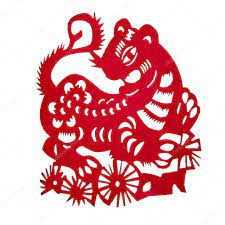
Year of the Tiger

February 1 was the Chinese New Year that marked the end of the Year of the Ox and the start of the Year of the Tiger.  While based on the Chinese lunar calendar, this day is also celebrated as the New Year in Korea, Singapore, Mongolia, Tibet, Vietnam and in Asian communities worldwide. More than just the beginning of a new calendar year, the Lunar New Year is seen as a time of reunion and rebirth, marking the end of winter and the start of spring. Thus it is also celebrated as the Spring Festival in China. This is traditionally a time to honour ancestors and deities, with family reunions, parades and fireworks to drive off evil spirits. These customs relate to a legend according to which a monster called Nian (Chinese for year) would emerge from under the earth at the start of every year and eat villagers. It was believed that the monster was afraid of bright lights and loud noises, and the colour red. Hence the fireworks, and the tradition of wearing something red on this day.

The Chinese calendar is on a 12-year cycle, with each year linked to one of a dozen animals — the rat, ox, tiger, rabbit, dragon, snake, horse, goat, monkey, rooster, dog and pig. There is a popular legend about a race as a consequence of which these animals came to be in this order. The tiger is the third animal in the Chinese zodiac. Among the other legends that tell how the animals were selected for the Chinese zodiac, there is one about the tiger found its place here.

Once upon a time the lion was the king of animals. The lion was very cruel but the supreme gods could not take away its status on the zodiac because they did not know of another animal strong enough to control the other animals. Meanwhile, down on earth the tiger was an insignificant animal, but a clever one. It learned fighting skills from the cat, and then honed these to such an extent that it could defeat any animal in battle. Over time tiger became famous for its ferocity and bravery. The supreme gods heard about this and summoned the tiger to heaven where it was challenged to prove its prowess; and it did so, defeating even the supreme god’s warriors. The supreme gods designated the tiger as one of their warriors.

Back on earth, with no one to fear, the other animals started attacking humans who called upon the supreme gods to help them. The gods sent tiger back to earth for this mission. The tiger took on all the other animals in three major battles, defeating them all, until they fled to the forest, and no longer emerged. The humans were saved from their attacks, and were very grateful to the tiger.

The tiger went back to heaven, the gods were pleased with his winning the three big battles. As a permanent mark of reward, the supreme god marked three black horizontal lines on its forehead. Sometime later there was a huge flood on earth, caused by a turtle. Once more the tiger was sent to the rescue. It defeated the turtle in battle and saved the earth. This time the supreme god rewarded it with a vertical line in the centre of the horizontal lines, creating thereby the Chinese character ‘wang’ which means ‘king’. The tiger was thus anointed the King of the Animals and replaced the lion in the zodiac.

During the year of the Tiger, children have the character Wang painted on their foreheads in wine and mercury to promote vigour and health.

The tiger is much more than a zodiac sign in Chinese culture and tradition, and has played a significant role in Chinese mythology, history, art and craft for over 7000 years. The earliest tiger statue ever discovered was dated to the Neolithic period in China, around 5000 BC. Throughout Chinese history, the tiger has evoked a sense of both awe and admiration for its prowess, its ferocity, its beauty, and the harmony of the opposites. It was especially revered in southern and north eastern China, believed to be its original habitat, as a creature with many symbolic attributes.

According to Chinese myths, five types of tigers balance the energy in the cosmos, preventing universe from chaos: Black tiger, governs the water element and rules during winter season; Blue tiger, governs the earth element and rules during spring; Red tiger, governs the fire element and rules during the summer; White tiger governs the metal element and rules during autumn; and yellow tiger, rules all other tigers and symbolizes the sun.

According to another belief, each direction of the compass is traditionally believed to be ruled by a mythical creature and the ruler of the West direction is the White tiger.

Tigers figure largely in Chinese classical literature and performance art. They are also the main protagonists of many folk tales and proverbs. In Chinese folklore tigers are believed to be such powerful creatures that they are endowed with the ability to ward off the three main household disasters; fire, thieves and evil spirits. A painting of a tiger is often hung on a wall inside a building facing the entrance to ensure that demons would be too afraid to enter. Tiger charms are used to keep away disease   and evil, and babies are given colourfully embroidered tiger shoes for protection. Tiger images frequently decorate children’s clothing and caps. The “Tiger Claw” (hu chao) amulet is believed to ward off sudden fright and give the wearer the courage of the tiger. Along with the tiger, the dragon, phoenix, and tortoise are considered to be the four ‘super intelligent’ creatures, and thus are held in high esteem. They are popular design motifs in Chinese arts and crafts.

After the 12-year cycle, the year of the tiger is here again in 2022. 1926, 1938, 1950, 1962, 1974, 1986, 1998 and 2010 were all Tiger years. People born in the Year of the Tiger are said to be born leaders, who walk and talk assertively and inspire respect. They are courageous and energetic, love a challenge or competition and are prepared to take risks. They are hungry for excitement and crave attention. They can also be rebellious, short-tempered and outspoken, preferring to give orders rather than take them, which often leads to conflict. Tiger people may appear calm but there is often a hidden aggressiveness, but they can also be sensitive, humorous and capable of great generosity and love.

Cheers to the tigers!

–Mamata

The Year of the Ox

As we do in India, the Chinese too use the lunar calendar to designate festivals. The Chinese calendar follows a twelve-year cycle in which the years are identified by twelve animal signs. The animals follow one another in an established order, and are repeated every twelve years: Rat, ox, tiger, rabbit, dragon, snake, horse, sheep, monkey, rooster, dog and pig.

This week is the run up to the Chinese New Year which falls on 12 February this year. This day marks the start of the Year of the Ox. In Chinese element theory, each zodiac sign is associated with one of the five elements: Gold (Metal), Wood, Water, Fire, and Earth. Thus the zodiac sign also carries one of these elements. 2021 is the Year of the Metal Ox

There are several tales in Chinese folklore and mythology that relate how the order of the animals came to be decided. The best known one is story about the great race that the Jade Emperor called for, and how the order in which the animals reached the finale determined their rank in the zodiac. I had shared this story in my post The Year of the Rat on 26 January 2020.

To jump to the end of the story, of the twelve animals who competed in the race, the wily rat effortlessly covered most of the distance by riding on the back of the ox. The strong ox had steadily lumbered on, and crossed the river to the other side, ahead of all the other animals. It was almost at the finishing line when the rat jumped off its back and scurried across, thus being declared the winner. And so it was the Rat is the first sign in the Chinese zodiac, followed by the Ox as the second sign.

 Each animal has particular characteristics and people born in a certain year are believed to take on these characteristics. As per the twelve year cycle, the Ox Years are: 1901, 1913, 1925, 1937, 1949, 1961, 1973, 1985, 1997, 2009, 2021. As demonstrated by the ox in the story, people born in the year of the Ox are said to be strong, reliable and hardworking. They are also calm, patient, methodical, and trustworthy. Although they are not great talkers, they do have strong opinions, and could, on occasion, be stubborn.

In Chinese culture, the Ox is a valued animal not just for these characteristics but also because it plays an important role in agriculture. And there is another story that endorses this.

According to legend, in ancient times the ox was a servant of the Jade Emperor and acted as a messenger between heaven and earth. At that time the earth was barren, and the soil was bare. The people of earth asked the ox to convey a request to the Emperor to grant them some seeds with which to make the earth beautiful. The Jade Emperor agreed to send someone to earth to sow the seeds, but was wondering who to send on this mission. The loyal ox volunteered. The Emperor was not very sure if the ox was up to the task, but the ox assured him that it would faithfully carry out all instructions.

When it was time to go, the Emperor gave the ox seeds of many food grains, with instructions to sow one handful of seeds every three steps. The ox took the seeds and started off. By the time he reached earth, he was a little confused about what he had been told; but he diligently started sowing three handfuls of seeds with every step. As a result, the earth was so overgrown with weeds that the farmers were unable to harvest any crop.    

In despair they asked the Kitchen God to send word to the Jade Emperor about their plight. The Emperor summoned the ox who honestly admitted that he had mixed up the instructions and planted three times as much as he had been instructed to. The Emperor was very angry. He proclaimed that from then on, all oxen would have to work only for the farmers and eat only grass, so as to help keep the fields weed-free. And so the ox left the service of the Emperor and since then has always worked for farmers, and has never stopped eating grass. But the ox has borne its burden with dignity and steadfastly. And the farmers have valued the ox for its hard work and simple nature.

While seeds have always denoted fertility and abundance, fruits also have great significance in Chinese New Year traditions. Fruits are exchanged as gifts that are meant to bring good luck and happiness throughout the year. Different fruits are said to symbolize different things, especially in the Feng Shui tradition.

Apple: Symbolizes good health, peace, and harmony within the household.

Grapes: Symbolize prosperity, wealth, and success.

Orange: Its colour symbolizes gold, and its round shape is believed to bring prosperity and great fortune.

Pineapple: Indicates upcoming wealth, luck, and success in life.

Watermelon: Aside from bringing prosperity, it is also good for the body’s wealth.

Peach: Symbolizes long life, good health, happy relationship, and prosperity.

Mango: Symbolizes sweetness and strength within the family.

Pomelo: Is believed to attract luck and prosperity.

Papaya: Symbolizes prosperity and good health.

Banana: Symbolizes family unity and prosperity.

Pomegranate: Is believed to bring good health and prosperity within the family

Lemon: Symbolizes cleanliness, energy cleaning, and protection.

Coincidentally this is also the International Year of Fruits and Vegetables. So while we may or may not choose to follow the symbolic value of fruits, this is a good year to remind ourselves of the medically proven health benefits; and remember that health is indeed wealth for us and our families. Something that the just past Year of the Rat has demonstrated clearly.  

Here’s to the Year of the Ox! May it give every one of us the health and strength to face each day with fortitude, stamina, and success.   

–Mamata