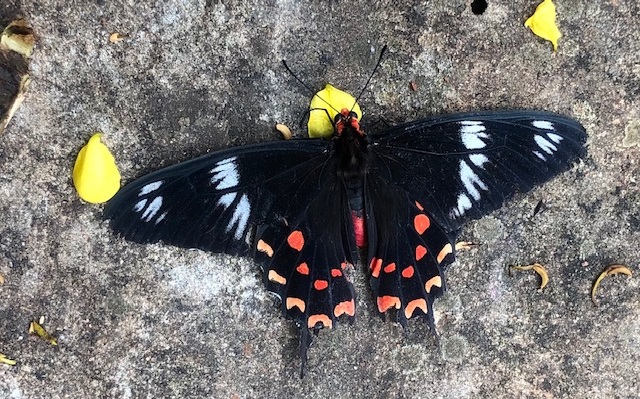
Of Birds and Birdwatchers: International Bird Day — 1 April

April 1 traces back to the International Convention for the Protection of Birds, one of the earliest international efforts to formally recognise the need to conserve avian life. On International Bird Day, observed each year on April 1, the focus is usually on birds themselves—their fragile habitats, their migrations, their role in holding ecosystems together and the threats they face.

But today we are looking more at the people who watch birds and their idiosyncrasies.

Every obsession develops its own private vocabulary. Birdwatchers—or birders, as they prefer—have taken this instinct a step further. Over time, they have shaped a dictionary so distinctive that to outsiders it can sound faintly eccentric. Words here behave differently: they slip free of their everyday meanings, acquire new ones, and quietly signal who belongs.
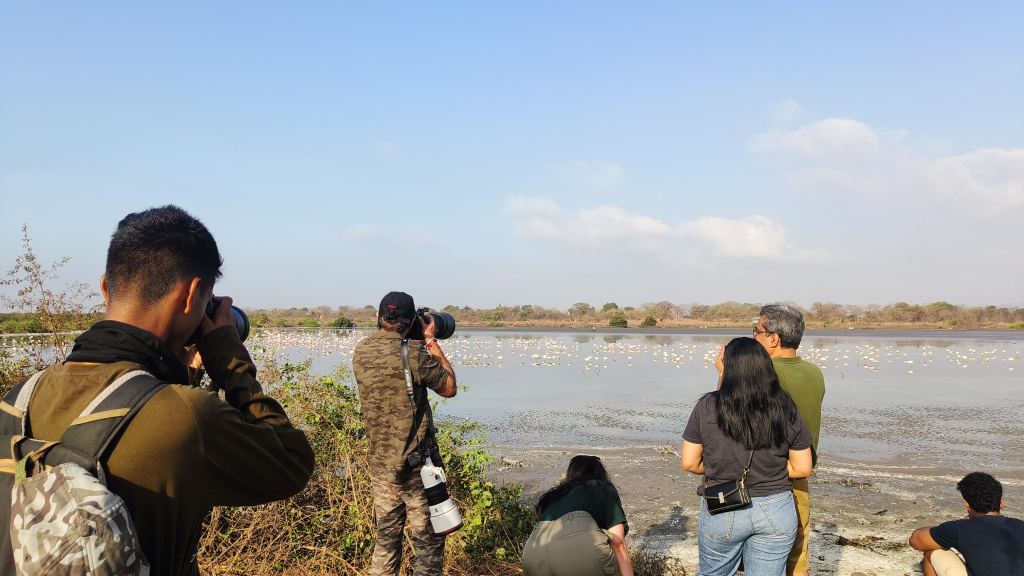
Consider twitching. To most people it suggests nervousness or involuntary movement. In birding, it means deliberate, often hurried travel to see a rare bird reported elsewhere. A twitcher is someone who drops everything at short notice and sets off, binoculars in hand to chase that possibility. The term emerged in mid-twentieth-century Britain, when news of sightings spread through phones and handwritten notes, carrying with them a sense of urgency and barely contained excitement.

This habit of birders to repurpose language runs deep. A tick is not a parasite but a small victory—a species added to one’s personal list. A lifer marks a first-ever sighting, the kind that stays with you. A dip, on the other hand, captures a very specific disappointment: travelling all that way and missing the bird.

Some of the most intriguing expressions describe perception. Jizz—sometimes softened to giss—refers to the overall impression of a bird: its shape, posture, movement, the rhythm of its flight. You may not catch every marking, but you recognise it instinctively. “It had the jizz of a harrier.” There is no real substitute for this word, which perhaps explains why birders defend it with quiet determination.

Then come the social terms, edged with humour. A stringer is someone suspected of stretching the truth about sightings—their records “on a string.” A lagger arrives too late. A gripper is not an object but a bird so rare it inspires envy, and to be gripped off is to feel that envy keenly while still offering polite congratulations.

Even equipment is linguistically reshaped. Bins are binoculars. A scope is a spotting-telescope. To lock on is to get your optics trained on the bird before it disappears. These are practical words, forged in moments where seconds matter.

Place, too, carries its own vocabulary. A patch is a birder’s regular haunt, revisited across seasons and years. A stakeout involves waiting patiently at a known location. Suppression refers to an ethical choice—not publicising a rare bird’s location if attention might disturb it. To flush a bird is simply to make it fly off, usually by getting too close, and is generally frowned upon.

What stands out is how emotionally evocative this language is. It does not just describe birds; it maps the experience of pursuing them. Like any specialised language, birding slang creates community. To know the terms is to belong; to learn them is to enter gradually. Yet many of these words travel beyond their niche. Twitching now describes reactive behaviour more broadly. Jizz has been borrowed into design and art. Patch has found a life in other forms of local attachment.

Colour, in birding, acquires a precision that everyday language rarely demands. Birds are not simply brown or grey; they are rufous, buff, ochre, slate, ashy, olive, chestnut. A drab-looking bird, on closer inspection, becomes a composition of tones—warm on the flanks, cooler on the crown, a faint wash along the breast. These are not ornamental choices of words but functional ones, allowing birders to separate one species from another in seconds. To say “yellow” is often useless; to say “sulphur-yellow with a greenish wash” is to narrow the field.

Even familiar colours are subtly reworked. A “black” bird may, to a birder, show glosses of blue or green; a “white” wing might carry a hint of cream or grey that matters enormously in identification. Terms like supercilium (the eyebrow stripe), mantle (the upper back), and primaries (the outer flight feathers) turn the bird’s body into a map where colour is carefully located, not loosely described. Over time, birders learn to see in these finer gradations, and the language follows suit—less about naming colours as we know them, more about learning to see them as birds wear them.

Some colour words have travelled the other way—borrowed not to describe birds, but from them. Teal is the most familiar example, a word that once referred primarily to the small freshwater duck, the Eurasian teal, whose striking greenish-blue patch lent its name to a shade now used everywhere from fashion to design. What began as a bird became a colour, and then quietly detached itself, so that many people use “teal” today without any awareness of its avian origin.

This is not an isolated case. Duck-egg blue, robin’s egg blue, and peacock blue all carry traces of the natural world into everyday speech. The Indian peafowl, for instance, has given us a whole palette of iridescent blues and greens, while the soft tint of a robin’s egg has become shorthand for a particular pastel. In these instances, birding has quietly shaped how colour is named and imagined—proof that even those who never lift a pair of binoculars are, in some small way, speaking a language borrowed from birds.

In an age where English is increasingly standardised, birdwatching offers a reminder that language still evolves wherever people care deeply enough. These words were not coined for effect. They emerge out of necessity—to express experience, to share feeling, to laugh gently at oneself.

So this International Bird Day, stand quietly at the edge of a wetland or in your garden. Watch the birds and hopefully, you will get a tick!

–Meena

Pic: BNHS https://www.bnhs.org/nature-trails-details/

Celebrating the Third Sector: World NGO Day

Ponder this…

Helpage India runs 152 Mobile Health Units which travel to 1920 community locations spread over 22 states, and has provided 3 million treatments to vulnerable seniors at their doorsteps.

The Association for the Mentally Challenged, Bangalore was founded in 1960, and since then has been supporting children, adolescents and adults with intellectual disabilities, with the aim to educate, train and rehabilitate them.

Association for Democratic Reform works to improve voter knowledge by disseminating information on candidates contesting local and national elections through all media across the country.

Akshaya Patra Foundation strives to eliminate classroom hunger by implementing the Mid-Day Meal Scheme in the government schools and government-aided schools. Today it is serving meals to 1.8 million children across India.

Pratham focuses on high-quality, low-cost and replicable interventions to address gaps in the education system. Working  directly with children and youth as well as through large-scale collaborations with government systems, Pratham programs touch millions of lives every year.

Give India, itself an NGO, is the largest and the most trusted giving platform in India. It enables individuals and organizations to raise and donate funds conveniently to any cause they care about.

Goonj aims to build an equitable relationship of strength, sustenance and dignity between the cities and villages using the under-utilized urban material as a tool to trigger development with dignity, across the country.

Centre for Environment Education has been working across the country for the last 40 years, to increase awareness about the environment and sustainable development, working with schools, higher educational institutions, policy makers and reaching out to youth and the general community.

The Bombay Natural History Society (BNHS), a pan-India wildlife research organization, has been promoting the cause of nature conservation since 1883. Its mission is Conservation of nature, primarily biological diversity through action based on research, education and public awareness.

Sulabh International Social Service Organisation developed a two-pit pour-flush using ecological compost toilet technology. Sulabh flush is based on a simple design that is eco-friendly and uses just around 1.5 litres of water to flush. Over 1.5 million such toilets have been constructed across 492 districts of India.

All the organizations mentioned above belong to what is called the ‘third sector’. It is common to refer to three sectors of society, viz Government, Business, and the Non-Profit sectors. The academic Maciariello. J (2005) explains it thus: ‘First, there are public sector organizations through which the work of government is carried out. Then there are private organizations, organizations established to meet the economic needs and wants of society. And finally there are social sector organizations to care for those welfare needs of citizens that are not met fully either by public or private sector organizations.’

World NGO Day

The relationships among these three are complex and dynamic. They may be complementary, supplementary or antagonistic.  For instance, government looks to business to produce goods and services that people want, provide jobs and underpin the economic growth of the country. At the same time, it regulates how business functions. Similarly, governments and businesses look to NGOs to provide last-mile services to communities. At the same time, governments regulate NGOs; both the others sectors fund them; and both government and business are sometimes sceptical about them. There are also NGOs and activist organizations which bring to light the misdoings or shortcomings of governments and businesses, and speak up for the interests of society, especially those who do not have a voice—the under privileged, the environment, etc., and hence are on the opposite side to the other two. But what we need to understand and accept is that each of these has its own responsibilities and tasks in a well-functioning society.

As per the definition in India, NGOs are Non-Governmental Organizations working towards various causes or charitable purposes, i.e., activities which are carried out for relief of the poor, education, yoga, medical relief, preservation of environment (including watersheds, forests and wildlife) and preservation of monuments or places or objects of artistic or historic interest, and the advancement of any other object of general public utility’. (Section 2(15) of the Income Tax Act, 1961). These organizations aim to do good for society, and not generate profits. Hence, NGOs are legally not allowed to distribute the income from their working to their members. According to some reports, there are over 30 lakh NGOs in India. However, it is difficult to be quite sure of the number of working, functional NGOs.

In terms of legal structure, NGOs can be registered as Societies under Societies Registration Act (1860); Trusts under Indian Trusts Act (1882); or Non-profit company (Section 8 Company) under Companies Act (2013). There is no difference in status among these forms (though there is a lot of difference in terms of disclosure, transparency and governance requirements, with Section 25 companies required the most stringent compliances), and it depends on the context of the organization as to how it chooses to constitute itself.

NGOs differ greatly in the scope of their work, the nature of their work, size, objectives, mission, thrust areas etc. Some may have only a few staff members, while others may have employees running into hundreds. Some may work in a single village, town or community, while others may work across geographies, even internationally. Some may work on a single theme like girl child education, while others may work on holistic rural development or variety of issues from health to environment to sanitation. Some may be involved in grassroots work and delivery of services, while others may be involved in capacity building, or advocacy, innovating and creating new models of delivery of public goods and services, or policy work or funding.

Often, NGOs are accused of financial mis-governance, programme mismanagement, or not making an impact. But there are as many bad apples in every basket! Who has not encountered a bribe-seeking babu or a governmental system which needs to be oiled? How many times a month do we wake up to headlines about the shenanigans of bad corporates which cost the nation in the hundreds of crores? There is no particular reason to point fingers at the Third Sector, who for the most part work with a great deal of commitment and passion, in difficult circumstances and with less rewards.

The need is for society to understand the important role that NGOs play, the value they add, the key role they play in social development and building a just and more equitable world, and not stereotype them—either as impractical do-gooders or a self-serving bunch.

That’s a resolve for World NGO Day, marked on the 27th of February every year!

–Meena

Look Around for the Butterflies!

September is observed as Butterfly Month in India. We have about 1400 species of butterflies–from the 190 mm wingspan Southern Birdwing, to the tiny Grass Jewel with a 15 mm wingspan. And we are yet to discover all the species there are—in the last few years, 77 species have been discovered in just the Matheran Hills near Mumbai.

Citizen-scientists who sight, record and report their findings are critical in any exercise of species monitoring. So here is a list of some popular guides to Indian butterflies which can get you started on your butterfly journey. Who knows, you may discover a new one, or help to expand the understanding of range or behavior! Good luck!

Common Rose Butterfly. Bangalore. August 2020. Photo credit V. Raghunathan
  1. Butterflies of India. Thomas Gay, Isaac Khemikar and JC Puneetha. WWF/Oxford University Press.
  2. A Naturalist’s Guide to the Butterflies of India, Pakistan, Nepal, Bhutan,  Bangladesh and Sri Lanka. Peter Smetacek.
  3. Identification of Indian Butterflies. J.H. Evans. BNHS.
  4. Butterflies of the Indian Region. MA Wynter-Blyth. BNHS.
  5. Butterflies of India. Arun Pratap Singh. Om Books International.

There are several excellent region-specific guides too, including:

  1. Butterflies of the Western Ghats. H. Gaonkar.
  2. Butterflies of Peninsular India. K. Kunthe, G. Madhav.
  3. Butterflies of Sikkim. Meena Haribal. Nature Conservation Foundation.
  4. Butterflies of Delhi. Peter Smetack. Kalpavriksh.

(Unapologetically non-conforming to  APA or any other referencing  style!)

And a few tips to help butterflies along:

  1. Butterfly gardening is a great way to provide a hospitable environment. Butterflies need different plants for different stages of their life-cycles. So planting a garden with many different types of flowering plants (or having pots with different kinds of plants) is a good first step. On the whole, plants like hibiscus, shankpushpi, sunflower, chrysanthemum, marigold, mint etc. are among those preferred by butterflies.
  2. Wherever you live, see if you can have some small areas which are left wild, with local species of wild plants. This will help butterflies, as these are probably their preferred vegetation.
  3. Stop use of chemical pesticides in your garden. These can cause serious harm to the butterfly  at the various stages of its development.

–Meena