
Among the recently announced Magsaysay Awards is Dr Ravi Kannan, an Indian surgical oncologist who has revolutionized cancer treatment in Assam through people-centered health care.
The citation for the award lauds the doctor’s ‘devotion to his profession’s highest ideals of public service, his combination of skill, commitment, and compassion in pushing the boundaries of people-centered, pro-poor health care and cancer care, and for having built, without expectation of reward, a beacon of hope for millions in the Indian state of Assam, thus setting a shining example for all.’
The Ramon Magsaysay Award, Asia’s premier prize and highest honour, recognizes greatness of spirit shown in selfless service to the peoples of Asia.
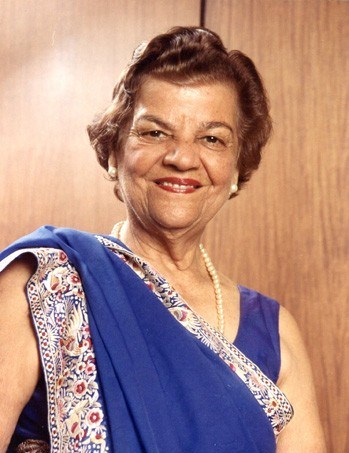
Thirty years ago this award was conferred upon another Indian doctor whose life and work reflected the same spirit that the above citation lauded. She was Dr. Banoo Jehangir Coyaji who was not only a medical practitioner, but an activist who used her profession and passion to change the lives of thousands of women in remote geographical areas.
Banoo Coyaji was born on 7 September 1917 in Bombay. She was the only child of Pestonji, a civil engineer, and Bapamai Kapadia. She spent her early childhood with her parents, but when she started schooling, her mother sent her to live with her grandparents in Pune, where she attended the Convent of Jesus and Mary. Thus Banoo grew up in a large loving household among aunts, uncles and cousins; while the family was affluent, the children were brought up to be disciplined. While many Parsis of the day were supportive of the British, Banoo’s family was nationalistic. Banoo herself was deeply influenced by Gandhiji and his philosophy.
One of the big influences in Banoo’s life was the family doctor Edulji Coyaji who was known in Pune for treating the poor as well as the rich. It is he who encouraged the young school graduate Banoo to study medicine. Sixteen-year old Banoo joined St. Xavier’s College in Bombay for pre-medical studies, following which she pursued medical studies at Grant Medical College in Bombay, completing her MD degree in 1940. In the meanwhile she met Jehangir Coyaji, her mentor Edulji’s younger brother, and an engineer. The two married in 1941 after Banoo completed her degree. In 1943, she moved back to Pune where Jehangir worked, to set up house. Although she had an MD in gynaecology, Banoo joined Dr Edulji in his general practice. One day Dr Edulji told her that she was to go to KEM Hospital, as they were in urgent need of a doctor.
KEM was a private charity hospital that had been founded in 1912 by Pune’s leading citizens. When Banoo entered the hospital in May 1944 it had only forty beds. Primarily a maternity hospital, most of the patients were poor women, many who came from remote areas when their medical condition had reached a critical stage. The women also came with other medical issues so the small staff had to be prepared to treat any emergency. The workload was relentless and they worked over 18 hours a day. Banoo and her husband moved into a flat above the hospital so that she was able to attend to her young son, as well as her patients.
In 1947 Banoo and her husband were among the millions who witnessed India’s tryst with destiny as we became an independent nation. Around this time Banoo also made her first major intervention at KEM hospital. Having treated, over the years, women whose health had suffered due to child bearing issues (too many children, too early or late pregnancies, and the toll of unattended childbirth) Banoo opened Pune’s first birth control clinic. She was joined by Shakuntala Paranjpe a social worker and family-planning advocate who helped her reach out to women and promoted birth control classes for local women. This was a revolutionary initiative for the time.
This was the start of many new developments that took KEM hospital from being a small maternity hospital to become a full-fledged general hospital, and one of the leading charitable institutions in Pune. To achieve this Banoo had to be continually fund-raising, adding new equipment and wards as and when she got funds. All the while she took no pay from the hospital.
Working tirelessly to maintain and grow the hospital, Banoo had no time to attend to something that had always been at the back of her mind. This was the question of what was happening in the villages from where patients often came with serious health conditions. In the late 1960s Banoo felt that it was important that the medical services should reach the villagers before the villagers needed to come to the city for treatment. She began exploring how KEM’s services could provide this outreach. Her team started by identifying a poor rural drought-prone area in Vadu Block, about 40 km from Pune. She approached the Health Secretary of Maharashtra government with the offer that the hospital run the block’s Primary Health Centre. This was agreed upon. In 1972, KEM set up a small outpatient clinic in Vadu. Maternal and child care, and family planning were the early priorities of the programme. From the beginning, KEM had emphasized the importance of research linked to its ongoing medical and public health programmes. In 1972, Banoo Coyaji seized an opportunity to establish a research society at the hospital.
While the first step to outreach had been achieved, Banoo felt that this was still a treatment service to those who came to the clinic. She felt that it was preventive care which could make a real difference, which addressed not the symptoms but the causes—sanitation, clean water, nutrition, and antenatal care. She felt that this would be best done by the local people themselves. Thus she asked each village to recommend a man and a woman who could be trained to serve as part-time health volunteers. The newly recruited volunteers underwent a comprehensive three-week training with a holistic approach to health and a healthy environment. The volunteers returned to their villages as community health guides, forming the grassroots base of a pyramid of healthcare services connecting their villages with KEM hospital at the top.
As the experiment showed results, there were suggestions that it be scaled up. In 1980 the model was introduced into the adjacent blocks of Kendur and Nhavra, where the village panchayats had passed a resolution inviting them to come. But the implementation had numerous challenges. However by the mid-1980s, Banoo Coyaji’s multifaceted interventions in Vadu were bringing about a quiet transformation, not just in human health but in the health of the local environment, and in the capacity and confidence-building of the local population, especially the women.
By 1987, many elements of the Vadu model were accepted by Maharashtra state. These included KEM’s process for selecting and training village health guides, its insistence upon retraining middle-level health officers and on continuing education for its field staff, and its effective patient referral and grassroots record-keeping systems. This model was later used in many developing countries.
In 1988, with the help of the Indian Council of Medical Research, Coyaji launched the Young Women’s Health and Development Project to support an experimental training programme for girls. Aside from lessons in health, hygiene, personal development, and family life, the girls also studied population issues, the status of women, and the importance of education for girls. A second component of the programme involved learning vocational skills such as sewing, knitting, embroidery, crochet, and making costume jewellery and decorative items.
Thus Banoo Coyaji’s vision and the work of the KEM-trained volunteers went well beyond health and family planning to encompass literacy, livelihood options, legal advice, and even the support to question social issues like dowry. It was always a challenge, but as Banoo said All social change is slow. And very profound social changes indeed are needed before India’s women can achieve their full potential.
Dr Banoo Coyaji continued to work for the causes dear to her heart till she passed away on 15 July 2004. In addition to the Magsaysay Award she received many national and international awards, including the Padma Bhushan.
–Mamata
 Millennial Matriarchs