
Every year on December 16, the internet celebrates something most households have tripped over, stepped on in the dark, or quietly wished would disappear: the “stupid toy.” Officially, it’s called Stupid Toy Day—a day devoted to toys that serve no obvious purpose, promise no educational outcomes, and stubbornly resist all attempts at being “enriching.” They do not teach coding. They do not build emotional intelligence. They simply… exist.
A “stupid” toy, as the internet defines it, is not broken or unsafe. It’s just inexplicable. It does one odd thing. It refuses to justify itself. It looks faintly ridiculous. Pet Rocks. Rubber chickens. Slime. Talking dolls that say things no one programmed on purpose. Lights that flash for no reason at all.
And honestly? That’s exactly why I think there is no such thing as a stupid toy. Because anything that gives joy to a child and it wants to spend time playing with, is a good toy! Whether store-bought, found at home or contrived from the most mundane things, whatever floats a child’s boat, is a toy. Entire generations have grown up playing with objects that contributed nothing measurable—and yet somehow contributed enormously to childhood.
The thing about calling a toy stupid is that the word never really belongs to the object. It belongs to the adult standing next to it and judging it.
When parents complain about “stupid toys,” they rarely mean toys that fail the child. They mean toys that fail them. Too loud. Too sticky. Too impossible to clean. Too bright. Too many pieces. Too much glitter. Too much slime. Too much mess. Too much noise. Too much… joy, possibly, expressed in a form that requires major clean-ups. Seems to me, most “stupid” toys are simply inconvenient toys. Toys which seem pointless to an adult.
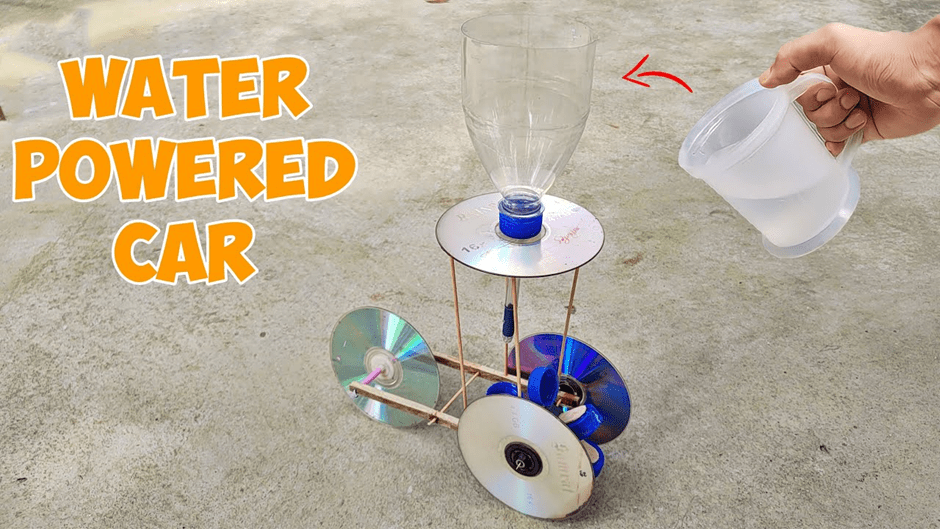
AN ARVIND GUPTA TOY
But to my mind, there is one category of toys that are stupid. A toy becomes exponentially more “stupid” the minute it costs a small fortune. A plush animal that costs as much as a phone. A doll with a wardrobe bigger than yours. A remote-controlled something that breaks in three days. High price and low value—what could be stupider?
Brian Sutton-Smith’s work on toys and play is powerful. In Toys as Culture, he argues that toys don’t live in one neat category like “fun” or “education.” They exist in overlapping worlds—family, technology, education, and marketplace. Toys can be consolation, security and companionship. They can be tools, machines, friends, achievements. They are not just objects; they are emotional support.
A glitter jar might look like a mess waiting to happen.
To a child, it might be the universe in a bottle.
A noisy toy might feel like an assault on adult nerves.
To a child, it might be power.
A useless toy might be, in truth, a deeply useful one—the kind that absorbs loneliness, invents stories, and makes space for imagination.
We forget that children do not play with toys to improve themselves. They play to live inside themselves.
And children by themselves never measure toys by price or return on investment. But sadly, there is no refuting that peer pressure and media pressure have enormous influence on a child perceiving a toy as highly desirable. And that is a worry.
Stupid Toy Day, at its best, quietly reminds us that joy doesn’t require justification. It doesn’t need a developmental framework or a learning outcome chart. Play is not a performance. It is a state of being.
Basically, Stupid Toy Day is STUPID!
Honour the toy that made no sense but means everything. And remember: not everything precious needs to be practical. And in this holiday season, as we go about buying things left and right, remember, a child will be as happy playing with the cardboard carton as the toy which was packed in it. Remember Calvin, Hobbes and their time machine? And Arvind Gupta’s Toys from Trash? Money does NOT equal toy-joy.
–Meena
 Millennial Matriarchs