
A title itself which will be grist to the mill for the “Grammar police”, a term for people who feel compelled to correct other people’s grammar, often in public. Of course, I would rather be pulled up by the grammar police than the “Grammar nazi”—a term which originated in the 1990s to describe someone who is overly critical of others’ grammar, spelling, typos, and other writing or speech errors. Grammar nazis are obsessed with formal grammar rules.
The world of grammar is a contentious one, with some debate or the other making the headlines. The latest is Germany’s outrage about the increasing influence of English on their grammar. The kerfuffle is about what is called the ‘idiot’s apostrophe’ (a translation from the German Deppenapostroph).
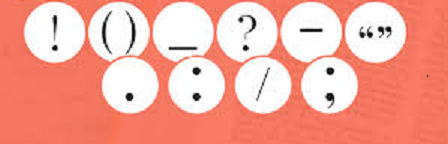
What is this intriguing thing? Well it stems from a basic difference between the grammar of the two languages. Unlike English, German does not traditionally use apostrophes to indicate the genitive case or possession. So in German, the correct form for a shop named after its owner, say Kareena or Paul, is ‘Kareenas Kirana’ or ‘Pauls Dry-cleaning’. And this is how it has been for centuries.
However in English, as we know, the correct form is ‘Kareena’s Kirana’ or Paul’s Dry-cleaning’. And for the last several years, thanks to the influence of English, slowly the general usage in Germany has shifted from ‘Kareenas Kirana’ to ‘Kareena’s Kirana’. Which was OK with the general public.
But now the new edition of the Council for German Orthography’s style guide—the official set of rules for the use of grammar has endorsed this shift, saying ‘Kareena’s Kirana’ is perfectly acceptable. Which has set the pedants and scholars up in arms, as they see it as a dilution of the rules of their language due the pernicious influence of a foreign tongue. The controversy continues to rage there!
We in India are rather free in our misuse of apostrophes, though not quite in this way. What we often see is what is called the English greengrocer’s apostrophe, when an apostrophe before an ‘s’ is mistakenly used to form the plural of a noun (e.g., “a kilo of potato’s”). Look closely at emails you receive, menus, or local ads, and you will find plenty of examples.
It is not just the apostrophe which is at the root of grammar-controversies. The Oxford comma is a case in point. The last comma in a list of three or more things is called the Oxford comma (or the serial comma). For example, in She bought peanuts, soap, and candles, there is a comma between each item listed. The comma before and is the Oxford comma. Not everyone agrees on whether to use the Oxford comma. In this case, the comma can be deleted without changing the sense of the sentence. But there are cases when things may get confusing without it. For example, in the sentence I love my dogs, chikko, and cheese, the Oxford comma makes it clear that all three items are separate. This one could be confusing if the Oxford comma were left out: I love my dogs, chikko and cheese, might mean that the speaker’s dogs are named Chikko and Cheese. Which would also of course imply that the writer is not strong with capitalization! But there is a point there, and doing away completely with Oxford commas does not seem a good idea.
Some people have proposed that we should have Grammar Czars–benevolent dictators who would hand down rulings on ambiguous grammatical rules. The GC’s decisions would be final. All would abide by the GC’s decisions, upon penalty of death (or being banned from social media for periods ranging from a month to a year!).
In the meantime, let us enjoy the creativity of grammatical mistakes, mis-spellings and confusions arising from misunderstanding of words. I love my neighbourhood ‘Karim Puncher Shop’. But surely an ad for a new housing society which I saw some years ago in Hyderabad, which proudly called for subscribers for ‘Mildew Apartments’, takes the cake!
–Meena
 Millennial Matriarchs