
Civil-Society Seshan: A Tribute to Jagdeep Chhokar

Mr. TN Seshan’s tenure as Election Commissioner (12 December 1990 to 11 December 1996) changed how we Indians viewed elections—he made free and fair polls a public expectation rather than an exception. The revolution he brought about was to enforce the Rules, provisions and systems that already existed, but no EC before him had acted sufficiently on. The Model Code of Conduct for instance, which political parties routinely flouted, with EC looking in the other direction. He cancelled or postponed elections where the MCC was blatantly violated. He took action to drastically reduce booth capturing, and clean up electoral rolls and reduce bogus voting. He made candidates and parties accountable for their campaign spending and took strong action against black money in elections. He strengthened monitoring of polling stations, and deployed paramilitary forces in sensitive areas. He laid the ground for Voter ID cards. He increased transparency by publishing election schedules and guidelines well in advance.

The man who ‘ate politicians for breakfast’ helped strengthen and deepen Indian democracy.

If Mr. Seshan brought about all these changes through rigorously using his given power as a bureaucrat, Jagdeep Chhokar, did it purely from the outside. He co-founded the Association for Democratic Reforms (ADR) in 1999 along with his colleague Prof Trilochan Sastry and others as an NGO.

ADR’s primary mission is to improve governance and strengthen democracy by bringing transparency and accountability into India’s political and electoral processes. Over the past two decades, it has become one of the most credible civil society voices on issues of electoral reforms, political funding, and the integrity of candidates and parties.
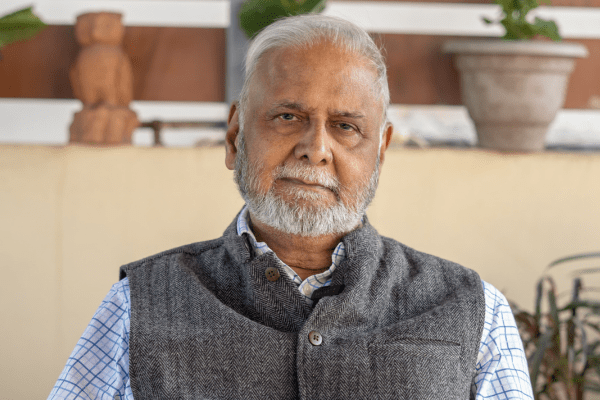
One can see echoes of Mr. Seshan’s work–one of ADR’s most significant contributions has been its role in disclosure of criminal, financial, and educational background of candidates contesting elections. Following a landmark Public Interest Litigation (PIL) filed by ADR, the Supreme Court of India in 2002 mandated that all candidates must file self-sworn affidavits disclosing their criminal records, assets, liabilities, and educational qualifications. This judgment fundamentally changed the way Indian voters access information about their representatives. Since then, ADR, through its platform MyNeta.info, has been collecting, analyzing, and disseminating this information for every state and national election, enabling citizens to make more informed choices.

ADR has also been active in examining political party funding and expenditure, a highly opaque area of Indian democracy. By studying income tax returns and donation reports of political parties, it has consistently highlighted the growing role of unaccounted money in politics. ADR’s reports show that a large proportion of party funding comes from unknown sources, often via electoral bonds or cash donations, which raises concerns about transparency. These findings have been widely cited in media, parliamentary debates, and reform discussions.

Beyond data disclosure, ADR has worked to strengthen electoral reforms in collaboration with the Election Commission of India (ECI), civil society organizations, and policy experts. Its advocacy has covered areas such as decriminalization of politics, regulation of inner-party democracy, curbing misuse of money and muscle power, and improving voter awareness.

Another major initiative is citizen empowerment through voter education. ADR conducts voter awareness campaigns, disseminates easy-to-understand report cards on candidates, and organizes debates and dialogues to promote ethical voting. It also collaborates with other organizations on programs like the National Election Watch (NEW), a network that monitors elections and promotes democratic accountability.

ADR has been central in challenging the electoral bond scheme in courts. In February 2024, the Supreme Court of India struck down the electoral bond scheme as unconstitutional, ordering disclosure of donor identities, amounts, etc.

In essence, ADR’s work has created a data-driven framework for citizen engagement, holding both candidates and political parties accountable. While challenges remain in implementing deeper reforms, ADR has significantly advanced transparency in Indian democracy and continues to push for systemic change.

Recent Initiatives of ADR

  • ADR has published updated data (as of July 2025) on how parties redeemed electoral bonds from 2018-24, including comparison with State Bank of India RTI responses. Their analyses show that in FY 2022-23, 82.42% of the income from “unknown sources” declared by national political parties came from electoral bonds.
  1. The report also examines the financial disclosures of Registered Unrecognised Political Parties (those registered with the Election Commission but not recognised as state or national parties).  There was a 223% rise in declared income during FY 2022-23 among these parties.
  2. ADR and its network National Election Watch (NEW) analysed the affidavits of 8,337 out of 8,360 candidates in the 2024 Lok Sabha elections
  3. Among findings:
    • Around 20% of all candidates had declared criminal cases; for state party candidates it was ~47%.
    • 46% of the winning MPs declared criminal cases, up from 43% in 2019.

A Friend

For Mamata and me however, he was Jagdeep, husband of colleague and dear friend Kiran. For me, he was also the colleague of my husband, and neighbour for decades.

What I recall very fondly is how caring of older people Jagdeep and Kiran were. Often when my parents were visiting and they knew I was travelling, they would ensure to drop in and chat, and solve any little problem they might have. The affection was mutual. He was a particular favourite of my mother’s who would rush to make rasam if she heard he had a cold.

Jagdeep did his Law when he was teaching at IIM. And he never did well in exams at all, because he did not follow the quarter-baked kunjis from which examiners expected students to mug and regurgitate answers. He would regale us with the regressive and misinterpreted answers that featured in crib-books, and while we laughed, we also worried about what lawyers were learning.

All of us who knew Jagdeep personally will of course miss you. But the whole country will miss you. Thank you for everything you have done for India’s democracy. We know it was your consuming passion and commitment for the last 25 years. And we also know it took an immense amount of courage.

Thank you Jagdeep. RIP.

Wish you all strength, Kiran.

–Meena and Mamata

Also see: Close encouters with Al-Seshan at https://millennialmatriarch464992105.wordpress.com/wp-admin/post.php?post=1106&action=edit

Celebrating the Third Sector: World NGO Day

Ponder this…

Helpage India runs 152 Mobile Health Units which travel to 1920 community locations spread over 22 states, and has provided 3 million treatments to vulnerable seniors at their doorsteps.

The Association for the Mentally Challenged, Bangalore was founded in 1960, and since then has been supporting children, adolescents and adults with intellectual disabilities, with the aim to educate, train and rehabilitate them.

Association for Democratic Reform works to improve voter knowledge by disseminating information on candidates contesting local and national elections through all media across the country.

Akshaya Patra Foundation strives to eliminate classroom hunger by implementing the Mid-Day Meal Scheme in the government schools and government-aided schools. Today it is serving meals to 1.8 million children across India.

Pratham focuses on high-quality, low-cost and replicable interventions to address gaps in the education system. Working  directly with children and youth as well as through large-scale collaborations with government systems, Pratham programs touch millions of lives every year.

Give India, itself an NGO, is the largest and the most trusted giving platform in India. It enables individuals and organizations to raise and donate funds conveniently to any cause they care about.

Goonj aims to build an equitable relationship of strength, sustenance and dignity between the cities and villages using the under-utilized urban material as a tool to trigger development with dignity, across the country.

Centre for Environment Education has been working across the country for the last 40 years, to increase awareness about the environment and sustainable development, working with schools, higher educational institutions, policy makers and reaching out to youth and the general community.

The Bombay Natural History Society (BNHS), a pan-India wildlife research organization, has been promoting the cause of nature conservation since 1883. Its mission is Conservation of nature, primarily biological diversity through action based on research, education and public awareness.

Sulabh International Social Service Organisation developed a two-pit pour-flush using ecological compost toilet technology. Sulabh flush is based on a simple design that is eco-friendly and uses just around 1.5 litres of water to flush. Over 1.5 million such toilets have been constructed across 492 districts of India.

All the organizations mentioned above belong to what is called the ‘third sector’. It is common to refer to three sectors of society, viz Government, Business, and the Non-Profit sectors. The academic Maciariello. J (2005) explains it thus: ‘First, there are public sector organizations through which the work of government is carried out. Then there are private organizations, organizations established to meet the economic needs and wants of society. And finally there are social sector organizations to care for those welfare needs of citizens that are not met fully either by public or private sector organizations.’

World NGO Day

The relationships among these three are complex and dynamic. They may be complementary, supplementary or antagonistic.  For instance, government looks to business to produce goods and services that people want, provide jobs and underpin the economic growth of the country. At the same time, it regulates how business functions. Similarly, governments and businesses look to NGOs to provide last-mile services to communities. At the same time, governments regulate NGOs; both the others sectors fund them; and both government and business are sometimes sceptical about them. There are also NGOs and activist organizations which bring to light the misdoings or shortcomings of governments and businesses, and speak up for the interests of society, especially those who do not have a voice—the under privileged, the environment, etc., and hence are on the opposite side to the other two. But what we need to understand and accept is that each of these has its own responsibilities and tasks in a well-functioning society.

As per the definition in India, NGOs are Non-Governmental Organizations working towards various causes or charitable purposes, i.e., activities which are carried out for relief of the poor, education, yoga, medical relief, preservation of environment (including watersheds, forests and wildlife) and preservation of monuments or places or objects of artistic or historic interest, and the advancement of any other object of general public utility’. (Section 2(15) of the Income Tax Act, 1961). These organizations aim to do good for society, and not generate profits. Hence, NGOs are legally not allowed to distribute the income from their working to their members. According to some reports, there are over 30 lakh NGOs in India. However, it is difficult to be quite sure of the number of working, functional NGOs.

In terms of legal structure, NGOs can be registered as Societies under Societies Registration Act (1860); Trusts under Indian Trusts Act (1882); or Non-profit company (Section 8 Company) under Companies Act (2013). There is no difference in status among these forms (though there is a lot of difference in terms of disclosure, transparency and governance requirements, with Section 25 companies required the most stringent compliances), and it depends on the context of the organization as to how it chooses to constitute itself.

NGOs differ greatly in the scope of their work, the nature of their work, size, objectives, mission, thrust areas etc. Some may have only a few staff members, while others may have employees running into hundreds. Some may work in a single village, town or community, while others may work across geographies, even internationally. Some may work on a single theme like girl child education, while others may work on holistic rural development or variety of issues from health to environment to sanitation. Some may be involved in grassroots work and delivery of services, while others may be involved in capacity building, or advocacy, innovating and creating new models of delivery of public goods and services, or policy work or funding.

Often, NGOs are accused of financial mis-governance, programme mismanagement, or not making an impact. But there are as many bad apples in every basket! Who has not encountered a bribe-seeking babu or a governmental system which needs to be oiled? How many times a month do we wake up to headlines about the shenanigans of bad corporates which cost the nation in the hundreds of crores? There is no particular reason to point fingers at the Third Sector, who for the most part work with a great deal of commitment and passion, in difficult circumstances and with less rewards.

The need is for society to understand the important role that NGOs play, the value they add, the key role they play in social development and building a just and more equitable world, and not stereotype them—either as impractical do-gooders or a self-serving bunch.

That’s a resolve for World NGO Day, marked on the 27th of February every year!

–Meena