Thanks, but No Thanks: Awards Declined

Last week I was ruminating on KK Shailaja and her refusal of the Magsaysay award. She is not alone. There are several people across the world who for principles or personal choices refuse awards.

Arguably the most prestigious award in the world is the Nobel. But there are two people who have refused the Noble too.

The first was the author Jean-Paul Sartre, who in principle refused all official awards. He declined the 1964 Literature Prize, stating: ‘A writer must refuse to allow himself to be transformed into an institution, even if it takes place in the most honourable form.’

The other person who refused the Nobel was Le Duc Tho of North Vietnam. He and Henry Kissinger were awarded the 1974 Peace Prize together  ’for jointly having negotiated a cease fire in Vietnam in 1973’. However, Le Duc Tho refused the award ‘on the grounds that his opposite number had violated the truce’. He said ‘peace has not yet been established’.

Russian mathematician Grigori Perelman’s reason for declining the Fields Medal, considered the Nobel of mathematics, was similar to Jean-Paul Sartre. He said that he had no interest in money and fame and did not want to be on display like a zoo animal. Considering that the inaugural award was $1-million, that was a brave stand.

Arundati Roy
Arundati Roy

Protest against governments is often a reason to refuse awards. For instance, Arundhati Roy, Booker-winning novelist, refused the Sahitya Akademi Award for her collection of political essays  The Algebra of Infinite Justice saying she could not accept an award from an institution supported by the Indian government, whose policies on “big dams, nuclear weapons, increasing militarization and economic liberalism” she disagreed with.
Chinua Achebe
Chinua Achebe

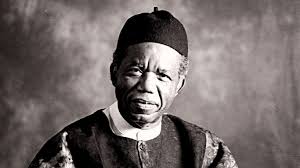
Another author who refused an award from his government was the renowned novelist Chinua Achebe. Nigeria offered him the ‘Commander of the Federal Republic’. But Achebe in a letter to the then-president Olusegun Obasanjo expressed his great discomfort with events in Nigeria. His letter said ‘I had a strong belief that we would outgrow our shortcomings under leaders committed to uniting our diverse peoples. Nigeria’s condition today under your watch is, however, too dangerous for silence.’ He again turned down the honour again in 2011

Not against the government, but Marlon Brando registered his protest against the establishment—in this case Hollywood. He refused the Oscar for Best Actor for the film Godfather in 1973, citing the ill-treatment of native Americans by the film industry as the reason.

Several Indians have refused the government’s high honours for several reason.  Maulana Abul Kalam Azad, freedom fighter and our first Education Minister declined the honour, taking the principled stand that those who were on selection committees for national honours should not themselves receive them.

PN Haksar bureaucrat and diplomat who served as Principal Secretary to the PM was offered the Bharat Ratna in 1973 specially in the light of his role in brokering the Indi-Soviet Treaty of Friendship and Cooperation, as well as the Shimla Agreement. He declined saying ‘Accepting an award for work done somehow causes an inexplicable discomfort to me’. Some other civil servants have also taken this stand.

A communist who probably set the standard for KK Shailaja was EMS Namboodiripad, General Secretary of the CPI (M) and the Kerala’s first Chief Minister who declined the 1992 Bharat Ratna–he said it went against his nature to accept a state honour.

Some others like Swami Ranganathananda have declined awards because it was given to them as individuals, and not to the organizations that they were part of—in this case, the Ramakrishana Mission.

Two prominent journalists—Nikhil Chakravarty and K. Subrahmanyam (who was also a civil servant)—refused Padma Bhushans because they thought it was not appropriate for journalists to accept awards from the government. As Nikhilda put it ‘journalists should not be identified with the establishment.’

Romila Thapar the distinguished historian refused to accept the Padma Bhushan twice. Her stand was that she would accept awards only ‘from academic institutions or those associated with my professional work.’

Several distinguished people have refused or returned honours due to specific incidents, as a mark of protest against the government. These include Hindi author and parliamentarian Seth Govind Das, and Hindi novelist and playwright Vrindavan Lal Varma, both protesting against the amendment of the Official Languages Act to allow for the continued official use of the English language. The famous Kannada novelist Shivram Karanth  returned his award to protest against the declaration of Emergency. PM Bhargava, scientist and founder-director of Centre for Cellular and Molecular Biology returned his award in protest of the Dadri mob lynchings and out of concern at the ‘prevailing socio-political situation’ in the country. Prakash Singh Badal ex-CM Punjab, and SS Dhindsa leader of the Shiromani Akali Dal (Democratic) party, returned their awards to show their support to the Farmers’ protests.

Some return awards because they feel the recognition has been delayed too long, or because they feel that people junior to them have been recognized before them. These include playback singer S. Janaki who felt it came too late. Sociologist GS Ghurye refused his award because he felt that people who had contributed less had been given more prestigious awards.

Whatever the reasons, when people of achievement refuse or return awards, governments and establishments need to seriously listen to the reasons. If they think the person is worth honouring, surely the point that they make by refusing the award must be worth listening to?

–Meena
Engineering Woman Power: A. Lalitha

15 September is celebrated as Engineering Day in India to mark the birth anniversary of M Visvesvaraya, one of India’s greatest engineers who made a vital contribution to the field of engineering and education. Visvesvaraya is best known for designing one of India’s first flood protection systems, construction of dams and reservoirs, and setting up one of the first engineering institutes in the country, the Government Engineering College, now called University Visvesvaraya College of Engineering, Bengaluru.

Today there are hundreds of engineering colleges in India and tens of thousands of students, both boys and girls, compete to gain places in the best of these colleges. While the idea of a woman pursuing engineering is not uncommon today, the way had been paved by spunky pioneers who took on numerous challenges in a different time and circumstances. This is a good day to remember one of these women—A. Lalitha.

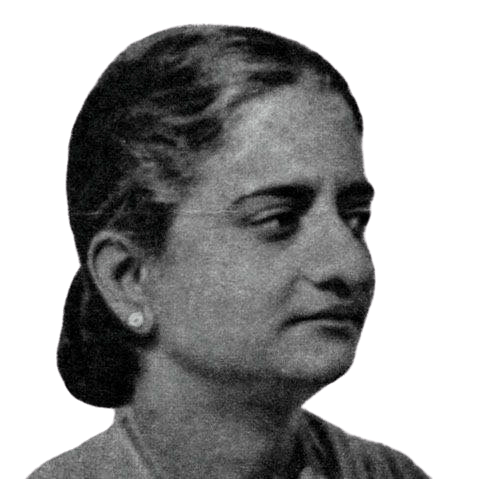
Lalitha was born on 27 August 1919 in a middle class Telugu family, one of seven siblings. Her father was himself an engineer, and fairly broad-minded, but societal norms and expectations took precedence over personal beliefs. Thus, as was the norm in those days, while Lalitha’s brothers were supported in pursuing higher studies, the girls in the family were educated only till the primary level, and then married off. Lalitha herself was married at the age of 15. But her father ensured that even in her new life she could continue to study till she completed class 10.

Sadly Lalitha’s married life was short-lived. Her husband passed away when she was just 18 years old. Lalitha had recently become a mother to a baby girl. Now she was a young widow with a four-month-old daughter, living in a society where widows were shunned and relegated to a life of isolation and austerity. This is where Lalitha’s fighting spirit led her to quietly start breaking the first of many barriers.

She moved back to her father’s house with a strong resolve to study and get a professional degree so that in future she could become self-reliant. Her father supported her decision, and Lalitha cleared the intermediate exam from Queen Mary’s College in Madras. This was the first step to moving ahead.

At the time there were women who were studying medicine. But Lalitha felt that a career in medicine would not leave her sufficient time and attention for her young daughter, who was her priority. Living in a family of engineers, this was an option that came to her mind. At that time technical education was itself in a nascent stage in India, and the idea of women entering this field was unheard of. No institute was admitting women. Once again, her father Pappu Subbarao helped to open a door for his daughter. He was a professor of electrical engineering in the College of Engineering (CEG) in Guindy, and he put up a special request to the then Principal of CEG Dr KC Chacko, that his daughter be permitted to take up an engineering course. He also put forward the appeal to the Director of Public Instruction, RM Statham. Luckily, both these officials were forward thinking and were agreeable to opening admission for a woman for the first time in the history of CEG. Lalitha applied for the electrical engineering course.

Thus Lalitha became the only girl in a college with hundreds of boys. But as accounts go, she never felt uncomfortable there. Accommodation in a separate hostel was arranged for her, while her daughter was looked after by her brother’s family; Lalitha visited her every weekend. While Lalitha was comfortable and happy in her classes, she missed having company in the hostel. Once again her father encouraged the authorities to open admissions for more women. In response to the advertisement two more women—Leelamma George and PK Thresia joined in the civil engineering course the following year.

As per the government rule then, engineering students had to put in four years of academic work and one year of practical training before they could graduate. Lalitha completed her practical training with a one-year apprenticeship at the Jamalpur Railway Workshop, a major repair and overhaul facility. 

Lalitha received her Bachelor of Engineering degree in 1943. Although they were technically junior, the three women engineers graduated together. Interestingly, the degree certificate of CEG had to replace the word He with She for their first three women graduates! 

Having already crossed several hurdles, Lalitha was ready to start a new phase of life as a professional. However she continued to give priority to her daughter Shyamala and looked for work opportunities which would not compromise her care. She accepted a job offer as an engineering assistant at the Central Standards Organisations of India, Simla. This was suitable as she was able to live with her brother’s family which offered support and care to her daughter. After two years in this job, she moved to Chennai work with her father helping him with his research which had led to several patents. This was intellectually stimulating, but financial pressures led Lalitha to find other work. She moved to Calcutta to work in the engineering department of Associated Electrical Industries. Once more her second brother and his family provided a home for her daughter. 

Lalitha got the opportunity to put all her education to practice, and gained experience and expertise. She worked on large projects, including the upcoming Bhakra Nangal Dam, which was then to be the biggest dam in India. Her tasks included the designing of transmission lines, substation layouts, and protective gear. Her brilliance and abilities began to gain national and international attention.

In 1953, the London-based Council of Electrical Engineers invited her to be an associate member. Visiting a British factory as an Indian woman dressed in a sari attracted a lot of press attention. She later became a full member. In 1964 she was invited to the First International Conference of Engineers and Scientists in New York. She was the first Indian woman engineer to attend. Lalitha subsequently became involved in several international organisations for women engineers. In 1965 she became a member of the Women’s Engineering Society of London.

Lalitha continued to work with Associated Electrical Associates (later taken over by General Electric Company) until she retired in 1977. She also lived with her sister-in-law in the same house in Calcutta for 35 years.  Throughout her career she championed the idea of women in STEM careers. Her daughter Shyamala followed in her mother’s footsteps by studying science and maths, and making a career in teaching maths. In an interview her daughter summed up the essence of her mother’s work and life: “What I take from her life is her extreme patience towards people and the quality of doing instead of just talking. She believed that people come into your life for a reason and leave when the purpose is over.”

Not long after retirement Lalitha suffered from a brain aneurysm and passed away at the age of 60, in 1979. Today as many girls take up engineering as a career, most would not know about the grit and determination of a woman who helped pave the way. A. Lalitha—a young widow, dedicated single mother, a brilliant student, a path-breaking professional clad in a sari, who did not need to wear power suits to break the glass ceiling. 

–Mamata

The Conviction to Refuse an Honour

The Ramon Magsaysay Award is undoubtedly a high honour and prestige. Instituted in 1957 (with the first awards given in 1958), it is called the Noble Peace Prize of Asia. It ‘celebrates greatness of spirit and transformative leadership in Asia.’ It has till date, been conferred on 300 individuals and organizations  ‘whose selfless service has offered their societies, Asia, and the world successful solutions to some of the most challenging problems of human development.’ The awardees are selected by the Ramon Magsaysay Foundation trustees who call for nominations from a pool of international confidential nominators. The nominations go through a rigorous process of evaluation by the trustees.  

Awardees include Vinobha Bhave, the Dalai Lama, Mother Teresa, Verghese Kurian, Tribhuvandas Patel, The Peace Corps in Asia, Jayaprakash Narayan, Muhammad Yunus….the list of luminaries is distinguished indeed!

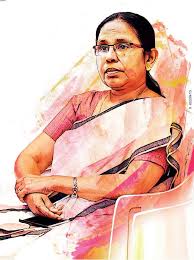
KK Shailaja
KK Shailaja

This year, Kerala’s former health minister KK Shailaja (called Shailaja Teacher) was one of those selected. This was in recognition of her stellar performance as health minister of Kerala, especially the management of Covid-19 in Kerala. She was one of the first people world-wide to recognize the potential seriousness of the virus, and ensured that her state was ready to combat it.

When she got the news of her award, Shailaja informed her party, the CPI(M). They deliberated on this and asked her to refuse it. Being a loyal party worker, she politely wrote to the Ramon Magsaysay Foundation refusing the award, saying that the battle against Covid was a collective effort, and that she was not individually responsible for it, and thus could not accept the award.

Controversy has raged since then. Was it jealousy on the part of some of her senior colleagues that she was getting such a high-profile recognition? It has been perceived for some time now that some of the party leaders in Kerala fear her success and her being highlighted on the international stage, and that is why she was refused a second term as Minister. Was it misogyny? That some people will do anything to bring down a successful women?

Well, maybe a bit of both.

But there is more to it. In fact, deep ideological reasons.

The Ramon Magsaysay Award was instituted in memory of Ramon Magsaysay, former President of the Philippines, and his commitment to integrity in governance, courageous service to the people, and pragmatic idealism within a democratic society.And indeed Ramon Magsaysay did live by these ideals. He did a lot for the people of his country, cleaned up the administration and made government responsive. He created the Presidential Complaints and Action Committee, a body which heard grievances of the public and recommended remedial actions.  He established the National Resettlement and Rehabilitation Administration (NARRA) which redistributed thousands of acres of lands to the landless. He set up the Agricultural Credit and Cooperative Financing Administration (ACCFA) to make available rural loans to small farmers and share tenants loans at low interest rates.He played a significant role in regional affairs too. Magsaysay’s presidency was considered one of the cleanest and most corruption-free in Philippine history.

So he was a tall leader, no doubt. But the explanation for Shailaja’s refusal of an award names after him goes a little further back in time. In early August 1950, using his own experiences in guerrilla warfare during World War II he was the strategist behind then-President Quirino’s plan to fight the Communist guerrillas. He led this attack when he was named Secretary of National Defence in September 1950. All his life, he opposed communism not only in speeches and forums, but also on the ground through military action.  All through his years in power, he was a close friend, ally and supporter of the United States whose foremost enemy was communism.  All his life, Magsaysay was a vocal spokesman against communists. 

So that is one part of it.

Coming to the award itself. The Ramon Magsaysay award was instituted through an endowment from the Rockefellers Brothers Fund. The Rockefellers were staunchly anti-communist. For instance, as Assistant Secretary of State, Nelson Rockefeller played a big role in the establishment of NATO, its stance against the Soviet Union, and the resolution of NATO members to defeat communism and its spread. The Rockefellers also had a big hand in the shaping of the UN and its stance against communisim.

So the people who instituted the award as well as the man whom it commemorates were dead against communism.

To me, it makes sense why Ms. Shailaja, a life-long member of the Communist Party of India (Marxist), with a deep committment to the communist ideology, refused the award. I am now a bigger fan than ever!

KK Sahilaja has a host of awards and recongitions from across the world, and awards probably do not matter to her.

But I hope that she will be able to play a bigger part in the management of public affairs not only in her state but the country too. We would be the poorer if she cannot!

–Meena

From Tagore to Ken Robinson: Creative Education

Continuing musings on education this week. This time with some thoughts from Sir Ken Robinson, one of the most influential contemporary thinkers on education, and discovering uncanny similarities in his vision with that of Rabindranath Tagore.

British-born teacher, author and speaker Ken Robinson spoke out against what he describes essentially an industrial model of education, a manufacturing model, which is based on linearity and conformity, and ‘batching’ people. As he said: We have sold ourselves into a fast food model of education, and it is impoverishing our spirits and our energies as much as fast food is depleting our physical bodies.

He viewed large school systems as being rigid and unresponsive, squeezing the creative juices out of children by overemphasizing standardized testing and subjects like mathematics and science over the arts and humanities.

Ken Robinson advocated strongly for schools not only to broaden their curriculums but also to support teachers as creative professionals; and to personalize learning by breaking large classrooms — artificial environments that invite boredom, he said — into small groups.

Over a hundred years after Tagore, he shared Tagore’s vision of a good teacher: Good teachers activate children’s minds instead of helping them to assimilate and collect information, and inspire children through their own self-development.

Ken Robinson made it his life’s mission to highlight the importance of systems and environments that nurtured creativity. In his book Creative Schools he describes how he views creativity.

 Imagination is the root of creativity. It is the ability to bring to mind things that aren’t present to our senses.

Creativity is putting your imagination to work. It is applied imagination. Innovation is putting new ideas into practice. There are various myths about creativity. One is that only special people are creative, another is that creativity is only about the arts, a third is that creativity cannot be taught, and a fourth is that it’s all to do with uninhibited “self-expression.”

None of these is true. Creativity draws from many powers that we all have by virtue of being human. Creativity is possible in all areas of human life, in science, the arts, mathematics, technology, cuisine, teaching, politics, business, you name it. And like many human capacities, our creative powers can be cultivated and refined. Doing that involves an increasing mastery of skills, knowledge, and ideas.

Creativity is about fresh thinking. It doesn’t have to be new to the whole of humanity— though that’s always a bonus— but certainly to the person whose work it is. Creativity also involves making critical judgments about whether what you’re working on is any good, be it a theorem, a design, or a poem. Creative work often passes through typical phases. Sometimes what you end up with is not what you had in mind when you started. It’s a dynamic process that often involves making new connections, crossing disciplines, and using metaphors and analogies. Being creative is not just about having off-the-wall ideas and letting your imagination run free. It may involve all of that, but it also involves refining, testing, and focusing what you’re doing. It’s about original thinking on the part of the individual, and it’s also about judging critically whether the work in process is taking the right shape and is worthwhile, at least for the person producing it.

Creativity is not the opposite of discipline and control. On the contrary, creativity in any field may involve deep factual knowledge and high levels of practical skill. Cultivating creativity is one of the most interesting challenges for any teacher. It involves understanding the real dynamics of creative work.

The real driver of creativity is an appetite for discovery and a passion for the work itself. When students are motivated to learn, they naturally acquire the skills they need to get the work done. Their mastery of them grows as their creative ambitions expand. You’ll find evidence of this process in great teaching in every discipline from football to chemistry.

We have to recognize that human flourishing is not a mechanical process, it’s an organic process. And you cannot predict the outcome of human development. All you can do, like a farmer, is to create the conditions under which they will begin to flourish.

Tagore dreamed the same dream and urged for the same process when he wrote: Do not be preoccupied with method. Leave your instincts to guide you to life. Children differ from one another. One must learn to know them, to navigate among them as one navigates among reefs.

This week as we all remembered the teachers who have, in some way or the other, contributed to making us who we are, words of such visionaries help us to better articulate what it means to be a real teacher.

–Mamata

Celebrating the Gurus: Teachers’ Day

Rabindranath Tagore was the one who gave Gandhiji the title of Mahatma. Gandhi in turn called him ‘Gurudev’ in reverence to his wisdom and his learning, and saw him as a teacher to humanity.
Gurudev and Radhakrishnan at Shantiniketan where Oxford Univ held a special convocation in 1940 to honour Tagore
Gurudev Rabindranath Tagore gave India a different vision of education, of teachers and the teaching process. It is appropriate to remind ourselves of his views on these subjects on the occasion of Teachers’ Day, Sept 5. Trying to paraphrase him would be useless.  So better, I thought, to share a few quotes:
About teachers:
‘A teacher can never truly teach unless he too continues to teach himself. One lamp can never light another unless it continues to burn its own flames. Similarly, the teacher who has come to the end of his subject, and has no living traffic with his knowledge but merely repeats his lessons to his students, can only burden their minds, he cannot inspire them.’
‘Good teachers activate children’s minds instead of helping them to assimilate and collect information, and inspire children through their own self-development. They encourage them to work on the teacher’s own original projects and thereby travel together on their journey to more understanding.’
Gurudev always looked for gurus for his schools and educational institutions, rather than teachers. According to him, gurus are ‘active in the efforts to achieve the fullness of humanity”. They ‘will give their whole selves to their students instead of merely sharing the material as prescribed by the curriculum’.
His message to teachers:
‘Do not be preoccupied with method. Leave your instincts to guide you to life. Children differ from one another. One must learn to know them, to navigate among them as one navigates among reefs. To explore the geography of their minds, a mysterious instinct, sympathetic to life, is the best of all guides.’
He wanted teachers and school administrators to recognize the importance of letting children discover the joy of learning and what nature has to teach them. Nothing sums this up better than an excerpt from a lecture he gave in London in 1933, where he recounts one of his encounters with a more ‘traditional’ educator:
‘I well remember the surprise and annoyance of an experienced headmaster, reputed to be a successful disciplinarian, when he saw one of the boys of my school climbing a tree and choosing a fork of the branches for settling down to his studies. I had to say to him in explanation that ‘childhood is the only period of life when a civilized man can exercise his choice between the branches of a tree and his drawing-room chair, and should I deprive this boy of that privilege because I, as a grown-up man, am barred from it?’ What is surprising is to notice the same headmaster’s approbation of the boys’ studying botany. He believes in an impersonal knowledge of the tree because that is science, but not in a personal experience of it. This growth of experience leads to forming instinct, which is the result of nature’s own method of instruction. The boys of my school have acquired instinctive knowledge of the physiognomy of the tree. By the least touch they know where they can find a foothold upon an apparently inhospitable trunk; they know how far they can take liberty with the branches, how to distribute their bodies’ weight so as to make themselves least burdensome to branchlets. My boys are able to make the best possible use of the tree in the matter of gathering fruits, taking rest and hiding from undesirable pursuers. I myself was brought up in a cultured home in a town, and as far as my personal behaviour goes, I have been obliged to act all through my life as if I were born in a world where there are no trees. Therefore I consider it as a part of education for my boys to let them fully realize that they are in a scheme of existence where trees are a substantial fact, not merely as generating chlorophyll and taking carbon from the air, but as living trees.Ideal Teachers: Gurus vs. Schoolmasters.’
On Teachers’ Day, as we commemorate Dr. S. Radhakrishnan, another of India’s great educators, let us think about what education means in this changing world, and how the role of teachers must evolve.
–Meena

Sweet Offerings

Meena’s biscuit trail led me to look into the history and story of what is perhaps one of the favourite pan-Indian sweets—the modak or laddoo. This seemed appropriate in a week marked by the preparing, offering and the partaking of this sweet for Ganesh Chaturthi.

The connection between the elephant-headed God and his love for modaks can be traced back to ancient lore and legends. One story goes thus. One day, Anasuya, the wife of the ancient rishi Atri invited lord Shiva, his wife Parvati, and their baby son Ganesha for a meal. Shiva was ready to start eating but Anasuya said that the adults could eat once the Bal Ganesha was fed. She laid out a sumptuous spread, and Ganesha immediately started to partake of the goodies. He ate and ate everything that was before him, but just did not seem to have had enough. His parents and hostess looked on in wonder. Anasuya then went in and brought a single piece of sweet and offered it to the seemingly ever-hungry Ganesha. As soon as he ate it, Ganesha let out a loud burp. At last, he was sated! At exactly the same time, by now  the very-hungry Shiva also burped 21 times. Parvati was curious to know what this wonder sweet was that seemed to have satisfied the hunger of both father and son. Anasuya told her that it was a modak. Thereafter Parvati expressed her wish that all devotees of Ganesha should offer him 21 modaks. This tradition has carried on to this day.  

While the traditional modak recipe is said to have its origins in Maharashtra, modaks  are prepared across India in a variety of ways, and are known by various names– mothagam or kozhukattai in Tamil, modhaka or kadubu in Kannada, or modakam or kudumu in Telugu. Modaks are made both by steaming, and by frying. Their traditional recipe includes fillings of grated coconut and jaggery with a hint of cardamom or nutmeg, encased in a covering made of flour.

Churma laddoo

While in several parts of India, modak refers to the steamed and stuffed version, in some states like Gujarat the word modak and laddoo are synonymous. The word laddoo is used to refer to the spherical sweet primarily made from flour, ghee, and sugar or jaggery. Laddoos themselves have a long history, both in lore as well as in the culinary culture of India.

An interesting folktale traces the origins of what may have caused the difference between laddoo and modak. The story goes that Ganesha’s maternal grandmother Queen Menavati used to indulge her grandson by feeding him with laddoos that she made. As he grew, his appetite for the sweet was insatiable. Grandmother could not keep up with his endless capacity to gobble them down, especially as making  laddoos is a laborious and time-consuming process, as each ball has to be individually moulded and set . She thought that by making a similar stuffed sweet that could be steamed together in larger numbers would hasten the process. Her grandson was equally delighted with this variation. And thus came about the steamed modaks, and Ganesha’s moniker Modakpriya—lover of modaks.

The history of laddoos can be traced back a long way. The term ladduka first finds mention in the Mahabharata. Sushruta Samhita the classical Sanskrit text on medicine and surgery also has references to laddoos. It is believed that Indian physician, Sushruta, used ladoos as an antiseptic to treat his surgical patients. In the 4th century BC, he used a concoction of ingredients like sesame seeds, jaggery and peanuts which had nutritional properties, to make laddoos which provided strength and energy. Even today new mothers and pregnant women are given laddoos with special additional herbs and seeds to boost their immunity, and improve lactation. Old texts also mention laddoos being carried during long journeys, and wartime because of their long shelf life.  

The wonderful diversity of culinary traditions across India has led to a mouth-watering array of ‘speciality’ laddoos made with different ingredients. Over the years, people from different communities started experimenting with the ingredients and replaced them with whatever was readily available in their region. Other elements like geography, weather and diets of communities also play a significant role. For example laddoos with gond (edible gum) are eaten in winter as they are believed to give warmth and energy. The Sankranti festival in Gujarat is incomplete without the variety of laddoos made from seasonal ingredients like sesame, peanuts and jaggery. 

From the besan laddoos which are common to several states, the boondi or motichur laddoo that is originally said to hail from Rajasthan and Uttar Pradesh, churma laddoo from Gujarat and Rajasthan, coconut ladoo and rava laddoo from the southern states, the Assamese black sesame laddoo–each region-specific laddoo has its distinct identity, and has specific associations with the local traditions and culture.

The laddoo also has associations with celebrations. While traditionally the partaking of laddoos is a part of certain festivals, the distribution and sharing of laddoos is an important part of any happy or auspicious occasion—an engagement, a wedding, the birth of a baby, exam results, a new job appointment. All “good news” was heralded by sending and receiving a box of laddoos.

Times are changing though. In urban areas, the time-honoured tradition is now being represented by boxes of designer chocolates, and gift hampers with imported goodies. Celebrity chefs are conjuring up fusion recipes for old sweets to create innovative desserts. And yet, for many of us, there is sense of nostalgia and comfort that the very word laddoo or modak brings. For me it evokes memories of my mother-in-law’s literal labour of love in making trays full of churma laddoos coated with poppy seeds, family feasts where these were consumed with gusto, and the wonderful feeling of being happily replete before sinking into a deep siesta. A modak by any name tastes just as sweet!

–Mamata

The Biscuity Taste of Nostalgia

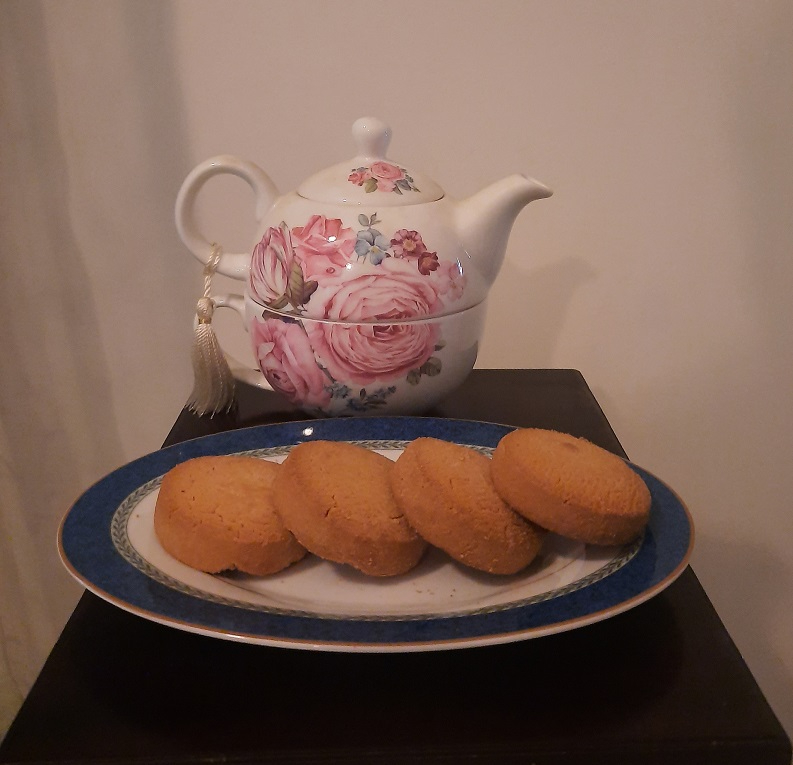
Last week, some friends knowing that we had spent several years at Hyderabad, brought us a box of Osmania biscuits. One of the specialities of Hyderabad, as per the box, the recipe for the biscuits wsa thought up on the demand of the last Nizam of Hyderabad, Mir Osman Ali Khan, who wanted a snack that was a little sweet and a little salty. So teatime this week has been pretty good!

Which made me think about biscuits in general. What exactly is a ‘biscuit’?

The word biscuit came to English from French (bis-qui), which is from the Latin root panis biscotus, which roughly means ‘bread twice cooked’. The origin of biscuits goes way back maybe even to Neolithic times. But for sure the Romans had them. In Roman times, biscuits were basically bread which was re-baked so that it would last longer, and hence could be useful for marching armies or travellers. From the 14th century onwards, biscuits became popular in England and were an important part of naval food supplies, carried on ships which set out on long journeys. These naval biscuits were highly inedible, but still an important part of a ship’s provisions as they could last for very long!

As per the dictionary, a biscuit is ‘a small baked unleavened cake, typically crisp, flat, and sweet’. Which of course is inadequate, as biscuits are often salty, and as we shall see below, sometimes leavened (made with yeast or other raising agent).

Biscuits apparently fall into four broad categories. The categories are differentiated by their recipes (mainly the amount of fat, sweet and water), and the baking process. These are:

Crackers:This covers a wide range of products characterised by crispy, open texture and savoury flavours. They are leavened.

Hard sweet biscuits: They have low sugar and fat. They have an even colour and texture,  and good volume.

Short doughs (moulded biscuits): The doughs for these are ‘short’ (ie, have more fat and less water) compared to the dough for crackers of hard sweet biscuits.

Cookies (inlcuding filled cookies): These are made from very soft doughs which are put directly on to the oven band for baking.

India is a pretty big consumer of biscuits—another legacy of our colonial past, I suppose.  Per capita consumption of biscuits in India has been estimated at 2 kilos. The biscuit industry was valued at Rs. 37,000 crore before the pandemic. Lockdowns were good for biscuits, as people stocked up on these foods with long shelf-lives, and the industry saw sharp growth.  The top-selling brands domestically are: Parle-G, Marie Gold, Good Day, Unibic and Bourbon.

India is also an important producer of biscuits along with the US and China. Significant quantities are exported to Haiti, Ghana, Angola, the UAE and the US

My all-time favourites are from a bygone era. In Delhi, my mother would take tins of atta, ghee and sugar to a nearby bakery in the morning, and send one of us to collect the biscuits in the evening. It was difficult not to slyly ‘steal the cookie from the cookie jar’ on the way home. These atta biscuits had typical stripes running along the length. I don’t know if local bakeries even exist today or take such custom-orders. But those biscuits were delicious!

Another biscuit I miss are the Mangaram wafers, or cream biscuits as we used to call them. They came in yellow and pink. They were more expensive than the normal biscuits and so were a special treat for special occasions—birthdays or if one did exceptionally well in a test or exam! Apparently, the Mangharams were from Sukkur, Sindh and had a major factory there from 1937 onwards (as also factories in Delhi, Calcutta and Mumbai). The Sukkur factory was declared evacuee property and given to a Muhammad Yakoob. It was re-named the Yacood Factory. JB Mangharam, the patriarch of the family, settled in Gwalior when they came to India during Partition, and started a factory there. After the death of the founder, the company was restructured in 1969 and again in 1977. In 1983 it became a part of the Britannia Group. Somewhere along the way, the cream biscuits fell out of favour. Was it that the family was too caught up in internal squabbles to pay attention to its star product? Or could they not keep with external competition? Or was it that tastes changed? Whatever the reasons, old-timers like me will always miss those light, sweet, exotic biscuits.

–Meena

PS: Maybe modaks or ladoos would have been a more appropriate topic today. But somehow I feel Ganesha would be game to try something new—a plateful of sweet cookies for instance. Happy Ganesh Chaturthi!

Mahatma Gandhi and Madam Montessori

India is currently in the process of introducing the New Educational Policy (NEP 2020). Exercises are ongoing to develop the curricula and frameworks for education at all levels, starting from Early Childhood Care and Education (ECCE).  As per the Policy document: The overall aim of ECCE will be to attain optimal outcomes in the domains of physical and motor development, cognitive development, socio-emotional-ethical development, cultural/artistic development, and the development of communication and early language, literacy, and numeracy.

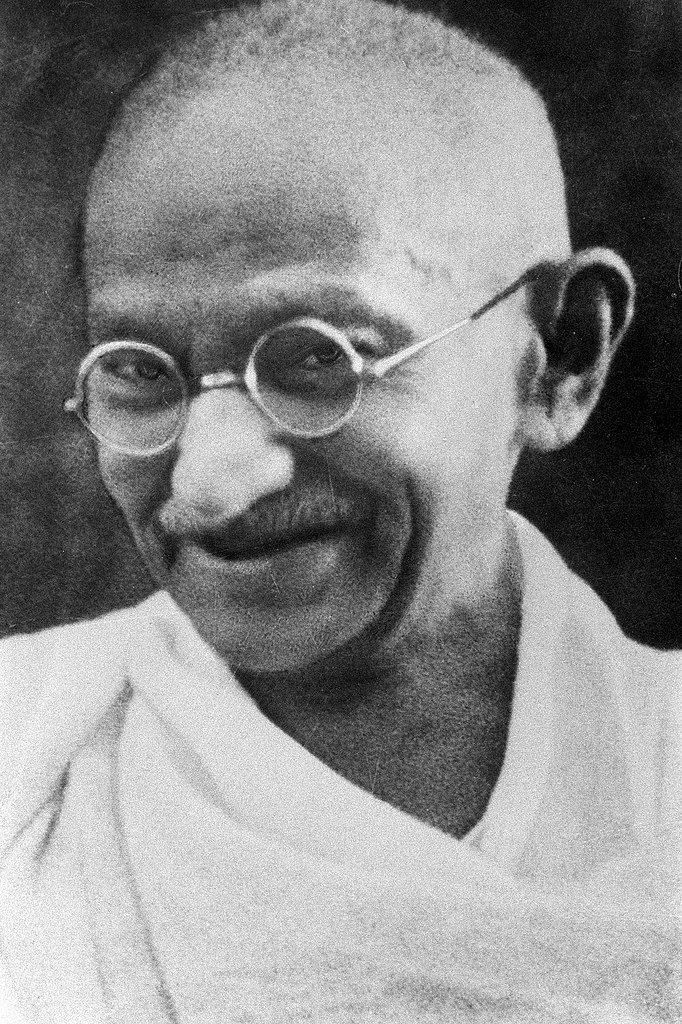
This vision for laying the strongest foundation for lifelong learning has its seeds in the thoughts and writing of many educationists and thinkers. It has a deep resonance with Gandhiji’s thoughts on education. In 1937, at a conference in Wardha, Maharashtra, Mahatma Gandhi seeded an important idea to revamp the educational system through Nai Talim or Basic Education.

Gandhiji’s vision was that this new paradigm of education should prepare the young learners to become morally sound, individually independents, socially constructive, economically productive and responsible future citizens. The foundation for this was to be laid in early childhood. Gandhiji believed that education should develop all the capacities of the child so that he becomes a complete human being. “By education I mean all-round drawing out of the best in child’s and man’s body, mind and spirit. Literacy is neither the beginning nor the end of education. This is only a means through which man or woman can be educated. 

In Gandhiji’s educational thoughts the integrated development of the personality of child is more important than mere literacy or knowledge of different subjects. Thus his vision was of life-centred as well as child-centred education. Besides learning of three R’s–Reading, Writing and Arithmetic in school, he insisted on development of the three H’s–Hand, Heart and Head.

While these thoughts took formal shape in the form of Nai Taleem in 1937, they had long been brewing in his mind. Over the years he was also assimilating the writing and educational philosophies of other thinkers and practitioners of alternate and innovative systems of teaching and learning. One of these was Madam Montessori.

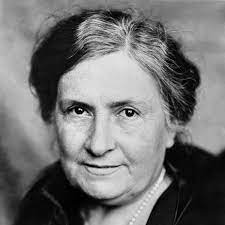
The two had already met in spirit before they met in person. Gandhiji was in London to attend the Round Table Conference in October 1931. Maria Montessori was at the time holding one of the International Training Courses for teachers. Common friends brought them together. At their first meeting which was around 9 October 1931, the interaction was recorded thus:

Gandhi greeting her said: “We are members of the same family”.

“I bring you the greetings of children” said Madam Montessori.

Gandhiji said: “If you have children I have children too. Friends in India ask me to imitate you. I say to them, no, I should not imitate you but should assimilate you and the fundamental truth underlying your method.”

Madam Montessori: “As I am asking my children to assimilate the heart of Gandhi. I know that feeling for me over there in your part of the world is deeper than here.”

Gandhiji: “Yes, you have the largest number of adherents in India outside Europe.”

On 28 October 1931 Gandhi gave a speech at the Montessori Training College in London wherein he traced his own Montessori journey.

Madam you have overwhelmed me with your words. [Madam Montessori had welcomed Gandhiji as “a soul rather than a man”.]

It was in 1915 when I reached India, that I first became acquainted with your activities. It was in a place called Amreli that I found there was a little school being conducted after the Montessori system. Your name had preceded that first acquaintance. I found no difficulty in finding out at once that this school was not carrying out the spirit of your teaching; the letter was there. But while there was an honest—more or less honest—effort being made, I saw too that there was a great deal of tinsel about it.

I came in touch, then with more such schools, and the more I came in touch, the more I began to understand that the foundation was good and splendid, if the children could be taught through the laws of nature—nature consistent with human dignity, not nature that governs the beast.

…I see the same thing here, and it was a matter of inexpressible joy to me that from childhood the children were brought to understand the virtue of silence. It and how in ,response to a whisper from their teacher, the children came forward one after another, in pin-drop silence. It gave me great joy to see all the beautiful rhythmic movements and as I was watching those movements of the children, my whole heart went out to the millions of the children of the semi-starved villages of India, and I asked myself as my heart went out even to those children, “Is it possible for me to give them these lessons and the training that are being given under your system, to those children?

It was this first meeting that inspired Mahatma Gandhi to visit Montessori schools in Rome on his way back. He declared there, his interest in promoting them in India. The two continued to be in touch. Just after the outbreak of the Second World War in 1939 when Maria Montessori came to India, Gandhiji was one of the first to send her message of welcome. They met and corresponded during the nearly 10 years that Montessori lived and worked in India. After Italy’s entry into the World War, restrictions were imposed on Montessori as she was being considered as an enemy-alien. Gandhiji expressed sympathy, and regret even, though he was under restrictions himself.

In March 1940 when Madam Montessori was in Ahmedabad she inaugurated the Bal Mandir (kindergarten) in the Sabarmati Ashram campus. Thus the long friendship between two visionaries took concrete form.

As we mark Maria Montessori’s birth anniversary on 31 August, it is a good time to revisit the close links between her and the Mahatma. In these turbulent times, we urgently need to remember their strong belief that to have real peace, we must begin with the children.  

If we are to teach real peace in this world, and if we are to carry on a real war against war, we shall have to begin with the children. MK Gandhi

Averting war is the work of politicians; establishing peace is the work of education. Maria Montessori

–Mamata

Fruity Names

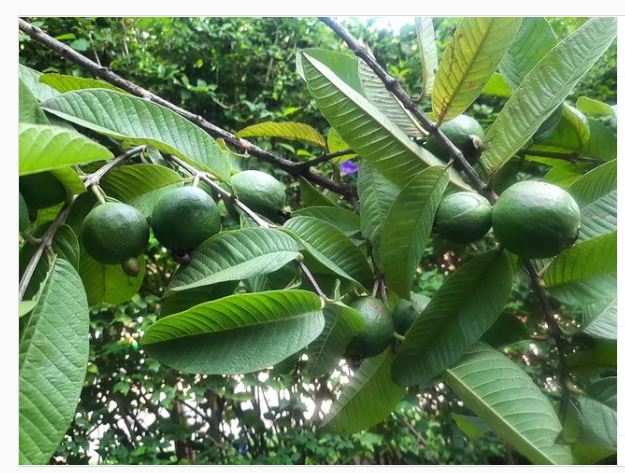
I have a guava tree which has just started fruiting this year. And with the enthusiasm of a newbie, it is overdoing the act. But I must marvel at its boldness—a thin, weak tree, it has literally 10s of fruits on each branch and is completely bowed down with the weight. Even after the birds and squirrels have done feasting on them, we are left with about 5-6 fruits every day. Which is a lot more than we can eat.

So I decided to check out some guava-based recipes. A visit to cooking sites threw up a few promising ones. But I got side-tracked. Browsing through the pages, I was reminded that guavas, apart from being called amrood, are also called peru. I was intrigued. Where did that name come from? A fairly straight forward explanation: Guava is believed to be a native of Peru in South America. Guavas came to India only around the 16th century, and probably because consignments were received from Peru, people in and around the port of Bombay started calling it that.  The fruit took well to Indian growing conditions and became popular here. Today peru or guava is the fifth-most widely grown fruit crop of India!

Guava
Guava, also called Peru

That got me thinking of the names of other fruits and vegetables which take their names from the names of places. Obviously, they are not called that in their place of origin, but when they travel, they take along the name. I doubt if anyone in the country of origin knows that the fruits are carrying the names of their countries far and wide, albeit in a strange context (how confusing it would be if people in Peru called a fruit ‘peru’!). And for sure, most people in the destination country after a passage of time, don’t link the name of the fruit to anything–a name is a name is a name and just is.

Here is a look at some more such fruit names

Peaches were called persicum—‘Persian apples’–by the Romans because they were traded by Persians. And a variation of the name stuck in English.

The name ‘currant’ is derived from the ancient Greek city of Corinth, which was known for its production of small dried grapes now known as currants.

Musk melons are sometimes called Cantaloupe. Though the fruit is not native to Italy, it was brought to the Cantus region of that country from Armenia and gained popularity there. As it slowly spread from there to other parts of the world, it carried the name of the Cantus region with it.

Oranges are indigenous to India and the origin of the name is from the Sanskrit naranaga. Most languages call oranges by some variation of this name. But in Greek, it is called portokali  because Portugese merchants traded in them.

Oranges spread far and wide, and variations developed. A type of blood orange which originated in the Mediterranean islands of Malta circled back to India and we call it the ‘Malta’. It is widely grown in Uttarakhand today. Tangerines are a variant which come from Tangier, Morocco.

Though the tamarind probably has its origins in tropical Africa, it has been cultivated in the Indian subcontinent for so long that it is universally known as Tamarind—the date of India!

Even apart from being named for the place of their origin, fruit and vegetable names are often prefixed with place names. The Devenahalli Pomelo for instance, is a special variety of the fruit which grows only in the Devenahalli area around Bangalore airport, and is tagged with Geographical Indicator (GI) status.  Another example is the Shimla Mirch. When the British brought capsicum to India, they first cultivated it in Shimla, so the name of the district is still used to refer to the now-ubiquitous vegetable.

The Nagpur orange, Lima beans, Brussels sprouts, are all named for places where they originated or where they grew abundantly. Ponni rice, so popular in the South, derives its name from the Cauvery, also called Ponni (meaning gold), since it grows in the deltas of this river.

Interestingly, the origin of the word ‘fruit’ itself can be traced back to the Latin word fructus, which comes from frui meaning ‘to enjoy’.

What could be more appropriate!

–Meena

PS: I found a few recipies for peru subzi and chutney, which shall be tried out in due course.

Fighter for Many Freedoms: Hansa Mehta

This week as the Indian national flag flew proudly across the land, it was also a time when we were reminded of the fact that the right to fly this flag was won through a long struggle in which millions of people played their part, big or small.

Going back to the midnight session on 14 August 1947 which marked the birth of a free India. As the session was about to conclude, a lady member of the House came up to the podium in the Central Hall. She handed over the tricolour to the Chairman and announced “It is in the fitness of things that this first flag that will fly over this august House should be a gift from the women of India”.

This lady was Hansa Mehta who was not just a representative of the Indian women, but a champion for universal women’s rights, all her life.

Hansa was born on 3 July 1897 in an affluent and cultured family in Gujarat. Her father was a professor of philosophy at Baroda College and later served as the Dewan of the states of Baroda and Bikaner. Her grandfather Nandshankar Mehta was a social reformer and well known author.

As a student in Baroda Hansa was influenced by the progressive thoughts of the Maharaja of Baroda Sayajirao Gaekwad III, and the philosophy of Aurobindo Ghosh. After graduating with honours in philosophy from Baroda, she left for England to pursue further studies in sociology and philosophy. She also travelled to the United States as an exchange student, and was keenly interested in understanding how their educational system worked. While in England she got to know Sarojini Naidu and Rajkumari Amrit Kaur who planted in her the early seeds of nationalism.

The spark was truly ignited when after her return to India, it was once again Sarojini Naidu who introduced Hansa to Mahatma Gandhi. It was 1922, and Gandhi was locked in Sabarmati Jail in Ahmedabad. Hansa was, as she, recalled “visibly moved” by this meeting. This also proved to be the turning point that launched Hansa into the freedom struggle. She got actively involved in the Non-Cooperation and Swadeshi movements, organising protests, and boycotts of foreign goods, and courting arrest.

Her decision to marry Jivraj Mehta, the then Chief Medical Officer of Baroda, met with opposition from her family and community as the groom was from another community. But she received strong support from the Maharaja of Baroda Sayajirao Gaekwad III. The couple moved to Bombay where Hansa continued her active involvement with the freedom struggle.

On Bapu’s advice, on 1 May 1930, Hansa led the first batch of the Desh Sevika Sangh in a satyagraha which involved picketing foreign cloth and liquor shops. Her organisational skills led to her appointment as President of the Bombay Congress Committee. Hansa was arrested and sentenced to three months in prison. She was released along with the other political prisoners under the Gandhi-Irwin Pact signed on March 5, 1931. In 1932 Hansa and her husband, who was not actively engaged in political life, were once again arrested and detained.

Following her release, she got deeply involved in the political processes which would go on to define the future of Indian polity.

She contested and won the first provincial elections from the Bombay Legislative Council seat in 1937. This was significant because she refused to contest from a reserved seat and was elected as a general category candidate. She remained on the Council till 1949. With her entry into mainstream politics Hansa also began to get closely involved with the All India Women’s Conference, and became its President in 1946. Her progressive vision for women’s empowerment in all fields, starting from education, was reflected in all the work of this organisation.

She became President of the Conference in 1946. In this role she piloted the drafting of the Indian Women’s Charter of Rights and Duties—which became a manifesto for women’s equality. Embodying the spirit of progressive politics, the charter sought among other things equality with men in terms of pay, civil rights, access to health and education, distribution of property, and fair marriage laws.

The next significant milestone was Hansa’s election to India’s Constituent Assembly in 1946. She was one of fifteen women in the Assembly. Rubbing shoulders with other founding fathers, with the shared vision for a new India, Hansa infused the deliberations with her own passion, vision and championing of women’s rights and justice. While the world over suffragettes were fighting for women’s equality, Hansa Mehta was ensuring that India’s constitutional document ensured that women were equal partners. Even as she fought for her own countrywomen, Hansa got the opportunity to carry her mission to an international arena.

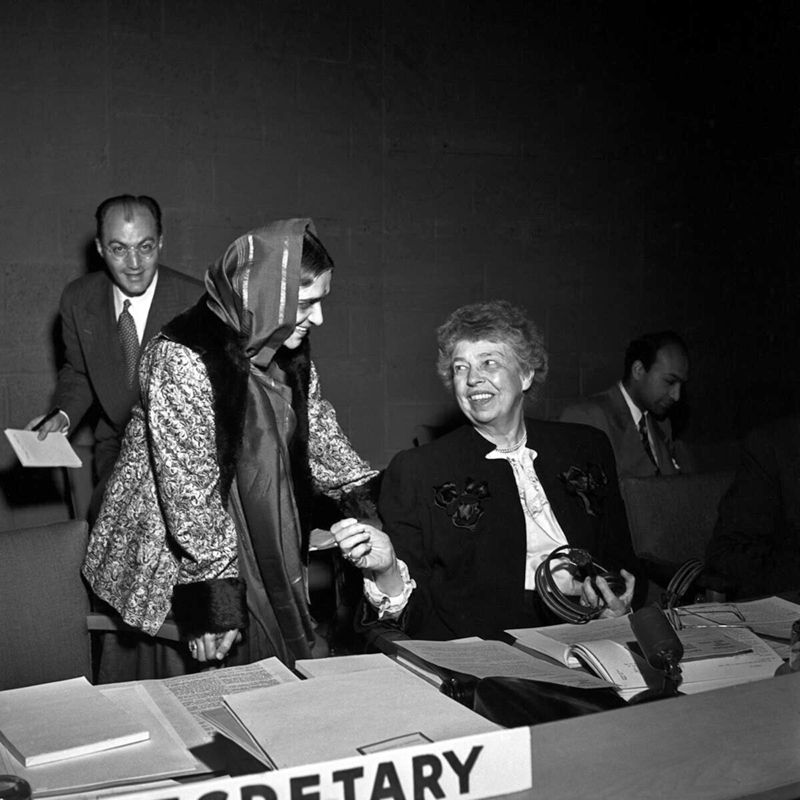
Hansa Mehta and Eleanor Roosevelt Source:www.un.org

Around this time Hansa was appointed as an Indian delegate to the United Nations Commission on Human Rights. She found serving on the Commission as Vice-Chair to the Chair Eleanor Roosevelt, the first lady of the United States. During the discussion on the document that we know today as the Universal Declaration of Human Rights, it was suggested that the opening words of the first Article should read “All men are born free”. It was the Indian delegate Hansa Mehta who registered strong protest at the wording. Hansa argued that this could later be read to exclude women, and suggested that the word ‘men’ should be changed to ‘persons’ or ‘human beings’. The proposal was seconded by Eleanor Roosevelt. The suggestion was put to vote and was finally enshrined in the document thus: All human beings are born free and equal in dignity and rights. They are endowed with reason and conscience and should act towards one another in a spirit of brotherhood.

Thus Hansa put her indelible mark on what is, even today, a milestone document in the history of human rights. Her legacy is not forgotten. In 2015, the Secretary General of the United Nations, Ban Ki-Moon reminded that “The world can thank a daughter of India, Dr Hansa Mehta, for replacing the phrase in the UDHR”.

Hansa Mehta continued her advocacy of women’s education and rights, even as she herself went to attain many “firsts”. She became India’s first woman Vice Chancellor with her appointment at the SNDT University in Bombay. In 1949 she was appointed as the Vice Chancellor of the newly established Baroda University, the first woman to head a co-educational university. She was a prolific writer, and researched and published over twenty books, many focussing on women and children. She was awarded the Padma Bhushan in 1959. She passed away in 1995.

‘Feminist’, ‘Activist’, ‘Reformist’—Hansa Mehta was all these well before the labels became fashionable. A woman ahead of her time, who spent her life fighting for many freedoms, for the cause of her fellow women.

–Mamata