Forts, forts, forts…

A visit to Rajasthan leaves one with a head swimming with visions of elephants and camels, turbans and bandhini saries, sweets and more sweets .  And of course forts and palaces. I spent last week at Rajasthan, and so obviously these grandiose structures are very much on my mind.

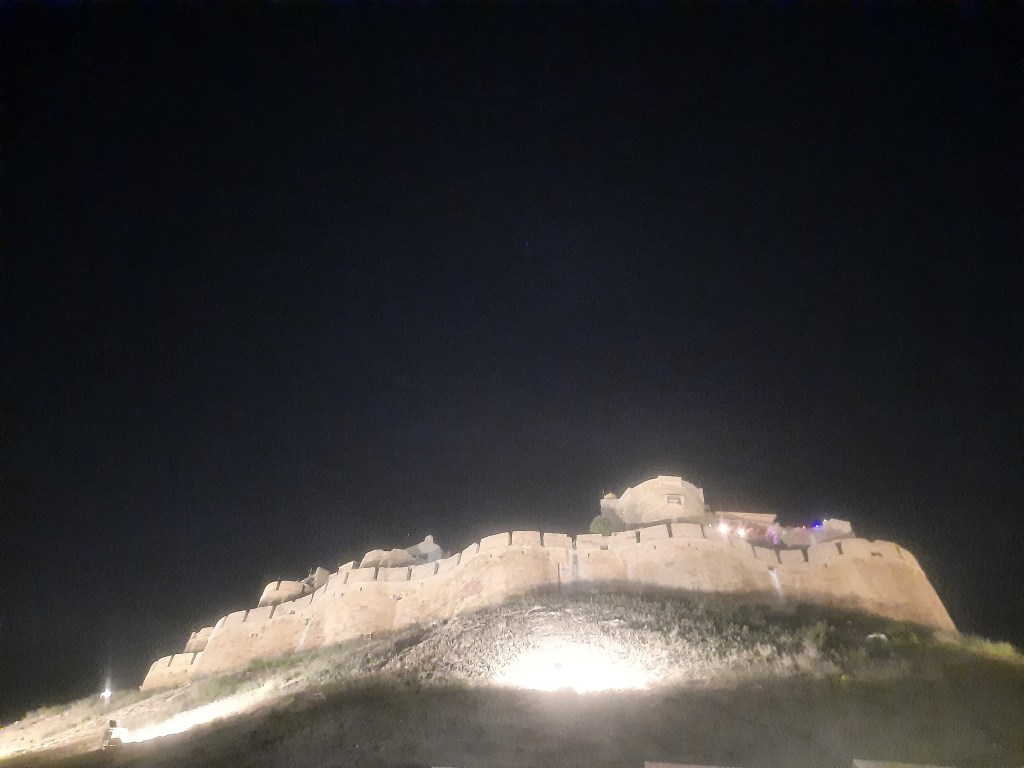
Jaisalmer Fort by Night

Which got me wandering: what are forts vs. fortresses vs. castles vs. palaces,? Well, here we go:

A fort is not a residence, but rather a military fortification. These structures were built specifically for war situations, and used to defend specific territories. A fortress is similar, but it is a larger fortified area than a fort.

A palace is primarily a residential place, occupied by royalty, heads of state, or very rich and important people. They are not fortified against attacks, but rather designed for comfort and elegance, and are often status symbols. 

Castles are large residences or a group of large buildings that have been constructed with strong walls to protect against attacks. Basically, castles are fortified residences. 

Apparently, there are about a thousand forts in India. Going strictly by the book, most forts in India are either fortresses or castles. But the British when classifying them, used the conventional British system and called them all forts.  The oldest surviving fort is thought to be the Qila Mubarak in Bathinda, Punjab, whose origins go back to the period 90-110 AD. This Qila was built by Raja Deb, a Rajput king.

That is a pretty ancient fort! But the thinking about forts goes back to even earlier times. Kautilya, the man who wrote prodigiously on all aspects of governing kingdoms, as far as the 3rd Century BC, had discussed various types of forts and fortifications.

‘On all the four quarters of the boundaries of the kingdom, defensive fortifications against an enemy in war shall be constructed on grounds best fitted for the purpose: a water-fortification (audaka) such as an island in the midst of a river, or a plain surrounded by low ground; a mountainous fortification (párvata) such as a rocky tract or a cave; a desert (dhánvana) such as a wild tract devoid of water and overgrown with thicket growing in barren soil; or a forest fortification (vanadurga) full of wagtail (khajana), water and thickets.’ he says in Book II of the Arthashastra in a section which elaborates “The Duties of Government Superintendents”. He goes into great detail not only about the construction of the fort, ramparts, towers, turrets, gates  and staircases, but even to the extent of specifying the width of various types of roads within the forts which would make for easy movement in war and peace. He details out how the spaces within the fort should be planned, and where which facility should be set up.`

However strongly fortified a fort, the danger of sieges was always present. It was for this reason that Chanakya laid down that: ‘There shall be a water-well for every ten houses. Oils, grains, sugar, salt, medicinal articles, dry or fresh vegetables, meadow grass, dried flesh, haystock, firewood, metals, skins, charcoal, tendons (snáyu), poison, horns, bamboo, fibrous garments, strong timber, weapons, armour, and stones shall also be stored (in the fort) in such quantities as can be enjoyed for years together without feeling any want. Of such collection, old things shall be replaced by new ones when received.’

Well, I suppose all this detailing could possibly have been done by any conscientious bureaucrat. What really gives the Chanakya twist to the discussion on forts is Book XIII, “Strategic Means to Capture a Fortress”. It mentions such tactics as: Sowing the Seeds Of Dissension; Enticement Of Kings By Secret Contrivances; The Work Of Spies in a Siege; The Operation of a Siege; etc.!

Wow! India not only has the most amazing forts, it probably has the oldest document guiding their conception!

–Meena

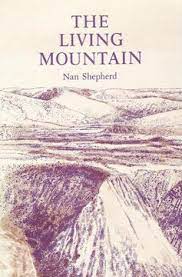
Nan Shepherd and The Living Mountain

George Mallory, when he was asked why he wanted to climb Mount Everest, is said to have replied: “Because it’s there”. Mallory was the only climber to take part in three of the British pioneering expeditions to climb Mount Everest in the 1920s. Mountains have always “been there” and have over centuries, challenged humans to ascend and ‘conquer’ them. Hundreds of books have been written about mountains, mostly by men. The books are characterised by the language of conquest and victory, and propelled by the goal of reaching the summit.

In the period when men were racing to scale and conquer the highest peaks, was a young woman who perceived, and described, mountains not in terms of heights but in terms of depths. This was Nan Shepherd, not only an explorer of mountains, but also one of the great early 20th century writers of nature, landscape and the Scottish mountains that she so loved.

 Anna (she called herself Nan) Shepherd was born in February 1893 near Aberdeen on the North East coast of Scotland. Not long after she was born her family moved to Cults (now a suburb of Aberdeen). The hills of Deeside close by, were her natural playground, and her love for walking in the hills was encouraged by her father who was a keen hill walker. Nan was also an avid reader, and at the age of fourteen started filling notebooks with quotations and citations from her readings. She attended Aberdeen High School for Girls and studied at Aberdeen University, graduating with an MA in 1915. She went on to teach English literature at the Aberdeen Training Centre for Teachers (later the College of Education). She remained there for the next forty-one years, until her retirement in 1956, having become known as an inspiring teacher with a feminist slant to her work. Although she did travel extensively, she continued to live in her childhood home until she died in 1981.

Having explored the local hills almost from the time that she could walk, Nan ventured further afield, to the Cairngorms. These formidable mountains to the west of Aberdeen, are amongst the wildest landscapes in the British Isles. This was in June 1928, Nan was 35 years old. This first experience of the mountains was the start of a passion that came to define both her life and her writing. From then on, she would head for the Cairngorms whenever her job would allow, often alone, or occasionally with friends and fellow walkers.

For Nan, who conquered all six of the major peaks in the Cairngorms while still a young woman the goal was never to reach the summit of a mountain: it was not climbing up that excited her so much as “clambering down,” discovering all the hidden parts of the mountain that only an attentive walker would notice. It was this perspective of ‘looking within’ both at the mountain, and herself, that inspired Nan to also write copiously during the period between 1928 and 1933. During this time, she published three novels: The Quarry Wood, The Weatherhouse, and A Pass in the Grampians. As she said: “It simply must be written”. Shepherd drew inspiration from the places and people she knew well, setting her stories in the North East of Scotland, with a focus on country communities and the harsh way of life imposed by the landscape. Above all, what shone through was her deep love for the Scottish mountains and her knowledge of these through walking. 

While Nan published these books, the book that was most inspired by these mountains, and her most inspirational piece of writing, was called The Living Mountain. The book, written in 1940, describes Nan’s explorations, as a walker and as a writer, of the Cairngorm Mountains. Nan sent her manuscript to a novelist and publisher friend Neil Gunn who appreciated it, but felt that it was not fit for publication unless she added photographs and a map. Nan put away the manuscript in a drawer and there it remained for over 30 years. It was finally published by the Aberdeen University Press in 1977.

The publication of The Living Mountain revealed Nan as one of the earliest ‘Nature writers’ who brilliantly captured the Cairngorms in their various seasonal moods. Her descriptions emerged out of her own immersion in the experience of walking in every kind of weather, swimming in the lochs, dipping in the streams, and camping under the sky. It also showed her incisive eye for detail, and her profound understanding not only of the geography and geology of the mountains, but equally of the living elements that made it a vibrant ecosystem. Long before ecology became a buzzword, Nan was acutely aware of the interconnections. 

Shepherd was interested in the ‘essential nature’ of the mountain: in understanding it from all angles and in all seasons. She viewed the mountains not as looming objects of sublime terror, but as acquaintances. She wrote: Often the mountain gives itself most completely when I have no destination but have gone out merely to be with the mountain as one visits a friend, with no intention but to be with him.

The poetic descriptions of the routes are so vivid that the readers can literally walk these with Nan. But Nan Shepherd’s writing is not simply a description, it is equally an introspection. While most mountaineers think in terms of peaks, plateaus and cliffs, Nan looks within, “into” cracks in rocks, and the depths of lochs and rivers. Her prose is philosophical and often meditative: One does not look upwards to spectacular peaks but downwards from the peaks to spectacular chasms, for a mountain has an inside.

Although it was written nearly a century ago, The Living Mountain is today acclaimed as “one of the most brilliant works of modern landscape literature”. It is a lyrical memoir that combines field notes, natural history, and oral history. One of its most profound tenets is that we should not walk “up” a mountain but “into” mountains, thus exploring ourselves as well as them.

December 11 is celebrated as International Mountain Day. The theme for this year is Restoring Mountain Ecosystems. Nan Shepherd’s The Living Mountain is a reminder that healthy mountain ecosystems can restore us: in body and spirit.

–Mamata

Words Over the Years

It is the time of the year when important dictionaries of the English language have just announced their Word of the Year 2023.

Collins Dictionary has picked AI (Artificial Intelligence) the term that describes ‘the modelling of human mental functions by computer programmes’. In other words, a computer system that has some of the qualities that the human brain has, such as the ability to produce language in a way that seems human.

The Cambridge Dictionary has chosen Hallucinate which has traditionally been defined as“To seem to see, hear, feel, or smell something that does not exist, usually because of a health condition or because you have taken a drug.” But is now expanded to include: ‘When an artificial intelligence (AI) hallucinates, it produces false intelligence’.

The Merriam-Webster dictionary’s Word of the Year is Authentic. Authentic has a number of meanings including “not false or imitation,” or “true to one’s own personality, spirit, or character”. It is a synonym of real and actual. It is perhaps an appropriate antidote in an age of Fake News.

To have been selected as Word of the Year means that a word has great resonance for the year in which it was chosen. These are terms that describe the prevailing trends, moods (including anxieties), attitudes, and cultural climate of our time.

Indeed these three words succinctly sum up the year which has been headlined by AI and its potential, including the dangers of false intelligence and fake news, and the growing need to have ‘authentic’ reliable information to draw upon in such times.

The Dictionaries follow a rigorous process leading to the choice. It includes research by hundreds of lexicographers, and now, evidence gathered from millions of new and emerging words of current English from web-based publications, as well as referring to dictionaries themselves, using sophisticated software.

Thus do dictionaries grow, adding words and usages as they emerge in response to changing times and modes of expression. We often forget that the process of creating a dictionary from scratch was, in its time, a complex and gargantuan task, which took years of painstaking manual and mental labour.

The first fully-developed representative of the monolingual dictionary in English is believed to be Robert Cawdrey’s Table Alphabeticall, first printed in 1604. Its first edition had 2543 headwords for which Cawdrey provided a brief definition. While small and unsophisticated by today’s standards, the Table was the largest dictionary of its type at the time.

As the century rolled by, there was a growing feeling that the English language “needed improvement” and that it lacked standardisation. From the mid-17th century many literary figures proposed ideas and schemes for improving the English language, but none really came to fruition. Until Samuel Johnson, an English poet, satirist, critic, lexicographer embarked upon his Plan of a Dictionary of the English Language.

Johnson had several issues with the English language as it was at the time. As he wrote, he had found the language to be ‘copious without order, and energetick without rules’. In his view, English was in desperate need of some discipline: ‘wherever I turned my view … there was perplexity to be disentangled, and confusion to be regulated’.

A group of London booksellers first commissioned Johnson’s dictionary, as they hoped that a book of this kind would help stabilise the rules governing the English language. The booksellers’ interest was purely commercial. They were aware that this kind of work would be popular with the general public, but as such a project would be long and risky, a number of booksellers formed temporary partnerships, thereby sharing the costs as well as the risks. Also the copyright belonged to the publisher, so aside from a one-time payment to the author for commissioning the work, the publishers could enjoy the massive profits from the sales.  

In 1746 Johnson entered into an agreement with the booksellers to write an English dictionary, and began work the same year with only six assistants to aid him. A year later he published a plan for the dictionary in which he outlined his reasons for undertaking the project and explained exactly how he intended to compile his work. Johnson projected that the scheme would take about three years, but he seriously underestimated the scale of the work involved. In the end it took him three times this length of time to write over 40,000 definitions and select nearly 114,000 illustrative quotations from every field of learning and literature. Each word was defined in detail, the definitions illustrated with quotations covering every branch of learning. Johnson’s was the first dictionary to use citations for the words it listed. He sourced books stretching back to the 16th century, and used quotations from Shakespeare, Spenser and other literary sources. This was with his intention to acquaint users with the classic literary greats. Johnson was the first English lexicographer to use citations in this way, a method that greatly influenced the style of future dictionaries.

In the process of compiling the dictionary, Johnson recognised that language is impossible to fix because of its constantly changing nature, and that his role was to record the language of the day, rather than to form it.

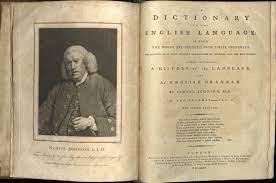
First published in two large volumes in 1755, the book’s full title was A dictionary of the English Language: in which the words are deduced from their originals, and illustrated in their different significations by examples from the best writers. To which are prefixed, a history of the language, and an English grammar. It became popularly known as Johnson’s Dictionary.

The dictionary was a huge scholarly achievement, a more extensive and complex dictionary than any of its predecessors. The closest to compare was the French Dictionnaire which had taken 55 years to compile and required the dedication of 40 scholars. Still, Johnson’s dictionary was far from comprehensive, even by mid-eighteenth-century standards. It contains 42,773 entries, but there were almost 250,000 words in the English language, even during Johnson’s time.

Even as new words are added to the number of dictionaries today, and some of these are crowned as words of the year, here is an educational, and entertaining peek at some of the entries from Johnson’s dictionary. Starting with how he defines himself!

Lexicographer: A writer of dictionaries; a harmless drudge that busies himself in tracing the original, and detailing the signification of words. A paltry, dirty, sorry wretch.

Cough: A convulsion of the lungs, vellicated by some sharp serosity.

Distiller: One who makes and sells pernicious and inflammatory spirits.

Dull: Not exhilaterating (sic); not delightful; as, to make dictionaries is dull work.

Excise: A hateful tax levied upon commodities, and adjudged not by the common judges of property, but wretches hired by those to whom excise is paid.

Far-fetch: A deep stratagem. A ludicrous word.

Jobbernowl: Loggerhead; blockhead.

Kickshaw: A dish so changed by the cookery that it can scarcely be known.

Network: Any thing reticulated or decussated, at equal distances, with interstices between the intersections. (See how he defined ‘reticulated,’ below.)

Oats: A grain, which in England is generally given to horses, but in Scotland appears to support the people.

Patron: One who countenances, supports or protects. Commonly a wretch who supports with insolence, and is paid with flattery.

Politician: 1. One versed in the arts of government; one skilled in politicks. 2. A man of artifice; one of deep contrivance.

Reticulated: Made of network; formed with interstitial vacuities.

To worm: To deprive a dog of something, nobody knows what, under his tongue, which is said to prevent him, nobody knows why, from running mad.

Samuel Johnson, was in fact much more than a lexicographer; he was a prodigious writer who published periodicals, plays, poems, biographies and a novel, as well as a celebrated humourist.

–Mamata

Cufflinks are a Man’s Best Friend

It seems a little unfair to insist that only women crave for diamonds and gold and jewelry. Down the ages, men have worn a lot of jewelry—one only has to look at paintings and pictures not only of Indian Kings and nobles, but of rich people from around the world. If the Koh-i-noor is on the crown of the Queen of England, the Cullinan (the largest gem quality diamond ever found on earth)  is on the scepter of the King of England, and Cullinan II, the second largest diamond, is on his imperial state crown.

Today, male jewelry is back with a bang. One only has to look at rappers and their gold chains. Closer home, apart from being a means of self-expression, it is both a way to show off wealth, as well as to appease the gods. The popularity of the navaratna ring, which is supposed to cure all ailments, bring wealth and good fortune, is more often seen on men than women. As also rudraksha bracelets and chains.

Of course it’s not all about flashy chunky stuff which sometimes runs into kilos (think Bappi Lahiri). There is also well-designed, subtle stuff.

From crowns to chains to jeweled collars, to bracelets, pendants, brooches, ear rings, to ankle adornments, there have been male versions of almost every piece of jewelry.

However, cufflinks are fairly unique in that they are quintessentially male jewelry rarely worn by women.  There has always been a need for some device to fasten shirt cuffs. In the 13th century, men used ribbons to do this. It was in the early 17th century that cufflinks as we know them today started to emerge. King Charles II popularized them, but they still remained very expensive items which were handmade, and therefore confined to people who could afford them.

It was only in 1876 that George Krementz, a German immigrant, adapted the manufacturing process used to make bullets to make cufflinks, and started mass production. And from that point on, they gained wide usage and popularity.

A cufflink has three parts:

The front face – the top of the cufflink, which is the decorative part, with a design, gemstone, or any other attractive design.

The post – the part that goes through the cuff holes and is attached to the toggle.

The toggle – the bottom part of the cufflink, which locks the link in place and prevents the cufflink from slipping out of the cuff holes

Cufflinks

While a cufflink may be a cufflink to many of us, apparently there are several types:

Whale Back cufflinks have a straight post, a flat head, and a tail shaped like a “whale” flips completely flat against the post.

Fixed back or fixed stud cufflinks do not have any moveable hardware. This means putting them in requires that they are manually secured by pushing the backing through the buttonhole. 

Bullet back cufflinks have a metal bar that attaches to the bridge of the cufflinks. This metal bar, which has a bullet aesthetic, rotates 90 degrees.

Chain link cufflinks are made of two usually identical faces attached by a chain.

Stud or button cufflinks look and work like studs.

Ball return cufflinks are those whose rear features a largish ball, attached to the decorative face by either a chain or curved post.

Locking Dual-Action cufflinks are secured shut with a mechanism similar to that of a wristwatch.

Silk Knot cufflinks are made entirely from silk, with two identical knots attached to a cord.

As I look around me, fewer and fewer men seem to be wearning cufflinks, something I felt sad about, because this is definitely an elegant addition to men’s attire. But a report on the cufflinks market says that the market is at $1.52 billion, and predicted to grow at 5.9% over the next few years. So maybe their demise is not so imminent after all!

Predictably, China is the biggest exporter, but surprisingly, India is one of the importers!

I shall surely look out more carefully to spot cufflinks around me!

–Meena

Trendhim.com; Nextmsc.com

Be a Sport!

This month games have been in the news. From cricket dominating the headlines, to Meena’s pieces on the importance of play for the all-round development of children. Toys are perhaps the first objects that children interact with as they learn how to ‘play’. Beginning with supporting the development of psycho-motor skills, toys also encourage imagination and creativity.  As the child explores and discovers, in its own way, the toy becomes way more than what it was formally designed for. Toys can become the central characters in a gamut of games and make-belief adventures. The child’s interactions with toys also begin to lay the foundation of the sense of ownership (“my doll, my truck”), which also lends itself to possessiveness when the same toy is ‘snatched’ ‘begged’ or ‘coveted’ by another child. 

It is at this early stage then, that the field of games introduces other instincts such as ownership and competiveness, often leading to conflict. This is where the concepts of ‘sportsmanship’ are also planted (or not planted), well before the child graduates from toys and imaginary play to more formal games, and then on to sports.  

A game is described as a physical or mental recreational activity involving one or more players, defined by a goal that the players try to reach, and some set of rules to play it.

A sport is a physical activity carried out under an agreed set of rules, with a recreational purpose: for competition or self-enjoyment, or a combination of these.

The two terms have also spawned two related terms—sportsmanship and gamesmanship.

Gamesmanship refers to the strategic manipulation of the rules and the spirit of the game to gain an advantage over opponents. While not necessarily breaking the rules, players who engage in gamesmanship employ tactics that push the boundaries of fairness. This may include exploiting loopholes, distracting opponents, engaging in unsportsmanlike conduct, or using psychological tactics to gain an edge. While gamesmanship may be within the confines of the rules, it can undermine the principles of fair play and the spirit of the game.

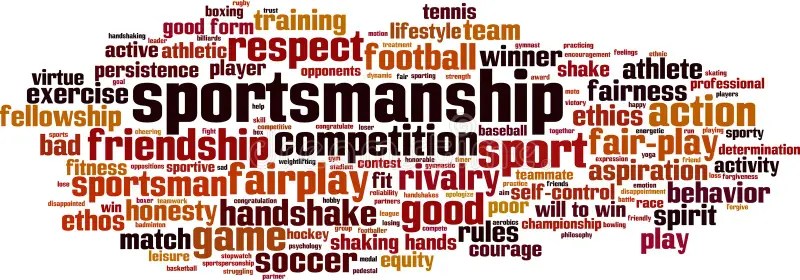
Sportsmanship refers to the values and behaviours exhibited by the players that uphold the spirit of fairness, self-control, respect for rules, opponents and authority, and integrity. Sportsmanship fosters positive relationships among players, promotes teamwork and healthy competition, encourages accepting victories and defeats with grace, and thereby enhances the sports experience.

Poor sportsmanship, while not exactly using manipulative tactics, includes unethical behaviour such as intentionally injuring opponents, taunting or insulting players, or disrespecting officials and fans. 

We teach children the importance of sports, but sadly do not pay enough attention to also inculcating the values of sportsmanship from an early age.  We send them to coaching classes to hone their skills in a sport—from tennis to football to hockey. Large academies are set up that identify budding players and rigorously mould them to become “champions.” These instil in the young minds the yen to be winners always, to be the best, the fastest, and the strongest at all times. They also laden them with highest of expectations. The aspiring champions carry on their young shoulders the burden to always meet these expectations, at any cost, including personal burn-out and breakdowns.

This expectation balloons manifold in the eyes of spectators of team games. It manifests itself in the fanatic fandom of a favourite team. This is what buoys the playing teams and fuels the culture, and indeed, the enormous business of spectator sports. Support and encouragement of one’s favoured team is necessary, even desirable in sports. But when this balloon bursts, leading to a mass wave of intense negative feeling, it is certainly not sportsmanship. What we have forgotten in our love for ‘our team’ is that it is more than one team that makes a sport a sport, that that it calls for dignity and grace to acknowledge that we cannot always be the winner.

Participation in sports develops important skills, but this needs to be combined with developing the values and behaviour of sportsmanship. Even as we coach our young minds and bodies to excel in sports, it is important to remember that they also need coaching in sportsmanship. This involves engaging also with their hearts and emotions. It means emphasising respect for the opposing team in every circumstance—win, lose or draw, on or off the field. It means extending goodwill not only to one’s own team mates and coaches, as well as the others who support the players in many ways, including the spectators.  

While healthy competition is an important ingredient of a competitive sport, unsportsmanlike conduct cannot justify the end—winning at any cost. Competing with honour and fairness need not be a dampener to the skills and excellence of players. Rather a game well played to the best abilities of both teams enhances not only the quality of the game, but the ambience within which it is played. 

As the curtains fall on the mega spectacle of World Cup cricket, let us remind our children (and indeed ourselves) that the true spirit of sportsmanship means that it doesn’t matter what the outcome of the game is, it is not just about winning or losing; it is also about empathy, about the person or people you are competing against; they deserve to be shown the same respect you would show them outside of sport. Sportsmanship centres on three vital life-skill components of Respect, Losing with Dignity, and Winning with Humility. Let this principle be the guiding factor in the long game of life, as in the many games that we play in many fields.

Be a sport! May the best one win!

–Mamata

Getting Serious about Play!

Last week, we talked about the International Dolls’ Museum in Delhi.  And we lamented about its not keeping up with the times and re-inventing itself.

A model from which it could draw inspiration is The Strong National Museum of Play, Rochester, New York, USA. It was established in 1969 based on the collection of one individual, Margaret Woodbury Strong, who by that point in time has collected over 27,000 dolls. Like Shankar who set up the Dolls’ Museum, she started by exhibiting parts of her collection and later added two wings to her palatial house to exhibit to select visitors. Over time, she started thinking about setting up a museum for the public.   Margaret Strong died in 1969, leaving her collection and her wealth for a museum, which was finally opened to the public in 1982.

The Museum’s display of the collection of dolls is only a small part of what it does. It is ‘a highly interactive, collections-based museum, devoted to the history and exploration of play’ and sees itself as ‘the ultimate play destination of all ages’. To meet this mission, it has interactive exhibits in a space of 1,50,000 sft, online exhibits, the World Video Game Hall of Fame, a Play Lab which is a maker-space, and a Skyline Climb. The Strong Museum takes the effort to ensure that the experiences are accessible for people of all abilities. Many of the exhibits on the online museum are viewable to all of us on Google Arts and Crafts.

A very interesting initiative of the Museum is the National Toy Hall of Fame. Every year, the Hall of Fame recognizes and inducts toys that have ‘inspired creative play and enjoyed popularity over a sustained period’. The public (I think only those who live in America) are invited to nominate their favorite toys based on the following criteria:

  • ‘Icon-status: the toy is widely recognized, respected, and remembered.
  • Longevity: the toy is more than a passing fad and has enjoyed popularity over multiple generations.
  • Discovery: the toy fosters learning, creativity, or discovery through play.
  • Innovation: the toy profoundly changed play or toy design. A toy may be inducted on the basis of this criterion without necessarily having met all of the first three.’

What a wonderful way to engage with the community at large! The toys in the Hall of Fame include everyday objects, like sand which is one of the most popular materials for children to play with; blankets which children can make into anything from tents to disguises; to cardboard boxes which as we know are more interesting to kids than the most expensive toy packed inside. The list of course includes items created to be played with—from balls, playing cards, rubber ducks, girl-dolls, hoola-hoops, jump-ropes and  jigsaw puzzles to Rubik’s Cube and Nintendo.

Games and toys

The Museum has the core philosophy that ‘Play sharpens minds and boosts creativity. When children play, they learn to solve problems, make decisions, express ideas and recognize boundaries’, the Museum focuses attention on educators, with special grade-related exhibits and lesson-plans for teachers.

The Museum plays a very serious role in research too. The Strong’s Brian Sutton-Smith Library and Archives of Play is devoted to the intellectual, social, and cultural history of play and is a 230,000-volume research library and archives of primary and secondary sources, including scholarly works, professional journals, periodicals, trade catalogues, children’s books, comic books, manuscripts, personal papers, business records, and more.

Another important collection is The International Centre for the History of Electronic Games which has 60,000 artefacts and thousands of archival material on the history of video games.

A third collection is The National Archives of Game Show History which ‘preserves the history of game shows—from the earliest panel shows and quiz scandals, to the games and puzzles of the 1970s, to the big money network series and the classic games now in primetime’.

So efforts on every front to be relevant to a wide audience, and to keep up with the times.

A lesson or two or three, our museums can learn?

–Meena

A Cry for Children

This week Meena wrote about Children’s Day in India which is celebrated on 14 November each year, marking the birth anniversary of Jawaharlal Nehru. It is in this same week that another children’s day is celebrated. This is Universal Children’s Day which is celebrated on 20 November every year to mark the date when the United Nations General Assembly adopted, in 1989, the Convention on the Rights of the Child.  

There had been previous discussions about children in the international community. Declarations on the rights of the child had been adopted by both the League of Nations (1924) and the United Nations (1959). Also, specific provisions concerning children had been incorporated in a number of human rights and humanitarian law treaties. However amidst global reports of children bearing the brunt of grave injustice in many forms–from health and nutrition, to abuse and exploitation, it was felt that there was a need for a comprehensive statement on children’s rights which would be binding under international law.

In response to this the UN initiated a process of consultation which led to the drafting of a comprehensive document keeping the child as the focus in all realms—civil, political, economic, social and cultural. The Convention on the Rights of the Child was adopted by the UN General Assembly on 20 November 1989 and entered into force in September 1990.The Convention is the most rapidly ratified human rights treaty in history; more countries have ratified the Convention than any other human rights treaty in history. Three countries, the United States, South Sudan, and Somalia, have not ratified the Convention.

The Convention outlines in 41 articles the human rights to be respected and protected for every child under the age of eighteen years.

The articles can be grouped under four broad themes:

Survival rights: include the child’s right to life and the needs that are most basic to existence, such as nutrition, shelter, an adequate living standard, and access to medical services.

Development rights: include the right to education, play, leisure, cultural activities, access to information, and freedom of thought, conscience and religion. The term ‘development’ includes not only physical health, but also mental, emotional, cognitive, social and cultural development.

Protection rights: ensure children are safeguarded against all forms of abuse, neglect and exploitation, including special care for refugee children; safeguards for children in the criminal justice system; protection for children in employment; protection and rehabilitation for children who have suffered exploitation or abuse of any kind.

Participation rights: encompass children’s freedom to express opinions, to have a say in matters affecting their own lives, to join associations and to assemble peacefully. Children have the right to be heard and to have their views taken seriously, including in any judicial or administrative proceedings affecting them. As their capacities develop, children should have increasing opportunity to participate in the activities of society, in preparation for adulthood.

The Convention establishes in international law that States Parties must ensure that all children – without discrimination in any form – benefit from special protection measures and assistance; have access to services such as education and health care; can develop their personalities, abilities and talents to the fullest potential; grow up in an environment of happiness, love and understanding; and are informed about and participate in, achieving their rights in an accessible and active manner.

Even as the world will be reminded of the Convention on the Rights of the Child this week, this year is tragically one where these very rights are being destroyed minute by minute. More than one hundred children are killed every day in the ongoing war in Gaza and the West Bank. Thousands more are believed to be buried under the rubble of entire townships razed to the ground. Hundreds are dying in hospitals which are being ruthlessly attacked from the air and ground, including premature babies who have not even yet had a chance to take a breath on their own.

Never before in history have so many children faced the horrors of relentless violence, hunger, thirst, displacement, and so many as yet untold terrors. What will be the future of those who do survive this new holocaust?

Which of the Rights listed above will we have the courage to place before them? How can the world appease them, and our own consciences, with a flourish of the Convention on the Rights of the Child?  

In the words of Ghassan Kanafani, eminent Palestinian activist, essayist, novelist, who was killed by a car bomb in 1972 at the age of 36 years.

I wish children didn’t die.

I wish they would be temporarily elevated to the skies until the war ends.

Then they would return home safe, and when their parents would ask them: “where were you?”

They would say: “we were playing in the clouds.

How much longer? How much further?

–Mamata

A Prime Minister, A Cartoonist, and A Dolls’ Museum : Marking Children’s Day

We celebrate November 14th, the birth anniversary of our first Prime Minister Pandit Jawaharlal Nehru, as Children’s Day. This is because not only did he love children, but children loved him right back! They called him ‘Chacha’—a name that stuck even with adults.

Nehru understood children and the need for loving and carefully nurturing them, as also their importance to the future of the nation.  ‘Children are like buds in a garden and should be carefully and lovingly nurtured as they are the future of the nation and citizens of tomorrow. The children of today will make the citizens of tomorrow. The way we bring them up will determine the future of the country’ he said. He also had a clear vision on the purpose and role of education: ‘The object of education is to produce a desire to serve the community as a whole and to apply the knowledge gained not only for personal but for public welfare.’

A contemporary who also loved and valued children was Shankaran Pillai, India’s first political cartoonist. Shankar, as he was called, and Nehru, enjoyed a great friendship, though the cartoonist featured the PM in over 4000 cartoons, many of which were merciless. Nehru was a tall leader—not only could he laugh at himself but he also appreciated the need to do this: ‘It is good to have the veil of our conceit torn occasionally’. He urged the cartoonist on, saying ‘Don’t spare me Shankar.’ Nehru even used to enclose Shankar’s cartoons in his letters to his daughter Indira Gandhi when he was in prison.  

Those were different times, those were different people!

Shankar founded the Children’s Book Trust (CBT) in 1957 to ‘to promote the production of well written, well illustrated and well designed books for children.’ CBT has been bringing out high-quality books in English and Indian languages and these are highly subsidized, to make them widely accessible. In 1968, CBT started a magazine called Children’s World. An International Children’s Competition for Painting and Writing has been on-going since 1951. These were pioneering initiatives.

Shankars Dolls Museum

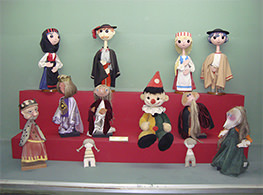
But maybe the most innovative idea was The Shankar’s International Dolls Museum, which has now grown into one of the largest collections of costume dolls anywhere in the world, housing over 7500 dolls from 85+ countries. And it all started with a single doll—sometime in the ‘fifties, the Hungarian Ambassador gave Shankar a typical doll from his country, to give away as one of the prizes in the International Children’s Competition. So fascinated did Shankar become with this doll that he started collecting costume-dolls whenever he travelled.

He did not just do this for his own enjoyment. He often held exhibitions so that children of all strata could see and enjoy them. Pandit Nehru and Indira Gandhi visited one such event, and Indira Gandhi suggested then that Shankar should set up a permanent museum of these dolls. The idea slowly crystallized, and the Museum was inaugurated in 1965. The building where it was housed was appropriately named Nehru House. Nehru gifted a large number of dolls to the Museum and these were the core around which the collection was built. Subsequent PMs as well as Ambassadors and visiting dignitaries from various countries also added special and unique dolls from their nations.  And thereby, a landmark institution was created.

While these were pioneering ideas in their times, the question that needs to be asked is how can the Museum be made relevant for today? How can modern understanding of museums and collections be brought in to revitalize the display and hold the attention of today’s children? The collection is unique ,and the rich collection of artefacts would be a dream for many a researcher to delve into –how can that be facilitated?

We are sitting on a treasure-trove. If we respect the legacy left by Pandit Nehru and Shankar, we have a duty to use this better.

Happy Children’s Day!

–Meena

Pic from https://www.childrensbooktrust.com/dollsmuseum.html

Story in a Teacup: Wagh Bakri Chai

In Gujarat tea is literally ‘the cup that cheers’ at any time of the day or night. From the age-old kitlis the small roadside tea stalls where the sweet milky chai is constantly boiling on the hissing kerosene stove, to the upmarket ‘tea lounges’ where the menu offers a range of fancy artisanal teas, people of all ages and walks of life hang out. Tea is the essential companion to the range of farsans (savoury snacks) that are the identifying hallmarks of Gujarati food.  

While Gujarat is geographically almost across the country from the tea producing states in the east and south, it is probably the biggest consumer of tea leaves. The large-scale sale of tea leaves in the region began with the crossing of continents by a Gujarati entrepreneur Narandas Desai. The company he founded was to grow into one of the largest tea companies in India—Wagh Bakri chai.

The story begins in 1892 when Narandas Desai crossed the ocean to South Africa with the dream to start a business. He took on lease 500 acres of tea estates near Durban, and threw himself with focus and passion into learning the intricacies of cultivating and producing tea, as well as the business of selling it. While he was there he came in touch with Gandhiji who was beginning his own journey of learning to live and work on foreign soil. The two mutually respected each other’s work, values, and personal and professional ethics. They also equally faced the challenges of racial discrimination, which eventually led them both to return to their home country.

Narandas Desai returned to Gujarat in 1915, leaving behind a successful tea business. He came home with very little material wealth, but carrying a prized letter from Gandhi which stated: “I knew Mr Narandas Desai in South Africa, where he was for a number of years a successful tea planter”. He also carried in him the strong Gandhian ethic of hard work and honesty, as well as a sound knowledge of teas and the tea business.

After working briefly at a tea estate in Maharashtra, Narandas moved to Gujarat. He took a loan to establish, in 1919, the Gujarat Tea Depot, the first store in Ahmedabad to sell wholesale loose tea. The original clientele were workers in Ahmedabad’s many textile mills. The tea was procured from estates in different parts of the country; Narandas, from his South Africa experience had learnt how difficult it was to own and run a tea estate. As business grew, Narandas began sourcing and blending better varieties of tea leaves, and expanding his clientele.

In 1934, for the first time, the Gujarat Tea Depot, started selling tea under its own brand. The name selected for the brand was Wagh (tiger) Bakri (goat). The twinning of two disparate characters was intended to represent social equality—tiger representing the upper class and goat representing the lower classes. This was visually represented by a picture of a tiger and a goat drinking tea from the same cup. Here too Gandhi’s influence was visible. The company was not only a swadeshi one, its logo also indicated the support of the movement against caste-based discrimination. The unusual logo became an icon for the company’s ethos, and continues to be so even today.  

Narandas Desai’s three sons Ramdas, Ochavlal amd Kantilal joined their father in managing the growing business. The company also started an office in Kolkata to oversee and check the purchase of tea at auction centres there. Till 1980 Gujarat Tea Depot continued to sell tea in wholesale, as well as retail through 7 retail outlets. But by that time they also foresaw the burgeoning market for packaged teas. In response, the group launched Gujarat Tea Processors and Packers Ltd. in 1980, introducing packaged tea. Initially people were sceptical and hesitant to buy packaged tea as they were used to feeling and smelling loose tea leaves before buying. 

In the early 1990s, the company decided to introduce the concept of tea bags. This again, was uncharted territory. In a culture where boiling tea thoroughly was the norm, the idea of instant ‘dip dip’ tea was alien. Wagh Bakri took the risk and imported state-of -the-art tea bag machines from Argentina. The introduction of tea bags marked a paradigm shift in the tea scene.

The company continued to experiment and innovate, introducing new dimensions and products to the tea drinkers. All the generations of the Desais engaged totally in carrying Narandas’s vision to new heights and breadths, introducing new varieties into the packaged tea market. Through the journey they continued to adhere to their founder’s strong commitment to quality and affordability, targeting “decent profits, but not profit maximisation at any cost to company image and standing”. Even in the face of stiff market competition and many financial pressures, their product range has always carried an economically-friendly price tag. 

But before the product reaches the shop shelves, it is preceded by a great deal of research and evaluation. The research includes understanding the specific tastes of the region where the product is to be introduced. It even includes a study of the local water and milk commonly used for brewing the tea. Every region, if not every home, has its own preferences and tea-brewing processes. The Wagh Bakri team invests a great deal in understanding the preferences of its consumers and putting together suitable blends.

The ultimate test is the tea tasting in which the company’s directors are personally involved. The company’s headquarters in Ahmedabad has a large Tea Tasting Department. Tea samples procured from auctions of different estates, saucers of milky teas blended according to the quality of local water and milk, and weighing scales are systematically arranged. The company’s directors personally taste each sample and rate it according to colour, strength, taste and briskness. On some days 400-500 samples of tea are tasted. There is no compromise on taste and quality. Little wonder then that 50 per cent of the tea consumed in Gujarat is from Wagh Bakri.

While continuing to cater to the traditional tastes, the company is also aware that with international exposure, the younger generation is open to more flavours and trends. In response the company has launched a wide range of offerings from Oolong tea to Matcha tea. It was also the first to offer suitable settings to savour these gourmet teas by setting up Tea Lounges in Ahmedabad in 2006, and later in a few other cities.

The corporate office of Wagh Bakri was inaugurated in 2006. A fitting tribute to the founder whose vision, dedication and trust guided the company for over a century. While largely confined to Gujarat for nearly a century, the company started selling its tea in other states as well between 2003 and 2009. Wagh Bakri is not pan-Indian in its sales, but even with the limited states that it sells in, it is the third largest tea brand in India. It also has an international presence. As its directors believe, it is more than a tea company, it is a creator of connections and a nurturer of relationships.

Wagh Bakri’s executive director, and one of its key tea tasters, Parag Desai recently passed away at the age of 49, after a brain haemorrhage caused by a freak accident. A sad loss for the Wagh Bakri family of tea drinkers across the world. 

–Mamata

Fun and Games

Play is something the young of many species indulge in. Play is of course a part of the life of young humans, but we also see puppies, kittens, the young of many mammals and even some birds play.

The study of play is however, a serious matter, as can be seen from this definition: ’ play is repeated, seemingly non-functional behavior differing from more adaptive versions structurally, contextually, or developmentally, and initiated when the animal is in a relaxed, un-stimulating, or low stress setting’ (Burghardt, 2014).

If that sounds a bit complex, here is a breakdown of the behaviours associated with play, i.e. play should

‘*be incompletely functional in the context in which it appears;

*be spontaneous, pleasurable, rewarding, or voluntary;

*be different from other more serious behaviors in form (for example, be exaggerated) or timing (for example, occur early in life, before the more serious version is needed);

* be repeated, but not in abnormal and unvarying stereotypic form (for example, rocking or pacing); and

* be initiated in the absence of severe stress.’

Till a few decades ago, it used to be believed that only the young of warm-blooded animals and birds played. But research is showing that many other creatures play too, including the young of some fish, frogs, lizards, turtles and even Komodo dragons. Coming from a human perspective, we may not recognize this as play. But going by the definition and framework above, many of the activities of the young of these species fall in the category.

Play is of critical importance in the development of all species who indulge in it. In the case of human children, it helps in the development of cognitive, physical, social, and emotional well-being. It helps children learn about themselves and the world, and through play they learn many life-skills like confidence, resilience, cooperation, team spirit, coping with challenging situations etc.

Play itself can be of different types: Physical Play, which helps in physical development and skills like coordination; Social Play which helps children develop the skills of how to interact with others, taking turns, cooperation, etc.; Constructive Play, wherein children create things—arts and crafts including drawing, painting, building things, etc.; Fantasy Play, that is using the imagination to create situations and enacting parts; and Games with Rules, which helps the child develop cognitively and learn how to follow instructions and rules.

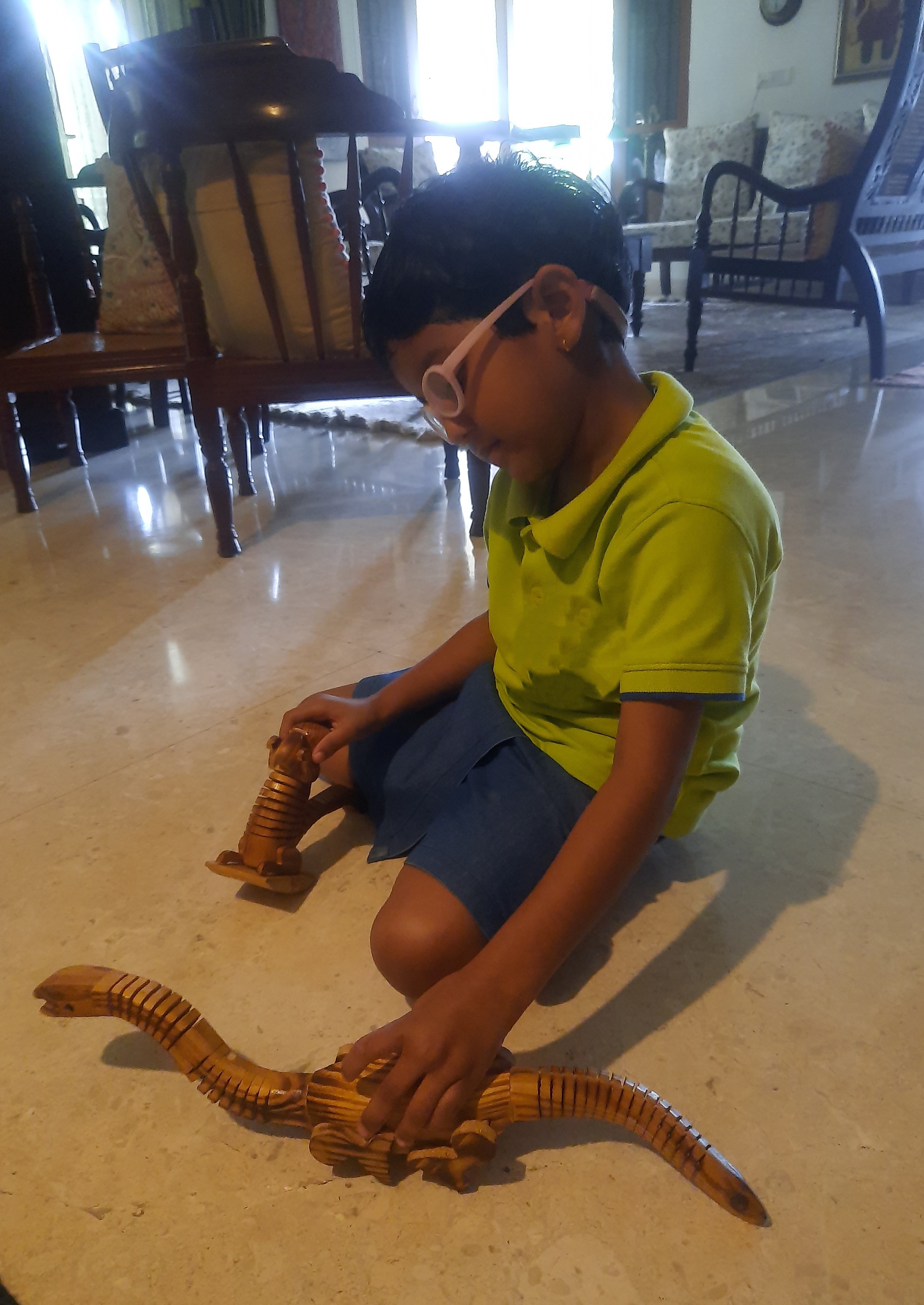
If the topic of the conversation is play, can toys be far behind? Toys too date back to ancient times– archaeologists excavating the ancient city of Kültepe Kaniş-Karum in Turkey discovered a 4,000 year old ceramic rattle, which is believed to be the oldest children’s toy yet uncovered.

Toys
Photocredit: Harini M.

Today toys and games are a highly sophisticated market with several categories including puzzles, dolls, soft toys, fidget toys, modelling clay and related products, movable vehicles, construction toys, constructed toys, board games etc. 

It is also a huge market–in 2022, this market generated total revenue of US$122.90 billion. India is a tiny part of this—with the Indian toys market size reaching $ 1.5 billion last year, with barely $ 1.14 per capita spend on toys. Which means most of our children don’t have access to toys, or have too few toys—which is definitely disadvantages their development. Not that I am saying that store-bought toys are the only way to go. We know that children show enormous ingenuity in making anything into a toy–kitchen vessels, sticks and stones, boxes and cartons. And creative parents and teachers can make toys at no or low-cost. (For ideas, you can visit https://arvindguptatoys.com/, the website of Padma Shri awardee Shri Arvind Gupta, who has spent his life developing and advocating for the use of no- and low-cost toys with educational value). But having said that, I do believe that every child has the right to a new, shiny toy once in a while. So not only must we manufacture more toys, but low-cost, innovative ones which don’t compormise on safety.

Equally important are innovative ideas like toy libraries so each child does not have to buy every toy and less-advantaged children can get access too; toy hospitals so toys can be mended and their life extended;  and NGOs which collect, refurbish and re-distribute toys. Another complex challenge is how to keep toys from reaching solid waste dumps—how to recycle them safely and cost-effectively?

So toys may be fun and games, but it’s definitely not all child’s ply!

–Meena

PS: The image is from a storybook Harini and I created using toys as charecters. ‘My Sunday with Daadu and Deedu’ available on Amazon. The Telugu version by Manchi Pustakam is available on their site.