Stupid Toy Day? Makes No Sense!

Every year on December 16, the internet celebrates something most households have tripped over, stepped on in the dark, or quietly wished would disappear: the “stupid toy.” Officially, it’s called Stupid Toy Day—a day devoted to toys that serve no obvious purpose, promise no educational outcomes, and stubbornly resist all attempts at being “enriching.” They do not teach coding. They do not build emotional intelligence. They simply… exist.

A “stupid” toy, as the internet defines it, is not broken or unsafe. It’s just inexplicable. It does one odd thing. It refuses to justify itself. It looks faintly ridiculous. Pet Rocks. Rubber chickens. Slime. Talking dolls that say things no one programmed on purpose. Lights that flash for no reason at all.

And honestly? That’s exactly why I think there is no such thing as a stupid toy. Because anything that gives joy to a child and it wants to spend time playing with, is a good toy! Whether store-bought, found at home or contrived from the most mundane things, whatever floats a child’s boat, is a toy. Entire generations have grown up playing with objects that contributed nothing measurable—and yet somehow contributed enormously to childhood.

The thing about calling a toy stupid is that the word never really belongs to the object. It belongs to the adult standing next to it and judging it.

When parents complain about “stupid toys,” they rarely mean toys that fail the child. They mean toys that fail them. Too loud. Too sticky. Too impossible to clean. Too bright. Too many pieces. Too much glitter. Too much slime. Too much mess. Too much noise. Too much… joy, possibly, expressed in a form that requires major clean-ups. Seems to me, most “stupid” toys are simply inconvenient toys. Toys which seem pointless to an adult.

AN ARVIND GUPTA TOY

But to my mind, there is one category of toys that are stupid. A toy becomes exponentially more “stupid” the minute it costs a small fortune. A plush animal that costs as much as a phone. A doll with a wardrobe bigger than yours. A remote-controlled something that breaks in three days. High price and low value—what could be stupider?

Brian Sutton-Smith’s work on toys and play is powerful. In Toys as Culture, he argues that toys don’t live in one neat category like “fun” or “education.” They exist in overlapping worlds—family, technology, education, and marketplace. Toys can be consolation, security and companionship. They can be tools, machines, friends, achievements. They are not just objects; they are emotional support.

A glitter jar might look like a mess waiting to happen.
To a child, it might be the universe in a bottle.

A noisy toy might feel like an assault on adult nerves.
To a child, it might be power.

A useless toy might be, in truth, a deeply useful one—the kind that absorbs loneliness, invents stories, and makes space for imagination.

We forget that children do not play with toys to improve themselves. They play to live inside themselves.

And children by themselves never measure toys by price or return on investment. But sadly, there is no refuting that peer pressure and media pressure have enormous influence on a child perceiving a toy as highly desirable. And that is a worry.

Stupid Toy Day, at its best, quietly reminds us that joy doesn’t require justification. It doesn’t need a developmental framework or a learning outcome chart. Play is not a performance. It is a state of being.

Basically, Stupid Toy Day is STUPID!

Honour the toy that made no sense but means everything. And remember: not everything precious needs to be practical. And in this holiday season, as we go about buying things left and right, remember, a child will be as happy playing with the cardboard carton as the toy which was packed in it. Remember Calvin, Hobbes and their time machine? And Arvind Gupta’s Toys from Trash? Money does NOT equal toy-joy.

–Meena

Listen carefully. Listen widely. Listen without assumptions: Gallup Polls

For many of us who grew up reading international newspapers, Gallup was a familiar name—almost a synonym for “what America thinks.” Their polls were quoted in classrooms, editorials, speeches, and policy discussions. If Gallup said Americans trusted an institution, or were worried about unemployment, or supported a policy, it felt as if a nation had spoken.

November 19 marked the anniversery of the birth of the man who started it all–George Gallup, a career journalist. His interest in politics led him into the areana of forecasting polls, and he set up a company to do this. He set up the American Institute of Public Opinion in 1935 to do this, at a time when the idea of systematically measuring public opinion was almost revolutionary.

Gallup polls represent a methodology of scientific polling initiated by George S. Gallup in the 1930s, aimed at accurately assessing public sentiment. This was a significant departure from earlier, less systematic polling methods, as it emphasized the importance of selecting representative samples of the population. Gallup polls gained widespread recognition in 1936 for successfully predicting Franklin D. Roosevelt’s election victory but faced criticism in 1948 when they incorrectly forecasted Harry S. Truman’s defeat. These setbacks led to learnings, and Gallup refined his polling techniques, employing random sampling and continuous polling to enhance accuracy, particularly in presidential elections during the 1950s.

When Gallup moved to random sampling in the 1950s and began polling continuously until the eve of elections, he wasn’t chasing precision for its own sake. He recognised a deeper truth: societies shift quietly, between headlines. Polls must therefore be reliable mirrors, not hurried sketches.

Over the years, Gallup polls have become integral to political campaigns, influencing candidate nominations and public policy discussions. They have also mirrored societal changes, capturing evolving attitudes on issues such as gender equality and civil rights. Despite their utility, there is ongoing debate about the reliance on polling data by political leaders, with critics cautioning against using polls as the sole measure of success. Overall, Gallup polls continue to play a vital role in understanding public opinion and shaping political discourse.

But over the past twenty years, America has changed dramatically. People stopped answering landlines. Survey participation dropped. Voter behaviour became harder to predict. And suddenly, the organisation that once defined polling found itself struggling to keep pace with a shifting landscape.

There were headline moments—for example, missing the mark in the 2012 US presidential election—that forced painful introspection. To their credit, Gallup did omething rare: they hit pause. They stepped back from national election polling, admitted where methods were no longer working, and began a long process of rebuilding.

Today, Gallup occupies a different—but still significant—place in American public life.

They no longer dominate political horse-race coverage the way they once did. But they have pivoted towards areas where long-term, stable measurement matters more:

  • Public trust in institutions
  • Wellbeing and life evaluation
  • Workplace engagement
  • Social attitudes that evolve over years, not election cycles

Their “State of the American Workplace” and “Global Emotions Report” are now widely cited, not for predicting results, but for revealing how people feel about their lives and work. In a country where political noise can drown out quieter realities, Gallup’s longitudinal datasets offer something precious: continuity.

And that, perhaps, is Gallup’s place today. Not the sole voice of American opinion, but a steady, methodical listener in a crowded room.

And Then Comes the Indian Question…

All this inevitably leads to a Indian doubt: Do we do anything like this?

India is a nation where elections are larger than many countries, where tea stall debates spill into WhatsApp forwards, and where “sentiment” is often declared loudly—but loosely. So who is actually listening methodically?

The answer is both reassuring and sobering.

Yes, India does have organisations that follow rigorous polling practices—most famously CSDS-Lokniti, which uses sampling frames, stratified selection, field-tested questionnaires, and detailed post-poll analysis. Some private agencies also attempt scientific sampling, though with varying transparency. But polling in India faces unique challenges: population size, linguistic diversity, urban-rural divides, accessibility, and the sheer logistics of reaching voices beyond the easily reachable.

The result? While we do have pockets of high-quality research, we also have a landscape crowded with “quick polls,” “mood trackers,” and “snap surveys” whose methodology, if printed, might fit on the back of a bus ticket. Till today, election forecasts have minimum credibility.

Let’s see if all the bad press drives election forecasters to move towards more statistically sound and scientifically based approaches. Well, we can hope!

–Meena

Pic from: The India Forum

Happy Diwali! Prosperity and Well-being to All!

We are in the midst of the Diwali celebrations—honouring and worshipping the Goddess Laxmi. In this time of wishing everyone prosperity, it is contrarily also a moment to think of poverty.

It is also timely because Oct 17 is marked as International Day for the Eradication of Poverty.

Poverty is a state of lacking sufficient money or material possessions to meet a minimum standard of living. It is “pronounced deprivation in well-being”. It is not just a lack of income but also a lack of access to basic necessities like food, clean water, shelter, healthcare, and education. It is a complex and multifaceted issue involving social, economic, and political elements. 

The World Bank measures poverty primarily through an international poverty line. In June 2025, this line was updated to $3.00 per day (using 2021 purchasing power parity or PPP), replacing the previous $2.15 per day. A person is considered to be in extreme poverty if their income or consumption falls below this threshold. In India, this is approximately ₹62 per day.

Measurement of poverty is a complicated and often contentious affair. Poverty can be an absolute amount of money. It can also be tied to a specific type of consumption; for example, people could be house-poor or food-poor or health-poor. These dimensions of poverty often can be measured directly, for instance, by measuring malnutrition or literacy.

But the broadest approach to well-being (and poverty) focuses on the capability of the individual to function in society. Poverty is when people lack key capabilities; they may have inadequate income or education, or be in poor health, or feel powerless, or lack political empowerment.

In India, NITI Aayog has developed the National Multidimensional Poverty(MPI) Index, based on the global MPI framework. A person is identified as multidimensionally poor if they are deprived in at least one-third of the weighted indicators of which there are 12.  These indicators are categorized into three dimensions which carry equal weights: health, education, and standard of living. Deprivation in any household member’s nutrition or the death of a child indicates health deprivation. Educational deprivation is measured by the lack of schooling years for those aged 10 and above or school non-attendance for school-aged children. Standard of living deprivations include using rudimentary cooking fuel, having inadequate sanitation or drinking water access, living in poorly constructed housing, lacking electricity, not owning essential assets, or not having a bank account.

Linked to poverty is inequality. Economic inequality is the unequal distribution of income and opportunity between different groups in society. It encompasses differences in income (pay) and wealth (total assets like property and stocks), and is measured using metrics like the Gini coefficient.  Economic inequality includes Income Inequality, Wealth Inequality and Inequality of Opportunity.

Diwali is about caring and sharing. And it is about family. This year’s theme for the Poverty Eradication Day emphasizes ‘ensuring respect and effective support for families’. There could not be a happier coming together of intent, pointing the way for a truly Happy Diwali!

–Meena

Jane Goodall: Teaching the World to Care

Jane Goodall’s story begins, as many extraordinary stories do, with an ordinary girl and an unlikely dream. As a child in England, she carried a toy chimpanzee named Jubilee everywhere. No one could have guessed that this early fascination would lead her to the forests of Gombe, where she would change not just how we look at chimpanzees, but also how we think about our relationship with nature.

When Jane set off to Africa in 1960, she had no formal scientific training. What she did have was patience, an open mind, and an eye for detail. Those qualities led to her ground-breaking observations: chimpanzees using tools, showing complex emotions, and displaying social bonds once thought to be uniquely human. These revelations turned the world of primatology upside down, but more importantly, they shifted how the public perceived animals. No longer were chimpanzees just “creatures” in the wild; they were kin.

Jane Goodall was truly path-breaking as a woman scientist at a time when the field of primatology, and indeed most of science, was dominated by men. In the early 1960s, she ventured into the forests of Gombe, Tanzania at a time few women undertook intensive fieldwork. For countless young women, she became a role model who showed that passion and persistence could break barriers, and that it was possible to be both rigorous and compassionate in research. By sharing her journey widely, she inspired generations of women to believe that they, too, could pursue careers in science, venture into the field, and shape the questions that redefine our understanding of the natural world.

Jane’s greatest contribution may not lie in her scientific discoveries alone. It lay in how she chose to use them. From the 1980s onwards, she began to move away from research and into advocacy and education. She saw forests vanishing, wildlife populations declining, and young people growing increasingly alienated from nature. She knew that science alone could not stem the tide of environmental degradation. What was needed was education—education that could inspire empathy, action, and hope.

This vision gave birth to Roots & Shoots, her global program for young people. Starting in 1991 with just a handful of students in Tanzania, it has now spread to more than 60 countries, empowering thousands of young people to become change-makers in their communities. The premise is simple: every individual matters, every individual has a role to play, and every individual can make a difference. Roots & Shoots projects range from planting trees and cleaning up neighbourhoods, to wildlife conservation and social justice initiatives. Jane wanted children to see themselves not as passive inheritors of a troubled world, but as active participants in shaping a sustainable future.

Her approach to environmental education is distinctive in three ways. First, it is grounded in hope. At a time when climate anxiety is widespread, Jane insists that hope is not naïve optimism, but a call to action. “Without hope,” she says, “we fall into apathy. With hope, we find the courage to act.” Second, she emphasised connection—to animals, to the land, and to each other. In her talks across the globe, she reminded audiences that the health of humans, animals, and ecosystems is intertwined. And third, she led by example. Even in her late 80s, Jane travelled around the world, tirelessly addressing schools, communities, and governments, showing that passion has no retirement age.

What makes Jane Goodall so compelling as an educator is that she does not lecture; she told stories. She talked about the moment when a chimpanzee she named David Greybeard accepted her presence, breaking the barrier between human and animal. She recalled village children in Tanzania planting trees that now tower above their schools. Through these narratives, she drew her listeners into a shared emotional space where science and spirit met.

For us, as parents, teachers, and citizens, there is much to learn from her style. Environmental education, she shows us, is not about overwhelming children with statistics on melting ice caps. It is about nurturing wonder, building empathy, and giving them the tools to act. It is about ensuring that the animals the children see today do not become just relics of lost species tomorrow.

Jane Goodall often said that every day we make an impact on the planet, and we can choose what kind of impact that will be. That simple truth is perhaps her most enduring lesson. She taught generations not only how to care about the environment, but also how to carry that care into action.

In a world crowded with crises, Jane stands as a reminder that education is not about filling minds, but about lighting fires. And hers is a fire that continues to spread, quietly but persistently, across classrooms, living rooms, and communities worldwide.

When I worked at Centre for Environment Education, I was lucky enough to meet her to introduce the institution and its work to her. She had very little time, but focussed intently on the conversation. It was indeed a memorable moment!

Thank you Jane Godall for all you have done and all the people you have inspired. RIP.

–Meena

PIC: My ex-collegue Ramjee is lucky to have got this signed pic of her’s when he met her.

Racing with the Oars of Tradition – Kerala’s Boat Races

Come August, the air begins to buzz with anticipation in Kerala. The boat race season is here! Known locally as vallamkali (literally, boat play), the sight of dozens of snake boats slicing through the waters, powered by hundreds of synchronized oarsmen, is one of Kerala’s most spectacular traditions. Shiny black boats stretching almost 100 feet, with rowers swaying to the rhythm of a vanchipattu (boat song).

The most famous of the boat races is the Nehru Trophy Boat Race, inaugurated in 1952 when Jawaharlal Nehru, then Prime Minister, was so captivated by the spectacle that he donated a silver trophy. Today, the Nehru Trophy on the Punnamada Lake in Alappuzha attracts international attention and has been featured on tourism campaigns worldwide. But across the state, from Aranmula to Champakulam, local communities host their own races, each with its own traditions and lore.

Innovation on the Water

One of the most interesting aspects of the boat races today is how technology has crept in—not to diminish tradition, but to amplify it. While the boats themselves are still crafted the old way, using Anjili wood and painstaking carpentry handed down through generations, innovations have entered the training and organization.

Rowers now undergo scientific fitness regimes, with physiotherapists, nutritionists, and even sports psychologists guiding teams. GPS trackers and drone footage help coaches analyze synchronization and speed—things once left only to the naked eye and instinct. Live-streaming and 4K broadcasts take the drama of the races across the world, making it a truly global event. And traditional boat songs as well as new ones are now available on Spotify playlists.

Women at the Oars

But what about women? For long, the snake boat races were a male preserve, embodying sheer physicality. Yet, in recent years, there has been a quiet but important shift. Kerala has begun hosting all-women boat races—a recognition that strength and stamina are not male monopolies. In 2022, the first Vallamkali exclusively for women was held, with teams of fisherwomen taking to the waters.

Even in mixed-community celebrations, women’s teams are increasingly visible, particularly in the Kettu Vallam (smaller decorated boats) races. It is still early days, but the image of women rowing with fierce determination underlines how traditions evolve without losing their essence.

More than a Race

Preparing a snake boat involves dozens of families. Training the oarsmen requires food, lodging, and encouragement from entire villages. On race day, the banks are filled with people singing, cheering, and celebrating. Divisions of caste, class, and creed dissolve.

There is also a spiritual dimension. The Aranmula boat race, for instance, is tied to temple rituals, where the boats are offered as homage to Lord Parthasarathy. Here, winning or losing is less important than participation.

The Kerala boat races are not just about the boats—they’re about the teams, each carrying the pride of their village or community. In recent years, the competition has become so professional that many villages now run their own “boat clubs,” with dedicated squads training year-round. It’s a bit like football clubs elsewhere—loyalty runs deep, rivalries are fierce, and victories are celebrated across the community!  A few of the most celebrated teams are:United Boat Club (UBC), Kainakary, Police Boat Club, Kollam, Jawahar Boat Club (JBC), Kollam, St. Pius Boat Club, Alappuzha, Karichal Chundan (Alappuzha), Champakulam Chundan, Veppu Vallams of Aranmula.

Congratulations to the winner of this year’s 71st Nehru Boat race held last week, the boat Veeyapuram Chundan of Village Boat Club Kainakary. The winning team which was one among 75 competitors, touched the finishing line in 4.21.084 minutes.


And Happy Onam to all
!

–Meena

Pic: nehrutrophy.nic.in/

The Stroop Effect and Other Sneaky Brain Games

Having been associated for long with Vikram A. Sarabhai Community Science Centre (VASCSC), the pioneering science centre in the country, I always source STEM education materials and kits from them.

A few weeks ago, we received one such package I had ordered. The wonderful thing about VASCSC material is that they don’t let an inch of space go to waste. So the large envelope in which the kit came was also printed with any number of science games and puzzles.

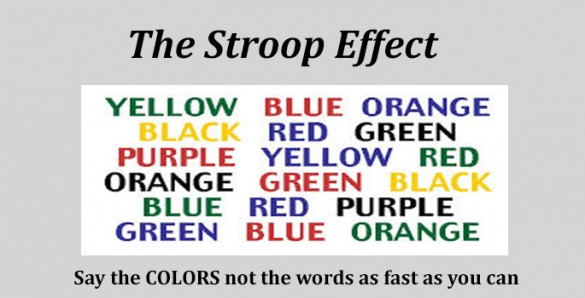
The one that my 6 year old grand daughter and I really had fun with was the Stroop Effect.

It was all giggles as she held out the sheet with a bunch of words and asked me to look at them.  The word “RED” was written in bright blue ink. She asked me to say the colour, not the word..

“Red!” I said instinctively.

“No!” she giggled. “It’s blue ! You have to say the colour of the ink!”

Oh.

And just like that, we stumbled headfirst into the Stroop Effect—a clever little quirk of our brains first identified by psychologist John Ridley Stroop in 1935. Stroop, an American psychologist conducted a series of studies as part of his PhD research. He was fascinated by how automatic processes—like reading—can interfere with other tasks, such as identifying colours. In his now-famous experiment, he showed that when colour words (like “red” or “green”) were printed in mismatched ink colours, people took longer to name the ink colour. This delay, or interference, revealed something profound about how our brains handle conflicting information.

So what is the Stroop Effect?

The classic version of the Stroop test asks you to name the colour of the ink in which a different colour name is written. Like the word “Green” printed in red ink. Sounds simple, right? But our brains are wired to read words so automatically that it slows us down, or even trips us up, when the word and the ink colour don’t match.

This interference between what we read and what we see is a fascinating peek into how our minds juggle competing bits of information.

Why does it matter?

What seems like a party trick actually has deeper implications. Psychologists use the Stroop test to study attention, processing speed, and cognitive control. In clinical settings, it helps assess brain injuries, dementia, and even ADHD. The longer it takes for a person to respond correctly, the more it can reveal about how their brain is functioning.

But even beyond labs and clinics, understanding the Stroop Effect has very real applications.

Take driving, for instance. Ever noticed how highway signs use simple fonts and colours? Imagine if a stop sign said “Go” in red letters—confusing, right? Designers rely on principles like those revealed by the Stroop Effect to make sure our brains process the right cue first.

It’s not just colours and words

Once you start noticing, these mental speed bumps are everywhere. Consider this: we all know that when we try rubbing our stomach with one hand and patting our head with the other, we run into hilarious situations. It is tricky, because your brain is trying to coordinate two conflicting patterns of movement. That’s a bit like motor interference, another cousin in the Stroop family.

Or think of the McGurk Effect, where what you see affects what you hear. If a video shows someone saying “ga,” but the sound is “ba,” your brain may hear “da.” Vision wins over sound, just like reading wins over colour in the Stroop test.

And then there is change blindness—when something in a visual scene changes, and we don’t notice because our attention is elsewhere. Magicians depend a lot on this trick, as also UX designers, who try to guide user attention in websites and apps using visual cues.

A lesson in humility

For me, discovering the Stroop Effect was a gentle reminder that our brains, for all their wonder, are not infallible. They’re predictably imperfect, prone to biases and blind spots. Well, that makes life more exciting!

–Meena

Image: Venderbilt University site

Carravaggio Crosses the Seas

When we hear the name ‘Michealangelo’, we think of the Sistine Chapel. But there was another one of the same name, Michelangelo Merisi da Caravaggio (known as Caravaggio) born a few years after the original’s death, who played own his part in significantly re-defining art.

Born in Milan, his father was an architect. The family left the city in 1576 to escape a plague and moved to Caravaggio. In 1584 our Caravaggio was apprenticed for four years Simone Peterzano, a painter. He became familiar with the works of Leonardo da Vinci, Michelangelo, Titian, Raphael, and other Renaissance masters during this time.

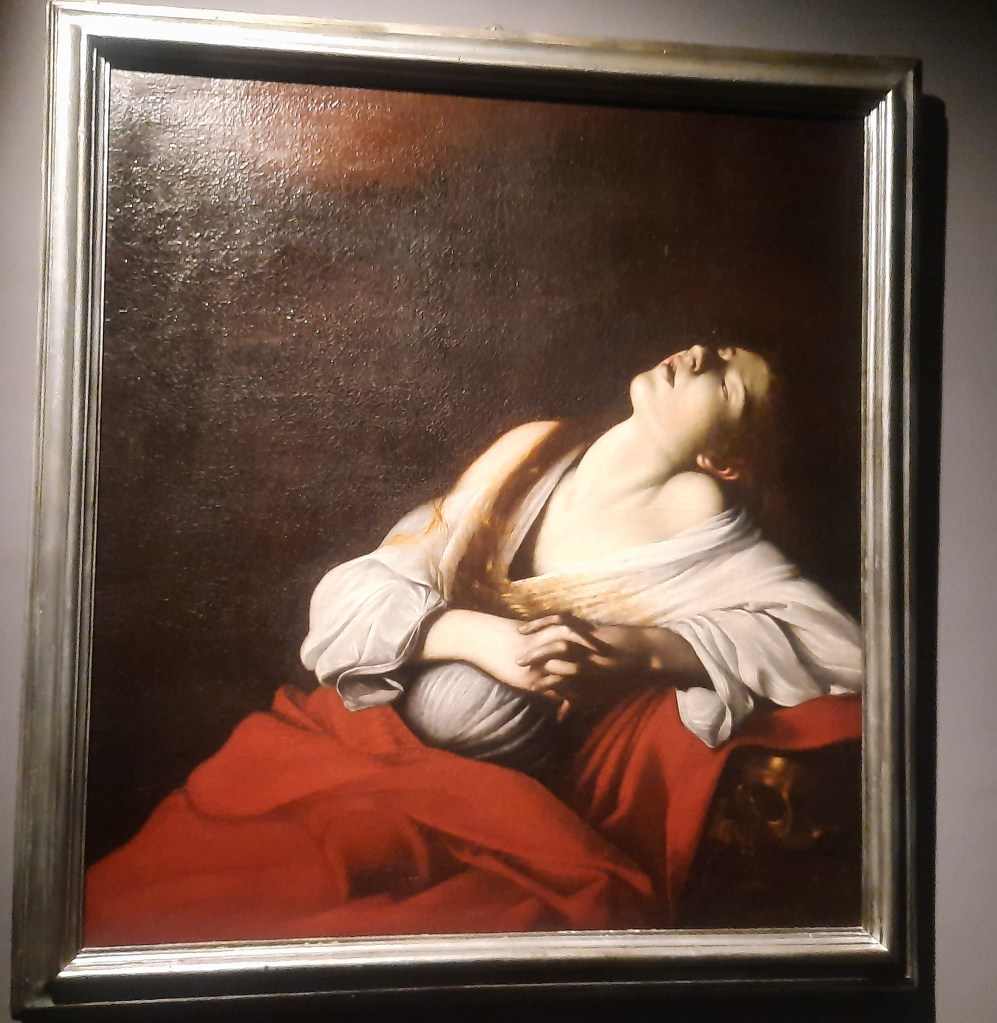
He moved to Rome, and set up in due course as an artist in his own right. Caravaggio’s work is known for its chiaroscuro (from Italian chiaro, “light,” and scuro, “dark”) technique—basically the use of light and shadow to define three-dimensional objects. Caravaggio and his followers used a harsh, dramatic light to isolate their figures and heighten emotional tension. Caravaggio’s use of realism and chiaroscuro helped to create a new style of painting that came to be known as Baroque, which shaped European art in the centuries to come.

One of his masterpieces has come to India. This is ‘Mary Magdalene in Ecstasy’, which was painted around 1606, and exemplifies his use of chiaroscuro. This painting was lost for centuries, re-surfacing only in 2014. It was authenticated as an original masterpiece by a team of leading art historians and is generally accepted as such today.

The painting travelled to India a few months ago, and was first exhibited in Delhi under the aegis of The Kiran Nadar Museum of Art, in partnership with The Cultural Centre of the Italian Embassy. Now it has come to Bangalore, and is exhibited at the National Gallery of Modern Art.

Three armed policemen are at the entrance to guard this $50 million work.The NGMA has also done its best to make it an enriching experience, with detailed panels about the artist and the painting, as well as a Virtual Reality experience.

Admittedly, It is a slightly strange feeling to go into a large, empty, almost-dark hall with only the one painting on the wall, with just one light focussed on it. A very different experience from seeing tens of paintings displayed in a room, with visitors filing from one to the other, and sometimes sitting on the benches provided to contemplate on something that catches their attention (or just to rest tired feet).

But all the care being taken with the work certainly proves India’s seriousness to protect and display of priceless art that comes to visit us.

It is not as if international masterpieces have not come to India before. Picasso’s works have been exhibited in India–the first exhibition of his works in South Asia was held at the National Museum in Delhi in December 2001 and featured 122 works. 

There are reports of original Botticelli paintings being exhibited in India too. For example, there are some reports that “Madonna of the Pomegranate” was displayed at an exhibition in Thiruvananthapuram. 

While no originals were physically displayed, there was an online exhibition of Raphael’s drawings by the India International Centre (IIC) IIC to commemorate the 500th death anniversary of the artist. 

Immersive, virtual experiences around Van Gogh’s work as well as da Vinci’s work have come to India in recent years.

Looks like India is now on the art-map, and we will be getting to see more such international masterpieces in the near future.

In the meantime, we can of course take in all the amazing art, craft, sculpture and architecture our own country offers!

–Meena

The Water Bear Goes to Space Again

Now what is this creature who is undertaking so many space odysseys? We don’t recall seeing a bear of any kind suited up and entering a space vehicle. And what is a water bear anyway—we’ve heard of polar bears, sloth bears, brown bears, black bears and several others; but never a water bear.

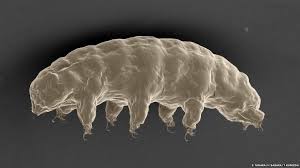
Well water bears or tardigrades are microscopic eight-legged animals. Because they look like bears under the microscope, they have been dubbed water bears. However, they don’t necessarily live in water, though they need a coating of water around themselves to prevent dehydration. They live in all kinds of places, from deep seas and hot springs to sand dunes! They also like to live in the moist environment provided by mosses and lichens and hence are also called moss piglets.

The German scientist Johann Goeze first described these creatures in 1773, and called them Kleiner Wasserbär in German, which translates to ‘little water bear’. In 1776, the Italian biologist Lazzaro Spallanzani named the phylum Tardigrada, meaning ‘slow walkers’. Today, about 1500 species of tardigrades have been documented.

They are generally about 0.5 mm in length when fully grown, short and plump, with four pairs of legs, each ending in claws or sticky pads. They are visible under low-power microscopes, so can be viewed easily even at schools or homes.

But it is not all this that makes tardigrades creatures of special interest. What sets them apart scientifically is that they belong to an elite category of animals known as extremophiles. They can survive extreme environments that most animals can’t.

For instance, tardigrades can go up to 30 years without food or a water supply. They can live even at absolute zero, and can survive above boiling temperatures. They can take pressures six times greater than the ocean’s deepest trenches, and exist in the vacuum of space. They have survived five mass extinctions!

One reason for their resilience is a unique protein in their body which protects their DNA from harmful radiation which is present all around us.  A strategy they employ in dry environments is to push all water out of their body, pull in their head and limbs, and roll up into a small ball. They go into a deep sleep until conditions improve

Tardigrade biology is unique, and scientists study tardigrades to understand their indestructibility, to transfer these learnings to many fields.  

The idea of sending tardigrades to space was first proposed in 1964. Actual experiments began in 2007 when they went up with NASA’s FOTON-M3 mission, where they were exposed to space’s vacuum for 10 days, and reanimated just by rehydration, back on Earth.

Then, in 2011, tardigrades were on board the International Space Station, and in 2019, a capsule containing tardigrades was sent on board the Israeli lunar lander Beresheet which crashed on the Moon. SpaceX-22 Commercial Resupply Services mission on June 3, 2021 also carried tardigrades to do an experiment to identify the genes involved in their ability to survive and adapt to high-stress environments, including the one astronauts experience in space. NASA hopes the findings can help guide research into protecting humans from the stresses of long-duration space travel, and ultimately help in setting up sustainable colonies on the Moon and Mars.

These space-veterans are also part of Group Captain Shubanshu Shukla’s crew! He and his fellow Polish astronaut Uzanaski-Wisniewski will study several aspects of tardigrades duing their 2-week trip–their revival, survival, and reproduction; they will count the number of eggs laid and hatched duringthe mission; compare the gene expression patterns of the astronaut-tardigrades with  those of ground populations; and identify molecular mechanisms of resilience

Thank you, Grp Captain Shukla and your brave mates on Axiom 4. Wishing you a safe journey and that you extend the boundaries of space and knowledge.

–Meena

PIC: From BBC

Woolly, Woolly

The recent weeks have seen a number of news items starting with ‘Woolly…’. That is not very normal—the phrase ‘woolly-thinking’ is too archaic to be used as a pejorative across the lines in Parliaments.

But this bandying about of the word is neither from debates nor about shearing of sheep and records set therein.

The references all come from the world of science.

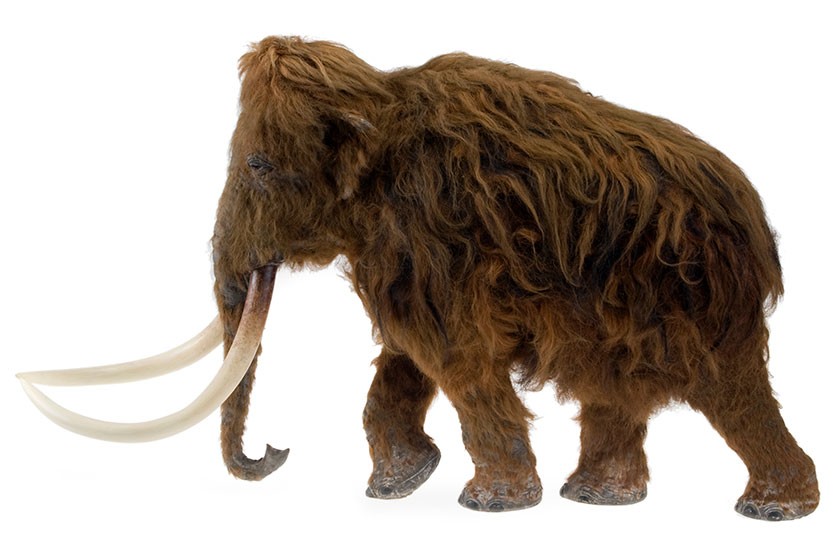
The first set of references stem from experiments of mixing mutations from the extinct mammoth and extant mice to create a woolly mouse! No, creating mice, woolly or otherwise, is not the purpose of the group of scientists which is working on this. The ultimate objective is to actually re-create the woolly mammoth itself. This is only a small intermediate step.

Now who would want to do such a thing, and why? Well, a company appropriately called Colossal Laboratories and Biosciences is behind this. Colossal refers to itself as a ‘de-extinction’ company. In a throwback to Jurassic Park, this company has retrieved the DNA of the 8-ton giant woolly mammoths which walked the earth over 4000 years ago from permafrost. They have mixed this with the genes of mice through complex gene-editing processes and have, after over three years of trials and experiments, created litters of normal sized mice which however have the ‘long, wavy, woolly hair of the mammoth’. They also have fat metabolism that mimics that of the giants. Colossal sees these mice as the first step in the route to actually re-create mammoths. They plan to work up to editing Asian elephant genes to express the traits of the woolly mammoth, and introduce the stem cells into an elephant embryo. The embryo would then be implanted into the womb of a female elephant, and lo and behold, a mammoth would be born to her!

For those who thought only a few years ago that this was the height of woolly thinking, well, maybe with the birth of the woolly mice, they are re-thinking!

Apart from the mind-boggling technical prowess required however, there are many debates about the ethical and environmental dimensions of ‘de-extinction’. (A TED Talk by Stewart Brand titled ‘The Dawn of De-extinction: Are you Ready?’ offers interesting insights).

The second set of woolly references is nothing so controversial. It is the recent discovery of a flowering plant whose flowers, rather meanly, have been called Woolly Devils. The plant or the flowers don’t seem to do any harm to anyone, but have been so dubbed because the flowers are hairy-looking, have florets which resemble devils’ horns, and the plant has been discovered in the desert in Chihuahua  (an ecoregion that covers areas of northern Mexico and the southwestern U.S., including west Texas, parts of New Mexico, and southern Arizona) along some paths in in an area known as the Devil’s Den. The plant belongs to variety known as “belly plants”—because scientists find it comfortable to study them while lying on their bellies! 

How unfair it is to name this newly-discovered plant (Ovicula biradiata) as Woolly Devils is borne out by the fact that scientists think they may produce chemicals of medicinal value.

Only time will tell where the quest for the woolly mammoth leads, and what benefits the woolly devil brings us.

In the meantime, we can pray for an end to woolly thinking.

–Meena

Famous Women on the Wall: Happy Women’s Day

This week we celebrate International Women’s Day.

It was in 1911 that IWD started being marked. A couple of decades after that was when something called the ‘Famous Women Dinner Set’ was commissioned. This was a set of 50 dinner plates depicting famous women down history.

Kenneth Clark (Baron Clark), the art-historian and museum director, commissioned these. (Those of an older vintage may remember the BBC serial ‘Civilization’ which discussed Western art, architecture and philopsophy. Though made in 1969, it was broadcast in India in the late ‘70s or early ‘80s, and was one of the most popular art-history programmes in the world.)

Coming back to the dinner-plates, the artists given the commission were Vanessa Bell and Duncan Grant, of the famous Bloomsbury Group. This was the name given to a group of English writers, philosophers and artists who met between 1907 and 1930 in the Bloomsbury  district of London, the area around the British Museum , and discussed matters of art and philosophy.

It is said that Kenneth Clark got the idea of commissioning a special dinner service when he was dining off a historic blue-and-gold Sèvres service, originally made for Catherine the Great.

Kenneth and his wife did not interfere in any aspect of the creative work—what form or shape it would take, what pieces it would consist of, or even what it should portray.

In 1933 the work was completed, and after showing it to the Baroness, the artists presented the set of 50 plates to Kenneth Clark, who was probably quite surprised to see the result if his commission, because he thought he would be getting’…a wide ranging set of decorative crockery that included everything from soup tureens to mustard pots’

Picture from https://www.charleston.org.uk/event/famous-women-dinner-service

Vanessa and Duncan had selected 50 famous women down history—twelve each from four categories: Women of Letters (e.g George Eliot, Charlotte Brontë, 10th-century Japanese poet Murasaki. Virginia Woolf and Elizabeth Barrett Browning); Queens (including Catherine the Great, the Queen of Sheba, Elizabeth I, and Victoria); Beauties (among whom were Pocahontas and Helen of Troy); , and Dancers and Actresses (including Sarah Bernhardt, Ellen Terry and Greta Garbo). That made 48 women. The last two plates portrayed the artists Vanessa Bell and Duncan Grant. The artists had hand painted beautiful portraits of their subjects on Wedgewood plates.

Though he was initially a bit confused with the dinner service, it seems that Baron Clark quite grew to like his plates. It is said that he used to select specific plates from the service for use for particular guests, depending on their interests, or to poke fun at their sensitivities.

The dinner set, after being sold and re-sold disappeared from view for some decades, but later re-surfaced. They are now housed in the Charleston Museum in the UK—the original home of Vanessa Bell.

Another major work of art involving women and dinner is ‘The Dinner Party’, a 1979 installation by Judy Chicago. This is a dinner table arranged with place settings for 39 mythical and historical women. They are seated around a triangular table. Though controversial, this is considered a classic of feminist art.

In India we do have portraits (paintings and photographs) of women. But they are outnumbered by artistic works down the ages which put females at the centre—the oldest probably being the Harappan Girl, going back to 1750 BC or thereabouts. From there, to all the art in temples, to Raja Ravi Verma and his goddesses and mythical women, to the controversial portrayals of MF Hussain, to women painted by Amrita Shergill, Anjolie Ela Menon, Arpana Caur, Bharathi Kher and others, which are all classics today.

May many more artists immortalize real women in their art. It is an apt tribute.

Happy Women’s Day!

–Meena

And thanks to all our readers on this, the anniversary of our blog! And all those whose encouragement and support keeps it going!