The Joy of the Bouncy Bite

Did you know that Q is a word? No, not QUEUE, but just plain Q. It is the Taiwanese name for a range of textures best translated, imperfectly, as “bouncy.” It is the degree of chewiness of a given food and how it feels against the teeth and tongue.

If you’ve ever bitten into something that resisted you just a little—neither soft nor hard, but springy, elastic, and alive—you’ve probably encountered Q without knowing its name. Think sabudana, tapioca pearls in bubble tea, or handmade noodles that snap faintly between your teeth. That sensation—the cheerful recoil, the gentle resistance—is Q.

What makes Q fascinating is that it describes not one texture, but a spectrum. There is nen-Q, soft and tender; cui-Q, crispy-bouncy; tan-Q, chewy-springy. Noodles are Q: resilient but not rubbery, lively but not tough. (In the case of pastas, I suppose ‘al dente’ is the equivalent,) Even sweets and desserts aspire to it—marshmallows, herbal jellies or sweet potato balls.

In Taiwanese food culture, to say something is Q is high praise. Q is considered one of the keys to good food in Taiwan, on par with taste, color, and consistency. It’s not about indulgence alone; it’s about skill. Achieving Q often requires precise technique: the right ratio of starch to water, the correct kneading time, the ideal temperature.

What’s intriguing is how Q resists quick translation. “Chewy” is too blunt. “Springy” is closer, but incomplete. “Bouncy” catches the spirit but misses the nuance. Q is pleasant resistance, playful elasticity, a sassy texture. It invites you back for another bite. It’s the opposite of mushy or limp.

Q became a recognised food term in Taiwan in the late 20th century — roughly the 1980s to early 1990s,when it moved from slang into mainstream food language. Interestingly, the letter Q itself is not traditional Chinese. It entered Taiwanese usage as a borrowed symbol from English, chosen because:

  • the sound (“kyu”) suggested elasticity
  • the shape felt visually “springy”
  • and there was no single Chinese word that captured the idea precisely

At first, it was slang but now it’s formal enough to appear in Taiwanese dictionaries, culinary writing, product labels and restaurant menus

In Taiwan, the term has gone beyond the kitchen and found its way into everyday speech, where it can describe hair, skin, or even the bounce in someone’s step.

In a world increasingly obsessed with flavour profiles—smoky, umami, citrusy—we sometimes forget texture altogether. Yet Q reminds us that eating is as much about feel as it is about taste.

Q—Taiwan’s playful word for “bouncy”—captures that perfect bite: springy, chewy, lively, and irresistible. From bubble-tea pearls to handmade noodles, Q celebrates food that pushes back just enough. It’s a texture so prized in Taiwan that it’s become part of the language itself, standing alongside taste and aroma. Every culture has its version of Q—al dente pasta, mochi-mochi rice cakes—and we in India find it in sabudana, fresh idlis, rasgulla, modak and more. Q is not just what you chew, but what you feel: a small, elastic joy.

Maybe every culture has its own version of Q, a word for the textures it prizes most. Italians chase al dente, the Japanese revere mochi-mochi and kori-kori. But Taiwan’s Q feels particularly evocative—a single letter carrying a thousand sensations.

So the next time you sip a bubble tea and play absently with the pearls at the bottom, or tear into a dumpling that seems to smile back at your teeth, remember this small, clever word. Q is not just what you’re chewing. It’s what you’re feeling—a quiet, elastic joy.

And here is a tour of Indian Q foods that I can think of: sabudana, fresh idli, rasgulla, modak, noodles, dhokla,  sevai, and appam.

Any others?

–Meena

Listen carefully. Listen widely. Listen without assumptions: Gallup Polls

For many of us who grew up reading international newspapers, Gallup was a familiar name—almost a synonym for “what America thinks.” Their polls were quoted in classrooms, editorials, speeches, and policy discussions. If Gallup said Americans trusted an institution, or were worried about unemployment, or supported a policy, it felt as if a nation had spoken.

November 19 marked the anniversery of the birth of the man who started it all–George Gallup, a career journalist. His interest in politics led him into the areana of forecasting polls, and he set up a company to do this. He set up the American Institute of Public Opinion in 1935 to do this, at a time when the idea of systematically measuring public opinion was almost revolutionary.

Gallup polls represent a methodology of scientific polling initiated by George S. Gallup in the 1930s, aimed at accurately assessing public sentiment. This was a significant departure from earlier, less systematic polling methods, as it emphasized the importance of selecting representative samples of the population. Gallup polls gained widespread recognition in 1936 for successfully predicting Franklin D. Roosevelt’s election victory but faced criticism in 1948 when they incorrectly forecasted Harry S. Truman’s defeat. These setbacks led to learnings, and Gallup refined his polling techniques, employing random sampling and continuous polling to enhance accuracy, particularly in presidential elections during the 1950s.

When Gallup moved to random sampling in the 1950s and began polling continuously until the eve of elections, he wasn’t chasing precision for its own sake. He recognised a deeper truth: societies shift quietly, between headlines. Polls must therefore be reliable mirrors, not hurried sketches.

Over the years, Gallup polls have become integral to political campaigns, influencing candidate nominations and public policy discussions. They have also mirrored societal changes, capturing evolving attitudes on issues such as gender equality and civil rights. Despite their utility, there is ongoing debate about the reliance on polling data by political leaders, with critics cautioning against using polls as the sole measure of success. Overall, Gallup polls continue to play a vital role in understanding public opinion and shaping political discourse.

But over the past twenty years, America has changed dramatically. People stopped answering landlines. Survey participation dropped. Voter behaviour became harder to predict. And suddenly, the organisation that once defined polling found itself struggling to keep pace with a shifting landscape.

There were headline moments—for example, missing the mark in the 2012 US presidential election—that forced painful introspection. To their credit, Gallup did omething rare: they hit pause. They stepped back from national election polling, admitted where methods were no longer working, and began a long process of rebuilding.

Today, Gallup occupies a different—but still significant—place in American public life.

They no longer dominate political horse-race coverage the way they once did. But they have pivoted towards areas where long-term, stable measurement matters more:

  • Public trust in institutions
  • Wellbeing and life evaluation
  • Workplace engagement
  • Social attitudes that evolve over years, not election cycles

Their “State of the American Workplace” and “Global Emotions Report” are now widely cited, not for predicting results, but for revealing how people feel about their lives and work. In a country where political noise can drown out quieter realities, Gallup’s longitudinal datasets offer something precious: continuity.

And that, perhaps, is Gallup’s place today. Not the sole voice of American opinion, but a steady, methodical listener in a crowded room.

And Then Comes the Indian Question…

All this inevitably leads to a Indian doubt: Do we do anything like this?

India is a nation where elections are larger than many countries, where tea stall debates spill into WhatsApp forwards, and where “sentiment” is often declared loudly—but loosely. So who is actually listening methodically?

The answer is both reassuring and sobering.

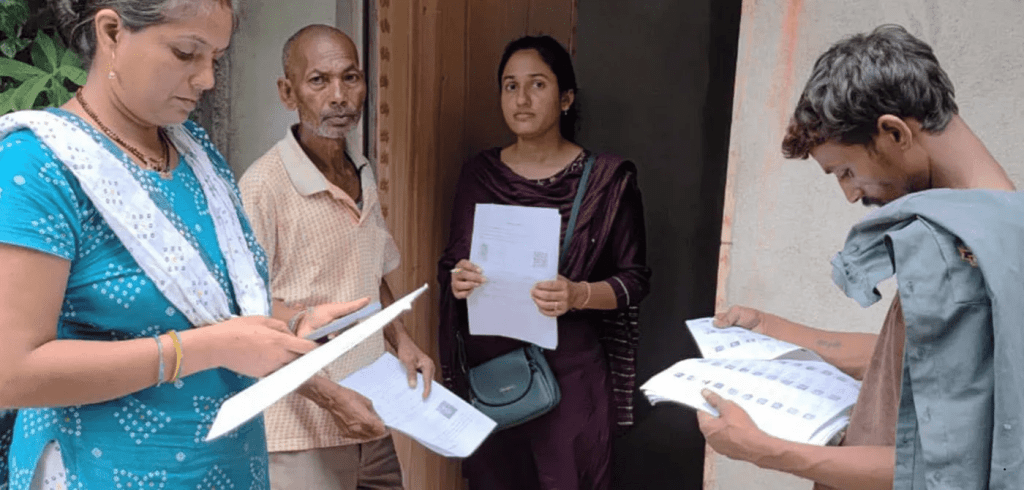
Yes, India does have organisations that follow rigorous polling practices—most famously CSDS-Lokniti, which uses sampling frames, stratified selection, field-tested questionnaires, and detailed post-poll analysis. Some private agencies also attempt scientific sampling, though with varying transparency. But polling in India faces unique challenges: population size, linguistic diversity, urban-rural divides, accessibility, and the sheer logistics of reaching voices beyond the easily reachable.

The result? While we do have pockets of high-quality research, we also have a landscape crowded with “quick polls,” “mood trackers,” and “snap surveys” whose methodology, if printed, might fit on the back of a bus ticket. Till today, election forecasts have minimum credibility.

Let’s see if all the bad press drives election forecasters to move towards more statistically sound and scientifically based approaches. Well, we can hope!

–Meena

Pic from: The India Forum

When Feet Take Flight: A Memory and the Magic of Sepak Takraw

Some memories come back vividly when there is a trigger. Sadly, the trigger for this memory was a newspaper item reporting an accident involving a Sepak Takraw team.

But the memory itself is joyful. A trip to Burma, about fifteen years ago. It was a warm afternoon in Yangon. The tea stalls were buzzing, the pagodas gleamed in the sun, and somewhere between wandering and people-watching, I found myself drawn to a small patch of open ground near a quiet lane.

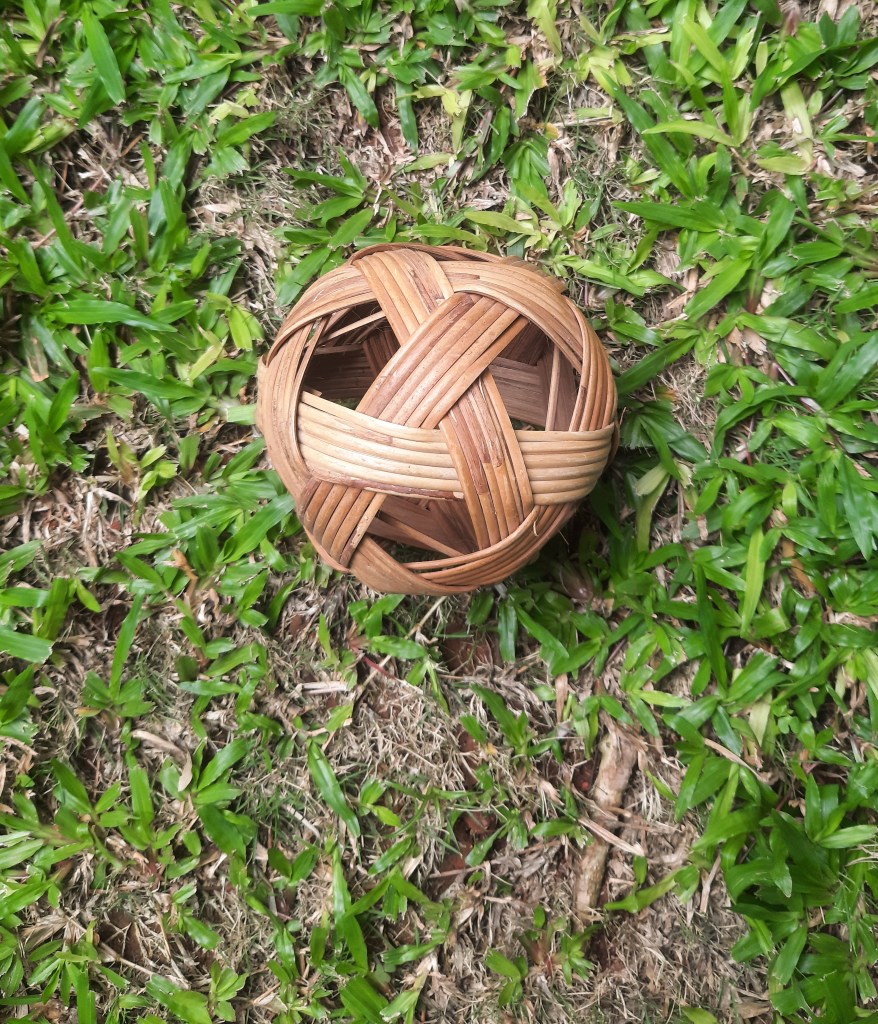
A group of young boys were playing a game I had never seen before. A boy leapt into the air, spun like a dancer mid-flight, and kicked a small rattan ball clean. I stood completely still, mesmerized. It was my first encounter with Sepak Takraw. We stood and watched for quite a while—the grace, the athleticism, the sheer joy of the players—was something amazing to watch. Fortunately on the way out, I found a Sepak Takraw at the airport and bought it.

All these years later, that moment still shines brightly in memory. Because Sepak Takraw is not a sport you easily forget.

For many of us in our generation, our playground sports were familiar—gully cricket, kho-kho, maybe a weekly volleyball session if your school had both a net and enough motivation to set it up. But Sepak Takraw feels like someone took volleyball, infused it with martial arts, added the grace of classical dance, and sprinkled it with sheer joy.

In the lanes of Myanmar, Malaysia, Thailand, and Indonesia, this sport has lived for centuries. Its early form, sepak raga, simply meant “kick the rattan ball.” Communities played in circles, keeping the woven ball aloft with feet, knees, heads—much like our own childhood attempts to keep a rubber ball bouncing on our legs, but infinitely more skillful.

Over time, the game evolved. Nets were added, rules refined, teams formed. What remained unchanged was the heart of the sport—rhythm, teamwork, and an almost balletic coordination.

What struck me in that first encounter in Burma was the joy. There was no crowd, no scoreboard, just a group of boys pushing the limits of their bodies, laughing, teasing, showing off impossible kicks.

Since then, as videos of Sepak Takraw swirl across the internet, the world has begun to share in that delight. Watching professionals play is like watching physics bend slightly. The killer kick—a full somersault that sends the ball crashing down at an angle—feels like something from a choreographed stage performance. The teamwork is intuitive, almost telepathic.

Interestingly, Sepak Takraw has been creeping into India’s sporting landscape too, especially in the Northeast. Manipur in particular has embraced it with enthusiasm, with players who train tirelessly and compete internationally. Perhaps some Indian traveller today will see a game in Imphal or Aizawl and feel the same quiet awe I felt in Yangon all those years ago.

Today the game is played at international level, and has entered the AsianGames. Efforts are on to get it into the Olympic list. 

But for me, it is the memory of that afternoon in Burma—the dusty field, the laughter of boys, the swift arc of a rattan ball against the sky. It is a reminder of how sport, in its purest form, connects us across borders and time.

–Meena

Operation Cat Drop: Borneo to Cyprus

As an environmental educator there was a popular story that we used to illustrate how everything is connected, and how one step can sometimes have a chain of unanticipated consequences that disturb the delicate balance of nature. The story goes thus:

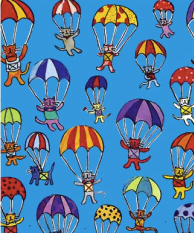
In the early 1950s, there was a severe outbreak of malaria amongst the Dayak people in Borneo. The World Health Organization tried to solve the problem. They sprayed large amounts of a chemical called DDT to kill the mosquitoes that carried the malaria. The mosquitoes died and there was less malaria. That was good. However, there were side effects. One of the first effects was that the roofs of people’s houses began to fall down on their heads. It turned out that the DDT was also killing a parasitic wasp that ate thatch-eating caterpillars. Without the wasps to eat them, there were more and more thatch-eating caterpillars. Worse than that, the insects that died from being poisoned by DDT were eaten by gecko lizards, which were then eaten by cats. The cats started to die, the rats flourished, and the people were threatened by outbreaks of two new serious diseases carried by the rats, sylvatic plague and typhus. To cope with these problems, which it had itself created, the World Health Organization had to parachute live cats into Borneo. Operation Cat Drop as it was called, air dropped a number of cats (numbers range from 20 to 1400!) into the region. This step was visualized as the initiation of a reverse cycle that could restore the chain of predator-prey, wherein the cats would feed on the rats which were posing the public health challenge.  The story did not continue to describe the new consequences of this step.

I remembered this story when I read a recent report where the problem and not the solution has started with cats!

This is on the small island nation of Cyprus in the eastern corner of the Mediterranean where currently cats outnumber the local human population!

Cyprus has a long history associated with cats. It is believed that cats were first domesticated in Ancient Egypt. But archaeological discoveries of cat remains close to human burial sites in sites in Cyprus dating back around 9500 years ago indicate that the interactions between humans and cats may have started here much earlier. It is speculated that cats must have been introduced to the island from the mainland, and there are several stories about this. One legend states that in AD 328 Saint Helena, a Roman Empress began construction on a monastery on the island. At that time a terrible drought afflicted the area, people fled and snakes proliferated. Helena got boatloads of cats shipped over from Egypt and established them in the area to destroy the snakes. The monastery was built, but also destroyed later and subsequently rebuilt several times. But the cats remained and thrived, and established themselves as an unofficial sub-breed known as the Cyprus Cat.

There is still a monastery, St. Nicholas of the Cats, that is believed to have been founded by St. Helena and where there are some cats which are purported to be the descendants of the original cats! The monastery has a tradition of taking in any stray cat brought to them in honour of the centuries of service of the felines. Cyprus itself is an island of cat nurturers where cat food dispensaries and other cat services are a common sight. This has also added to its tourist attractions (albeit for cat lovers!).

Cyprus Cats are part of the island’s identity; they are an example of how ecology, cultural history and animal love intersect. But they are also an example of how too much of a good thing can be counterproductive.

With the passage of time, no outside interference, and favourable conditions, the cat population on the island continued to grow. Unchecked breeding, especially in urban areas has now turned into an explosion of feral cats. The cats now outnumber humans. And that is a matter of concern for the civic authorities. Given cats’ predatory nature, a larger than sustainable population has the potential to wreak havoc with the island’s ecosystem. The feral cats threaten local wildlife, they become urban traffic hazards as they scavenge for food in the populated areas, and they themselves carry threat of diseases which could spread rapidly if there is an outbreak. Without sustainable measures the situation can reach an irreversible point. And ecologists are concerned that this point is close.

In recent years there have been programmes to control the cat population through sterilization, but the numbers have now exceeded manageable limits. The civic authorities feel the effective control and management of the issue needs huge funding, as well as a concerted effort which includes the active participation of NGOs, national as well as international animal welfare organisations, volunteers, the general public, as well as the tourists.

While the parachuted cats of the Borneo story became the saviours of the moment, it would be interesting to go back and review whether the cats, in turn, impacted the ecosystem. Meanwhile the Cyprus Cats continue to challenge the fragile balance.

–Mamata

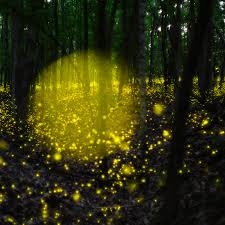
Stars in the Forest: Fireflies

Photo source: https://www.firefly.org/

Poets have celebrated them, children have been awe-struck by their magic, scientists have not yet unravelled all their mysteries …These are fireflies that glow and twinkle in the dark of the night, like the stars come down to earth.

What makes a firefly? The ‘fly’ part of the name is misleading as these insects are not flies but soft-bodies beetles.

The ‘fire’ in the name is more self-explanatory. It comes from the flashes of light that these insects naturally produce. This phenomenon is called bioluminescence. It is caused through a chemical reaction by two enzymes in a firefly’s tail: Luciferin which is heat resistant and glows under the right conditions (in Latin the word Lucifer means ‘light-bearing’), and luciferase, an enzyme the triggers light emission. The two enzymes combine in the presence of magnesium, oxygen and ATP (Adenosine Triphosphate), to emit light.

This bioluminescence in fireflies is nearly 100 per cent efficient, in that very little energy is wasted to produce their light. By contrast, in an incandescent light bulb 90 per cent of the energy is lost as heat. Because it produces no heat, scientists refer to firefly lights as “cold lights.

Like most insects, fireflies have four life stages — egg, larvae, pupa, and adult. Their average lifespan is around two years, most spent of this is spent as larvae. But fireflies emit light at all stages of their life. Their tiny eggs glow in the darkness underneath leaf litter; the worm-like larvae glow as they crawl around the forest undergrowth, and the adults shine as they fly around among the forest foliage.

Scientists believe that fireflies evolved the ability to emit light to avoid predation, warn predators (like bats, birds, and toads), and signal that they are distasteful. Fireflies release drops of toxic, foul-tasting blood, and their light is an early warning that keeps predators away.

Over time, adult fireflies began using this ability to emit light as a mating signal. Every firefly species has a unique flash pattern, much like Morse code. When a male firefly wants to communicate with a female firefly, he flies near the ground while he flashes his light every six seconds. Once he’s near the ground, a female can more easily tell if he’s from the same species as she is. (Most female fireflies can’t fly.) She answers his flashes by turning on her lights. Then the male finds her. That’s how males and females of a species identify each other and mate.

After the twinkling courtship, an adult firefly lives only long enough to mate and lay eggs in the soil or on aquatic plants. The larvae hatch in around 25 days. The larval form lasts two months to over a year (depending on the species), before becoming adults and giving birth to the next generation. The larvae eat snails, worms, and slugs, which they inject with a numbing chemical to disable. An adult firefly’s life span is just one to three weeks.  Not much is known about what the adults eat; they may feed on plant pollen and nectar, or they may eat nothing.

Presently there are about 2,000 firefly species globally, although there may exist many more which are not yet known to science. They are found on all continents except Antarctica, and inhabit a wide range of habitats: forests, grasslands, marshes, coastal mangroves, and even vacant plots and city parks which meet their two important requirements: adequate food for their larval form (slugs, snails and small insect larvae), and darkness so that adult fireflies can use their light signals to find mates. At least 50 species have been reported in India, distributed across the country.

Fireflies have been on earth for at least 100 million years. Sadly in this  anthropocene epoch firefly populations are in decline. This is because the natural habitats where the adults fly and mate are destroyed or degraded, the pesticides in agriculture fields kills firefly larvae and the insects that they depend on for food. Artificial lighting from streetlights, buildings and vehicles creates light pollution and wipes the darkness that is necessary for the firefly’s signalling during mating season.

A recent year-long study carried out by Tamil Nadu Forest Department’s Advanced Institute for Wildlife Conservation (Research, Training and Education) about the insect’s genetic diversity, distribution, habitat and their ecology, and seasonal changes in population, as well as the environmental conditions at ten different locations within the Annamalai Tiger Reserve identified at least eight distinct species within different micro habitats. The studies aimed to understand the health of the ecosystem and develop strategies to conserve firefly habitats.

The study reinforced the concern that human activities, especially those that create a lot of artificial light (headlights, floodlights from religious festivals, and even the glow of mobile phones) in buffer areas around protected areas are adversely affecting fireflies. This affects synchrony, the phenomenon where thousands of fireflies flash in unison and which is an ecological marker, an indicator of habitat health.

At the same time there are also opportunities for non-scientists to enjoy the pure magic of firefly illumination at some places in Maharashtra which hold Firefly Festivals in May-June every year. Two of these are in Bhandardara (Kajwa Mahotsav) and Purushwadi.

But one can always be on the lookout for even a little spark of the magic in a dark park or garden (even your own) between May to July when adult fireflies emerge. And if you are lucky enough to spot fireflies you can become a citizen scientist by becoming a part of FireflyWatch (https://citsci-india.org/projects/project/fireflywatch/)

–Mamata

Farmers of Our Forests: Hornbills

Last week saw the launch of India’s first Centre of Excellence for Hornbill Conservation. This is hosted by the Anamalai Tiger Reserve in Tamil Nadu, and will be dedicated to the long-term study and conservation of this threatened species.

Great Hornbill

What are hornbills, and why are they threatened?

Hornbills get their name from the casque—a horn-like projection on the top of their long and downward-curving beak. While this is their defining feature, bright skin around their eyes and long eyelashes, and a brilliantly-coloured pouch of loose skin at their throat add to their striking appearance. They also have distinctive calls. Hornbills are giants among the forest birds in many ways.

There are 62 hornbill species worldwide, with 32 found in Asia and 30 in Africa. India is home to nine species. Among these: The Great Indian Hornbill or the Great Pied Hornbill is the largest among the hornbills found in India. The Malabar Pied Hornbill is endemic to tropical forests in India and Sri Lanka. The Rufous-necked Hornbill which is the most endangered, and the least studied of the nine hornbill species is found in the North-eastern parts of India.  The Narcondam Hornbill is only found in a 12 sq. km stretch in the tropical forest of the Narcondam Island in the Andaman Sea. The Malabar Grey Hornbill is endemic to the Western Ghats. The Indian Grey Hornbill is the most commonly seen hornbill species in India, and is sometimes spotted even in cities. 

Whatever the species, hornbills play a vital role in forest ecosystems as dispersers of seeds of forest plants, aiding the regeneration of forests. Hornbills are among the very few birds that can feed on fruits with large seeds. They digest only the fleshy parts of fruits that they swallow and then regurgitate the seeds, spitting them out, or defecating the seeds intact. As the hornbill flies from tree to tree, or during the nesting season flies back and forth over long distances to search for and carry food for its mate, the regurgitated cleaned seeds are dropped far and wide, enabling them to grow into trees far from the original trees from which they originated. The Namdapha National Park in Arunachal Pradesh has the highest density of hornbills across Asia. Studies have indicated that hornbills here disperse seeds at the rate of 11,000 seeds per day per sq. km! 

Thus hornbills are critical in keeping the forest alive. If we lose hornbills, many forest trees that depend on them to spread their seeds may eventually disappear from the forest too. Hornbills symbolise not only the health of a forest, but also a key to their continued survival.

Hornbills in turn, depend on a healthy tree density in the forest for their own survival. All hornbills are cavity nesters. While they cannot build their own nests or dig cavities, they use existing holes in a variety of trees to make their nest. The process begins during a month-long courtship when the male presents the female with food. As they embark on playful behaviour the pair also check out tree cavities to select their nesting site. Having done this, the two prepare the nest by cleaning it, creating the wall lining, and undertaking repair work. Once the nest is ready, the female prepares to confine herself in the nest while the male continues to provide for her needs by bringing food and nesting material. The female then seals the nest entrance with her own faeces, food and bark fragments, and mud pellets brought by the male. Only her beak protrudes out from the sealed nest. This helps to protect the eggs and chicks from predators. She lays her clutch of between two and five eggs and incubates them for over 20 days. Throughout this period the male diligently flies back and forth, feeding his mate through her protruding beak. The mother emerges from the nest shortly before the chicks themselves are ready to fly, and the chicks once again seal the nest from the inside, even as they continue to be fed. Now both the parents share in providing food and caring for the chicks. One of Nature’s many marvellous examples of nurturing the young.

This unique nesting habit of hornbills has also, in recent times, become a threat to the very existence of these birds. The fact that they use the same nests over the years makes it important to protect their nesting trees, and the habitats where they grow. The destruction of forests by habitat fragmentation, deforestation and clearance of forest areas for agriculture and dams is depriving these birds of places to nest and breed. The loss of native trees also affects their diet, posing a significant threat to their survival. Adding to these human-made threats is the impact of climate change which disrupts flowering and fruiting patterns critical to hornbill feeding and breeding. Thus it is imperative that the trees that they use, and the trees and forests that that provide them food and shelter to breed be protected. Sadly these are being rapidly depleted, thus endangering the birds

The rapidly increasing threat to these magnificent birds calls for urgent action at all levels, from the government measures to people’s efforts.

The Hornbill has great cultural symbolism among many tribes of North East India, especially in Nagaland and Arunachal Pradesh. A unique community-based initiative to protect nesting trees of hornbills is the Hornbill Nest Adoption Programme spearheaded by the Nyishi tribe in the Pakke Tiger Reserve in Arunachal Pradesh. The tribe which traditionally hunted hornbills for their casque which were a symbol of their tribal identity have become active partners in protecting and conserving the hornbill nesting areas. The programme invites donors across the world to become ‘hornbill parents’ by adopting hornbill nests. The donations help pay salaries to the local community nest protectors who patrol the area, and ensure that the habitat continues to invite these birds. What an appropriate way to celebrate a bird that is, in its unique way, a diligent nest protector and parent.

A great People’s Science initiative is Hornbill Watch, a website where anybody can share details of a hornbill sighting from anywhere in India. This user-friendly website can be accessed by people from all backgrounds to share their hornbill sightings; being a wildlife conservationist or photographer, or even an avid birder, is not a necessity. The website has information on Asian hornbills in general, and detailed descriptions of the nine species found in India, as well as photographs submitted by contributors. Over time the data collected would help in identifying and prioritizing sites for hornbill conservation.

Now the setting up of a dedicated Centre of Excellence for Hornbill Conservation is another important step. The Centre will focus on the four species that are found in the Western Ghats which is a globally recognized Biodiversity Hotspot. The four are: the Great hornbill, Malabar grey hornbill, the Malabar pied hornbill, and the Indian grey hornbill. The great hornbill and Malabar grey hornbill are categorised as vulnerable, while the Malabar pied hornbill is near threatened as per IUCN. The Centre will monitor hornbill populations, study their breeding habits, map their nesting sites and food sources, and track their movements using GPS or satellite telemetry techniques. The Centre will also engage with the local communities to work for habitat restoration and nest protection. 

The initiative looks beyond monitoring the species to protecting entire forest ecosystems upon which the hornbills depend for their survival, and which in turn are kept vibrant with help from their farmers—the Hornbills.

–Mamata

Redshirting: A Parenting Trend

My grandnephew was born on June 1. When the time came for him to be admitted to class 1 the school informed that as per rules, a child should have completed 6 years of age to be eligible for starting school. This child missed the mark by one day, and hence he had to continue in kindergarten until the next year. While this child’s parents were not unduly bothered by this, several parents in similar circumstances are greatly bothered by the fact that their child was obliged to “waste a whole year” just because of the difference of one day. In ‘the race’ as it were, for the child to be always ahead, many parents today start the child on the long journey of education that lies ahead, with an anxiety of ‘being left behind’. They are concerned that the child will be older than its peers (albeit by a few months) and that this will be a continuing concern right through its education. Some parents even resort to a variety of tactics to convince the school to relax the rule, especially in cases where the child ‘misses out’ by just a couple of days.

But if we really think about it, what exactly is the child ‘missing out’ on? An early start to the rigidity of a timetable, stress of homework and the structure of a prematurely heavy academic schedule? As compared to continuing another year of the relatively more relaxed environment of pre-school? How much of a difference will this make 17 years down the line?

This race in India and, I suspect, many other countries starts where there are pre-schools that take children in even as early as one and a half years. Parents are keen that children enter the ‘system’ as it were, asap!

I recently read about an opposite take on this approach. This approach, that has adherents in the United States, advocates postponing a child’s entrance into preschool or kindergarten. This is in cases where the child meets the official enrolment age requirement but it is the parents’ decision to postpone its school entrance.

This approach is called Redshirting.

Redshirting is different from ‘holding a child back’. It is based on the judgement of a parent, who needs to gauge whether the extra year will give a child more time to mature in emotional, social and physical areas. It is anticipating that this will compensate for baseline learning difficulties as a school may not be able to give a single child the necessary attention and support. It is also incumbent upon the parents that they have the requisite wherewithal to be able to provide this attention and support.

There has been much debate on whether or not redshirting has positive or negative long-term effects on the child. The reasoning is, that holding the child back a year means that the child may be physically stronger and bigger than its peers when in first grade. Looking ahead, it may also provide the child with an advantage in athletics when it reaches high school. But at this early stage all this would be mere speculation, or simply wishful thinking!

In terms of academics some research has shown that delaying kindergarten can give a child a temporary boost as compared with its peers, as it is a year older and (presumably) more mature. This may also give the child a competitive advantage. But research has shown that this advantage disappears by the first or second grade. What is does not seem to cover is the other advantages of peer learning and socialization that kindergarten offers.

However this delay may be a sensible choice for a child who has a genuine requirement, such as a special need, physical or intellectual, or lacks the emotional maturity to handle a more structured kindergarten environment. It is proven that brain development between the ages of five and six is very significant. In such cases coming into school with an extra year of development may be helpful for the child.

Research supports the idea that early education is critical to developing young students’ learning and social-emotional skills and also crucial to their long-term academic success. However it is controversial whether delaying a child’s entry to school helps or hinders this process.  

More intriguing is the term itself. Why ‘redshirting’? The origin can be traced back to sports, particularly college sports, where redshirting refers to the practice of student-athletes sitting out a year of competitive play to extend their eligibility or develop their skills. The term is said to have originated in the late 1930s at the University of Nebraska, where Warren Alfson, a player, wore a red practice jersey without a number, as Nebraska’s team colour was red. This practice of wearing a red shirt during practice to differentiate from players who were competing became associated with the concept of redshirting. 

Interestingly ‘redshirting’ became a popular trend following the publication, in 2008, of Malcolm Gladwell’s bestselling book Outliers. Based on data from the ages of the players for the Canadian Hockey League, the book claimed that the players who were born in the first four months of the year, and thus older than the other team members, were more likely more likely to be identified as talented and ultimately more likely to play professional hockey. Following from this Gladwell argued that the same principle extends to children who are older than their classmates, in that they may have an academic advantage.  

In a sports-crazy society like America, some parents reason that by holding the child back for a year, it will potentially be physically stronger and larger than its peers once it reaches high school, providing it with an advantage in athletics.

It is difficult to prove either way. Redshirting may have benefits for some children, but it is not a guarantee for any future advantage; it may even go the other way. Personally I find it rather difficult to make sense of this trend. And wonder if being a year younger or older than your classmates is likely to have such profound and life-changing consequences. What does ring true is this observation: ‘America is living on a calendar of age; age determines when we can start school, drop out of school, drive, vote, work, consume alcohol, buy tobacco. Age, by society’s standards determines individuals’ readiness, maturity, and ability to handle certain situations. America has let age define an individual’s experience and progression beyond just celebrating another year of life.’

–Mamata

The Potato Has Its Day

I love potatoes in all forms, from French fries to aloo tikki! I am sure that I am a member of a global club of potato fans. And worldwide it surely is, because the potato is such a versatile vegetable that it finds its place in cuisines across the globe. Used in different forms from the simply boiled and mashed to being roasted, sautéed and topped with a variety of fancy toppings, potatoes provide tasty sustenance and comfort.

Potatoes have also been generally perceived as being ‘only starch’ and children are admonished when they gorge on potatoes; and reminded that they must eat their ‘green vegetables’ that provide greater nutrition. But wait! In recent times the potato has been elevated! It is celebrated for its nutritional value as well as its role in providing food and livelihood security. It has been recognized by the United Nations for its deep historical and cultural significance, and its evolving role in today’s global agrifood systems. The United Nations has even designated a day to be observed annually as the International Day of the Potato.

The potato traces its roots way back to the Andes where it originated, and was domesticated during the Inca civilization and was revered as ‘the flower of ancient Indian civilization’. Following domestication, these early potatoes spread through Mesoamerica and became a crucial food supply for indigenous communities. It was  particularly suitable as a staple foodstuff called chuño, a freeze-dried potato product that could last years or even decades.

The Spanish invasions of the mid-1550s dwelt a blow to the Inca Empire, but gave a new lifeline to the potato. The invaders took tubers across the Atlantic, as they did with other crops such as tomatoes, avocados and corn, in what historians call the Great Columbian Exchange. For the first time in history, the potato ventured beyond the Americas; and gradually established itself on the European continent. These tubers, first grown in Spain were then sent around Europe as exotic gifts to botanists, and even prominent figures like the Pope. The potato played a role in the rise of urbanization and fueled the Industrial Revolution. By the end of the 18th century, potatoes had become in much of Europe what they were in the Andes—a staple.

The potato also gained popularity with sailors as it provided nourishment during long voyages. It is likely that these staples spread widely across the world through these voyages, taking root on different continents. In fact the potato has been called the “world’s most successful immigrant”, as its origin has become unrecognisable for producers and consumers everywhere.

Since then, the potato has shaped civilizations and diets across continents over several centuries. Ireland’s Great Famine of the 1840s was caused by the failure of the potato crop due to a fungal disease. More than half the Irish population depended entirely on potatoes for nourishment, and the wiping out of the crop led to starvation or famine-related deaths of millions, while millions emigrated to escape this. On the other hand, it was the potato that alleviated famine in China during the Qing Dynasty, securing its place as an essential crop. During World War II and subsequent conflicts, the potatoes high yield and resilience provided food security amongst shortages of other food.

Today potatoes are a key crop across diverse farming systems globally, ranging from smallholders producing diverse local varieties in the Andes, to vast commercial, mechanised farms in different continents. The potato is the world’s fourth-most important crop after rice, wheat and maize, and among the first non-grains. China, India, Russia and Ukraine are among the world’s top potato producers. About two-third of the world population consumes potatoes as its staple food.

In the light of its global reach and popularity the United Nations also felt that it was important to highlight the important role of potatoes in contributing to food security and nutrition, as well as livelihoods and employment for people in rural and urban areas the world over.  

Small-scale and family farming production of the potato, particularly by rural farmers, including women farmers, supports efforts to reduce hunger, malnutrition and poverty, and achieve food security, and relies on and contributes greatly to the conservation and sustainable use of biodiversity.

Potatoes are not just a staple food but a symbol of resilience and adaptability. The potato is resistant to drought, cold, and barren land with wide adaptability. The crop’s versatility and ability to grow in a variety of conditions make it an advantageous crop choice. Potatoes provide accessible and nutritious food and improved livelihoods in rural and other areas where natural resources, especially arable land and water are limited and inputs expensive. Potatoes are also a climate-friendly crop, as they produce low levels of greenhouse gas emissions in comparison to other crops.

In addition, there is a wide spectrum of diversity among potatoes. This provides wide genetic variation with a range of traits, including the ability to adapt to different production environments, resistance to pests and diseases, and different tuber characteristics. There are efforts to preserve indigenous knowledge and ancient technologies, while ensuring that the production of native varieties remains under local control. The 12 000-hectare potato park located in the Andes near Cusco, Peru is one of the few conservation initiatives in which local communities are managing and protecting their potato genetic resources and traditional knowledge of cultivation, plant protection and breeding.

In order to acknowledge and honour the multiple contributions of the potato, and propelled by an initiative from Peru and the Group of Latin American and Caribbean countries, the United Nations designated 2008 as the International Year of the Potato. The objective was to raise the profile of this globally important food crop and commodity, giving emphasis to its biological and nutritional attributes, and thus promoting its production, processing, consumption, marketing and trade. In addition to being a food staple, potato by products are also being explored.Potato starch is being used as a sustainable alternative to traditional plastics. These materials based on potato proteins and starch can be used for various environmentally-friendly packaging, like food containers and medicine capsules.

In order to sustain the momentum, the United Nations decided, in 2024, to mark 30 May every year as the International Day of the Potato. The day highlights the importance of the crop in the movement towards sustainable development while celebrating the cultural and culinary dimensions of the crop’s cultivation and consumption.

Nutritionists say that potatoes contain nearly every important vitamin and nutrient, except vitamins A and D, making their life-supporting properties unrivalled by any other single crop. Keep their skin and add some dairy, which provides the two missing vitamins, and you have a healthy human diet staple.

So let us join the celebration this year with guilt-free indulgence of our favourite potato dish!

–Mamata

WAR AND PEACE: BERTRAND RUSSELL

The media has been bringing to our homes never-ending images of different parts of the world which are in the throes of war. The world is on the brink of what could well be the third world war. At some level people are becoming dangerously inured to the horrors through the never-ending barrage of images and reports that have almost become a part of daily sights and sounds. This in itself is frightening; are we accepting that violence (and its consequences) are an inescapable part of life? And while the world is led by egoistic power-hungry leaders, there is a rapidly declining number of people who feel helpless, even hopeless at the situation as it spirals towards a possibly irrevocable conclusion. Amidst the clamour of belligerent war cries, are some who lament that there are, today, so few voices of reason to remind the world of the precipitous path that we seem to be treading.

What does war achieve? And why do we need to seek peace?

Questions that have been asked since millennia. And answered in different ways in different periods of history. Perhaps one of the most pertinent answers came over a century ago, at a time when the sparks of what became the First World War were just beginning to fan the fire that would rage for the next four years. This was an essay titled The Ethics of War, written by Bertrand Russell in 1915. This was first published in the International Journal of Ethics 25, in January 1915.   

Bertrand Russell is considered as one of the greatest philosophers of the twentieth century. He was actively engaged in numerous social and political issues controversies of his time. A mathematician, educator, social critic, pacifist and political activist, Russell authored over 70 books and thousands of essays and letters addressing a wide range of subjects. He was awarded the Nobel Prize for Literature in 1950 in “recognition of his varied and significant writings in which he champions humanitarian ideals and freedom of thought. Bertrand Russell died in 1970 at the age of 97. Till the end of his life he supported free thought in religion and morals, he opposed war, nationalism and political persecution.

Bertrand Russell’s thoughts on all of the above are beautifully articulated in the essay The Ethics of War. Here are some excerpts:

The question whether war is ever justified, and if so under what circumstances, is one which has been forcing itself upon the attention of all thoughtful men. On this question I find myself in the somewhat painful position of holding that no single one of the combatants is justified in the present war, while not taking the extreme Tolstoyan view that war is under all circumstances a crime. Opinions on such a subject as war are the outcome of feeling rather than of thought: given a man’s emotional temperament, his convictions, both on war in general and on any particular war which may occur during his lifetime, can be predicted with tolerable certainty. The arguments used will be mere reinforcements to convictions otherwise reached. The fundamental facts in this as in all ethical questions are feelings; all that thought can do is to clarify and systematize the expressions of those feelings, and it is such clarifying and systematizing of my own feelings that I wish to attempt in the present article. 

At the beginning of a war each nation, under the influence of what is called patriotism, believes that its own victory is both certain and of great importance to mankind. By concentrating attention upon the supposed advantages of victory of our own side, we become more or less blind to the evils inseparable from war and equally certain whichever side may ultimately prove victorious. Yet so long as these are not fully realized, it is impossible to judge justly whether a war is or is not likely to be beneficial to the human race. Although the theme is trite, it is necessary therefore to briefly remind ourselves what the evils of war really are.

To begin with the most obvious evil: large numbers of young men, the most courageous and the most physically fit in their respective nations, are killed, bringing great sorrow to their friends, loss to the community and gain only to themselves. Many others are maimed for life, some go mad, and others become nervous wrecks. Of those who survive many will be brutalized and morally degraded by the fierce business of killing, which however much it may be a soldier’s duty, must shock and often destroy more humane instincts.

The evils which war produces outside the area of military operations are perhaps even more serious, for though less intense they are far more widespread. …The extent and consequences of the economic injury inflicted by war are much greater than is usually realized. …Thus war, and the fear of war, has a double-effect in retarding social progress: it diminishes the resources available for improving the condition of the wage-earning classes, and it distracts men’s minds from the need and possibility of general improvement by persuading them that the way to better themselves is to injure their comrades in some other country.

Of all the evils of war the greatest, in my opinion, is the purely spiritual evil: the hatred, the injustice, the repudiation of truth, the artificial conflict, where if once the blindness of atavistic instincts and sinister influence of anti-social interests, such as those of armaments with their subservient press, could be overcome, it would seem that there is a real consonance of interest and essential identity of human nature, and every reason to replace hatred by love.

It has been over a century since this impassioned plea by Bertrand Russell. Much has changed since then, but much remains the same. Let us remind ourselves of the futility of mindless violence. Let us Give Peace a Chance.

–Mamata

Celebrating Sapodilla: GI Tag for Amalsad Chikoo

Not long ago I wrote about the Kuchchhi Kharek or Date that was given a GI tag. Just last week another fruit from Gujarat has been given this tag, making it the third fruit from the state (after the Gir kesar mango and Kuchchhi kharek) to be tagged thus. This is the Amalsad chikoo or sapodilla.

We generally think of the chikoo as being a very ‘desi’ fruit with its grainy texture, caramelly flavor and colour, and sticky latex at the stem of the fruit. However, the origin of the fruit can be traced back to the Yukatan peninsula in Mexico. Its history goes back to ancient Mesoamerica where it was cultivated by the Mayans and Aztecs who used its sweet and nutritious pulp was a part of their indigenous diet. European explorers to this region discovered this fruit, and the zapote or chicle spread with them as they continued their explorations across Central America and the Caribbean, and then further afield, reaching Asia, Africa and the Pacific. The well-travelled chikoo adapted to different climates and cultures, thriving in tropical and sub-tropical regions, to become a ‘local’ favourite across different continents. Manilkara zapota (its botanical name) acquired local names like chicozapote, naseberry, nispero, soapapple, sapota, sapodilla, and chikoo.

As with most fruits, chikoo has its share of health and nutrition benefits. Several parts of India provide ideal soil and climatic conditions for cultivating chikoo. In fact India is the world’s largest producer of the chikoo which is also widely exported. There are also several varieties of chikoos grown here. But not every variety of chikoo has the distinction of gaining a GI Tag.

What is this tag and how is it obtained. A Geographical Indication (GI) sign is used on products that have a specific geographical origin and possess qualities or a reputation that are due to that origin.

Geographical Indications are typically used for agricultural products, foodstuffs, wine and spirit drinks, handicrafts, and industrial products. In the case of fruits and vegetables the product needs to conform to certain parameters such as size, colour, number of seeds, flavour and aroma.

What is important is that the qualities, characteristics or reputation of the product should be essentially due to the place of origin. Since the qualities depend on the geographical place of production, there is a clear link between the product and its original place of production.

The use of place names to identify the place of origin of products goes back centuries. However the legal connotations of such names were introduced in the form of Geographical Index by the World Trade Organization in 1994. In India, the GI tag system came into force in 2003. Darjeeling tea was the first product in India to get a GI tag. But since then the awarding of GI tags has been active, and as of July 2024, there were 605 products with GI status, spread across agricultural, natural, manufactured goods, and handicrafts.

One of the main objectives of the GI tag is to protect and preserve traditional goods and crafts, and the communities that make them. It functions as a seal of authenticity to highlight that a product claiming to be from a certain region is in fact from that region, is produced by people living in that region, and that it meets certain quality standards set up to ensure this. The GI status also offers legal protections since only registered or authorised producers are allowed to use the tag. The GI registration allows registered parties to launch a lawsuit for infringement against unauthorised parties using the tag.

The GI tag values the traditional skills of artisans, unique ingredients, and region-specific delicacies, and agricultural produce. The attraction of a GI tag is that it is believed that it will give the producers a better status and the ability to get better price for their products.

In India, the process of obtaining a GI tag is rigorous, and often takes time. It begins by submitting a physical application by an association of persons producing the goods to the Geographical Indications Registry in Chennai, which is under the purview of Department of Promotion of Industry and Internal Trade, Ministry of Commerce and Industry.

 The information in the application needs to prove the historical and regional antecedents of the product. In the case of agricultural produce, details required include the exact area, the cultivar, how it’s grown, how long it had been linked to the region, and agricultural factors that make the ingredient unique. The approval process can take anywhere between one and three years to get the tag, sometimes even longer. For example, it took eight years for the Erode turmeric and Basmati rice to get their GI status. The GI tag is only valid for 10 years, which means that producers have to renew their application to keep the status.

The Amalsad chikoo is not the first chikoo to get the GI tag. It was preceded by another chikoo variety called the Dahanu Gholvad Bordi Chikoo in 2017.This variety cultivated on the Maharashtra-Gujarat border was recognized for its unique sweet taste, soft creamy texture and high nutrition value attributed to the high calcium content in the soil of the area. This region has been a hub of chikoo cultivation for over a hundred years; also it is possible to harvest the fruit here round the year.

Now the Amalsad chikoo joins the club. It was awarded the Geographical Indication (GI) tag in recognition of its “unique characteristics and deep rooted connection to the region”. The chikoo gets its name from a village in Gujarat’s Navsari district. However the region recognised by the GI covers 51 villages in Gandevi taluka, 6 in Jalalpore and 30 in Navsari which together produce about 30% of Gujarat’s chikoo yield. The region has ten chikoo cooperative societies which contribute substantially to the export of this fruit.

The application for GI certification was made jointly by the Gujarat Council on Science and Technology (GUJCOST) and Navsari Agricultural University (NAU). GUJCOST carried out research on proof of origin of the fruit cultivation in Amalsad while NAU worked on the special characteristics of this chikoo variety. This variety is recognised for its exceptional sweetness, fine texture, and long shelf life compared to several other varieties of India. The region’s unique soil composition, coupled with traditional farming practices passed down through generations have contributed to its quality and reputation. The GI certification acknowledges “the distinct quality, taste, and cultivation methods that make Amalsad chikoo a symbol of excellence in Indian horticulture.”

The GI tag is not only enhances the reputation of this chikoo but is a recognition of the traditional agricultural practices of the local horticulture community; this also boosts their business while giving them a level of legal protection. For the rest of us, it is one more incentive to enjoy a chikoo shake, ice cream, or simply chilled slices of this delicious fruit this summer.

–Mamata