Guillain–Barré: Real to Reality and Back

Watchers of ‘House MD’, the popular American medical serial would, unlike the general public, be very familiar with the term ‘Guillain–Barré syndrome’. GBS is a rare neurological autoimmune disorder in which a person’s immune system mistakenly attacks part of their own peripheral nervous system—the network of nerves which carry signals from the brain and spinal cord to the rest of the body. This can result in muscle weakness, loss of sensation in the legs and/or arms, and problems swallowing or breathing. Symptoms typically last a few weeks, with most individuals recovering without long-term, severe neurological complications.

The cause of GBS is not fully understood, but most cases follow after a viral or bacterial infection. Infection with the bacteria Campylobacter jejuni, which causes gastroenteritis (including symptoms of nausea, vomiting and diarrhoea), is one of the most common risk factors for GBS. People could also develop GBS after having the flu or other viral infections including cytomegalovirus, Epstein-Barr virus, and the Zika virus.

GBS is rare, affecting about 1 in 78,000 people across the world each year. But in the last few weeks, over 150 cases have been detected in India, especially in and around Pune and Maharashtra. Of concern is that a case has been detected as far away as Assam. A few deaths have also resulted.

Authorities are fully alert and taking action—both to ensure detection and treatment, but also importantly, prevention. Pune Municipal Corporation is promoting public health interventions – food and hand hygiene, and safe water — for disease management.

But getting back to ‘House MD’, so influential was the serial, that there is actually an academic paper titled ‘The usefulness of TV medical dramas for teaching clinical pharmacology: A content analysis of House M.D’, in a respected medical journal ‘Educacion Medica’!

Of course such serials often have patients misdiagnosing themselves with all kinds of exotic diseases, and generally being a pain in the neck for doctors, and a waste of resources. But in the case of one patient, Alexandria Ostrem, it was a tale stranger than fiction. Way back in 2008, when Alexandria was a teenager and an avid watcher of House. she suddenly developed trouble walking. Remembering the symptoms of GBS from all her TV-viewing, she rushed to the emergency room and insisted that the doctors test her for the syndrome. However, the results came back negative.

Her symptoms continued to worsen, and she was tested several times for GBS. But nothing positive showed up. There came a stage when she was paralyzed nearly everywhere except for some use of her arms. At this point, doctors told her they agreed with her self-diagnosis, and started treating her for GBS. She responded and got well!

In the serial House MD, the doctor and his team are super-specialists in rare diseases, and when diagnosing, they tend to think in terms of unusual and exotic diseases. Such diagnosticians are called ‘zebra hunters’, a term for someone who foolishly chooses to seek out the rarest of diseases. In the normal course of things, doctors are trained to do the opposite– summed up by the adage, “If you hear hoof-beats, think horses, not zebras.”

We are fortunate that the doctors in our health system listened to the hoof-beats carefully, and identified the zebras! Thank you all healthcare givers for all that you do for us.

Leonhard, S.E., Mandarakas, M.R., Gondim, F.A.A. et al. Diagnosis and management of Guillain–Barré syndrome in ten steps. Nat Rev Neurol 15, 671–683 (2019). https://doi.org/10.1038/s41582-019-0250-9

And here is praying that all those who have contracted GBS may recover quickly.

–Meena

The author is a laymen. All information is quoted from sources perceived to be authentic, and should not be a basis for action.

http://www.my.clevelandclinic.org/health/diseases/

http://www.who.int/news-room/fact-sheets/detail/guillain-barr%C3%A9-syndrome

Of Blasted Bunions and Cussed Cuboids

I was not born with beautiful feet. And they grew to a pretty unfeminine 6.5 size. I could have still lived with that. But then in my 30s, my right foot also started blooming a bunion. For those who do not suffer with this affliction, it is a word you may not even have heard. But for those of us who suffer, it an everyday reality. When will it start aching? Has it started growing again? Will I find a decent pair of footwear which accommodates the wretched bunion? Has anyone come out with yet another horrific torture-instrument that promises to solve the problem? And does it work? These are the questions we ask ourselves each day.

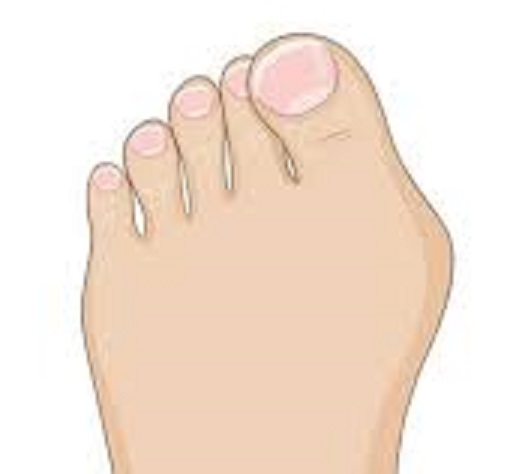
What is a bunion? Hallux valgus as it is called in medical terms, is ‘a bony bump that forms on the joint at the base of the big toe. It occurs when some of the bones in the front part of the foot move out of place, causing the tip of the big toe to get pulled toward the smaller toes and forcing the joint at the base of the big toe to stick out.’

Actually, bunions are not that uncommon. Experts estimate that about a third of the population of the US is thus afflicted. And why do they happen? Well, it is not a single reason. A combination of factors —family history, abnormal bone structure, increased motion and shoe choice — can cause them. When something puts extra pressure on the big toe joint over a long period– usually years–that can push the joint out of its natural alignment and toward the other toes, leading to bunions.  Some of the causative factors are beyond our control, but some things which we can take care of include the type of shoes we wear (narrow, pointed shoes are a no-no); the way we walk (what is called foot mechanics—though not easy, it may be possible to modify our gait so it more balanced); and how long we stand (avoid standing for extended periods of time).

And in yet another blow against the female gender, women are more prone to this! 30 per cent women versus 13 per cent men report this condition. And it is ageist too—people over 40 are more prone to it.

And can bunions be treated? Well, footwear change is recommended (but where do I go, I only wear open toe flats?); bunion pads and taping (of not too much use, believe you me); orthotics–shoe inserts that support your feet (these can help); icing and physical therapy (definitely help). If the pain and swelling are intense, painkillers or steroids are prescribed (fortunately I am not there yet). Surgery is the last resort in very severe cases, but not often resorted to for various reasons.

There are also a number of ‘correctors’ available which physically separate the toes and try to change the alignment of the big toe. These look like medieval torture instruments and have been of dubious utility to me.

Well, if there is any solace to be taken from the fact that very glamorous people have bunions, we can list several such. From Oprah Winfrey and Victoria Beckham, to Kate Middleton and Meghan Markle, from Uma Thurman to Naomi Campbell, the list is pretty long. And considering that they and their feet have to be in the glare of public and media view, we can count ourselves lucky that we can be more casual about our footwear and feet.

I had reconciled myself that I would face pain from time to time, and that I would never be able to wear dainty shoes. But then along came the cuboid! What is this very geometric sounding thing? Cuboid syndrome is a condition caused by an injury to the joint and ligaments surrounding the cuboid bone. The cuboid bone is one of the seven tarsal bones in the foot. It causes pain on the lateral side of the foot — the side of the little toe. A person often feels pain around the middle of the foot, or at the base of the fourth and fifth toes. So while the bunion hurts on the inner side of my foot, the cuboid hurts on the outside of the same foot.

And not to talk of my plantar fasciitis. The plantar fascia is a band of tissue, called fascia, that connects your heel bone to the base of your toes. It supports the arch of the foot and absorbs shock when walking. Plantar fasciitis typically causes a stabbing pain in the bottom of your foot near the heel. 

So all in all, I am definitely not Happy Feet!

I wonder why shoe-makers are not taking note of this huge market. If 30 per cent of the population suffers from bunions, surely many of them are yearning for comfortable footwear which is also half way decent looking. There is a pretty big market opportunity waiting!

Incidentally, Bunion is a cartoon strip by George Martin that was syndicated in newspapers throughout Britain and abroad (Canada, Sweden, etc.) in the 1960s and 1970s. Good to know someone found ‘Bunion’ funny!

–Meena

In solidarity with all sufferers of foot-pain, especially my bunion-sister Mamata!


Measuring Mount Everest: Radhanath Sikdar

Recently there was news that the world’s tallest mountain, Mount Everest is growing taller! While the rate of growth (0.2-0.5 mm per year) may not be significant given the total height of the mountain, it is a subject of study and research. The process behind this growth is called isostatic rebound, where land rises when heavy material like rock or ice is removed. In this case this is happening as a nearby river is eroding and causing the land under Mount Everest to push up, thereby increasing its height.

The height of Mount Everest has always been in the news, from the time that its height was measured for the first time, providing proof that it was the tallest peak on earth. Thereby hangs a long tale.

In 1802 the East India Company who were then ruling India instituted an ambitious project to scientifically survey the entire Indian subcontinent. The survey, originally started in Scotland, was brought to India as a geographical survey of the conquered territory after the British defeated Tipu Sultan.

The Great Trigonometrical Survey (GTS), as it was called, was expected to take five years. It ended up taking seventy years!

From 1923 the Survey was being supervised by Sir George Everest. In 1927 Andrew Scott Waugh, who had joined the Bengal Engineers, a regiment of the East India Company army, was appointed as a cadet in the Company, and he was assigned to the Great Trigonometrical Survey in 1832. By the late 1830s, when the Great Trigonometrical Survey reached the Himalayan region, Andrew Waugh had become Superintendent of the Great Trigonometrical Survey of India. The surveying of Everest was carried out under his supervision.

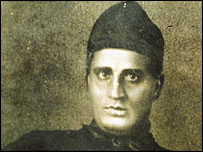
In 1831, George Everest, who had become the Surveyor General of India, was looking for a mathematician who had specialised in Spherical Trigonometry, to be a part of the GTS. A professor at what was then Hindu College (now Presidency College) suggested the name of his 19-year old student Radhanath Sikdar.

Radhanath had been a student at what was then the Hindu School of Calcutta for seven years. He had supported himself on scholarships, and his mathematical abilities did not go unnoticed. George Everest appointed the young Radhanath as a ‘computer’ in the newly established computing office. This was an era when a computer did not refer to a machine, but to the people who did complex calculations. Radhanath’s skills in this were far superior to those of his colleagues. He did not just use the established methods but invented his own formulas and applications to accurately measure different factors. He was described as a ‘hardy, energetic young man, ready to undergo any fatigue, and acquire a practical knowledge of all parts of his profession’. The young Radhanath became a favourite of George Everest.

Radhanath was sent to Mussourie where the main office of GTS was based, and it is here that he spent the next 15 years. His regular job began in 1832 as a sub-assistant. His salary was Rs 107 per month, comprising a pay of Rs 50, tent allowance of Rs 40 and horse allowance of Rs 17. In 1838, when his monthly salary was Rs 173, Sikdar expressed a wish to leave GTS for a profitable post as ‘teacher to a public institution’. Everest made a strong plea to the government to grant Radhanath Sikdar a substantial increase as an inducement to stay. As a result he was given an increment of Rs 100.

Everest retired in 1843 and was succeeded by Colonel Andrew Scott Waugh. Eight years later, in 1851, Radhanath was promoted to the position of Chief Computer and transferred to Calcutta.

This is when Radhanath started measuring the snow-capped mountains in Darjeeling. Foreigners were not allowed in Nepal so observations were taken from the Terai on the Indian side. Till then, Kanchenjunga was believed to be the highest mountain in the world. But during this survey the team noted that a mountain, then called Peak B, appeared to be higher. As calculations continued, the mountain was renamed Peak XV. The mountain had local names, it was known as Chomolungma in Tibet, Chomolangma by the Sherpas of Nepal and Qomolangma in China. But it had not yet featured on the international scene.

In 1852, the chief computer Radhanath Sikdar, through a series of calculations was able to establish that this peak was indeed higher than Kanchenjunga, making it the highest mountain in the world. He gave proof of this to his boss Andrew Scott Waugh who had succeeded George Everest as both Surveyor General of India, and Superintendent of the Great Trigonometrical Survey of India. Waugh waited four years to confirm and reconfirm the information. This was officially announced in March 1856. He also proposed that the highest peak be named after his mentor Sir George Mallory. And thus what could have been Mount Sikdar became Mount Everest!

Radhanath Sikdar’s many years of path breaking ‘computing’ and his tallest discovery were eclipsed by the ruling powers of the day. However, Radhanath continued his passion and pursuit of mathematics, even after he retired from the Survey in 1862. He joined as mathematics teacher at what later became the Scottish Church College. He, along with a friend, also founded Masik Patrika, a Bengali journal aimed at promoting education and women’s empowerment. Radhanath Sikdar passed away in May 1870.

On 27 June 2004 the Department of Posts issued a commemorative stamp featuring Radhanath Sikdar and Nain Singh Rawat a legendary the Indian explorer who surveyed the vast unexplored expanses of Tibet in the late 19th century.

–Mamata

Tree Architecture

About three decades ago, a new colleague joined our organization. During introductions, obviously the topic of what he had done-where he had done came up. It was an impressive pedigree—a Ph.D from JNU, under the legendary professor of ecology Dr. P.S. Ramakrishna. So far, so good. But his elaboration of what he had done his Ph.D on was what threw all of us. ‘Tree architecture’, he said casually, as if was a term we used day in and day out.  And embarrassing to admit, though we worked at Centre for Environment Education and should have been up with all terms ecological, none of us had heard this one. Dr. Ram Boojh Yadav, our new colleague educated us.

Last week, as I was doing my piece on topiary or tree-shaping, not surprisingly these memories came back to me. If topiary is about humans shaping trees as per their whims, tree architecture is about trees growing as they are destined to. So I thought I should re-visit that term which mystified me so many years ago, and try to learn a little more about it. So here goes…

When you look at a tree that you are familiar with, even from a distance and maybe even without leaves and flowers, you usually know what tree it is, e.g., mango vs. neem vs. Ashoka. And when it comes to botanists and arborists, obviously they can distinguish and identify many more just by looking at the silhouette.

Tree silhouttes

How does this happen? The answer is tree architecture or the study of the form of trees, which started gaining ground as a formal discipline in the 1970s, and has been use for a long time in management of trees. It is the branch of science that explains why a tree looks how it looks.

Tree architectures studies characteristics like type of branching, type of extension growth, branch orientation, flowering position etc. This is done by observing and schematising many individuals of the same species, in all life stages, to try to identify the ‘building plan’ of that species.’   To cite a researcher: ‘Plant architecture tries to identify fixed and repetitive phenomena in plant structures, valid for all individuals of the same species or even valid for multiple species.

So why does a tree look how it looks? Well the basic reason is genetics. Each tree species has a genetic blueprint of how it would ideally develop. And this goes back to its evolutionary history. For instance, the higher mechanical stresses imposed on trees that are native to windy areas makes them put down more wood to strengthen their structure, and consequently trees growing in such areas develop shorter but thicker trunks, branches, and roots. In contrast, trees that grow in sheltered areas will grow taller and thinner to improve their chances of reaching the light.

But the expression of this genetic blueprint depends on the site where an individual tree is growing—the soil, light, water, wind and other such factors that it finds there. These are the site conditions.

And the last are the environmental influences—has it experienced lightning, storms, insect infestations, human interactions, etc.

The science of tree architecture is based on subdividing trees into groups with similar characteristics (e.g., type of branching, type of extension growth, branch orientation, flowering position). Research has shown that all trees in the world fall into one of 23 architectural models—in other words, there are 23 tree building plans in the world!

Go on out there. Take a walk, get some exercise, breathe in some fresh air. And look at tree building-plans!

–Meena

Thanks: https://www.validtreerisk.com/resources/Documents/News/Tree%20Architecture%20

Double Dutch

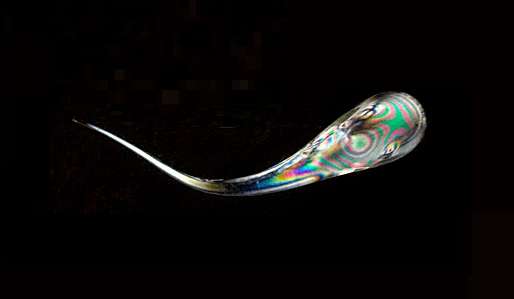
Dutch tears—that is an intriguing term I came across recently. At first I thought it was an idiom, like Dutch courage or Dutch comfort. But turns out Dutch tears are a real physical thing–toughened glass beads created by dripping molten glass into cold water! When glass is dripped into water, it solidifies into tadpole-shaped drops with thin, long tails. These were first produced in the Netherlands in the early 17th century. These tadpoles exhibit unusual characteristics—the bulbous part of the drop can withstand being hit by a hammer without breaking, but even a small pressure of the fingers to the tail-end will dramatically shatter the whole drop.

Dutch tear

These very contrary properties led to a great amount of scientific curiosity and they were the subject of much research in the 1700s and 1800s. But it was not till recently that the mystery was solved. One breakthrough came in 1994, when Prof. S. Chandrasekar of Purdue University and Prof. M. M. Chaudhri of University of Cambridge used high-speed framing photography to observe the drop-shattering process and concluded that the surface of each drop experiences highly compressive stresses, while the interior experiences high tension forces. So the drop is in a state of unstable equilibrium, which can be easily disturbed by breaking the tail. But the complete explanation came in 2017 when these scientists collaborated with Prof. Hillar Aben, of Tallinn University of Technology in Estonia and found that heads of the drops have a much higher surface compressive stress than previously thought—nearly 7,000 times atmospheric pressure. This gives the droplet-heads a very high fracture strength. (For a proper understanding of the science, please go to https://phys.org/news/2017-05-scientists-year-old-mystery-prince-rupert.html, rather than depending on my précis from there! Photocredit also to this page.)

But to get back to my original thought process: When I had tried to think of possible meanings of Dutch tears , so many idioms featuring the Dutch came to mind. We are very familiar with some:

When someone speaks very fast or unintelligibly, we say they are speaking Double Dutch–in other words, nonsense.

When one takes a shot of alcohol to boost up one’s courage before doing something one is afraid to do, it is called Dutch courage.

And of course, the Dutch treat, where each one finds they have to pay for whatever they consume.

And if you talk to someone like a Dutch uncle, you are giving them stern and serious talking-to.

And here is a small sample out of a range of many lesser-used ones:

Dutch agreement, where the parties making the agreement are drunk. And the related Dutch bargain—a bargain settled when the parties are intoxicated.

A Dutch headache is a hangover. And a Dutch concert is a very noisy situation, as would be made by a lot of drunken Dutchmen.

Dutch comfort is comfort which comes from the feeling that things could have been much worse.

Dutch reckoning is a very high bill that’s neither itemised nor detailed, and hence a bit of a con.

Dutch gold is a yellow-coloured alloy of copper and zinc from which imitation gold leaf is made.

HR persons should not go looking for Dutch talent, which is more brawn than brain. And they should be wary of employees who take Dutch leave, i.e., leave without permission.

Readers would have noticed that most of these idioms show the Dutch in a bad light. And apparently, there is good reason for this. Most of these came into being about 1665 and later, when the Netherlands and England were vying with each other both on land (England won a Dutch colony what is currently New York), and on sea for the control of trade routes. During the 17th century, the Netherlands and Britain waged three wars against each other over 20 years. The deep-seated animosity must have spilt over to language, and given the number of such idioms, the English must have vied with each other to come with nasty expressions about the enemy. (While this explanation seems logical, there don’t seem to be such expressions which feature the Spanish. And England and Spain were enemies and rivals for a good long time too. Maybe there is a Ph.D. thesis for someone here!).

Fortunately, many of these mean-idioms are falling out of use. And we have the rise of the Dutch oven—the most sought after cooking device; and of Dutch auctions–a type of open auction where the price starts high and decreases until the first bidder accepts it—which are seen as fast and efficient, as they end as soon as the first bid is made. 

Here’s to many more Dutch-positives!

–Meena

Namer of Clouds: Luke Howard

Cloud water colour by Luke Howard https://blog.sciencemuseum.org.uk/

23 March is World Meteorology Day. A day when there will be many scientific discourses on the science of the atmosphere and the weather. While not many adults may look up at the sky and marvel at the beauty of clouds as they drift up high, children will look up and imagine, in the continuously changing cloud shapes, everything from elephants to cotton candy! Perhaps few will make any links between the poems and paintings of this beauty with any form of scientific study.

While clouds are almost as old as the earth when it was formed, the science of clouds is much younger. Before the 19th century, the general understanding was that each cloud was unique, unclassifiable and in a state of temporary existence. Instead of strict descriptions clouds, were recorded by colour or individual interpretation. The scientific study of clouds may have said to have begun at the dawn of the nineteenth century, when a young man did more than admire the shapes of clouds, and set out to observe, study and devise a classification system for clouds. This was Luke Howard a London pharmacist and amateur, but ardent, sky gazer.

Luke Howard was born in London on 28 November 1772, the first child of a successful businessman. When he completed school Luke was apprenticed to a retail chemist, and went on to develop his own business, setting up a firm that manufactured pharmaceutical chemicals. While he ran his business, Luke also indulged his childhood fascination for nature, and especially the numerous facets of weather. He built a laboratory at home to observe, collect weather-related data and analyse this; he also maintained meticulous records of his observations.

In 1802 the modest young Luke made a presentation to a small gathering of young science-minded intellectuals in London who called themselves The Askesian Society. The lecture was titled On the Modification of Clouds (Modification referring to classification). In the talk, Howard proposed a common system for naming the recognisable forms of clouds.  In order to enable the meteorologist to apply the key of analysis to the experience of others, as well as to record his own with brevity and precision, it may perhaps be allowable to introduce a methodical nomenclature, applicable to the various forms of suspended water, or, in other words, to the modification of cloud.

Howard proposed a common vocabulary to describe different forms of clouds. The proposed system used Latin names like those that were being used for plants and animals in the Linnaean system. Combining detailed observations with imagination Howard introduced three basic cloud types:

Cirrus (Latin for ‘a curl of hair’) which he described as “parallel, flexuous or diverging fabrics, extensible in any or all directions”.

Cumulus (meaning ‘heap’), which he described as “convex conical heaps, increasing upward from a horizontal base”.

Stratus (meaning ‘something spread’), which he described as “a widely extended, continuous, horizontal sheet, increasing from below”.

He combined these names to form four more cloud types:
Cirro-cumulus
, which he described as “small, well-defined roundish masses, in close horizontal arrangement”; Cirro-stratus, which he described as “horizontal or slightly inclined masses, attenuated towards a part or the whole of their circumference, bent downward, or undulated, separate, or in groups consisting of small clouds having these characters”; Cumulostratus, which he described as “the cirrostratus blended with the cumulus, and either appearing intermixed with the heaps of the latter, or super-adding a widespread structure to its base” and Cumulo-cirro-stratus or Nimbus, which he called the rain cloud, “a cloud or system of clouds from which rain is falling”. He described it as “a horizontal sheet, above which the cirrus spreads, while the cumulus enters it laterally and from beneath”. 

This was a historic lecture for many reasons. His classification brought a sense of order and understanding to a subject that had lacked coordinated thought. There were at the time no documented theories as to how pressure, temperature, rainfall and clouds might be related. Howard’s observations and classification marked the beginning of meteorology, a previously unrecognized area of natural science. The three families he proposed—Stratus, Cumulus and Cirrus , are today included as examples of the ten main cloud types – known as the cloud genera, which are defined in terms of their shapes, their altitudes and whether they are precipitation bearing. Howard’s simple, science-based system of classification was accepted by the international scientific community, and the terms that he coined are still used by the meteorological community across the world.

Howard was not just an observer and recorder, he was also skilled at painting skyscapes with clouds. He was however not adept at painting landscapes and people and a painter friend used to fill in these to complete the picture. He used these paintings to illustrate his talks and publications about cloud classification. Howard’s 32 page cloud book The Modifications of Clouds, published in 1803, is illustrated with his water colours.

Even as Luke Howard was studying clouds, for three decades he also kept daily recordings of temperature, rainfall, and atmospheric pressure in and around London. His comparison of the data allowed him to detect, describe, and analyse the fact that average temperatures are higher in cities than in the countryside. As he described it, the temperature of the city is not to be considered as that of the climate; it partakes too much of an artificial warmth, induced by its structure, by a crowded population, and the consumption of great quantities of fuel in fires. Through his observations Howard was the first to recognise the effect that urban areas have on local climate, many decades before the phenomenon of Urban Heat Islands became the hot topic that it is today.

He published his findings for his “fellow citizens” as volumes titled The Climate of London deduced from Meteorological Observations at different places in the Neighbourhood of the Metropolis in 1818 and 1820, followed by an extensive second edition in 1833. Howard thus became one of the pioneers of urban climate studies.

Luke Howard was elected a Fellow of the Royal Society on 8 March 1821 and joined the British (now Royal) Meteorological Society on 7 May 1850, only a month after the society was founded. He died in London on 21 March 1864.

As we look up at the clouds in the sky, let us remember the one who gave them names.

–Mamata

Easy as Pi!

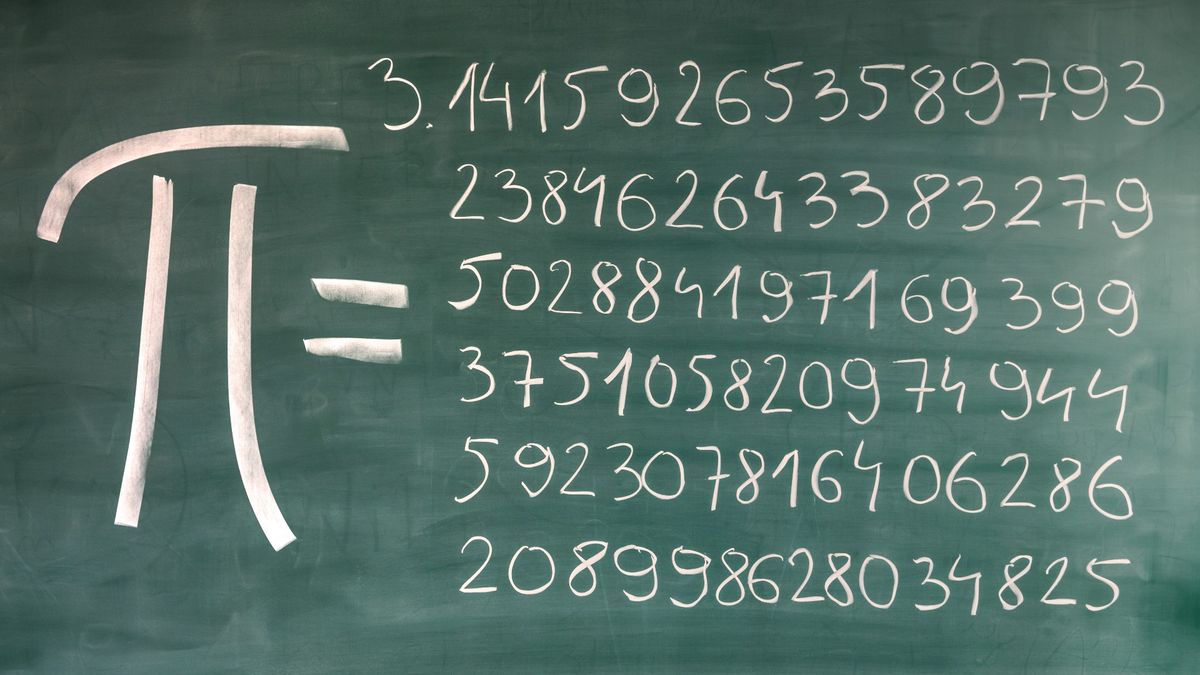
Well, most people do not think of ‘pi’ as easy. This constant is the bugbear of many a student. The general reaction is ‘The ratio of the circumference of a circle to its diameter is a constant. Something like 3.14…. So what’s the big deal?’

Well, Pi plays a crucial role in many, many calculations within and beyond mathematics and science. It is one of the most widely known mathematical constants and is applied in various calculations, from basic geometry, trigonometry, calculus to complex physics equations and in engineering applications. It is central to calculations related to motion, gravity, and electromagnetic radiation. In engineering, Pi is used in design and construction of circular structures such as bridges, tunnels, and pipes. And in astronomy, it is employed in calculations involving the orbits of celestial bodies and the study of planetary motion. Pi is also important in computer science, where it is used in algorithms for numerical analysis, machine learning, and cryptography. 

Pi

Humanity has been fascinated with Pi for over 4000 years.  The earliest recorded calculations of Pi date back to the Babylonian, Egyptian and Hebrew civilizations—it even appears in a verse in the Hebrew Bible(written around the 4th century BC). The Indian mathematician Aryabhata (476-550 CE), in his work Ganitapada approximated value of Pi as 62,832/20,000 = 3.1416 (more accurate than Archimedes’ ’inaccurate’ 22/7 which was frequently used), but he apparently never used it for anything, nor did anyone else at the time. Famous mathematicians like Fibonacci, Newton, Leibniz, and Gauss dedicated a lot of time to studying the value of Pi, calculating its digits, and applying it in numerous calculations.

These centuries of fascination culminated in someone deciding to do something about it—declaring a DAY for it! On 14 March 1988, the first official large-scale celebrations of Pi Day were organized at the San Francisco Exploratorium by Larry Shaw, a physicist. The events to mark the day included several participants marching around a circle and consuming fruit pies. Since then, it has gained popularity and the U.S. House of Representatives passed a notification in March 2009, recognising 14 March as Pi Day.

Why 14 March? Well, that date is also written as 3.14! And, by coincidence, is also the birthday of Albert Einstein! Pi Day celebrations across the world include calculating more and more digits, and memorizing their value!

Pi has been calculated to over 60 trillion digits beyond its decimal point. As an irrational and transcendental number, it will continue infinitely without repetition or pattern.

Pi has also inspired literary genres! Pilish is a genre which is written in such a way that each digit of pi denotes the number of letters in each word. So, the first word has 3 letters, the second 1, the third 4, and so on. The only novel in Pilish is by the American Mike Keith, with the title: Not A Wake: A Dream Embodying π’s Digits Fully For 10000 Decimals

Mike has also invented the “piku”, which is a Pilish poem based on haiku. And here is something he wrote for Pi Day some years back:

It’s a moon,

A wheel revolving on golden earth, and lotus blossoms.

Mountains embrace windmills, and it all reflects this number, pi.

On the other hand, to celebrate the day, NASA’s Jet Propulsion Laboratory has come up with a series of science and engineering questions that are related to some of the agency’s Earth and space missions.

Well, to each their own favourite Pi or Pie!

Happy Pi Day!

–Meena

Sleepy Time…World Sleep Day

We who sleep well, generally take sleep for granted. But it is when we cannot sleep that we begin to appreciate how important it is. As adults, at some point of time, we all probably have experienced short-term insomnia which can last for days or weeks and is generally caused by or a distressing event. But some of us suffer from long-term insomnia, also called chronic insomnia.

The necessity of sleep, and what the lack of it can do to us, cannot be underestimated. Doing research on this subject is difficult—after all, we cannot deprive people of sleep to check what happens to them. But the general observation is that after 24 hours without sleep, cognitive effects similar to having a blood alcohol concentration of 0.10% (which is higher than the legal limit for driving) can be seen. Anxiety and agitation set in. Performance on tasks declines, making people more prone to errors. There may be changes to visual perception. After 48 hours without sleep, people may begin to have blurry or double vision, which may progress into distortions of reality and hallucinations. After 72 hours without sleep, a person may begin to slur their speech or walk unsteadily. Hallucinations become increasingly frequent and complex. As people near 120 hours without sleep, they may experience a rapid and severe decline in mental health. This may include symptoms of psychosis, where a person becomes detached from reality and has complex delusions and displays violent behaviour. (https://www.sleepfoundation.org/)

So it is not at all out of place to have a World Sleep Day. This is celebrated on the Friday before the Spring Vernal Equinox, and falls on March 15th this year. It is organized by the World Sleep Day Committee of the World Sleep Day Society, to emphasize the importance of sleep and address common sleep-related issues that many people suffer from.

Human beings generally need between seven and nine hours of sleep, but sleep requirements vary widely across species, as do sleep habits. The general trend is that herbivores who are the prey species not only sleep less in terms of absolute time, but they sleep for shorter periods at a time. Not surprising, considering predators may attack them anytime. And in general, larger animals need less sleep than smaller ones. This is because larger animals have to spend longer time in searching for and eating food.

And to lighten the mood, here are some interesting animal-sleep facts: Impalas specially male impalas hardly sleep, having to be vigilant about predator attacks at all times. Walruses can go for 84 hours without sleep. When they do sleep, they can sleep anywhere on land, on the bottom of the ocean, even floating.    Elephants sleep only 3-4 hours per night. They sleep standing, leaning on a tree or termite mound, or lying on their side. If they lie on their side their sleep is less than 30 minutes, as otherwise their internal organs may get crushed.

An intriguing question is, do migrating birds sleep and if so how? Many birds are on the wing for weeks or months, and they fly day and night, day after day. Then what about sleep? Well, studies on frigate birds have found that they sleep even as they fly! Their power-naps can be as short as 10 seconds! They also have a technique whereby only half their brain sleeps while the other half remains functional. But not all migratory birds do this—many actually take pit stops to eat and sleep.

Well, these species are lucky to be functional with so little sleep, but humans aren’t. So on this Sleep Day, resolved not to take sleep lightly. Get the minimum quota. And if you can’t, talk to a sleep specialist.

Happy zzzzzz…

–Meena

An Extra(ordinary) Day!

When we were in school it was a great novelty to know, or know of, someone who was born on 29 February. There was much banter and joking about celebrating a birthday only once in four years, and therefore being that much younger than others born in the same year! This was about as much as we knew about the phenomenon that was called Leap Year.

Many leap years later, when I realized that this Thursday happens to be the 29th of February, curiosity prompted me to dig a little deeper into the why and how of Leap Years.

My first discovery was that there was a fair amount of solid science, as well as history, behind how this extra day came to be added to the calendar every four years. 

A regular calendar year as per the Gregorian calendar that is most widely followed, normally has 365 days. This is an approximation of time that it takes the Earth to orbit the sun. In reality it takes approximately 365.25 days (more precisely 365 days, 5 hours, 48 minutes and 46 seconds) for Earth to complete a full orbit around the sun. It would be hard, practically, to add a quarter of a day into a calendar every year. Thus while we follow a 365 day calendar for three years, the quarters add up to a full day every fourth year, which is when the extra leap day is added to February, the shortest month of the calendar, making it a 29-day month. In other words, leap years keep the calendar lined up with the Earth’s actual orbit.

This addition is important because it helps to adjust the Gregorian calendar to the solar calendar, so that we remain in sync with the seasons, marking the spring and autumn equinoxes at the same time each year. Put simply, these additional 24 hours are built into the calendar to ensure that it stays in line with the Earth’s movement around the sun. If this difference was not accounted for, then every year the gap between a calendar year and a solar year would widen by over five and a half hours, and over millennia it would shift the timing of the seasons. It has been calculated that in around 700 years the summer in the Northern Hemisphere would begin in December instead of June. 

In other words, the insertion of an extra day is rooted in a complex combination of time-keeping, astronomy and their alignment through mathematics. Interestingly, the insertion of days in a calendar, (known as intercalation) has been tried across civilizations, in an attempt to ensure compatibility between that the lunar and solar schedules, so as to maintain consistency with the seasons. The ancient Egyptian calendar was composed of twelve 30-day months with 5 days appended at the end of every year. In the Chinese calendar, an extra month is added every three years when a “double spring” is celebrated. In the Hindu and Hebrew calendars also, a month is added every three years or so, following the moon’s 19-year cycle of phases.

And then of course is the addition of the “leap day” in the Gregorian calendar every four years. But why the name “leap day” and “leap year?”

The name “leap” comes from the fact that from March onward, each date of a leap year moves forward by an extra day from the previous year. Normally, the same date only moves forward by a single day between consecutive years. For example, March 1, 2023 was a Wednesday, and in a normal year, it would fall on a Thursday. But in 2024, it will fall on a Friday. At the same time, during leap years, January, April and July start on the same day. This year it is a Monday.

The “leaping” of days and years while not scientifically understood by a lot of people was curious enough to generate unusual responses. Over the years, a variety of customs began to be associated with this day. Interestingly, several of these are associated with romance and marriage.

According to lore, in fifth century Ireland, St. Brigit lamented to St. Patrick about the fact that men always did the proposing while women were not permitted to propose marriage to men. Thus St. Patrick designated a day when tables could be turned, but ensured that this would not occur too frequently! This was to be 29 February, once every four years. Thus St. Patrick designated the only day that does not occur annually, February 29, as a day on which women would be allowed to propose to men, and called it Ladies Privilege day. While St. Brigid is usually associated with fertility, care for living things and peace-making, she may also be one of the earliest feminists! There was also a condition attached that if a lady’s proposal was refused, to compensate for her disappointment, the woman would have to be given a gift of silk gloves, a gown or a coat.

The tradition crossed the Irish Sea and reached England and Scotland, and onwards to parts of Europe. In some places, Leap Day became known as Bachelor’s Day. In Scotland the Ladies Privilege tradition was made a law by Queen Margaret in 1288, with the added caveat that women had to wear a red petticoat when proposing!

In Denmark the man who refused a proposal had to give the proposer twelve pairs of gloves, perhaps to help her hide her embarrassment that she was not wearing an engagement ring.  In Finland, the rebuffed lady was to be given a gift of fabric to make a skirt.

Quite the reverse in Greece where it is traditionally believed to be unlucky to get married during a leap year, especially on leap day, because it was feared that it would end in divorce.

In Reggio Emilia, a province in northern Italy, a leap year is commonly known as l’ann d’ la baleina or the ‘whale’s year’. Italians in this region believe that whales give birth only during leap years. In Scotland leap year is considered unfavourable for farmers, as per the old rhyme “Leap year was never a good sheep year.”

And in France, the tradition on this day, is to read a satirical newspaper called La Bougie du Sapeur (Sapper’s Candle). Named after a French comic book character supposed to have been born on a leap day, the newspaper was first published on Leap Day in 1980, and is only published on this day every Leap Year. This is the world’s least frequently published newspaper ever, but the highest selling French paper in a single day. In 2020 it sold 200,000 copies! Perhaps it may break its own record this year.

And last but not the least, the day marks a 4-in-1 celebration for all Leaplings–people born on 29 February. There is an Honor Society of Leap Year Day Babies, an exclusive club indeed. And Leaplings have the added privilege of choosing whether to celebrate their birthday on 28 February or 1 March for the interim three years!

Happy Leap Day to all!

–Mamata

The Shape of Words: Kiki Bouba

Do words have shapes? Or, in other words, are certain words or sounds associated with certain shapes?

Well till about a century ago, linguists did not think so. It was assumed that the connection between words and the objects they are attached to was arbitrary. For example, there is no link between the English word ‘dog’, or the French word ‘chien’, or the Hindi word ‘kutta’ and an actual dog. These are just names that people choose to give objects.

But in 1929 came an experiment by Wolfgang Kohler, followed by others building on this, which changed this thinking.

In the experiment, subjects were given these two words ‘bouba’ and ‘kiki’, and shown two shapes—one rounded and blob-like and the other spiky. Participants were asked to associate each of the given words to one of the shapes.

Over time, the experiment was carried out across regions and languages and ages—900 people across 25 countries.

And invariably, across countries and languages, the majority of people associated ‘bouba’ with the blob-like shape, and ‘kiki’ with the spiky shape. On average, more than 70% of the people tested confirmed the Bouba/Kiki effect– a non-arbitrary mental association between certain speech sounds and certain visual shapes

While this surprising phenomenon has now been accepted, there is no widely-accepted explanation of why it occurs, though several hy­potheses have been put forward. One hypothesis is that the association is related to the shape of the mouth when produc­ing the sounds—the more rounded shape of the lips when saying bouba, and the more taut shape when saying kiki. Another suggestion is that ‘the association is tied to the proportion of vowels and con­sonants and the phonemic qualities of the sounds in the words. It seems that people tend to base sound–symbol associations on the acoustic cues of the sounds.’ But exactly how they do so is yet to be explained.

Some researchers have extended these experiments to other senses. Professor Charles Spence explored the phenomenon in relation to taste. He asked his subjects to associate the words ‘ bouba’ and ‘kiki’ to the following tastes:

  • Dark chocolate / milk chocolate
  • Strong cheddar cheese / brie
  • Sparkling water / still water

Prof. Spence found that kiki was associated with dark chocolate, strong cheddar cheese and sparkling water by most people— in other words, the stronger, more bitter or sour tastes (similar to the spiky shape). Bouba was associated with more rounded, sweeter tastes (similar to the rounded shape).

While researchers are still trying to figure out the science, several interesting practical implications have emerged. Since these associations of sound/shape, sound/taste etc. are real, what happens when there is a mismatch in the image conjured up by a sound, and the real object? Well, people don’t like such dissonance!

For instance, people associate round names (“Bob,” “Lou”) with round-faced (vs. angular-faced) individuals.  And they like targets with “matching” names. One study has found that senatorial candidates in an election got 10% more votes when their names fit their faces very well, versus very poorly! (Will we be seeing a rush of name-changes before elections?!?).

And obviously, these insights are very important in naming products, developing brands, etc.

There are several such kiki-bouba association tests that you can find online. Go ahead and check if your conclusions range with the majority!

–Meena