It’s Still Christmas!

We are somewhere in the first quarter of the Twelvetide—the 12 days following Christmas. In the old days, December 25 was only the beginning of Christmas which started on that day, and went on till January 6th, which was considered by some to be more important than Christmas day itself! The 12 days mark the journey of the Magi, the three wise men, who set out to see the Baby Jesus on seeing the star, and ends at the feast of Epiphany, on Jan 6th, when they actually met Him.

The Christmas song ‘The Twelve Days of Christmas’ has always intrigued me as I could never make head or tail of the strange array of gifts given on each day. And I am sure that many others are confused as well. But things started falling into place after I realized that each gift was symbolic of something in Christian belief or ritual, and is linked to Twelvetide. And what exactly are these gifts?

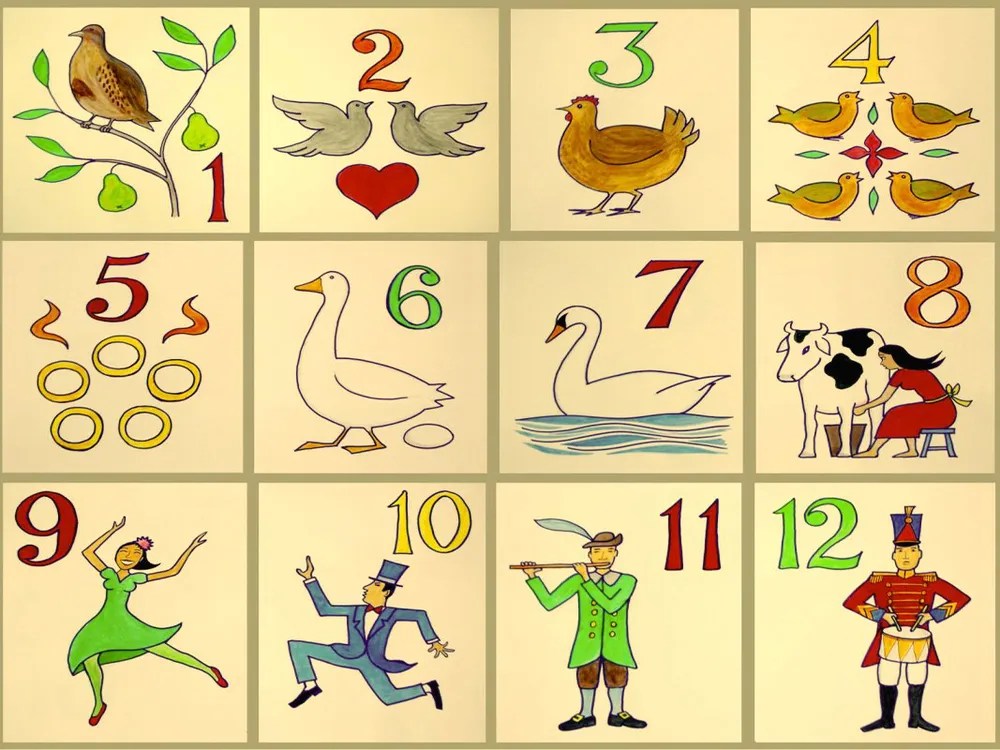
On the first day, someone’s true love gives her a partridge in a pear tree. Apparently, this symbolizes Jesus Christ himself.

12 days of Christmas

The second day brings a gift of 2 turtle doves—which stand for the Old and New Testaments.

The 3 French hens of Day 3 are the virtues of faith, hope and charity.

Particularly confusing are the gifts of the fourth day—viz, 4 calling birds. What on earth are calling birds? Well, opinion is divided. They could be blackbirds or starlings or crows! But the number 4 stands for the 4 gospels.

The 5 golden rings of the fifth day are a more conventional gift and stand of the five books of the Old Testament.

6 geese-a-laying symbolize the 6 days of creation, and this, in some weird way, seems to make some sense!

The day after that brings 7 swans-a-swimming. These stand for the seven sacraments recognized by the Catholic Church —Baptism, Eucharist, Confirmation, Reconciliation, Anointing of the sick, Marriage and Holy orders.

The intriguing 8 maids-a-milking symbolize the eight beatitudes or the sacred blessings which mark the opening of the Sermon on the Mount.

Continuing with pretty ladies, the next day brings 9 ladies dancing, which are the nine fruits of the Holy Spirit, namely love, joy, peace, forbearance, kindness, goodness, faithfulness, gentleness and self-control.

The nimbleness of the ladies is matched by 10 lords-a-leaping who come along on the tenth day. These symbolize the Ten Commandments.

The 11th day brings along accompaniments for the dancers and prancers in the shape of 11 pipers piping, who represent the 11 faithful apostles. I do feel the pipers could have come ahead of the ladies dancing.

And the last noisy day brings along 12 drummers drumming—symbolizing the 12 points of the apostle’s, i.e., the 12 points of faith that Christians believe in.

This carol was first published in 1780, but is believed to be much older.

Someone has gone to the trouble of calculating the cost of these gifts and has estimated the total for 2022 at a whopping $45,523.27. And this is when each gift is counted only once (i.e., assuming that the second day brings only the 2 turtle doves, and not another partridge in a pear tree).

Here is to the continuing spirit of Christmas—peace and joy to all our fellow-people!

–Meena

Not quite the Big Top, But a Circus Nevertheless

Growing up, the circus was definitely a major event in our lives. Every two or three years, a circus would come to town, and we would be taken to see it. Mothers used this as major leverage as in: ‘study for your tests and get a good score, otherwise no circus’; ‘you keep staying out beyond 6.30, and no circus for you’, etc.

After a gap of about four and a half decades, last week I went to the circus again.

So much had changed. And so much was the same.

What had changed? Well to begin with, the circus was no longer in a tent. That itself was a shock, because down the centuries, at least starting 1825, when Joshuah Purdy first used a large tent for his circus, the circus has been synonymous with the ‘big top’, which symbolized the big round tent in which circuses were staged. The circus I went to was staged in a closed auditorium!

The setting itself obviously gave rise to changes in the acts and the format. There was no longer space for simultaneous acts which added to the melee and the excitement—remember the elephants in the inner ring, as acrobats rode unicycles in the next ring, and clowns ran around hitting each other in the outermost one?

And which really struck awe in us, like the trapeze or the intrepid motorcyclists in the dome of death were not possible in the confined space.

There were two welcome changes.  There were no animal acts. While the central government released a notification in 1998 barring bears, monkeys, tigers, panthers, and lions from being exhibited or trained as performing animals, there were some exceptions made. A more total ban started being imposed in 2013. We also used to see child acrobats in those days, which again was banned around the same time.

Another major difference was the quality of the costumes. Gone the tawdry and shabby clothes. Today the clothes were slick and tastefully designed.

But the core had not changed! The excitement of the children which is the spirit and soul of the circus was intact. They were totally absorbed in whatever went on in the stage, oohing and ahhing at the stunts and tricks. They were glamour-struck with the performers and vying with each other to reach out and touch them. They were laughing at and with the clowns. They were dancing in the aisles with the music. The bottom line is that children don’t change!
And the size of the audience was heartening too. The circus was running in town for 15 days, with three shows per day. The show we went to easily had an audience of about 500. The circus obviously is able to compete quite effectively with more modern means of entertainment.

It gave hope that the circus is alive and well. After all, the circus has pretty old roots in India. Giuseppe Chiarini brought the Royal Italian Circus to India and put up shows for the first time in Bombay in 1879. It is said that the Rajah of Kurduwadi along with his riding master Vishnupant Chatre had gone to see the circus. Chiarini in a conversation told the Rajah that no Indian would be able to put up a circus comparable to his even in a year’s time. Chatre, who did a lot tricks with horses, took up the challenge and succeeded, and the Great Indian Circus was born. Chatre did equestrian performances while his wife was a trapeze artist at the circus. Chatre toured around India with the circus. On these travels, he reached Thalassery (Tellicherry) in Kerala with the circus, where he met Keeleri Kunhikannan a martial arts and gymnastics teacher. Chatre knew that the trend elsewhere in the world was the increasing mix of gymnastic and acrobatic acts in the circus. So he asked Kunhikannan to train acrobats for his circus, which the master began to do in 1888. At the turn of the centry, Kunhikannan opened a full-scale circus school in Chirakkara, a village near Kollam, which gave rise to several great circus performers and entrepreneurs.

And so the show goes on! In fact, a new circus school opened in Pondicherry as recently as 2012. This is run by Kalou Achaia who has trained as a circus artist around the world. The school attracts a large number of students.

A good thought on World Circus Day marked on the third Saturday of every April, to celebrate circus creators, performers, and artists.

–Meena

PS: Thank you Rambo Circus, for giving the childern a taste of the circus!

Bridging the Past and Future

Bridge-building brings to mind heavy equipment; tonnes of steel and concrete; engineers and overseers by the dozens. And lakhs of rupees.

Well, what if there were bridges which involve some rubber trees; centuries of traditional knowledge and skill passed down from one generation to another; and a lot of cooperation? And very little money.

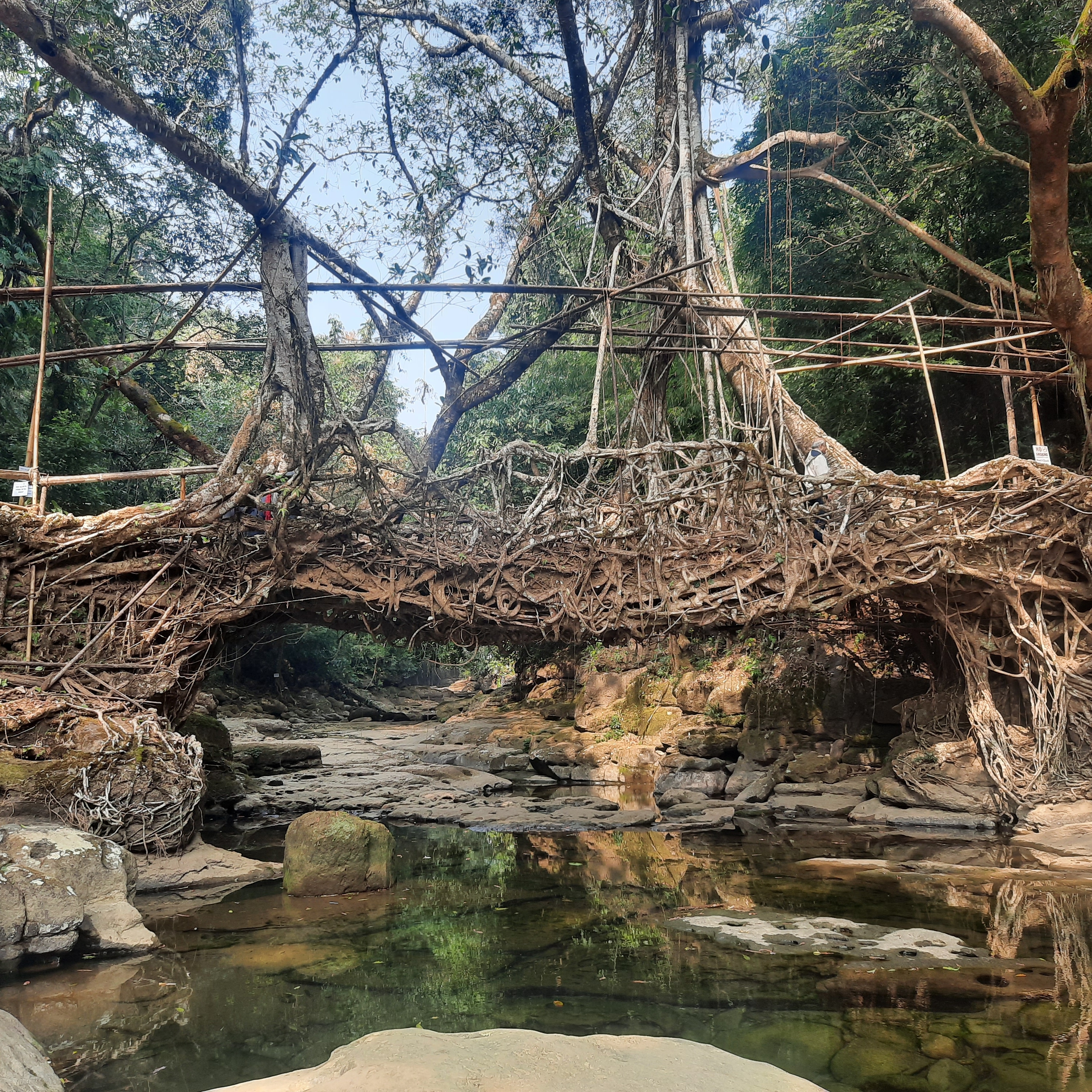
And indeed there are such bridges by the dozens in Meghalaya. Built by the Khasi and Jaintia communities, the Living Root Bridges, locally known as Jingkieng Jri, play a key role in rural connectivity in the dense forest areas of the state, which are also among the wettest areas of the world (think Cherrapunji).

Living Root Bridge

The process begins with the planting of two rubber trees– Ficus elastica—one on either side of the river. These trees take about 10 years to grow and give rise to secondary aerial roots.  A bamboo scaffolding is created across the river, and these roots are woven together and trained onto to this to start creating the structure. The aerial roots thus grow across the river, and when they reach there, they are planted again on the opposite side. The roots along the scaffolding grow thicker and intertwine. The roots need to be guided to grow in the right direction for the next few decades, after which they can stand on their own.

The planning and engineering skills required to build these bridges is enormous– they often rise 50 to 100 feet in the air and may be as much as 175 feet in length. Many are ‘single-storey’ bridges, but there are ‘double-storey’ ones as well. They have always been built and cared for by the local communities, and the tradition continues.

The bridges need loving care—for instance, every two years, the bamboo scaffolding has to be changed since the moisture and humidity might damage it. Properly cared for, these can last for a hundred years and more.

These bridges have been around for centuries and are even today, about 100 are in use, connecting over 75 villages. While local communities use them for their normal day-to-day movement, these bridges are also now major tourist attractions. They also act as corridors for animals to safely cross the rivers—barking dear and clouded leopards have been recorded to use these bridges. The bridges support the growth of moss and provide a habitat for squirrels and other small animals, and nesting sites for birds.

The technique is used not just for making bridges but also other structures that are needed locally, for instance,  ladders and steps to provide a reliable mode of movement especially during the monsoon season; platforms and towers which serve as lookout points; erosion and landslide prevention structures to protect slopes and help in soil stabilization.

A true testimony to the patience, skill and cooperative spirit of the communities who build, use and care for them. And also to the effective methods of transmission of traditional knowledge, so that generation after generation is able to do this work effectively.

This sustainable and eco-friendly tradition has been recognized internationally. In fact, as of last year, the Living Roots Bridges or the Jingkieng Jris has been included in the UNESCO’s tentative list for World Heritage Site status.

I was lucky enough to see such a bridge and walk across it. It was an amazing experience. The one I visited was very accessible to tourists. But some other intrepid members of our group went to see a double-storey one, which involved six hours of trekking. And came back exhausted and with aches and pains in every joint. But they said that every pain, ache and stiff joint was worth it, and given half a chance, they would do it again!

So take the soft route or the hard, but if you can possibly see a Living Root Bridge, it will be a memorable experience.

–Meena


Scarecrows Forever

For as long as humans have cultivated crops, they have had to worry about keeping birds away from the fields. Not that birds don’t play a huge positive role in agriculture. They do—by pollinating some species, and by eating pests and rodents which destroy crops.

But the damage they do to crops is considerable too. A government of India report has identified 63 species of birds that are responsible for the bulk of this damage in India. Cereals seem particularly attractive to birds, with 52 bird species feasting on these crops. 14 bird species enjoy pulses, while 15 species like oilseeds. Fruit crops attract 23 species.

Traditionally in India, children or others who could not put in hard labour in the fields were deployed to guard crops with the help of slings. They took up a vantage highpoint among the crops and aimed at the birds—hopefully only scaring them and not injuring them. Scarecrows were also put up.

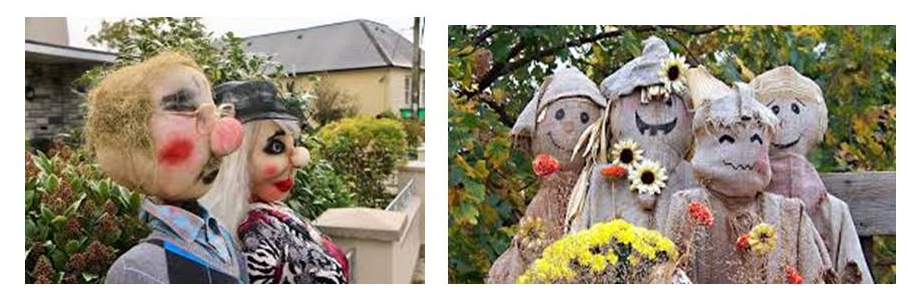
Across the world, maybe because there were not so many children or people to deploy, the use of scarecrows was more widespread. Scarecrows are decoys, usually made of straw or farm waste and fabric, made to look somewhat human and dressed in human clothes. They often have loose sleeves and pants, which move in the wind and scare the birds.

But the scarecrow is not really effective for too long. Once the birds get used to the scarecrow, they barely spare it a glance. In fact, they often use it as a perch!

So agriculturists have gotten innovative too, and come out with many ingenious ways to scare birds, including:

  1. Using shiny, reflective objects: Birds are bothered by the reflection of light from these and keep away. Farmers hang old CDs, aluminium cans, small mirrors or just plain metallic wrapping paper.
  2. Hanging balls: Round colourful garden balls are hung from trees, fences, etc.  Large eyes are often painted on them to mimic predatory birds. Birds get confused and try to avoid them.
  3. Balloons: Large floating balloons too, especially with eyes painted on them, work effectively.
  4. Predator images: Placing objects in the shape of birds’ natural predators– cats, owls, and larger birds of prey—does deter birds. But like with scarecrows, they will get used to these too. So these ‘predators’ need to be moved around frequently. Or they need to be hung from somewhere so that they move. One particular variation of this marketed in some countries is an owl than can be hung, which not only swings around in the wind, but also emits owl-like sounds every now and then.
  5. Sound-based repellents: Birds can hear in the 1-4 kHz range, a range human ears can’t hear too well. Electronic pest control devices take advantage of this by creating sound deterrent-devices that emit distress calls and predator growls in this range, which confuse birds and scare them away. 

Experts agree that no matter which the method deployed, the key is change. Birds quickly recognize that these objects don’t actually harm them, and are emboldened to flock to the fields. So the trick is to keep changing the position of the bird-scarers and add new ones frequently.

There are of course less kind ways to scare away birds.  The use of dogs and predatory birds which attack birds, drones which chase them, letting off cannons or fire crackers, firing plastic projectiles, and use of lasers are among these methods.


But of all these methods, the one that has been around the longest and plays a big part in our imaginations, stories, myths and films is the scarecrow. The most famous one of course is the Scarecrow in search of brains, who plays an important part in ‘Wizard of Oz’.  The Scarecrow is also one of the villains in the contemporary Batman trilogy.

Scarecrows
Scenes from Scarecrow Festivals

Scarecrows also figure in myths and legends of old—for instance, there is a story about a scarecrow in ‘Kojiki’, the oldest surviving book in Japan, dating back to about 712 A.D. A scarecrow called Kuebiko figures in this. He is a god who cannot walk, but knows everything that is happening.  

Several villages and towns in England have Scarecrow festivals.US and Canada also have their share. Many of these are of fairly recent origin. Phillipines is the latest entrant, with the Province of Isabela starting a festival a few years ago.


So even as newer methods of scaring birds emerge—from electronic, to laser, to drone–the fascination with scarecrows continues!

–Meena

Pithy Craft

A ‘pithy comment’ is one which is terse and full of substance and meaning. The origin of the word pithy is from the Old English piþa “central cylinder of the stems of plants,” and therefore signifying “essential part, quintessence, condensed substance.”

Here is a tale of a pithy craft (not an official term!). This is the pith-work done using the innards of Aeschynomene Indica or Aeschynomene Aspera , a herbaceous plant of the bean family which grows in marshy waterlogged areas which is the basis of a craft both in South and East India. Shola pith as it is called, is the inside of the plant, and ranges from soft, smooth, white (good quality) to hard, brittle, reddish (poor quality).

In South India, this craft-form is traditionally practiced in the Tanjore area. The most popular products are replicas of the Brihadeshvara Temple, Tanjore, the Meenakshi Temple of Madurai, the Malai Kovil of Trichy, etc. Taj Mahals and churches are popular too. While the proportions of the temple pieces would vary with the architecture of the original, typically, a pith-piece may be about 6”x10” wide and about 6-8” in height. They used to be a fairly common decorative item in Tamil homes a generation ago.

The pieces are made by first removing the outer brown skin of the plant by cutting it off with a sharp knife. The inner soft white portion of the stem is used to make the art pieces. The pith, known in Tamil as Netti, is cut into fine pieces of different designs and shapes as per the design, using a long knife for basic carving, and a tiny carving knife for detailing.  The carved pieces of pith are stuck together with adhesive to create the products, based on blue prints of the design or photos.  The completed piece is stuck on a piece of plywood and covered in a glass case.

netti work
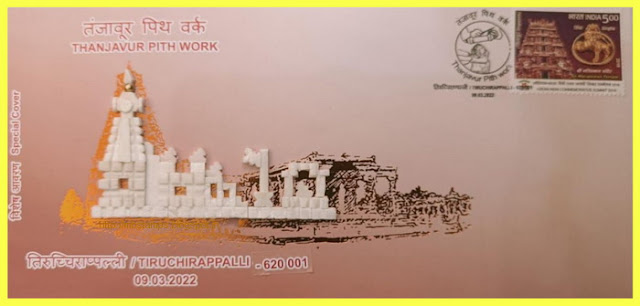
Commemorating the Craft

Thanjavur Netti work has Geographical Indicator tagging. GI tagging is a sign used on products that have a specific geographical origin and possess qualities or a reputation that are due to that origin. The application for GI for Netti Work was filed by the Tamil Nadu Handicrafts Development Corporation (Poompuhar) in 2013, but the process of awarding the tag took seven years and came through only in 2020.

Pith work is popular in West Bengal and Orissa too. Bengali brides and grooms wear elaborate head-gear made from pith. Durga Puja pandals have pith idols, backdrops and decorations. Ornaments and dresses for idols are often made of pith. Shola is also used by the puppeteers of Nadia district, West Bengal to make traditional string puppets. 

The use of shola is widespread in Orissa and ranges from the headgear worn by Lord Jagannath and his siblings during the Rathayatra, to symbolic boats made for Boita Bandana or the Bali Yatra festivals.

The difference between pith-work of the South and East seems to be that the temple-pieces and idols made in the South are items which are made to last for years and decades, whereas  the decorations and other items made in the East are more ephemeral in nature.

As with traditional crafts and materials, of course there are any number of stories and myths about shola. Here is one: Lord Shiva, as he was making his preparations for his wedding with Parvati, asked Vishwakarma, the divine architect and master-craftsman, to make him a pure white crown and garland for the occasion. But Vishwarma could not deliver. So Shiva plucked a lock of his hair and threw it into a pond. Lo and behold, there sprang up a special type of reed.  But Vishwakarma could not figure out how to fashion the crown and garland from the reed. Shiva then plucked out a hair from his arm and threw it into the pond. This transformed into a young man, who was smart enough and skilled enough to use the pure-white pith of the reed to make the required crown and garland.  Shiva named the youth ‘malakar’ or the garland maker, a name that traditional shola craftsmen of the East are still known by. (Shiva must have been in a benign mood indeed, for Vishwakarma  to have come out of the incident unharmed. I would have expected a pile of ashes!).

Incidentally, the pith helmets beloved to the British Empire has its origins in traditional Filipino sun hats. Though referred to as pith helmets, they may be made of pith, cork, bamboo, rattan etc.  These made their appearance in India in the 1840s, and were extensively used in military campaigns thereafter. They evolved into a distinctive shape which came to be known as the British Colonial pattern.

I have no idea what set off this pithy-wandering in my mind. We did have a Trichy Malai Kottai Temple netti piece in our house when I was growing up, and maybe I saw the story of GI tag for netti work. At any rate, an interesting meander!

–Meena

Sacred Games. With No Apologies to any Eponymous Show

A recent visit to the phenomenal 12th century Amrutheshvara temple near Shimoga in Karnataka introduced me to sacred games— ancient innocent, fun, time-pass activities, not violence-filled convoluted storylines.

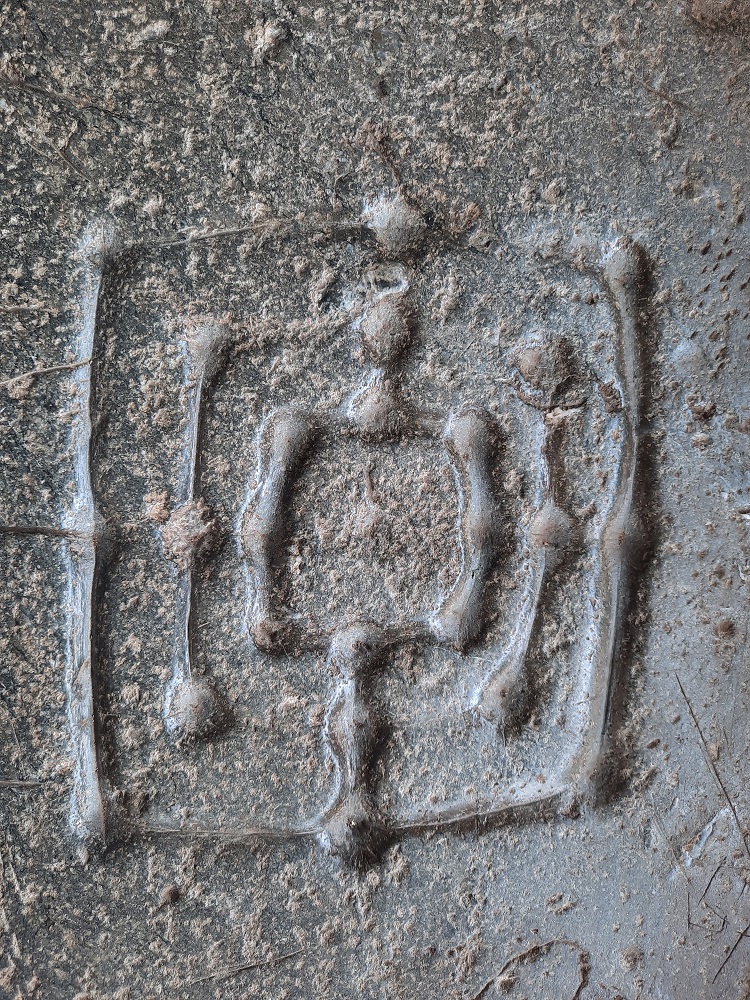
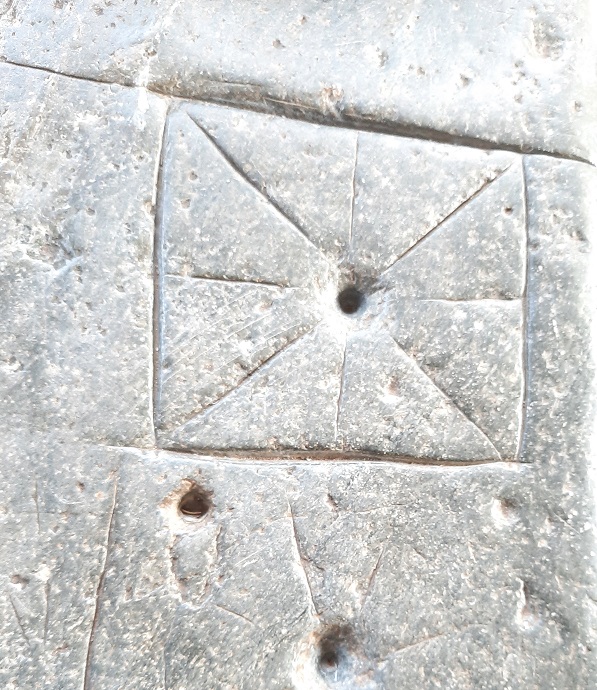
As we sat down on the stone benches after our round of the temple, we discovered strange-looking designs carved next to us. Considering we were a party of eight, we occupied quite a few benches, and each of us could see some carvings on our seats.

At first we thought they were random markings, but on closer examination, all of them turned out to be board games! Some of these we were vaguely familiar with, others not. Well, board games were popular in ancient India, with many of them, from chess to snakes and ladder having originated here. In fact, temple friezes often depict people absorbed in playing such games.

Temple games
Amruthesvara Temple, Karnataka

But this was the first time we had seen games put out for general edification in a public place. We got to wondering if these were really as ancient as the temple, or later-day graffiti. And considering that the temple was 800 years old, that was a lot of time for graffiti-workers to do their job.

But it would not have been easy to carve these elaborate games on the stone benches on the sly. So it seemed to us that it must have been an officially-sanctioned exercise, and one probably carried out before the stones were set in their places.

So did the temple-builders plan these games for the visitors? Seems likely. After all, visits to temples were a major outing for many; in fact, maybe the only outing for some.

Naturally, one got goggling on the subject after the visit. I discovered quite a few references to such games. Historian Chithra Madhavan and Vinita Sidhartha, founder of Kreeda say that such games are quite common in temples in South India, even being found in the Srirangam temple which is believed to be 2000 years old. They opine that it was not just for the devotees visiting the temples, but also to provide for the entertainment of those who worked in and around the temple—from maybe the pujaris, to the dancers, musicians and others involved in various aspects of running the temple.

Temple games

Such carvings have also been found in forts. There are a few groups, including Kreeda which are involved in research on this subject. Researchers R.G. Singh, Dharmendra and  Dr Dileep KCR Gowda, have documented 500 spaces with games across Tamil Nadu, Pondicherry, Telangana, Andhra Pradesh, Maharashtra, Rajasthan and Uttar Pradesh.Recently, a pair of researchers, Sojwal Sali and Rishi Rane, found 41 ancient carvings of board games of different sizes on rocks near Hinjawadi in Pune district of Maharasthra. These are on some hills, close to a temple, and the speculation is that they were used by pilgrims, travelers and traders who plied the route. This discovery is a treasure trove on games played in ancient times, and also the fact that one of these is huge–six feet long and six feet wide—sets it apart.

 It is not difficult to imagine an idyllic scene of a beautiful temple a thousand years ago, where in the midst of a buzz of activities, one can see groups of people playing their favourite game, with a few spectators standing around each group.

Were those more innocent times, when there was no betting on the outcomes? No loaded dice or fixed games? Well probably human nature was not very different, but one can hope they kept the temple games more sacred!

–Meena


Ode to the Sparrow

The last few days have seen many ‘DAYS’.

March 21 was World Poetry Day. It was adopted as such by UNESCO 21 March as World Poetry Day in 1999, at its 30th General Conference. The aim of Poetry Day is towards ‘supporting linguistic diversity through poetic expression and increasing the opportunity for endangered languages to be heard. World Poetry Day is the occasion to honour poets, revive oral traditions of poetry recitals, promote the reading, writing and teaching of poetry, foster the convergence between poetry and other arts such as theatre, dance, music and painting, and raise the visibility of poetry in the media.’ (UNESCO).

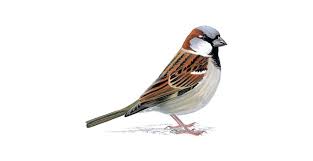
Sparrow

March 20 is celebrated as World Sparrow Day (WSD). The Day, celebrated for the first time in 2010, is meant to raise awareness about the house sparrow and the dangers it confronts. World Sparrow Day was established by Mohammed Dilawar who grew up in Nashik, Maharashtra. Birds were a big part of his childhood. As an academic, he came across a student-project about the decline of sparrows in UK, and that got him thinking about the same thing happening in India, and he decided to do something about it. He started Nature Forever Society (NFS) in 2005, and has been recognized as an Environmental Hero. WSD is one of his many initiatives to protect biodiversity.

Let’s bring the two ‘Days’ together with poems about….sparrows.

And interesting, I found two poems which also resonate with what we are going through today.

The first, a poem by the Tamil poet Mahakavi Bharatiyar, is about his yearning for India’s freedom.

Liberation – Little Sparrow: Subramania Bharathi

O May you escape all shackles

And revel in Liberty

Like this

Sprightly Sparrow!

Roam about in endless space,

Swim across the whirling air,

Drink the measureless wine of the light

That flows for ever from the azure sky!

Happily twittering and making love

Building a nest beyond danger’s reach

Guarding the fledgling, hatched from the egg

And giving it feed and a wholesome care.

From: https://tamilandvedas.com/tag/poem-on-sparrow/

The other, a poem is by Paul Laurence Dunbar who was born in 1872 to two formerly enslaved people from Kentucky and became one of the first influential Black poets in American literature. He sees the sparrow as a bird of peace and hope and love, whose calls our hearts are too deadened to listen to.

The Sparrow: Paul Laurence Dunbar

A little bird, with plumage brown,
Beside my window flutters down,
A moment chirps its little strain,
Ten taps upon my window–pane,
And chirps again, and hops along,
To call my notice to its song;
But I work on, nor heed its lay,
Till, in neglect, it flies away.

So birds of peace and hope and love
Come fluttering earthward from above,
To settle on life’s window–sills,
And ease our load of earthly ills;
But we, in traffic’s rush and din
Too deep engaged to let them in,
With deadened heart and sense plod on,
Nor know our loss till they are gone.

From: https://poets.org/poem/sparrow-0

Here is to a world where we make poetry, see sparrows, and importantly, listen to their call!

–Meena 

Serendipity is the Best Travel Guide

Last week, along with dear friends, we had driven to Shimoga to see the Jog Falls, maybe visit the Bhadravathi Sanctuary, and do the other local sights.

Alas, trouble broke out there and we decided to cut short our visit and drive back—fortunately after seeing the Falls. While we were not heart-broken to return a day early, there was an air of slight disappointment in the two cars.

When…

…we suddenly saw a sign ‘Welcome to Amrutapura: City of Ancient Amrutesvara Temple’ (Karnataka has a wonderful practice of labeling its towns, from Chennaptana: Toy Town, to others which are Silk Towns, Arecanut Towns, Coffee Towns etc.).  We recollected that the Hotel Desk had cursorily told us that Amrutapura was a possible place to visit, but we hadn’t really registered it it was a casual mention.

But now that we were here with a day to spare, we decided to explore the possibilities.

And what an experience awaited us!

Amruthavarsha Temple, Karnataka
Gopuram of Amruthavarsha Temple, Karnataka

Built in what experts deem the older Hoysala style, this 12thcentury Shiva temple was commissioned by Amrutheshwara Dandanayaka, one of the commanders of Veera Ballala II, the Hoysala King. The beautiful little temple, where worship still happens, is dense with an amazing array of sculptures. Friezes from the Ramayana adorn one side of the structure, while stories of Krishna and tales from the Mahabharatha decorate the other. One tower has a detailed panel of Shiva slaying Gajasura. Another tower showcases the emblem of the Hoysalas, a young man battling a lion. As per folklore, a young man, Sala, saved his Jain guru, Sudatta by striking dead a lion near the temple of the goddess Vasantik. The name of the dynasty itself comes from this incident– ‘Hoy’ meaning strike, and ‘Sala’ for the young man’s name. (I am a little confused about this story, not being able to make out the connection between Sala and the dynasty–did he found it? Was he one of the scions? Obviously, more research is called for on my part. But what really intrigues me is the killing of a tiger to save a Jain muni. Surely the teacher could not have approved of this?). There is also a large stone embedded in the premises, with a poem inscribed on it, which is believed to have been written by Janna, one of the most famous poets of the region and times.

Vasudeva praying to the Donkey, Amruthavarsha Temple, Karnataka
Vasudeva praying to the Donkey

It would seem that a lot of thought had gone into selection of the incidents to be depicted on the friezes. Krishna’s birth, the events subsequent to that, the various attempts of various hideous demons to kill him in his infancy, and his mischievousness as a child form a large part of the display. The most intriguing was of one of a man bowing to a donkey. We could not figure it out, but the temple priest was kind enough to tell us the story. It seems that when Vasudeva was preparing to smuggle Baby Krishna out in a basket on the night he was born, to deliver him to Nand at Mathura to save him from Kamsa, there was a donkey outside the prison gates, all ready to bray aloud and attract the attention of the guards. Vasudeva prostrated himself in front of the donkey, pleading with it not to make a noise. And it finally agreed, thus allowing the clandestine operation to proceed smoothly.

Krishna's Cradle Ceremony, Amruthavarsha Temple, Karnataka
Krishna’s Cradle Ceremony

There is of course the aesthetic beauty of the temple created in ancient times. But at a time when my 7-year old house has leaks and cracks and sundry problems, it is amazing to see how the 12th century structure is still so well maintained and standing so strong. And then, the peaceful and serene ambience of the temple, the spotless cleanliness, the well-maintained greenery. Kudos to the ancient masters, the priests who have taken care of the temple for 900 years+, and now the ASI, which seems to be managing it. But also a small request to ASI: how about a sign somewhere on the temple with its name (no, there was no hint that it was indeed the Amruthavarsha Temple)? How about some information on the temple itself, apart from signs warning of dire consequences of defacing the structure? How about a little more publicity for such a wonder? How about public conveniences built somewhere in the vicinity for travellers who drive many miles to get here?

But no complaints. The temple just blew our minds.  Maybe it is only in India that one would serendipitously happen on a 12th century masterpiece while driving along desultorily. 

–Meena

A Unique Musical Fest: Thyagaraja Aradhana

The Thyagaraja Aradhana held at Thiruvayaru, Tamilnadu, must be one of the most unique, participatory and joyous ways to celebrate the life and music of a great composer. The aradhana is held every year on the anniversary of the passing away of Saint Thyagaraja, and falls on 22nd January this year.

Saint Thyagaraja (1767-1847), one of the Trinity of Carnatic Music, is thought to have composed about 25,000 songs, apart from two musical dramas, the Prahalada Bhakti Vijayam and the Nauka Charitam. However, since the Saint hardly kept any record of his compositions, it is not clear how many songs he did actually compose. Only about 700 are known to us today—thanks not only to the lack of record keeping, but also vagaries of time, natural disasters, etc., which obviously were not kind to the palm leaf notes that his disciples kept.

Thyagaraja was completely immersed in bhakti, in his worship of Lord Rama. It is said that the King of Thanjavur, having heard of Thyagaraja’s musical genius, sent him an invitation to attend his court. The Saint not only rejected the invitation, but composed the song Nidhi Chala Sukhama  (Does wealth bring happiness?) in response!

Coming back to the fascinating history of the Aradhana. Thyagaraja died in 1847 after renouncing the world and taking sanyas. His mortal remains were buried on the banks of the Kaveri. A small monument was built there, but soon felt into neglect. In 1903, two of his disciplines Umayalpuram Krishna Bhagavatar and Sundara Bhagavata, now eminent musicians, made a nostalgia trip to Thirivayaru. They were appalled at the neglect of the memorial, and decided to commemorate the death anniversary of their Guru at the site, so that he could be remembered appropriately, and the Samadhi maintained.

The next year 1904, was when the Aradhana started. In 1905, it became a lavish affair with days of worship, dozens of performances by top-notch artistes, and feeding of the poor etc. While Krishna Bhagavatar and Sundara Bhagavatar were the moving spirits behind the festival, they obviously needed practical men with money and organizing power to see the event through. The brothers Tillaisthanam Narasimha Bhagavatar and Tillaisthanam Panju Bhagavatar stepped in to play these roles. However, the moneyed brothers soon developed disagreements, and by 1906 had formed rival factions which each conducted its own Aradhana! In time, a compromise was reached under which the group following the younger brother began its festival five days before the day of the Aradhana and culminated its celebrations on the day of the Aradhana, while the other group started on the Aradhana day, and went on for four days after.

The factions did dissolve their differences at some point and unite. Whether as two groups or united, one thing brought them together.  Their opposition to women to perform at the Aradhana. At that time, most women who performed in public were devadasis, and the keepers of morality decided they could not have them perform at such a venerable occasion.

Bangalore Nagarathnamma was one of the pre-eminent musicians of the time. She had earned name and fame as a highly gifted artiste. She was a great devotee of Thyagaraja, and felt she owed everything to him—after all, it was renditions of his songs that predominated her concerts and had brought her so much. However, as a woman, she was barred from participating in the Aradhana.

In 1921, Naratahnamma decided that she would dedicate her large wealth to preserving the Saint’s legacy. She bought land around the Samadhi and built up a temple over it. She had an idol of Thygaraja made and installed in front. The temple was consecrated in 1926.

The organizing group of the Aradhana was happy to let her do all this at her own expense. But when it came to performing at the Aradhana, they would not let her. The redoubtable Nagaratnamma decided to start her own Aradhana, which took place at the rear of the temple.This edition featured many women artists and became increasingly popular. She also went to court against the original organizing groups, saying they could not enter the temple because it was hers. While she lost the case, the court designated specific hours of the Aradhana day to her group, and the two other groups.

This was when a bureaucrat stepped in, and for once solved a problem! SY Krishnaswami, ICS, convinced the groups to unite, and in 1941 three rival events merged into one. And an important victory was won—women became part of the festival.

It was also in this year that the practice of singing the five pancharatnas of Thyagaraja as a group-rendering began. This is now the unique feature of the celebration. Five of the Saint’s compositions that were best suited to group singing were selected, so that all artistes could pay their homage to the Saint, unitedly.   A goose-bumping raising experience to see hundreds of people singing together, without any visible coordination.

Do catch it on You Tube.

Happy Thagaraja Aradhana!

–Meena

Changi Quilt

What on earth is that? A fancy quilt bought at some duty-free store at Changi Airport?

No! Changi is an old area of Singapore, and its name is derived from either a tree or creeper which was common there. Changi has two major landmarks– the Airport, which is among the world’s best; and the Changi Prison. The Quilts are associated with the latter.

On Feb 15 1942, Singapore fell to the Japanese and the Allied troops surrendered. Civilians including over 400 women and children were marched to the Changi Prison and interned there. These were women and children who had either not been able to get berths on ships to leave the island before the surrender, or who had consciously chosen not to leave. While the majority of the women were English, there were also women from Australia, New Zealand, the Netherlands, Canada, and the United States. The group included doctors, nurses, secretaries, teachers, as well as home-makers.

The Changi Prison building was designed to hold about 600 inmates, but with this influx, was accommodating about 2,400. The women and children occupied one wing of the building, while the men were put in the other. There was no communication between the two wings, and separated families had no way of knowing if members had survived, how they were, etc.

While some schooling did happen, some of the women were concerned that the children lacked a structure to their lives, and normal activities that would have been a part of their daily schedules outside prison. Elizabeth Ennis, an Army Nurse, along with a young Dutch girl, Trude van Roode, decided to do something about it. They made a group of about 30 girls between the ages of 8 and 13, and started a Girl Guides unit. The activity gave a focus and provided the girls with a purpose and discipline. The girls obviously thought the world of Elizabeth Ennis. On learning of her birthday, they decided to undertake a group-project of making a quilt for her. Each girl contributed to the making of a beautiful quilt, scrounging out fabric, thread and needles—precious commodities—to make hexagonal patches. Each child also embroidered her own name on to it. They put all the patches together and presented the quilt to Elizabeth.

This inspired a Canadian internee, Mrs Ethel Mulvany, a Red Cross representative in Singapore and chosen to be the camp Red Cross representative for the Changi women, with the idea of getting the women to make quilts for the Red Cross. The idea behind this move was ostensibly to alleviate boredom and to boost morale, and to give blankets to the wounded in hospitals. But it was also a means of passing information to men in other camps that the women and children were alive. 

Three quilts were made—one each for the British Red Cross, Australian Red Cross and the Japanese Red Cross. Each quilt had 66 squares.

Changi Quilt
Changi Quilt

Every woman who volunteered to make a square for the quilt was given a piece of plain white cotton– from various sources including flour bags and bed sheets–and was asked to put “something of herself” into the square, and also embroider her name on it. The squares varied in many ways—from the skill levels of the embroiderers, to the designs. While flowers were of course a common theme, there were animals, national symbols, and cartoon characters like Snow White and Pinocchio. Some were very poignant–Trudie von Roode’s square, for instance, shows a waiter and a table laid with lots of food and elegant cutlery, alongside the words ‘It was only a dream’. There were also messages, some which were very personal and understood only by the families concerned. For instance, one woman portrayed a baby rabbit wearing a blue ribbon—probably to inform the husband that a baby boy had been born. There was a level of censorship here too—for instance, the word ‘prison’ had to be unpicked before the quilts could go out.

]

The quilts survived the War. The Australian quilt was given to the Australian Red Cross and is on permanent loan to Australia’s War Memorial. The Japanese quilt too is with this War Memorial. The British Quilt is at the British Red Cross UK office.

And thus did some personal histories get recorded and preserved.

–Meena